
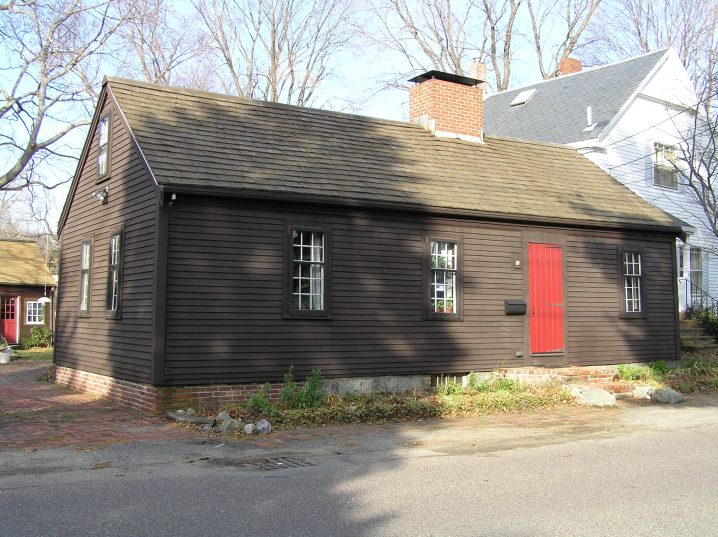
This house is believed to have originally been a modest cape on High Street, near the intersection with Mineral Street. In 1742, John Holland sold “ye house as is now finished standing there” to Daniel Ringe, a veteran of the French and Indian Wars (84:201) for “35 pounds lawful money.” Jabez Farley sold a 40′-wide lot to Joseph and John Wise, “laborers” in 1799, and an additional strip in 1801 (Salem Deeds: Book 172, page 252). They moved the Rindge house down Mineral St. to the present location, where the house was used as a saddle shop, and the leather was washed in Farley Brook. The framing of the barn in the rear appears to be equally old, and it may have been moved along with the Rindge house around 1800.
As late as 1832, this house was the only structure on Mineral St. Both men served in the military. Joseph was involved in 2 campaigns during the French and Indian War in 1761 and 1762. John enlisted as a private in Capt. Moses Whittier’s Company in 1814. In 1869, the heirs, Lucy Wise, Elizabeth, and Patrick Condon, sold a portion of the land on their “homestead…in consideration of $20” to Nathaniel Harris. The 1872 map shows the owner as “Mrs. E. Condon.”
Early history of the lot
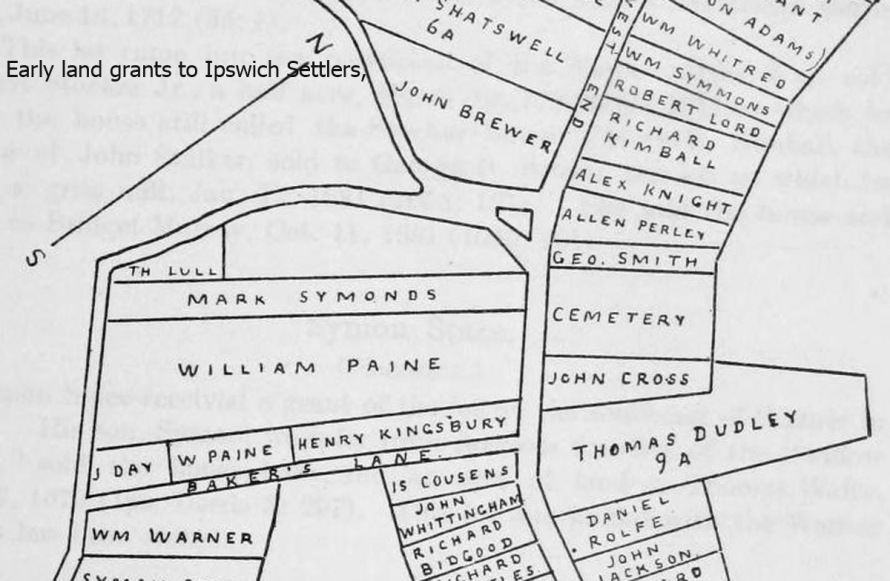
The land on which 16 Mineral St. now stands was granted to early Ipswich settler William Paine. His lot is described as extending from today’s High St. to Washington St. “and a house lot appertaining to me running upon a straight line from the northern corner of said Day’s fence down to a brook or run of water, part of which house lot was lately in occupancy of Widow Rofe, bounded by the brook and upon a lane or common way,” September 19, 1668 (Ips. Deeds 3: 92-95). The Widow Rofe lot was alluded to in a sale by John Perkins to his son Samuel in 1670 (Ips Deeds 4:285). *“The Widow Rofe” was the widow of one of the brothers, Daniel Rolfe, who died in 1654, Thomas Rolfe, who died in 1657, or Ezra Rolfe, who died in 1652.
In the 18th Century, Michael Farley and Deacon Jeremiah Perkins owned several acres of land in the vicinity of what is now Washington and Mineral Streets. Businessman and selectman Jabez Farley and Aaron Perkins divided the large field in 1798, and Farley sold 5 acres in the rear, including this property. (Ipswich in the Massachusetts Bay Colony Vol. 1, p. 320; p 363).
Construction
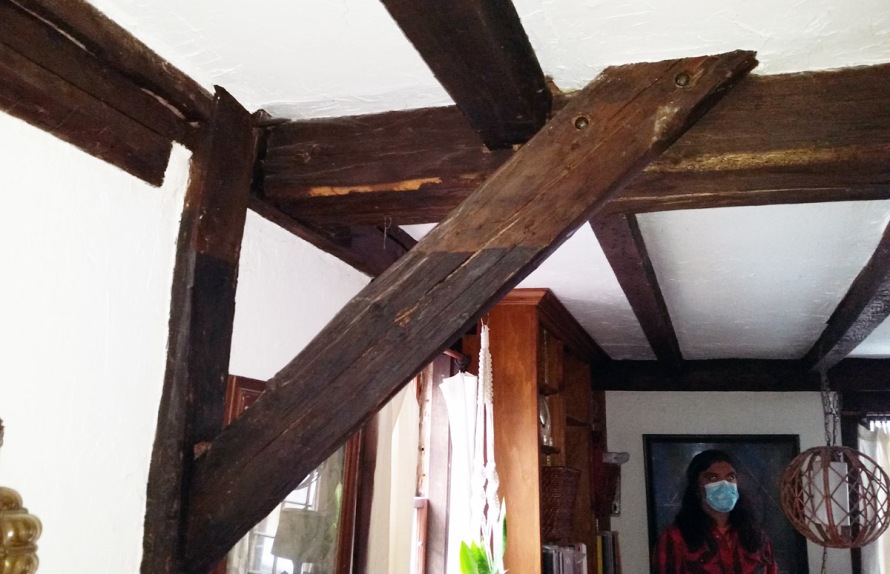
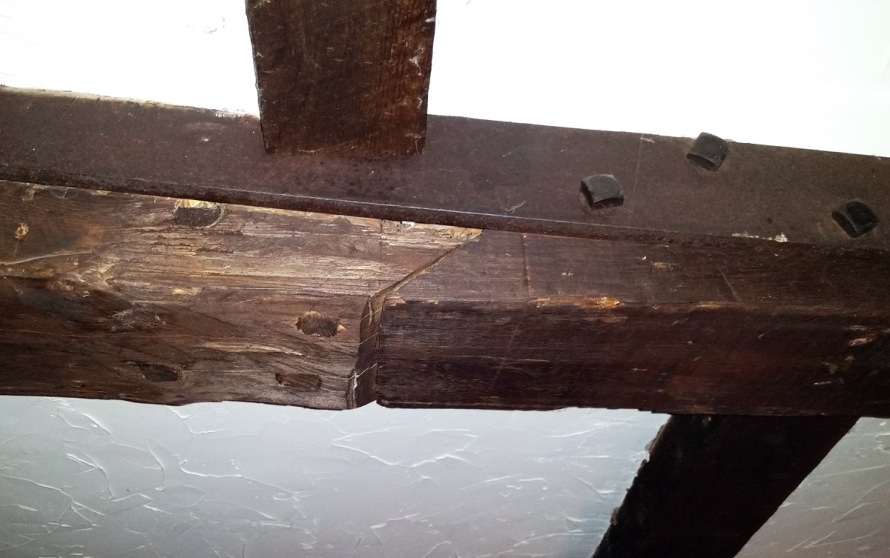
The post-and-beam construction in the house and the barn suggests that the buildings may be up to a century older than 1801, and that the structures could have been moved to this location after John and Joseph Wise purchased the land. The house appears to have been built as an early hall and parlor 1 1/2 story cape with a central chimney on a stone foundation. An extension to the rooms on the left side (without a full basement) was added, probably not long after the house was constructed on this site.
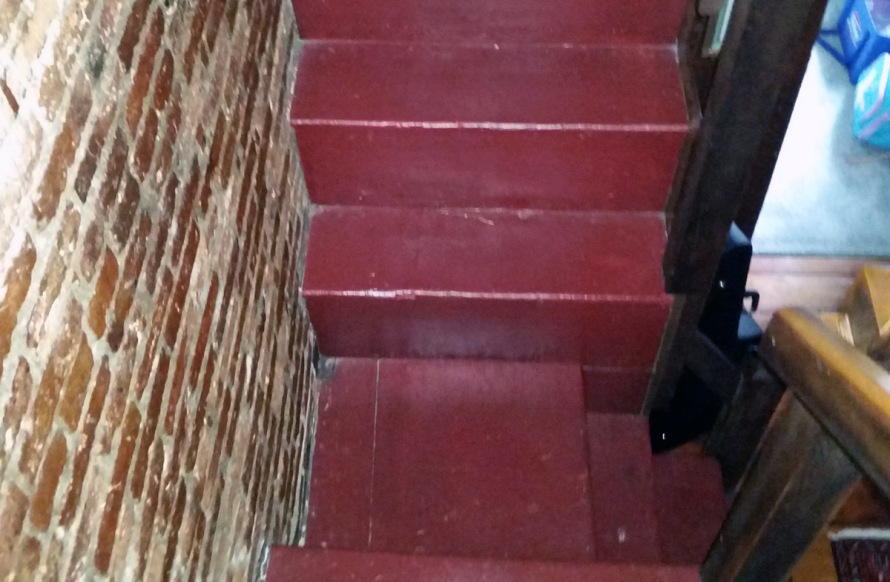
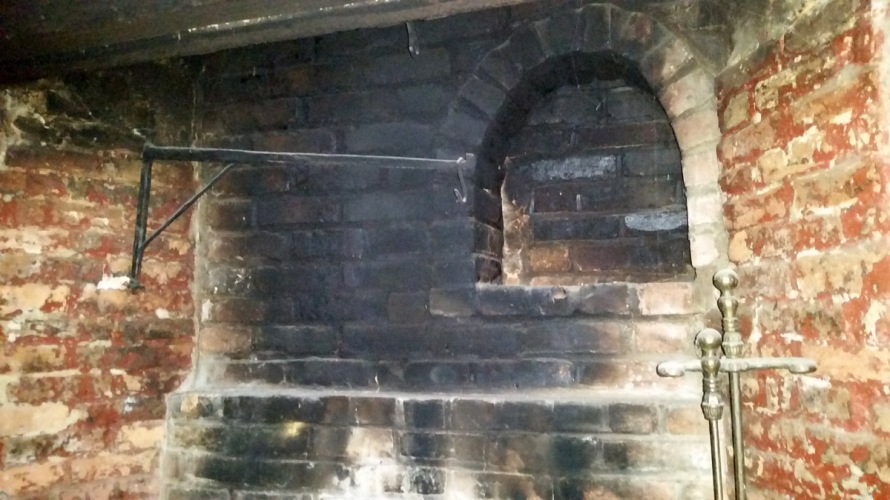
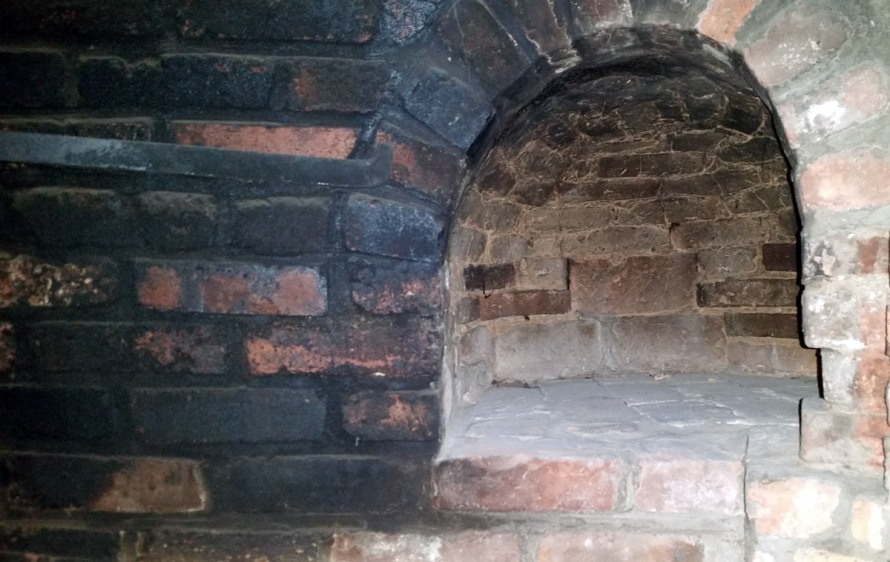
Inside the front entrance is a double stairway, similar to those found leading to the second floor or attic of two-story homes in Ipswich. The hall and parlor fireplaces are unusually large for the early 19th century and are mortared with clay.
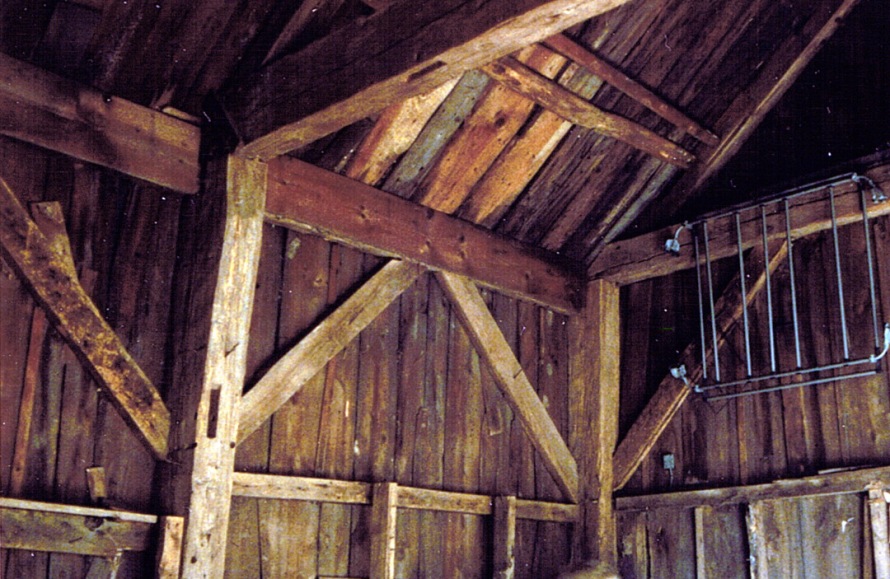
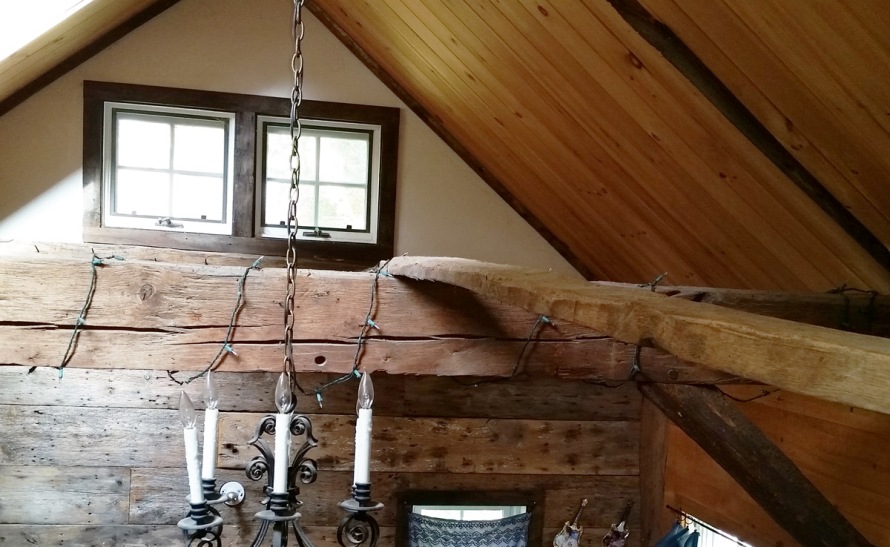
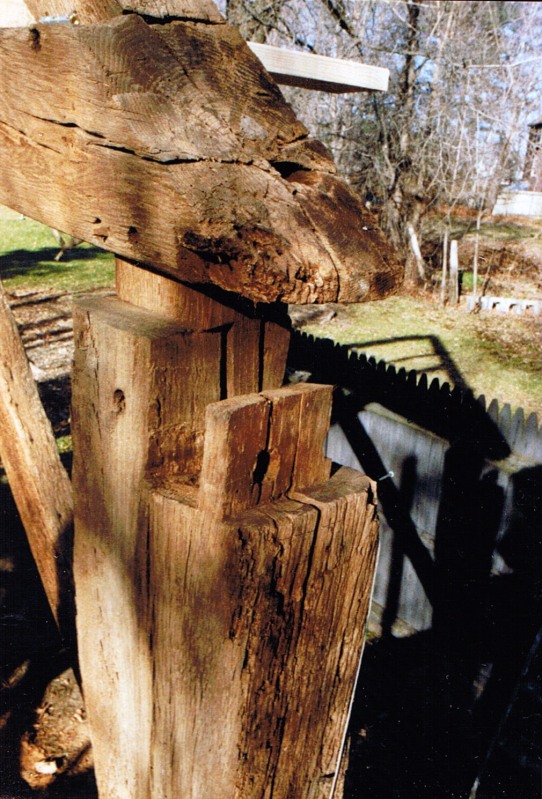
The barn in the rear of the building is believed to be of the same age or older. Architect Matt Cummings confirms that the structure is of the English timber frame style found in First Period and Georgian homes (predating 1775). The barn was restored in 1990-1994.
Earlier location
The frame of this house and the barn are indicative of the early to mid-18th Century, suggesting that the house may have been moved here by John and Joseph Wise after they purchased the lot in 1799. The house may have originally sat on High St. near the intersection of Mineral St. The present house at 42 High Street was built by Abner Harris in 1800 after the removal of the 1742 Daniel Ringe house. Although the exact location is not clear, it was said to have been moved to the area of Central Street. Mineral Street (aka Baker’s Lane) is on the earliest maps, but Central wasn’t constructed until around 1860. The 1800 date of construction of 42 High Street and its proximity to the present location of the house make that the most likely candidate.
Sources:
- MACRIS
- Salem Deeds: book 172, page 252. Lot deeds from Jabez Farley to John and Joseph Wise
- Salem Deeds: book 777page 178. Partial sale of the lot to Nathaniel Harris
- Ipswich in the Massachusetts Bay Colony, Vol. 1, p. 320
 Historic Ipswich
My grandparents, J. William Black and his wife Priscilla, owned this home and the one to the right of it which you can see in the photo, in which they lived and rented out this one. They lived there with my mother from the mid 1940s til the mid sixties. I also remember the barn.
My aunt, Beverly J. Bishop, lived in this house for many years up until her death in 2009. I believe she was responsible for getting the historical sign for the house. She also restored the barn as it was falling down. It is a lovely little house that she so much enjoyed.
Hi Elaine, we are still here in the house and now have a little girl growing up here. We love it here and are thankful to you and your uncle for selling us the house. Beverly seemed like an amazing person by all we’ve heard.
Hello Nathan, reviewing some bookmarked websites and looked at the Ipswich Historical Society one that I had scouted out to find more info on my Aunt Beverly’s house. I was pleasantly surprised and delighted to see your reply to my post. So happy you are still there. I have driven by on occasion and wondered if you still owned the house. I so dearly wanted to buy the house as I loved it so very much but my family thought it was too far away from them seeing as I would be living alone. I hope your daughter will appreciate its history when she gets older. Be well.