
“This survey was made at the request of the Ipswich School Committee. Its purpose was to determine what the schools might do to meet the recreation needs of the community, with special reference to the school children. As the investigation progressed, the larger aspects of the problems demanded attention owing to their inter-relations with most of the free time activities of the people. Mr. Knight has therefore included in his report some consideration of the motion picture exhibitions, bowling alleys, pool and billiard rooms, and even saloons. He has made recommendations concerning the organization of the athletic activities of the boys and young men; suggested ways and means of promoting and conducting neighborhood meetings in the schoolhouses; and outlined plans for making the celebration of public holidays contribute to the civic and social welfare of the community. The conditions that exist in Ipswich and the procedure recommended for meeting the recreation needs probably are to a large extent similar to those of many other towns of this size.
“The field work was done between November 2 and 19, 1914. The records and other data are on file at the office of the Department of Recreation of the Russell Sage Foundation, New York City, and are available for inspection and further study.”
Excerpts
“Altogether 696 children, 447 boys and 249 girls, were observed. Of the total number, 262, or almost 40 percent of the children and young people were doing nothing. Especially significant is the fact that 168 of the 262 idling boys and girls were idling in groups. Here is where mischief usually starts. A majority of those walking (203) were in reality idling. Fifty-six or eight percent of the children were playing football and baseball and 22 or a fraction over three percent were occupied with other games.
“Even though Ipswich has a wealth of yard space, open lots, and a playfield, more than 60 percent of the children observed were in the streets. Less than 20 percent were seen in yards, about 12 percent were in vacant lots and a little over six percent, all boys, were using the Athletic Field. More than three-fourths of all the girls seen were observed on the street.
“Every thinking parent will wonder why. The answer is simple. The streets are more attractive. Make the playgrounds, the school grounds, and the home yards sufficiently attractive to compete successfully with the street.
What High School Students Actually Do
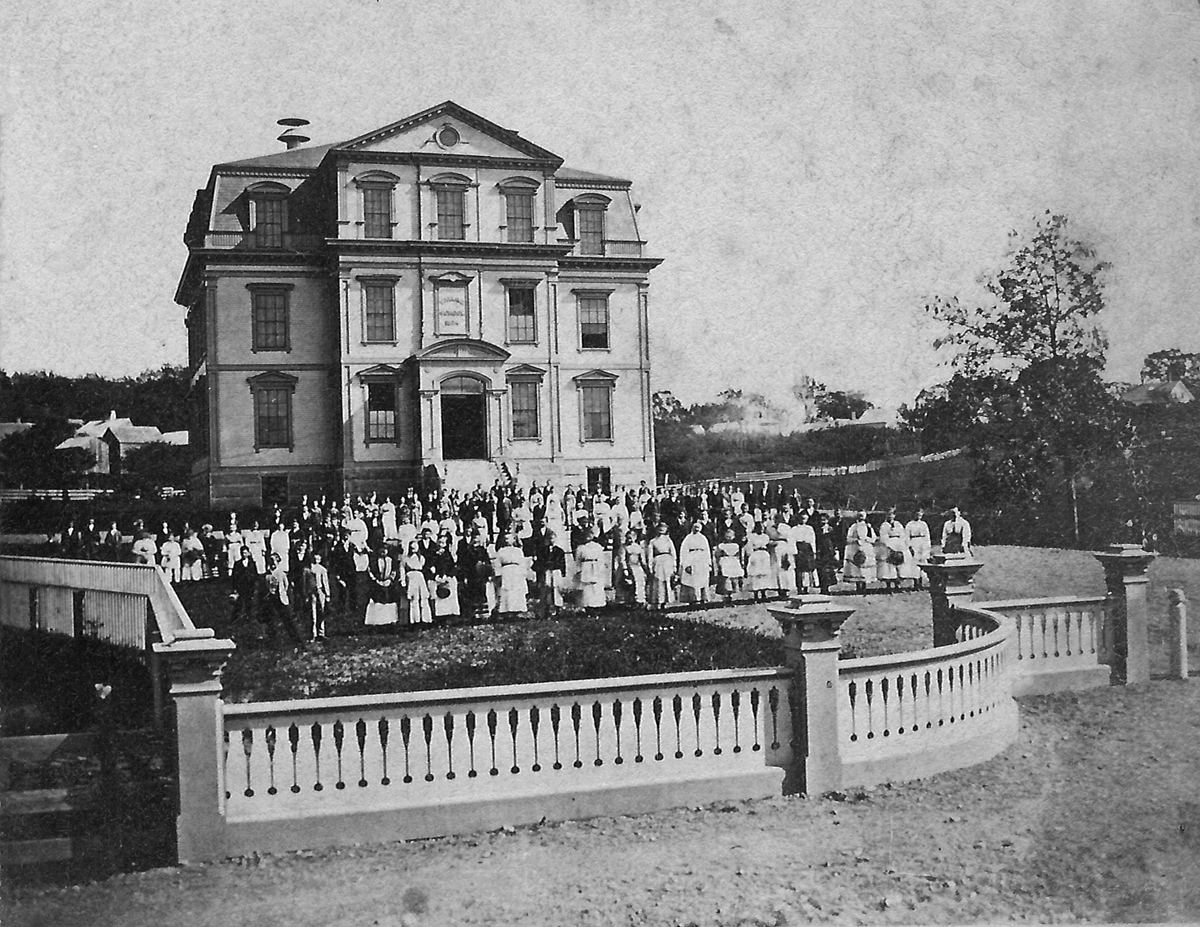
“In a questionnaire that the High School students filled out, they were asked: “What kinds of athletics or physical training do you engage in?” and “How many hours per week do you devote to such activities?” Answers were received from l01 girls and 78 boys. The only activity mentioned by more than one-half of the girls was walking. A large proportion of this walking was done not for exercise or recreation but incidental to going to and coming from school. A tramp over the hills or along country roads for the pure joy of it is an exercise of the pleasantest kind: walking to school or on errands has little recreative value. In some instances, the activity reported as walking was, without doubt, nothing more than idle sauntering along the street in search of adventure.
“The Manning High School is singularly lacking in this respect: There is no glee club to encourage good music, no debating society to develop in boys and girls quickness of thought, logical argument, and self-control. The school is neglecting one of its finest opportunities to enrich the lives of the students. Last year High School dances were prohibited and the ”Secret Society of General Leisure” was formed among the students to organize dances outside of school. Most communities prefer to have these dances of the boys and girls under the sympathetic supervision of parents and teachers. We understand that the custom of High School dances is to be resumed this year. Some attention might well be paid to the organization and helpful supervision of literary, musical, and dramatic societies.
Motion Pictures
“The children in the 5th-8th grades, elementary schools, were questioned as to the frequency of their attendance at motion picture shows. Two hundred and ninety-nine of the 311 boys and girls attend the motion pictures. Sixty-nine percent of the boys and 55 percent of the girls go once a week or more often. The 247 boys and girls who go once a month or more often attend a grand total of about 1,500 performances per month.
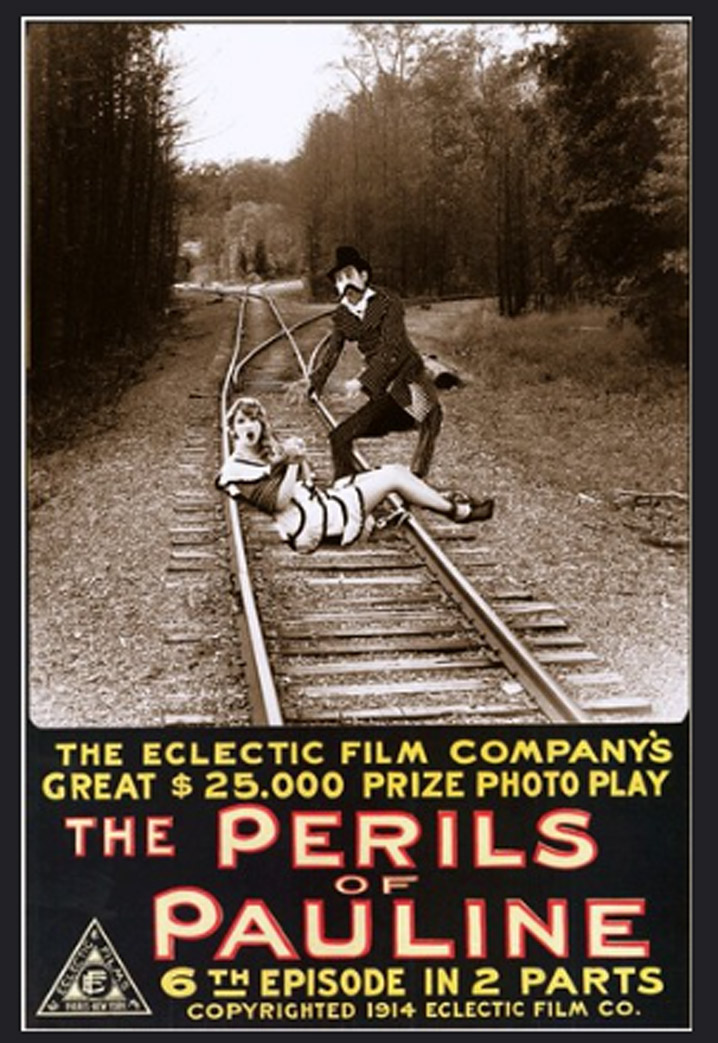
“The motion picture must tell its story to the eye alone. The loss of the spoken word must be balanced by stimulating the imagination. Frequently the suggestions are not of a wholesome character and are open to different interpretations by different people. Here lies the real danger in motion pictures- Most communities realize this and are taking steps to prevent the exhibition of suggestive and salacious films.
“The popularity of “The Perils of Pauline” in Ipswich illustrates this fact. On an advertising leaflet handed
out in the local Opera House is this statement:
‘There seems to be no limit to the sensational predicaments in which Pauline is placed by the men who are after her fortune. They are so resourceful in their villainy and have schemes to meet almost any situation.’
“There indeed seems to be no limit to the sensational stunts invented by film producers for the consumption of eager, open-eyed boys and girls. It is not surprising that in answer to the question “What kinds of motion pictures do you like best?” 69 percent of the boys and 52 percent of the girls voted for those subjects that are readily classified as thrillers. Compare this with the fact that but 5 percent of the boys and 3 percent of the girls mentioned films that could be classified as educational.
“Occasionally it is reported to the Ipswich police that boys have broken into some camp or unoccupied house. How often is this nothing more nor less than the boys living over again in their play some adventure seen in the moving pictures? Let the boys and girls have real adventures in the great out-of-doors, let them accomplish feats of strength and endurance in the friendly competition of the athletic field, and see to it that they live their own lives and not the lives of superheroes and stage adventuresses. A boy develops moral courage through vigorous, wholesome play; a girl leams to be sympathetic by learning to respect the rights and feelings of her playmates.
The right to play
“To the child, play is the serious business of life. It is of first importance. He is obliged to go to school. When he is free his own individuality comes to the surface. Here he begins to realize his ambitions, his boyish ideals. One day he is a robber chieftain, the next, ‘Broncho Billy.’ Thinking men and women of late years have recognized the vital significance of right play, of play that builds strength and character. With this has come a realization of the evil of wrong play, of the misery, crime, and vice due to wrong ideals learned in early life.
“The right to physical vigor is a fourth R in progressive school systems. Boys and girls must have physical strength if full advantage is to be taken of their educational opportunities. For this reason, we find schools providing food for poorly nourished children. We have a medical inspection to see that no diseased condition retards school progress. School is childhood’s work. School attendance is compulsory by law. Because society makes this demand it must make it its business to see that the child does not suffer physical harm but gains physical stamina, the first condition of mental strength.”
The Athletic Badge Test
“To ascertain how well the schools were meeting this obligation to develop physical vigor, the boys in the 5th, 6th, 7th, and 8th grades of the elementary school were given the Athletic Badge Test. The Athletic Badge Test consists of three sets of standards of increasing difficulty, in three different kinds of physical activity in which boys naturally indulge: running, jumping, and the pullup or chinning. Only one of the 172 Ipswich boys was able to fulfill the three simple requirements.
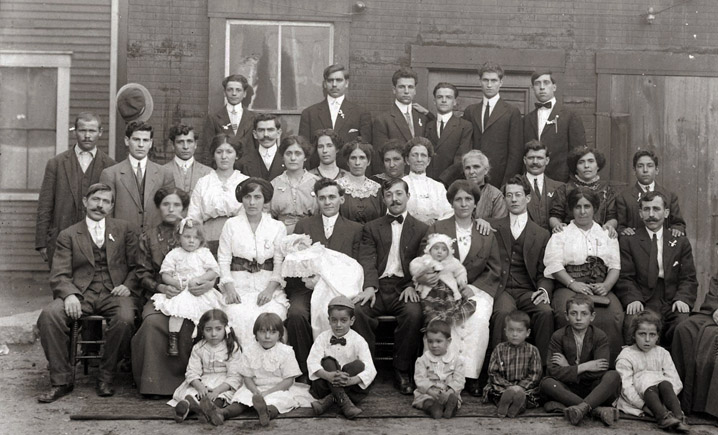
Americanization of the Immigrant through Recreation
“Ipswich is typical of many industrial towns in New England. The character of its population has undergone a radical change in the last half-century. Fifty years ago 8.68 percent of the population was of foreign birth. According to the Federal Census of 1910, 39 percent of the population was of foreign birth; 23 percent, the native-born children of foreign parentage; and 38 percent, were born of native parentage. Some of this last group are also the grandchildren of foreign-born parents. The steady increase in the proportion of foreign-born is conspicuous. In the earlier years, this class came largely from English-speaking countries. They were accustomed to a large degree of self-government, spoke our language, and understood our customs. They have been easily assimilated and are now some of our best and sturdiest citizens. During the past decade, the character of immigration itself has changed. The new influx has been of people from Southeastern Europe.
Fully a third of the population of Ipswich is now composed of Greeks and Poles. These people do not speak our language, do not understand our customs and institutions, and have not been trained for generations in the art of self-government. They form a definite proportion of the community, a proportion that is constantly increasing. They have come seeking industrial betterment or freedom from political tyranny. They have the inherent capacity for American citizenship, and the men, as fast as they qualify, are becoming naturalized citizens and are voting at every election. It will not be many years before the balance of voting power will be in the hands of these people and their children. These people form the largest part of the wealth-producing forces of Ipswich. They furnish most of the labor in the mills. They have entered into the business life of the community.
“Only in their daily labor and in the stores do they learn American ways and acquire American ideals. This is a slow and unsatisfactory way. The children go to the public school and here the process of Americanization is really begun. But the school has influence over the children only five hours a day for a part of the year. A major portion of their lives is spent under the influence of old-country customs and ideals. The stock which gave Ipswich its early history and traditions is fast dying out. How can these people from foreign lands best be welded into the citizenship of America, receiving its opportunities and privileges and giving in turn the contribution that it is theirs to make?
“One of the best ways of meeting these new people on a common footing and under conditions where the process of Americanization goes on unwittingly yet most effectively has not been considered constructively: that is the use of leisure time. An open, well-lighted schoolhouse where good times abound and where the best ideals of good sport and fairness are upheld produces better citizens than a commercially conducted pool room or a saloon. Friendly competition on the athletic fields destroys prejudice and develops mutual understanding.
Athletics for Boys
“The events that have been demonstrated to be most suitable for grammar school boys are: 50 Yards Dash, Running High Jump, Running Broad Jump, 60 Yards Relay Race, 115-pound Class 70 Yards Dash, 5-pound Shot Put, Running, Broad Jump, 440 Yards Relay.
Athletics for Girls
“The Playground and Recreation Association of America has adopted the following as standards which every girl ought to be able to attain: All-up Indian Club Race 30 seconds, Basketball throwing, Balancing. (When Indian Clubs are not available, the Potato Race may be substituted.)
Condemned: Pole vaulting, Running more than 100 yards, Weight throwing.
Doubtful: Basketball, Field hockey
Safe: Archery, Ball throwing Broad and high jump (not in competition), Climbing, Dancing, Horseback riding (cross saddle), Low hurdles, Paddling, Rowing, Running (not in intense competition), Skating, Swimming, Tennis, Walking.”
Conclusion
“We realize that it takes time, thought, and continued effort to develop a system of Public Recreation in any community. The first thing to be done in Ipswich is to engage a Physical Director who as he studies the needs can best advise as to further steps. The program as outlined above will no doubt be modified as the work progresses. It represents an ideal to work toward rather than a hard and fast line of Procedure. No work of this kind can succeed without the cooperation of the community at large. Ipswich will never have adequate provision for public recreation until Ipswich really wants it.”
 Historic Ipswich
I found the Americanization of the Immigrant through Recreation a very interesting read.
Thanks for loaning the book to us!
Excellent educational article. Have you thought about writing such a chronological review by decade to bring us to 2023? Or perhaps engage the town government and public schools? It creates a much appreciated perspective over time how we have evolved. Thank you very much.
Here’s a link to a chronological history of Ipswich on the Historic Ipswich site. https://historicipswich.net/history-of-ipswich-ma/