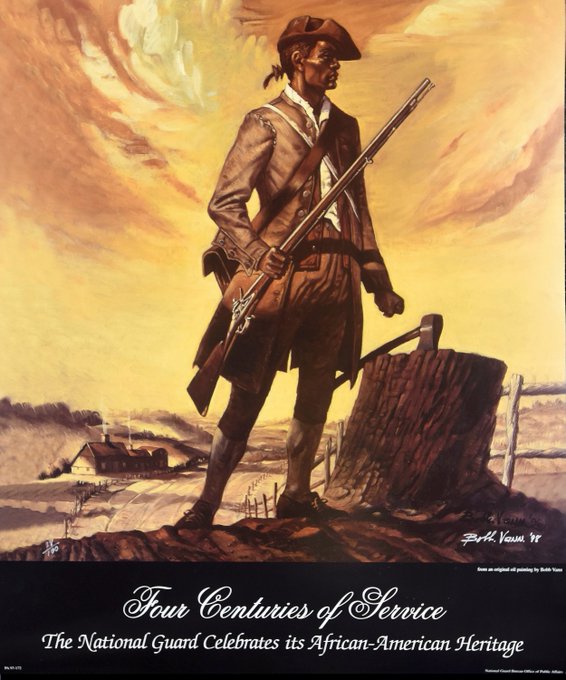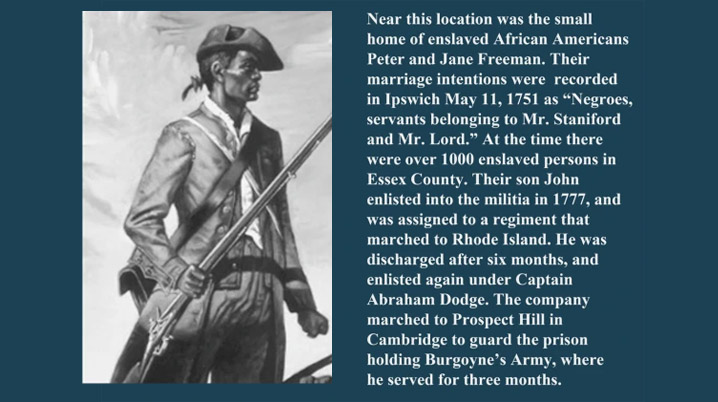
Nearly 4,800 African Americans were counted in the 1776 Massachusetts census, with over 1,000 living in Essex County. On Nov. 12, General Washington issued a general order, “Neither negroes, boys unable to bear arms, nor old men unfit to endure the fatigues of the campaign are to be enlisted.” Washington partially rescinded that order a month later, allowing “free negroes who are desirous of enlisting.” Early in 1777, Massachusetts included Negroes in the list of draft eligibles.
The first black person to die for the Patriot cause was Crispus Attucks, who was killed in the Boston Massacre by British soldiers. Two of the most famous black soldiers of the Revolution were Salem Poor of Andover and Peter Salem of Framingham (shown in the above image), credited with mortally wounding British officers at the Battle of Bunker Hill.
Black men weren’t required to enlist, and in 1777, a white man, Joshua Giddings of Ipswich received remission from the draft after testifying that he hired Fortune Ellery, a Negro, to serve in his place, testifying that he was “at great expense in hiring said Fortune to engage in the public service to which services he was not obliged, being a black man.” (View document). Fortune Ellery received manumission papers from Nathaniel Haskell of Gloucester, which read, “I remised, released and set free this negro whose name is Fortune.”
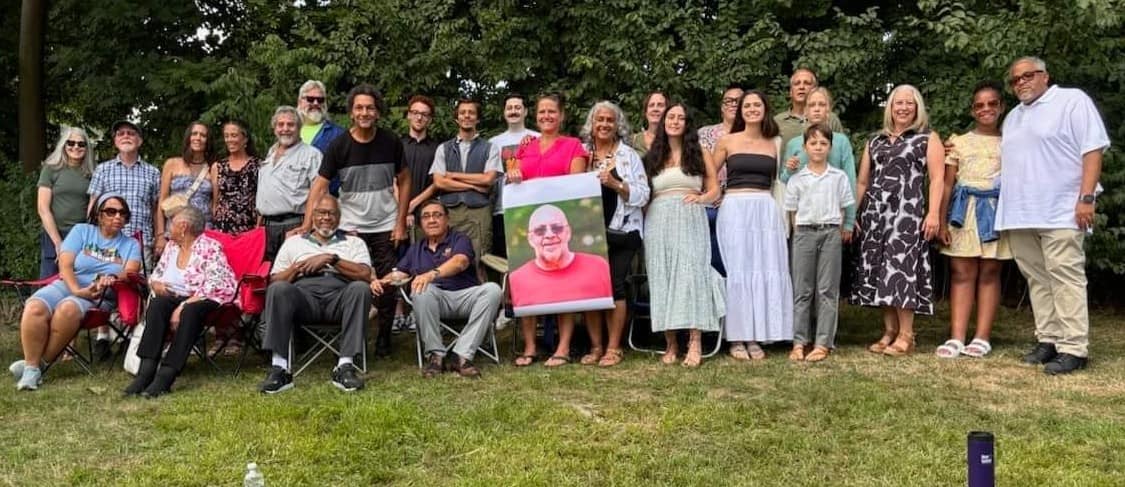
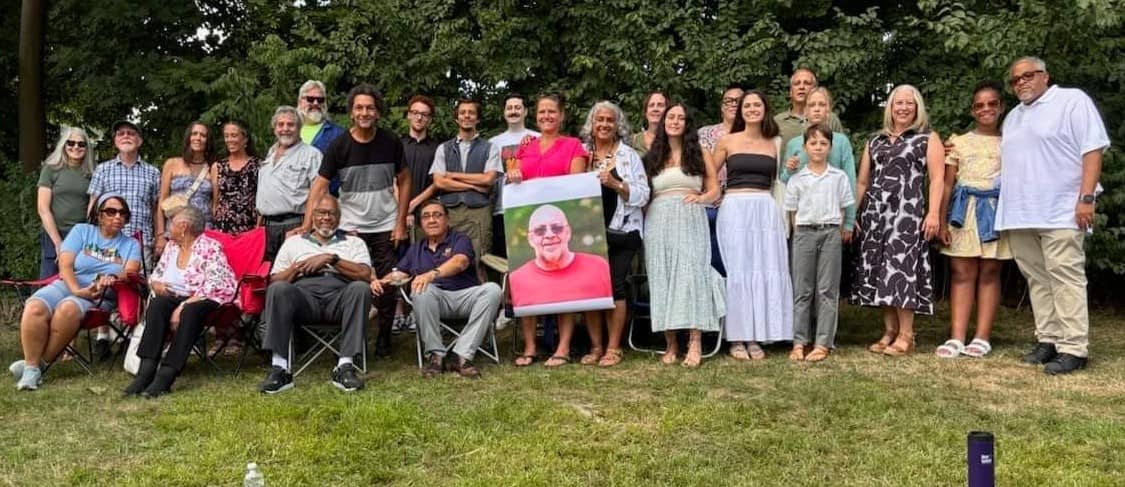
On Saturday, August 24, 2024, descendants of the enslaved Freeman family of Ipswich gathered near a plaque honoring John Freeman, a black Revolutionary War soldier.
Peter & Jane Freeman of Ipswich

Peter Freeman was a black enslaved man in Ipswich who was probably born around 1730. Thomas Franklin Waters wrote that in 1751, “Peter took to wife, Jane, servant of Thomas Staniford.” The word “servant” was a less objectionable phrase than “slave,” but they were nonetheless the property of their masters.
Capt. Thomas Staniford, “Gentleman,” purchased the mansion house of Francis Wainwright, which stood at 2 East Street, on Feb. 28, 1740 (83:4) and occupied the house until his death in 1778 (Pro. Rec. 353: 206). The inventory of Staniford’s estate, filed Dec. 9, 1778 (353:316) indicated it to be a fine mansion, but no slaves or servants were listed among his possessions at the time of his death. (Source: Thomas Franklin Waters, Ipswich in the Massachusetts Bay Colony Vol. 1).
Author Bruno Giles traced the descendants of this Freeman family in “Peter and Jane (___) Freeman of Ipswich, Massachusetts, and their Descendants in Maine: An African-American Family” in the New England Historical and Genealogical Register, Vol. 163, P. 245, published in 2009. Excerpts are below:
PETER AND JANE ( ) FREEMAN OF IPSWICH, MASSACHUSETTS, AND THEIR DESCENDANTS IN MAINE: AN AFRICAN-AMERICAN FAMILY
by Bruno Giles
“Members of this Freeman family moved from Essex County, Massachusetts, to Maine between 1778 and 1783...Peter Freeman was born, say 1726 (assuming age 25 at marriage), presumably in Massachusetts, parentage unknown. He married with intentions recorded at Ipswich, Massachusetts, on 11 May 1751, to “Jane.'” They were described, without surnames, as “Negroes . . . servants belonging to Mr. Staniford and Mr. Lord.” She was baptized at Ipswich on 3 April 1743 as “Jane, servant to Phillip Lord.” Peter Freeman died between 1761 (their youngest child was baptized on 16 May 1762) and 25 July 1778, when the marriage intentions of Mrs. Jane Freeman of Ipswich and Mr. Anthony Griffen of Brunswick were recorded at Brunswick, Cumberland County, Maine. They were married at Ipswich in August 1778. Anthony Griffin was the widower of Maria Moses, whom he had married at Scituate, Massachusetts, on 21 May 1749.“
The above dates are from the Vital Records of Ipswich, Massachusetts, to the End of the Year 1849, published in 1780 in two volumes, Births, Marriages and Deaths. The Ipswich Vital Records also provide the birth dates for Peter and Jane’s children:
- Peter Freeman was baptized on Oct. 20, 1751. He died before June 1757, when a second son named Peter was baptized.
- Jane Freeman, baptized on Dec. 17, 1752, married Phillip Wilson.
- Lydia Freeman, baptized on June 28, 1755, married Caesar Freeman.
- Peter Freeman, baptized June 25, 1757; died before 16 May 1762, when the third son Pete,r was baptized.
- John Freeman, baptized on July 29, 1759, married Leah Griffin.
- Peter Freeman, baptized May 16, 1762; m. Margaret Bowers.
The Freeman home
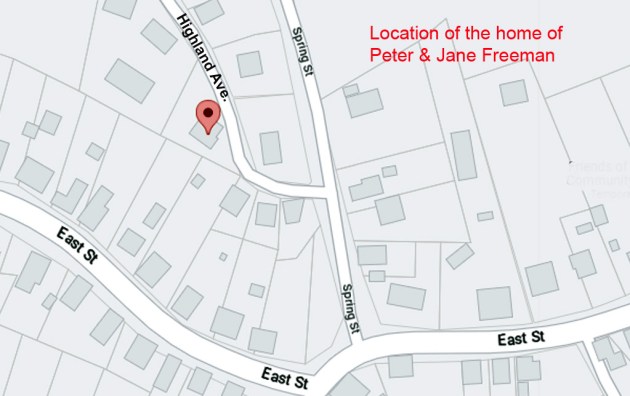
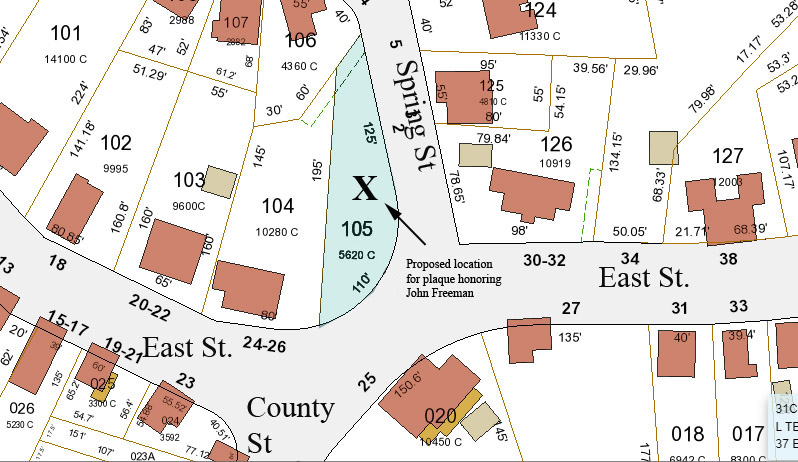
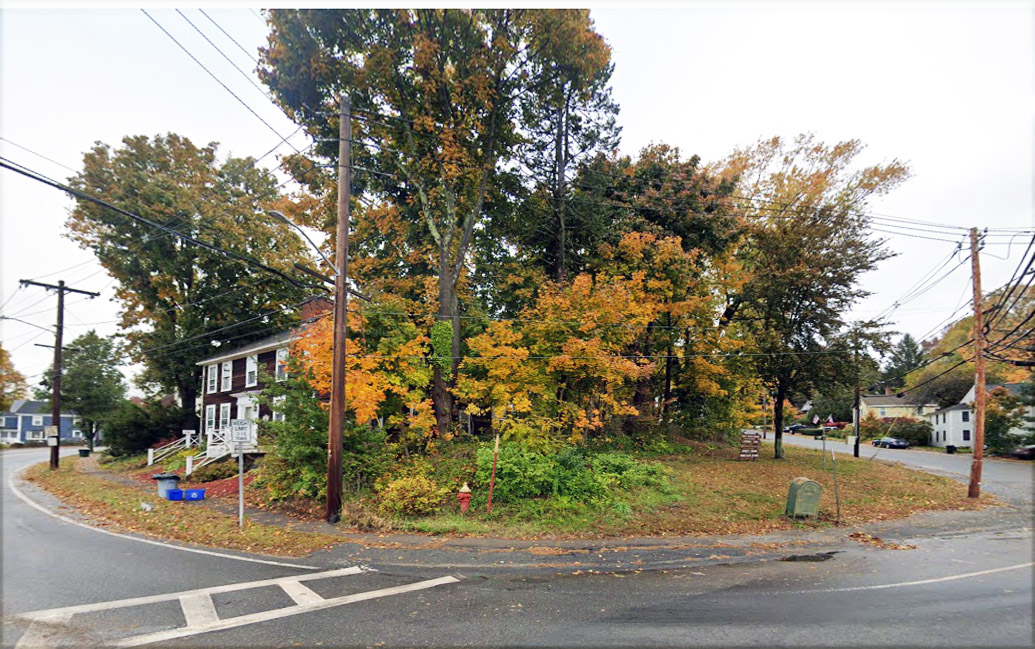
On Aug. 12, 1760, John Henderson sold to Peter Freeman, “Laborer”, a small dwelling and a quarter acre around the corner on Spring St. (Salem Deeds 160: 192) for £13, 6s. Peter Freeman’s “small dwelling” and quarter-acre was near the turn on Highland Ave. The person to whom they had been enslaved, Captain Thomas Staniford, owned a lot adjoining to the north (ref). It is unclear if the purchase and the word “Laborer” indicate that Staniford had manumitted Peter Freeman and his family.
Bruno Giles noted that Peter Sr. died between 1761, when their youngest child was born, and July 1778, when the marriage intentions of Mrs. Jean or Jane Freeman of Ipswich and Mr. Anthony Griffin of Brunswick were recorded at Brunswick, Cumberland County, Maine. They were married at Ipswich in August 1778.
Jane’s sons, John and Peter Freeman, joined their mother in Brunswick a few years later. The heirs of Peter Freeman Sr. (Peter Jr., John, John’s wife Jenny, Caesar Freeman, and Lydia) sold the lot with a house and barn to Samuel Colman, on April 27, 1784, for 40 pounds (Essex Deeds 160: 192, recorded in 1796). In this deed, Peter Freeman Sr. is referred to as “yeoman” (farmer). Colman mortgaged to Thomas Manning, Nov. 29, 1816 (212: 149). The 1816 deed lists abutters, which confirms the location of the Freeman lot.

John Freeman, a Revolutionary War soldier
Bruno Giles wrote, “On August 11, 1832, John Freeman of Bath, Maine, appeared in court there to obtain benefits for his war service. He swore in court that he was 72 years old, according to information from his parents and others, but he has no record of his age. He says he lived and enlisted in Ipswich, Mass., into the militia of the Revolutionary War in the year 1777, to go to Rhode Island in defense of the country. His company immediately marched to Rhode Island, where he did some guard duty. An alarm was given that Providence was to be burned, and his regiment marched there. He stayed there until he had served six months and was discharged. He says that during this service, Burgoyne was taken, and soon after his return to Ipswich, he again enlisted in the militia under Captain (Abraham) Dodge and was marched to Prospect Hill in Cambridge to guard the prison belonging to Burgoyne’s Army. Here, he continued in service for three months and was discharged. Soon after his services as a soldier, he moved to Brunswick, Maine, and later to Bath.”
The court documents read: “John Freeman, aged 84 years, of York, July 4, 1820. Private in the Mass. line (Co. & Regt. not given). Original declaration made Apr. 13, 1818. Pension No. 8,585. Affirmed. Family: Esther Freeman, wife, aged 82.” (*Maine Genealogy Archives).

Rhode Island
According to Thomas Franklin Waters, an Ipswich Committee reported on Jan. 21, 1777, that 67 men had been enrolled in the coast defense of Providence and the Northern Army. During this period, John Freeman testified that he was under the command of Capt. Asa Prince of Salem, whose company was part of Colonel Danforth Keyes’ regiment in the Rhode Island alarm.
The terms of John Freeman’s enlistment are unknown, but from an article in Wikipedia: “Many enslavers shirked their duty to serve and sent their enslaved men to serve in their place. As Frederick Mackenzie reported on June 30, 1777, the rebels “find it so difficult to raise men for the Continental Army, that they enlist Negroes, for whom their owners receive a bounty of 180 dollars and half their pay; and the Negro gets the other half, and a promise of freedom after three years.”
In his pension testimony, John Freeman stated that his first duty assignment was in Tiverton, Rhode Island. Tiverton Heights Fort was erected in early 1777 to prevent the British from moving northeastward. On February 14, 1778, the Rhode Island General Assembly voted to allow the enlistment of “every able-bodied negro, mulatto, or Indian man slave” who chose to do so, and voted that “every slave so enlisting shall, upon his passing muster before Colonel Christopher Greene, be immediately discharged from the service of his master or mistress, and be absolutely free.”
Lieutenant Colonel Archibald Crary’s 1st Rhode Island Regiment, made up almost entirely of African American freemen and slaves, played an important part in the Battle of Rhode Island in 1778, but by that time, John Freeman had returned to Ipswich and reenlisted in Capt. Abraham Dodge’s company.
Second enlistment: Cambridge
The pension testimony of John Freeman, along with testimony by his sister Jane and brother Peter, stated that after returning from 6 months of service, John Freeman immediately reenlisted under Captain Abraham Dodge. Freeman stated that his duty in his second enlistment was guarding the British prisoners in Cambridge. During the Revolutionary War, Abraham Dodge served as a Captain in Colonel Moses Little’s 12th Continental Regiment. Captain Dodge was in charge of a group of soldiers from Ipswich and Chebacco Parish (now the town of Essex), of whom many were assigned to Cambridge to guard Gen. Burgoyne’s troops.
On October 17, 1777, after two severe defeats at Saratoga and Bennington, British General John Burgoyne surrendered his army to American General Horatio Gates. Under terms known as the Convention of Saratoga, British troops were to be sent back home and were to be paroled so they would not return to fight the American army. Almost 6000 British, German, and Canadian troops were placed under guard by John Glover’s troops. They were marched to Cambridge, arriving on Nov. 8. Officers were given quarters in houses, but the rank-and-file soldiers were quartered in crude barracks. Burgoyne’s army spent about a year under guard in Cambridge, and when he refused to provide a list of the soldiers’ names, Congress revoked the terms of the convention. In November of 1778, his troops were removed to Virginia, and later to Maryland, and weren’t released until the end of the war.
Although John Freeman served with other Ipswich soldiers from Ipswich and Chebacco Parish, he was never under the command of Captain Nathaniel Wade and is not mentioned in the letters of Lieutenant Joseph Hodgkins of Ipswich. John Freeman died in Maine in 1835.
Peter Sr. died before the war, and in 1776, the younger Peter was 14 years old, too young to enlist. Only two men named Peter Freeman are listed as Massachusetts soldiers. One engaged for the town of Salem, Sept 17, 1781, and the other for the town of Dedham.
In the younger Peter’s testimony supporting his brother’s application for a pension, he testified that John “enlisted in the service of the country in the year 1777, marched to Rhode Island, and then joined the American Army, and was gone for as much as 6 months. I often heard from him when gone, and saw him when he returned to Ipswich. He again enlisted in Capt. Dodge’s Company and went to Cambridge or Prospect Hill to Guard….I saw him again when he returned. He removed from Ipswich to Bath after the Peace of 1783, and I came with him.”
In the First Census of the United States, taken in 1790, Brunswick counted 1357 free whites and 38 “other free persons.” Members of the Freeman family and other black families spread to other parts of Maine and were among the early settlers of the town of China.
Testimony of John Freeman
“At a Court of Common Pleas holden at Bath in said County on the 11th day of August AD 1832, personally appeared before John Ruggles, Esq. one of the Judges thereof, John Freeman a resident of Bath in the County of Lincoln and State of Maine, aged seventy-two years, who being first duly sworn according to law, doth on his oath make the following declaration in order to obtain the benefits of the provision made by the act of Congress passed June 7, 1832:
“That he is seventy-two years of age, or he verily believes by information derived from his parents & others, but has no record of his age, that he enlisted as a soldier in the militia of the Revolutionary War in the year 1777 at Ipswich in Massachusetts, where he then lived, to go to Rhode Island in defense of this country. His captain’s name was Prince, the first Lieutenant Billings, the second Lieutenant Lord, & the orderly sergeant Robert Farley of Ipswich. His colonel’s name was Keyes.
“That the company marched immediately for Rhode Island, & the first assignment of a Regiment which he remembers was at Tiverton. That he was employed guarding this coast for a considerable time & stationed opposite the Island, but upon alarm given that Providence was being burnt, his Regiment was marched to that place & continued then to be his location six months after he was discharged.
“That during this service, Burgoyne was taken, and soon after his return to Ipswich, he again enlisted in the militia under Captain Dodge & was marched to Prospect Hill to guard the prison camp belonging to Burgoyne’s army. And he continued in Service these months & was discharged—the only persons living to his knowledge who can testify of his services as herein stated, was Peter Freeman of Brunswick & Jane Wilson of Bath, but that he is known to Silas Stearns & David Shaw of Bath who will certify his veracity & that the representation that has been made is worthy of credit & believed by them. He also states that soon after his services as a soldier, he came to Brunswick & afterward to the Town of Bath to reside & that he has his home in said Bath.”
The court decision read: “John Freeman, aged 84 years, of York, July 4, 1820. Private in the Mass. line (Co. & Regt. not given). Original declaration made Apr. 13, 1818. Pension No. 8,585. Affirmed. Family: Esther Freeman, wife, aged 82.” (*Maine Genealogy Archives).
Testimony of Peter Freeman on behalf of his brother John Freeman
I, Peter Freeman, living in Brunswick, in the County of Cumberland, on oath do say that I am well acquainted with John Freeman of Bath, who has signed the foregoing application; he is about seventy-two years of age. I am in my seventieth year of age. I knew John Freeman before I moved, before the war of the Revolution, and lived in Ipswich with him. He enlisted in the service of the Country in the year 1777, marched to Rhode Island, and then joined the American army, and was gone for as much as six months. I often heard from him while gone, and I saw him when he returned. On his return to Ipswich, he again enlisted in Capt. Dodge’s company, and was sent to Cambridge or Prospect Hill to guard Burgoyne’s troops taken at Saratoga. He was gone the last time, three or four months and I saw him again when he returned. I have known him ever since. He moved from Ipswich to Bath just after the Peace of 1713. I came with him and have known him ever since. He is a man of truth and veracity. Signed, Peter Freeman
Testimony of Jane Wilson, sister of John Freeman
I, Jane Wilson of Bath in the County of Lincoln & State of Maine, in the Seventy-ninth year of my age, on oath, do state that I am well acquainted with John Freeman of Bath, who has signed the foregoing application; he is about seventy-two years of age. I knew him in Ipswich in the County of Essex & now Commonwealth of Massachusetts, and knew John Freeman before and during the Revolutionary War; he was born in Ipswich and then lived there. I remember that he enlisted in the service at Ipswich in the year 1777, under Captain Prince, and went to Rhode Island as a soldier; he was gone for over six months. I had a letter from him during that time, and while he was a soldier, this letter I have lost, but it was dated in the year 1777, and was written from some part of Rhode Island while he was a soldier their in the American army. After he returned from Rhode Island, he immediately enlisted again at Ipswich under Captain Dodge and went to Cambridge or Prospect Hill, near Boston, to guard Burgoyne’s troops there, prisoners at that place. This was the latter part of the year 1777 and the winter of 1778. He was in this service for three or four months. I have known John Freeman ever since, and removed from Ipswich to Bath about fifty-two years since, and have lived near him since in Bath in the State of Maine. He is a man of truth … Jane Wilson
Plaque to honor John Freeman

Permission to post the plaque at this location was granted at a meeting of the Ipswich Select Board on Monday evening, July 10, 2023. A dedication event was held on Saturday, September 16, 2023.
Reuben Freeman
The Secretary of State’s index of Massachusetts Soldiers and Sailors of the Revolutionary War lists a Reuben Freeman from Ipswich, who served as a private in several companies and regiments. The listing includes Continental Army pay accounts for service from March 20, 1777, to 1781, dated Camp at Valley Forge; April 1779, dated Providence. He enlisted on March 20, 1777, for 3 years and is listed in Continental Army pay accounts for service from January 1, 1780, to December 31, 1780. Age, 21 yrs.; stature, 5 ft. 10 in; complexion, black; hair, black; eyes, black; residence, Ipswich. His name does not appear in the Ipswich vital records, but Thomas Franklin Waters listed two candidates: Reuben, a servant of Lieutenant Thomas Choate, and Reuben, son of Flora, baptized Oct. 3, 1756.
Silas Quanomp
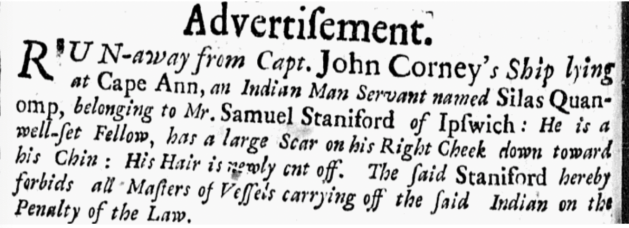
Samuel Staniford was born in 1688, a son of Deacon John Staniford and Margaret Harris Staniford. In Deacon Staniford’s will, Samuel was listed as a cordwainer. Deacon Staniford’s will also listed his daughter Tryphena, and Philip Lord, her husband. Samuel married Mary Chadwell, published August 15, 1715 (Hammatt Papers). In the Ipswich Vital Records, he was accidentally listed as Samuel Stainford, who married the widow Mary Caldwell in 1715. In 1716, Samuel Staniford owned the lot at the corner of North Main and High Streets, where he was an inn-holder in 1731. They had a daughter, Mary Staniford.
An advertisement in the 1729 Boston Post-Boy lists Silas Quanomp, an enslaved Native American belonging to Mr. Samuel Staniford of Ipswich, who escaped from the Gloucester shop of Capt. John Corney. Captain John Corney of Gloucester was involved in the slave trade. A summary of sales from 1715-1721 states that on April 8, 1717, he sold “several negro women and boys.”
Read also:
- Names of the Ipswich slaves
- The Revolutionary War letters of Joseph Hodgkins and Sarah Perkins
- Ipswich, Slavery and the Civil War
Sources and further reading:
- Waters, Thomas: Ipswich in the Massachusetts Bay Colony, Vol. 1 (Freeman house)
- Giles, Bruno: Peter and Jane Freeman of Ipswich, Massachusetts, and their Descendants in Maine: An African-American Family”, New England Historical and Genealogical Register Vol. 163, P. 245 (2009)
- Cape Ann Slavery: Ellery
- Essex County Revolutionary Soldiers
- Together We served: The 1st Rhode Island Company
- Lisa Terrell
- Up and down the Kennebec Valley: Blacks in Maine – Part 1 by Mary Grow
- Maine’s visible Black history by H.H. Price and Gerald E. Talbot
- Ipswich Vital Records
- The Colored Patriots of the American Revolution
- Historical research respecting the opinions of the founders of the Republic, on Negroes as slaves, as citizens, and as soldiers. Read before the Massachusetts Historical Society, August 14, 1862
- The black phalanx: a history of the Negro Soldiers of the United States in the War of 1775-1812, 1861-’65 by Wilson, Joseph T. (Joseph Thomas), 1836-1891
- The Negro in Colonial New England, 1620-1776 by Greene, Lorenzo J. (Lorenzo Johnston), 1899-1988
- African Americans of Massachusetts in the Revolution June 30, 2013, by G. Grundset
- Forgotten Patriots – African American and American Indian Patriots in the Revolutionary War: A Guide to Service, Sources, and Studies (DAR)
- Massachusetts Soldiers and Sailors of the Revolutionary War
- History.com
- WikiTree: Jane Freeman
- Centuries of Brunswick, Maine by Barbara Desmarais
- Maine Genealogy Archives
- Franklin Waters, Ipswich in the Massachusetts Bay Colony
- Americans on Paper: Identity and Identification in the American Revolution by Joyce E. Chaplin
- Ipswich Vital Records, Negroes, births
- Ipswich Vital Records, Negroes,
- Ipswich Vital Records, Negroes, deaths
- Massachusetts soldiers and sailors of the Revolutionary War, a Compilation Vol. 6: Freeman
- Up and down the Kennebec Valley: Blacks in Maine – Part 1
- History of the Town of Essex by David Choate
- Descendants of John Staniford of Ipswich
- The Abraham Dodge Papers at the Phillips Library include an orderly book, two company books, receipts, and pay abstracts from Abraham Dodge’s time as Captain of Colonel Moses Little’s 12th Continental Regiment. These records include the names of men enrolled in the company, along with lists of firearms, wages, and supplies recorded by Captain Dodge. The orderly book also includes official orders from headquarters, along with brigade and division orders.
- African Americans and the End of Slavery in Massachusetts, Massachusetts Historical Society
- The Freed Slaves of Cape Ann (Cape Ann Slavery)
- Stanton, Grant: “The unsung Black Patriots of Revolutionary Boston“
- Amos Fortune (Wikipedia)
- Alison Hart: Mostly White

Lisa Terrell and her sister Alison Hart contacted town historian Gordon Harris in 2021 about their ancestors, Peter and Jane Freeman, and this story began to take shape. Alison is the author of two intriguing books about the family, Mostly White, and The In-between Sky.

 Historic Ipswich