
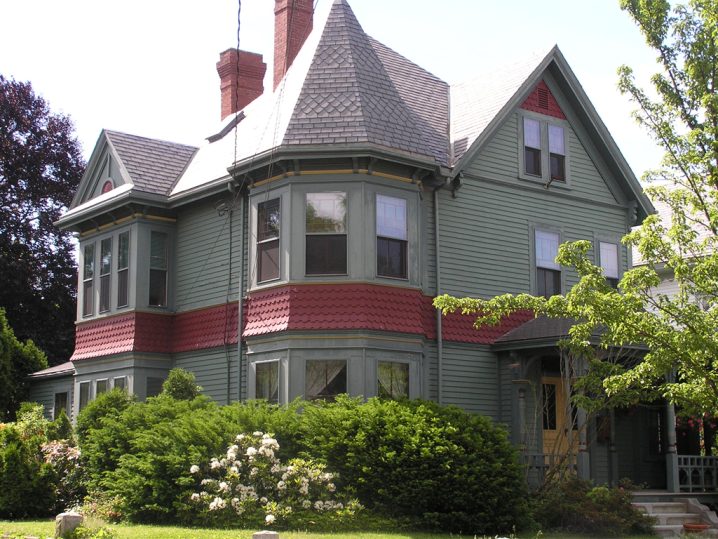
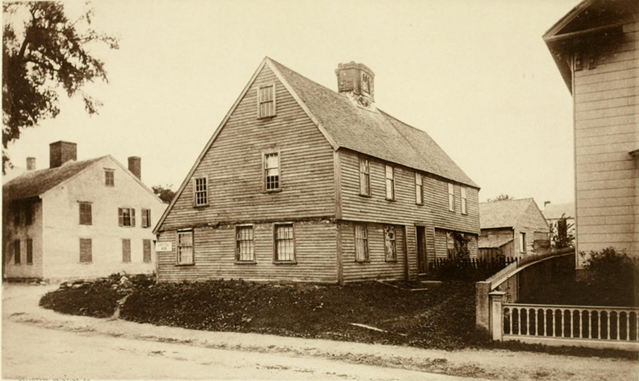
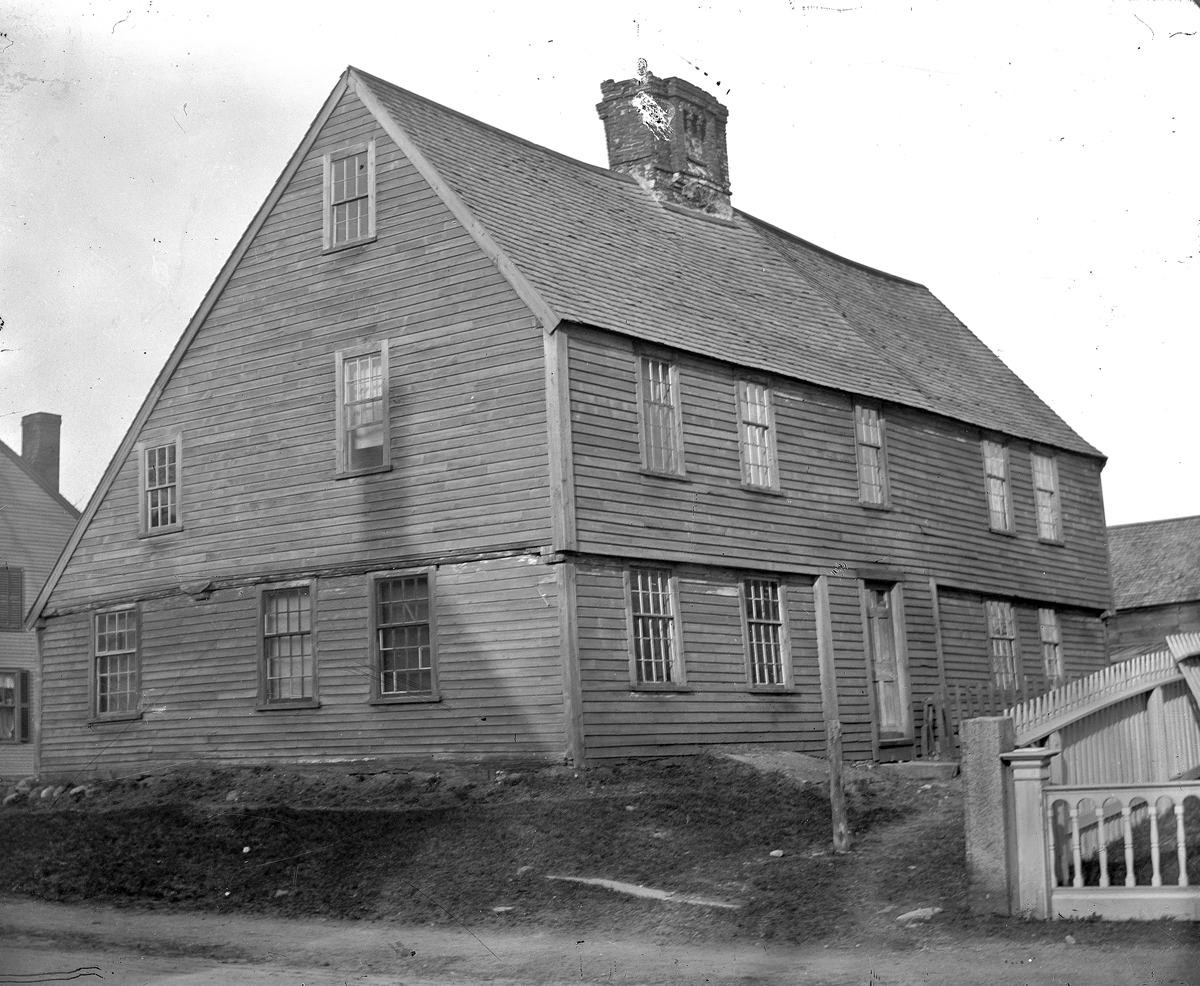
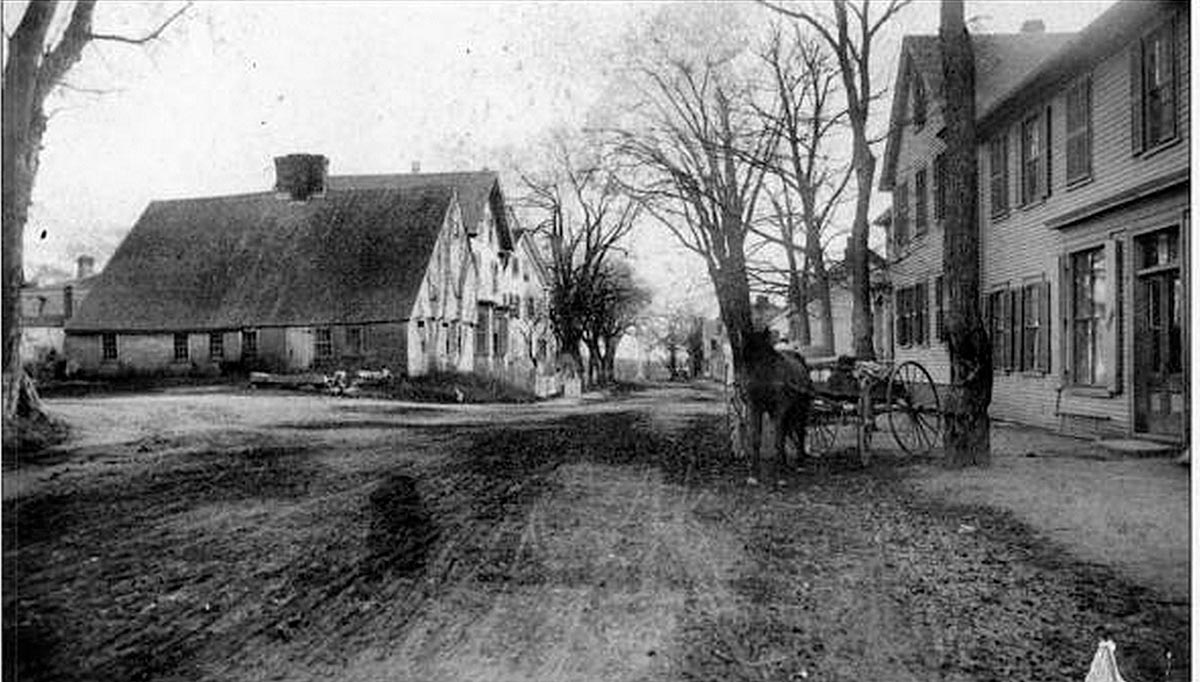
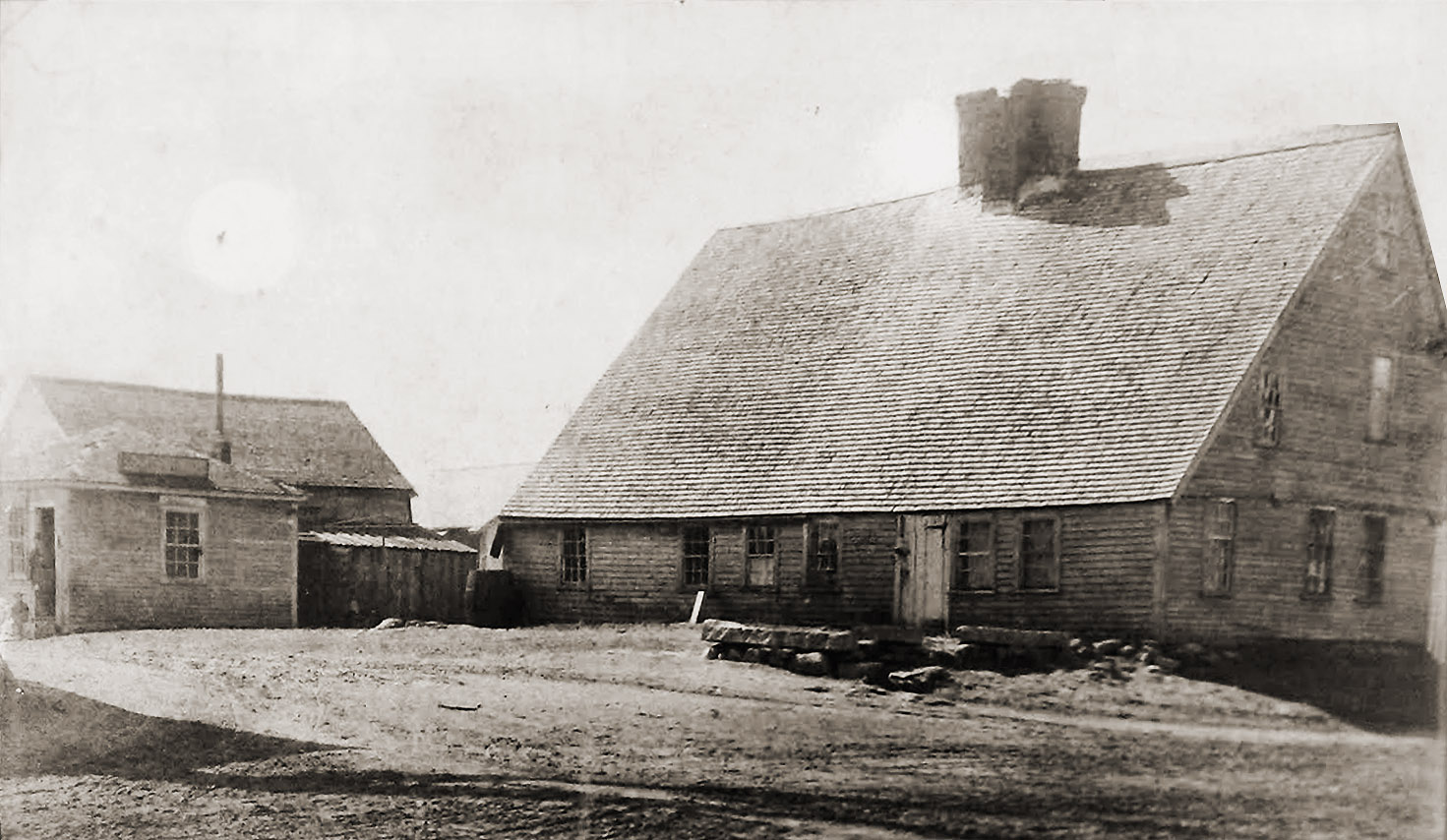
In 1888, Theodore Cogswell bought the ancient Dodge house and tore it down to build this Victorian “Painted Lady” for his daughter Emiline and her husband George Farley, owner of the Farley and Daniels shoe company.
George Edward Farley was born in 1855, the eldest son of Nathaniel R. and Emeline Caldwell Farley. He was one of the feoffees of the Ipswich grammar school and in 1907 was elected treasurer of the Ipswich Savings Bank. Both George and Joseph Farley had houses on this street and were descendants of General Michael Farley, an Ipswich representative to the Provincial Congress.
George and Emeline Farley had one child, Theodore Rogers Farley, who was born in 1894 and grew up in this home. He enlisted in the army on June 18, 1916, was commissioned 1st Lieutenant in 1917, and was called for service in WWI. After training in Bordeaux, his regiment went to the Verdun Sector.
On September 11th, his battery joined in the heavy fire that opened the St. Mihiel drive and advanced with the infantry. The unit was then ordered to Montfaucon, where it suffered many casualties, and at Gercourt pressed the enemy so hard that three batteries of German guns were captured and turned upon the retreating foe. Lieutenant Farley was lightly gassed in the sharp fighting in the Argonne Forest but was not disabled. The last three days before the armistice on November 11th, his guns supported the 104th Infantry, in which were several Ipswich boys.
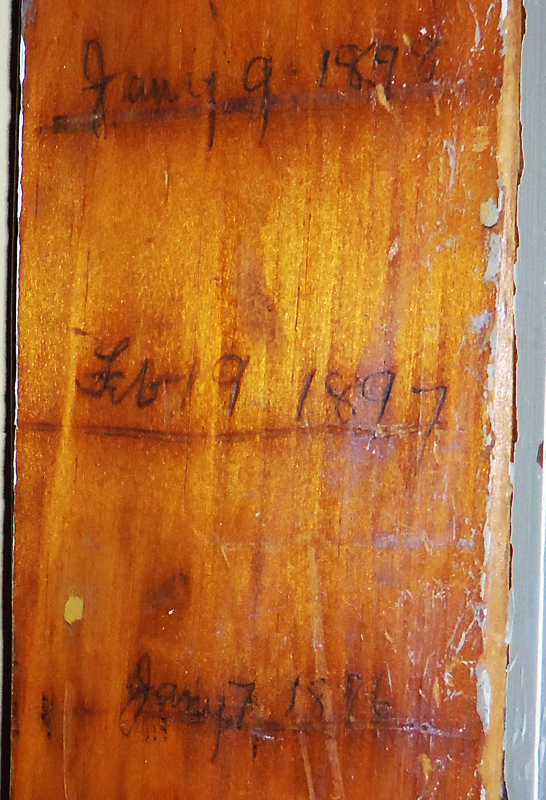
The following information is from the Publications of the Ipswich Historical Society.
Theodore Rogers Farley was born at Ipswich on Nov. 22, 1894. Son of George E. and Emeline F. Farley. Married Miss Gladys St. Clair at Buffalo, X. Y., August 4, 1917. He enlisted on June 18, 1916, in Buffalo, in the C5th Infantry, New York State Guards, and was stationed at Camp Whitman. On July 12, he was transferred to the 3rd Field Artillery and had been promoted to Sergeant when the regiment was sent to the Mexican border in September. Having passed a successful examination at Brownsville, Texas, he was commissioned 2nd Lieutenant on Jan. 23, 1917, and was then the youngest commissioned officer in the National Guard. He was commissioned 1st Lieutenant October 1, 1017, at Spartanburg, S. C, where lie remained until called for service in the War of the Allies. He was assigned to the 106th Field Artillery and went overseas on the Matsonia, landing at St. Nazaire. After a short period in a training camp near Bordeaux, his regiment went to the Verdun sector.
On September 11 at 11.59, zero hour, his battery joined in the heavy fire that opened the St. Mihiel drive and advanced with the infantry, stationed about a mile in the rear of their line. Then it was ordered to Montfaucon, where it suffered many casualties, and at Gercourt pressed the enemy so hard that three batteries of German guns, with their sights in place and their ammunition, were captured and turned upon the retreating foe.
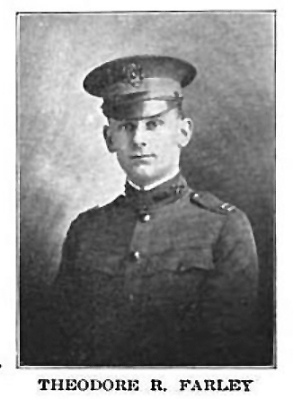
Lieut. Farley was slightly gassed in the sharp fighting in the Argonne Forest, but was not disabled, and was with his battery in action on the west and east banks of the Aleuse. The last three days before the armistice on November 11, his guns supported the 104th Infantry, which had a number of Ipswich boys. On February 20, 1919, he was promoted to the rank of Captain on the field of battle, in the face of the enemy, but he had been in virtual command of his company since June 1918. Discharged May 21, 1920.
 Historic Ipswich
Dear sir
I’m very impressed with your work.
do you know where I can find hi resolution of the Dodge House in Ipswich ?
I searched on every archive site online but couldn’t find any.
Best