
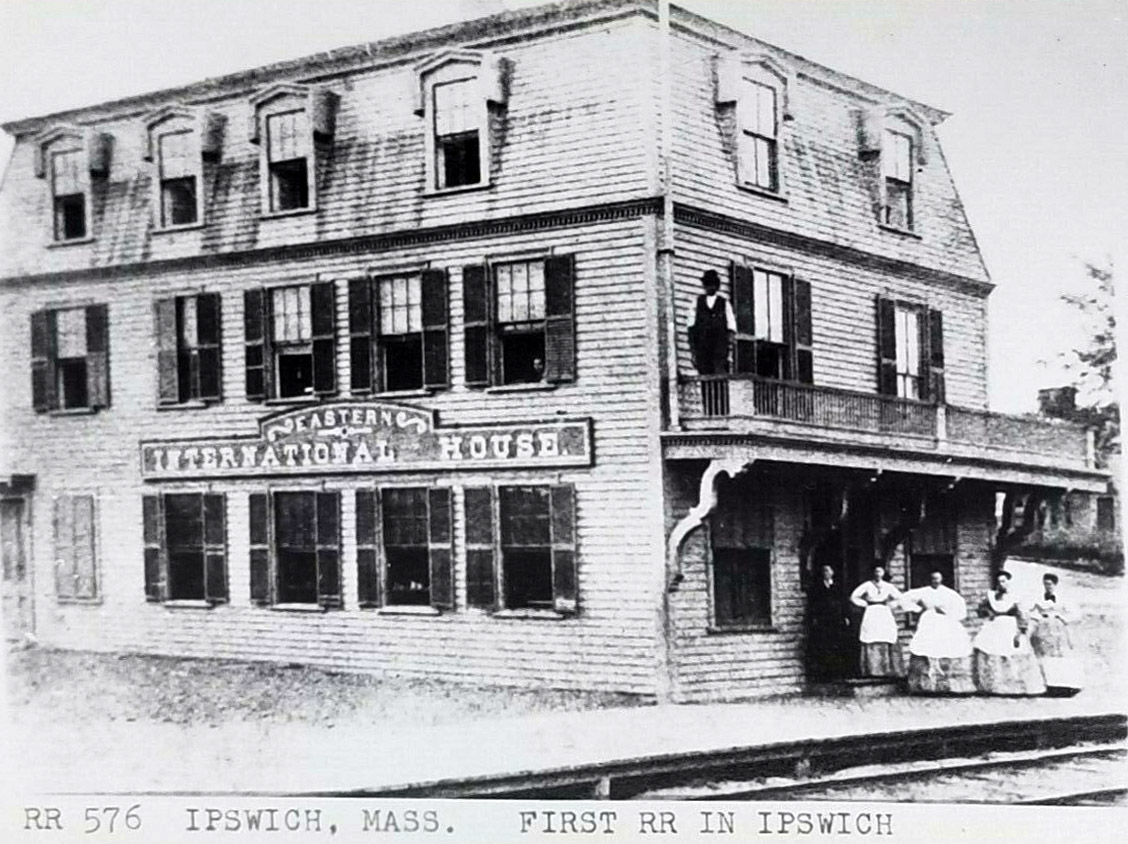
In 1866, the International House was built by the Eastern Railroad at Depot Square in Ipswich, near where the Institution for Savings now sits. The Eastern Railroad ran from Boston to Portland, continuing to Canada, and was the primary competition of the Boston and Maine Railroad until it was acquired by the B&M in the late 1800s to become the B&M’s Eastern Division.
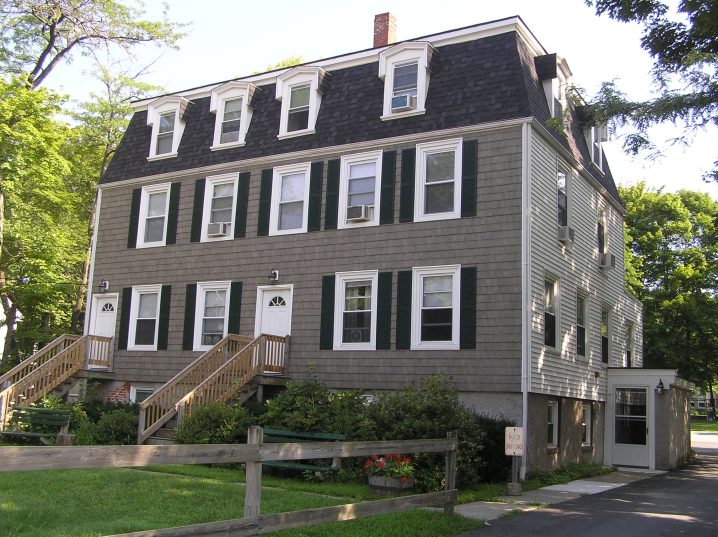
In 1882, the International Hotel was moved to the current location on Central Street to make room for a new depot. It continued to be operated as a hotel.
In the book, “The North Shore of Massachusetts, An Illustrated Guide,” written in 1894, we read the following:
- “The Eastern International House, kept by Mrs. Mary Smith, is on Central Street, just beyond the Manning school building. This is the principal hotel of the town. Mrs. Smith kept the dining rooms at the depot for many years, and it would be difficult to tell how many thousands of hungry travelers have received comfort at the old International. Who, that on a cold winter day has been warmed by that familiar notice, “hot muffins,” as he entered the room, will ever forget that happy moment! The house was moved to Central Street in 1880 and was entirely remodeled and refitted. It was again repaired and otherwise improved during the spring of 1881. A piazza runs entirely around the house, while the surrounding grounds are prettily laid out. The location is one of the best in town. In fact, few country villages are as fortunate as Ipswich in the matter of hotel accommodations. The International is not alone for transient guests but for those desirous of passing a week or two of the hot weather in the country.”
The 1910 Ipswich Village map shows the building on Central Street in the possession of F. L. Burke. He owned the Burke Heel Factory, which burned in 1933. Over the years, the building hosted the Carrollton Council, Knights of Columbus. and Boy Scout Troop 98. The building has been remodeled but still features the original “Second Empire” woodwork and mansard roof window details, a popular way of gaining floor space from attic areas in the Northeast from about 1865 until late in the 19th Century. It is easily recognizable from the earlier picture. In the 1970s and 80s, this building was known as the House of Hinlin.
 Historic Ipswich