

Jacob Brown is believed to have built this substantial house before 1832, as it appears on a map of that year. The porch is dominated by a central tower and flamboyant Queen Anne woodwork, added about 1890.
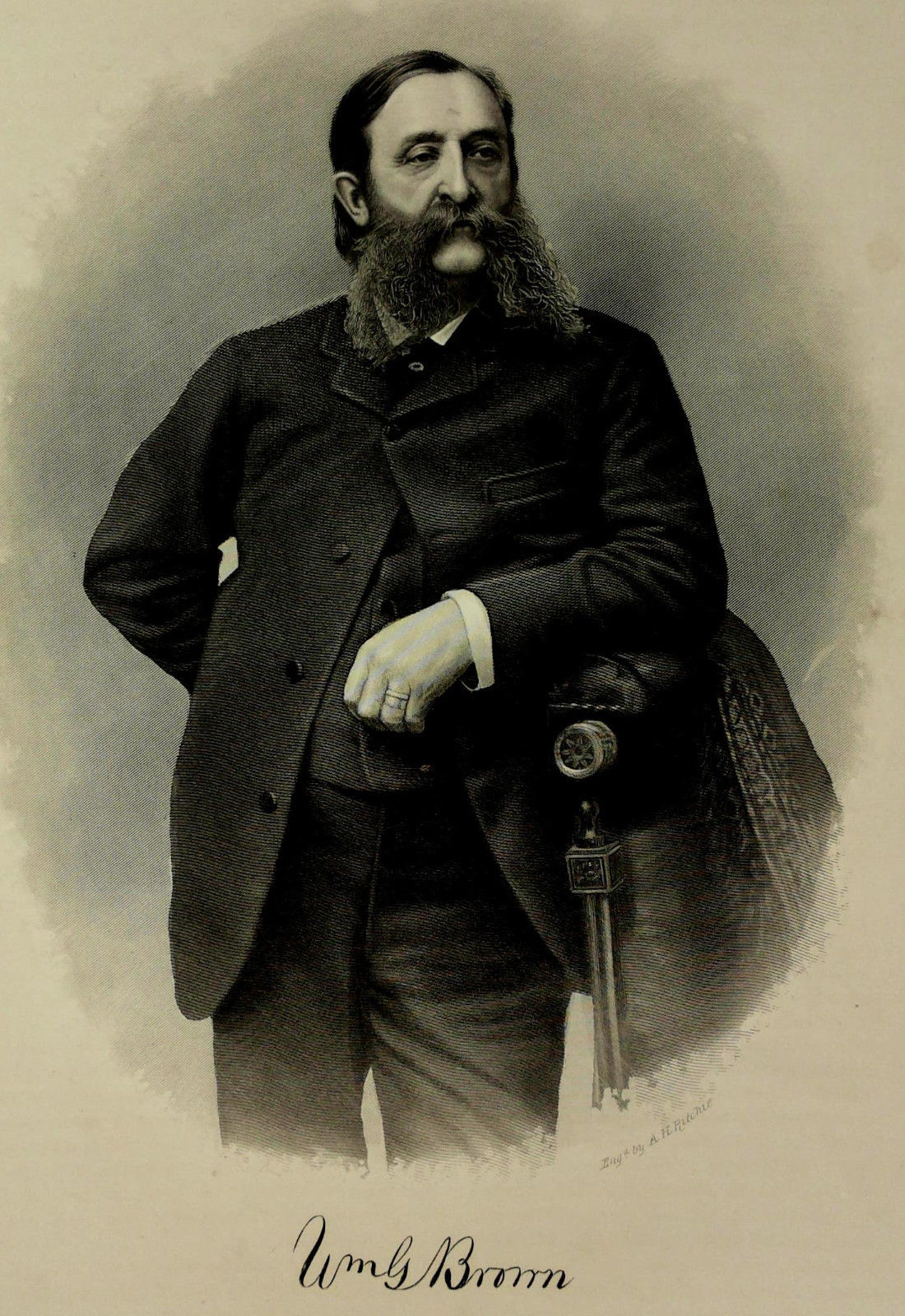
Jacob Brown was a farmer and a pioneer in the ice business. Brown owned a coal wharf and dispensed anthracite coal. For many years, he was the only dealer of ice and coal in Ipswich. After he died in 1863, the business was carried on by his son William Gray Brown, who also occupied this house after his father’s death and made the Victorian alterations. William, who was born in Ipswich in 1830, not only continued his father’s ice and coal business but also delivered lime, sand, and cement. He owned the Agawam House, a well-known hostelry, where he also operated a livery stable. The 1884 Ipswich map shows this house, owned by Mrs. J. F. Brown, and the house next door at 13 Topsfield Road, owned by William G. Brown. By 1910, this house was owned by C. Carter.
The house was constructed before the publication of the 1832 Ipswich map. The turret is a misguided Victorian-era addition to what was originally a typical late Federal or Greek Revival house, and is visible in the 1893 Ipswich Birdseye map. As late as 1980, the porch still had Victorian railings and trim.

Sources
- George E. Norris, Bird’s Eye View Map of Ipswich, 1893.
- T.F. Waters, Ipswich in the Mass. Bay Colony, Vol. II, p. 84
- MACRIS
 Historic Ipswich
