
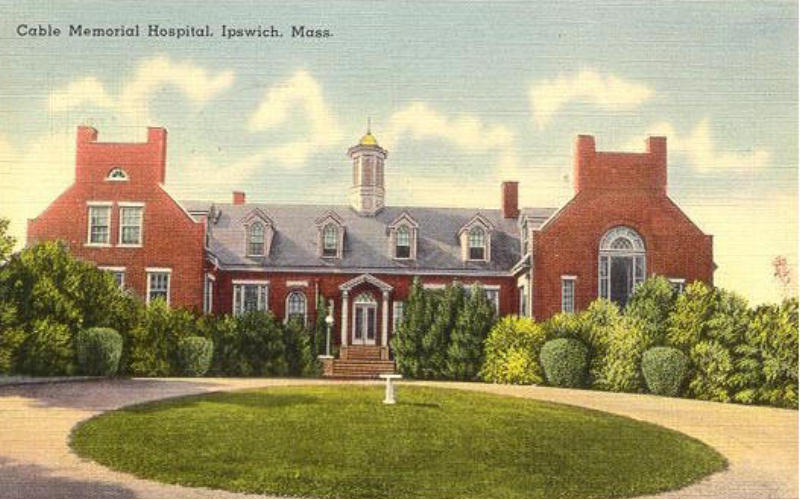
Construction of the Benjamin Stickney Cable Memorial Hospital was begun at the intersection of Essex and County Roads on the former Kimball estate, known in Colonial times as Windmill Hill. Richard Teller Crane Jr. purchased the land on which the building sits and made a further donation of $145,000 to the construction fund. The Georgian Revival building was designed by noted hospital architect Edward F. Stevens and is listed on the National Register of Historic Places. The facility was doubled in size in 1961, but was converted into residential units in 1987.
Communicable diseases were rampant in the United States before the 20th Century, and most communities relocated infected people to buildings designated as “pest houses.” In 1804, the Ipswich Pest House is reported to have been moved from Scott’s Hill to Town Farm Road. Ipswich residents needing treatment that a local physician could not provide went to hospitals in Danvers, Salem, and Beverly.
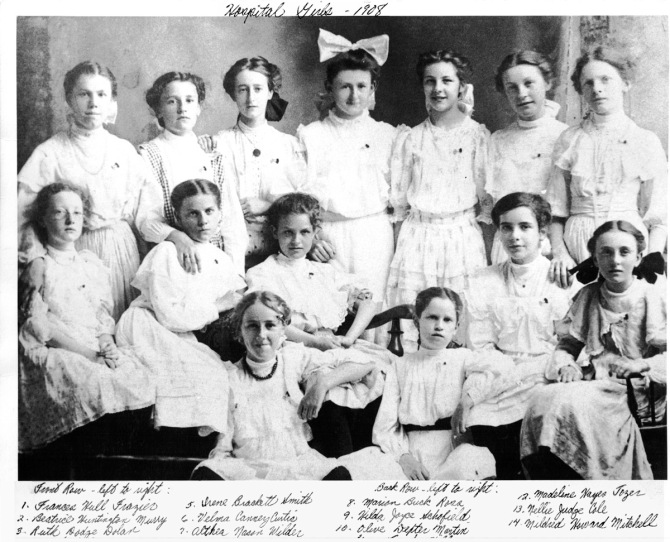
In 1908, several girls in the Ipswich eighth grade began a fundraising campaign to buy an ambulance and build a hospital in Ipswich. Their fundraising campaign continued for several years, even after their graduation from Manning High School as the class of 1912.
The Board of Health advised the town in 1909 that some action should be taken to provide a building for a Contagious Hospital, but the Town Meeting took no action. In the same year, the legislature mandated that cities and towns provide such hospitals for the care of tuberculosis and other diseases dangerous to public health. The appearance of diphtheria and scarlet fever among mill workers in 1913 necessitated the opening of a contagious hospital in September of that year at “111 Steep Bank.” The hospital was kept open for eleven weeks in 1912 and 7 weeks in 1913, with the cases being under the care of the town physician. (*I have been unable to determine the location of Steep Banks, referenced in the Ipswich Annual Report, 1913). The Board of Health opened Tuberculosis Camps at Town Farm and on High Street, and the polio epidemic was also becoming a concern.
The girls’ endeavor was advanced through the generosity of the owners of two of the town’s great estates. An ambulance was donated in 1910 by Mr. James H. Proctor to transport patients to the hospitals in Salem and Beverly. The Ipswich Hospital Corporation was incorporated on July 28, 1910, to build a hospital in town.
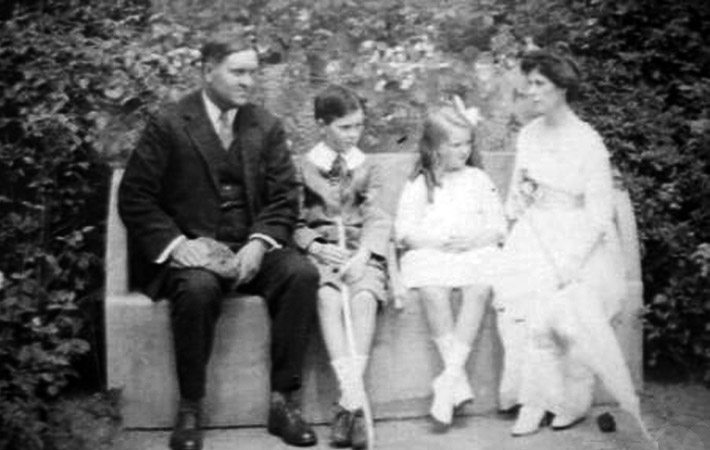
In 1915, Richard Teller Crane, Jr. was injured in an automobile accident when the car he was driving was struck by a car driven by a Milton resident at the intersection of the Newburyport Turnpike and Linebrook Rd. in Ipswich. One of his passengers was Benjamin Stickney Cable, president of the United Charities of Chicago and assistant Secretary of Commerce and Labor under President Taft. Mr. Cable was thrown from the car, which rolled over on him, and was taken to Dr. McGinley’s office in Ipswich, but he died from his injuries. Mr. Crane was convinced that had there been a hospital in Ipswich, his friend might have been saved. It is said that Crane was so distraught that he never drove again.


Dedication of Ipswich Hospital
from The Boston Medical and Surgical Journal, July – December 1917
The building of the Benjamin Stickney Cable Hospital at Ipswich, Mass, was dedicated on August 4, 1917, with appropriate exercises. This hospital is the gift of Richard T. Crane Jr. and Mrs. Crane to the town of Ipswich. It has an endowment of $30,000. It accommodates twenty patients, and for those who cannot pay, its services are free.
Mrs. Helen S Chapman, a graduate of the Massachusetts General Training School, is superintendent, and local doctors will be on the active staff. The trustees have offered the hospital to the government as a base hospital if the need arises, and the hospital can then be made to accommodate one hundred and fifty beds.
Herbert Warren Mason is president of the board of trustees, Rev. T. Waters’s secretary, and Howard N. Doughty treasurer. Physicians on the active staff are Dr. G.G. Bailey, Dr. Frank L Collins, George E. MacArthur and Dr. M.C. McGinley.
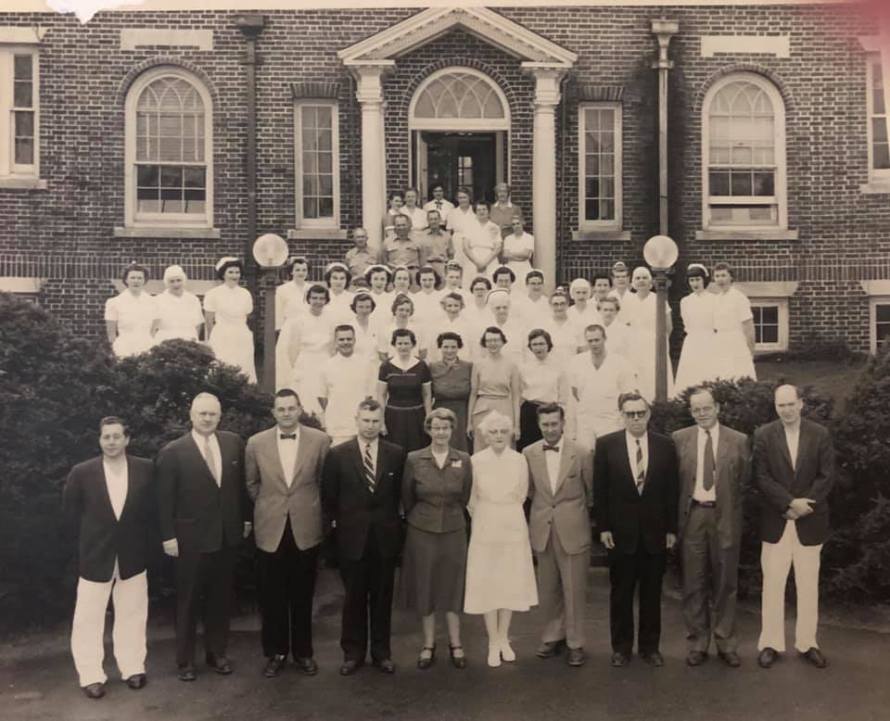
Cable Hospital physicians
from Municipal History of Essex County in Massachusetts, Volume 2
Dr. George G. Bailey, born in Rowley, graduated from the Massachusetts College of Pharmacy and the Harvard Medical School and established his Ipswich practice in 1897.
Dr. Michael C. McGinley was born in Adirondack, New York, and attended the University of Vermont and the Baltimore Medical College. In 1904, he relocated to Ipswich, where he became the town physician.
Dr. Frank L. Collins was born in Warren, Maine, and graduated from the medical school at Bowdoin College. He settled in Ipswich in 1916 after a year’s internship at Salem Hospital.
Dr. George E. MacArthur was born in Camden, Maine, and graduated from the University of Vermont. He settled in Ipswich in 1888, was a member of the Ipswich school committee for more than twenty years, and served as chairman of the Ipswich Board of Health and school physician.
Sources and further reading: MACRIS inventory forthe National Register of Historic Places
 Historic Ipswich
I have an apt in the original building. I feel like I am living history every day!
super interesting !