
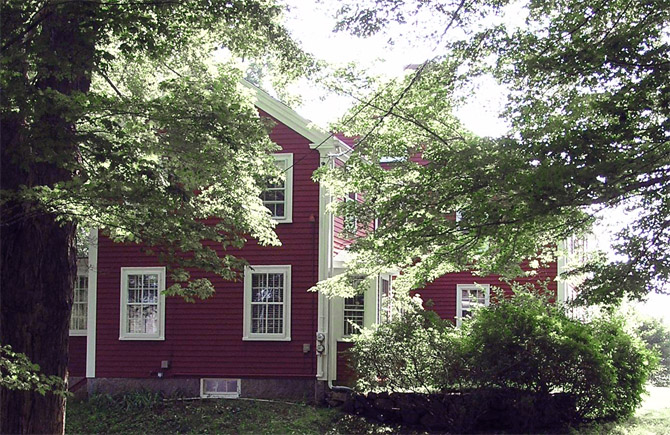
Elizabeth Brown, a descendant of the early Candlewood settler John Brown, was the wife of Captain Perkins and gained possession of this lot. In December 1779, their daughter, Elizabeth, became the wife of Joseph Brown, of the same family line, who built this house. Their son, Gardiner A. Brown, acquired possession and bequeathed it to his son, A. Story Brown.
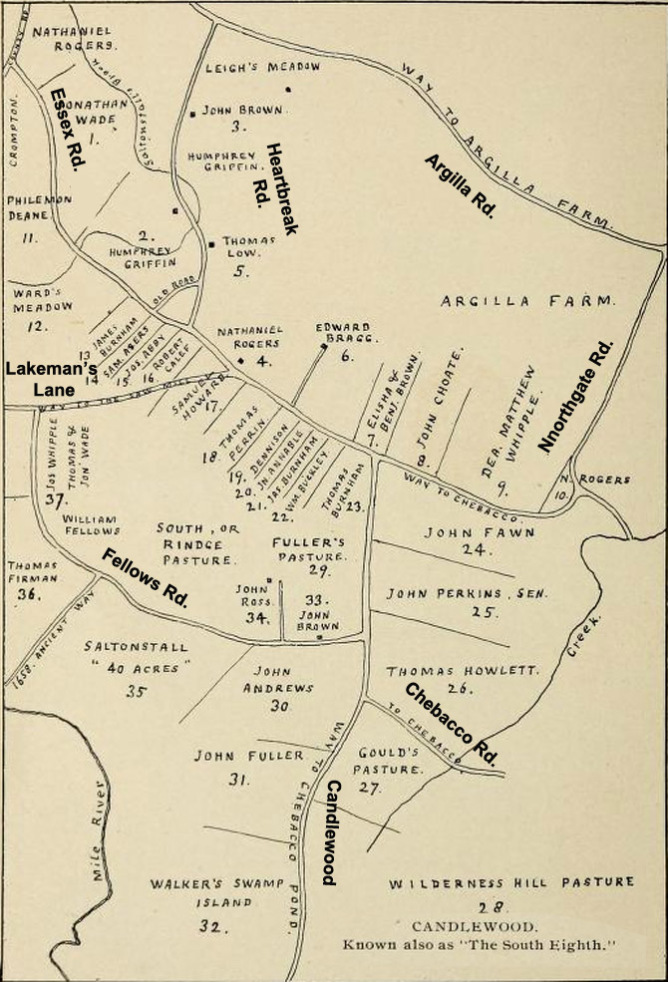
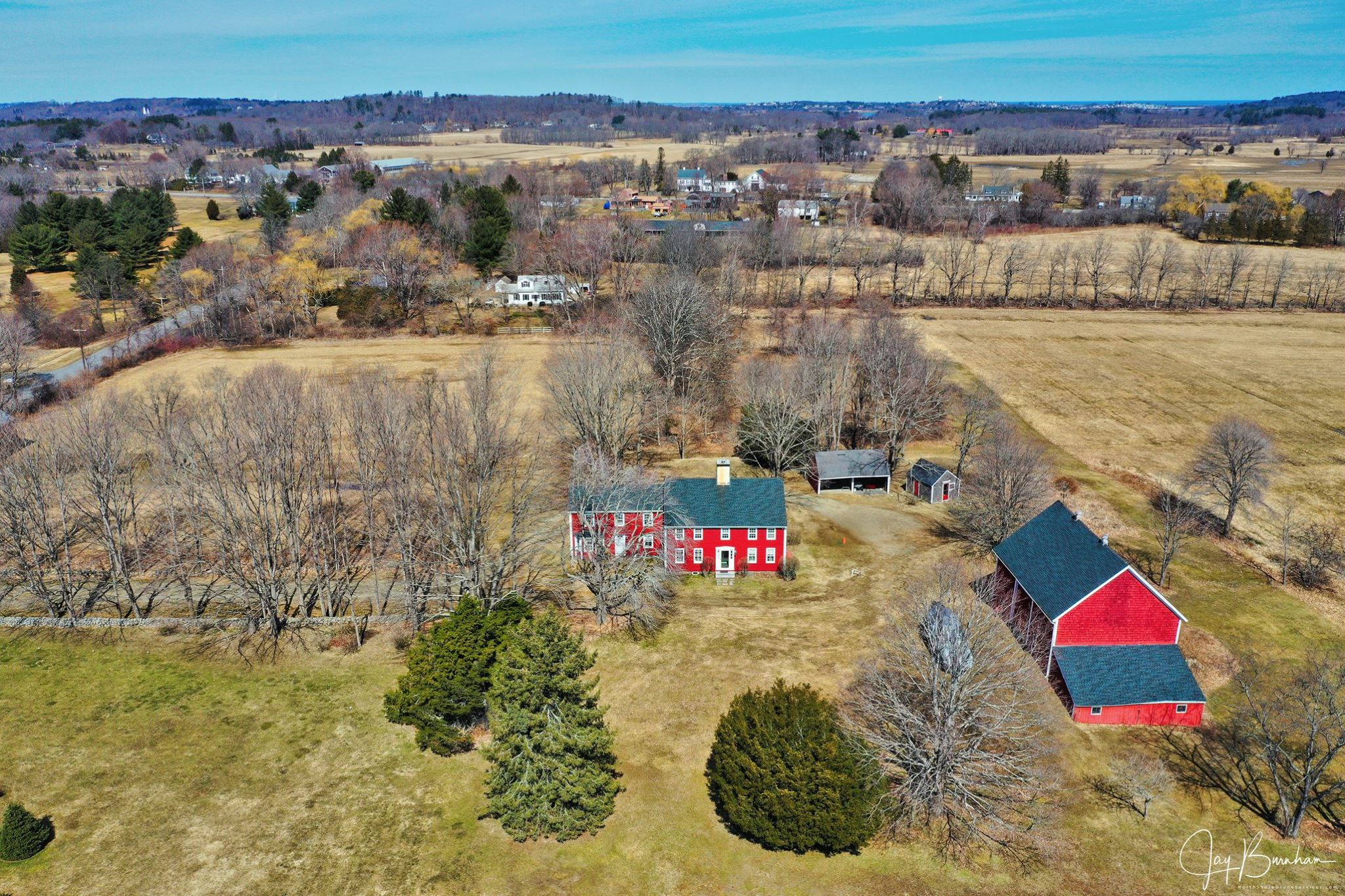
John Brown
John Brown Sr. is mentioned in the Ipswich Town Records as early as 1640, having first lived on Heartbreak Rd. Before 1660, Mr. Brown was on Fellows Lane at the corner of Candlewood Rd. Over the next 250 years, the Brown family extended their ownership of the finest farmland in Ipswich along the east side of Candlewood Rd. For over two hundred and forty years after John Brown bought the farm, it remained by inheritance in the Brown family through successive generations.
Thomas Franklin Waters wrote a history of the Brown family properties in his essay, “Candlewood, an Ancient Neighborhood in Ipswich, Massachusetts,” and in the two-volume book, Ipswich in the Massachusetts Bay Colony.”
“On the Candlewood road, leading toward Hamilton, large tracts of farmland were granted to the first settlers. John Fawn’s 25-acre lot, on the east corner of Essex Road and Candlewood Road, was sold to Robert Kinsman in 1652. He married Mary Boardman and proceeded to build his house and barns on the lot thus acquired.”
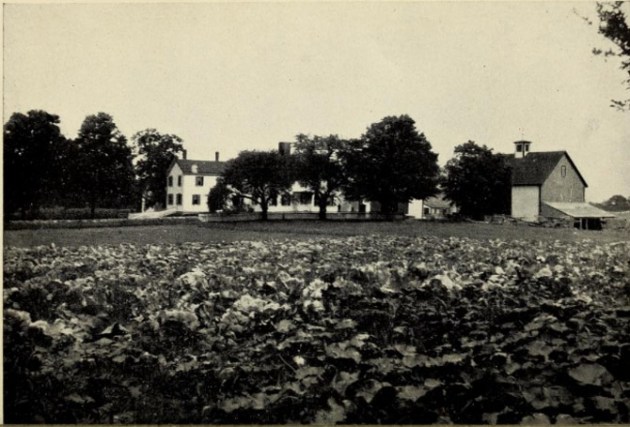
Adjoining the Kinsman farm, Thomas Howlett, one of the earliest settlers, acquired by grant and subsequent purchases, a hundred-acre farm. Thomas Franklin Waters recorded the transfer of the early Fawn and Perkins lots to Thomas Howlett of the property, presently known as Pony Express Farm:
“There was granted to Thomas Howlett thirty acres of upland and ten of meadow at the head of Chebacco Creek, the meadow lying on both sides of the Creek and the upland on the West side of the meadow.”
“Granted to John Perkins Senior, thirty acres of upland and ten of meadow lying towards the head of Chebacco Creek, having Thomas Hewlett’s Land on the Southwest.”
“Memorandum, that John Perkins the Elder hath sold unto Thomas Howlett a parcel of Land of forty acres more or less meadow and upland lying at Chebacco granted unto the sayde John Perkins in the year 1636, bounded on the Northeast by a parcel of Land formerly granted unto Mr. Faune…and partly also on the same side …by a parcel of Land granted unto the said Thomas Howlett at the Northwest end thereof butting upon a highway leading to Chebacky at the southeast.” (23d day of the second month, 1638″ (Town Records).
Thomas Bishop owned the Howlett farm as early as 1652. In 1684, a farm of 60 acres with a house and barn was conveyed to John Brown, and 36 acres with a house and barn to Sergeant John Choate. John Brown bequeathed his farm to his sons, James and William, in 1721.
Sources, and further reading:
- Ipswich in the Massachusetts Bay Colony
- Candlewood, an Ancient Neighborhood in Ipswich
- “Genealogical Record of the Descendants of John Brown” by Thomas Franklin Waters
- Descendants of John Brown of Ipswich by Sidney Perley
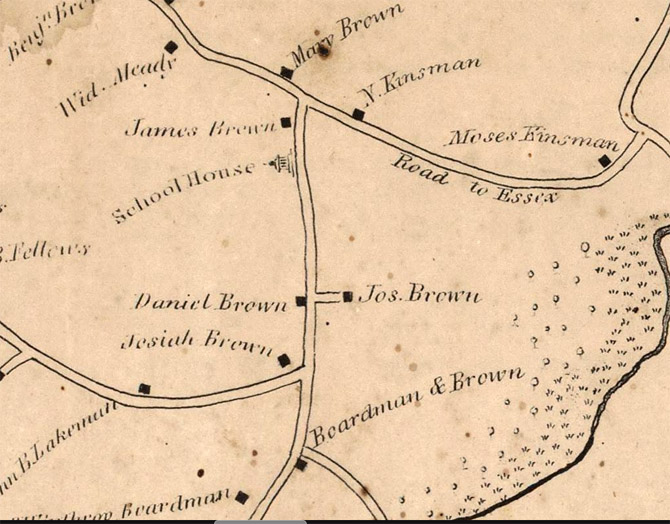
- 1832 Ipswich map
- Ipswich Vital Records: Births, Joseph Brown
- Ipswich Vital Records: Marriages, Joseph Brown
- Ipswich Vital Records: Deaths, Joseph Brown
- Essex Antiquarian: Joseph Brown6
- 56 Fellows Road, the Josiah Brown House (1812)
More homes of the Brown family in Ipswich
 Brown Stocking Mill Historic District - At the beginning of the 20th century, Harry Brown established a hosiery mill and laid out Brownsville Avenue with 22 workers houses just south of his factory, which were added to the National Registry of Historic Places in 1996… Continue reading Brown Stocking Mill Historic District
  92 Central St., the Abbie G. Lord House (1871) - The house at 90 Central St., was constructed after Andrew Geyer purchased the lot from Amos Smith in 1869. He sold the finished house to Abbie G. Lord in 1873, who sold to Maria J. Brown in 1897.… Continue reading 92 Central St., the Abbie G. Lord House (1871)
 86 County Road, the Burnham – Brown House (1775) - This house was built in 1775 on a lot on Candlewood Rd., probably by Thomas Burnham. In 1821 Nathan Brown bought the house from Oliver Appleton, and 3 years later he removed it to its present site on County Rd. Brown and others enlarged and remodeled the old Burnham House, but some 18th century features remain. … Continue reading 86 County Road, the Burnham – Brown House (1775)
  83 County Road, the Rogers-Brown-Rust House (1665-1723) - In 1836 the house and lot were conveyed to the South Parish as a church site. Asa Brown bought the house and removed it to its present location.… Continue reading 83 County Road, the Rogers-Brown-Rust House (1665-1723)
  82 County Road, the Brown – Manning House (1835) - The widow Judith Manning and single woman Mary Brown had the house at 82 County Rd. built for them in 1835. It remained in the family until the late 19th century.… Continue reading 82 County Road, the Brown – Manning House (1835)
  68 Essex Rd., the Levi Brown House (1832) - George W. Heard sold an acre and a half to Levi Brown, who had bought a half acre from his father, March 21, 1832. He built a dwelling and other buildings. … Continue reading 68 Essex Rd., the Levi Brown House (1832)
 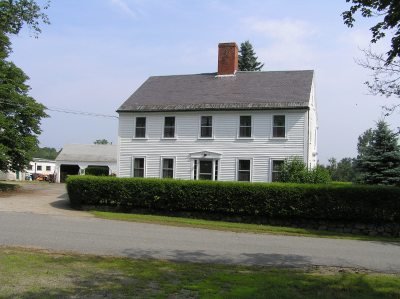 56 Fellows Road, the Josiah Brown House (1812) - The pasture land along Fellows and Candlewood Roads was purchased in the mid-17th Century by John Brown. His descendant Josiah Brown built this house in 1812. For over two hundred and forty years after John Brown bought the farm, it remained by inheritance in the Brown family through successive generations.… Continue reading 56 Fellows Road, the Josiah Brown House (1812)
  50 North Main Street, the James Brown House (1700 / 1721) - The James Brown house is part of a larger 1700 house that was divided into three houses in the 19th Century. The chamfered oak frame in the southern portion indicates late First period, while the northern section appears to date from the 1720s. The Morley house next door was separated and turned sideways. … Continue reading 50 North Main Street, the James Brown House (1700 / 1721)
  41 Washington Street, the George Brown House (1883) - John A. Brown sold this lot to George B. Brown in 1883 and he built a house shortly thereafter. Brown’s house is one of the few Stick Style Victorian homes in Ipswich. Brown built a grist mill, also located on Washington St., in 1881. He started with a single team and by 1888 employed 6 men. Brown was the first in the area to install a roller mill, which removed all foreign iron substances from the grain before it entered the mill… Continue reading 41 Washington Street, the George Brown House (1883)
  37 Washington Street, the Brown-Grossman-Doucette House (1884) - This house was built by 1884 by George V. Brown, one of several houses he built on a large parcel. Brown operated a large hay & grain business nearby at Brown Square and lived on Liberty Street. In 1916 this house was occupied by Charles (& Mary) Grossman and Denis (& Maggie) Doucette.… Continue reading 37 Washington Street, the Brown-Grossman-Doucette House (1884)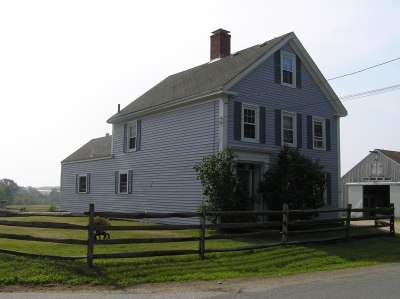
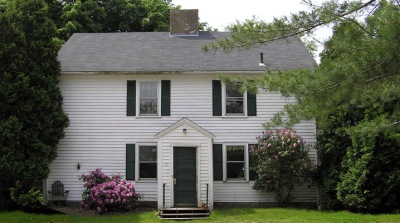 3 Candlewood Rd., the Brown-Whipple House (1812) - Joseph Brown built this house in 1812 as a dwelling for his son, James, and sold him the house and 3 acres, Dec. 23, 1817. The entire estate of Joseph Brown eventually was inherited by James. In 1852, D. F. Brown and the other heirs sold their interest to Hervey Whipple, who had married Martha P., daughter of James Brown, July 3, 1852. The heirs of Hervey Whipple still occupied into the 21st Century. … Continue reading 3 Candlewood Rd., the Brown-Whipple House (1812)
  27 High Street, the Edward Browne House (c. 1650-1750) - Edward Brown was the original owner of this site in 1639, and the east side of the present house is believed to have been constructed under his ownership around 1650 as a one-room over-one-room floor plan.… Continue reading 27 High Street, the Edward Browne House (c. 1650-1750)
  232 Argilla Road, the Brown-Crockett House (c. 1800) - John Patch died in 1799 leaving the Sagamore Hill farm to his grandson Tristram Brown, who built the dwelling, which he operated as a boarding house on the way to the beach. Dr. Eugene A. Crockett bought the property along with its dairy and hay farm in November 1897. … Continue reading 232 Argilla Road, the Brown-Crockett House (c. 1800)
  14 Liberty Street, the George B. Brown House (1898) - The elegant Victorian house at 14 Liberty Street in Ipswich was built between 1896-98 by George B. Brown, who owned a grain mill on Washington Street.… Continue reading 14 Liberty Street, the George B. Brown House (1898)
  14 Candlewood Road, the Joseph and Elizabeth Perkins Brown House (1779) - Elizabeth Brown, descendant of the early Candlewood settler John Brown, was the wife of Captain Perkins. In December, 1779, their daughter, Elizabeth, became the wife of Joseph Brown, of the same family line, who built this house.… Continue reading 14 Candlewood Road, the Joseph and Elizabeth Perkins Brown House (1779)
  13 Argilla Road, Thomas and Elizabeth Brown House (c. 1844) - The simple exterior is enlivened by Victorian elements, including two door hoods with elaborate scroll brackets decorated with incised floral motifs and sunbursts. Thomas Brown is the first known owner of the house (shown in a map dated 1856). … Continue reading 13 Argilla Road, Thomas and Elizabeth Brown House (c. 1844)
  117 High Street, Brown’s Manor (1886) - Abraham Lord sold 30 acres to George A. Brown on Nov. 6, 1886. The Browns built this imposing brick Mansard with white alternating quoins, a fine entrance porch, and a round-headed, double-leaf door.… Continue reading 117 High Street, Brown’s Manor (1886)
  11 Topsfield Road, the Jacob and Brown House (b. 1832) - William Gray Brown, occupied this house after his fathers death and continued his father’s ice and coal business. He also owned and operated the Agawam House hotel facing Meeting House Green. The turret and porch are Victorian additions.… Continue reading 11 Topsfield Road, the Jacob and Brown House (b. 1832)
  Historic Ipswich