

(Featured image: Engraving, “New England Kitchen Scene” from A Brief History of the United States by Joel Dorman Steele and Esther Baker Steele, 1885).
Read the letters of Joseph Hodgkins and his wife Sarah Perkins Hodgkins

In 1775, a company of Ipswich and Rowley Minutemen was formed with Captain Nathaniel Wade and Lieutenant Joseph Hodgkins of Ipswich in command. The Ipswich Company took part in the siege of Boston and the Battle of Bunker Hill on June 17, 1775.
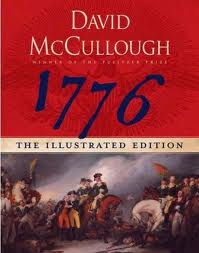
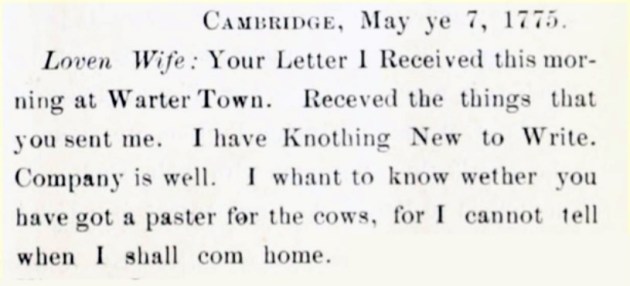
David McCullough, in his book 1776, wrote repeatedly of Joseph Hodgkins, who sent letters home from the Revolutionary War battlefronts to his wife, Sarah Perkins Hodgkins, longing for home and detailing the desperate troop conditions. From 1775 to 1778, Joseph wrote 86 letters; Sarah wrote twenty letters that survived, and at least 22 are known to have been lost.
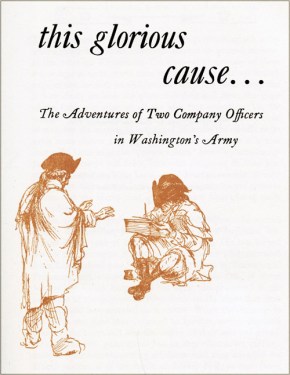
In 1958, Robert A. Lively finished the work begun by Herbert T. Wade, compiling the letters, as written, into his book, This Glorious Cause, the Adventures of Two Company Offices in Washington’s Army. The original letters are physically stored in the Phillips Library Repository at the Peabody Essex Museum.
Joseph Hodgkins

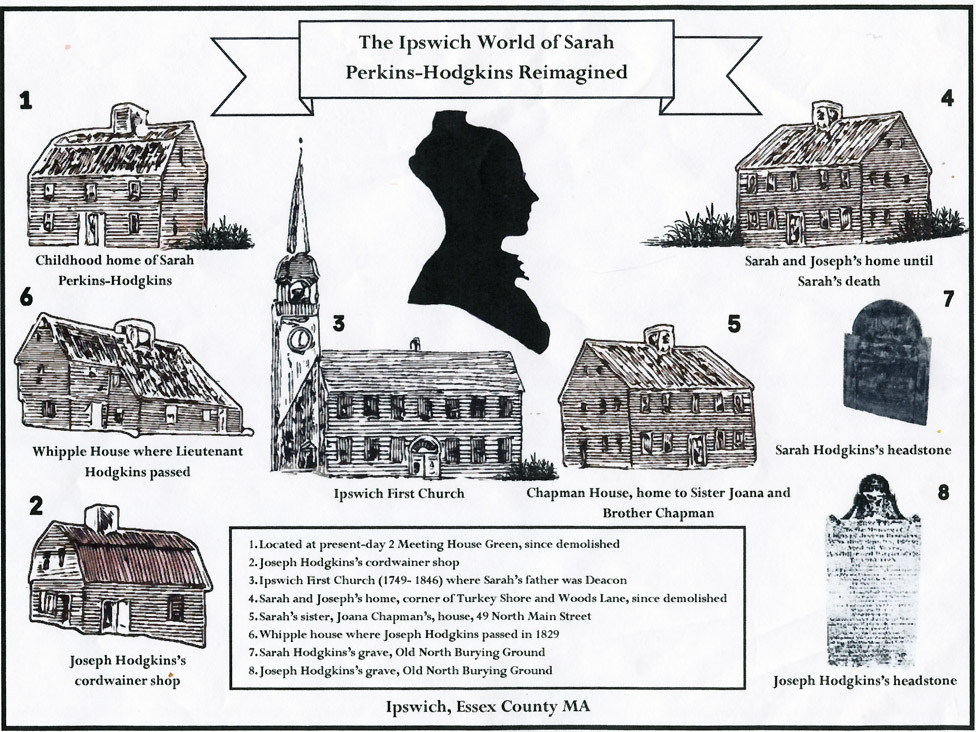
Joseph Hodgkins was born at Ipswich in 1743, son of Thomas and Hanna Hodgkins, grandson of Sgt. Thomas Hodgkins, and great-grandson of William Hodgkins, who arrived in Ipswich in 1665, and whose son William Jr. built the house at 76 East St., still standing. The house was sold to Archelaus Lakeman in 1745, two years after the birth of Joseph.
Thomas Hodgkins bought a 4-acre lot on the inside corner of Turkey Shore and Woods Lane in 1697, and it stayed in the family until 1741, when part of the lot was sold. The 4-acre lot is shown on a map by Thomas Franklin Waters. Joseph Hodgkins sold 2 acres of this lot to John Appleton in 1792, and in the deed, his wife gave up her right of dower, which was customary in deeds. The house is no longer standing. The deed is at https://salemdeeds.com/salemdeeds/bpimage.aspx?book=00156&page=034.
Joseph Hodgkins was widowed three times. He married first, Joanna Webber of Methuen, in 1764, who died in 1772 shortly after the death of their fifth child. He married second, Sarah, daughter of Dea. Aaron Perkins. He was married a third time to Lydia, widow of Elisha Treadwell and daughter of Dea. John Crocker. She died in June 1833. He had sixteen children, but only one survived him. He held several town offices and was the Representative from 1810 to 1816 inclusive. The active part that he took in the Revolutionary struggle gave him great respect. He was a Lieutenant in the Ipswich Company at the Battle of Bunker Hill. He was also in the battles of Long Island, Harlem Heights, White Plains, and Princeton. He was at the capture of General Burgoyne’s army. He succeeded Colonel Wade in the command of the Middle Essex Regiment.
Genealogy of Joseph Hodgkins
William Hodgkins, the settler →William Hodgkins and Grace (Dutch) Hodgkins →Thomas Hodgkins and Abigail (Hovey) Hodgkins → Thomas Hodgkins and Hannah (Warner) Hodgkins → Joseph Hodgkins
Sarah Perkins Hodgkins
In December of 17722, Joseph married 22-year-old Sarah Perkins, 9 years his junior, the daughter of Jeremiah Perkins and Joanna (Smith) Perkins, and granddaughter of Jacob Perkins and Sarah (Kinsman) Choate. With her marriage to Joseph, she became the stepmother of his only surviving child. The following year, their first child, Sally, was born, followed by baby Joseph in March 1775.
Sarah’s father, Jeremiah Perkins, bought the lot on the corner of North Main and Meeting House Green in 1726, and it stayed in the family until 1831, when it was replaced by the Joseph Farley House. This is where Sarah Perkins grew up. Joseph Hodgkins had a shoemaker’s shop on Meeting House Green near the location of the Rev. David Kimball House, very close to Sarah Perkins’ childhood home.
Sarah’s sister, Joanna, married John Chapman, who built the house at 49 North Main Street, which is still standing.
Genealogy of Sarah Perkins
John Perkins Sr. and Judith (Gater) Perkins → Quartermaster Sgt. John Perkins Jr. and Elizabeth (Unknown) Perkins → Corp. Jacob Perkins and Sarah (Kinsman) Choate → Jeremiah Perkins and Joanna (Smith) Perkins → Sarah Perkins
*Google map showing the locations of Joseph and Sarah Hodgkin’s home, and others mentioned in their letters. This map is a work in progress.
From the Phillips Library collection of the Peabody Essex Museum:
“Colonel Nathaniel Wade was born in 1750 in Ipswich, Mass. He worked in Boston as a carpenter and held six acres of land in Ipswich before serving in the American Revolutionary War. After enlisting in the Ipswich Minutemen on January 24, 1775, he was elected Colonel by his peers. He married Mary Foster (1760-1785) of Gloucester in 1777, and together they had three children. Wade served during the Boston, Long Island, Trenton, and Princeton campaigns. Wade’s last act as a militiaman included efforts to shut down Shay’s Rebellion. He married in 1788, Hannah Treadwell (1762-1814). Wade held various political offices in and for Ipswich following his service, chiefly as a member of the Massachusetts General Court, on which he served continually for 21 years. Wade died in 1826.
“Colonel Joseph Hodgkins was born in 1743. He worked as a shoemaker in Ipswich, Mass. Hodgkins married Joanna Webber (1741-1772) of Methuen in 1764, and only one of their children survived to adulthood, Joanna Hodgkins, born in 1765. In January 1772, Joseph’s wife died, and in December of that year, he married Sarah Perkins (1780–1803). Hodgkins served as Lieutenant to Colonel Wade during the War, as he was elected to this position by his peers following enrollment in the Ipswich Minutemen on January 24, 1775. He served during the Boston, Long Island, Trenton, and Princeton campaigns and ended his Revolutionary War service in June of 1779. Following the war, he worked in public service positions, including on the Massachusetts General Court and also as a keeper of the Ipswich County House. He ascended to the position of Colonel in the early 1790s. Sarah Hodgkins died in 1803, and he married Lydia Crocker Treadwell (1754-1833) for the third and final time in 1804. Hodgkins died in 1829.”
The Revolutionary War
Joseph Hodgkins signed articles of enlistment in the Provincial Service on January 24, 1775. Throughout the war, he maintained an ongoing correspondence by mail with Sarah and was torn between his allegiance to the cause and his concern for the welfare of his family back home. His letters to Sarah acted as a conduit to the Ipswich community, providing news about their husbands and sons, but also brought the dreadful truth of the early losses to the people of Ipswich. By the spring of 1778, Sarah was “very Low in Spirits” but always ended her letters “I remain your Loving wife till death.“
Col. Hodgkins finally returned home in June 1779, followed by Col. Nathaniel Wade a few months later. On October 19, 1781, General Cornwallis surrendered to the American commanders at Yorktown, ending the last big battle of the Revolutionary War. When news reached Ipswich, there was great cheering, and bells rang on Meetinghouse Green.
Joseph and Sarah Hodgkins’ home was at the intersection of Turkey Shore and Woods Lane, but it is no longer standing. After Sarah’s death, Joseph married the widow Lydia, the widow of Elisha Treadwell, who was a part-owner of the Whipple House, which at that time was on Union St, and is where he lived for the remainder of his life. Col. Joseph and Lydia Hodgkins deeded the land and house at 7 Summer St. to Stephen Low and his wife, Sarah, on March 29, 1825 (238: 22, 23). Col. Hodgkins was the last of the Hodgkins family to own the house at 48 Turkey Shore Rd. The deed included 1 1/4 acres, a house, a barn, and a joiner’s shop when he conveyed it to David Andrews on April 23, 1813.
Read the letters of Joseph Hodgkins and his wife Sarah Perkins Hodgkins
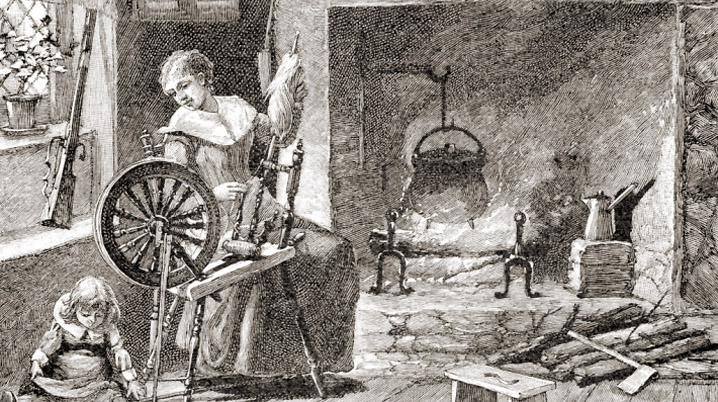 The Letters of Joseph Hodgkins and Sarah Perkins Hodgkins - (Featured image: Engraving, “New England Kitchen Scene” from A Brief History of the United States by Joel Dorman Steele and Esther Baker Steele, 1885) Ipswich soldier Joseph Hodgkins sent letters home from the Revolutionary War battlefronts to his wife, Sarah Perkins Hodgkins, longing for home and detailing the desperate troop conditions. From 1775 to 1778, Joseph wrote… Continue reading The Letters of Joseph Hodgkins and Sarah Perkins Hodgkins
 Original Documents
- This Glorious Cause: The Adventures of Two Company Officers in Washington’s Army by Herbert T. Wade and Robert A. Lively. Peabody Essex Museum. E W121W 1958. Essex County Collection
- Wade and Hodgkins Papers, 1775-1855, 1879-1927. Peabody Essex Museum. MSS 806. Phillips Library Stacks.
- George Norton Diary, 1777-1778. Peabody Essex Museum Phillips Library Stacks Call Number: DIA 124. The diary of this Ipswich, Mass. man details one year of daily life, including notations on the Revolutionary War and accounts.
Sources and further reading:
- This Glorious Cause, the Adventures of Two Company Offices in Washington’s Army; 1958 by Herbert T. Wade & Robert A. Lively
- Antiquarian Papers
- The Wartime Letters of Joseph and Sarah Hodgkins | Journal of the American Revolution by John L. Smith, Jr.
- The Revolutionary War Service of Sarah Hodgkins of Ipswich (1775-1779) by Richard S. Tracey
- Ipswich In the Massachusetts Bay Colony, Volume II, Chapter XIV, “The Revolutionary War” by Thomas Franklin Waters
- Children of Jeremiah and Joanna (Smith) Perkins page 42 in the Descendants of John Perkins of Ipswich, Massachusetts
- Publications of the Ipswich Historical Society, Issues 8-15. History of the Whipple House
- Publications of the Ipswich Historical Society, Issues 16-20. History of the Whipple House
- Google Books: Antiquarian Papers Vol. 1: Hodgkins letters
- Archive.org: Antiquarian Papers (misc. letters as written): May 7, 1775,Jan. 7, 1776, Apr. 2, 1776, Art. 10, 1776, May 2, 1776, June 10, 1776, July 22, 1776, Aug. 12, 1776, Sept. 5, 1776, Sept. 15, 1776,Dec. 3, 1776, Dec. 20, 1776, Dec. 31, 1776 – Oct. 13, 1777
- Nathaniel Wade and his Ipswich Minutemen by Herbert Wade
- “So I must be contented to live a widow…” The Revolutionary War service of Sarah Hodgkins of Ipswich (1775-1779), Historical Journal of Massachusetts, Summer 2002 by Tracey, Richard S.
- A people’s history of the American Revolution by Ray Raphael
- Nathaniel Wade and his Ipswich Minutemen by Herbert T. Wade
- Journal of the American Revolution: The Wartime Letters of Joseph and Sarah Hodgkins
- Ipswich in the Massachusetts Bay Colony, Vol. I: 1633-1700 by Thomas Franklin Waters
- Waters: Houses and Lands
- Ipswich in the Massachusetts Bay Colony, Vol. II: 1700-1917 by Thomas Franklin Waters
- Thomas Franklin Waters: “The Breach with Great Britain”
Genealogical Resources:
- Descendants of John and Judith Gator Perkins of Ipswich
- Early Inhabitants of Ipswich, Massachusetts, by Abraham Hammatt.
- The family of John Perkins of Ipswich
- The Perkins Family of Ipswich Massachusetts (An American Family History)
- William Hodgkins, Early Inhabitants of Ipswich by Abraham Hammat
- Publications of the Ipswich Historical Society: The Whipple House (ownership by Joseph Hodgkins)
- Historic Houses of Ipswich, Massachusetts
Related posts:
 Ipswich and the American Revolution: The Breach with Britain - In John Adams’ 1765 opposition to the Stamp Act, he referenced the citizens of Ipswich who resisted a tax imposed by the Crown in 1687. An Ipswich town meeting on August 11, 1768 approved of "the Conduct of those Gentlemen of the late House of Representatives...when it was required of them at the Peril of their Political Existence." The Town meeting on Dec. 28, 1772 supported the rights of the Colonists as British subjects, and established a Committee of Correspondence to communicate resistance with the Committees of other towns. Delegates from throughout Essex County arrived in Ipswich on Tuesday, Sept. 6, 1774, and by unanimous vote, bound themselves together in establishment of the Provincial Congress for the common safety.
… Continue reading Ipswich and the American Revolution: The Breach with Britain
Ipswich and the American Revolution: The Breach with Britain - In John Adams’ 1765 opposition to the Stamp Act, he referenced the citizens of Ipswich who resisted a tax imposed by the Crown in 1687. An Ipswich town meeting on August 11, 1768 approved of "the Conduct of those Gentlemen of the late House of Representatives...when it was required of them at the Peril of their Political Existence." The Town meeting on Dec. 28, 1772 supported the rights of the Colonists as British subjects, and established a Committee of Correspondence to communicate resistance with the Committees of other towns. Delegates from throughout Essex County arrived in Ipswich on Tuesday, Sept. 6, 1774, and by unanimous vote, bound themselves together in establishment of the Provincial Congress for the common safety.
… Continue reading Ipswich and the American Revolution: The Breach with Britain  Ipswich and the American Revolution, Part 2: The Revolutionary War - On June 10th, 1776, the men of Ipswich, in Town-meeting assembled, instructed their Representatives, that if the Continental Congress should for the safety of the said Colonies Declare them Independent of the Kingdom of Great Britain, they will solemnly engage with their lives and Fortunes to support them in the Measure.… Continue reading Ipswich and the American Revolution, Part 2: The Revolutionary War
  Historic Ipswich

One of my 5x great grandfathers (private, then later Corp. Israel Manning) served in Captain Hodgkins’ company starting Apr. 1, 1777. Captain Hodgkins’ letters to his wife have given me incredible insight into what my ancestor experienced during part of his military service. I’m extremely grateful to Sarah for keeping her husband’s letters and you for making them available so that I could read them almost 250 years later. Thank you so much.