

With excerpts from an article by the New England Historical Society:
The first Great Migration to New England began in 1628 when King Charles granted a new charter to the Massachusetts Bay Colony. Between 1629 and 1640, 20,000 people crossed the Atlantic. By 1650, a steady stream of Boston-bound ships began to leave Ireland filled with redemptioners – indentured servants who agreed to near-slavery for seven years in exchange for passage, food, shelter, and clothing. That stream would become a flood. Between the years 1652 to 1659, it is estimated that well over 50,000 men, women, and children of Irish descent were forcibly transported to British imperial colonies to serve as indentured labor.
The ship Goodfellow transported conquered Irish, Scottish, and child prisoners repeatedly to Virginia and Boston to sell as human cargo to any inhabitants who wanted slaves or servants. In 1653, the Goodfellow under Captain George Dell arrived with a large number of Irish “emigrants”, and many Scotch people had been taken prisoners at the battle of Dunbar.
By 1790, there were 400,000 Americans of Irish birth or ancestry out of a population of 3.9 million. When the Irish famine ships arrived in Boston in the 1840s, tens if not hundreds of thousands of immigrants from Ireland had already made their mark on New England.
In the 1840s and 50s, Irish refugees sailed to America in the wake of the Potato Famine to seek employment. Thomas Franklin Waters wrote,
“The first variant element was the incoming of the Irish, driven from their homes by oppressive land laws, the failure of crops, which resulted in severe famine, and general unrest. They adhered, naturally, to the Catholic religion, but they spoke our language and were readily assimilated as citizens. A priest from Newburyport ministered to them spiritually until 1871, when Rev. William. H. Ryan of Beverly took charge. In 1873, they had increased sufficiently in numbers and strength to erect a church edifice which was dedicated Nov. 9, 1873.”
By 1860, over half the population of New England mill towns was foreign-born. A large percentage of them were Irish, who became victims of the same hostility that they had experienced from the English when, in 1854 the anti-immigrant Know Nothing Party swept Massachusetts elections. Originally named the “Native American Party” it was organized with the intent of preventing Irish Catholic immigration, fed by unfounded fears that the nation would soon be controlled by Irish bishops obedient to the Pope.
With no love of the English, Irish immigrants and their descendants played major roles in achieving American independence. More than 1,200 officers in the American armies came from Ireland, including Gen. John Sullivan, later a New Hampshire governor. The muster roles of the Continental Army and Navy were filled with Hibernian names. There were 695 soldiers with the surname Kelly who fought against the British. So many fought, in fact, that one British general testified at the House of Commons that ‘half the rebel Continental Army were from Ireland.’
Sources:
- Robinson, Christy K, Slavery and child-trafficking in New England, 2013
- New England Historical Society: Before the Famine Ships, The Irish Made Their Mark in New England
- O’Dwyer, George F, Catholic World: The Irish in Ipswich 1630 – 1700
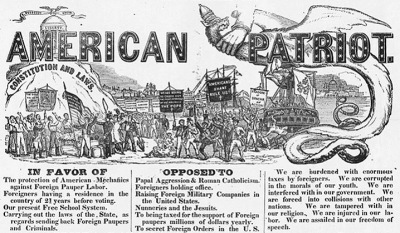 1854: Anti-immigrant Know Nothing Party Sweeps Massachusetts Elections - Prejudice disguised as patriotism repeats itself in American politics. In 1854, the "Know Nothing" American Party formed in opposition to Irish immigration and carried local elections in New England communities. They swept the state of Massachusetts in the fall 1854 elections but were defeated two years later.… Continue reading 1854: Anti-immigrant Know Nothing Party Sweeps Massachusetts Elections
 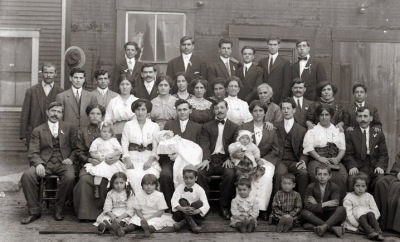 A Town of Immigrants - Puritans founded Ipswich during the “Great Migration” of the early 17th Century. Many residents of the town descend from immigrants who arrived in the late 19th and early 20th centuries to work in the mills.… Continue reading A Town of Immigrants
  Boston Irish Long Remembered the 1834 Charlestown Convent Fire - Featured image: Woodcut image of the 1834 burning of the Ursuline Convent in Charlestown, Massachusetts. Catholics and fair-minded Bostonians were dismayed by the tragedy. by Helen Breen This week marks the anniversary of the burning and ransacking of the Ursuline Convent in Charlestown, Massachusetts on August 11, 1834. The outrage would smolder in the memories of… Continue reading Boston Irish Long Remembered the 1834 Charlestown Convent Fire
  How the Irish Made Their Mark in New England - From the New England Historical Society: Over 50,000 men, women, and children of Irish descent were forcibly transported to British imperial colonies to serve as indentured labor. By 1790, there were 400,000 Americans of Irish birth or ancestry out of a population of 3.9 million. … Continue reading How the Irish Made Their Mark in New England
  Samuel Symonds, Gentleman: Complaint to Salem Court Against His Two Servants, 1661 - Philip Welch and William Downing, both children, were kidnapped from Ireland in 1654, and sold to Samuel Symonds in Ipswich. After 7 years they refused to continue working on his farm and demanded their freedom. They were arrested and brought to trial.… Continue reading Samuel Symonds, Gentleman: Complaint to Salem Court Against His Two Servants, 1661
  The Courtship and Marriage of William Durkee and Martha Cross - William Durkee, an indentured Irish Catholic, and Martha Cross, the daughter of Robert Cross of Chebacco parish were servants in the household of Thomas Bishop in Ipswich. When Martha became pregnant by William, they were both presented for fornication. The court ruled that they be punished and get married.… Continue reading The Courtship and Marriage of William Durkee and Martha Cross
  Historic Ipswich
“Scotch-Irish” are not Irish…they are the Scots forced to move to Northern Ireland (Ulster) by the English…