


Born in Boston on November 10, 1859, Charles Wendell Townsend, M.D. was attracted by the natural beauty of Ipswich. He built a summer house on a ridge overlooking a wide expanse of salt marsh with an open sea to the east. From here he wrote a number of books, including Beach Grass, Sand Dunes and Salt Marshes, and Birds of Essex County. Wendell was a charter member of the Essex County Ornithological Club, a member of the Boston Society of Natural History, and at the time of his death, a director of the Massachusetts Audubon Society.
Sand Dunes And Salt Marshes is available through Amazon.com
Thanks to Kellscraft.com for text and pictures from Wendell’s book, Sand Dunes and Salt Marshes, which you can read with the following links, or by flipping the pages in the embedded book below.

- SAND DUNES
- TRACKS AND TRACKING
- VEGETATION IN THE DUNES
- LAND BIRDS OF THE DUNES
- SWALLOW ROOSTS AND SWALLOW MIGRATION
- WATER BIRDS SEEN FROM THE DUNES
- THE HARBOR SEAL
- SALT MARSHES
- SALT MARSHES — THEIR PAST AND FUTURE
- BIRDS OF THE SALT MARSHES
- THE HORSESHOE CRAB AND OTHER DENIZENS OF SAND AND MUD
- BIRD GENEALOGY
Related Posts
 The Ipswich Visitor Center - 1820 Hall-Haskell House sits at the heart of our town on the Center Green, in one of several national historic districts in town.… Continue reading The Ipswich Visitor Center
  The Crane Estate at Castle Hill (1928) - Castle Neck and Crane Beach have a long history of ownership by several families before being granted by the Cranes to the Trustees of Reservations.… Continue reading The Crane Estate at Castle Hill (1928)
 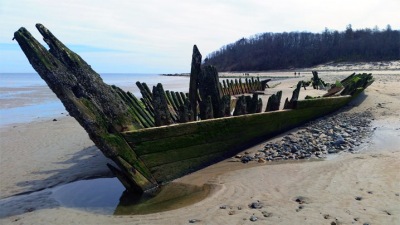 Wreck of the Ada K. Damon - Christmas, 1909 witnessed the heaviest storm in many years. The ship was wrecked during the captain's first trip for a load of sand from the plentiful supply on Plum Island.… Continue reading Wreck of the Ada K. Damon
  The Missing Dunes at Castle Neck - The "Great Dune" at the end of Castle Neck has disappeared, the point is retreating, and the opening to Essex Bay between Castle Neck and Wingaersheek Beach has widened.… Continue reading The Missing Dunes at Castle Neck
  Wreck of the Edward S. Eveleth, October 1922 - In October 1922, the sand schooner Edward S. Eveleth rolled over when a wave rushed over her deck and pushed her onto the edge of Steep Hill Beach. Filled with sand, each tide buried her deeper. Her remains were visible for several years. The skeleton of the hull is just off-shore a short distance from the wreck of the Ada K. Damon.… Continue reading Wreck of the Edward S. Eveleth, October 1922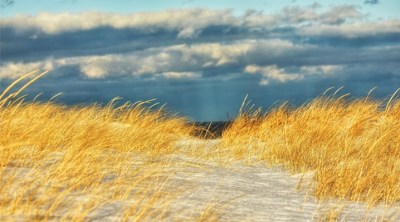
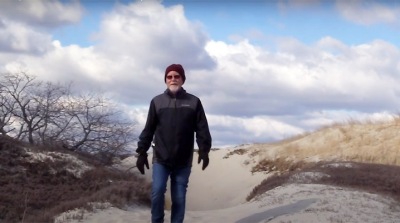 Destination Ipswich: A Walk in the Dunes - Gordon Harris kicks off the first episode of Ipswich ICAM'S "Destination Ipswich" series with a walk in the sand dunes at Castle Neck.… Continue reading Destination Ipswich: A Walk in the Dunes
 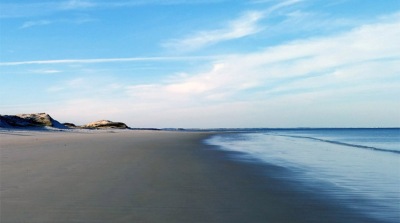 Crane Beach - Crane Beach belongs to the Trustees of Reservations and is part of the historic Crane Estate. The property includes Crane Castle, miles of shoreline, and over 5 miles of marked trails through the dunes at Castle Neck and Steep Hill Beach, open year-round.… Continue reading Crane Beach
  Choate Island and Rufus Choate - Choate Island was originally known as Hog Island, and is the largest island in the Crane Wildlife Refuge and is the site of the Choate family homestead, the Proctor Barn, the White Cottage, and the final resting place of Mr. and Mrs. Cornelius Crane. There are great views from the island summit of the Castle Neck dunes and Plum Island Mount Agamenticus in Maine.… Continue reading Choate Island and Rufus Choate
  Charles Wendell Townsend, Ipswich Naturalist - Charles Wendell Townsend, M.D. was attracted by the natural beauty of Ipswich. He built a summer house overlooking a wide expanse of salt marsh with open sea to the east. From here he wrote a number of books, including Beach Grass, Sand Dunes and Salt Marshes, and the Birds of Essex County. … Continue reading Charles Wendell Townsend, Ipswich Naturalist
  The Fox Creek Canal and Robinson’s Boatyard - The Fox Creek Canal is the oldest man-made tidewater canal in the United States, dug in 1820. In 1938 it was dredged to accommodate ship-building at Robinson's Boatyard, where small minesweepers were constructed for World War II.… Continue reading The Fox Creek Canal and Robinson’s Boatyard
 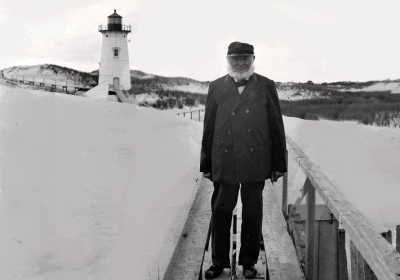 The Ipswich Lighthouse - In 1881, a 45-foot cast iron lighthouse was erected at Crane Beach, replacing an earlier structure. By 1913, the sand had shifted so much that the lighthouse was 1,090 feet from the high water mark. Use of the light was discontinued in 1932 and in 1939 the Coast Guard floated the entire lighthouse to Edgartown on Martha's Vineyard.… Continue reading The Ipswich Lighthouse
  Life at an Estuarine Front - Shorebirds congregate and drift in rafts along the estuarine front where the mixing of fresh and saltwater stirs up small fish, crustaceans, and other aquatic organisms.… Continue reading Life at an Estuarine Front
  The Shipwrecks at Ipswich Bar - The Ipswich Bar has a long history of tragic shipwrecks. Its swift currents and shallow waters are especially dangerous during storms, and many ships have gone aground. The hull of the Ada K. Damon sits on Steep Hill Beach.… Continue reading The Shipwrecks at Ipswich Bar
  The Farm at Wigwam Hill - Symonds Epes bought a large tract in 1726 and built a substantial farm and orchards at Wigwam Hill, named for a group of destitute Indians who briefly camped there. The protecting pitch pines were later cut for lumber, and the farm became a large dune.… Continue reading The Farm at Wigwam Hill
 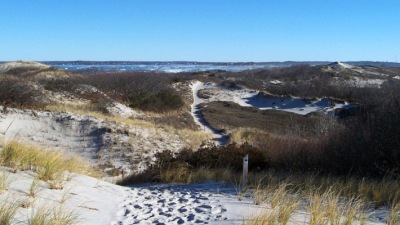 Winter Walks in the Dunes at Castle Neck - Crane Beach and all of Castle Neck are protected by the Trustees of Reservations. Pitch pine and scrub oak rise from the masses of marsh grass, sage green hudsonia and dune lichen lining the trails that wind through the dunes.… Continue reading Winter Walks in the Dunes at Castle Neck
  Historic Ipswich
As an Ipswich native with Choate relatives by marriage, I was fascinated by this new old information about Castle Neck and the beach area. Thanks.