
The Freeman Family
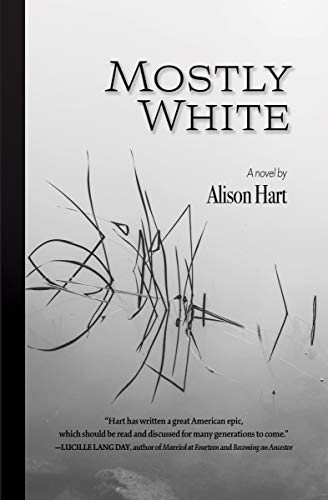
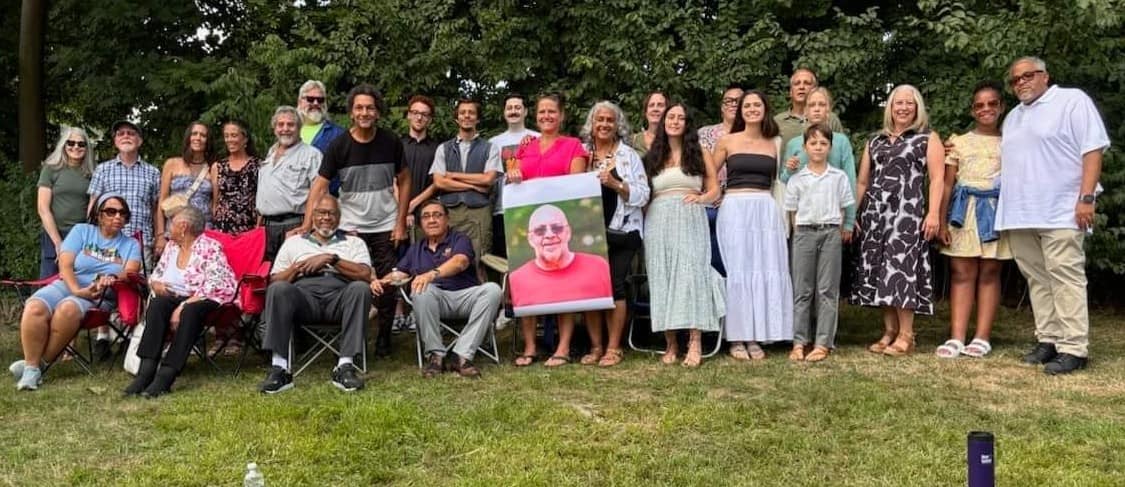
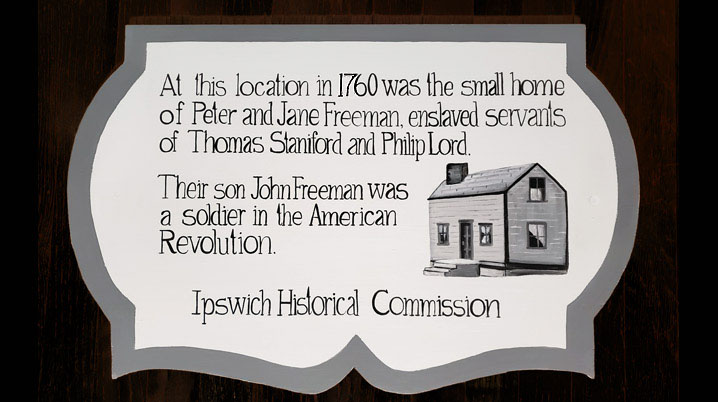
Author Bruno Giles traced the descendants of this Freeman family in “Peter and Jane Freeman of Ipswich, Massachusetts, and their Descendants in Maine: An African-American Family” published in the New England Historical and Genealogical Register in 2009. In 2021, Lisa Terrell and Alison Hart, who are descended from the Freemans, contacted Ipswich local historian Gordon Harris, who researched where the Freemans had been enslaved, where they lived, and their son John Freeman’s service in the Revolutionary War. Read the entire story. In 2022, the Essex National Heritage Area offered to create a plaque for John Freeman as a stop on their new Black Revolutionary Heritage Trail. The project, event, and signage have been endorsed by the Ipswich Historical Commission and Select Board. A temporary plaque has been installed at the intersection of East and Spring Streets, and an Ipswich Historical Commission plaque was installed at the location of the Freeman home on nearby Highland Avenue.
Peter and Jane Freeman
Peter Freeman was a black enslaved man in Ipswich born around 1726 and was a servant of Thomas Staniford who owned a mansion that stood at today’s 2 East Street. His marriage intentions to his wife were recorded in Ipswich on May 11, 1751, as “Negroes, servants belonging to Mr. Staniford and Mr. Lord.” Jane was baptized at Ipswich, on April 3, 1743, as a “servant to Philip Lord,” who had married Thomas Staniford’s sister Tryphena.
Peter and Jane Freeman had six children:
- Peter Freeman, was baptized on Oct. 20, 1751. He died before June 1757 when a second son named Peter was baptized.
- Jane Freeman, baptized on Dec. 17, 1752; married Phillip Wilson.
- Lydia Freeman, baptized on June 28, 1755; married Caesar Freeman.
- Peter Freeman, baptized on June 25, 1757; died before 16 May 1762 when the third son Peter was baptized.
- John Freeman, baptized on July 29, 1759; married Leah Griffin.
- Peter Freeman, baptized May 16, 1762; m. Margaret Bowers.
The Freeman home
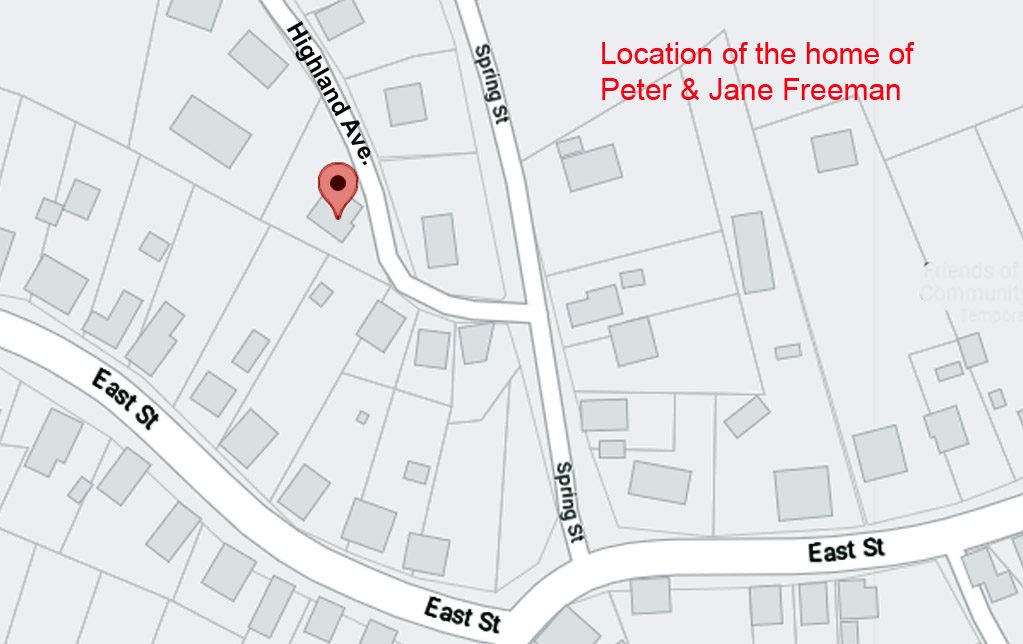
On Aug. 12, 1760, Peter Freeman, “Laborer”, purchased a small dwelling on a quarter acre near today’s 6 Highland Ave. (It is unknown when Staniford manumitted the Freeman family). In 1778, following the death of Peter Freeman, his wife Jane married Anthony Griffin of Brunswick, Maine. Her sons John and Peter Freeman Jr. joined their mother in Brunswick a few years later. Their Ipswich lot with a house and barn was sold on April 27, 1784.
John Freeman, a Revolutionary War soldier
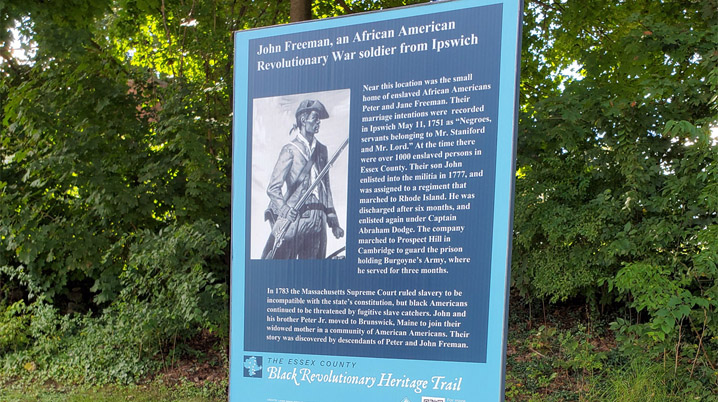
In 1832, John Freeman, now eighty-two years old and living in Bath, Maine, appeared in court there to obtain benefits for his Revolutionary War service while the family was in Ipswich. Freeman testified that his first tour of duty was in Tiverton, Rhode Island in 1777 to prevent the British from moving northeastward. During this period, British General John Burgoyne’s army was taken. After a brief return to Ipswich, Freeman enlisted again in the militia under Captain Abraham Dodge of Chebacco Parish & was marched to Prospect Hill in Charlestown (today part of Somerville) to guard Gen. Burgoyne’s captured troops.
The Maine court’s decision read: “John Freeman, aged 84 years, of York, July 4, 1820. Private in the Mass. line (Co. & Regt. not given). Original declaration made Apr. 13, 1818. Pension No. 8,585. Affirmed. Family: Esther Freeman, wife, aged 82.” (*Maine Genealogy Archives). John Freeman died in Maine in 1835.
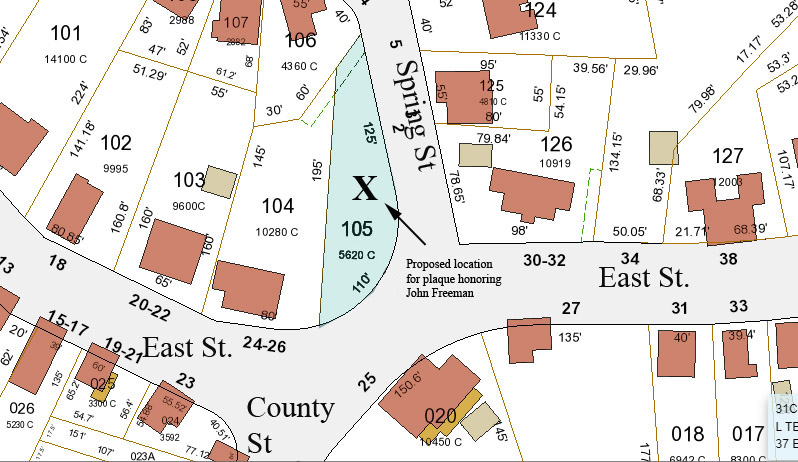
Plaque honoring John Freeman at the intersection of East and Spring Streets

The Essex National Heritage Area obtained a grant to create and install several plaques for the Black Revolutionary Heritage Trail in Essex County and plans to post one of the plaques on the town-owned lot at 2 Spring St. The Ipswich Historical Commission is a co-sponsor. Permission to post the plaque at this location was granted at a meeting of the Ipswich Select Board on Monday evening July 10, 2023. A temporary plaque was installed at that location by Ipswich local historian Gordon Harris.
 Historic Ipswich