
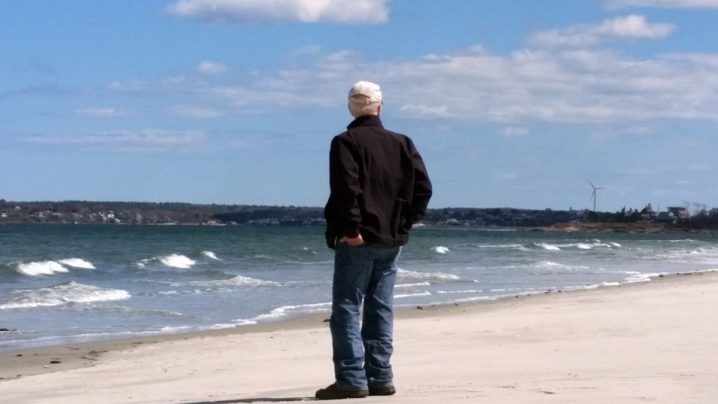
By Gordon Harris
Thomas and Martha Lake Harris were among the early Puritan settlers of Rowley, and relocated to Ipswich in 1652. Within a century there were dozens of Harrises living in Ipswich. Their grandson Sgt. John Harris transported accused witches to Salem in 1692. The Harrises were carpenters by trade, and Ipswich is full of First Period houses constructed by them.
I’m also a carpenter, but not one of those Harrises. It’s more likely that my Harris ancestors were shipped to Georgia when the British were emptying their debtor prisons. As the story goes, my great-great-great-grandfather Henson Harris was a Confederate soldier from Georgia who went to Mississippi to fight the Yankees, some of whom were Harrises from Ipswich.
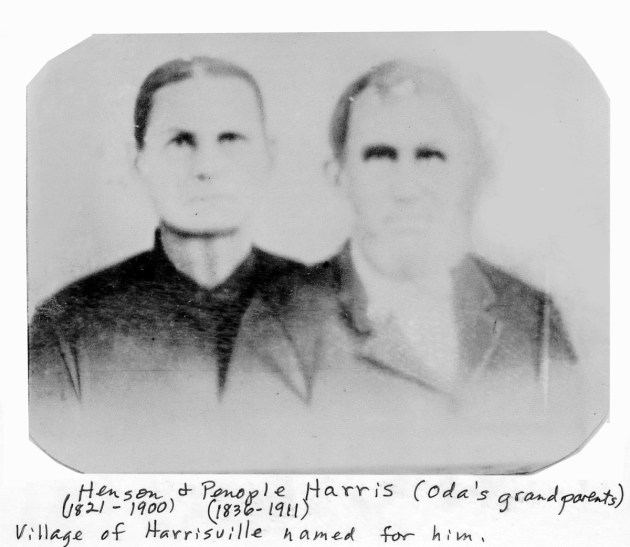
While he was in Mississippi, Henson met a strong young woman named Penelope Gill, whose ancestors had also come from Georgia. He returned to Mississippi after the war; they married, settled in Buck Short, and renamed it Harrisville. That’s where my father was born. I loved visiting my grandparents’ dogtrot house, with the barn, cows, chickens, Ol’ Ned the horse, fields to run and play in, and a three-hole outhouse with a stack of old Sears and Roebucks catalogs. Grandpa drove a worn out old pickup, and Grandma could be found in the kitchen churning butter. But they were worn out, and I don’t recall seeing them smile very much.
My mom was from Batesville, Mississippi, the casket capital of America. Her father, on a dare, had jumped over a grist mill when he was a kid, and was the town’s bitter one-legged alcoholic tax assessor during the few short years I knew him. My parents met and married after the Second World War. My father had flown 20 missions over Germany, and promised God to become a minister if he survived. The Harrises and McBrooms were all Methodists in good standing.
Growing up in Mississippi, we were told that our state was the best place in the world. We were living in a small town called Calhoun City when John Kennedy ran for president, and there were fascinating images on television of their beautiful family jogging on the beach at Hyannis. I’d never seen anyone jogging, and the Massachusetts mystique seemed exotic and exciting. My dad was one of the few Mississippi white folks who voted for Kennedy. Soon, like the Rev. Martin Luther King, I had a dream, but mine was to escape Mississippi and move to Massachusetts.
The next year, our family moved to Tupelo, known for being the first town to get electricity from TVA, being destroyed by a tornado in 1936, and as the birthplace of Elvis Presley. There were folks from “up North” running the factories, and it seemed like they were from another planet. My English teachers were witches, except for the pretty one, but they taught me how to write and “speak proper.” Tupelo is where we lived for the next ten years, and for many years afterwards, I called it my hometown.

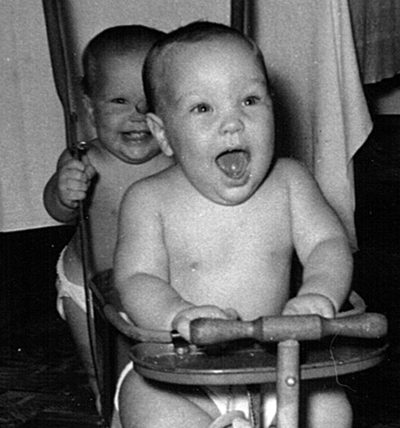
It’s too bad about Tupelo. They built a gigantic Walmart shopping center five miles north of town, and downtown became a ghost of its former self, a story told in most towns in America. My twin brother Glenn still lives near Tupelo, and he worked for Walmart before he retired. Now he’s a volunteer at the Natchez Trace headquarters for the National Park Service. He’s one of the kindest people you will ever meet. Sometimes, but not too often, I remind him that he voted for Donald Trump twice.
When I was a teenager, I “felt the call” at a revival meeting to be a Methodist minister like my Dad. I took the course of study very early, and by the time I was in college, I was a licensed Methodist lay minister. Two years later, I was a junior at Millsaps College in Jackson, following exactly in my father’s footsteps, serving as a student pastor in a tiny Methodist church in a rural Delta crossroads named Ebenezer. The Methodists there must have been desperate. I was too young and clueless to be a good pastor, but everybody said I was a good preacher, until I “changed.”

On May 15, 1970, forty Jackson police officers marched on Jackson State College and opened fire on black students. Two died and several were injured. The white folks in Ebenezer saw me on television the next day in a protest, arm in arm with black students, and the next day, I was advised to leave town by the one person who showed up for Sunday service. And I had started to grow my hair much too long for a good Methodist preacher boy.
So I was finished with religion, and I found a summer job at a YMCA camp in Becket, Massachusetts. In September, I returned to Jackson, graduated from Millsaps, and married a free-spirited hippie girl named Judy. We had neither a plan nor a clue, so we headed up north to the Berkshires and rented an apartment in Great Barrington, Massachusetts, mostly because that’s where the fan belt broke on my old Rambler, and we were running low on cash.
We practiced Living on the Earth from a book we read by Alicia Bay Laurel, and I grew my hair longer, or at least what was left of it. My friends told me I looked like David Crosby or William Shakespeare. My dad told me it looked silly, and he was right, but it was not until he was dead that I started listening to him. I became a political activist again with the Nuclear Freeze Movement and was part of a group called “People for Peace.” That’s how the few people who remember me in the Berkshires still remember me. That’s also where I took up carpentry for a living, something I knew nothing about. It has served me well for almost 50 years.

Judy and I eventually divorced, and I spent the last ten Berkshire years in Williamstown, a small upscale college town that I thought I would never leave. Many years ago, Williamstown adopted “The Village Beautiful” as the official town slogan, but it sounded pretentious and silly like “Manchester by the Sea,” and they took the signs down. (Williamstown is where marriage #2 happened, but let’s not talk about that.)
As for Judy, she has been happily married to a nice woman in Pittsfield for more years than she and I were married, so Massachusetts has worked out well for her, too. She’ll probably be happy for a long time, because her grandmother, Betsy Cooper, known better as “Memom,” lived to be the oldest person in the world. We have a talented daughter named Eartha Harris. She’s a musician and a nutritional therapist. She inherited Memom’s genes and looks even younger than she actually is.

By the year 2000, having survived an awful midlife depression that made me a better person, I decided, on a whim, to ride my bicycle across the country. While on the road, I developed a website called Bike New England. People started saying things like, “Oh, you’re that guy who rides a bike.”
The next year, I met my wife, Deb, on a bicycle tour in Canada. Out of the blue, she had decided to buy a bicycle and ride a long, long way. I felt we had a lot in common. She thought I was a weirdo. She’s beautiful, and a brilliant scientist too. I have no idea what this article means, but she is one of the authors. Deb lived in Danvers, and for the next three years, I drove there every weekend from Williamstown to see her.
Which finally gets us back to the title of this little trip down memory lane, “How I Came to Ipswich.”
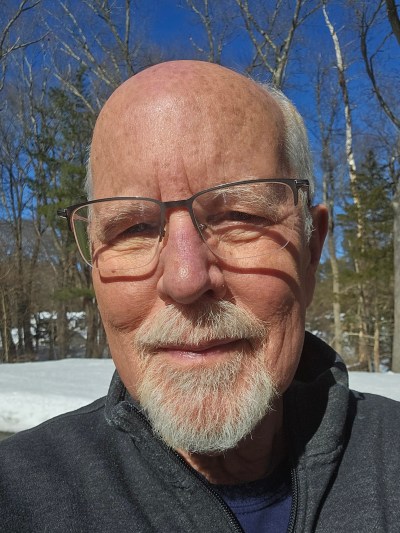
One day, Deb brought me to Ipswich for breakfast, back when Stone Soup was at Market Square. Ipswich seemed wonderful and quaint like the Berkshires. I looked down Market Street and immediately fell in love with this historic old village. (I was already in love with Deb.) I didn’t know yet that Market Street is the “new” part of town.
We found a house here and got married, in that order. She still thinks I’m a weirdo, and I guess she’s right. Stone Soup’s not anywhere anymore, but Heart and Soul is, and we go there on Saturday morning for breakfast.
For over twenty years I have called Ipswich home. I started leading bicycle tours of the North Shore for Road Scholar, and to help promote the tours, I created this website with photos of all the nice old houses in Ipswich, and the stories that go with them, which is how I became the Town Historian. I more or less retired from carpentry because 50 years is enough, and I’m preoccupied with other things, including this blog. People told me when I moved to Ipswich that the town had changed a lot. Now I say that too. I lead walking tours of Ipswich, and I help with the Visitor Center in America’s best-preserved Puritan town. The Puritans weren’t so nice, but they built good houses.
By the way, the moral of this little story is that it’s never too late to decide what you’re going to be when you grow up.
 Historic Ipswich