
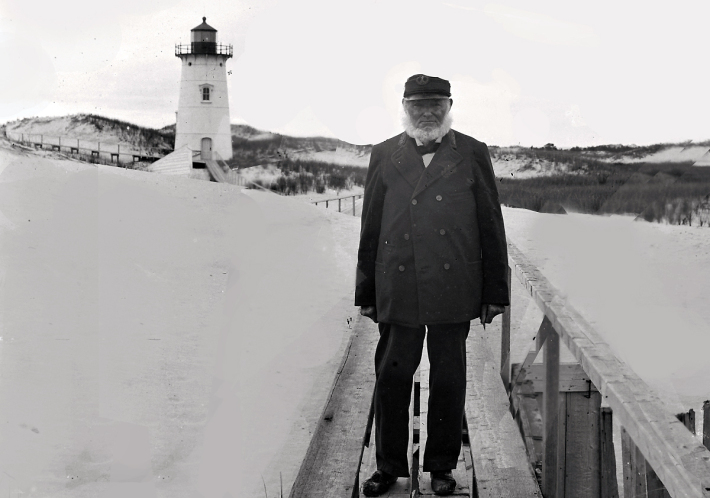
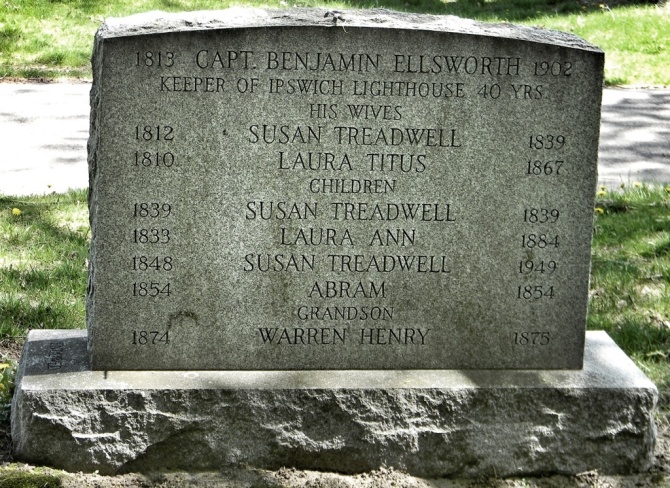
Benjamin Ellsworth, born in 1813 in nearby Rowley, was appointed keeper of the Ipswich lighthouse by Abraham Lincoln in 1861. With his daughter Susan, he remained at the station until his death in 1902.
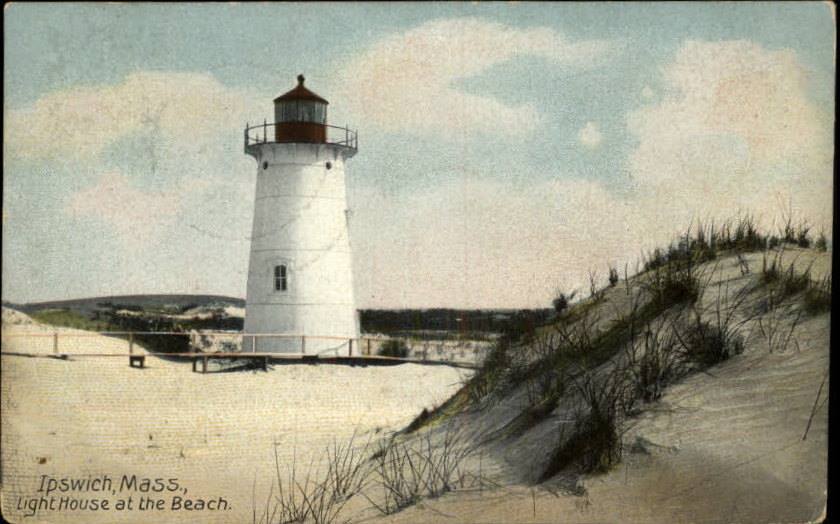
In 1837 the U.S. government purchased four acres of beach land from John Baker and Tristam Brown and erected two 29′ brick towers for guidance to the mouth of the Ipswich River along with a lightkeeper’s residence. The lighthouses were aligned such that they would provide guidance into the river’s mouth. The westernmost tower was soon updated with a revolving light.
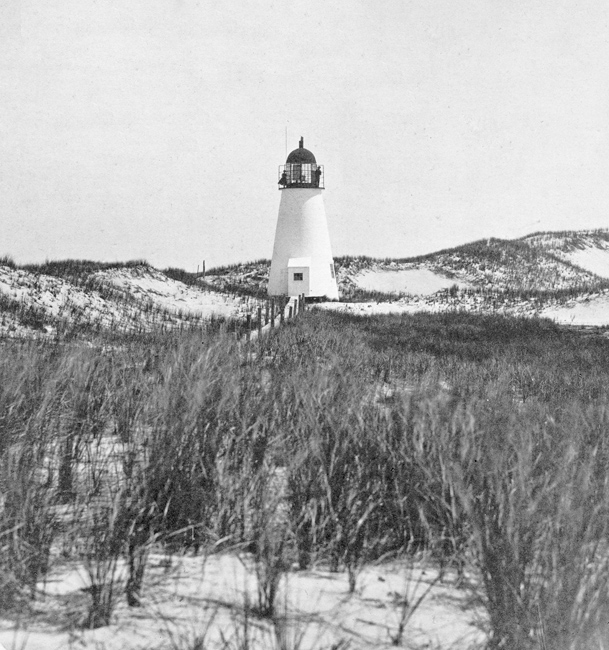
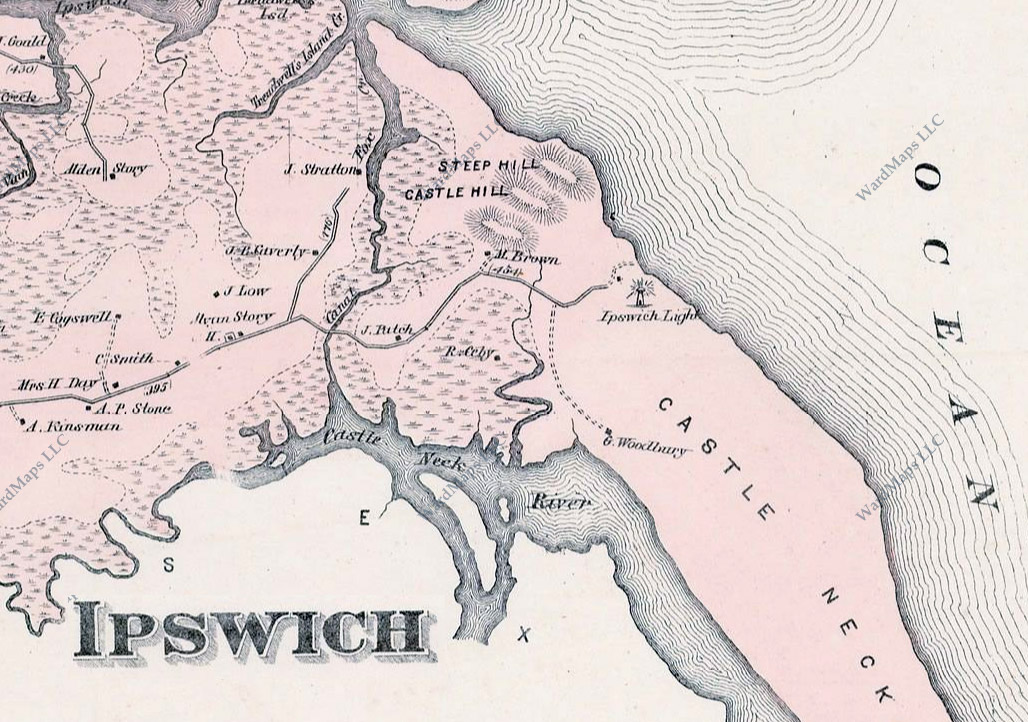
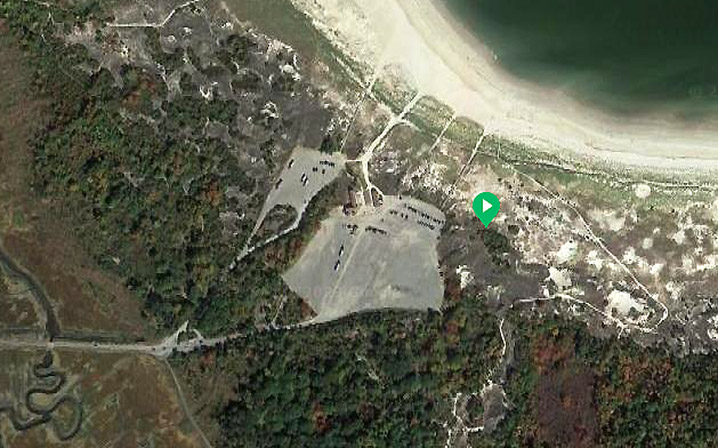
The first keeper of the Ipswich Light was Thomas Smith Greenwood, a native of Boston. Greenwood owned a large tract of land now operated by the Trustees of Reservations as the Greenwood Farm Reservation. During a hurricane in 1839 a schooner, the Deposit ran aground close to the Ipswich Range Lights. Keeper Thomas Greenwood swam to the ship pulling a lifeboat with a Mr. Marshall in it. The captain’s wife was saved but her husband and other crew members were lost.
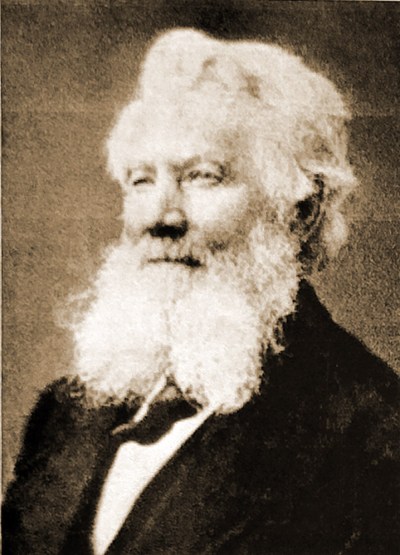
On December 23, the New England coast experienced “triple hurricanes.” A Maine Schooner, the Deposit, ran aground close to the Ipswich Range Lights. When Keeper Greenwood discovered the vessel at dawn, two people had died and the others were clinging to the rigging. With a 200-ft rope tied to him, Greenwood dived into the high, icy waves, reached the schooner, and pulled his neighbor, a Mr. Marshall to the ship. The ship’s Captain Cotterell was lost as they tried to save him, but the two men convinced the captain’s wife to jump from the rigging into their arms. She, along with two other survivors was carried to safety on the shore by a great wave. The Captain and the other sailors were buried in Ipswich a few days later.
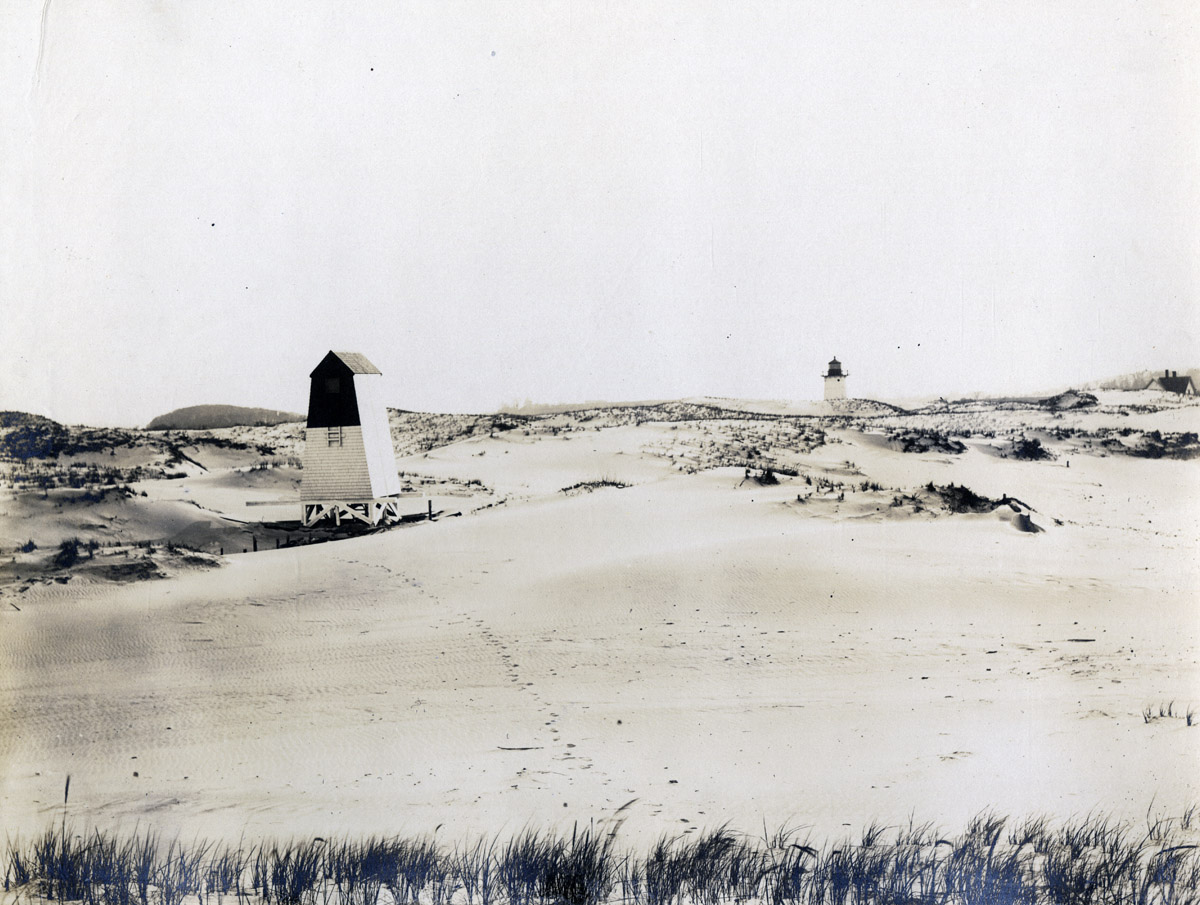
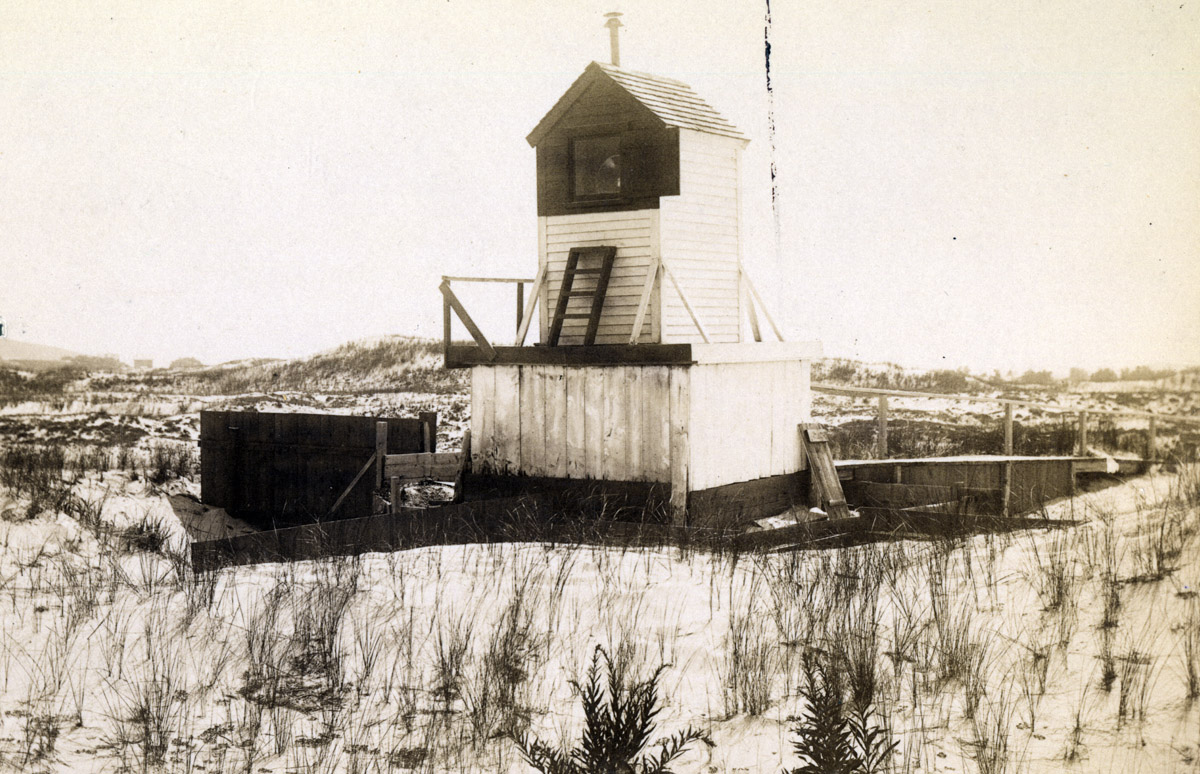
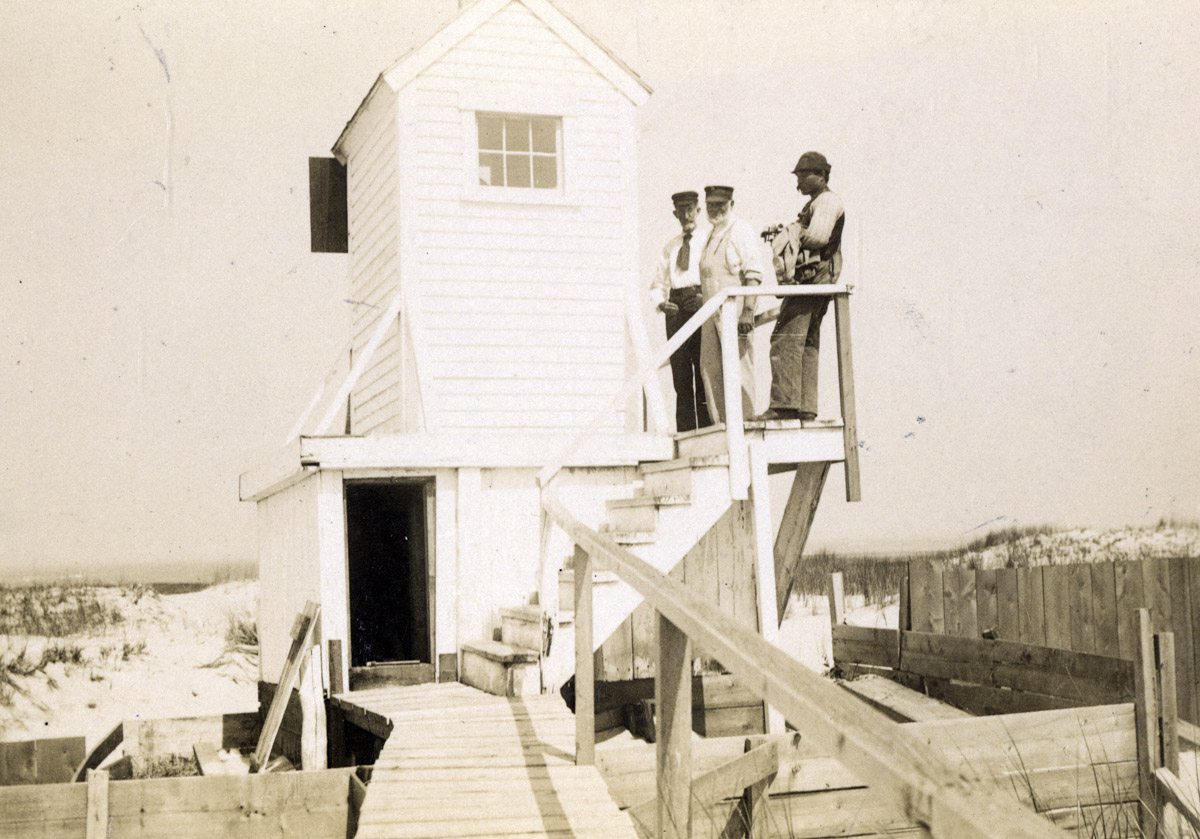
Joseph Dennis became the keeper in 1841. There was ongoing concern about changes in the channel and the position of the light. It was observed that the channel had moved so much that a ship would run ashore at Plum Island if they followed the lights, and the front light was replaced by a “bug light.” It had to be moved 550 feet in 1867 because of continued shifting in the channel.
Benjamin Ellsworth was appointed keeper in 1861. Ellsworth’s wife Lora died soon after he took the position, and the keeper’s daughter, Susan, kept house at the station. Susan was the youngest of 12 children. Three sons of Keeper Ellsworth fought in the Civil War, and all three returned safely. Captain Thomas Fouldes Ellsworth received the Medal of Honor. Benjamin Ellsworth would remain at the station until he died in 1902.
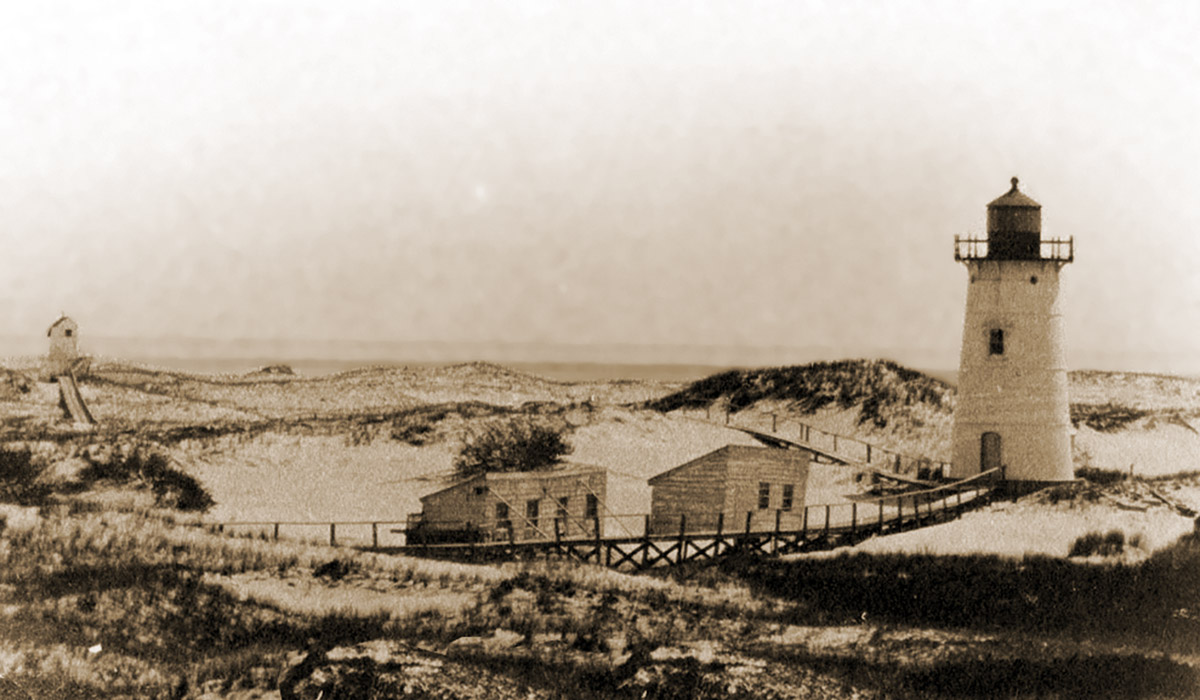
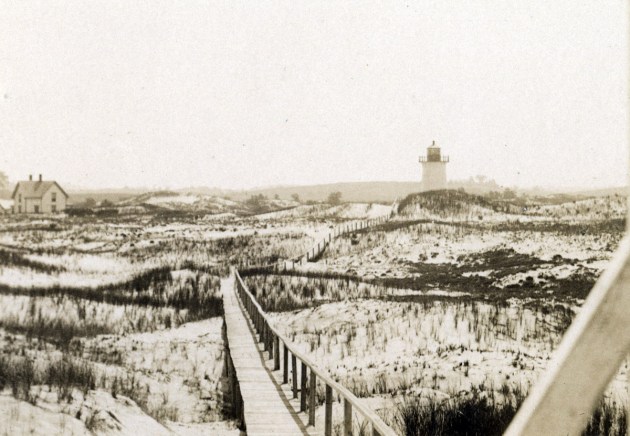
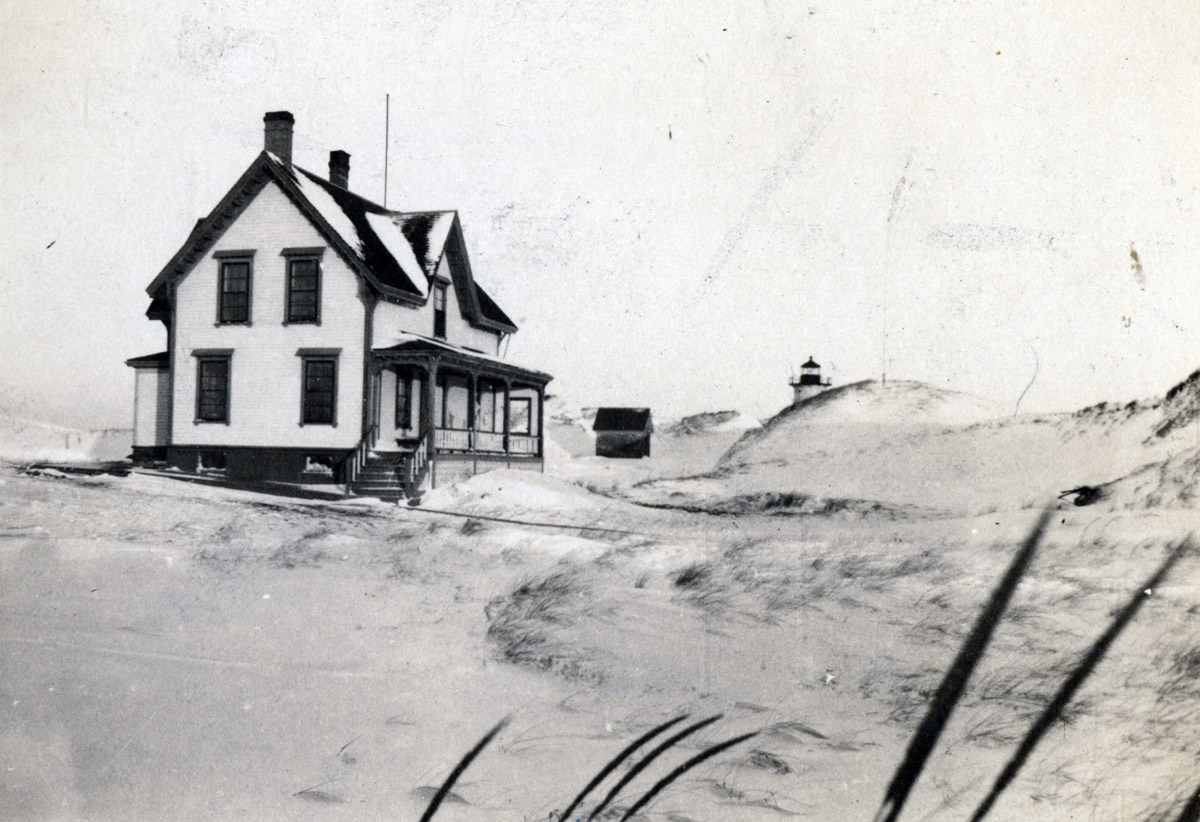

Keeper Ellsworth received a medal in 1873 for saving two men from a vessel near the lighthouse, and a second medal in 1892 for rescuing two men he saw in the ocean from a capsized boat while he was visiting Salem. The first story is told in “The Fishermen’s Memorial and Record Book” by George H. Proctor:
“The fishing boat Garibaldi, Capt. George “W. Morgan, of Lanesville, engaged in the shore fishery, was caught in the gale of Tuesday, March 11th, 1872, off Ipswich, while attending to the trawls, and, being unable to carry sail, was soon driven ashore on Ipswich Bar, and sunk within two minutes after striking. Capt. Morgan had with him his partner, Mr. Levi Lane, and their only hope of escape was by clinging to the mast until assistance came.
“Here they succeeded, after much effort, in lashing themselves for their long and perilous watch through the night that was coming on, if indeed they should live to pass that watch. Cold, benumbed, and wet, with only a faint hope of holding out, the long hours of the night passed wearily. At midnight they saw the keeper of the Ipswich light go and return from his duties, yet no help came.
“It now became a question of endurance. Capt. Morgan, becoming so thoroughly wet and benumbed, began to show signs of exhaustion, and must soon have perished. At length morning dawned, when the daughter of the lighthouse keeper, Miss Susie Ellsworth, having, as it were providentially, risen earlier than usual that morning, saw the men clinging to the mast of their sunken boat. She immediately informed her father, who mustered a crew and went to their rescue in the lifeboat. The men were taken to the house of Mr. Ellsworth, where they were very kindly cared for.”
The second story was told by Jeremy D’Entremont: “In 1892 Keeper Ellsworth performed a daring rescue down the coast from his lighthouse station. He was in the Willows area of Salem, Massachusetts, when he saw that a boat had capsized in rough seas, and two men were clinging to the craft. Ellsworth rowed in a small boat against high wind and waves and managed to pull the two men from the water; one of them reportedly was about to slip under. For his heroism, the keeper received a bronze medal from the Massachusetts Humane Society.”
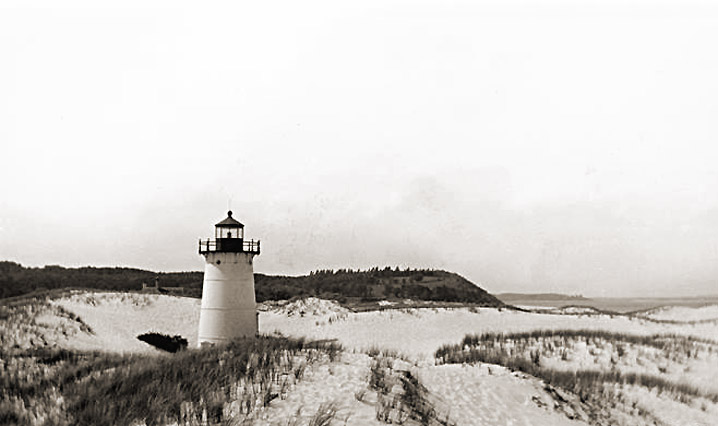
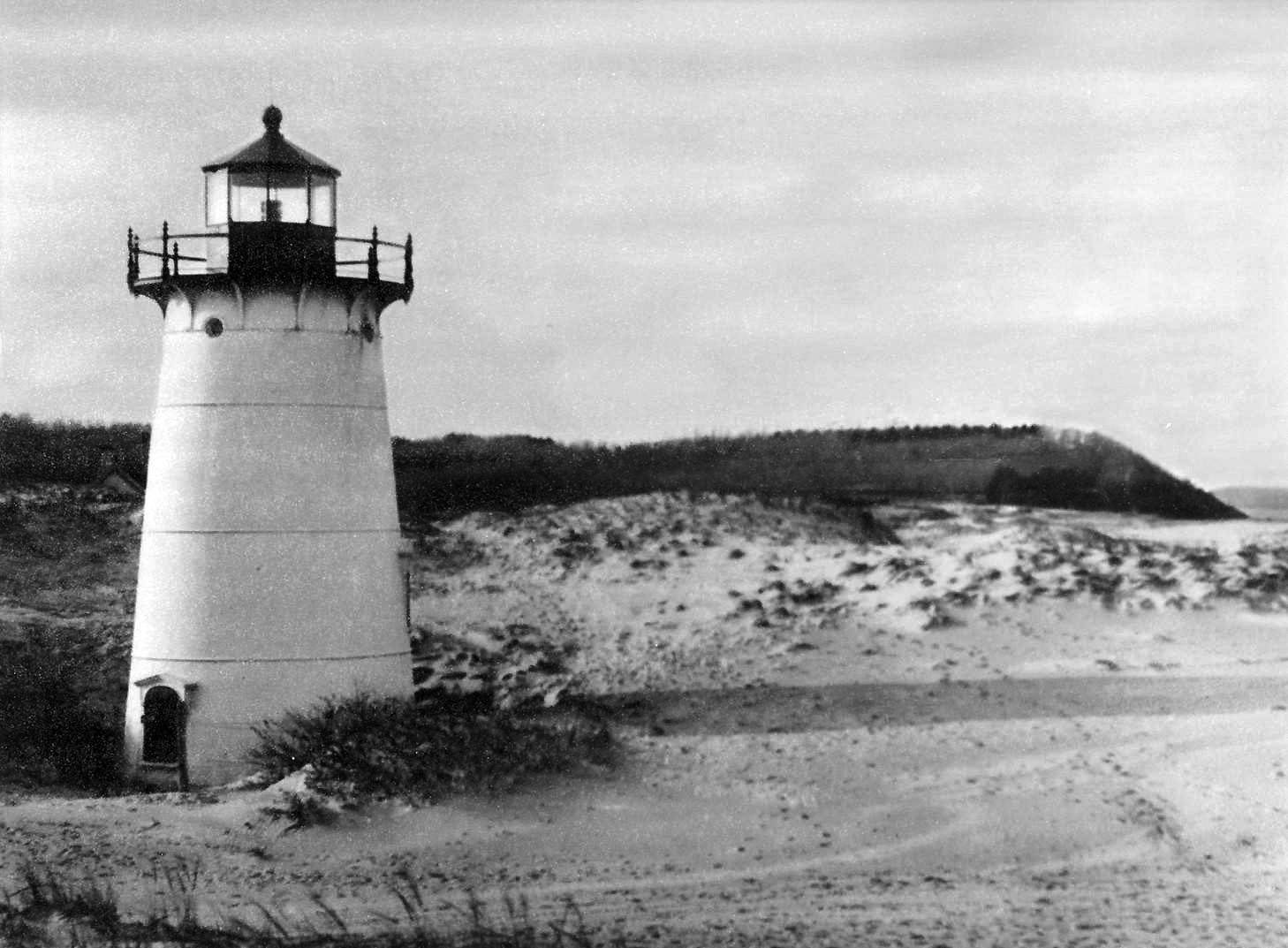

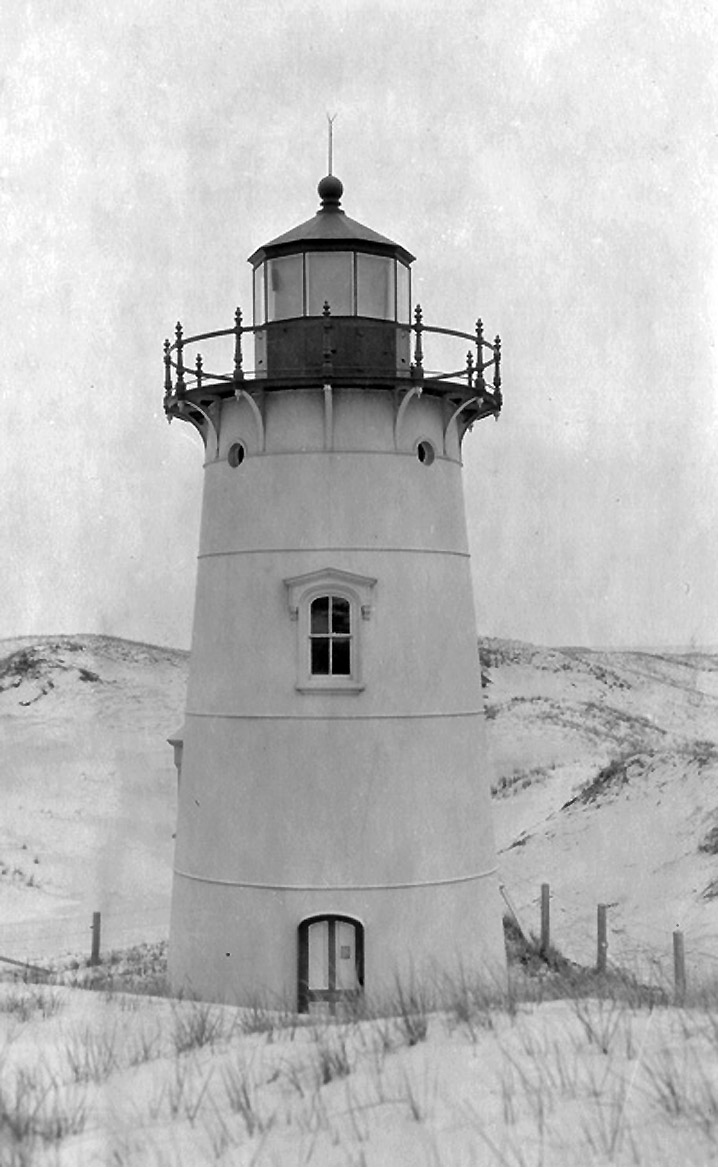
In 1881 the rear tower had been badly damaged by the pressure of accumulated sand along its base and was replaced by a conical 45-foot cast-iron lighthouse. The front light was replaced with a movable base.
Construction
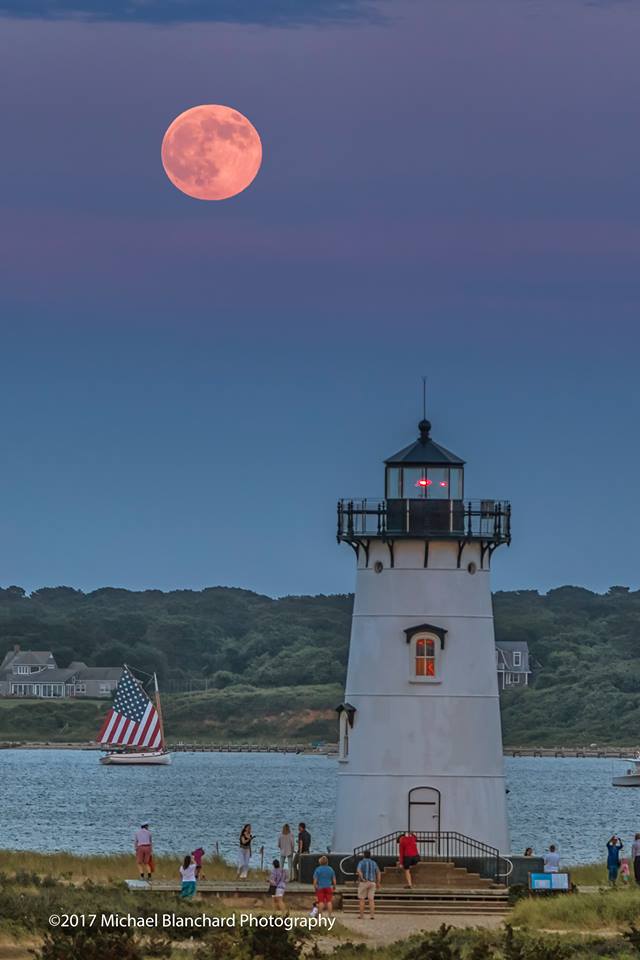
The former Ipswich (now Edgartown) light was similar in construction to the Ten Pound Island Light in Gloucester Harbor but 15 feet taller. Both were constructed in 1881, almost certainly prefabricated by the South Boston Iron Company, which made cast iron lighthouses up to 70′ tall. The frame is the round cast iron exterior and they were lined inside with brick to make them feel more stable. The Ipswich lighthouse was moved by barge to Edgartown without the interior bricks which were never added in Edgartown, but the exterior appearance is still identical to when it was in Ipswich.
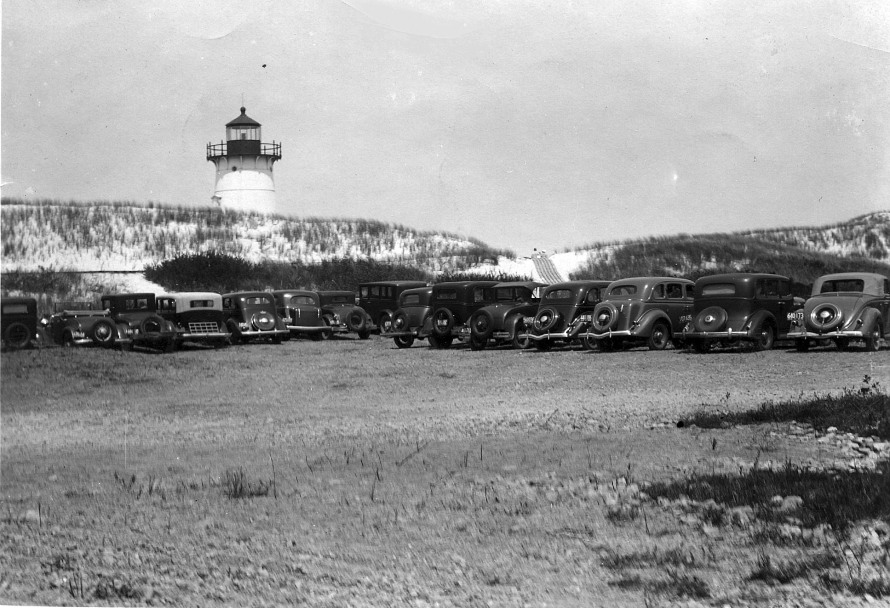
Charles Wendell Townsend wrote in 1913 that the sand had shifted so much that the lighthouse was 1,090 feet from the high water mark. Use of the light was discontinued in 1932 and by 1938 sand had filled around the base of the tower.
The last keeper was LeRoy Lane, who lived at the station with his wife, Angie (Harris) Lane, and their three children. One year the “Flying Santa” scheduled a Christmas present drop to children assembled in the lightkeeper’s house. Hearing the sound of an airplane the keeper called up to his wife, “Has Santa arrived yet, dear?” Immediately he heard the Christmas bundle crashing through the skylight, upon which his wife yelled down, “Yes, dear. We can start the party now.”
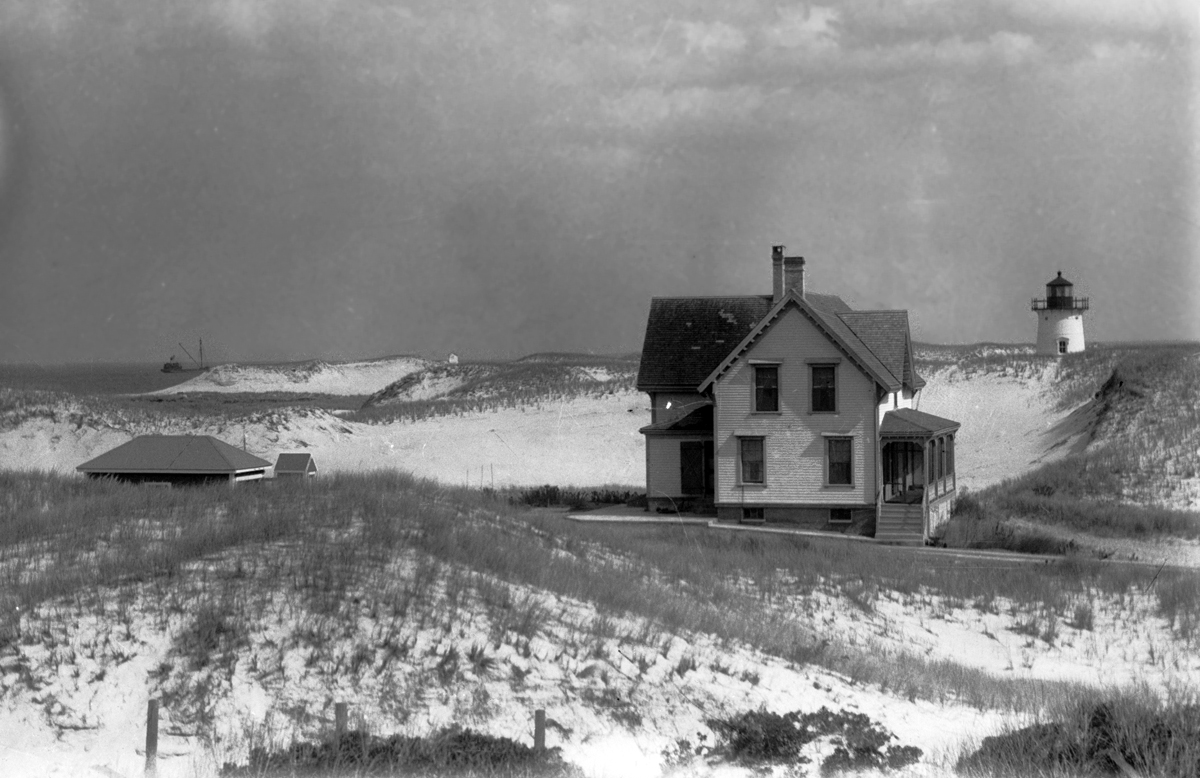
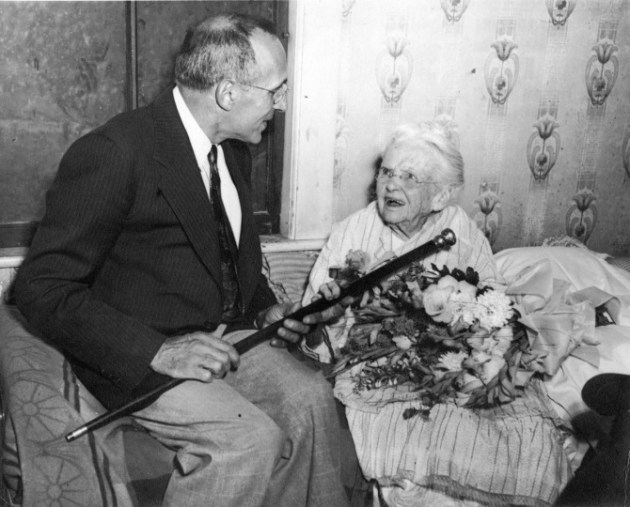
In 1939 the Coast Guard floated the entire cast-iron lighthouse to Edgartown on Martha’s Vineyard to replace a lighthouse damaged by the 1938 hurricane, and a steel skeleton light was erected at Crane Beach. It emits a white light every 4 seconds. Susan Ellsworth, the 90-year-old daughter of Keeper Benjamin Ellsworth who had been the acting lighthouse keeper after the death of her father led an organized opposition to the move, to no avail.
A Complete List of the Keepers of Ipswich Light from the records of the Lighthouse Service:
- 1838 to 1852: Captain Thomas Greenwood
- 1852 to 1902: Captain Benjamin Ellsworth
- March 27, 1902 to Oct. 31, 1910: M. Gunderson
- Nov. 12, 1910 to March 31, 1912: T. J. Creed
- April 1, 1912 to Apr. 30, 1916: G. A. Howard
- May 1, 1916 to Apr. 30, 1919: A. A. Howard
- May 1, 1919 to June 8, 1922: G. F. Woodman, Jr.
- June 9, 1922 to Nov. 12, 1932: Carl Delano Hill
At the close of November 12, 1932, the Front Range Light was discontinued and the Rear Range Light made automatic, thereby dispensing with services of a Keeper at the station.
This was the end of the Lighthouse Service. However, there were two keepers after November 12, 1932, who serviced the light until the U. S. Coast Guard took over after the light was dismantled and moved to Edgartown on Martha’s Vineyard. They were paid by the Cranes and worked on the Crane Estate as well as tending the light. These were:
- 1932 to 1934: Frode Nordquist
- 1934 to 1942: Leroy F. H. Lane
Recollections of a Lighthouse Keeper’s Daughter
by Virginia Lane Stansfield
In 1934 my family, Dad, Leroy Lane, Mother, Angie, Brother, “Rusty”, Sister, Barbara, and I moved to the Keeper’s House at Crane Beach. After the stock market crash of 1929 and the depression following it, my father’s business making radio tubes in Salem failed. Dad, two brothers, and another man owned a business located at the corner of Derby and Lafayette Streets in Salem. Jobs were extremely scarce so we considered ourselves very fortunate that he found work.
Dad became a lighthouse keeper. The lighthouse had been illuminated by oil lamps but was automated with electricity in about 1932. His duties consisted of changing the bulbs when one went out. There were two lights, one above the other, and when the top light went out, the lower one automatically came on, then he needed to put a new bulb in the top light. The ‘bug” light further down the beach was moved by a team of horses whenever the channel shifted with the tides and wind. The bug light was discontinued after the light was automated.
The Lighthouse Service was disbanded in 1932 and the United States Coast Guard took over the operation of all lighthouses around 1939. But while we were there the Crane family was responsible for the keeper’s pay and my father also worked on the Crane estate during the day.
The road to the beach was very poor then and we often had to walk a dike across the causeway to get to the house and to the school bus stop when the tide was high because the road flooded.
I remember one storm when the waves broke through the dunes between the Keeper’s House and the water and we found ourselves with the waves breaking on one side of the house and then rolling on past the house leaving us in the middle. The house was well-built with one-foot thick walls of brick so it survived storms well.
When we moved in we were told by the previous keeper that we would inherit a cat. It seems that the former keeper’s son harassed the poor cat so that it would not stay with them. He became quite wild, living in the woods, catching mice, rabbits, and even snakes for food, but when the first snow came he would come to us for shelter. That is how Peter came to live with us. He was a very large black and white tiger and really wild, but he was now older and we did not bother him so he decided to stay with us. He became almost like a dog, walking to the school bus stop with us and when we returned in the afternoon he was there waiting to walk home with us.
During the 1938 hurricane when the top light went out my father took me with him when he went to change the bulb. The blowing sand really cut my legs but inside the lighthouse, it was totally silent as the walls were so thick.
Each year before Christmas the “Flying Santa,” Edward Rowe Snow, flew over and dropped a package containing newspapers, magazines, and candy. One year he misjudged and the package came right through the glass windows on the porch. Another year we were not at home when he came and we didn’t find the package, which was dropped some distance behind the garage, until after the snow melted in the Spring.
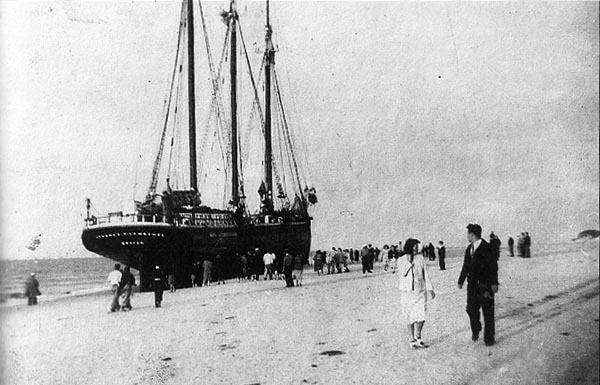
In September of 1939 a three-masted schooner, the Thomas H. Lawrence was thrown up on the beach during a bad storm. It was bound from Rockland, Maine into New Bedford, Massachusetts when the storm pushed her over the sandbar in Ipswich Bay and onto Crane Beach. I remember awakening in the night to find the seamen in our kitchen. My mother made coffee and sandwiches. Only the Captain spoke English, with the seamen mostly of Portuguese descent.
During the low tide backhoes were brought in to dig out in the back of the schooner and on the high tide it was successfully pulled off the beach by tugs. My father and I were invited to go aboard by the Captain. My recollection is that it was very old and in poor condition.
In 1938 the government decided to move the lighthouse to Edgartown on Martha’s Vineyard and replace the light at Ipswich with a steel tower, with the Coast Guard servicing the light. Despite efforts of local residents to keep the lighthouse at Ipswich it was dismantled and taken to Edgartown by barge. During the dismantling process, the light was placed on a temporary wooden tower.
One of the most prominent protesters of this move was Miss Susan Ellsworth. Her father, Benjamin Ellsworth, was a keeper for fifty years from 1852 to 1902. Her mother died soon after they moved to the lighthouse and she kept house for her father there. After her father died it is said that she maintained the light until a new keeper was appointed. She died in 1938.
During the years Benjamin Ellsworth was keeper he planted and maintained an apple orchard. A fire and the shifting sands destroyed the orchard. However, I remember seeing the remains of some of the apple trees partially buried by sand at the time that we lived there.
There was a cranberry bog in this area which was also covered by sand, but I remember picking cranberries. There were also many beach plums we picked, from which mother made jelly. In those days we could walk the beach and dig sea clams which made a wonderful chowder.
After World War II began in 1941 the Army established bunkers in the dunes and patrolled the beach with dogs as it was thought that German submarines might attempt to land at some isolated beach. One night the Army held maneuvers in which our house was the target and we awoke in the morning surrounded by soldiers.
We remained at the Keeper’s House until 1942 when World War II created a demand for radio tubes and light bulbs and my father went back to work in this business.
The Keeper’s house was later used by the Boy Scouts, the Girl Scouts, and other local organizations, then rented to others for a few weeks during the summer for vacations. In October 1973, vandals burned the house and an era in Ipswich’s history came to an end.
Entries from the Lightkeeper’s Journal
by Benjamin Ellsworth
“1870, three young men from Lowell were spending their vacation at Plum Island. While out sailing, the boat was capsized and one of them was drowned abreast of the lighthouse. The body was recovered the next day, by one of my sons, William M. Ellsworth.
“April 18th 1873: The Schooner Cecilia under Capt. Coffin and 4 men, lumber-laden from Jonesport for Boston came ashore on the Bar in a thick snowstorm at five am, and at three pm came onto the beach a total wreck. They were cared for at my house.
“April 10th, 1875, Schooner Charlotte Ann from Rockland for Boston with lime, under Capt. Frank J. Hood and 3 men, stuck on the bar and went to pieces. The crew took the boat and came ashore. I also rendered assistance to them.
“April 26th, 1877: The Schooner Alba from St. Johns for Boston with coal came ashore on the Beach in a thick snowstorm. Her cargo was discharged and shipped to Boston by Benjamin Ellsworth, James W. Bond, William P. Crane, and Alfred Norman. The brig was got off without much damage.
“Sept. 8th, 1878, the schooner Franklin with Capt. Greenleaf from Wiscasset for Weymouth, lumber-laden came ashore at the lower end of the beach. She was discharged and got off without damage. Her cargo was bought by the Brown brothers of Ipswich.
“April 20th, 1879, the schooner J. Mashun under Capt. Webber from York, Maine headed for Ipswich went ashore on the Bar. The crew came ashore at my house the next day. The schooner was got off and went to Gloucester for repairs. After being repaired, she returned to Ipswich and went ashore again on the bar and went to pieces.
“During this year the Government has rebuilt the old dwelling house making a nice two-storied house besides giving more rooms. In 1880 a new lighthouse was built of iron, the old one taken down. Both of these are much better than the old one.
“February 2nd, 1882. The fishing schooner Flying Scud, Captain Phalan of Gloucester from Grand Banks with 12 men came ashore at seven o’clock pm in a heavy blinding snowstorm. The first knowledge I had of this was while we were sitting at the table reading. Who should walk into the house but 12 men, a terrible sight, completely covered with ice. Everything was done to make them comfortable. The vessel was got off and the crew went away speaking the loudest praise for their kind treatment.
“This ends the disasters up to the present. There have been others that have come ashore during my stay here that have needed no assistance from me and got off without any damage. A great many other mishaps have happened since I have been here that I have kept no note of. They would be quite interesting if I could remember them!”
Further Reading:
- Santa hits the Ipswich Lighthouse
- Ipswich Lighthouse: Voices from the Beach
- Massachusetts Lighthouses: Past & Present
- Lighthouse Handbook New England
- New England Lighthouses: Maine to Long Island Sound
- New England Lighthouses: Famous Shipwrecks, Rescues, & Other Tales
- New England Lighthouses: Bay of Fundy to Long Island Sound
- Lighthouses of New England
- Ipswich Range Lights
- Lighthouse Digest
- Tall Towers of Iron

Download: A Lightkeeper’s Story, Benjamin Ellsworth and the Ipswich Lighthouse by Gordon Harris
Related Posts
 The Ipswich Visitor Center - 1820 Hall-Haskell House sits at the heart of our town on the Center Green, in one of several national historic districts in town.… Continue reading The Ipswich Visitor Center
  The Crane Estate at Castle Hill (1928) - Castle Neck and Crane Beach have a long history of ownership by several families before being granted by the Cranes to the Trustees of Reservations.… Continue reading The Crane Estate at Castle Hill (1928)
 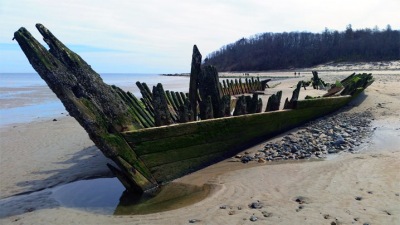 Wreck of the Ada K. Damon - Christmas, 1909 witnessed the heaviest storm in many years. The ship was wrecked during the captain's first trip for a load of sand from the plentiful supply on Plum Island.… Continue reading Wreck of the Ada K. Damon
  The Missing Dunes at Castle Neck - The "Great Dune" at the end of Castle Neck has disappeared, the point is retreating, and the opening to Essex Bay between Castle Neck and Wingaersheek Beach has widened.… Continue reading The Missing Dunes at Castle Neck
  Wreck of the Edward S. Eveleth, October 1922 - In October 1922, the sand schooner Edward S. Eveleth rolled over when a wave rushed over her deck and pushed her onto the edge of Steep Hill Beach. Filled with sand, each tide buried her deeper. Her remains were visible for several years. The skeleton of the hull is just off-shore a short distance from the wreck of the Ada K. Damon.… Continue reading Wreck of the Edward S. Eveleth, October 1922
 Destination Ipswich: A Walk in the Dunes - Gordon Harris kicks off the first episode of Ipswich ICAM'S "Destination Ipswich" series with a walk in the sand dunes at Castle Neck.… Continue reading Destination Ipswich: A Walk in the Dunes
  Crane Beach - Crane Beach belongs to the Trustees of Reservations and is part of the historic Crane Estate. The property includes Crane Castle, miles of shoreline, and over 5 miles of marked trails through the dunes at Castle Neck and Steep Hill Beach, open year-round.… Continue reading Crane Beach
  Choate Island and Rufus Choate - Choate Island was originally known as Hog Island, and is the largest island in the Crane Wildlife Refuge and is the site of the Choate family homestead, the Proctor Barn, the White Cottage, and the final resting place of Mr. and Mrs. Cornelius Crane. There are great views from the island summit of the Castle Neck dunes and Plum Island Mount Agamenticus in Maine.… Continue reading Choate Island and Rufus Choate
  Charles Wendell Townsend, Ipswich Naturalist - Charles Wendell Townsend, M.D. was attracted by the natural beauty of Ipswich. He built a summer house overlooking a wide expanse of salt marsh with open sea to the east. From here he wrote a number of books, including Beach Grass, Sand Dunes and Salt Marshes, and the Birds of Essex County. … Continue reading Charles Wendell Townsend, Ipswich Naturalist
  The Fox Creek Canal and Robinson’s Boatyard - The Fox Creek Canal is the oldest man-made tidewater canal in the United States, dug in 1820. In 1938 it was dredged to accommodate ship-building at Robinson's Boatyard, where small minesweepers were constructed for World War II.… Continue reading The Fox Creek Canal and Robinson’s Boatyard
 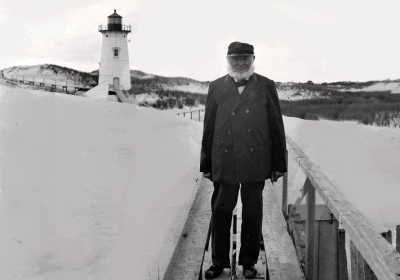 The Ipswich Lighthouse - In 1881, a 45-foot cast iron lighthouse was erected at Crane Beach, replacing an earlier structure. By 1913, the sand had shifted so much that the lighthouse was 1,090 feet from the high water mark. Use of the light was discontinued in 1932 and in 1939 the Coast Guard floated the entire lighthouse to Edgartown on Martha's Vineyard.… Continue reading The Ipswich Lighthouse
  Life at an Estuarine Front - Shorebirds congregate and drift in rafts along the estuarine front where the mixing of fresh and saltwater stirs up small fish, crustaceans, and other aquatic organisms.… Continue reading Life at an Estuarine Front
  The Shipwrecks at Ipswich Bar - The Ipswich Bar has a long history of tragic shipwrecks. Its swift currents and shallow waters are especially dangerous during storms, and many ships have gone aground. The hull of the Ada K. Damon sits on Steep Hill Beach.… Continue reading The Shipwrecks at Ipswich Bar
  The Farm at Wigwam Hill - Symonds Epes bought a large tract in 1726 and built a substantial farm and orchards at Wigwam Hill, named for a group of destitute Indians who briefly camped there. The protecting pitch pines were later cut for lumber, and the farm became a large dune.… Continue reading The Farm at Wigwam Hill
  Winter Walks in the Dunes at Castle Neck - Crane Beach and all of Castle Neck are protected by the Trustees of Reservations. Pitch pine and scrub oak rise from the masses of marsh grass, sage green hudsonia and dune lichen lining the trails that wind through the dunes.… Continue reading Winter Walks in the Dunes at Castle Neck
  Historic Ipswich
Interesting! My great grandfather was Carl Delano Hill, the last lighthouse keeper. My grandmother would talking about growing up there.
Great site.