

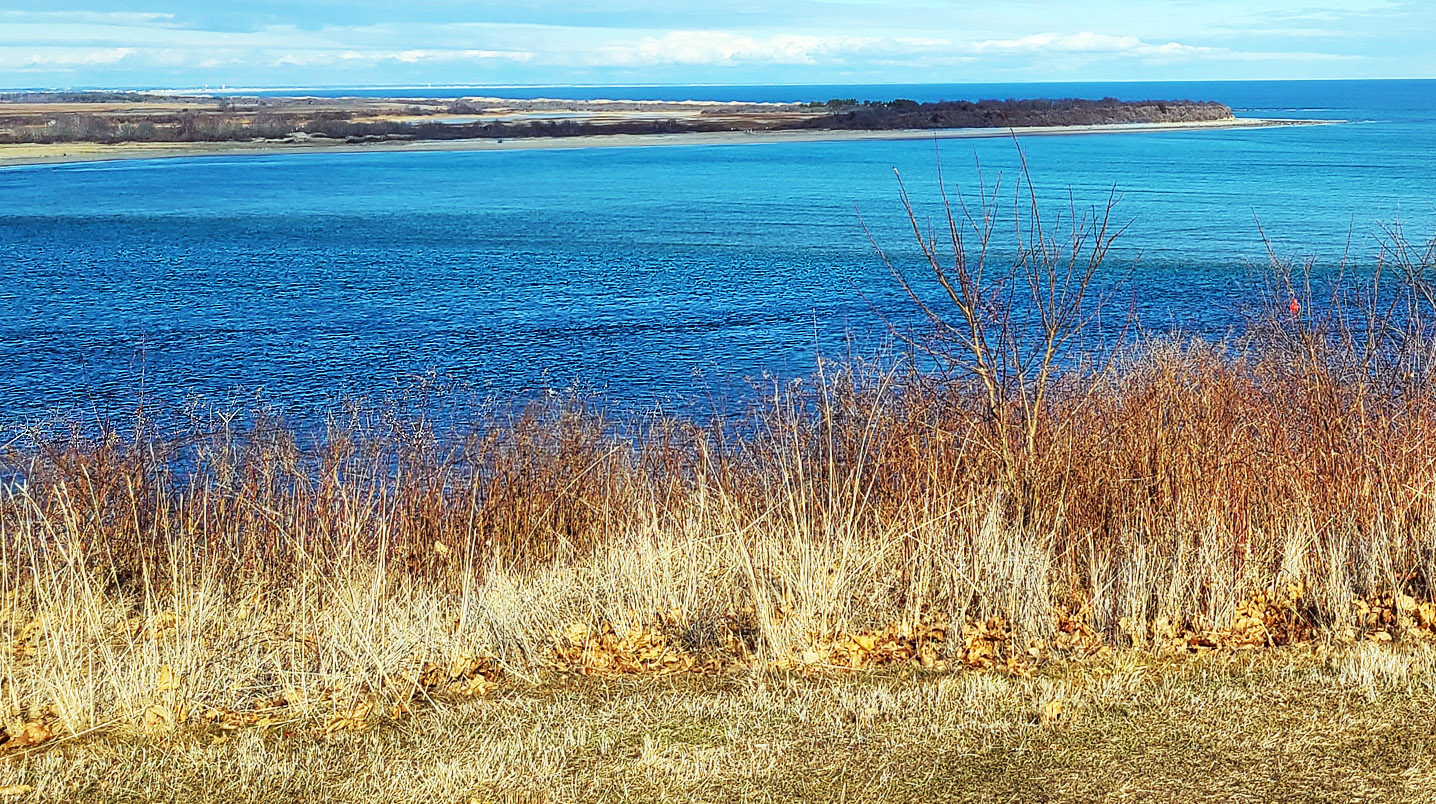
(Featured image: view from Steep Hill at the Crane Estate in Ipswich.)
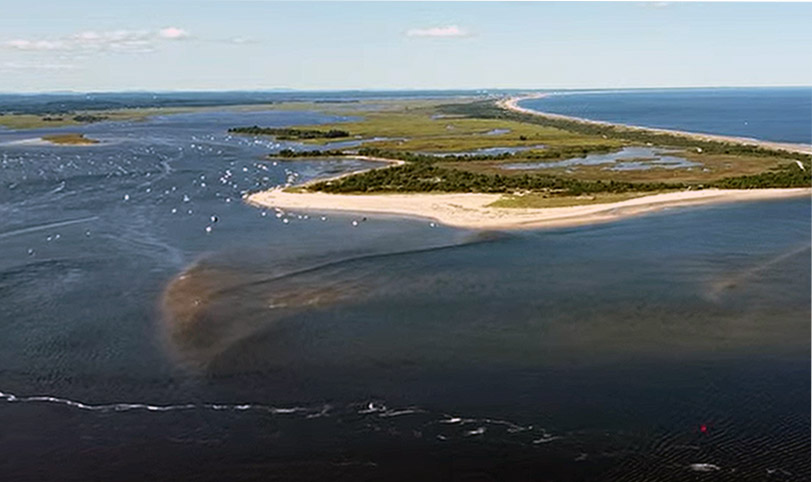
The Parker River National Wildlife Refuge‘s 16-mile estuary surrounding Plum Island Sound is a dynamic intertidal zone. Part of the Great Salt Marsh, it provides critical habitat for diverse wildlife, particularly shorebirds. Here the Rowley River flows into the Parker River as it flows south, is joined by the Ipswich River, and an impressive turbidity front, sometimes referred to colloquially as a “rip line“ is created when all of this water meets the ocean.
Oceanographers refer to the boundary where freshwater rivers meet the salty ocean as an estuarine front. The phenomenon we observe from Crane Beach is also a turbidity front because of the suspension of sediments in the river, creating distinct color and transparency gradients between the two sides of the front. Freshwater tends to flow on top of the saltwater because salt makes ocean water dense. A visible line of standing waves is formed where they meet, and the outgoing river water becomes turbulent as it encounters built-up sand in the confluence area.
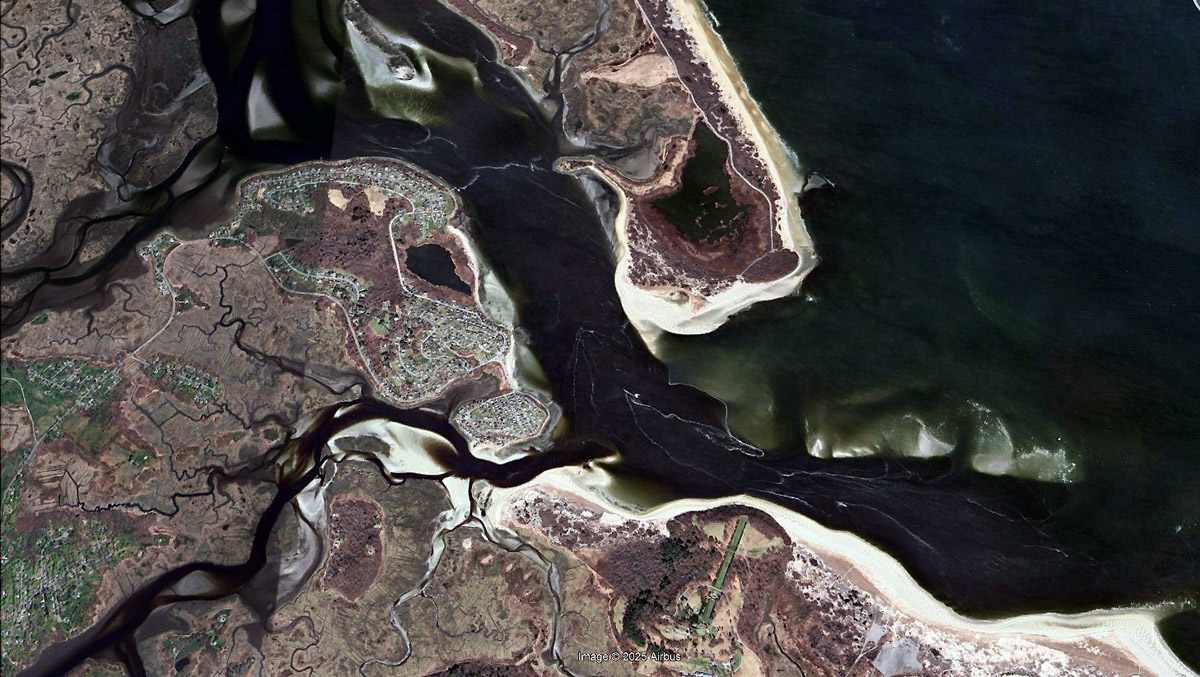
The location of the front varies during the day. At high tide, the ocean pushes saltwater further upstream, and at low tide, freshwater from the three rivers moves the front seaward. This interaction of different salinity, temperature, and sediment concentrations creates visible changes in water clarity and color, and stirs up small fish, crustaceans, and other aquatic organisms, attracting an abundance of fish. Shorebirds congregate, feed, and drift in “rafts” along this interface, floating to the end of the turbulence, then flying back to the beginning, and starting over again.
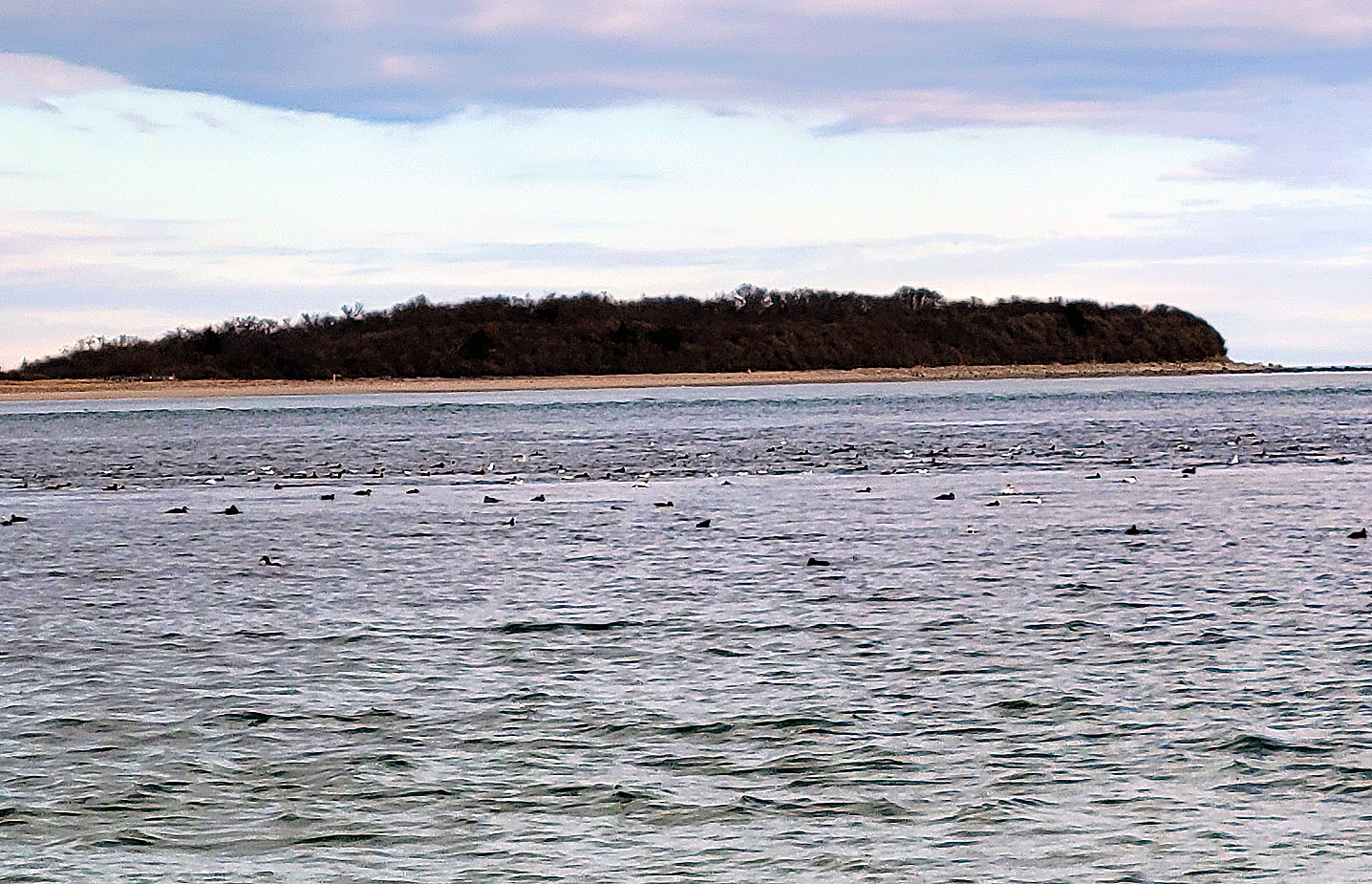
One of the most prevalent waterfowl species in the Parker River Estuary is the black duck, which feeds on snails, seaworms, small clams, mussels, small crustaceans, green crabs, and other aquatic arthropods that get stirred up by the current. They are often accompanied by the common eider, which dives for crustaceans, mollusks, and mussels. The male is easily recognized by its distinctive black-and-white pattern, while the female is brown. White-winged scoters and black scoters also dive, feeding on mollusks and crustaceans.
Not all waterfowl utilize estuarine fronts. Cormorants usually forage alone but occasionally feed together, preying on schools of small fish. Land-loving seabirds prefer shoals and marshes, where they can forage on mummichogs, silversides, and sand shrimp. When seagulls are not busy stealing food from people at the beach, they eat shellfish, crabs, clams, small fish, crustaceans, mollusks, and even plankton.
Further Reading:
- Treatise on Estuarine and Coastal Science, Eric Wolanski and Donald McLusky
- Fronts in the World Ocean’s Large Marine Ecosystems by Igor M. Belkin and Peter C. Cornillon
- Introduction to Oceanography: Estuaries, Roger Williams University
- Science Direct: Estuarine Front
 Historic Ipswich