
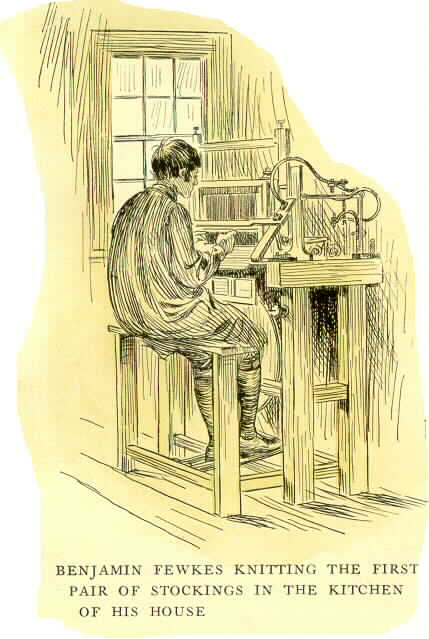
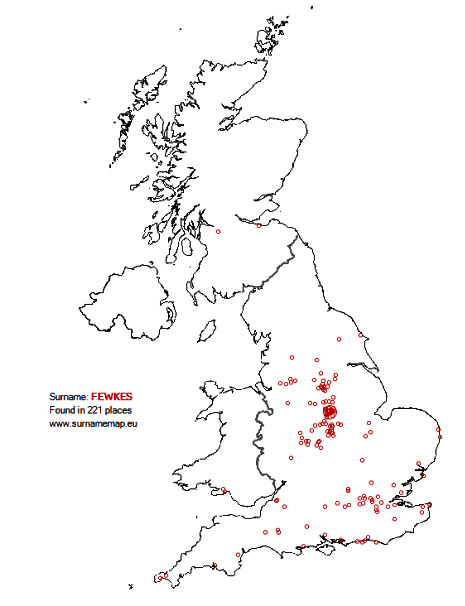
Benjamin Fewkes (1788-1869) was born in Loughborough, Leicestershire, England, the son of William Fewkes. He apprenticed in the stocking knitting trade, working for an uncle who owned a stocking shop in a small village called Quorn. It was in this town that he married Elizabeth Smith on 21 May 1809, daughter of Jarvis and Mary Smith, of Loughborough, England.
In 1799, the first bobbin net was made by warp machinery, and Nottingham became the center of a thriving trade in this inferior lace. The Luddite riots in Nottinghamshire, England, commenced on March 11, 1811, when unemployed weavers rioted and smashed over 200 stocking frames in three weeks, and organized themselves into a society to suppress by force the making of lace by machinery. By 1812, these labor troubles had compelled nearly one-half of the inhabitants of Nottingham to apply for relief.
With the British government seemingly unable to provide sufficient protection from riotous mobs of unemployed stocking knitters and pillow-lace weavers, many of the factory workers resolved to emigrate to America. Fewkes continued to work in the stocking trade in England until 1818. With economic conditions continuing to deteriorate, the couple immigrated to the United States, along with George Warner. Together they managed to smuggle a stocking frame, which at that time was illegal, with fines up to £500.
Thomas Franklin Waters related the story of how it arrived in America in Vol. II of Ipswich in the Massachusetts Bay Colony:
“It was first bought in Nottingham, then packed in two boxes and sent to a framesmith to be repaired and repacked for its trip to America. It was then sent to Liverpool and left upon the wharf where an old brig was lying, being laden with salt stowed loosely in bulk. It was taken by a stevedore and placed upon the keelson away up in the bows of the ship, and packed deep in the salt. The brig dropped down to the mouth of the harbor, and was overhauled and inspected thoroughly (as they thought) by the Custom House men. Trunks and boxes were inspected, and long sticks were run into the salt, but these two boxes with the adventurous machine escaped detection.
“Its passage in the brig, which was destined to a southern port, was a stormy one. She was driven off her course several times by adverse winds for over sixty days. Then, when some miles outside of Massachusetts Bay, she was spoken by a schooner bound for Boston, to which the machine and its adventurous owners were transferred, and the brig, with her lost reckoning rectified, and her mechanical “Jonah” not overboard, but reshipped on an American schooner, went on her southbound way rejoicing, no doubt. The schooner arrived in Boston on Sept. 4, 1818. The boxes were put upon a produce wagon, carted to Watertown, and carefully unloaded at a little house by the river, near the present Etna Mills. When the boxes were opened, it was found that one of the most important parts of the machine was missing. Its sinker bar and all its sinkers had been left behind in England.
“By the ingenuity and skill of one of its owners, these were replaced during the first winter in its new home; then it was used under the management of its two owners, six hours on and six hours off, through the day and night, for the greater part of its first two years in this country. It was then that there came the lace makers, and the starting of the Lace Factory in Watertown, which gave it a long time of rest, but it finally reached Ipswich to do duty while the New England lace company was getting a foothold in this good old town. This machine was brought to Ipswich in 1822 by Benjamin Fewkes and George Warner, its joint owners. I have been told that the first pair of stockings, woven upon this machine in Ipswich, were made by Mr. Benjamin Fewkes, Sr., in the kitchen of a house, which then stood upon the site of the present South Congregational meeting house.” The old house Waters’ refers to was moved to 83 County Rd.
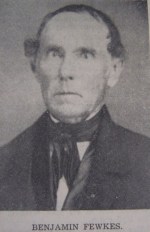
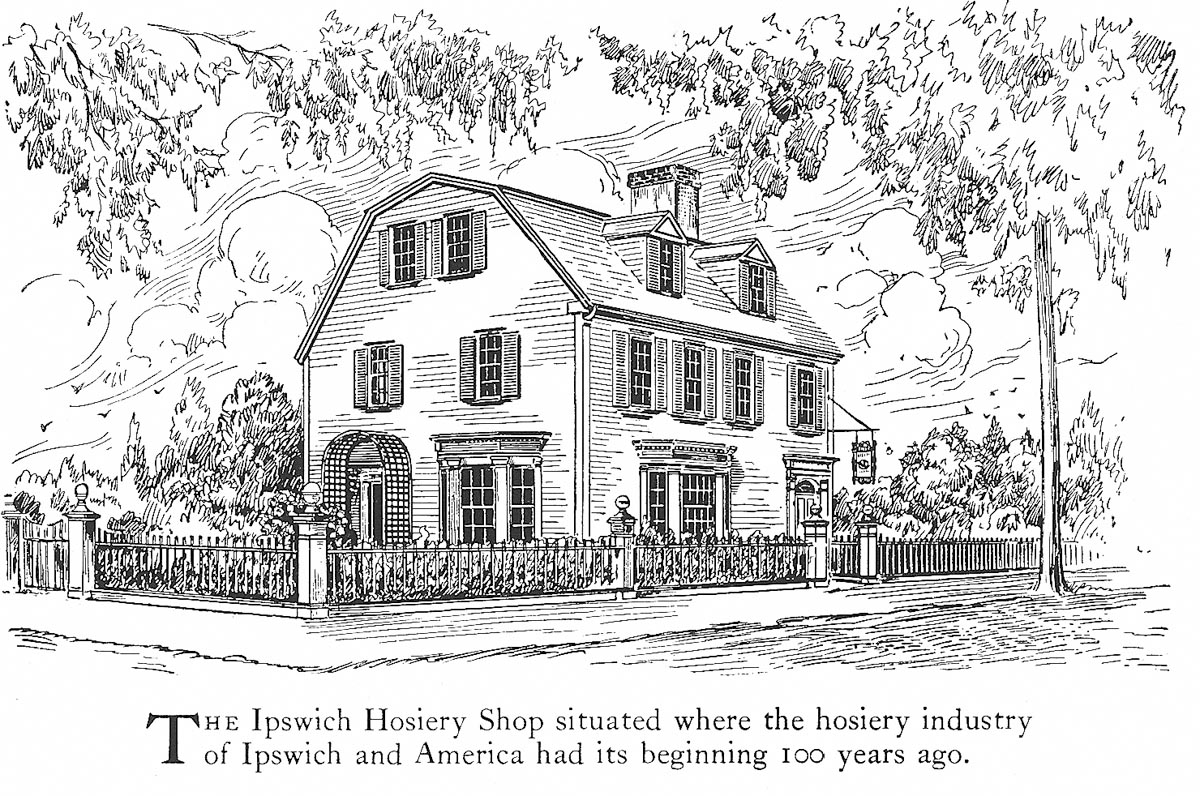
Landing in Boston after six weeks at sea, Fewkes and Warner set up their frame on the Charles River in Watertown and established the New England Lace Company. In 1922, Fewks moved to Ipswich; his arrival marked the advent of a new industry, which was destined to revolutionize the life of the community. Fewkes began working with the Ipswich Lace Company, where lace machines were installed in a rear addition at the Dr. Philomen Dean House on South Main Street, which was owned by George W. Heard. The lace factory was in operation in October 1822, but the shareholders found it a losing investment.

A new company for machine-made lace was begun on High Street, where Fewkes was a stockholder and employee. Eventually, both enterprises failed, but they gave birth to the Ipswich Hosiery Company, which employed Ipswich residents and hundreds of French Canadian, Greek, and Polish immigrants, and the old town, which had suffered economically since the Revolutionary War, quickly returned to prosperity.
Fewkes then set up a small shop in his backyard, making stockings and underwear on two looms built by the Peatfield Brothers, who had worked for the Watertown company. They are believed to be the first stocking looms made in America.
Benjamin and Elizabeth, whom he called Bessie, had ten children, seven boys and three girls. An early letter written by Fewkes to his sister and brother-in-law back in England provides insight into the life of the Fewkes family in Ipswich: “It is with pleasure I embrace this opportunity of writing a few lines to you, hoping they will find you in good health as they leave me and family at his time I thank God for it. We have 4 children besides William and Henry; they are all boys. William works in a lace frame 41 inch 12 points, I work in a 38 inch 13 points, which I got to work this spring. I am getting about 8 dollars a week besides what William gets. Henry winds the thread and goes to school.”
Fewkes continued working in this craft for the rest of his life. The value of his real estate in the 1850 census was listed as $400.00
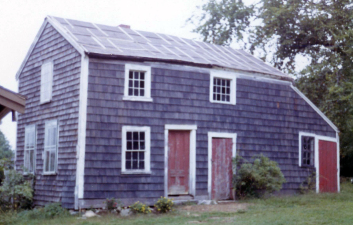
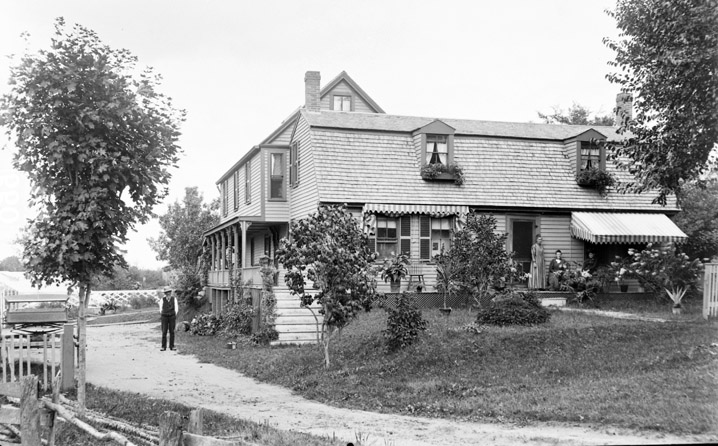
Home of Benjamin Fewkes Sr.
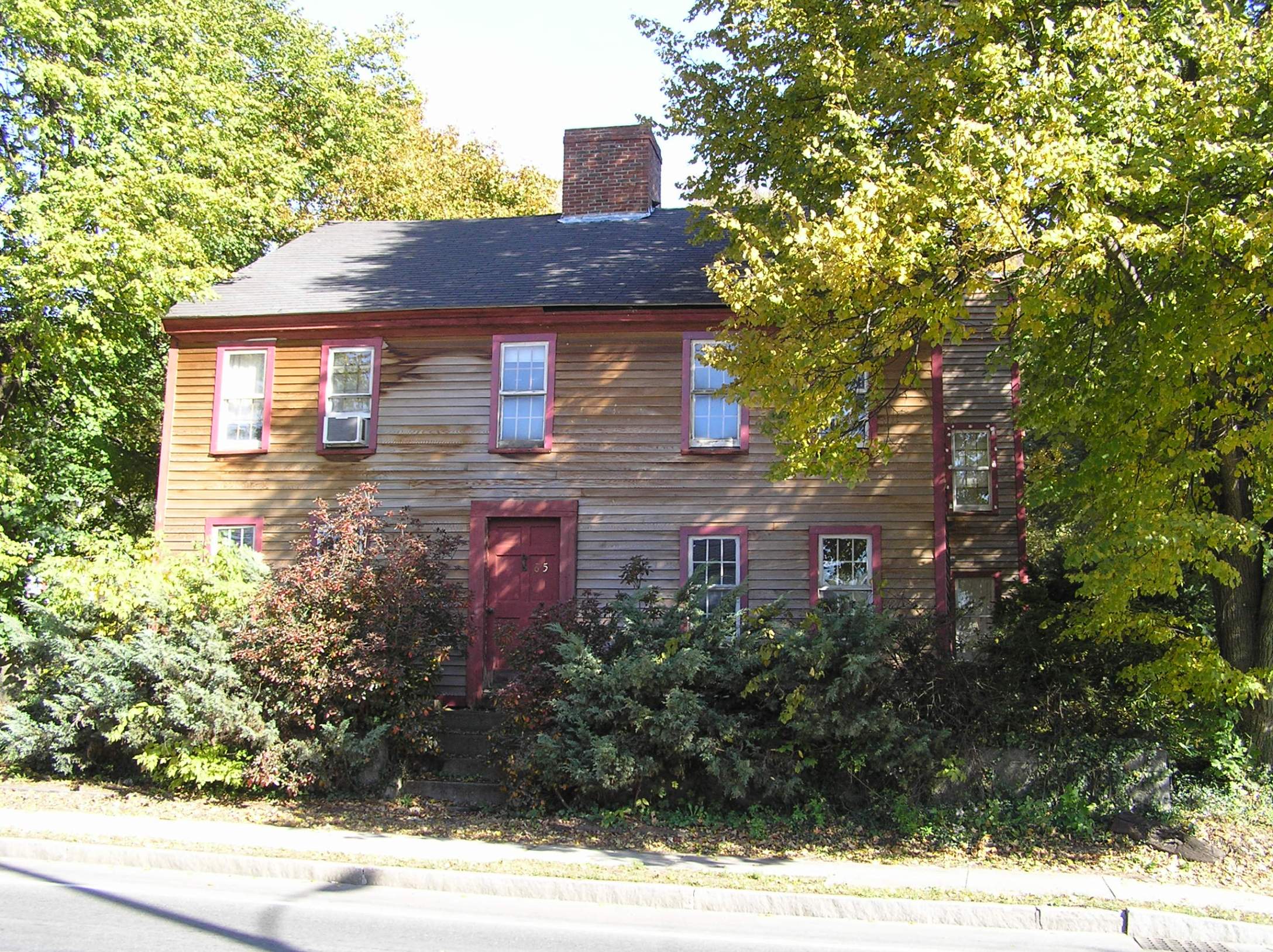

In the rear of the Fewkes House, on the left, was his small hosiery shop.
John Lane Jr. sold a parcel of land with half of the Philip and Elizabeth Lord House on High Street, including a shop in the rear, to Benjamin Fewkes in March 1832 (264:87). The 1832 map shows the Widow P. Lord as the owner. Descendants of Benjamin Fewkes Sr. sold the half of a house in 1895 to Mary Jewett for $585.00. (1456:185-187).
Benjamin Fewkes Jr.
Benjamin J. Fewkes, the son of Benjamin and Elizabeth Fewkes, was born in 1815, and moved to Newton to join his brother, where he married Elizabeth Wilkins of Newton. Their marriage intentions were declared Jan. 23, 1848. In Newton he worked as a carpenter, but in retirement, he returned to his hometown, Ipswich and purchased the house at 48 Turkey Shore Rd. in 1886 (1181: 258) and operated a nursery at this house. He was born in 1852 and died in 1915, aged 63 years. The 1893 Ipswich annual town report shows the following real estate and property tax valuation for Benjamin Fewkes at this location: horse $75, 2, cows $60, swine $10, 20 fowl $10, carriage $50, boat $25, house $1000, barn $100, greenhouses $400. The house stayed in the Fewkes family until 1948. The house was constructed about 1720 on part of the land owned by Ipswich settler Daniel Hovey. Nathaniel Hodgkins, who married Hovey’s daughter, is believed to have built the house.
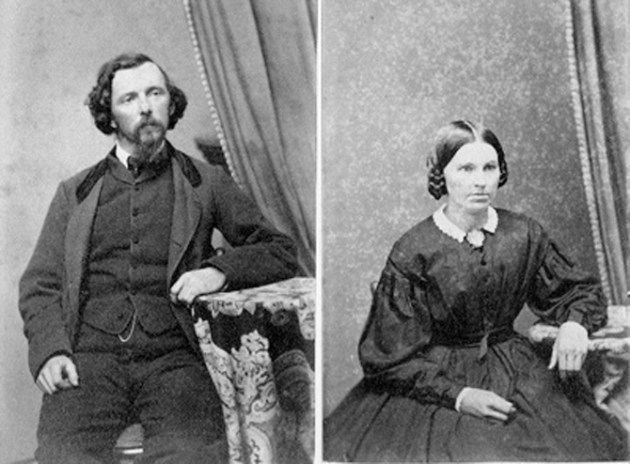
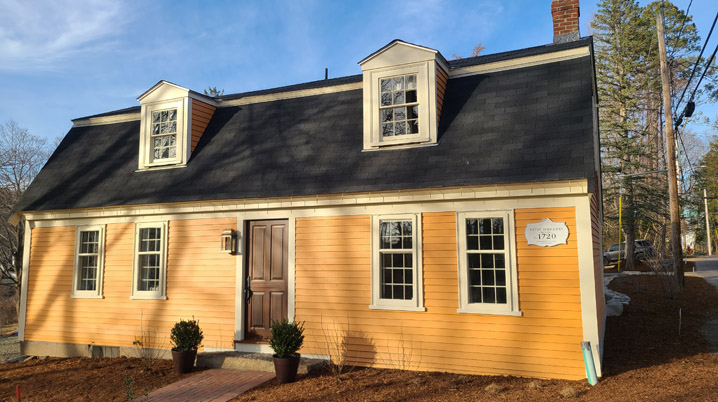

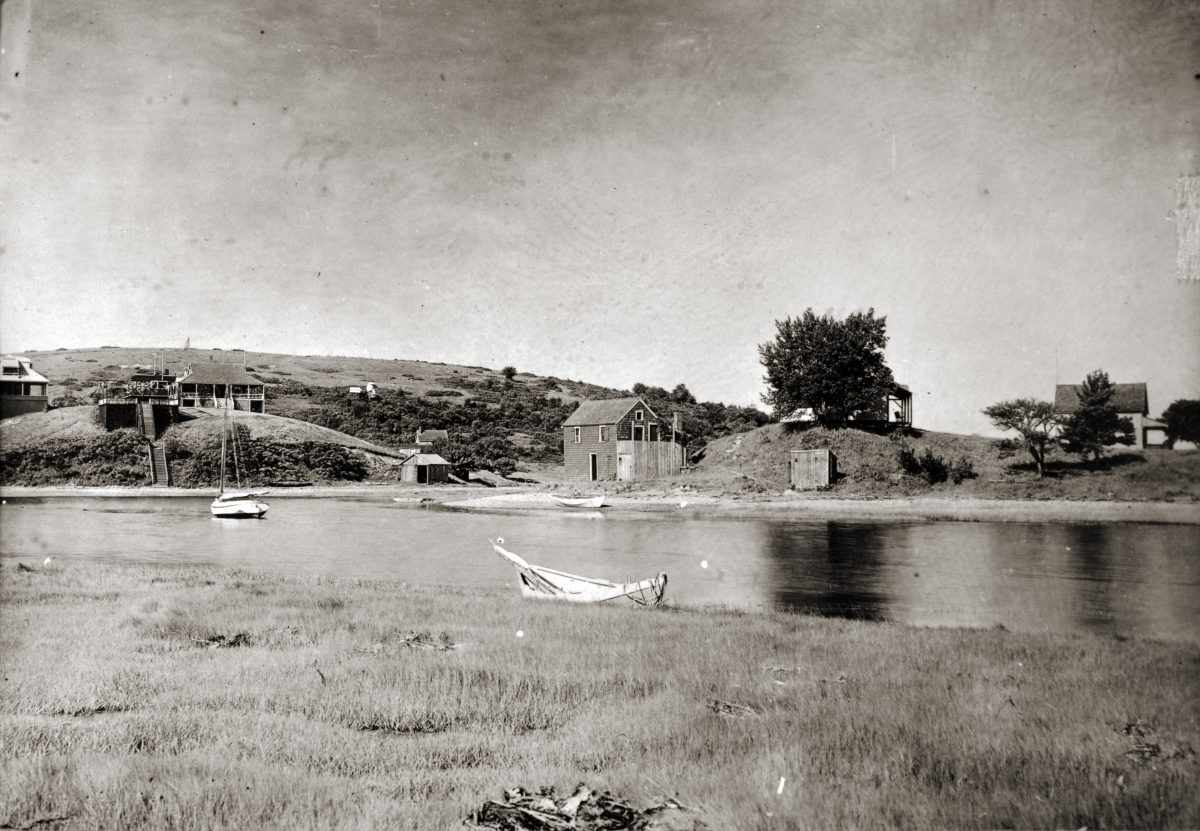

None of the Fewkes’ children followed in the father’s footsteps.
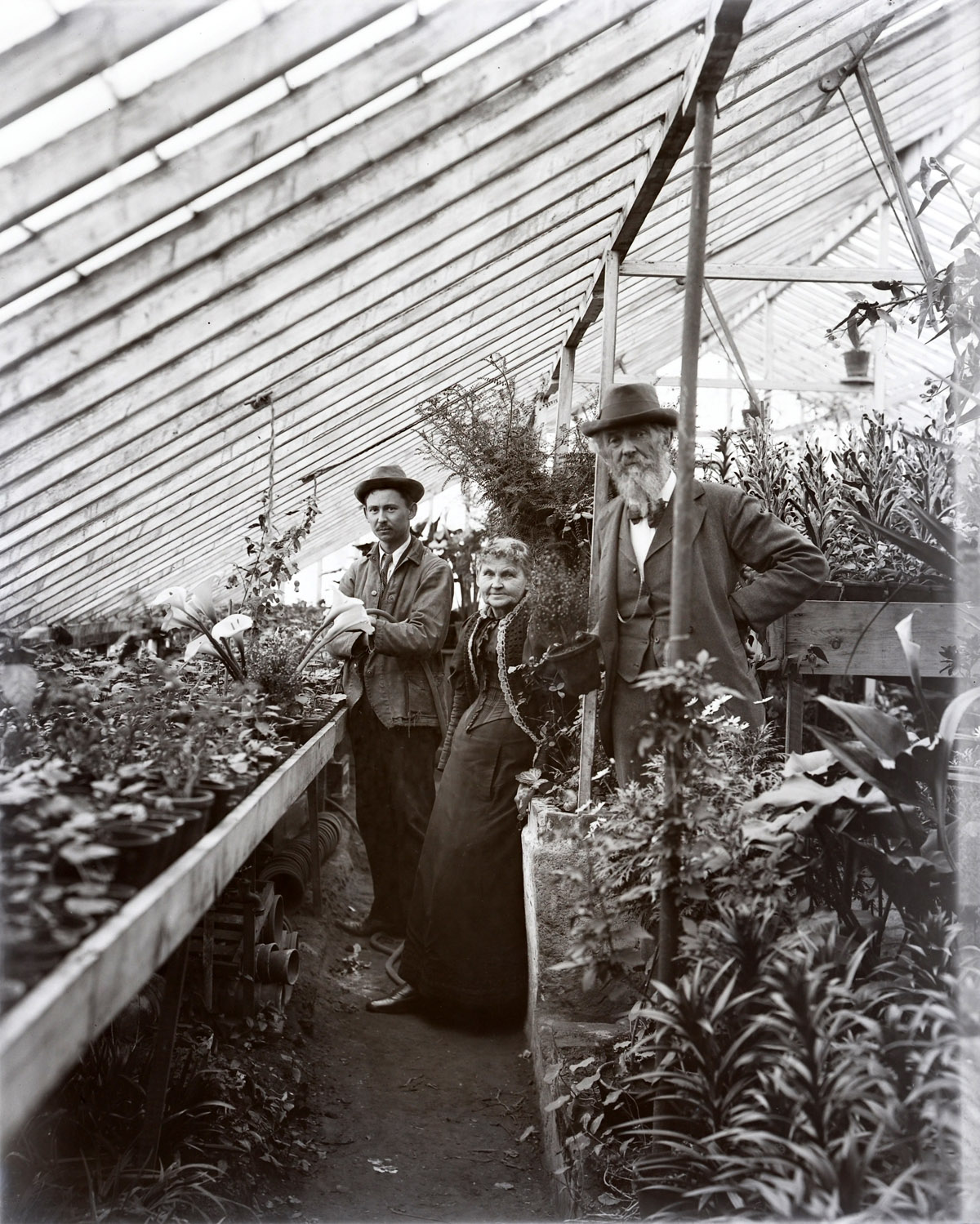
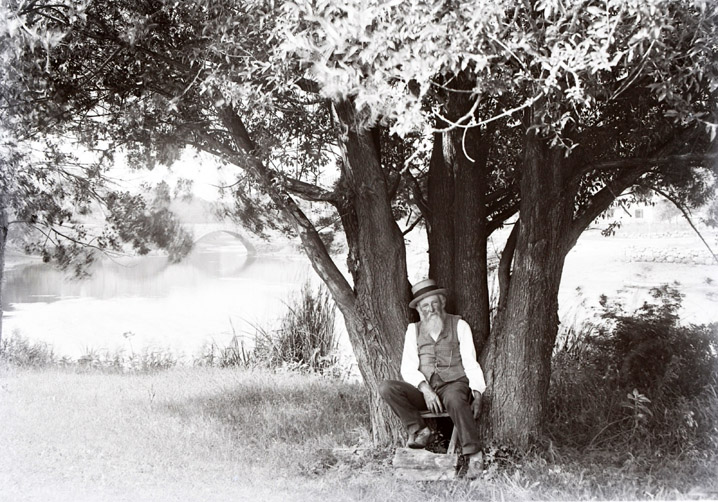
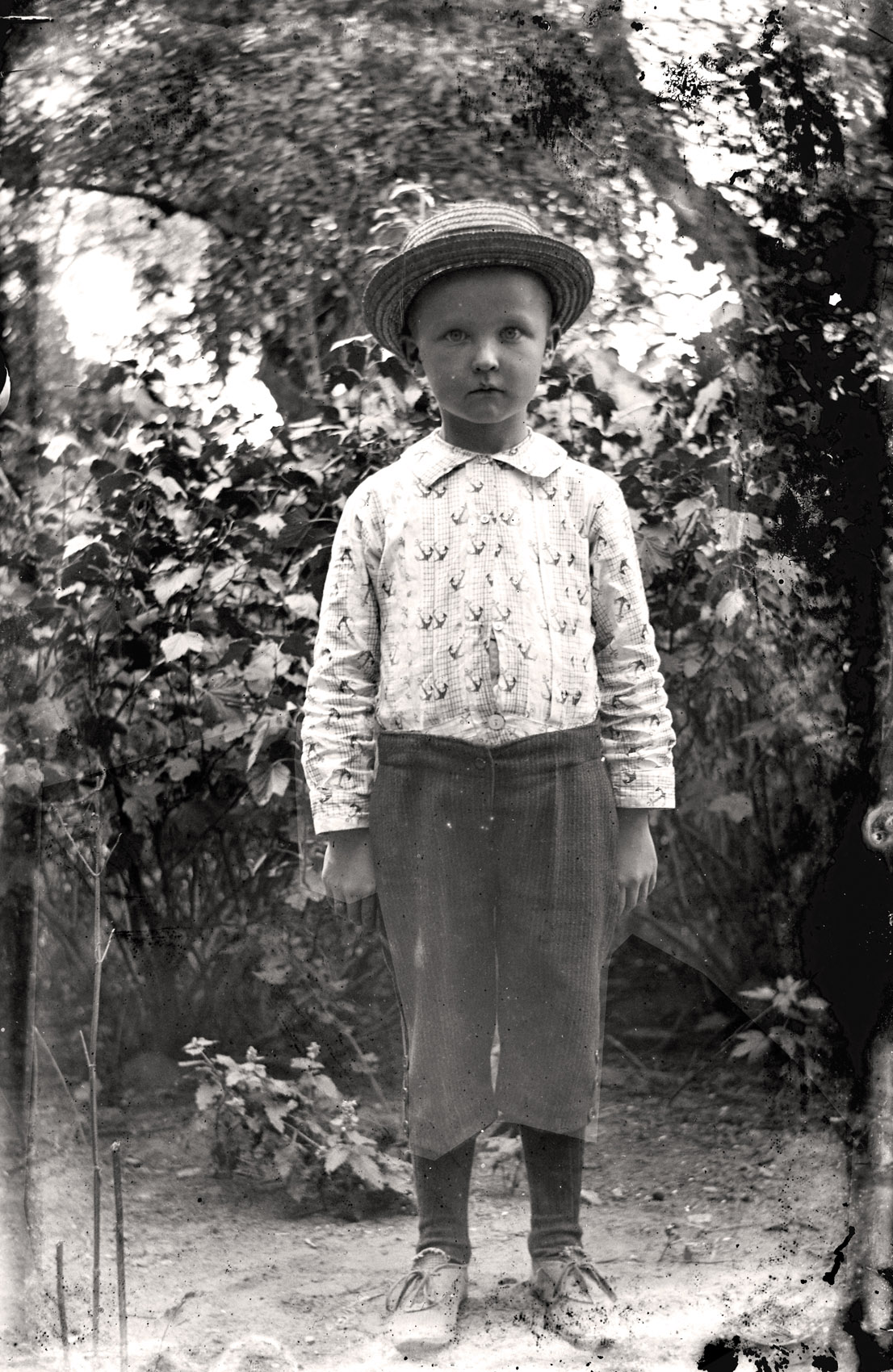
Edwin William Fewkes
Edwin William Fewkes was born on 4 November 4, 1868 to Benjamin Fewkes Jr., age 44, and Elizabeth Wilkins Fewkes, age 39. In 1896, Edwin married Nettie Seba Foss of Lynn, and they were the parents of 2 sons and 4 daughters.
- Daughter Hazel Fewkes died at 7 days, and is buried at the Old North Burying Ground.
- Daughter Hazel Appleton Fewkes died at three years of age and is buried at Highland Cemetery.
- Daughter Mildred C. Fewkes lived until 1973 and spent her life in Ipswich.
- Son Louis Melvin Fewkes was born on 18 August 1898, in Ipswich, when Edwin William Fewkes was 29. He married Lila Ottilie Redhed on 7 April 1930, in Maricopa, Arizona, and they lived in Los Angeles for about 10 years. He died on 17 August 1957, in San Luis Obispo, California the age of 58.
- Son, Pvt. Howard Edwin Fewkes was born one year before his father’s death, and died at age 36 in 1944 during WWII at Bretagne, France. He is buried at Highland Cemetery in Ipswich.
Edwin William Fewkes died on 14 March 1908 in Ipswich at age 39, and was buried at the Highland Cemetery in Ipswich. We have no death records for his wife, Nettie Seba Foss.
Jesse Fewkes
Benjamin Fewkes’ fourth son, Jesse Fewkes (1826-1911), moved to Watertown in 1850. He had an ardent interest in natural history and was a member of the historical societies of Newton, Watertown, and Ipswich. Jesse Fewkes presented a paper titled “Fine Thread, Lace and Hosiery” before the Ipswich Historical Society in 1905. Read also, Ipswich Hosiery, Page 3. His son, Jesse Walter Fewkes (1850-1930), became a renowned marine zoologist and ethnologist, and was Chief of the Bureau of Ethnology at the Smithsonian Museum from 1918 to 1928.
Emma Fewkes and Edward Darling
Emma Matilda Fewkes, born 15 Oct., 1832, daughter of Benjamin & Elisabeth Fewkes, married Edward Christopher Darling on May 22, 1872. She was his second wife. Emma died Dec. 20, 1903, aged 71 years. They had two children: Bessie, born 1 May 1873, who died five days after her birth; and Edward Lee Darling (1874 – 1962), who became one of the earliest and most prolific photographers in Ipswich. The location of their home is not recorded.
Gravestones at the Old North Burying Ground

G-195 Benjamin Fewkes, born in England, Apr. 13, 1788 – died Dec. 27, 1869, aged 81 yrs. His virtues dignified his humble birth, and let his mind above the things of earth; Benjamin Fewkes 13 Apr 1788 – 27 Dec 1869
- Benjamin F. Fewkes – died April 17, 1915, aged 63 years, 1 month, 12 days He was the son of Benjamin and Elizabeth Wilkins Fewkes – – –Fewkes, Benjamin
- Edwin W. Fewkes – died March 14, 1908, aged 39 years. He was the son of Edwin and Elizabeth M. Wilkins Fewkes.
- Elizabeth M. Fewkes – died March 12, 1907, aged 78 years, 6 months She was the daughter of Alexander Wilkins and Jannett McLachin; Edwin W. Fewkes 1868 – 14 Mar 1908
- Emma M. Fewkes – see Emma M. Darling.
- Hazel Fewkes – died July 2, 1897, aged 7 days. She was the daughter of Edwin and Nettie S. Foss Fewkes— Fewkes, Hazel
B-190 (right) Henry J. Fewkes, 1849 -1890 (Fewkes, Henry Jarvis, Jr.)
- His wife, Hannah J, 1851 -1930 Hannah J. Stone Fewkes 1851 – 1930–
- Lillian Appleton Fewkes – died Aug. 25, 1907, aged 3 yrs, 3 mos. She was the daughter of Edwin W. and Nettie S. Foss Fewkes (Fewkes, Lillian Appleton)
- Sarah E. Fewkes – died March 7, 1885, aged 55 years, 8 months (Fewkes, Henry Jarvis, Jr)
G-196 Bessie May Darling, Daughter of E. C. and Emma M. Darling, died May 6, 1873, aged 6 days. *Emma M. Darling died Dec. 20, 1903, aged 71 years, 2 months, 5 days. She was the widow of Edward Darling and the daughter of Benjamin Fewkes and Elizabeth Smith. Darling, Bessie May
Sources and Further Reading
- Waters, Thomas: The Ipswich Textile Industry
- Ipswich Chronicle, Aug. 14, 1886: The Fewkes Family and How It Originated in America
- Fewkes 1886 Family Reunion news article
- Ipswich Public Library: Fewkes Records
- Ipswich Public Library: Fewkes Family Register #1
- Ipswich Public Library: Fewkes Family Register #2
- Historic Newton: Fewkes Family Papers 1867-1963
- Findagrave: Benjamin Fewkes
- Michael Brown Rare Books: Benjamin Fewkes Letters
- Benjamin Fewkes and America: Loughborough Echo – March 29th, 1935
- Quorn Village Museum
- Fewkes, Jesse: Fine Thread, Lace and Hosiery
- Fewkes Family Papers (Historic Newton)
- Newton Vital Records
- Wikipedia: Jesse Walter Fewkes
 Historic Ipswich


Thanks for this, Gordon. I mention Fewkes and the smuggled stocking machine in my new book coming out in February 2026 about Abraham Lincoln’s two tours of New England. Good to have more background on Fewkes! – David