
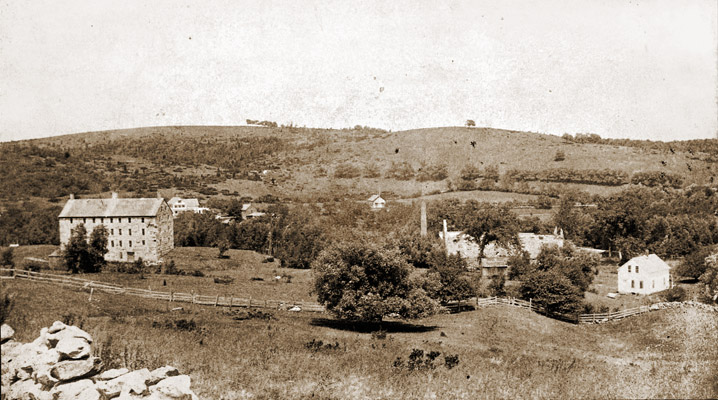
In 1829, Dr. Thomas Manning of Ipswich was granted permission to construct a 6′ tall dam and a wooden saw mill on the Ipswich River along Topsfield Rd, “Provided however, the said Thomas Manning his heirs and assigns shall make and keep open through said dam a passageway for the fish to pass up said river or stream.” The dam was constructed and a sawmill was erected but it soon burned. The mill was replaced with another which was used additionally for the sawing of veneers and turnings. About 1834, a stone factory on the Hamilton side of the river was erected, along with a stone boarding house on the slope above. Looms were installed and the weaving of woolen goods began.
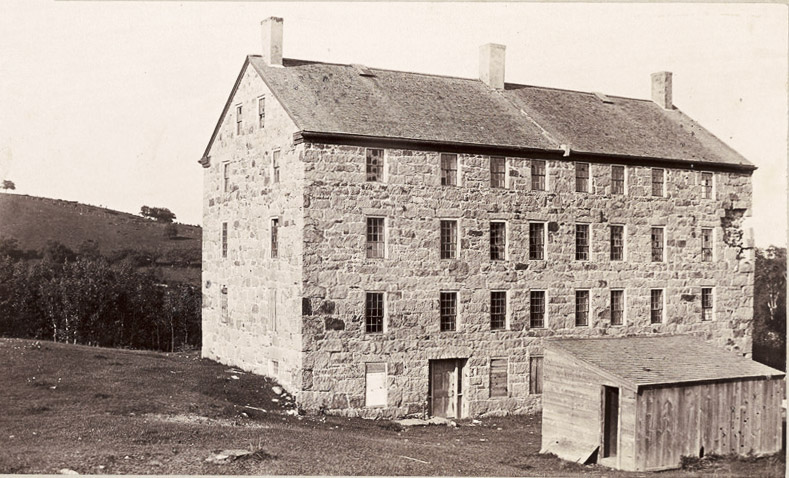
James Gage, a researcher of stone structures added the following: “On the Ipswich side of the river, there was a country store surrounded by private houses. Workers were also provided housing in the large stone house and their children were transported daily to the public schools in Ipswich and Hamilton. A bell announced the daily startup early in the morning, and employees worked 12 to 14-hour shifts 5 days a week, with a half day on Saturdays.
“There were two separate mill buildings on the property: the veneer sawmill built circa 1829 or 1830 and the 1834 woolen mill. The sawmill disappeared from the records after the 1840s. Although the timeline indicates that the United States Fireworks Company owned the mill complex from 1892 to 1895, there are no records in the Essex County Registry of Deeds that this company ever owned any property in Essex County.
“The stone boarding house is not shown on the 1906 survey of the property, and a 1903 presentation to the Ipswich Historical Society by Thomas Franklin Waters reports that the boarding house was already gone. The exact date the stone boarding house was torn down is not known, but we believe it occurred prior to 1896. Francis Dane had to build a new boarding house circa 1896 when he rebuilt the factory that year, to be used in leather manufacturing for the shoe industry.”

When Dr. Manning died on February 3, 1854, he bequeathed the greater part of his estate to the Town of Ipswich to establish the Manning High School. Still known as “Manning’s Mill,” the factory continued to operate, employing seventy people, and producing 55,000 pairs of army socks and woolen goods for Union troops during the Civil War, valuing $135,000.00.

After the war, hosiery production gave way to the manufacture of blankets by the Willowdale Manufacturing Co., and more buildings were erected for the operation: five houses for supervisors, a barn, and an office. The mill was closed during the summer months because of low water flow. The mill began producing cotton textiles, but closed in 1870.

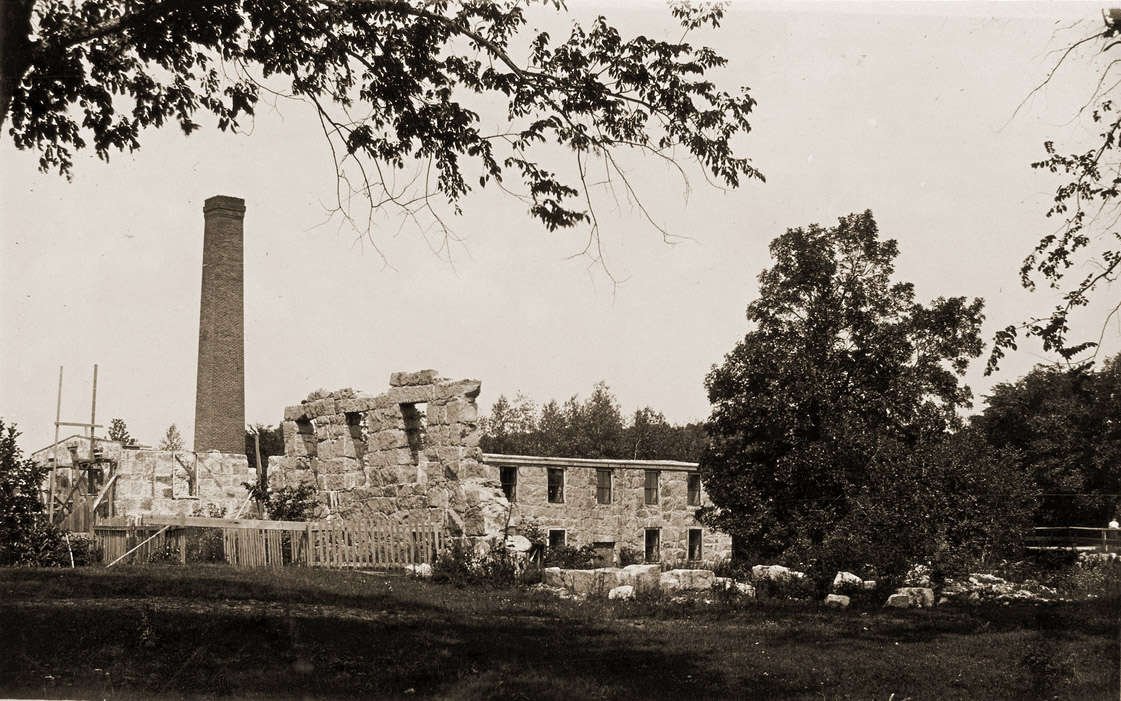

The mill burned in 1881, and again on Jan. 12, 1884. Most of the stone walls for the mill building collapsed, and it never reopened. The stone boarding house was taken down, and many of the houses at Manning Mills were moved in 1905 to Mill St. in Hamilton.


All that remains of the once flourishing mill and small community around it are the dam, the foundation of the mill, and a sluiceway parallel with the river that directed the water flow under the mill. In the early 1940s, a fish ladder was constructed on the Hamilton side of the river to allow for fish passage around the Foote Brothers dam on the Ipswich River. This fish ladder was sturdy and still survives but was found to be a poorly functioning fish ladder.

Foote Brothers Canoe Rentals was established at the dam in 1955, and is still in operation today with second and third-generation family members operating the business. Foote Brothers has been working with the Commonwealth of Massachusetts Division of Marine Fisheries to construct a new fish passage ladder at the Willowdale Dam.
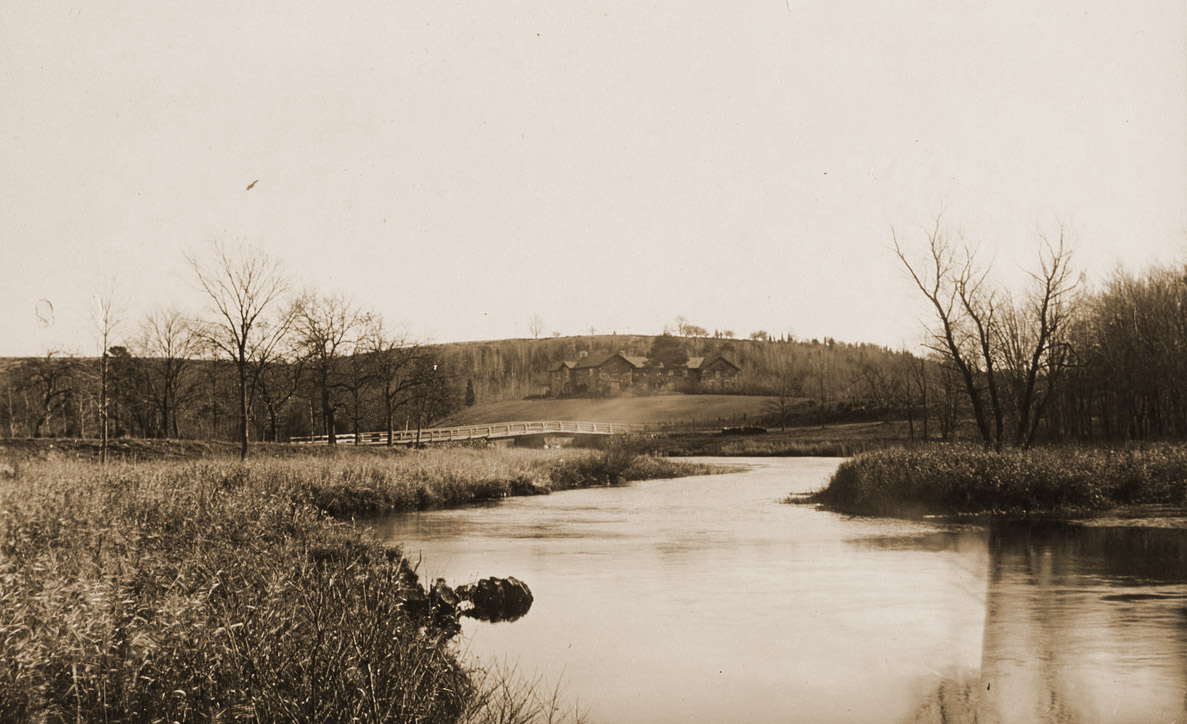
Around 1891, Bradley Palmer, a prominent U.S. attorney and businessman began to acquire over 10,000 acres near the Ipswich-Topsfield line, including the former properties of the Willowdale Mill. In 1898 Palmer purchased the hereditary farm holdings of the Lamson family, some 747 acres, and built a stone mansion near the Lamson House, leaving it standing. He named the estate Willowdale. Between the years 1937 and 1944, Palmer donated all of the property to the Commonwealth of Massachusetts, leasing back the 107 acres surrounding his mansion. The state established Bradley Palmer State Park and Willowdale State Forest on the properties.
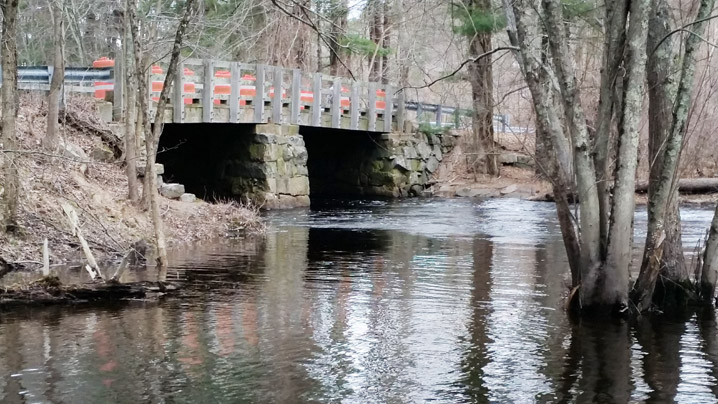
Willowdale Mill Reservation, Parking on Winthrop St. near the Willowdale bridge with a trail taking you from the mill ruins along the old sluiceway to the dam.
Willowdale State Forest, 40 miles of trails. The East side on Topsfield and Linebrook Rd. connects to Hood Pond, Willowdale West.
Bradley Palmer State Park, Topsfield Rd., Ipswich Winthrop Rd. Hamilton, Asbury St., Topsfield. Willowdale and Bradley Palmer trail map

Sources and further reading:
- Gage, James: “History and Surface Archaeology of the Willowdale Mills Complex on the Ipswich River, Winthrop Street, Hamilton, Massachusetts 1830-1915” (127 pages, 40MB, PDF)
- Waters, Thomas Franklin: Ipswich in the Massachusetts Bay Colony Vol. 2
- Waters, Thomas Franklin: Publications of the Ipswich Historical Commission XIII Ipswich Mills and Factories
- Hurd, Duane Hamilton: History of Essex County, Massachusetts: With Biographical Sketches
- Hamilton-Wenham Library: Manning’s Wool Mill
- Images: Digital Commonwealth, Hamilton Historical Society Collection
- Ipswich Mills and Factories
- Industrial History of the Ipswich River
- Laws of the Commonwealth of Massachusetts CHAP CXXXV An Act to authorize Thomas Manning to erect a Dam across Ipswich River
 Historic Ipswich
In the summer of 1954, when I was 12 years old and fishing just above the junction of the Ipswich River and the Wenham canal, I noticed the river surface roiling as far as I could see downstream. Quickly the roiling reached me and I started to catch Alwives on every cast of my fly. These spawning fish must have used the fish ladder on the Hamilton side of the Willowdale dam. My father explained its function to me the previous Spring when he took me trout fishing below the dam. I think the fish ladder may have been more effective during river floods, but I never again saw Alewives in the Ipswich river.
Very informative,. What about Pine Swamp and the different ventures down there.
I can’t wait to return to Ma this summer and am ready to explore this area! Thanks
I love your history lessons. Thank you.