
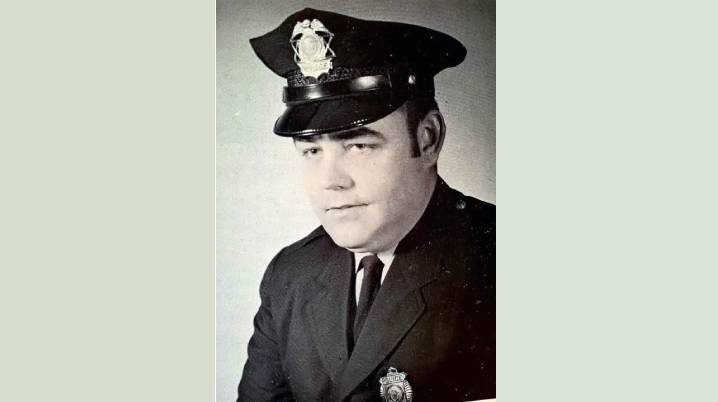
The Admirable Life and Times of Richard C. Lombard
Richard C. Lombard, after a long and blessed life, passed away on August 4, 2026, in the presence of those whom he loved so much. He had just celebrated his 90th birthday in May and was still going strong right up until his end. Richard was born in town in 1936, the middle child between his older sister Anne and younger brother Brian, and also in the middle of the Great Depression, which made him a member of the Silent Generation. He did not conform to that. Richard grew up living and working at Groton House Farm, aka the Winthrop Estate, bordering Ipswich and Hamilton along the Ipswich River. From an early age, Richard learned the realities of birth and death, and the necessity and value of hard work; think of haying, milking, driving cattle and horses, feeding livestock and all aspects of the farm life spread before him. This work made him a very strong man, naturally so, with no pretensions.
After graduating from Essex Aggie High School, Richard joined the Navy to see the world. He first served on the Battleship USS Wisconsin. Richard liked the way the ship behaved in rough seas, but thought it too crowded. He was then assigned to the USS Bigelow, a recently launched Forrest Sherman-class Navy Destroyer, and became an official Tin Can Sailor. The Bigelow was more to Richard’s liking. He trained and was rated as a Gunner’s Mate. Richard also had a side hustle. Sailors at sea often gamble away their meager earnings playing cards or rolling dice. Not Richard. Never a gambler, Richard served as ship’s banker, offering tapped-out sailors low-interest payday loans with reasonable terms. No one ever defaulted.
Following four years of service, Rich mustered out and returned home. Working the farm, thinking about his future, Richard made by far the best move ever on the chessboard of his life. He met the comely young Myrna Diamond. They dated. Myrna loved Richard’s kindness and sense of humor. Richard admired how smart Myrna was and loved the way she laughed at his jokes, although he wasn’t always sure if she was laughing with him or at him. Then, as young people often do, they fell in love and decided to get married. The year was 1962, and their lives together sailed full steam ahead into an exciting future.
They lived on the farm in a rented house while Myrna, having completed nursing school and aced her board exam, took a job as a Registered Nurse at Cable Hospital. For his part, Richard worked the farm, did some plumbing and heating, and wondered if his uncle, Ipswich Police Chief Stanley Surpitski, might see fit to appoint him as a Special Officer. He did, and in 1964, “Rich” pinned on a badge and dipped his big toe to test the waters of police work.
Special Officers then had part-time, occasional assignments either at construction sites or selected patrol work. Rich often caught the Sunday morning downtown walking beat. Essentially this meant walking along the square, helping people cross the street to or from church or to the news store for the Sunday paper, and chatting amiably with passers-by. It was here that Rich first met the infamous “guy downtown,” a confidential and mysterious source of information who provided Rich the skinny on current events, famous Clamtown personages, and the nitty-gritty regarding his fellow officers. This guy downtown would whisper in Rich’s ear right up to the day he retired from the I.P.D. Many who worked with Rich would learn this guy knew more about them than they knew about themselves.
Unsure if he wanted to dive into the police life full-time, Rich continued to work the several jobs available to him. But with the expanded responsibilities of fatherhood and home ownership a reality, and a steady, predictable income a necessity, Rich joined the Ipswich Police as a full-time officer in 1969, thus contributing in his own unique way to the greatest show on earth.
Policing in Ipswich from the mid-1960s through the early 1980s would be unrecognizable today. The times then were different, the town was different, and the people were very different. It was a bare-knuckled place of working folks, with lots of alcohol and drug-fueled rowdiness. Weekend nights downtown provided the police with lots of activity, often requiring the deployment of two beat men just to keep the peace and protect property from vandalism and unrestrained hooliganism. Rich landed in the middle of it all, and dealt with his share of the unreasonable and the disorderly. He worked with some of the best cops too: Chief Brouillette, Sergeants Boley Radzinski, Frank Geist, and Joe Carpenter. He walked the beat with Walt Klimaszeski, Ed Rauscher, Pete Foote, Jack Poirier, Ed Walsh, Jim Souter, Dick Burns, Charlie Surpitski, and later, Charlie Cooper and Ted Lemieux. His style was old-school: talk them down and move them along. His favorite rejoinder to verbal foolishness was, “Don’t talk crazy.” When a handful remained troublesome beyond permissible parameters, well, his natural farmer strength would ultimately settle things.
Work shifts were chosen by seniority. Initially, Rich picked the 6 pm -2 am walking beat. He liked having his days free. He could work more that way. Walking downtown in all sorts of weather in every season had its challenges; you got cold, wet, or overheated. But Rich mastered the art of the beat. He would take a break in the passing cruiser. He was also a frequent visitor at the firehouse, seated on the back porch of Engine Three, chatting with Mel Bowen or the other firefighters. Once, when a fire alarm came in and the truck flew from the apparatus bay, it had Rich’s uniform hat on the back step where he had left it. In cold or rainy weather, Rich learned to always leave his badge on the windowsill against the storm glass to keep it cold, and how to stand under the downspout of Town Hall to appropriately dampen his raincoat. This was all purposed to trick the desk sergeant, sitting warm and dry in the station, into thinking that he had been outside fighting the elements to keep the public safe. In time and with seniority, Rich settled into life on the day shift, working 10 am to 6 pm. The guy downtown shifted with him.
When their kids Mary and Katy came onto the scene, Myrna told Richard that they needed to buy a proper home to raise a family. Rich asked why. He grew up on a farm; why couldn’t they? Besides, houses cost a lot of money, and they would have to take out a loan. The erstwhile Navy banker was nervous about this role reversal. Myrna told him not to worry, just go buy one. Eventually, Rich found a lovely cape-style home located on the exclusive Newmarch Peninsula. Myrna inspected same and, although noticing some minor flaws, approved the purchase and told Rich to buy it while she busied herself drawing up the punch list of things for him to fix.
In his spare time between working, raising a family, and completing home upgrade projects, Rich attended North Shore Community College in pursuit of a degree in Law Enforcement. On the whole, he enjoyed the educational experience, with the exception of the psychology coursework. Rich bristled at the dry, academic presentation from an instructor unschooled in the realities of police work. He obtained his degree, and further developed his own unique approach to community policing underscored by kindness toward others, and continued to burnish his reputation as cop-philosopher.
Rich was nearing the apex of the American Dream: a beautiful and loving wife, two adorable children, a roof over their heads they could call their own, and a secure job affording him the opportunity to work overtime and pay off his mortgage early. He only wanted a decent automobile. He preferred to drive Nash, later AMC, Ramblers, and always ordered them from Price’s Auto Sales on Route One. And indeed, these were special orders. Rich didn’t care for frilly extras like carpeting, radios, or a newfangled flub-dub known as air conditioning. Basically, he just wanted four wheels, a motor, bench seats, and doors. And a roof, of course. But eventually Ramblers went the way of the Dodo Bird, and became unobtainable. Rich then got himself a Ford Mustang. He did his own maintenance. When the springs gave out, he had the frame welded to the body. The ride was bumpy. When the front passenger floor rusted out, he replaced it with plywood – standard grade, not pressure-treated. When it rained, Myrna needed to wear hip boots in the car. During a wet Nor’easter, Myrna finally had to put her foot down. It went through the car floor, and that was the end of the Mustang.
While Rich remained planted with both feet firmly on the ground, usually working traffic details, Myrna flew with the eagles and went back to school to become a Nurse Practitioner. She developed a reputation as one of the best in her field and even carried two beepers, not one. Patients and doctors called her at all hours seeking advice and direction, which she provided with great knowledge, patience, and skill. The wise ones listened and heeded her counsel; those who did not were soon viewed at the funeral parlor.
Rich was well-known for his work ethic and irrepressible energy. When assigned to evenings, Rich worked extra during the a.m. hours, and reversed the pattern when he came down to days. Off-duty weekends were a mixed bag, and if he did not have family or important obligations elsewhere, Rich could be counted on to fill a last-minute sick call, cover a shift during a resource-depleting incident, or work the Friday night Bingo game at the church and the Drop-in-Center detail on Saturday. Up until his sixtieth birthday, he would even bounce in smiling for a midnight shift, and follow it up with his regular day shift. Desk Sergeants desperate to cover a Saturday night sick call scofflaw loved him for this, as did the folks working the shift with him. They were guaranteed a quiet night with a lot of laughs to boot. They would also be privy to the latest from the guy downtown. Some things are richer than gold.
Rich had a keen, piercing appreciation for the absurdities of life and the actors in the play, developing his own interpretation of law and order which, in application, worked well for him and the public at large. Grounded in common sense, Rich emphasized order over law; as long as people would listen to reason, modify their immediate behavior, shut up and not talk crazy for the next eight hours, the law was satisfied. He really did not like to arrest people. This merely created hardship for them and unneeded paperwork for him.
When the downtown changed, and the beat assignments faded away, Rich moved to a cruiser patrol. Rich didn’t like it much at first. Motor vehicle enforcement was a challenge; tickets were expensive, and the public didn’t appreciate them. He was very good at an accident or other type of emergency, though, caring for the injured and upset, directing traffic to keep everyone safe from harm, and leaving the fault-finding to the insurance companies. They liked to find fault.
He eventually learned to embrace the freedom made available to him by working in the car. He always preferred the North patrol, which covered the west side of town. Foolish supervisors who would assign him the South sector on the east side of town would grow frustrated when a call came in from the Neck area, and Rich would respond from Hood’s Pond. Rich wasn’t one for any of that esoteric police radio-speak either. He liked it straight up and simple; no codes, no location checks, and no drama. He always liked Car #3, no matter what year, make, or model. It was easy to remember. When the Department changed car numbers to 1641, 1642, etc, Rich would still respond “Three.”
On the street, or in a crisis, Rich brought calm to chaos. Inside the station house, he preferred the inverse, and enjoyed firing up his fan base with outrageous insinuations against some of his favorite foils; those cops who would seriously believe what he said to them about themselves. This was usually qualified by a reference to what the guy downtown told him. When challenged, Rich would walk it back, move it sideways, and turn it around, leaving his target confused and unsure if he had been insulted or not. Rich often commented that I was the only cop in the place who could follow his thought pattern and discursive conversational blitz. I remain unsure that he meant this as a compliment.
Meanwhile, Rich and Myrna’s daughters Mary and Katy finished Bishop Fenwick and, in what seemed a nanosecond later, graduated from college. They both got good jobs. Mary married Joseph Tkakuck, who had a cousin in the National Hockey League. We all immediately hit up Rich for gratis NHL tickets. Rich replied, “Don’t talk crazy.” Mary and Joe had a daughter named Kamryn. Katy married Brendon Bruner. They had Jonathan and Abigale. Rich and Myrna were over the moon with all three.
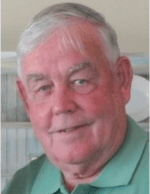
But Father Time was moving on its own schedule. The rule is, when you turn sixty-five, you must retire from the police service. Rich hated the idea and remained in place until escorted from the building on that dreaded day. Happy Birthday to no one. But we saluted him in formation as he passed, and threw him a backyard shin-dig after work, where Rich collected valuable prizes and mementos. Myrna and the kids threw him an even more lavish roast later that year. It featured comedians, clowns, and politicians. I know I’m repeating myself here.
Rich remained idly retired for about 12-15 hours. His first post-retirement venture was with O’Keefe, later Lannan Chevrolet on County Road. He also hooked up with John and Robin Morris at their funeral parlor on North Main Street, and worked wakes and funerals for the next twenty-five years along with Howie Bowen and other local guys. Sadly, Rich would see his brother Brian and his wife Barbara off from there, as well as his beloved daughter Mary. His sister Anne had already passed in 1988, as well as his father John and mother Eleanor. Through all of this sadness, Rich kept his head up and his faith strong. He went on living with a smile on his face and his sadness buried deep inside, where only he and Myrna could see. They found solace and hope in being the best grandparents on earth, and the results show their success.
When Lannan left town, Rich transitioned to Gordon Florist as a delivery guy and greenhouse worker. They loved him, and he loved them, especially Pops Gordon, who thought the world of Richie. Rich ALWAYS got eight hours from a workday there, and once related his secret to me. One half hour for delivery, one hour to talk. The math worked for him.
When Rich hit eighty-nine, he decided to slow down. He and Myrna took the trip of a lifetime to Ireland, and spent many hours in cemeteries looking up relatives, or looking down at them, I guess. But even Rich couldn’t escape the wear and tear that comes from living a long and productive life. He managed well for many years, his number one nurse constantly at his side, telling him what to do. He always listened, but even long, happy, blessed lives end. When Rich knew his time was over, he bid his loved ones goodbye and closed his eyes forever.
On a sunny August morning, Rich took his last ride around town, and, as Father Brogan noted, arrived at church late for his own funeral. With nephew Kevin at the wheel and Myrna giving directions, they drove Rich down Town Hill, past the police station on Elm Street and around the corner along the War Memorial on South Main. He crossed over the Choate Bridge and onto Central Street, something he had done on foot and in the cruiser thousands of times before. The guy downtown was standing on Quint’s Corner. He whispered a quiet goodbye as the hearse passed and caught the next train out of town. He was sad. So are we.
After the Funeral Mass, Rich was driven to a north-facing slope at the top of the town where he lived, loved, and had protected for many decades. He passed under the stars and stripes, carried aloft by the Ipswich Fire Department ladder truck. The firefighters saluted, and Rich was carried by family and friends to rest next to his loved ones. He was escorted by a color guard of Ipswich police officers, resplendent in dress-blue uniforms. The Piper played. The Navy Honor Guard was there and presented Myrna with the colors and thanks of a grateful nation. After taps, a final radio call, and closing prayers were heard, a three-cannon salute sounded from the Lombard Ancient and Honorable Artillery Battery. Rich would have approved of it all, and would expect nothing less. And to those who doubt this, he would simply reply, “Don’t talk crazy.”
Discover more from Historic Ipswich
Subscribe to get the latest posts sent to your email.


Fantastic send off for one of the nicest people to ever wear blue . Tim Clancy