
Histories of a few Ipswich houses and buildings constructed in the Twentieth Century.
View also:
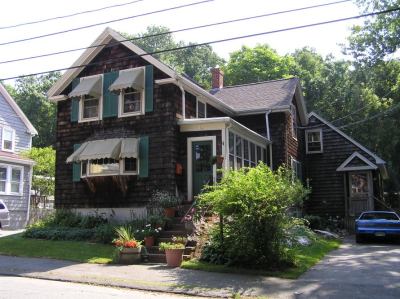 13 Manning St., the Fields House, (c. 1900) - 13 Manning St., is owned by “Mrs. Fields” in the 1910 map. The town assessors database gives the date of construction as 1870. However, the 1884 Ipswich map shows no houses yet constructed on the street, which had not even been added in the 1872 map.… Continue reading 13 Manning St., the Fields House, (c. 1900)
 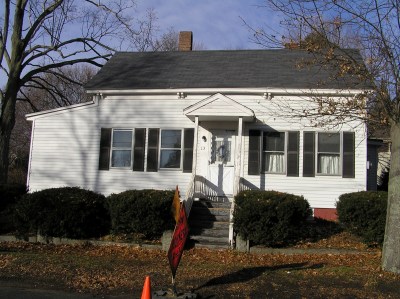 13 Liberty St., the Roberts House (c. 1900) - The 1910 Ipswich map shows the owner of the house at 13 Liberty St. as D. A. Roberts.… Continue reading 13 Liberty St., the Roberts House (c. 1900)
  101 Central Street, the Newton House (c. 1900) - This house first appears in the 1910 Ipswich map on the same lot with the house in front, labeled, “Mrs. Newton.” Mary Newton was the widow of Nashua Newton. In 1908, she sold this parcel with buildings to Arthur Bishop. Sources:
 5 Wildes Court, the James H. and Frances Lakeman House (c. 1900) - Until the early 20th Century, Central and Hammatt Streets did not exist. This lot with a house was owned in 1910 by J. J. H. Lakeman, the Ipswich postmaster.… Continue reading 5 Wildes Court, the James H. and Frances Lakeman House (c. 1900)
 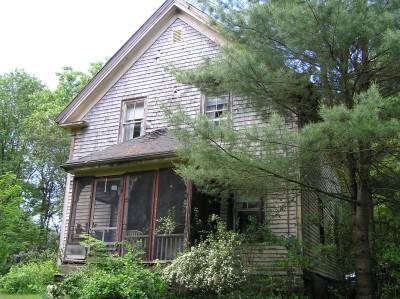 4 Old Right Road, the Tenney House (c. 1900) - The small abandoned house, first on the left on Old Right Road (just after passing 282 Linebrook Road) is owned by the State and is part of the Willowdale State Forest. The house first appears on the 1910 Ipswich map owned by “Mrs. Tenney.”
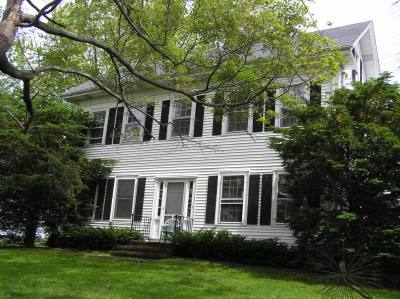 94 Essex Road, the William G. Horton House (c. 1900) - This house first appears in the 1910 Ipswich map. The old grain elevator at Tedford's Lumber was once operated by William G. Horton Grain, Flower and Feed. The house today is owned by Maplecroft Farm.… Continue reading 94 Essex Road, the William G. Horton House (c. 1900)
 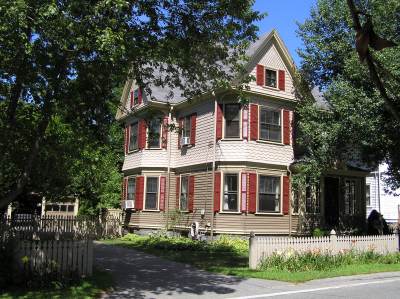 12 Argilla Road, the Norman J. Bolles House (c.1900) - The first known owner of this house is Norman J. Bolles, president of the Ipswich Savings bank. This house is a fine example of a Queen Anne Cottage. Features include a wealth of shingle types and an exceptional shingled carriage house in the rear which retains a cupola.… Continue reading 12 Argilla Road, the Norman J. Bolles House (c.1900)
 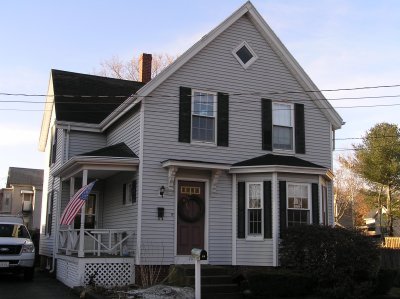 10 Brown Street, Essex Hosiery Company Worker Housing (c. 1900) - Several homes on this street were built by the short-lived Essex Hosiery Company to house their employees. The house is typical of the vernacular Victorian "gable with ell" homes built at the end of the 19th Century on Brown and Mineral Streets.… Continue reading 10 Brown Street, Essex Hosiery Company Worker Housing (c. 1900)
 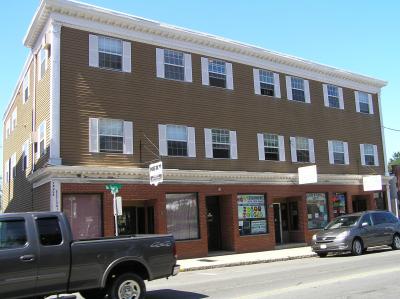 38 Central Street, the Measures Building (c. 1900) - Austin Measures built this after the Central Street fire of 1894. Measures' Candy Shop was a long-lasting institution that began in a small small building on North Main Street. The building was taken down in 1904 to construct the Colonial Building, and he reopened in this Central Street location.… Continue reading 38 Central Street, the Measures Building (c. 1900)
 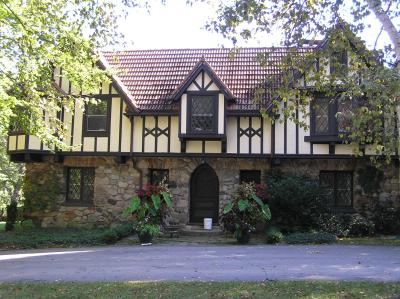 29 Labor in Vain Rd., the Isaac Foss House (c. 1900) - The extensive Foss estate was sold in parcels in 1921. The house appears to be a mix of Tudor and Richardson Romanesque.… Continue reading 29 Labor in Vain Rd., the Isaac Foss House (c. 1900)
  251 Topsfield Road, Turner Hill (1900) - Construction on the Turner Hill mansion-house began in 1900 for Charles and Ann Rice. She was killed in an equestrian accident in 1933 and a decade later the estate was purchased by the La Salette Fathers. It is now a golf club and condominium development.… Continue reading 251 Topsfield Road, Turner Hill (1900)
 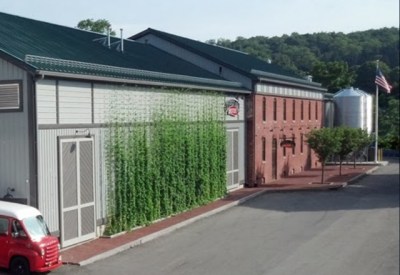 2 Brewery Place (Brown Square) Ipswich Ale Brewery (c.1900) - The Burke Shoe Heel factory burned on June 19, 1933, but this wing survived the fire, and is today the Ipswich Ale Brewery. It was the home of Saffron Brothers, the exclusive suppliers of clams to the Howard Johnson chain for 32 years.… Continue reading 2 Brewery Place (Brown Square) Ipswich Ale Brewery (c.1900)
 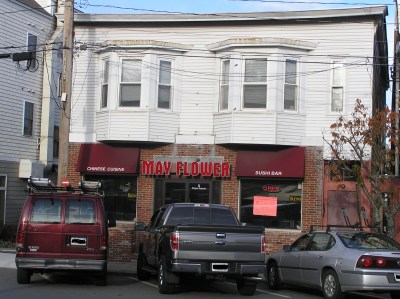 11 Depot Square, Russell’s Lunch (c. 1900) - Arthur Honey Russell is said to have been responsible for making the Ipswich fried clam famous. Folks from other cities and towns on the North Shore came to Ipswich on the train or by trolley just to eat at Russell's on Depot Square. … Continue reading 11 Depot Square, Russell’s Lunch (c. 1900)
 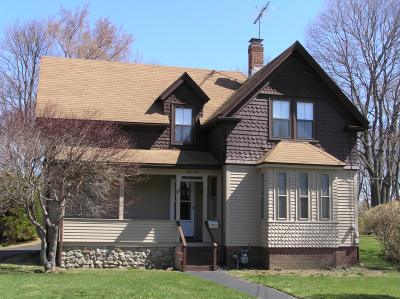 29 Woods Lane, A.L.R. Mahoney House (c. 1900) - Built circa 1900, the house at 29 Woods Lane appears on the 1910 Ipswich map with the name “Mrs. A.L.K. Mahoney."… Continue reading 29 Woods Lane, A.L.R. Mahoney House (c. 1900)
  5 Hemlock Drive: Fairview, the Charles Campbell Estate (1900) - Hidden in the woods near the corner of County Rd. and Lakeman’s Lane is a beautiful “Tudor Revival” house, built in 1900 for Charles A Campbell. Thomas Franklin Waters wrote about the early history of the property in Volume II, Ipswich in the Massachusetts Bay Colony: “On the east side of the Bay Road, the great tract of pasture, tillage… Continue reading 5 Hemlock Drive: Fairview, the Charles Campbell Estate (1900)
 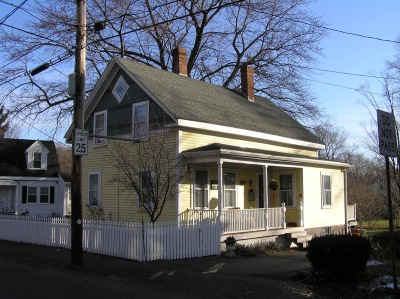 10 Liberty St., the Brown House (c. 1900) - The house at 10 Center Street is not in the 1884 Ipswich map, but appears in the 1910 Ipswich map under the name "C. Brown."… Continue reading 10 Liberty St., the Brown House (c. 1900)
 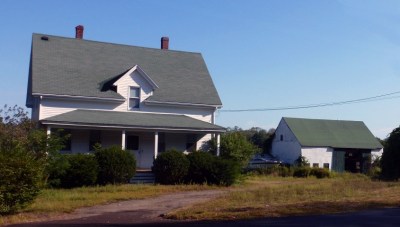 173 Linebrook Road, the Kozeneski Farm (c. 1900, demolished 2019) - On April 24, 2018, a demolition request was filed for the Kozeneski farmhouse at 173 Linebrook Road, The developer has offered assistance with removal costs. … Continue reading 173 Linebrook Road, the Kozeneski Farm (c. 1900, demolished 2019)
 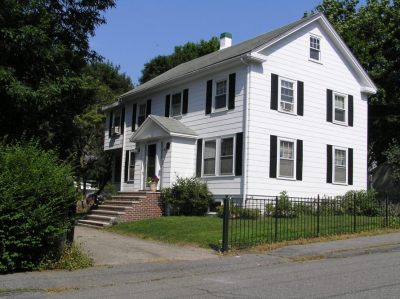 24 Manning Street, the A. P. Hills House (c. 1900) - This house first appears in the 1910 map of Ipswich. … Continue reading 24 Manning Street, the A. P. Hills House (c. 1900)
 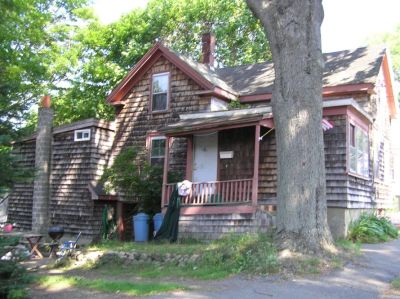 16 Manning St. (c. 1900) - 16 Manning St., circa 1900. G. A. Lord owned this house, another one house next door and one on High St.… Continue reading 16 Manning St. (c. 1900)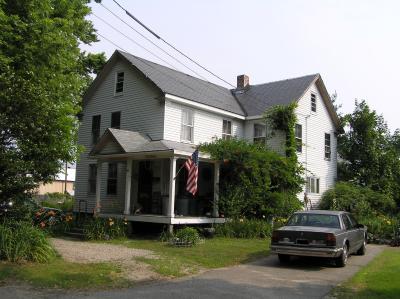
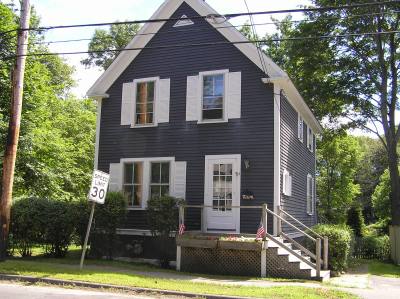 3 Argilla Rd. (c. 1900) - This house has not been researched… Continue reading 3 Argilla Rd. (c. 1900)
 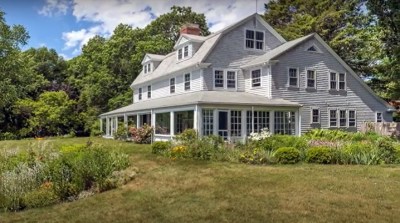 211 Argilla Rd., the Mary Ann Archer Lord House (1902) - In 1902, Mary Ann Archer Lord of Boston purchased 20 Acres of Land on Argilla Road from the Smith family. No buildings are mentioned in the deed. In 1929, Sidney Lord and other parties sold to Benjamin Van Wick the property, including buildings, bordering on the lot of Dr. Charles Townsend, the well-known naturalist. Van… Continue reading 211 Argilla Rd., the Mary Ann Archer Lord House (1902)
 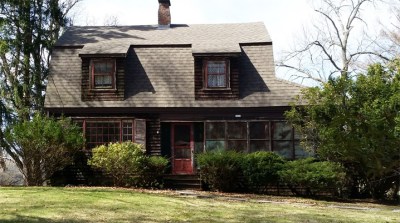 6 Riverbank Lane, the Henry Rodman Kenyon house (1902) - In 1899 Kenyon married the t pastel portraitist Caroline A. Savary and by 1901 Kenyon and his wife had settled at Ipswich in a home they called the Riverbank House. His small scenic paintings record the seasons in Ipswich.… Continue reading 6 Riverbank Lane, the Henry Rodman Kenyon house (1902)
 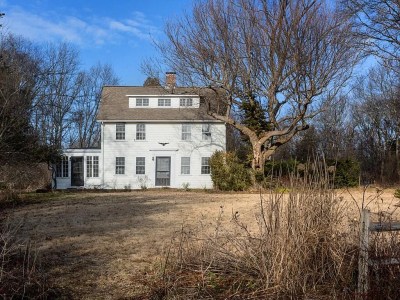 217 Argilla Road, the Townsend House (1902) - In 1892 Dr. Charles Wendell Townsend and his family began spending summers on Argilla Road, staying at Smith’s Boarding house. He built his house a decade later. Townsend is known for his nature studies of the sand dunes and wildlife at Crane Beach and Plum Island.… Continue reading 217 Argilla Road, the Townsend House (1902)
 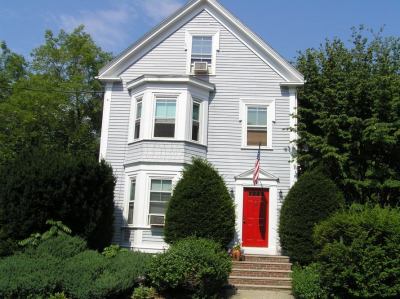 20 Manning Street (1902) - 18-20 Manning St. is believed to have been constructed in 1902 and was owned by G. A. Lord in the 1910 Ipswich map. A different structure is shown in the 1893 Ipswich Birdseye Map.… Continue reading 20 Manning Street (1902)
 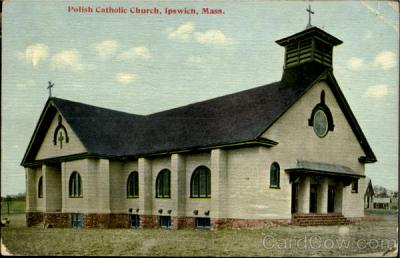 28 Topsfield Road, Sacred Heart Church (1903) - Large numbers of Polish immigrants began coming to Ipswich in the late 19th and early 20th centuries. The church and rectory were constructed in 1908. In 1999 the Archdiocese announced plans to close the church. While the Sacred Heart building retains most of its original appearance, the interior was converted into luxury apartments. The Rectory is now a private residence.… Continue reading 28 Topsfield Road, Sacred Heart Church (1903)
 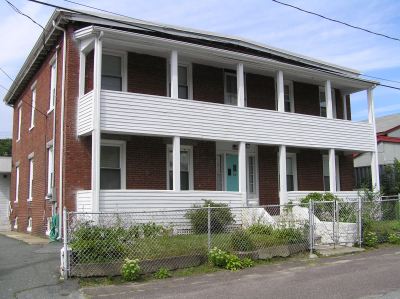 19 Brown Square (1903) - Harold Bowen wrote that this building was constructed from bricks that were saved from where the parking lot is now for the Ipswich Inn opposite N. Main st.… Continue reading 19 Brown Square (1903)
  117 County Road, the Hellenic Center (1904) - Mrs. Anna P. Peabody purchased thiis property in 1903-4 and transformed the bare pastures into a beautiful estate which named Floriana. For many years it has served as the Hellenic Center for the town's Greek population.… Continue reading 117 County Road, the Hellenic Center (1904)
 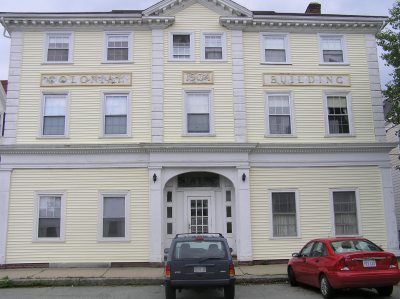 22 North Main Street, the Colonial Building (1904) - The Colonial Building at 22 North Main Street was built in 1904 as a commercial venture by the Feoffees of the Little Neck Trust. Ralph A. Daniels of Rowley had a furniture store in the building and Howard J. Blake, Jr. had a hardware store at one time. One floor of the building was rented by the School Board in 1907 to accommodate the 9th grade. Charles Lampson converted the building into apartments about 1945.… Continue reading 22 North Main Street, the Colonial Building (1904)
 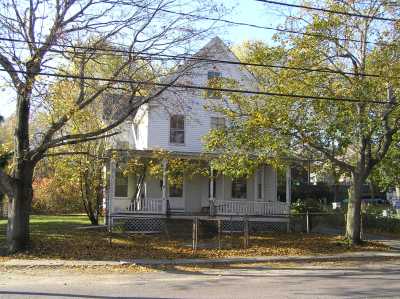 44 Washington St., the Howard Hills House (1905) - The house at 44 Washington Street was built between 1902 and 1907, and was constructed for Howard S. Hills who was manager of Russell’s Ideal Lunch at Depot Square.… Continue reading 44 Washington St., the Howard Hills House (1905)
 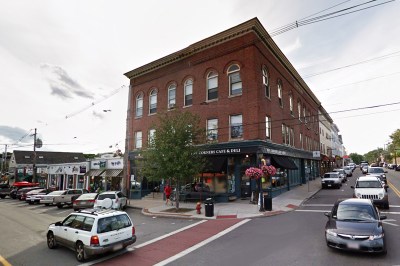 2 Central Street, the Tyler Block (1906) - The Tyler Building, was the last commercial block on Central Street to be constructed after the 1894 Central Street fire. It was the home of Tyler's Department Store and Quint's Drugs, and houses the Heart and Soul restaurant.… Continue reading 2 Central Street, the Tyler Block (1906)
  136 County Rd., the Francis Henry Richardson House (1902) - The artist Francis Henry Richardson built a house for his family in Ipswich after studying at the Academie Julian in France. In Ipswich he concentrated on landscapes and only a few portraits. His exhibitions included the National Academy of Design, Pennsylvania Academy, Detroit Museum of Art, Salamagundi Club and others, receiving the Philadelphia Art Society medal in 1902 and the Boston Art Club Purchase Prize in 1903.… Continue reading 136 County Rd., the Francis Henry Richardson House (1902)
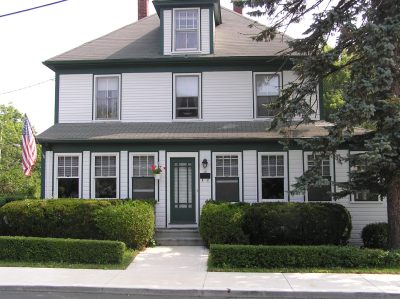 19 Putnam Rd., the Lezon Home (c. 1910) - The first known owners were George and Emma Holmes, who in 1916 sold the house and land to Stanislaw and Karolina Lezon.… Continue reading 19 Putnam Rd., the Lezon Home (c. 1910)
 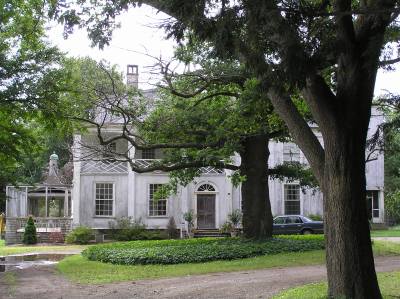 21 Spring Street, the G. F. Swain Summer Estate (b. 1910) - George Swain married Mary Hayden Lord, the daughter of William Safford Lord of Salem. This house was their summer home.… Continue reading 21 Spring Street, the G. F. Swain Summer Estate (b. 1910)
 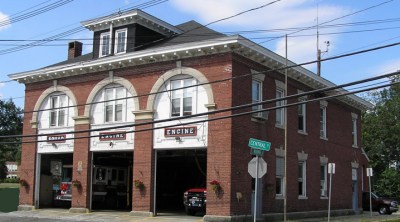 55 Central Street, Central Fire Station (1907) - Constructed for horse-drawn equipment in 1908, this building has served for over a century as the Ipswich fire station.… Continue reading 55 Central Street, Central Fire Station (1907)
 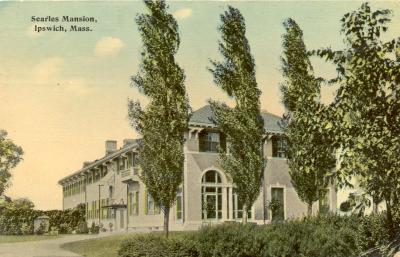 30 Jeffreys Neck Road, The Searle Estate (1910) - This mansion was designed in the form of a Florentine villa, and the living room and dining room were decorated in a Louis XVI style. The house served as the Searle family summer home until 1919, and has been abandoned since the Sisters of Notre Dame de Namur purchased the property in 1960, and is in a state of decay.… Continue reading 30 Jeffreys Neck Road, The Searle Estate (1910)
 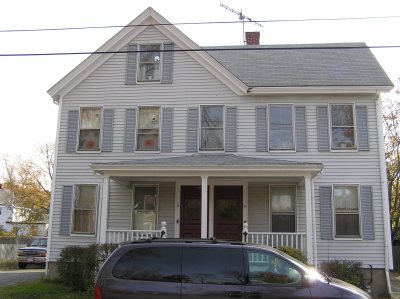 8 Kimball Ave, the W. B. Richards House (b. 1910) - This house originally was at Lords Square, owned by W. B. Richards. In 1940 the home was moved over the High Street bridge to 8 Kimball Avenue where it still stands today, and Mutual built a new service station which now houses Tick's Auto Service.… Continue reading 8 Kimball Ave, the W. B. Richards House (b. 1910)
 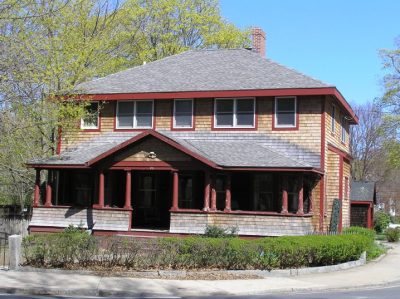 70 County Road, the John Hayes House (1910) - The hip roof , the generous front porch and extended eaves of this 1910 house draw from the Arts and Crafts architectural styles of the early 20th Century. The Hayes Tavern at Depot Square was known as the Hayes Hotel in the mid-Twentieth Century. … Continue reading 70 County Road, the John Hayes House (1910)
 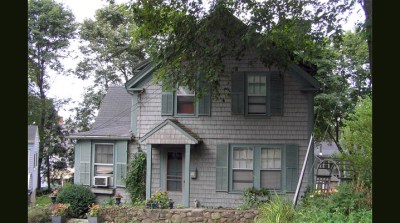 4 Highland Ave., the George & Elizabeth Spencer House (c 1910) - The house at 4 Highland Ave. was constructed by George Spencer after he acquired the lot from his father, George Spencer II in 1906.… Continue reading 4 Highland Ave., the George & Elizabeth Spencer House (c 1910)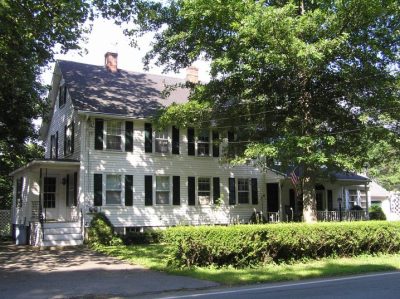
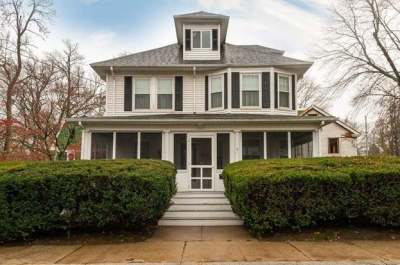 1 Poplar Street, the Lathrop House (1912) - This lot is part of the old "School Orchard" on which the town's first grammar school was built. In the 1800s Wallace and Charles Lathrop purchased the land for their well-established coal, ice and wood distribution business. … Continue reading 1 Poplar Street, the Lathrop House (1912)
  176 Argilla Rd., “Thatchbanks” (1912) - Mr. and Mrs. August Neal Rantoul built their large and solid brick house "Thatchbank" at 176 Argilla Rd. on the southwest side of Goodale pond in 1912 on land purchased from John August Burnham.… Continue reading 176 Argilla Rd., “Thatchbanks” (1912)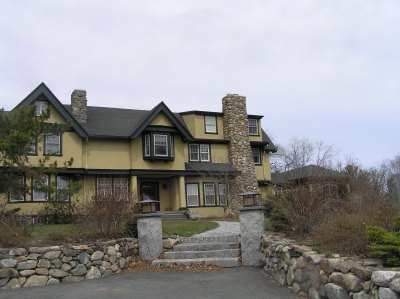
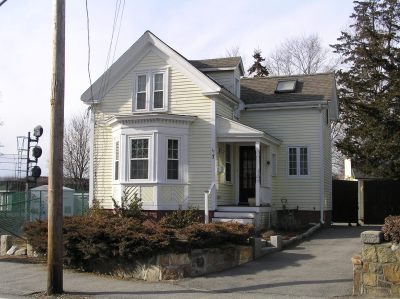 7 Linebrook Road (1914) - The actual date of construction for the house at 7 Linebrook Rd. is unverified. There is a tradition that 5 Linebrook was originally at this location and was moved.… Continue reading 7 Linebrook Road (1914)
 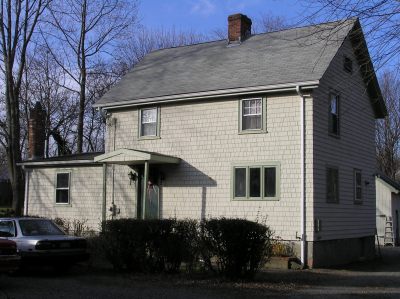 14 Mineral Street (c. 1915) - The house at 14 Mineral Street does not appear on the 1910 Ipswich map but was probably constructed or moved to this location soon after.… Continue reading 14 Mineral Street (c. 1915)
 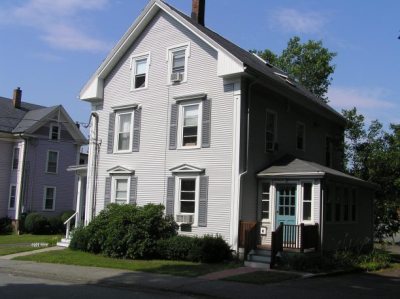 14 Manning Street (c. 1915) - The house at 14 Manning Street does not appear in the 1910 Ipswich map, but based on the architectural characteristics in common with other houses on the street is presumed to have been constructed shortly thereafter.… Continue reading 14 Manning Street (c. 1915)
 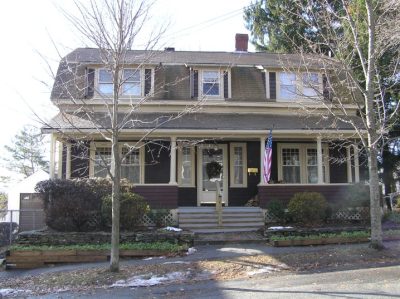 4 Maple Avenue, the Arthur H. and Madeline H. Tozer House (1915) - Arthur Tozer was a music teacher for the public schools and apparently worked out of his home. Prior to construction of this house, land on which it stands was part of a larger parcel belonging to G. Tozer.… Continue reading 4 Maple Avenue, the Arthur H. and Madeline H. Tozer House (1915)
 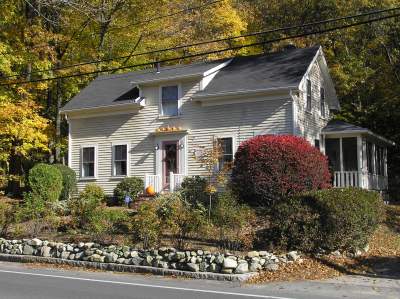 327 High Street, the Annie Donovan House (1873, Rebuilt in 1914) - The 1873 house at this location burned in 1914, but was rebuilt with the same appearance of a one-and-one-half story cottage of the 19th Century.… Continue reading 327 High Street, the Annie Donovan House (1873, Rebuilt in 1914)
 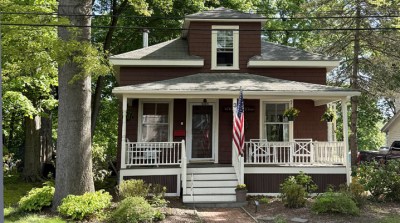 3 Maple Avenue, the Harland and Blanche Burke House (1916) - Harland Burke was a superintendent at F.L. Burke & Son, heel manufacturers whose factory was at Brown Square. … Continue reading 3 Maple Avenue, the Harland and Blanche Burke House (1916)
  126 County Road, Benjamin Stickney Cable Memorial Hospital (1916-1987) - Cable Memorial Hospital was built in 1917 on the former Kimball estate, known in Colonial times as Windmill Hill. After his friend Benjamin Stickney Cable was killed in an automotive accident, Richard Teller Crane Jr. purchased the land and donated $145,000 to the hospital construction fund.… Continue reading 126 County Road, Benjamin Stickney Cable Memorial Hospital (1916-1987)
  208 Argilla Road, the Barney-Smith House (1917) - The 1884 Ipswich map shows the owner of the acreage as John B. Caverly. The 1910 Ipswich map shows the property belonging to “Dr. Smith.” On March 29th, 1913, Theobald Smith sold “a parcel of land and saltmarsh” to Margaret H. Barney, (Salem Deeds, book 2204, page 575). The Barneys built the present estate house.… Continue reading 208 Argilla Road, the Barney-Smith House (1917)
 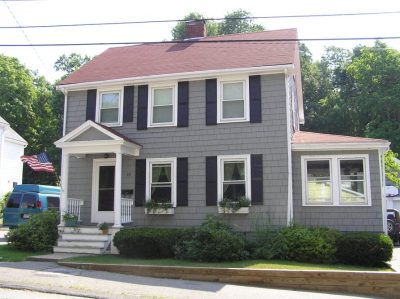 15 Manning Street (c 1920) - The Ipswich assessors database provides a date of 1920 for this house.… Continue reading 15 Manning Street (c 1920)
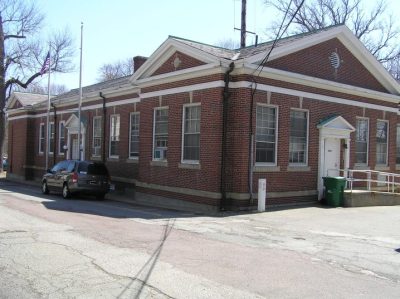 15 Elm Street, the Old Town Hall Annex (c. 1920) - The brick building at 15 Elm Street was known officially as the Town Hall Annex, constructed in the early 20th Century. It is presently the Ipswich Police Department.
… Continue reading 15 Elm Street, the Old Town Hall Annex (c. 1920)
15 Elm Street, the Old Town Hall Annex (c. 1920) - The brick building at 15 Elm Street was known officially as the Town Hall Annex, constructed in the early 20th Century. It is presently the Ipswich Police Department.
… Continue reading 15 Elm Street, the Old Town Hall Annex (c. 1920)  126 High Street, Burnham’s Antiques (c 1920) - Ralph W. Burnham owned several Ipswich antiques businesses at the turn of the 20th Century. He employed experts to repair and restore antique rugs, at High Street store, which was later used as a marine supplies store and still stands today.… Continue reading 126 High Street, Burnham’s Antiques (c 1920)
 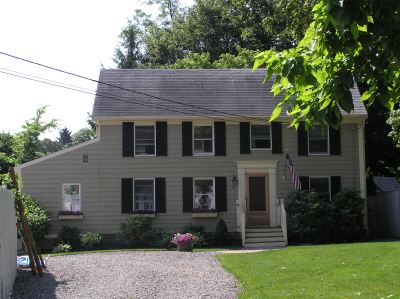 55 East St. (c. 1922) - This house is said to have been constructed from the front left section of Asa Lord's store when it was removed from Lord Square in the 1920s.… Continue reading 55 East St. (c. 1922)
 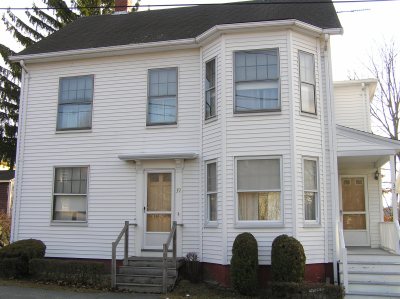 39 Mineral Street (c. 1920) - The building at this location in the 1910 Ipswich map was a two story barn or storage building belonging to the Smith family. It is unclear if this is the same structure converted into a residence.… Continue reading 39 Mineral Street (c. 1920)
 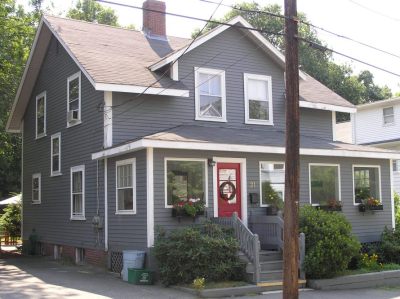 21 Manning Street - The date of construction for this house is uncertain. The Ipswich assessors database shows the date of construction as 1990. The 1893 Ipswich birdseye map and 1910 map shows show a utilitarian structure at this location, which may have been converted or a new house placed on an older foundation.… Continue reading 21 Manning Street
 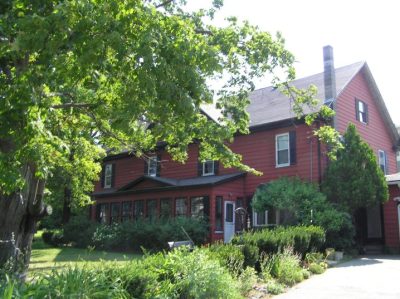 3 Manning St. (after 1910) - 3 Manning Street. An empty lot is shown on the 1910 Ipswich map, owned by E. W. Russell.… Continue reading 3 Manning St. (after 1910)
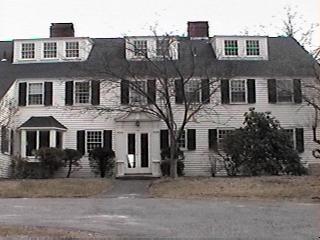
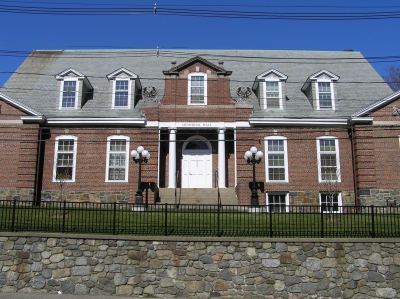 33 Central Street, Memorial Hall (1921) - In 1921 the Memorial Building was built in memory of Ipswich Veterans. The long stairs from Central Street were difficult. The town sold the building to a non-profit corporation in 2003 and the building was renovated into affordable elderly housing.… Continue reading 33 Central Street, Memorial Hall (1921)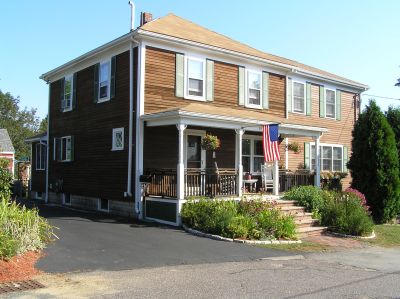
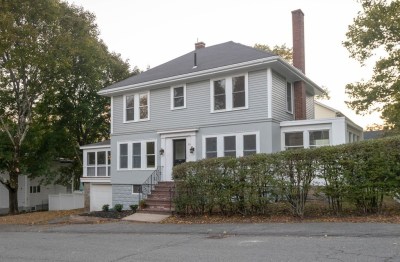 26 Manning Street, the Sullivan House (1927) - The 17th Century Caleb Lord house on the corner of High and Manning Streets was removed in 1927 and was replaced by the home of Bernard Sullivan. This is a modified form of the "American foursquare" house of the 1920s and 30s.… Continue reading 26 Manning Street, the Sullivan House (1927)
  The Crane Estate at Castle Hill (1928) - Castle Neck and Crane Beach have a long history of ownership by several families before being granted by the Cranes to the Trustees of Reservations.… Continue reading The Crane Estate at Castle Hill (1928)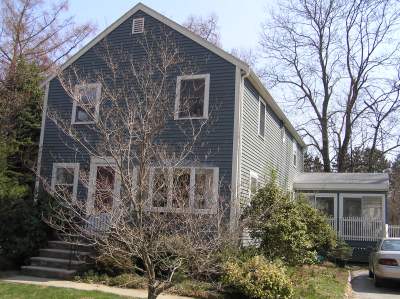
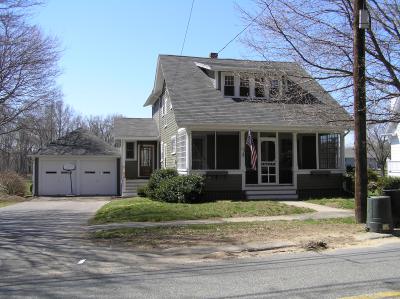
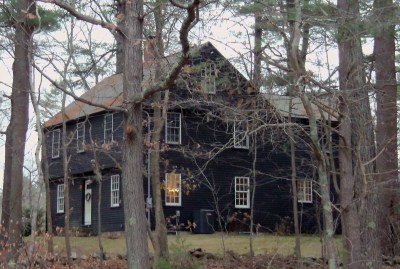 402 Linebrook Rd. (1929) - The Colonial replica house at 402 Linebrook Rd. in Ipswich sits across from the Old Linebrook Cemetery. The Ipswich Assessors site lists the date of construction as 1929. The name of the builder is unknown. The owner of the house at this location in 1910 was W. W. Ballard.
 55 Waldingfield Rd., “Waldingfield” (1929) - Daniel and Helen Appleton built the original Waldingfield mansion with the early Samuel Appleton homestead attached. The houses were were destroyed by fire in 1916. A new house was later built by his daughter, Julia, and her husband, Charles Bird. Trails on the Julia Bird Reservation are open to the public.… Continue reading 55 Waldingfield Rd., “Waldingfield” (1929)
  41-47 South Main St., R. W. Davis Dealership (1930) - The buildings at 41 and 47 South Main were the R. W. Davis automotive dealership. By 1930, the Thomas Manning House had been moved to the Timothy Souther lot, and R. W. Davis had built a brick building for his automobile dealership. The buildings currently house the store, “Anntiques.”
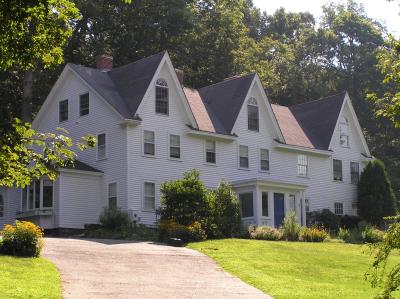 44 Argilla Rd. (c. 1930) - This large gothic revival house is not on the 1910 map, but a 1920 date is on the Ipswich assessors site.
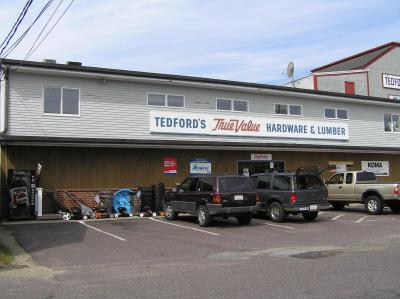 10 Brown Square, Tedfords Lumber (1933) - Tedford's Lumber on Brown Square got its start in 1946 when James Tedford Sr. and Bill Martin, just back from the Navy, took a portable sawmill into the woods to cut timber. The next year they decided to open a lumber yard on Brown Square.… Continue reading 10 Brown Square, Tedfords Lumber (1933)
 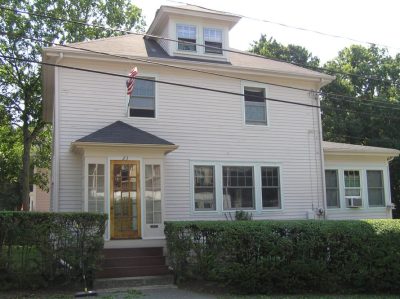 23 Manning Street (1934) - The Ipswich Assessors database shows the date of construction as 1934.… Continue reading 23 Manning Street (1934)
 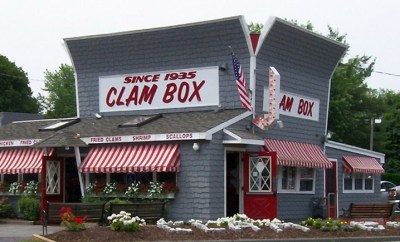 246 High St., Ipswich Clam Box (1935) - Mr. Richard J. Greenleaf Jr. devised the design of this building and constructed it with the aid of his brother-in-law and a carpenter. The design was based on the box in which fried clams were sold. The building was originally constructed of homasote and was painted silver with red trim. The stand was immediately successful:… Continue reading 246 High St., Ipswich Clam Box (1935)
 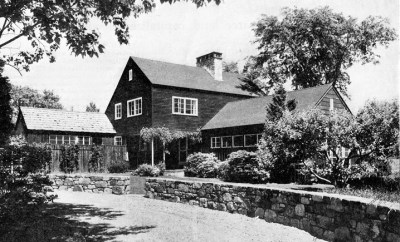 207 Argilla Rd., the Sidney Shurcliff House (1935) - Sidney Shurcliff, a Boston landscape architect hired architect George W. W. Brewster to convert the Mary Lord house into his summer residence. … Continue reading 207 Argilla Rd., the Sidney Shurcliff House (1935)
 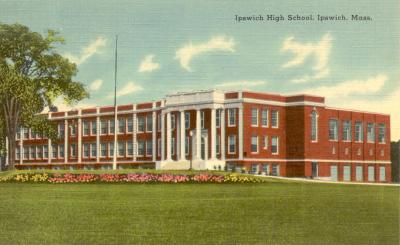 25 Green Street, the Ipswich Town Hall (1935) - A large jail/insane asylum was built on the Green Street location in 1828. It was torn down in 1934 to make room for a new high school. The building now serves as the Ipswich Town Hall. The prison workhouse still stands and was remodeled into a senior residence center.… Continue reading 25 Green Street, the Ipswich Town Hall (1935)
 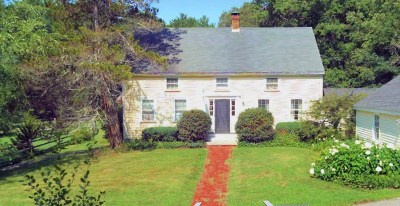 411 Linebrook Rd. (1938) - This house is said to have been constructed in 1938 to resemble the house at 419 Linebrook, incorporating similar features of the Greek Revival Vernacular style.… Continue reading 411 Linebrook Rd. (1938)
  8 Liberty Street (1938) - This 1938 Cape at 8 Liberty St. is the newest house on the street, constructed in 1938 on the stone foundation of an earlier house owned by J. Russell, according to the 1910 Ipswich map. Concrete walls were poured around that foundation, expanding it to a width of 30″ – 36″. The timber-frame barn shown… Continue reading 8 Liberty Street (1938)
  42 Washington Street, DJ’s Variety Store (1938) - This small grocery store was built between 1936 and 1940, and was operated by Christ G. Geanakos as a grocery store. Geanakos lived at 1 Burley Avenue.
… Continue reading 42 Washington Street, DJ’s Variety Store (1938)
42 Washington Street, DJ’s Variety Store (1938) - This small grocery store was built between 1936 and 1940, and was operated by Christ G. Geanakos as a grocery store. Geanakos lived at 1 Burley Avenue.
… Continue reading 42 Washington Street, DJ’s Variety Store (1938)  27 Market Street, the Ipswich Post Office (1939) - The Ipswich Post Office was built on Market St. in 1939 with U.S. Treasury funds. … Continue reading 27 Market Street, the Ipswich Post Office (1939)
 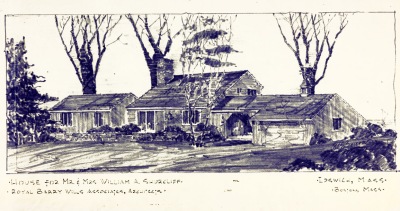 203 Argilla Rd., the William Shurcliff House (1963) - The house at 203 Argilla Rd. was designed in 1963 for William Shurcliff by architect Royal Barry Wills.… Continue reading 203 Argilla Rd., the William Shurcliff House (1963)
 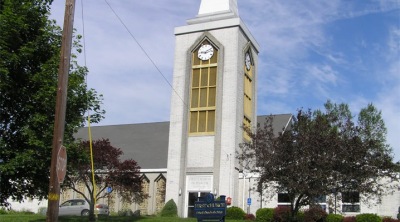 1 Meeting House Green, the First Congregational Church (1971) - A meeting house was built here by 1636. This is the sixth church on this spot. The previous historic building burned in 1965. This green has always been the religious and governmental heart of Ipswich.… Continue reading 1 Meeting House Green, the First Congregational Church (1971)
 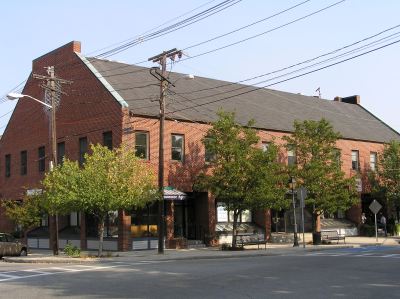 61 Market Street, formerly the Damon Block (1982) - This is the third commercial building at that location. The Court House on Town Hill moved to this location in the mid-19th Century by Curtis Damon. It was destroyed by fire in 1894 and replaced by a large elegant Victorian building which burned twice.… Continue reading 61 Market Street, formerly the Damon Block (1982)
  Historic Ipswich