

In July 1813, John Hodgkins sold John Stanwood a one-acre empty lot at the corner of County Street and East Street. John sold to his son Stephen in 1827 (247: 119), and Stephen Stanwood erected the house in 1830 for a fulling mill, a process for cleaning wool. The sheep grazed on the bare hills above East and High Streets, where there were no trees other than orchards. The mill used water that still runs under Spring Street (known then as Brook Street).
In 1837, Stephen Stanwood sold the building to Isaac Stanwood, and he sold it to Daniel L. Willcomb in 1848. It was later owned by Fred Willcomb and his brother Lewis E. Willcomb, where they operated a house and store.
In the mid-19th Century, the County improved the spring on the hillside and laid a pipe to the House of Correction, which was located where the Ipswich Town Hall is now. The County Street bridge was constructed, and a large woolen mill was erected on the northeast side. As a condition for the town to pipe the water across his land, Wilcomb’s house is said to have been the first in Ipswich with running water. If you stand at the crosswalk near the intersection of County and East Streets, you will hear the sound of running water in the culvert nearby.
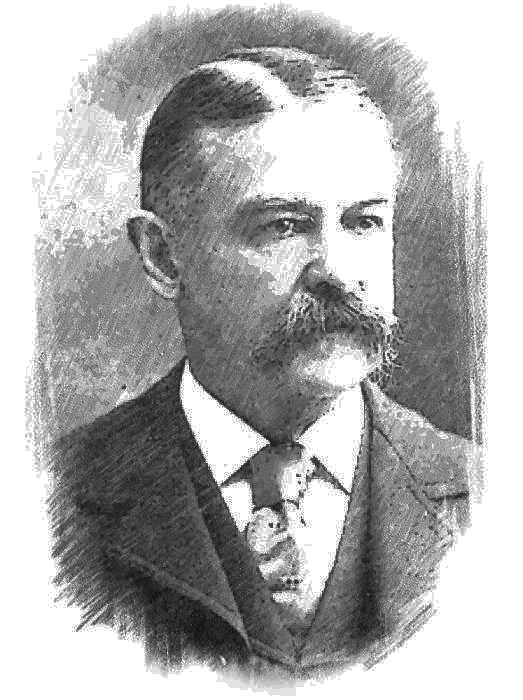
Lewis Edwin Willcomb was the son of Daniel L. and Louisa (Sweet) Willcomb. In early life, he went to California and the Northwest Territories and was in the party that founded Helena, now the capital of Montana. On April 20, 1864, at the age of 25, he was married by the Rev. Robert to Lucy A. Ross, daughter of Daniel and Elizabeth (Perkins) Ross. For many years, he conducted a general grocery and provision business at this location, known locally as Willcomb’s Square, succeeding his brother, Fred Willcomb.

This close-up from the 1872 Ipswich map shows Willcomb’s store at the intersection of East, Spring, and County Street, which was still called Cross Street at that time. It is said that when the County wanted to pipe water from the spring to the jail on Green Street, they provided running water to the Willcomb building as a condition for laying pipes through his land.
Sources:
 Historic Ipswich