
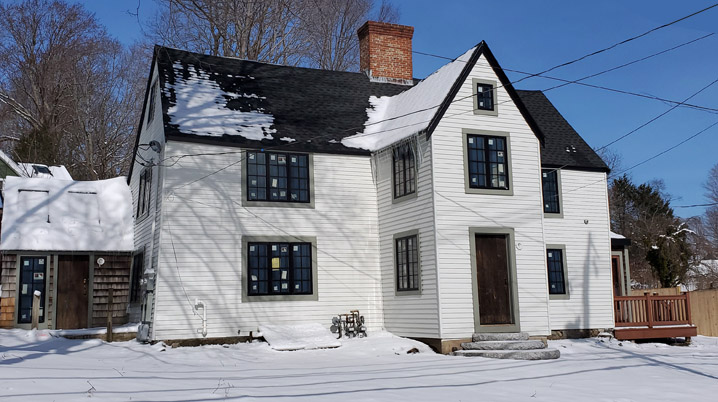
Edward Ketcham was the earliest known owner of this lot, possibly as early as 1635, and was made a Freeman of Ipswich on March 9, 1637. In 1640, his daughter Hester was freed from her service to John Woolridge, and sometime after that year, he sold land to Samuel Boarman (aka Boreman, Bowman), and moved to Southold, Long Island, where records show that he was a resident in 1651. He eventually moved to Stratford, Connecticut. In approximately 1641, Francis Jordan purchased the house lot from Samuel Boarman,” containing about one acre more or less situated in Ipswich, which I bought of Edward Ketcham.” [Ipswich Land Records 3:188].
Francis Jordan arrived with the settlers of Ipswich in 1634 at the age of 24. He married Jane Wilson in 1635, with whom he had six daughters. In 1650, he was appointed as the officer to execute corporal punishment, being allowed 20 pounds per year.” In other words, he was the “town whipper.”
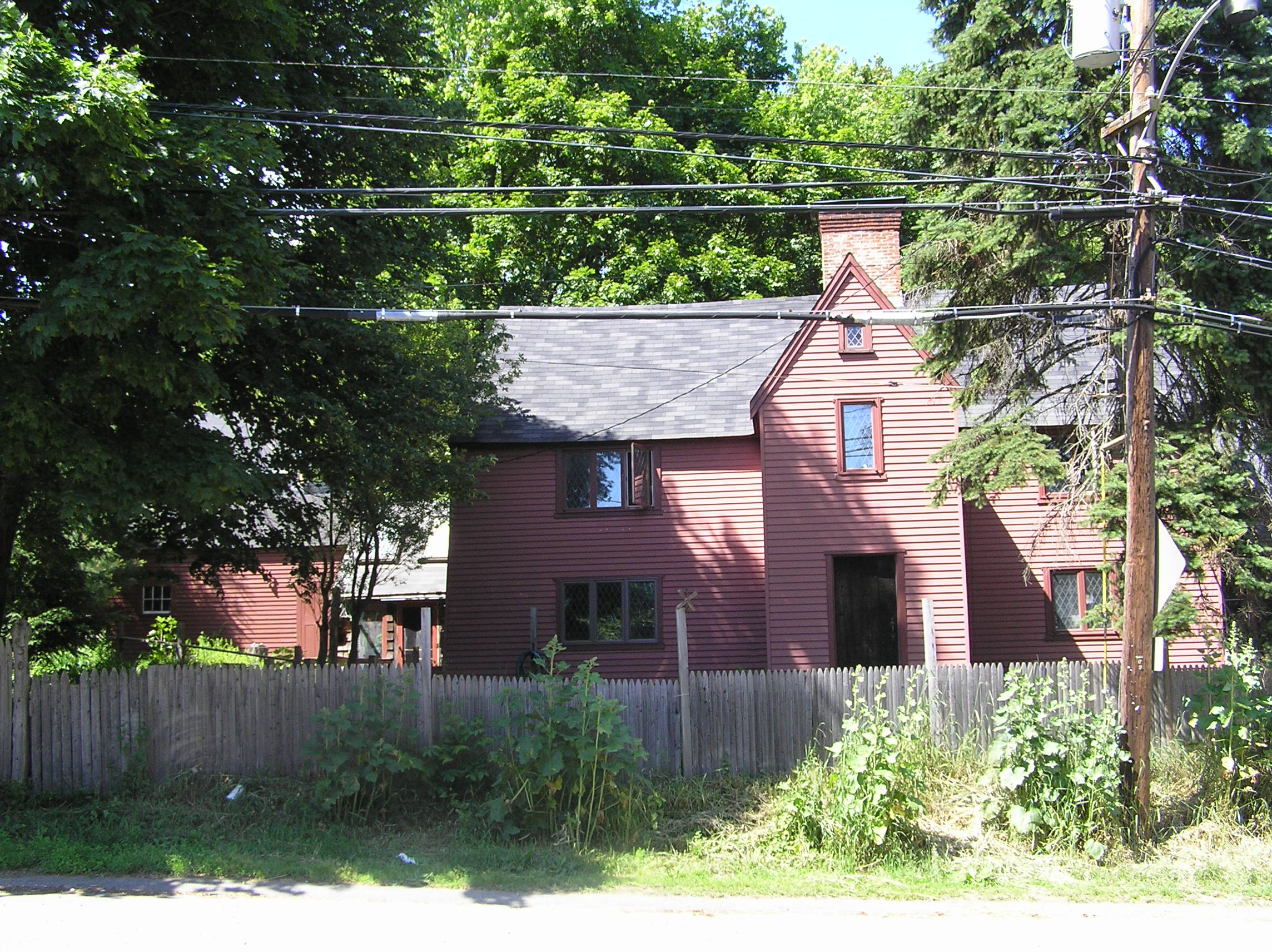
Jordan expanded his house lot through subsequent purchases. At his death in 1678, the estate was valued at £262, including a house, barn, pasture, and his planting land in the Common. By custom, we can assume that one of her married daughters resided with the widowed mother and assumed responsibility for the property. This was probably Lydia Jordan, born Feb. 14, 1643, who in 1664 married Thomas Simson, and after his death married George White on Apr. 5, 1671. Some parts of the present house appear to have been constructed or greatly altered at this time. Structural evidence indicates that the house was constructed in two stages, and the west (left) side is the earlier section.
In Jane Jordan’s will, dated Dec. 10, 1689, the widow made provisions for her own maintenance and bequeathed her lands and belongings in 6th parts to her daughters and grandchildren. She died four years later, on Oct. 30, 1693. It was not until 1708 that the widow’s executor Richard Belcher, who had married Lydia Jordan’s daughter Mary Simpson, sold “the messuage or tenement that was formerly Francis Jordan’s deceased,” to John Potter, for £88. Daniel Potter sold the house and lot to Thomas Hovey, 3rd, a fisherman, on March 31, 1741, for £270. (The first half of the 18th Century was a period of rapid inflation, and the tripling in value cannot be interpreted to mean the construction of a new house.) The timbered frame of this house is observationally similar to the oldest part of the William Howard House at the intersection of Turkey Shore and Green St., which was constructed in 1680. The specific dates of construction for this house cannot be determined without dendrochronology (tree ring dating).

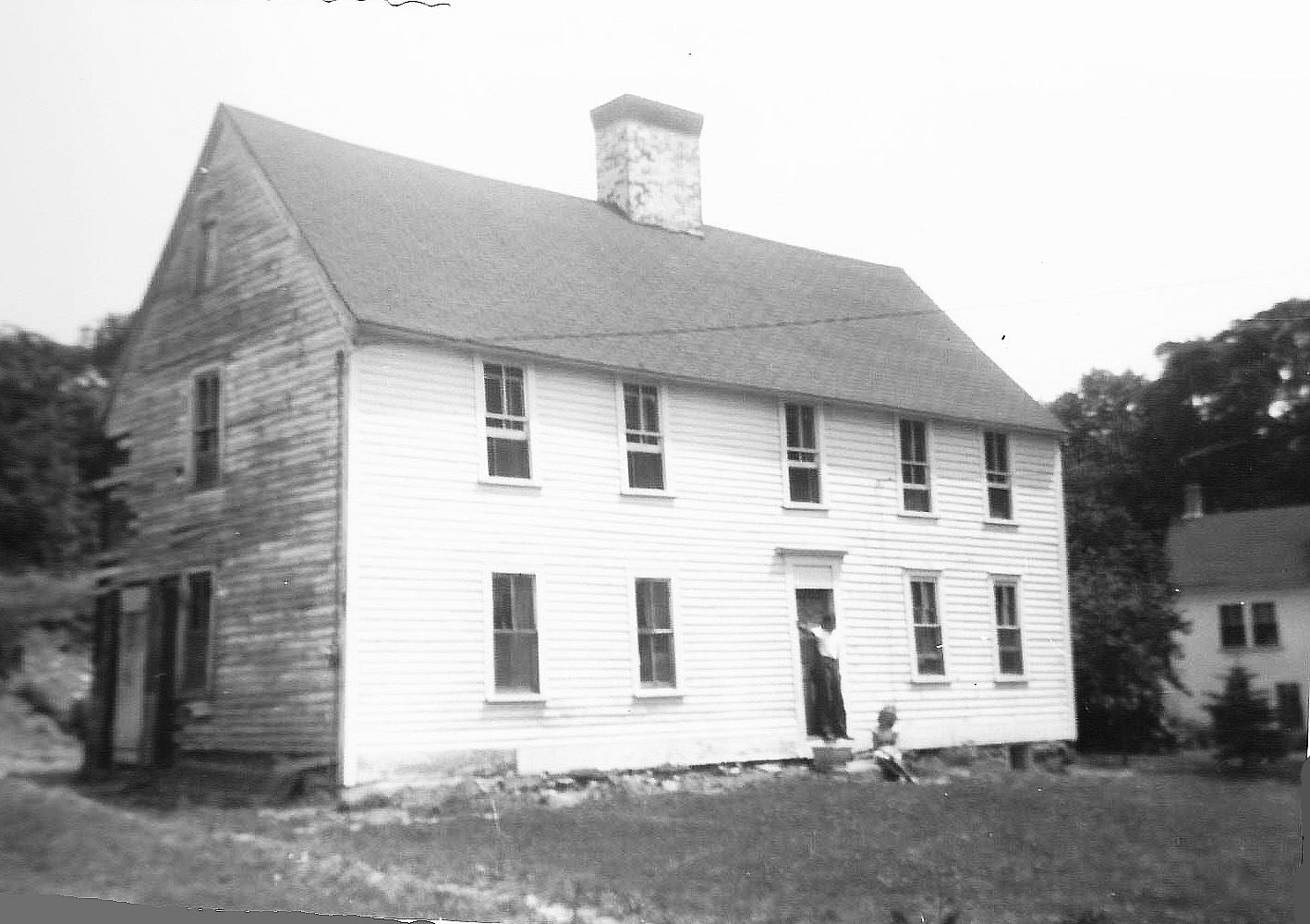
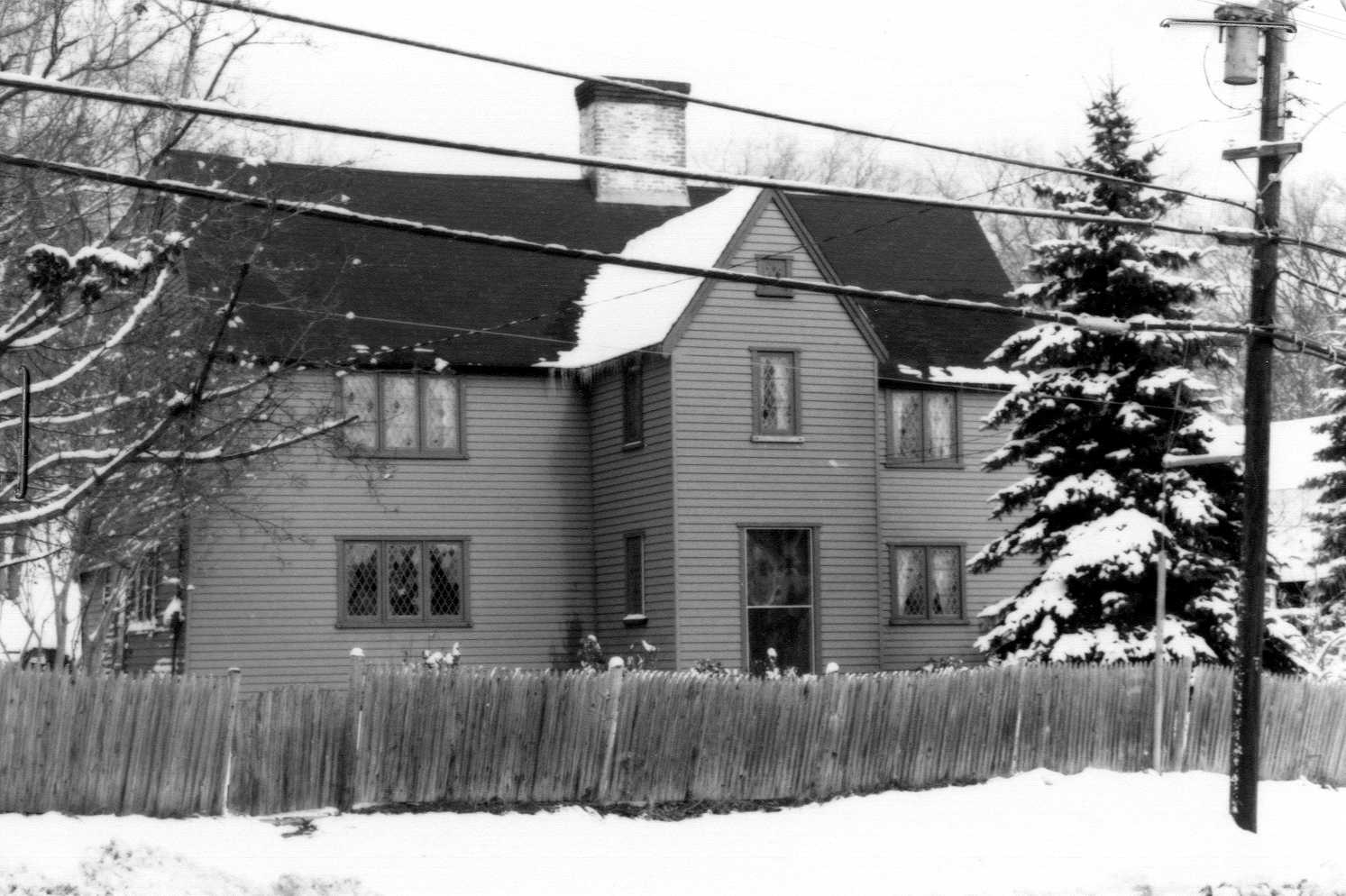
The original lean-to was removed in the mid-20th Century, and the present lean-to and gable porch were added in 1968 by Hollie Bucklin, who restored the interior of the house to a 17th-century appearance. The house was remodeled in 2023.
In a Publication of the Ipswich Historical Society and in Ipswich in the Massachusetts Bay Colony, Volume 1, Thomas Franklin Waters referred to the “well-preserved old mansion beneath the spreading elms on the corner of East Street and Hog Lane, later known as Spring Street.” Waters theorized that the present house was built after Anthony Potter’s deed of 1708, but noted that the architecture appeared to be from an earlier period. The earliest possible owner, Francis Jordan, immigrated to Ipswich in 1634 and established himself at this location in 1648, and expanded his property through purchases from adjoining owners in 1657, 1661, 1664, and 1671. (See deed and land registry notes below). Thomas Franklin Waters noted that in the 19th Century, an old foundation was discovered on the east slope behind the present house, along with old spoons of a type dating before the 18th Century.
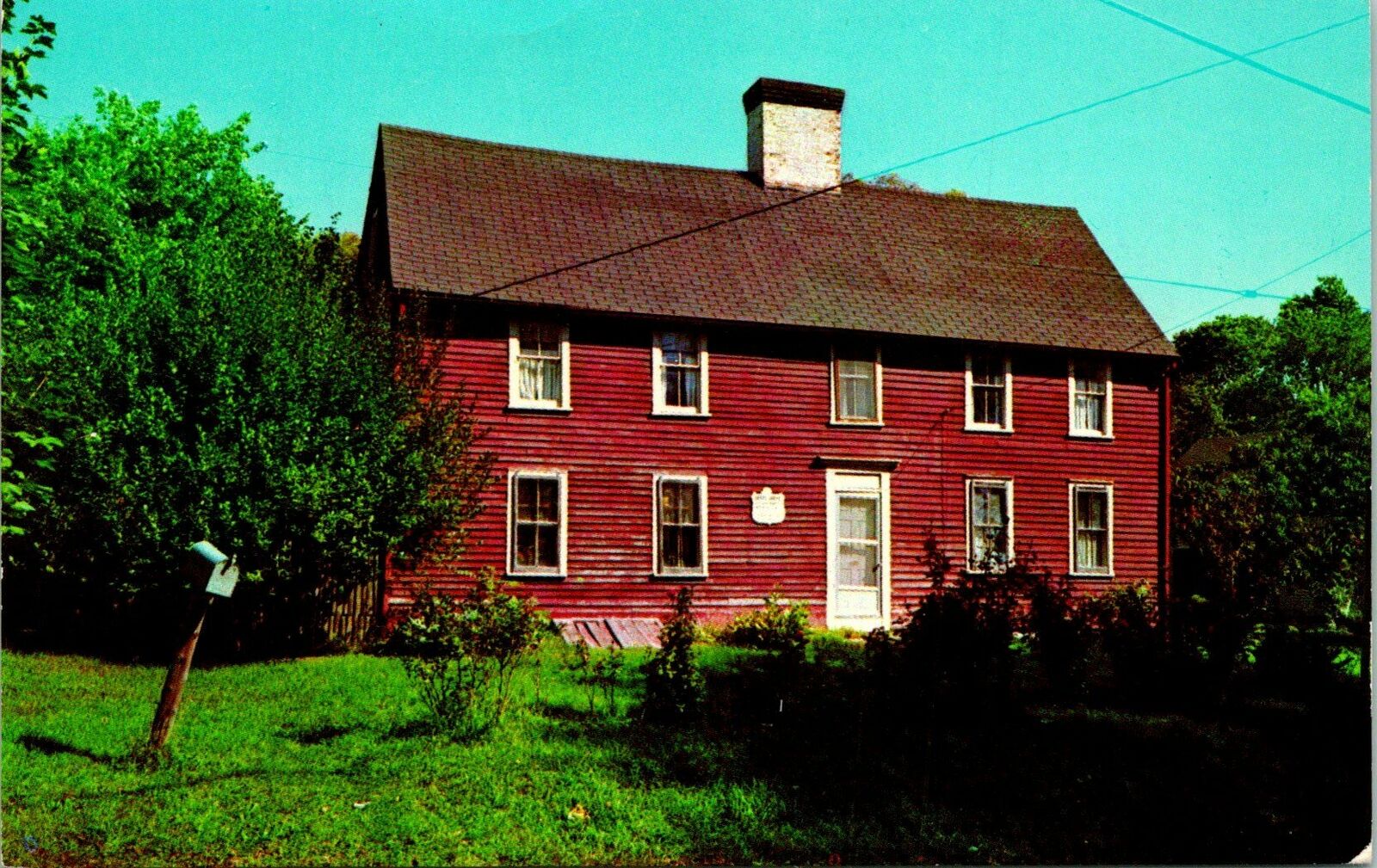
Francis Jordan (1610 – 1678) arrived in Ipswich in 1634 at 24 years of age and was granted a lot on today’s Agawam Ave. / Spiller’s Lane adjoining the lots of John Perkins Jr. and Thomas Hardy (Essex Quarterly Courts, 7:85; Miner Descent). “Given and Granted unto John Pirkins Jun’r that he shall have six acres of Land, more or less, in equal share with Thomas Hardy and Francis Jordan, lying East and West of him, unto his heirs and assigns forever.” (Schofield, The Ancient Records of the Town of Ipswich, published in 1899).
/
Historic ownership and deeds
With notes from Thomas Franklin Waters: Ipswich in the Massachusetts Bay Colony, Volume 1
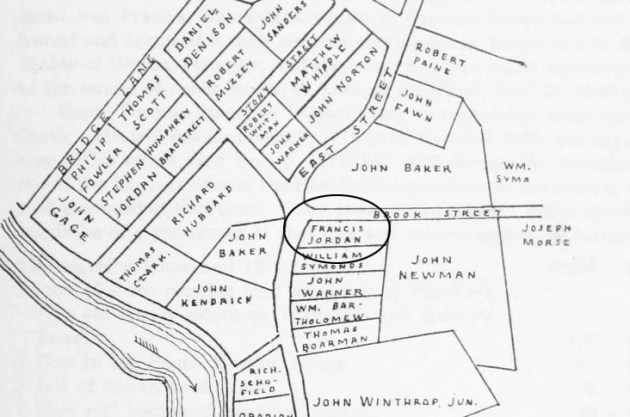
- April 3, 1646: John Newman, husbandman, sold to William Goodhue, weaver, on April 3, 1646, a house on Brook Street, between the dwelling house of Francis Jordan and Joseph Morse. This establishes the early residence of Francis Jordan near or at this location. (Salem Deeds book 14, page 53), (Hammatt, Early Inhabitants of Ipswich, p. 232).
- 12 April 1651 – Samuel Bowman (aka Boardman?) deposed that he sold unto Francis Jordon of Ipswich about ten years ago “my house and house lot containing about one acre more or less situated in Ipswich, which I bought of Edward Ketcham” [Ipswich Land Records 3:188]. Recorded 19 April 1671. (Reference: Miner Descent). This establishes the approximate date of 1641 for Francis Jordan’s purchase.
- In 1657 (day and month not given), John Morse of Ipswich sold to Francis Jordan “a parcel of land of fifteen or sixteen rods or thereabout out of a six-acre lot that was formerly my father’s Joseph Morse’s.”[Ipswich Land Records 2:212]. (Reference: Miner Descent).
- September 24, 1664: John Morse (2) sold to Thomas Jordan, September 24, 1664, a property which is described as “land that formerly was my father’s Joseph Morse’s.” (Hammatt, Early Inhabitants of Ipswich, pp. 229-230).
- April 29, 1671 – Theophilus Shatswell of Ipswich sold to Francis Jordan “my right that I had in two acres of land at the upper end of Brook Street or Hog Lane, this land I had in lieu of a house lot I had where Goodman Lord now dwells, which Mr. Ward did desire to build on and had it.” (Ipswich Land Records 3:188: re: Miner Descent). This land is further up the street from Jordan’s residence.
- Francis Jordan died April 24, 1678, at the age of about 68. His will is dated the previous day and gives all his estate to his wife, Jane, to dispose of it to his children and grandchildren. His entire estate was valued at £262, 6s and included a house, barn, and house lot, plus two acres of pasture and 4 1/2 acres of planting land, of which £157 10s. was real estate: house and barn and home lot, £100. Ipswich Land Records, 4:195, 210-11; Essex County Probate Records, 3:245-46.
- In her will, dated Dec. 10, 1689, and proved upon her death, Oct. 30, 1693, Jane Jordan of Ipswich, widow & relict of Francis Jordan deceased, late of said town, appointed Richard Belcher her executor, made provisions for her own maintenance, and bequeathed lands and belongings in 6th parts to her daughters and grandchildren. The inventory of the goods & estate of Jane Jordan of Ipswich, relict of Francis Jordan, who deceased 4 Oct. 1693, taken 20 Oct. 1693, totaled £159 18s. 6d. In the account is the item, Paid Richard Belcher for keeping her 4 years 4 mos., 2 weeks at £14 per Anno & her funeral expenses, £60. 18′. 9d. (Essex County probate, 15244)
- The executor of Jane Jordan’s estate, Richard Belcher of Charlestown, sold the house and land it sat on to John Potter, for 88 pounds, on Dec. 22, 1708; “the messuage or tenement that was formerly Francis Jordan’s deceased,” about 2 acres, “bounded west by the lane commonly called Hog Lane (*Spring St.), and east by land of John Harris” (20: 199). The deed specifies “the old house and new outhouses.” The 15-year period between the widow’s death and her executor’s sale of the house is unexplained, perhaps because one or more of her daughters continued to occupy the house.
- Daniel Potter sold the house and lot to Thomas Hovey, 3d, fisherman, on March 31, 1741, “a certain messuage or tenement” for the sum of 270 pounds.(81:176). The threefold increase in the value of the property suggests a substantial improvement or enlargement of the house during this period. The upstairs east side room has beaded sheathing covering the beams and posts, a characteristic of Georgian-era houses.
- At Hovey’s death, half the house and land were set off to his widow Rebecca, and the other half was sold by John Hovey to Ebenezer Hovey on April 29, 1777 (135: 122).
- “Michael Hodge of Newburyport brought suit against Ebenezer Hodge, and execution was made upon his estate in favor of Hodge, Aug. 1787 (147:31). Hodge sold to Ebenezer Hovey Jr., July 14, 1796. John Hohnes Hovey quitclaimed to Stephen Hovey, his interest in the house of his father, Ebenezer, “near Hovey ‘s Bridge,” July 21, 1827 (247: 230).
- “John H. and Izette Hovey sold the west half of the house to James Scott Jr., Oct. 29, 1870 (812: 221). Asa Lord sold the east half of the house to Perley Scott on April 1840 (537:227). The ancient house, still a comfortable dwelling, is now owned by Mr. James Damon and Mrs. Edward Damon. The Town owned a gravel pit on the east side of the house in 1840, and used it, as long as the limits of the lot permitted.” (Waters)
Francis Jordan
Francis Jordan, born about 1610, immigrated to Ipswich, married Jane Wilson in 1635, and was named as an abutter in a land grant to John Perkins Jr. in 1641. At a court in 1650, Francis Jordan was appointed as the officer to execute corporal punishment, being allowed 20 pounds per year.” (Essex Court Files 1: 188.) Waters referred to him as the “town whipper.”
The following is an excerpt from Abraham Hammat’s Early Inhabitants of Ipswich:
“JORDAN, Francis, commoner, 1641, one of Major Denison’s subscribers, 1648; had a share in Plum Island, &c., 1664; surveyor of Highways, 1675. Died April 24, 1678. His will is dated April 23, 1678. He gives all his estate to his wife, Jane, to dispose of it to his children and grandchildren; and “may give it to them who behave themselves best towards her,” with liberty “to sell what part she may have occasion for her comfortable maintenance.”
In Francis Jordan’s will, his lot, house, and barn were valued at £100. His entire estate was valued at £262, 6s. and included, in addition, two acres of pasture and 4 1/2 acres of planting land. The will of his widow, Jane Jordan (who was a commoner in 1678), is dated Dec. 20, 1689, and was proved Oct. 28, 1693. She appointed Richard Belcher, who was probably her son-in-law, as executor. She mentions a granddaughter, “Mary Simson, so-called before her marriage,” and a daughter, Jane Ward. She then directs her estate to be divided into six equal parts, and given to her granddaughters, Mary Belcher and Sarah George; daughters, Hannah Fowler, Mary Kimball, and Lydia White, each one-sixth part; and one-sixth part to the children of Deborah, late wife of Benjamin Goodridge, viz., Benjamin, Joseph, Daniel, Josiah. She mentions having paid John Kimball more than any of the rest. Inventory, Lieut. Symon Stace and John Harris, sen’r, overseers.
Children:
- Sarah Jordan, born Nov. 8, 1636, married James George by 1659.
- Hannah Jordan, born March 14, 1638, married Thomas Fowler at Ipswich on April 23, 1660.
- Mary Jordan, born 7 Apr. 1639: died in August 1639.
- Mary Jordan, born May 16, 1641, married John Kimball on Oct. 8, 1666.
- Lydia Jordan, born Feb. 14, 1643, was married first by 1664, Thomas Simson; and married second to George White on Apr. 5, 1671.
- Deborah Jordan, born Dec. 4, 1647, married Benjamin Goodridge of Newbury on September 8, 1663. She died at Newbury, Massachusetts, on Nov. 28, 1676.
Sources:
- MACRIS
- Waters, Thomas Franklin: Ipswich in the Massachusetts Bay Colony, Volume 1: p. 395
- Publications of the Ipswich Historical Society
- WikiTree: Francis Jordan
- Massachusetts (Colony). Quarterly Courts (Essex County). Records and files of the Quarterly Courts of Essex County, Massachusetts. (Salem, Massachusetts: The Essex Institute, 1911-1925, 1975), v 2 p 345, 346
- Miner Descent: Francis Jordan
- Records and Files of the Quarterly Courts of Essex County, Massachusetts, 1636-1686: Francis Jordan
- Pillsbury Ancestry: Francis Jordan
- Ipswich Land Records, Indexes to deeds, wills 1639-1695 Deeds, mortgages, wills v. 1-2 1639-1666
- Will of Francis Jordan: Essex County Probate Records, 3:245-46.
- Schofield, The Ancient Records of the Town of Ipswich, Volume 1, 1634-1650, published in 1899.
- Seibel Family Stories: Edward Ketcham and Mary Hall
- Wikitree: Edward Ketcham
View also:
 Historic Ipswich
I am a descendant of Edward Ketcham and would like to know when he arrived in Ipswich, how he obtained property there and from whom, and and any other info that you may have.
Thanks for the great history! 🙂