
The Manning family is an Ipswich success story. Thomas Manning, a commoner, was employed in 1661 to keep the flock of sheep on the north side of the river. His grandson Joseph Manning graduated from Harvard College and served the town as a highly-regarded physician for 50 years. Joseph’s son, John Manning, and grandson, Thomas Manning, also became important Ipswich citizens and physicians.
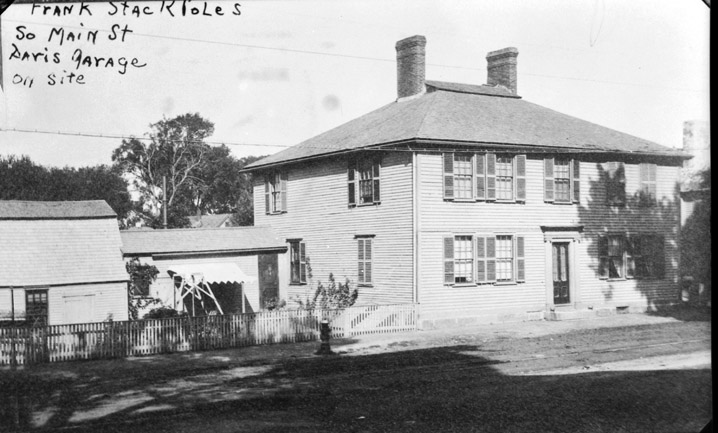
“Being desirous of settling in the town of his nativity,” young Dr. Joseph Manning was granted about ninety feet between the river bank and South Main Street in 1727. The house he built was one of the earliest hip-roofed Georgian houses in Ipswich, with fireplaces on either side of a central hall.
It was stipulated by the town that the lots could extend no farther into the river than “ye low water mark,” but the industrious young doctor expanded his lot by rowing downstream each evening and bringing back stones. This house is where Joseph Manning lived until he died in 1784.
He married first, Priscilla, daughter of Jacob Boardman; After her early death, he married her cousin, Elizabeth Boardman, the daughter of Thomas Boardman. Jacob and Thomas Boardman were sons of Thomas Boardman2, a son of Thomas Boardman, the early settler of Ipswich who came about 1635 from Claydon, a small town near Ipswich, Suffolk, England.

In 1869, Josiah and Dorcas Stackpole purchased the house from the Ipswich Mills Company (774: 84), and their descendants were the last families to live in the old house. The Stackpole & Sons Soap Factory on County Rd. made tallow soap from the carcasses of sheep and cows.
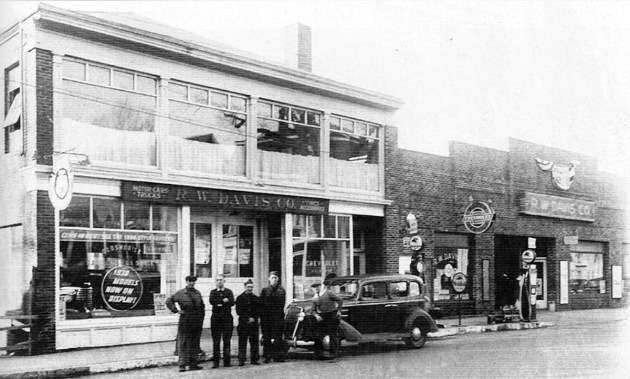
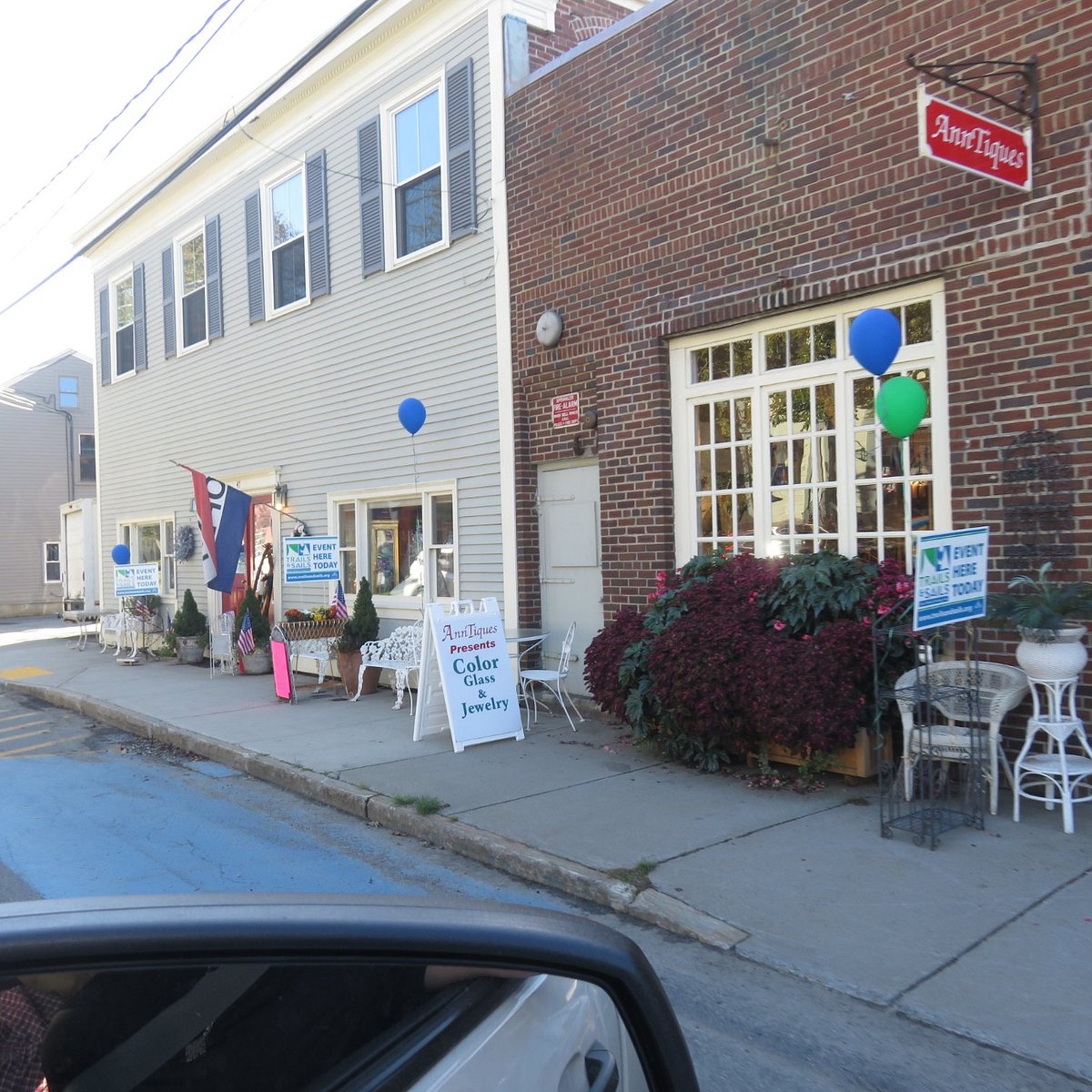
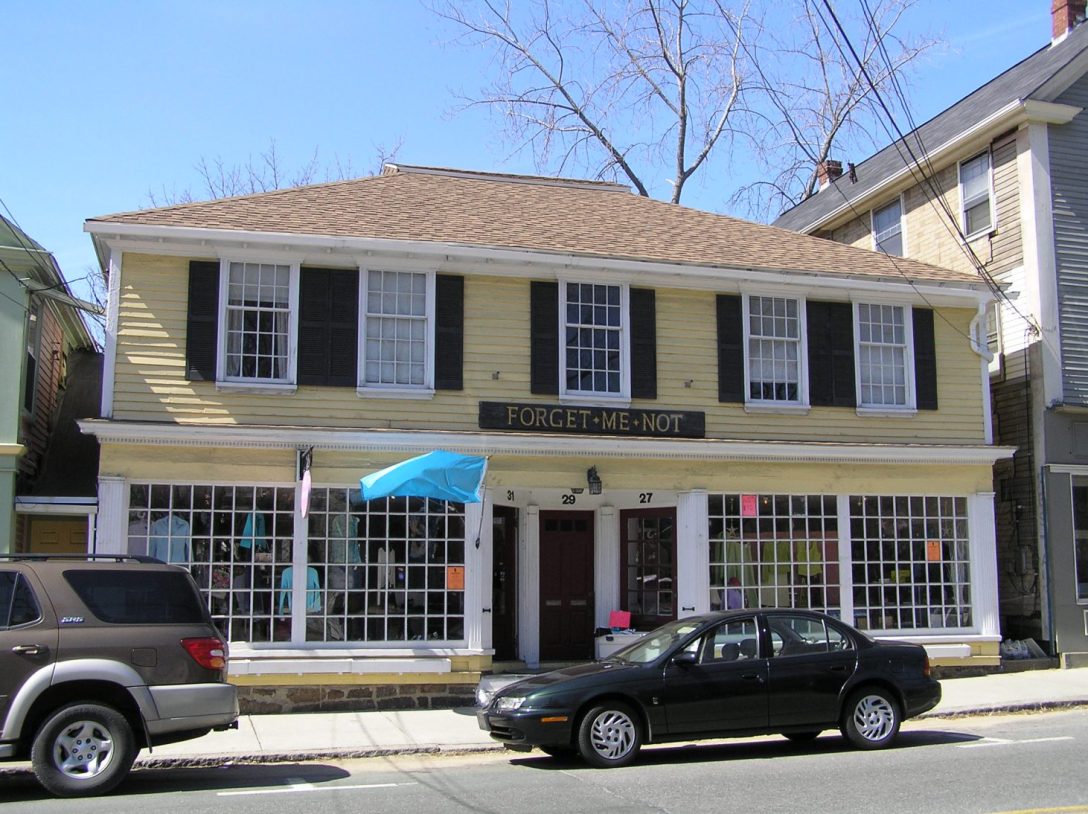
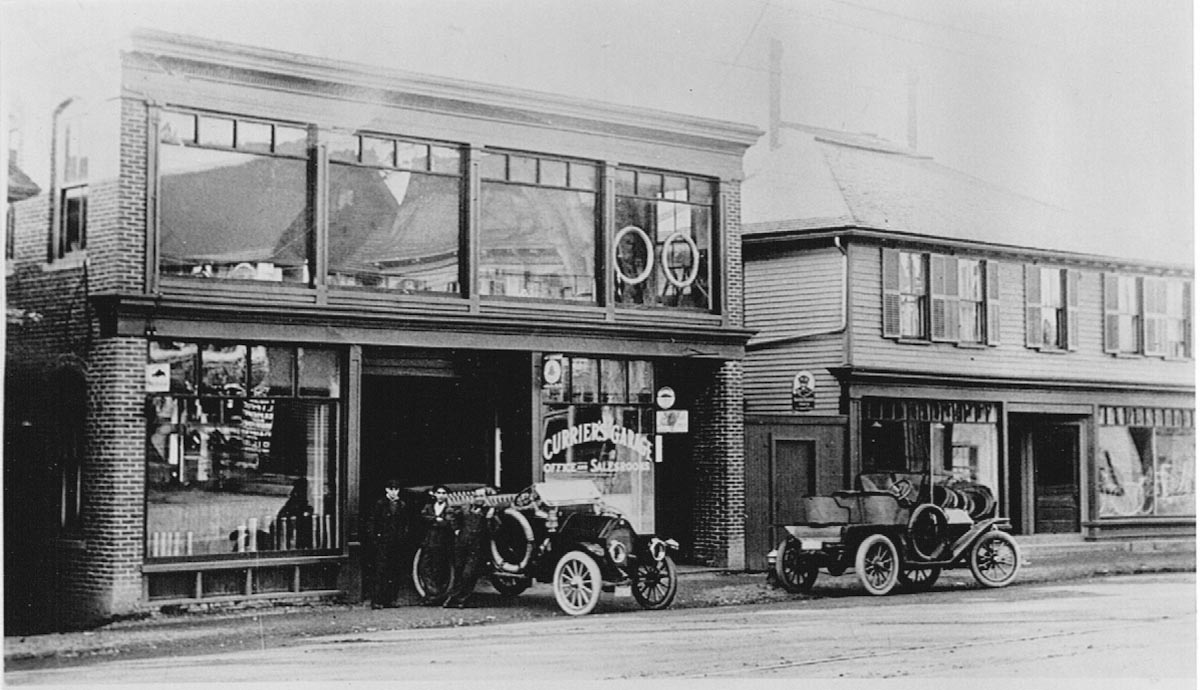
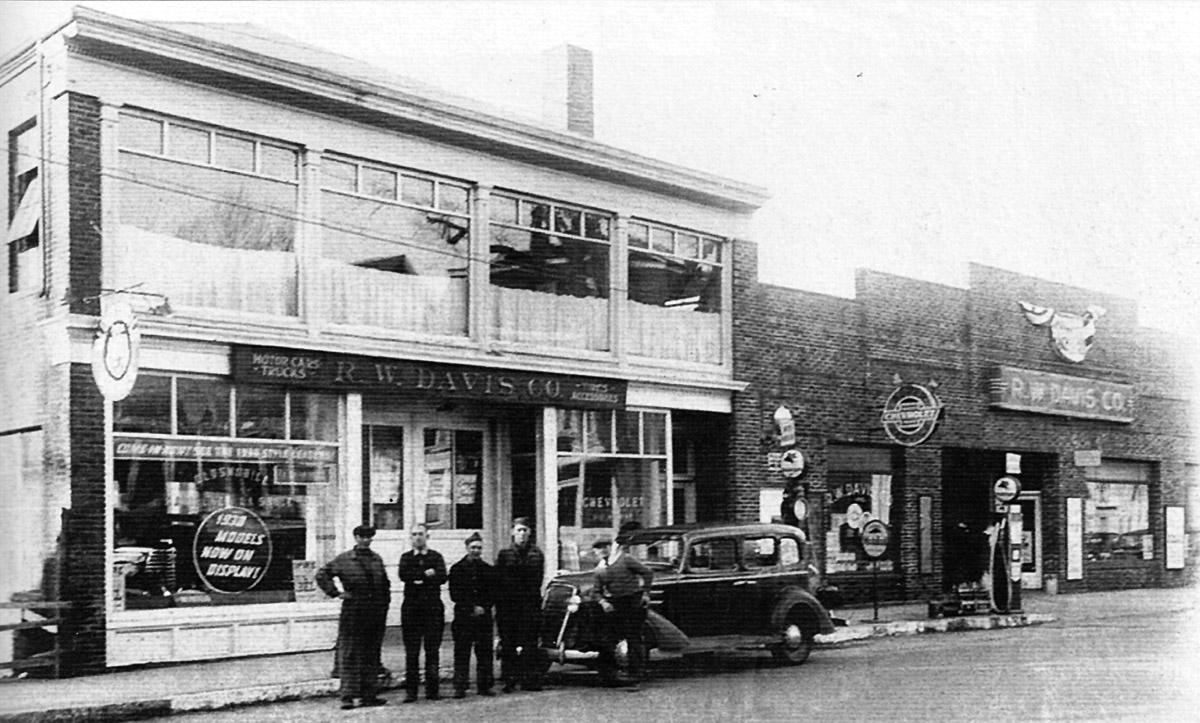
In the early 20th Century, Dr. Manning’s house was sold to Ernest Courier, who converted it into a bicycle shop, but the short-lived Golden Age of Cycling soon succumbed to automobiles. In 1930, the house was moved a short distance closer to the Choate Bridge to make way for the R. W. Davis auto dealership, which today houses the AnnTiques store. You have probably passed Dr. Manning’s home many times, but you may not recognize it until you step across the street and see the hip roof, minus the chimneys.
In exploring the history of this building, I uncovered a tale of two families, one most fortunate, and the other less so.
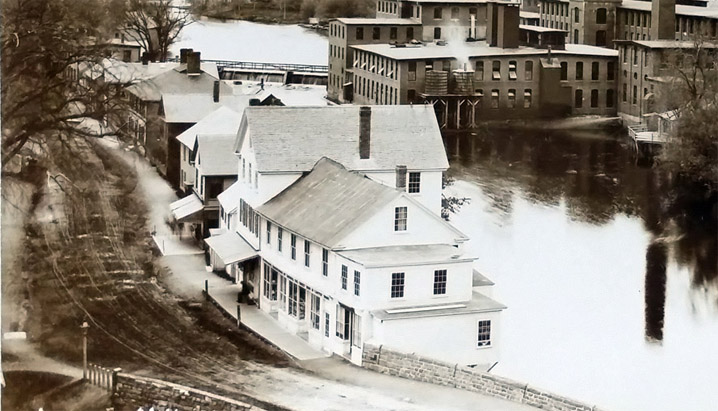
A house that previously sat on the lot at 31 South Main Street can be traced back to Isaac Fitts, a hatter, who petitioned for forty feet on the riverbank in 1726, that he might set a dwelling thereon, which he accomplished in 1727. The house was purchased by Timothy Souther in 1794 and stayed in the Souther family until 1860. It was long known as the “Souther House,” and was taken down in 1917. The Dr. Joseph Manning house, which was also built in 1727, just a few doors down the street, was moved to this location so that an automobile dealership could be constructed across from the Old Town Hall. In 1928, Richard W. Davis sold the lot to Millard J. Patterson with the condition that he could maintain the right to enter the building and conduct repairs until it was removed from the lot to its present location.
Doctor Joseph Manning
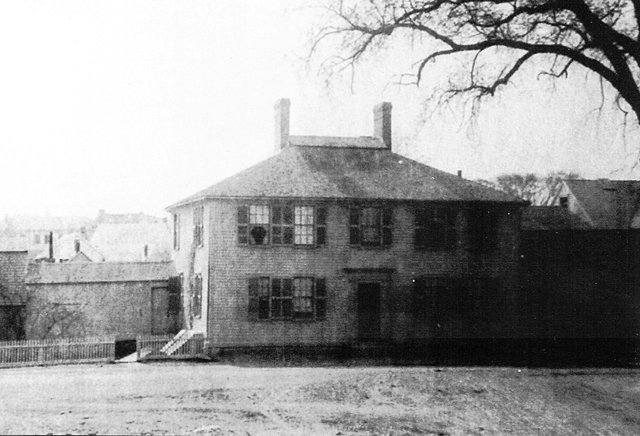
Joseph Manning was born in 1703 in Ipswich. He graduated from Harvard College in 1725 and returned to his native town, where he served for more than 50 years as a physician, eminent and favorably known. Doctor Manning was the father of the legendary Dr. John Manning, whose home on North Main Street still stands, and the grandfather of Dr. Thomas Manning, whose home is also still standing.
In 1727, Dr. Joseph Manning built a fine hip-roofed Georgian home on South Main Street opposite the intersection with Elm Street. While fine examples of early Georgian hip-roof houses are found in the American South, in New England, they occurred principally in High-style homes. Thomas Franklin Waters wrote that Dr. Joseph Manning, “being desirous of settling in the town of his nativity,” had no place for a dwelling, and therefore petitioned for eighty or ninety feet of the riverbank. (1727 Town Record). The petition was granted, and Dr. Manning built his house forthwith and occupied it at the time of his death.
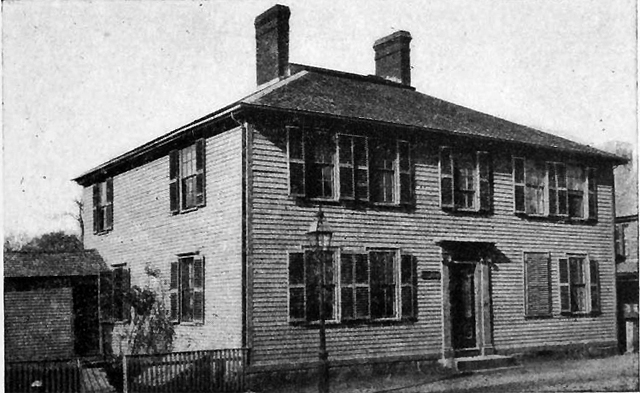
From the History of the Manning Families, written in 1902, I read the following about Dr. Joseph Manning and his home on South Main Street:
“Dr. Manning owned the lot, which is nearly opposite to the present town house (the Old Town Hall on South Main), and put up the square edifice still standing there. To make a substantial wall on the riverside, he needed large stones. In the river bed a mile or so down (the lower falls by the County Street Bridge), there were boulders in abundance. Selecting at low tide one of these, he would put a chain about it and so mark its position as to be able to find it with no other light but the stars and moon. At night, the ebbing tide would find the wily doctor with his boat anchored over the rock, which would soon after be grappled to the little skiff. Then, as the sea wave came, the lifting and wafting force of the water was all that was needed to place the boulder in the very spot where he wished to have it. Small wonder that passersby on the following morning, seeing a large stone lying where no stone had been the night before and looking like a vast meteorite that had fallen from the sky, should turn their eyes askance as the young doctor passed, and almost fancy they detected a whiff of brimstone in the air.”
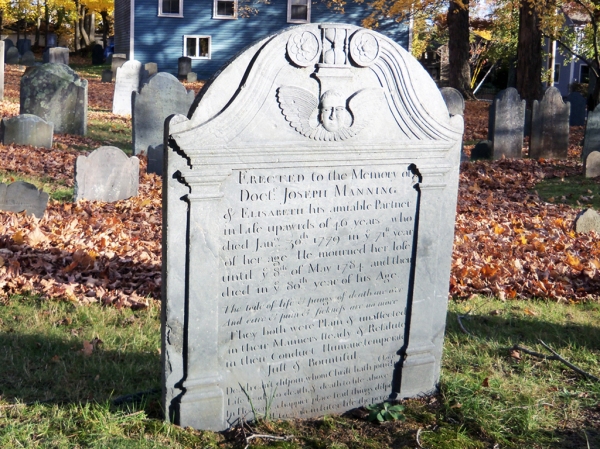
Dr. Joseph Manning died in 1784 at the age of 80. The inventory of his estate appraised the house and lot at £175.00, and the total of all his real estate and possessions at £796.00. His tomb is at the Old North Burial Ground in Ipswich, and is located in the book Memento Mori, page 171, and on the map C, #87. The inscription reads:
“Erected to the memory of Doc. Joseph Manning and Elizabeth, his amiable Partner in Life upwards of 46 years, who died Jan. 30, 1779, in the 71st year of her age. He mourned her loss until the 8th of May, 1784, and then died in the 80th year of his Age. The toil of life and pangs of death are o’er, And care and pain and sickness are no more. They both were Plain and unaffected in their Manners, steady and Resolute in their Conduct, Humane, temperate, just, and Bountiful.”
Timothy Souther
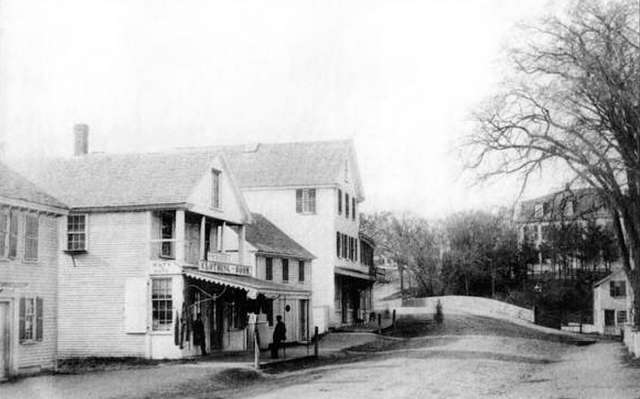
In the 18th Century, towns were responsible for the poor people within them, and measures were sometimes taken to relieve the town of responsibility for residents who were unable to provide for themselves. Timothy Souther arrived with his wife in 1763 and was “warned out.” The town’s lack of hospitality did not serve him well, and in the book Memento Mori, a grave at the Old North Burial Ground at location D-41 tells us his sad story: “Here lies the remains of Mr. Timothy Souther, who departed this life August 5th, 1766, in the 27th year of his age.” His widow, Sarah Morton Souther, was only 23 years old. She married widower Paul Little of Newbury on August 30, 1772, and died in Windham, Maine on September 26, 1797.
Almost 40 years later in 1792, we read that another Timothy Souther, a native of Haverhill, was also “warned out.” In the previous year, he married Elizabeth Badger, daughter of Daniel Badger and Phoebe Lakeman, from an old Ipswich family. Timothy Souther was able to buy part of a small house near the Choate Bridge for his family, but things did not go well for him. A grave at the Old North Burial Ground for three-month-old Charles Souther, who died in 1799, shows his parents as Timothy Souther and Elizabeth Badger.
Timothy Souter died in the West Indies at 36 years of age in 1804. By then, he had sold “half of the half” he owned, but his wife Elizabeth Badger Souther, continued living in the northwest corner of the house until her death on December 31, 1841, in Ipswich at age 74.
Their son, also named Timothy Souther, was born in Ipswich on April 7, 1800. He fared much better, and at one time owned a home on Meeting House Green where the Kaede Bed and Breakfast is today. He involved himself in the affairs of the town, and in 1829, he became the collector of customs for the district and inspector of the revenue for the port of Ipswich at the old Custom House. He was caught up in a payback scandal, and in 1842 Souther moved with his family of five sons and two daughters to Alton, Illinois, where he served as the postmaster of that city from 1846 to 1854.
A mystery unraveled
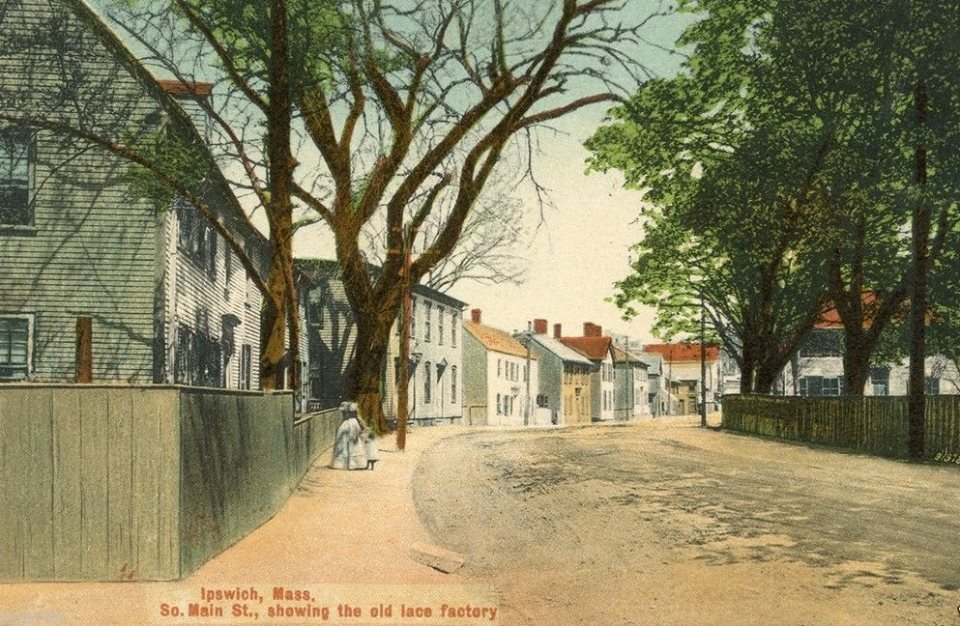
The small house near the bridge, or at least part of it, stayed in the family until 1860 and was always known as the Souther house. Thomas Franklin Waters stated that the Souther house was torn down shortly before 1917. In 1928, the lot with Dr. Joseph Manning’s fine old home on it was sold by Richard W. Davis to Millard J. Patterson with the condition that Davis would still own the building and would have the right to maintain the foundation and eaves, enter the building, and conduct repairs as long as the building remained on the lot (2814-20). By 1930, the house had been moved, and a new automotive dealership had taken its place, which is now the home of AnnTiques.


SOURCES:
- Ipswich in the Massachusetts Bay Colony, Vol I, by Thomas Franklin Waters: (*Timothy Souther house) (*Joseph Manning house)
- Ipswich in the Massachusetts Bay Colony, Vol. II by Thomas Franklin Waters
- Encyclopedia of the History of St. Louis: A Compendium of History …, Volume 4
- Journal of the Senate
- Genealogical and Family History of the State of Maine
- Vital Records of Essex County
- Ipswich Revisited by Bill Varrell
- History of Essex County
- Manning, William Henry, “The genealogical and biographical history of the Manning families of New England and descendants.”
 Historic Ipswich