

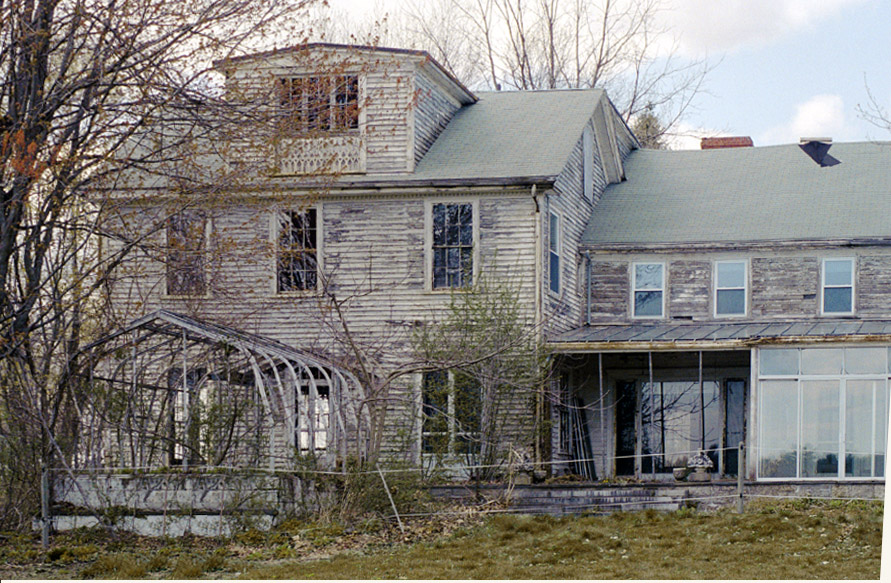
Featured above is the Appleton Farms “Old House,” which is now the visitor center. Many generations of the Appleton family lived on this property at Appleton Farms. It was originally granted to Ipswich settler Samuel Appleton, an original settler. His grandson, Isaac, is said to have built the first house at this location in 1688. Samuel Appleton, the fifth generation of the family, built the earliest section of the existing house in 1784 with Georgian and early Federal features, and some of the framing probably still exists. Later generations added Victorian flourishes. Successive generations of the Appleton family gutted and rehabilitated the house at least six times. The farm continued in family ownership for seven generations.
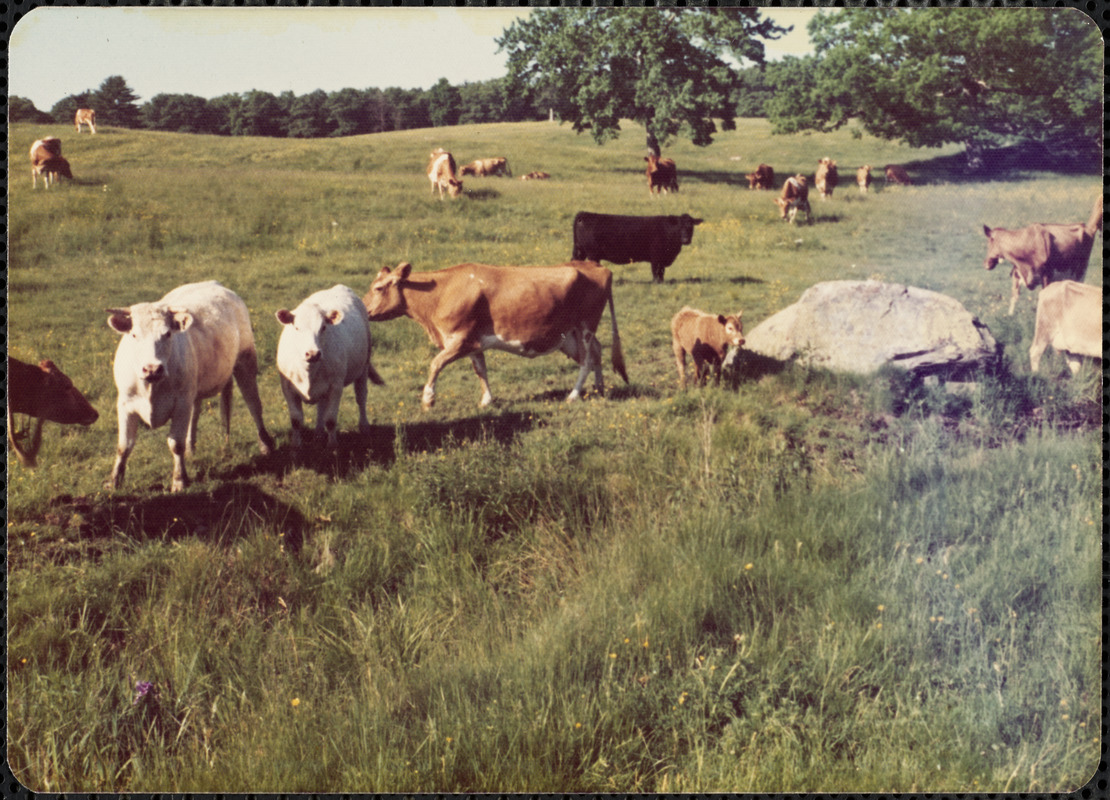
Appleton Farms was gifted to the Trustees of Reservations by Francis and Joan Appleton, and is America’s oldest working farm, with rolling grasslands, grazing livestock, stone walls, extensive forests, and historic farm buildings that are part of the farm’s 1,000-acre pastoral landscape. The farm operates a 550-member community supported agriculture (CSA) program and a farm store that sells artisanal cheeses, butter, yogurt, beef, and eggs.

Trails
The property consists of forests, fields, wetlands, and small glacial hills. Appleton Farms, along with the neighboring Appleton Farms Grass Rides, offers more than 12 miles of walking trails, a visitor center, and is open to the public seven days a week.

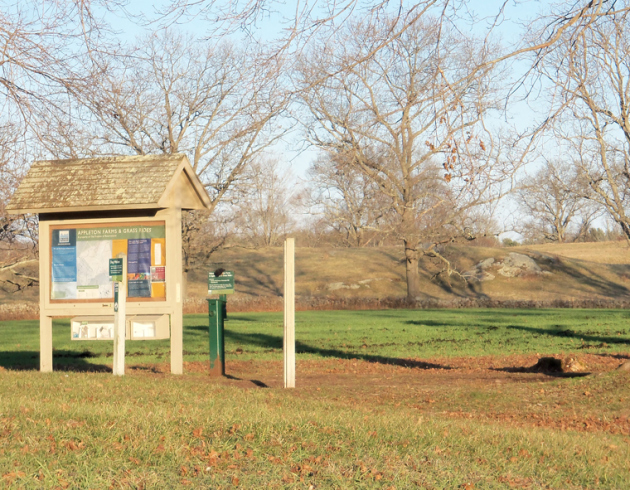
The Hamilton section is known as Appleton Farms Grass Rides on Highland St. View directions. Wide trails through the forest were designed by the Appletons for horseback riding. Appleton Farms Grass Rides is part of the Bay Circuit Trail and the “Discover Hamilton” trail system. Walking, mountain biking, and cross-country skiing are allowed, as well as dogs. Parking is free for Trustees of Reservation members, $5 for non-members.
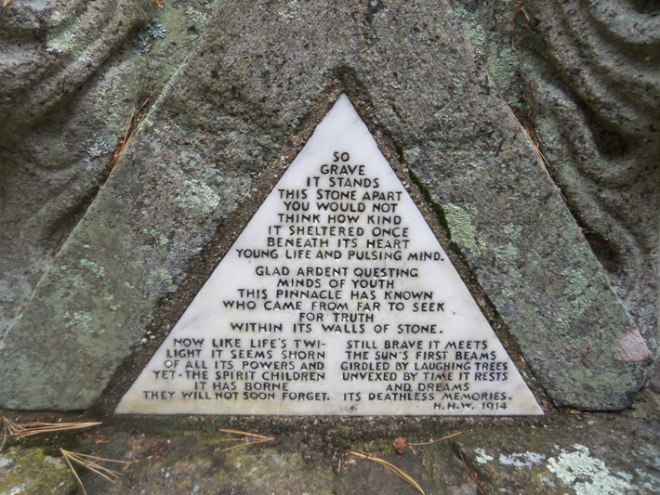
There are four granite pinnacles on the farm, salvaged from the former Harvard College Library, standing as silent sentries in the two sections. Read more about the Appleton Farms pinnacles.


Cross-country skiing at Appleton Farms
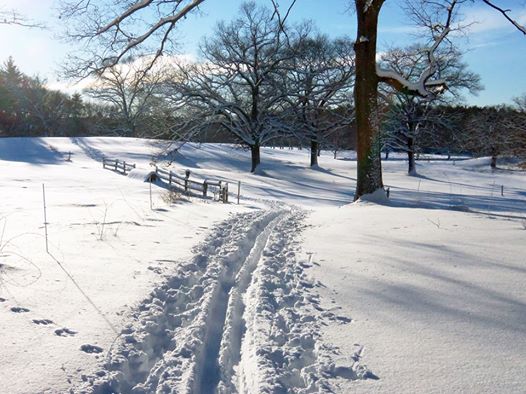
The North Shore Nordic Association promotes winter use of our area’s existing trail networks and recreational assets by partnering with existing organizations and governmental entities to plan and maintain a system of winter trails for human-powered snow sports such as cross-country skiing, skate skiing, and snowshoeing. By providing a network of groomed trails, trail maps, and signs, NSNA encourages and facilitates active living and exploration of the outdoors in winter. Use of the groomed trails is donation-supported and open to all.
History and Photos of Appleton Farms


The Trustees of Reservations assumed responsibility for the farm in 1998 and renovated the 200-year-old house with green technology, restoring it to its Georgian essence. The home had fallen into great disrepair, but the core of the home had been saved. The renovation preserved hand-hewn timbers, heart-pine floorboards, Victorian-era windows, decorative moldings, and mementos. The newly opened visitor center includes furniture, portraits, photo albums, books, and other objects original to the house. The house tells the story of one family’s history from settlers to farmers to “gentleman farmers” over 371 years.

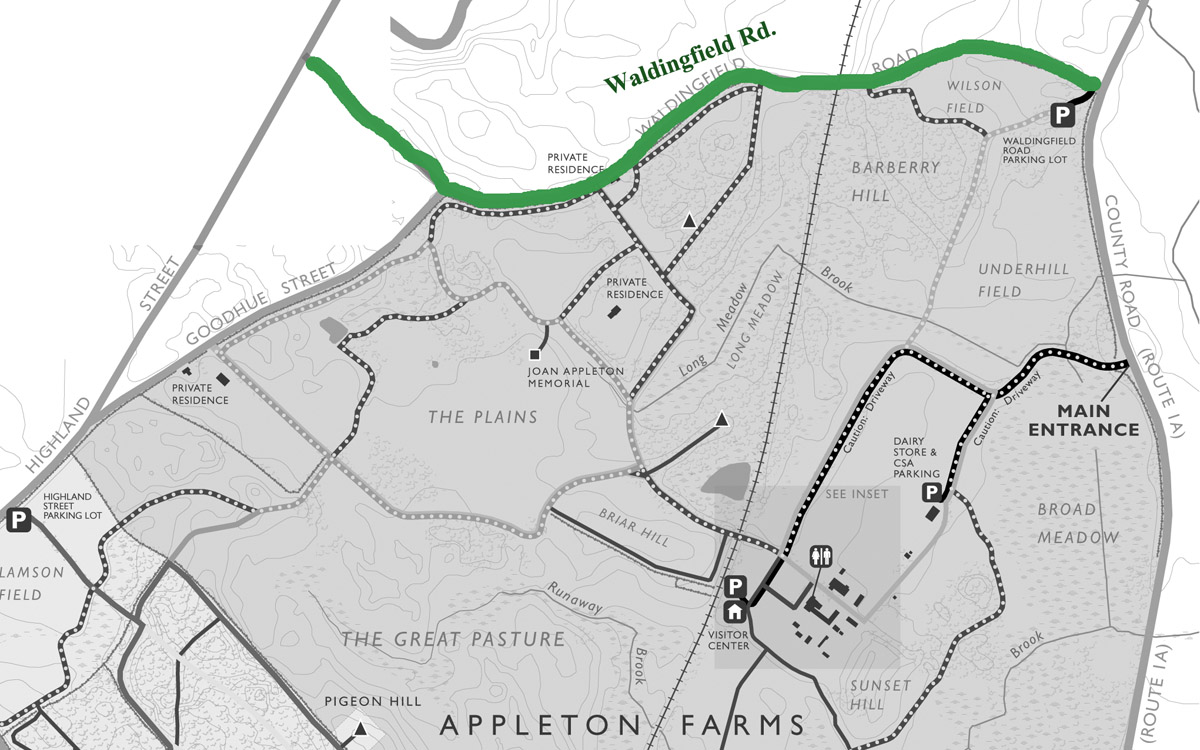
Waldingfield Road
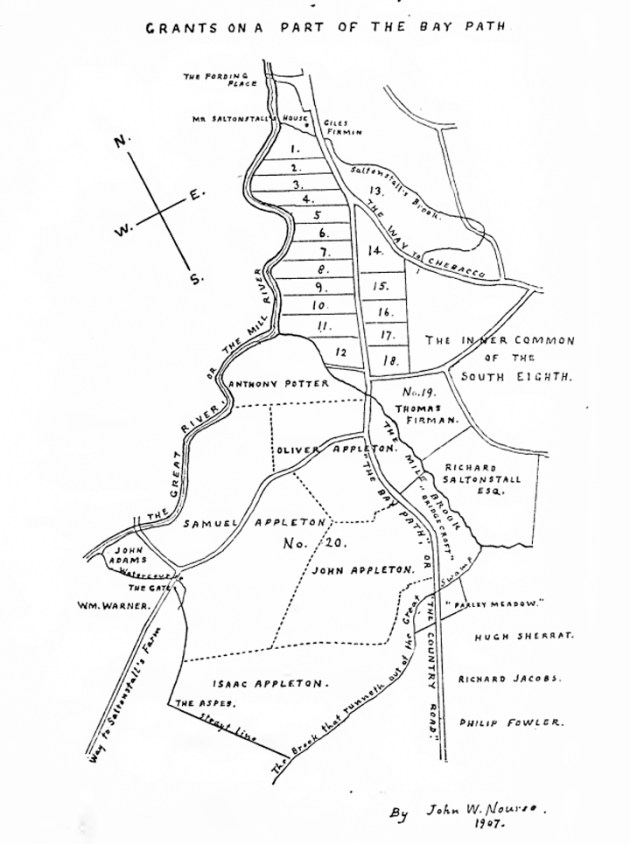
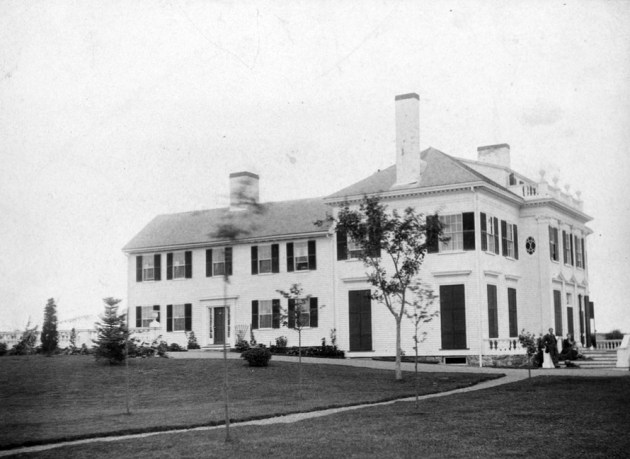
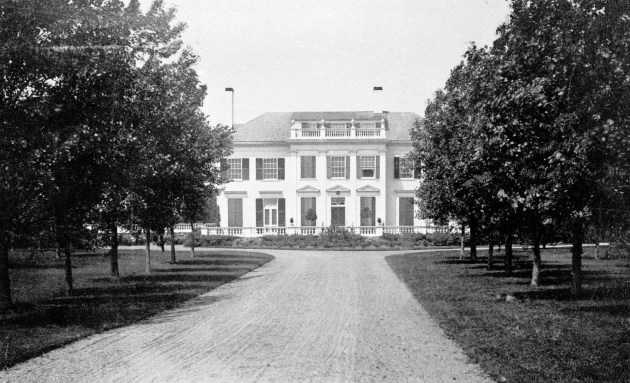
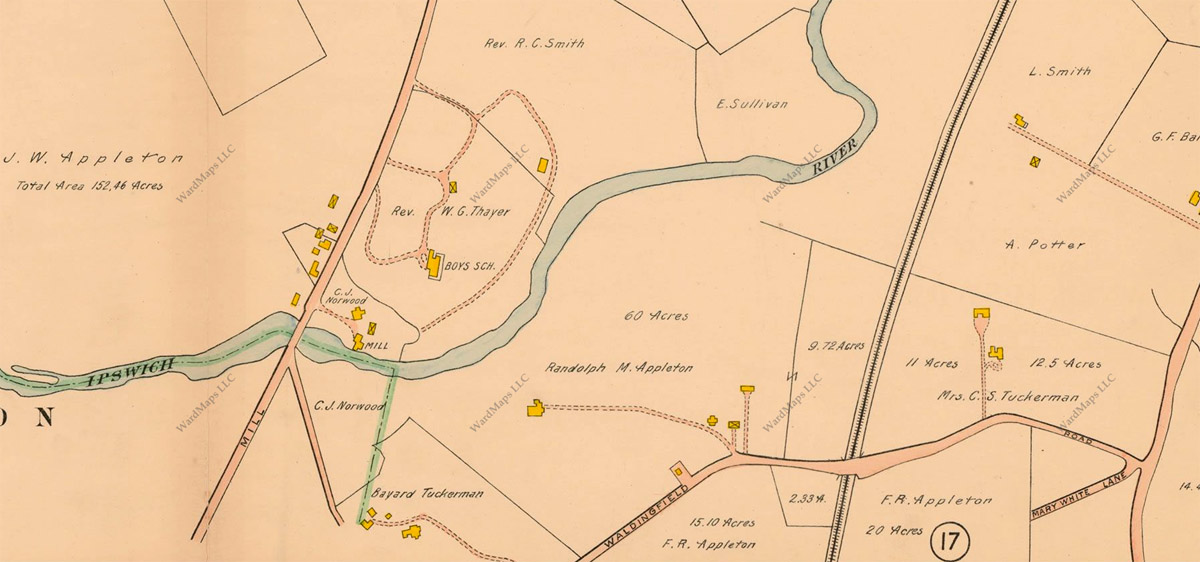
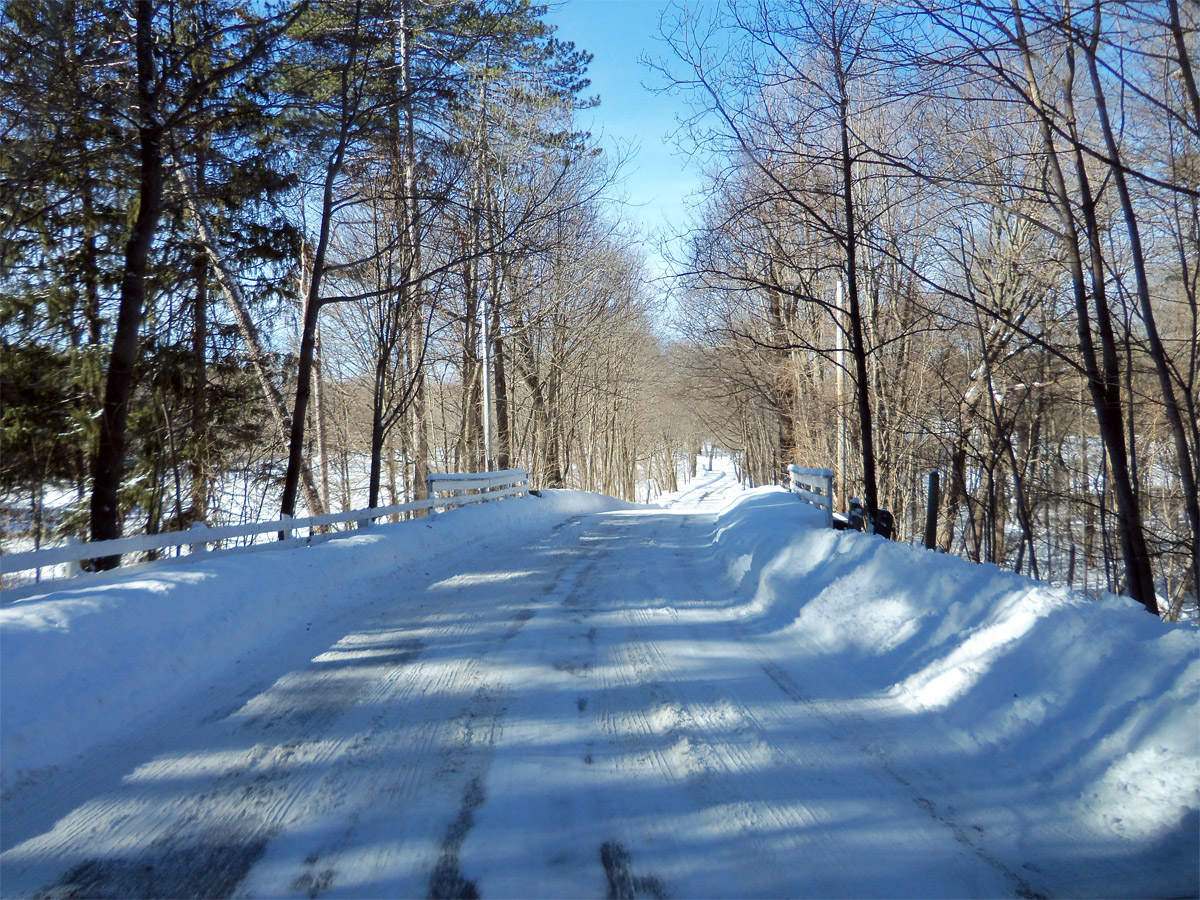
The intersection of Waldingfield Road and County Road (Bay Road) marked an area with tremendous wealth, with the Appleton estate Waldingfield on the west and the Proctor estate on the east. Continuing west on the north side of Waldingfield Road, the Captain Isaac Smith House was purchased by Helen, wife of Randolph M. Appleton, son of Mr. D. F. Appleton, who apparently gave it the name “Applefield.” There were two Tuckerman-Appleton marriages, and the Tuckerman family owned several elegant properties between Waldingfield Rd. and the Ipswich River. “Applegate” was owned by Charles Tuckerman and his wife, Ruth Appleton. “Waldingfield” was built by Randolph Morgan Appleton. “Sunswick”, bordering “Waldingfield” on the west, was built by Bayard and Annie Tuckerman. Even today, Waldingfield Road, with its beautiful stone walls, tree-lined pastures, and grand homes, is one of the most scenic ways in Ipswich.

Reaching Highland Street, the Appleton holdings extended on either side of Mill Road to Topsfield Road, bordering the Rice properties. The Rev. W. G. Thayer constructed his summer residence not far from the bridge, along the river, and named it Holiday Hill.
Adjoining his property was the estate of the Rev. Roland Cotton Smith, who married Harriett, daughter of General James Appleton, becoming the brother-in-law of Daniel Fuller Appleton. He founded the Ascension Memorial Church in Ipswich and named his home on Mill Road “Cottonfield.”
Further reading:
- A Genealogy of the Ipswich Descendants of Samuel Appleton
- Of Farm and Family: Generations of Appleton Family Portraits (TTOR)
- Recollections of a New England Boyhood 1886-1908 By Arthur Russell Lord
- Founding Farms, Portraits of Five Massachusetts Family Farms
- Form A, nomination papers to add Appleton Farms to the National Register of Historic Places
- Appleton Farms Tercentenary 1638-1938, privately published by Francis R. Appleton, Jr. in 1938.


What a fascinating look into Appleton Farms! I love how you captured the rich history and the beautiful landscapes of Ipswich. It’s incredible to learn about the farm’s role in the community and the sustainable practices they employ. I can’t wait to visit and experience it for myself!