
Elizabeth Morse of Newbury was accused and found guilty of being a witch. She was initially sentenced to be hanged, but after spending a year in the Boston jail, she was sent home

On the Massachusetts North Shore
Elizabeth Morse of Newbury was accused and found guilty of being a witch. She was initially sentenced to be hanged, but after spending a year in the Boston jail, she was sent home

The Ipswich Bar has a long history of tragic shipwrecks. Its swift currents and shallow waters are especially dangerous during storms, and many ships have gone aground. The hull of the Ada K. Damon sits on Steep Hill Beach.

At the beginning of the 20th Century, Cape Ann was a popular destination for tourists. Gloucester's grand hotels were the subject of "The Summer Hotel Guide," published in 1905.

On June 9, 1954, before a nationwide television audience, Joseph Welch of Waltham replied to Joseph McCarthy, "Until this moment, Senator, I think I have never really gauged your cruelty or your recklessness."
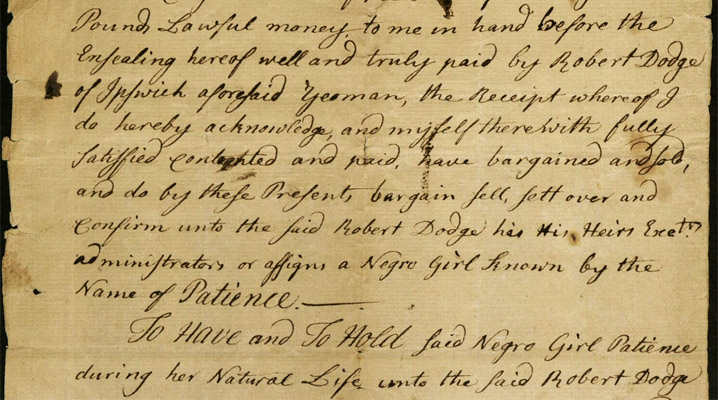
"Know all men by these presents I, Thomas Burnam of Ipswich, do by these presents bargain, sell, sett over and confirm unto the said Robert Dodge, a negro girl known by the name of Patience...To have and to hold said negro girl Patience during her natural life."

The youngest daughter of Thomas and Elizabeth Lull, Sr married William Caldwell in 1714. The wives of his brothers, John and Jacob, were her nieces, being the daughters of Thomas Lull Jr. The Caldwell family became prominent, while the Lull family name disappeared from Ipswich.

in the early 1950s, a group of young amateur archeologists men discovered one of the largest Paleo-Indian sites in North America along the banks of Bull Brook and the Egypt River in Ipswich, with over 6,000 artifacts uncovered.

In 1661, Lydia Perkins of Newbury had become a Quaker, and the church issued demands that she appear and give reasons for her withdrawal. Her angry response was to appear naked in the Meeting House. She was ordered to appear at the Salem court, and was then taken to Ipswich and severely whipped.
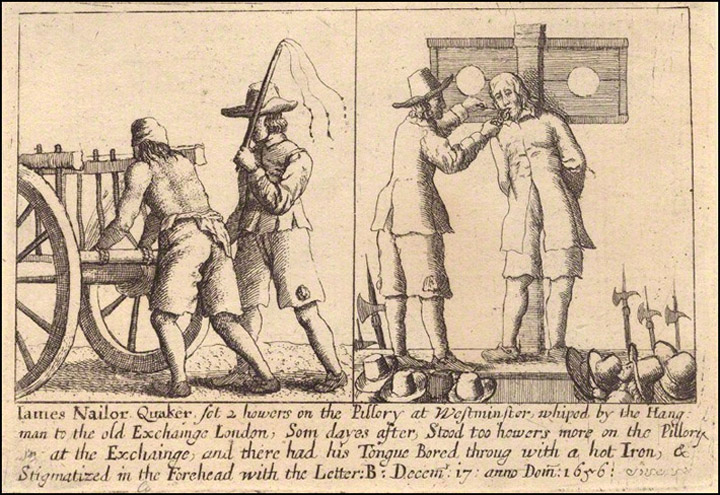
Beginning in 1656, laws forbade any captain to land Quakers. Any individual of that sect was to be committed at once to the House of Correction, to be severely whipped on his or her entrance, and kept constantly at work, and none were suffered to speak with them. In Ipswich, Roger Darby his wife lived on High St, and were warned, fined and dealt with harshly.
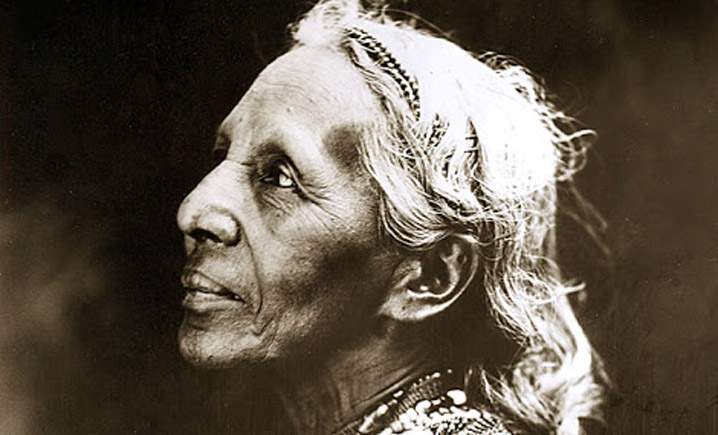
Stories on this site about women in local history from the early days of the settlement through the Twentieth Century.

At noon, a "midnight darkness" had fallen on Essex County. Candles were lighted, and fowls went to roost. By the next morning, dark ash lay four or five inches thick.

Capt Nathaniel Wade's company and Capt. Abraham Dodge's company fought from the trenches in Col. Moses Little's regiment. 18-year-old Jessie Story of Chebacco Parish was killed, the first Ipswich man to lay down his life in the struggle for Independence.

Many a pleasant sail down the river are in the memories of William J. Barton. "These were the names of the places and flats along the Ipswich River before my time, and familiar to me during my time. They were used by the fishermen and clammers. I know. I was one of them. It was the happiest time of my life."
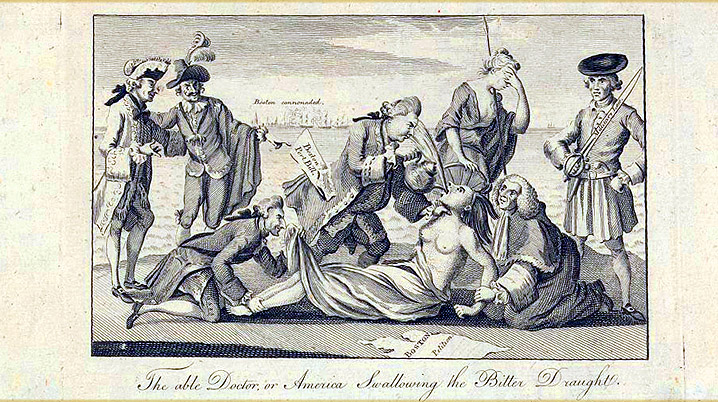
Despite the failure of the Stamp Act and the Townshend Acts, the British Parliament responded to the "Boston Tea Party" by passing even more restrictive acts to punish the American extremists.

"It was the schooner Hesperus, That sailed the wintry sea; And the skipper had taken his little daughtèr, To bear him company."
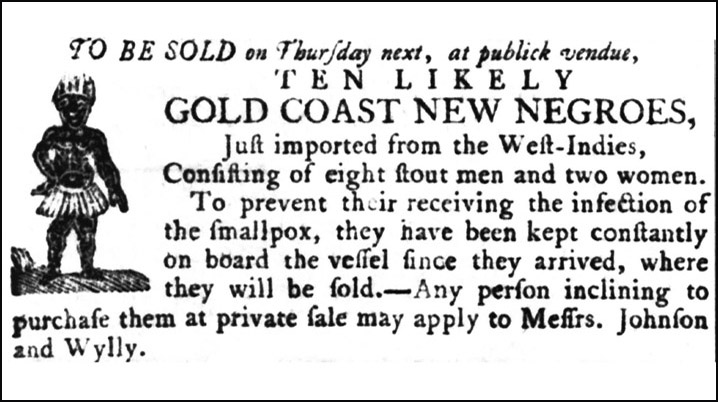
In 1765, Jenny Slew, a slave in Ipswich, successfully sued John Whipple Jr. for her freedom. In the mid-19th Century, divisions between ardent abolitionists, moderate anti-slavery people and those who avoided the discussion divided families, churches and the town of Ipswich.
 Historic Ipswich