
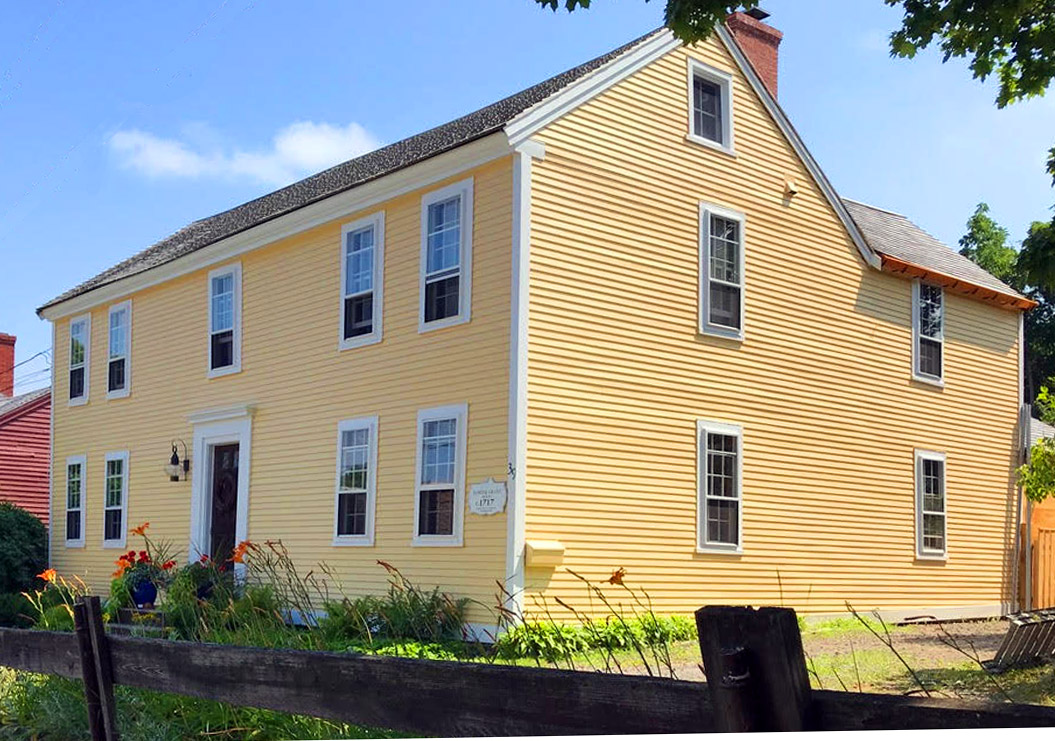
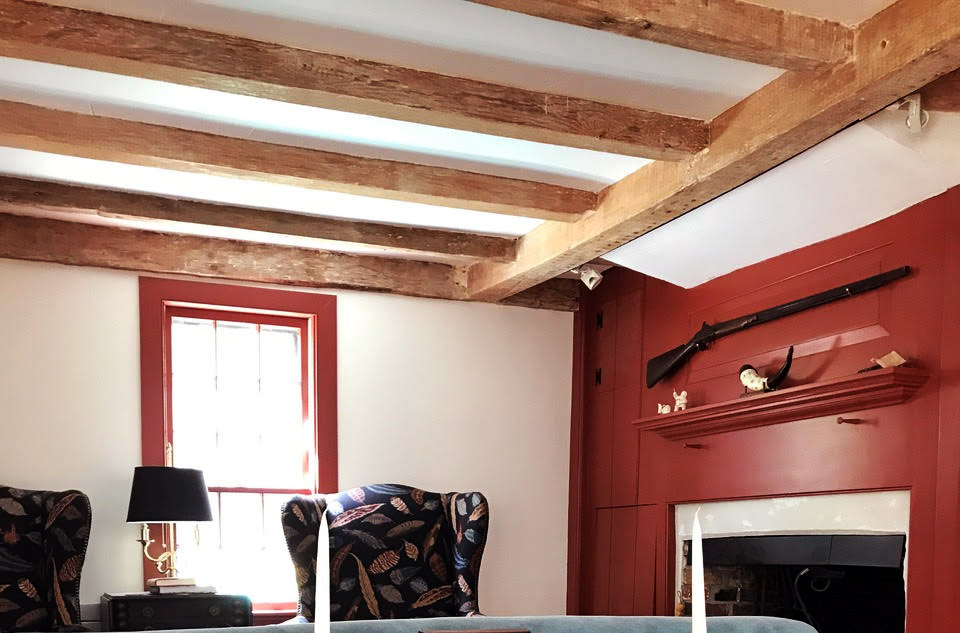
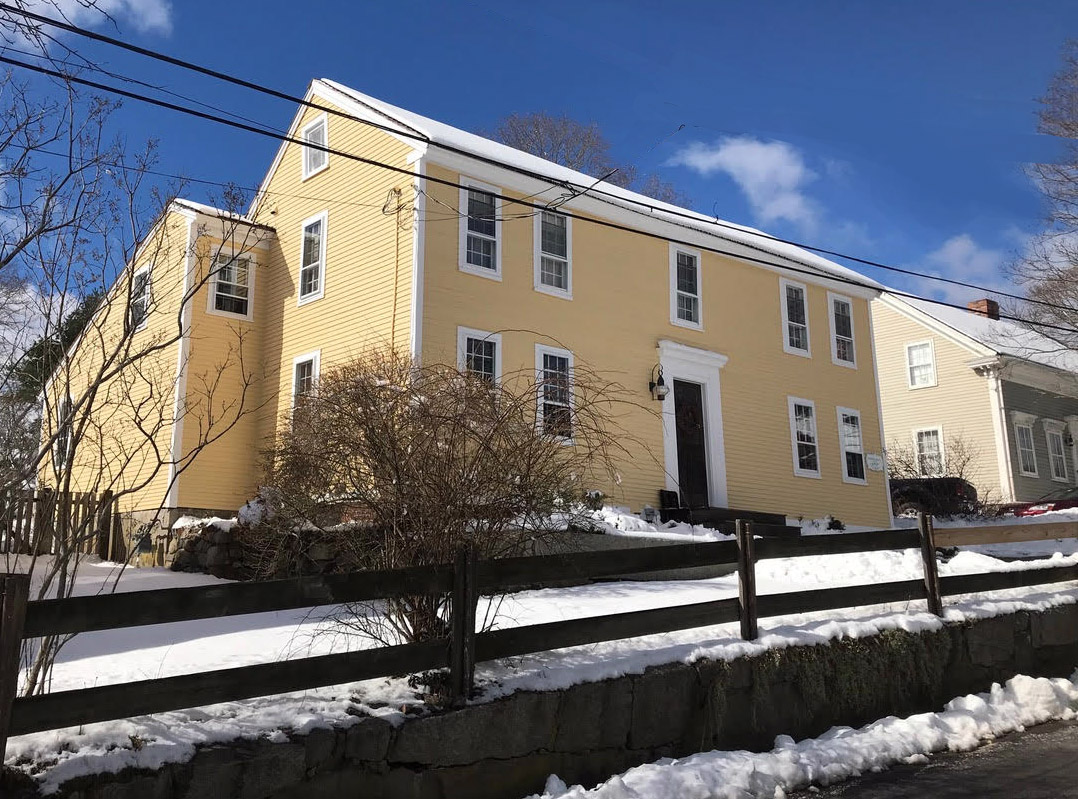
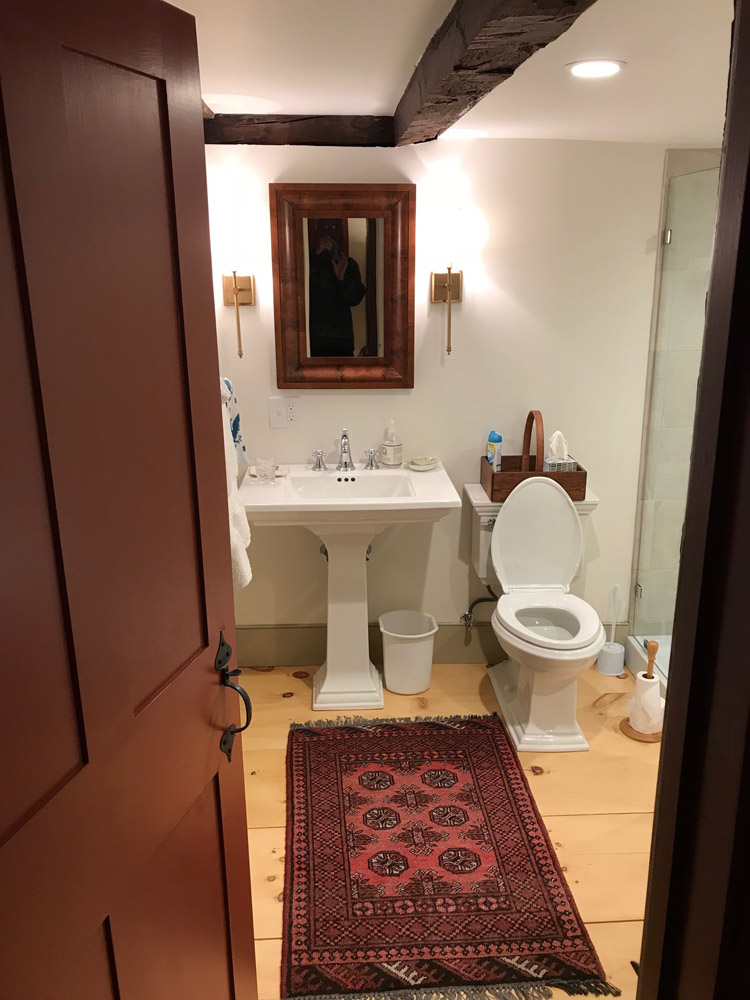
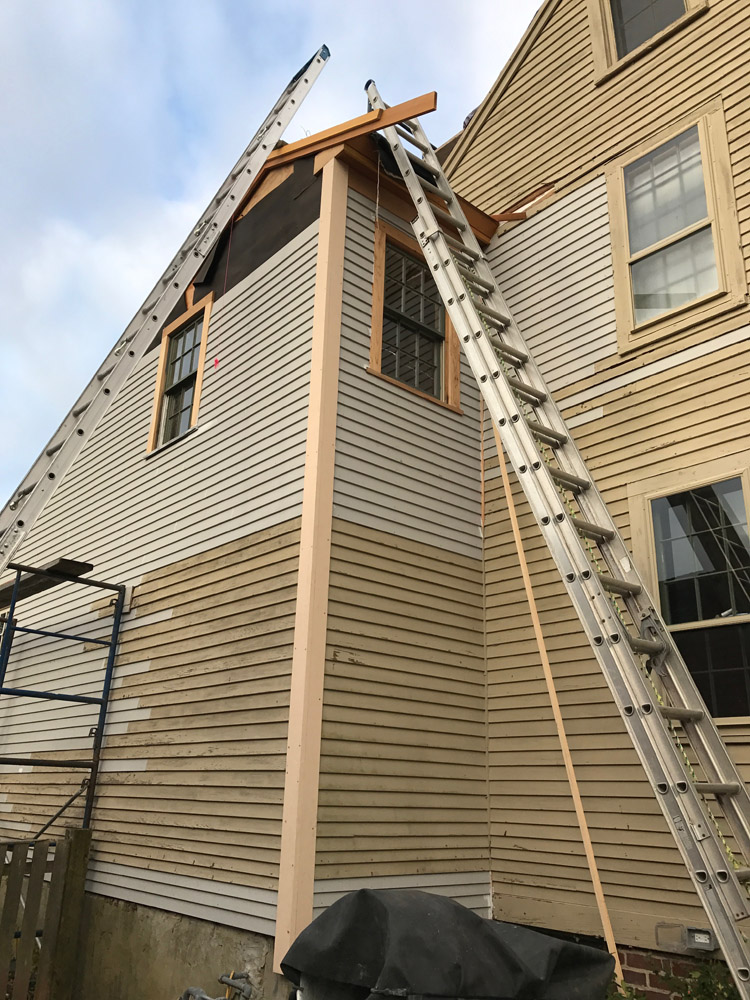
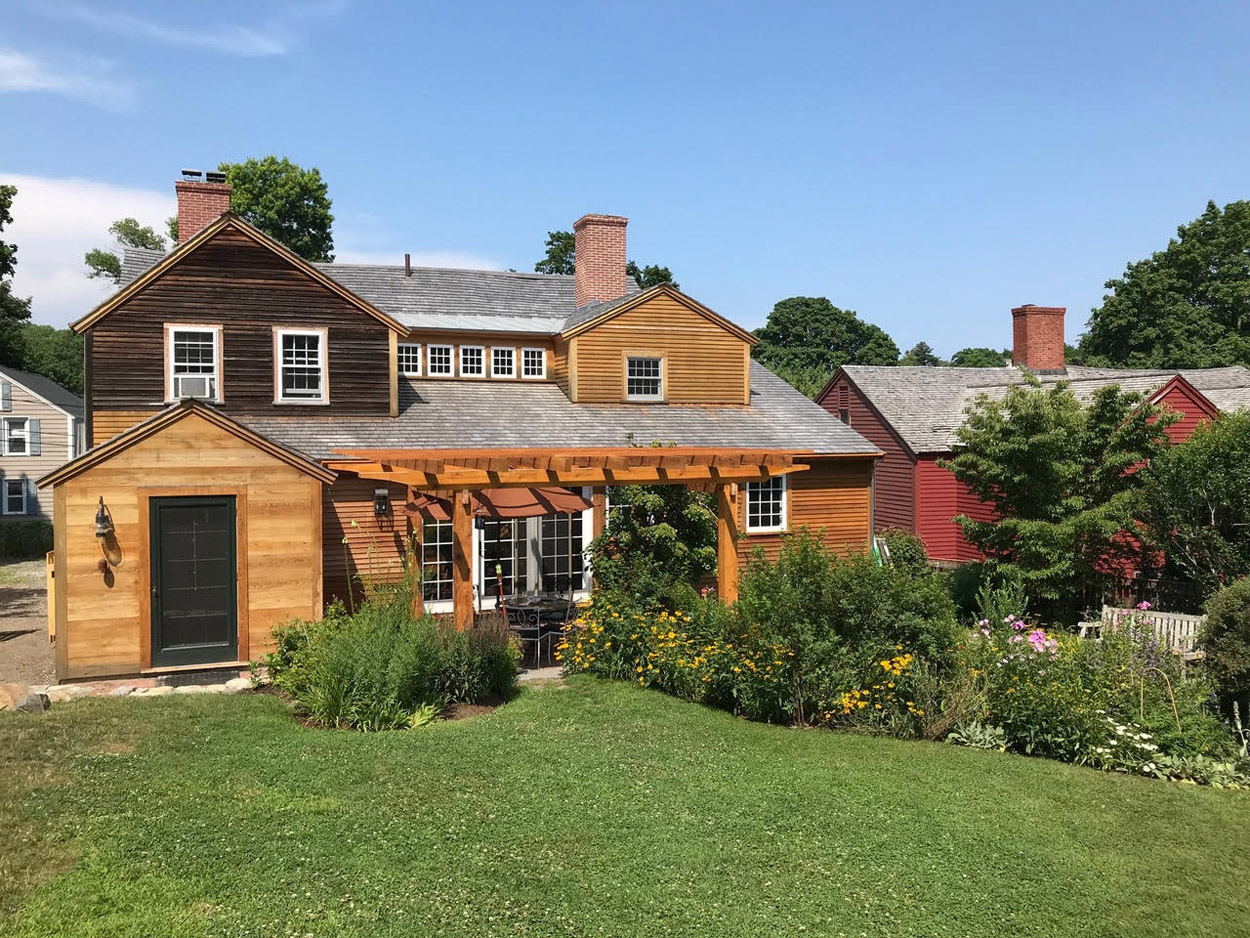
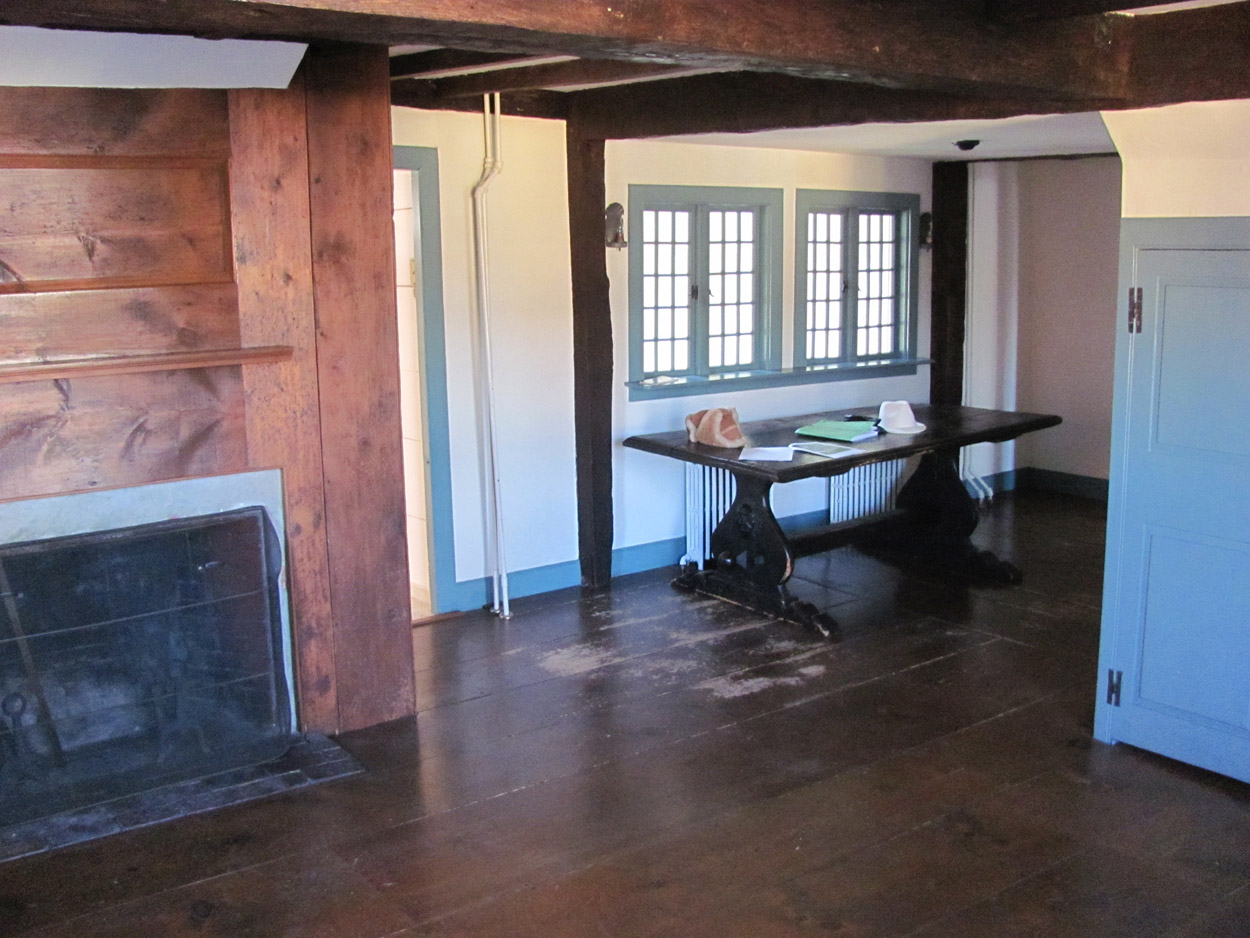
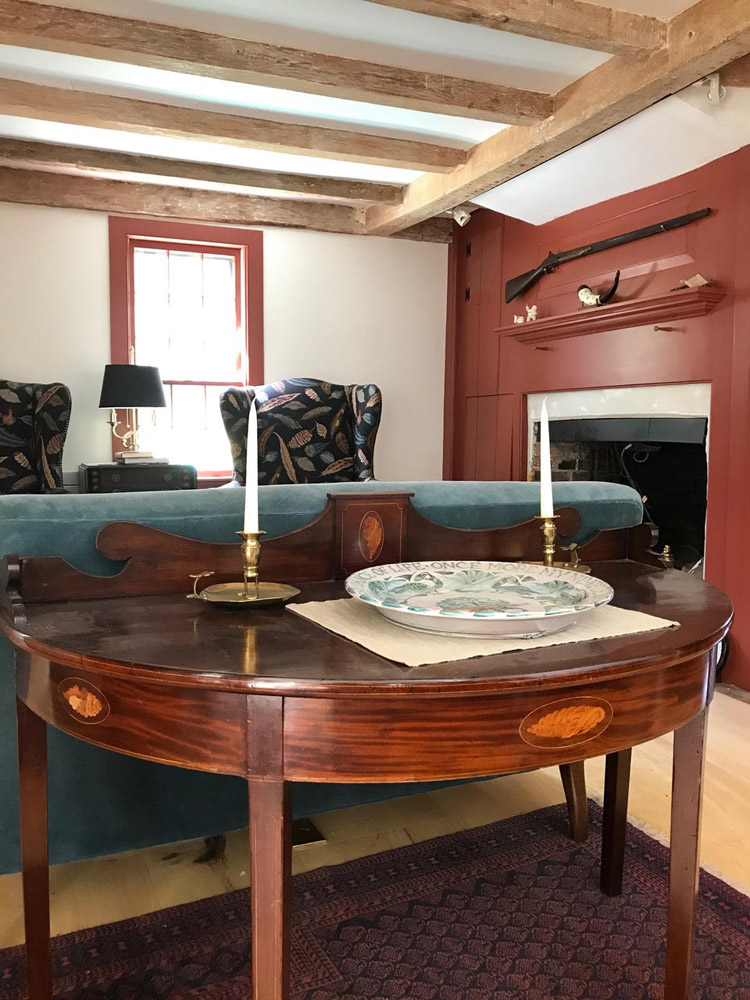
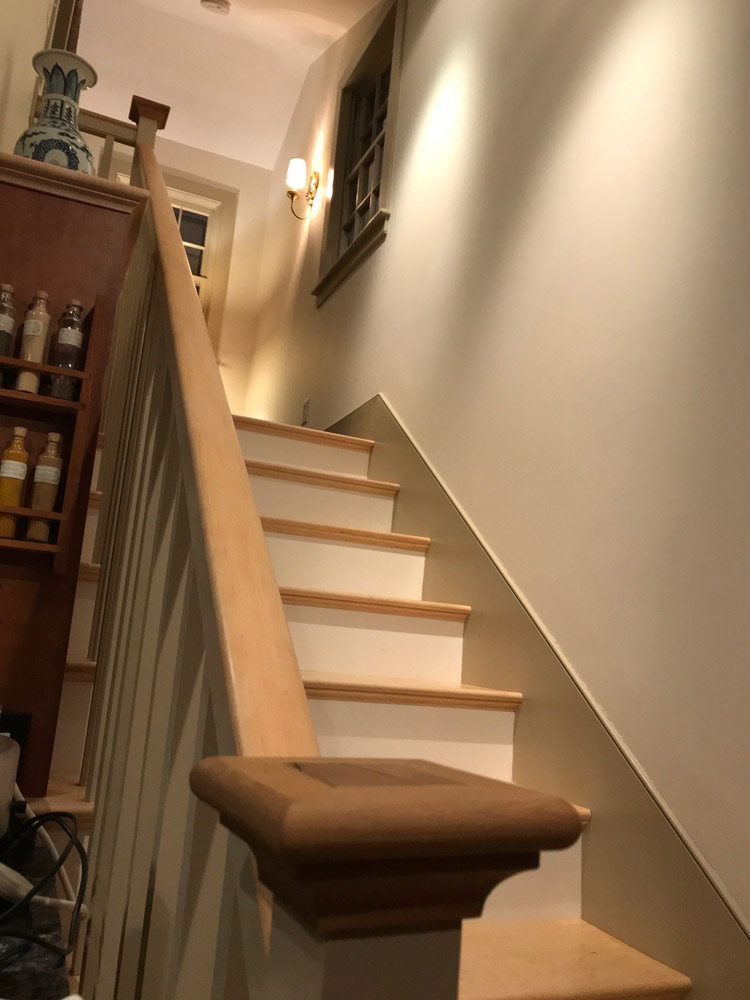
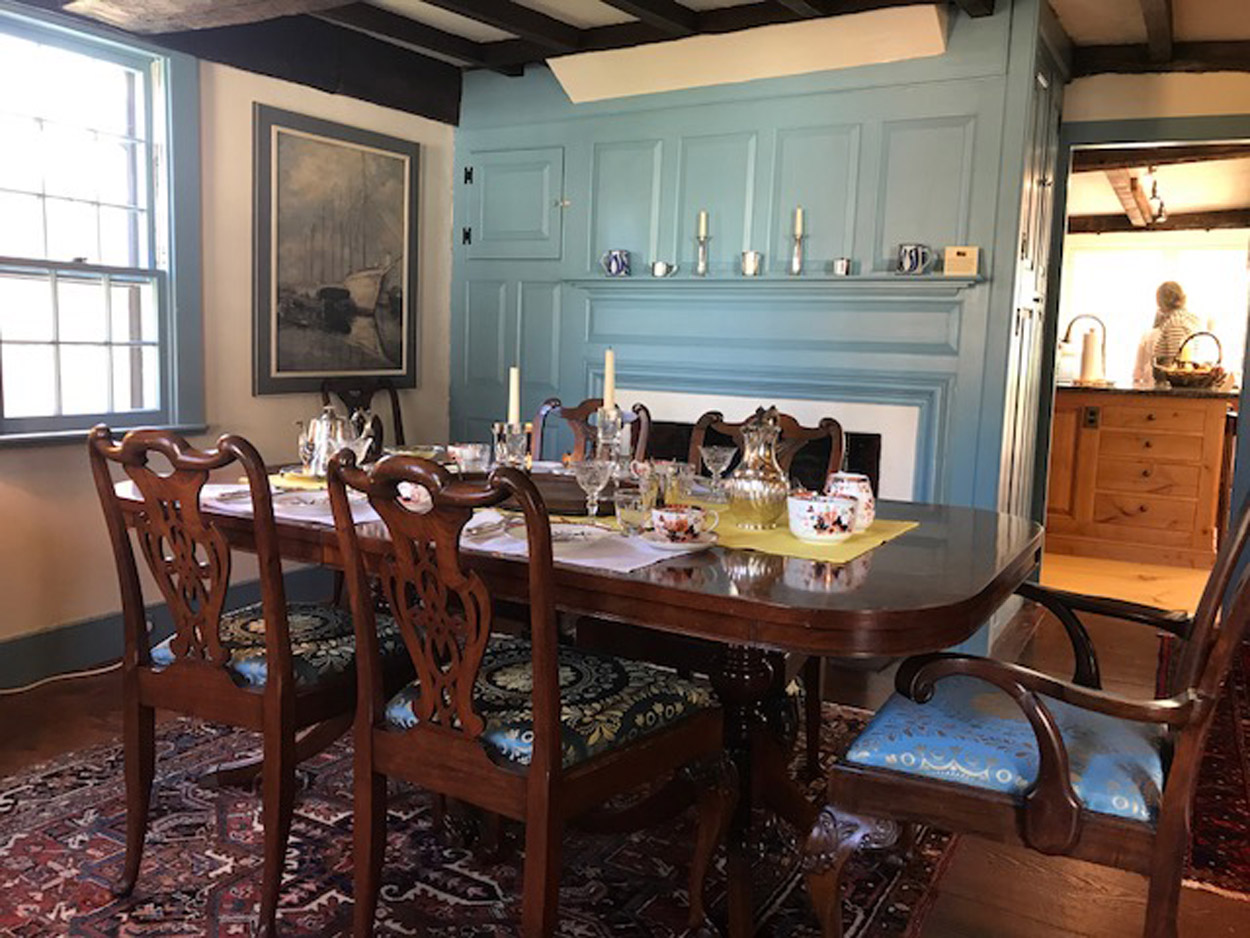
The Foster family constructed three First Period houses in this neighborhood, including the James Foster house across the street, and the ancestral Reginald Foster house around the corner on Water Street. James Foster, son of Reginald Foster, purchased this lot in 1717 and is presumed to be its builder. Although constructed at the end of the First Period, the house has early Georgian interior architectural elements and shows no indication of having once had a central chimney. The ceilings are low throughout the house; beams and joists previously covered with plaster were exposed during a 20th-century restoration. More recent renovations connected two small ells in the rear of the house and added a “Beverly jog” for additional access to the second floor.
This home appears to have been constructed as a two-family house, with the first landing of the front stairway forking to the two sides of the dwelling. Various members of the Foster family continued to reside in the house until 1826, when the widow Rebecca Sutton and single woman Abigail Foster sold the right side to Ephraim Grant, and the left side was owned by Joseph Wait.
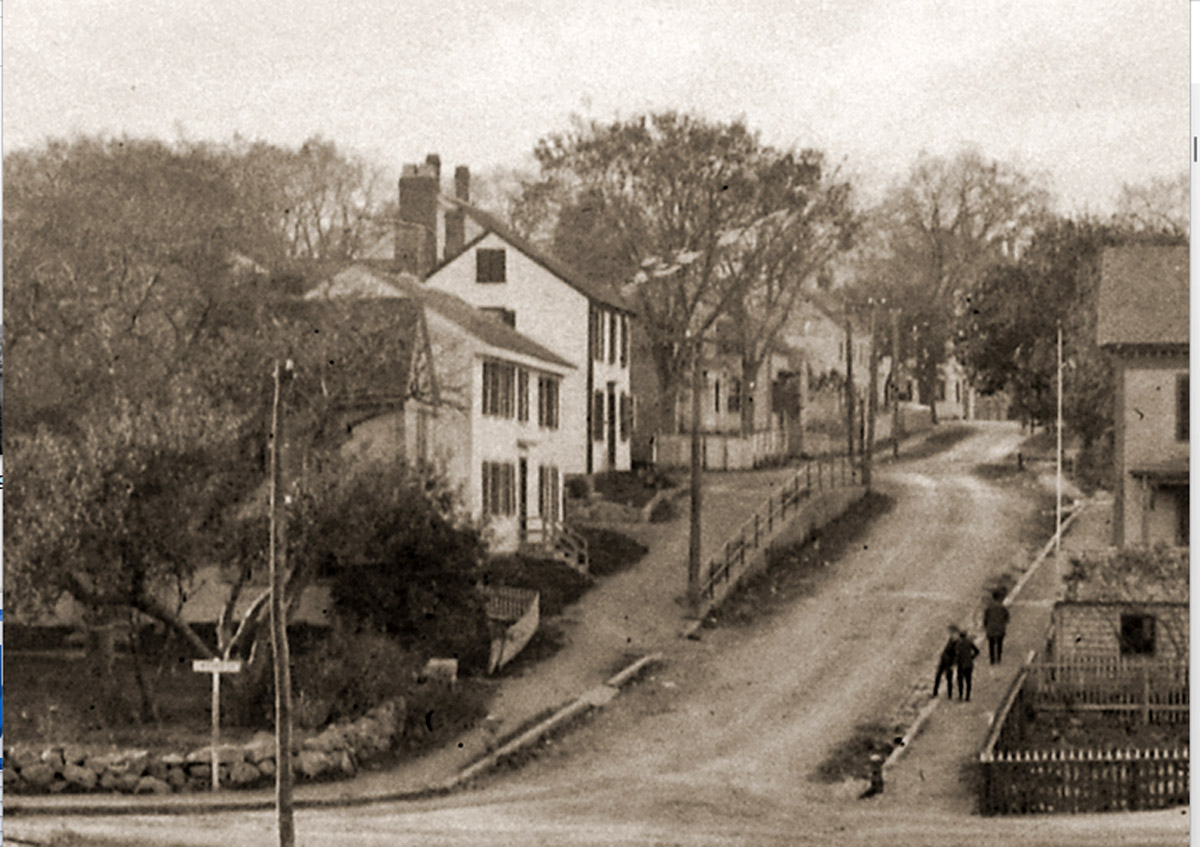
The Foster-Grant House at 39 Summer Street is believed to have been built in 1717 and has many well-preserved original elements. Summer beam construction and reused shadow-molded sheathing on the attic door are the architectural highlights of this house.
Early History of the House
Thomas Franklin Waters wrote the following:
“Nathaniel Knowlton sold a small lot of seventeen rods to James Foster (grandson of settler Reginald Foster) on Oct. 25, 1717 (35: 63). Jacob Foster (possibly James’ brother) conveyed the same apparently to William Foster, June 3, 1741 (84: 17). Rebecca Sutton, widow, and Abigail Foster, single woman, conveyed to Ephraim Grant, house and land, three rods fifteen links on the Lane, reserving to Joseph Wait, the east half of dwelling, June 30, 1826 (243: 252). This is known as the Grant house.”
From the Foster Genealogy:
Deacon Jacob Foster lived in the house built by his father, Reginald, on the south side of the Ipswich River near the stone bridge. The house was given by Reginald Foster at his death to Deacon Jacob, his son. Among Jacob’s children were James, born 12 Nov. 1682.
James Foster married Anna Cross on 15 May 1706, but left no issue. His will, dated 20 April, and proved 6 May 1751, gives the use of his estate, valued at £165, to his wife Anna during her life, afterward to the children of his brothers Jacob, Abraham, and Joseph, and brother-in-law John Caldwell. His widow was published to Benjamin Fowler, of Rowley, on 23 July 1756.
The MACRIS site states that James Foster was the first postmaster, but that was a different James Foster, born in 1716.

Mary Conley Award
The Ipswich Historical Commission presented the 2018 Mary Conley Award to Peter Bubriski and Richard Spalding, owners of the 1717 Foster-Grant house at 39 Summer Street.
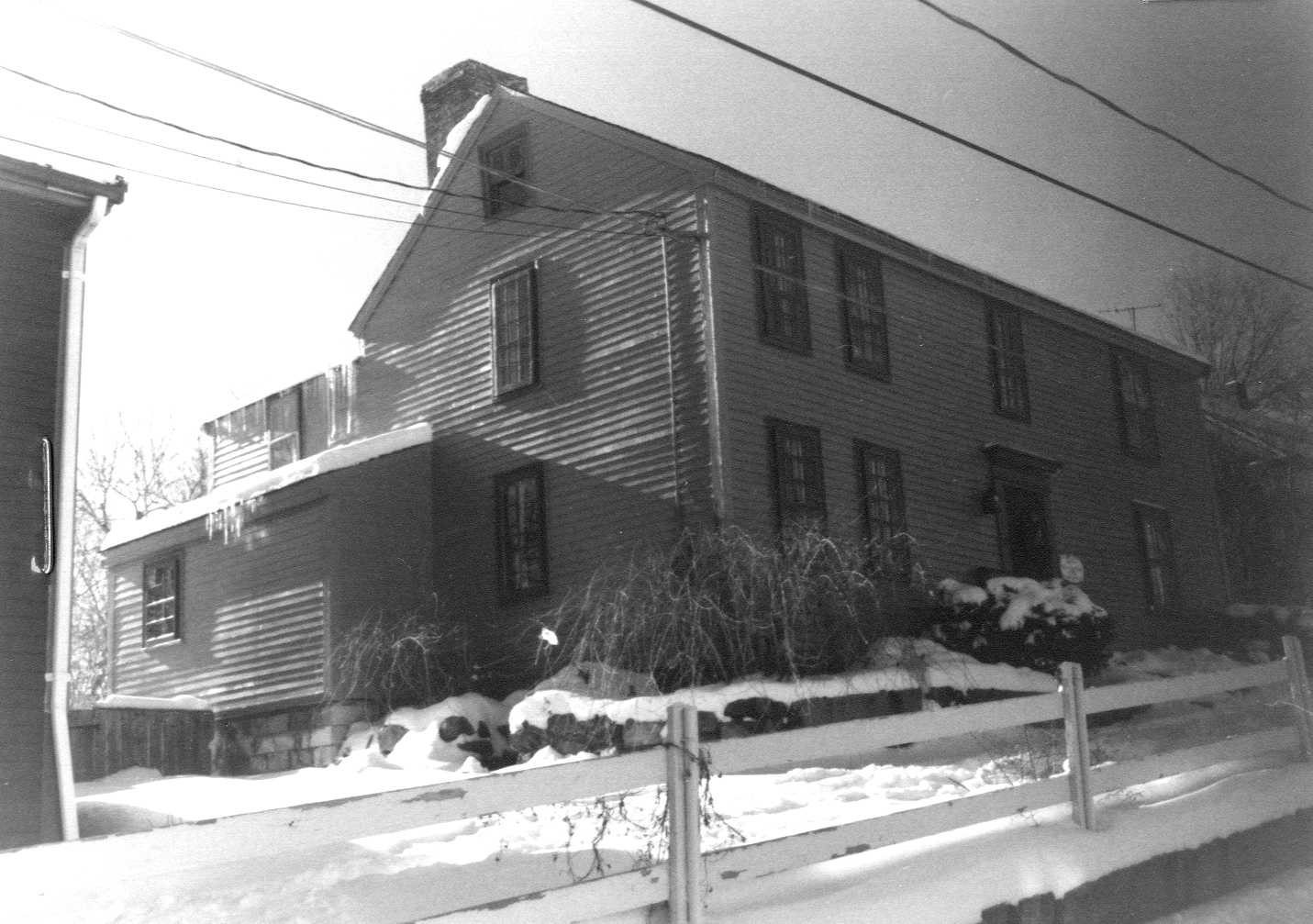
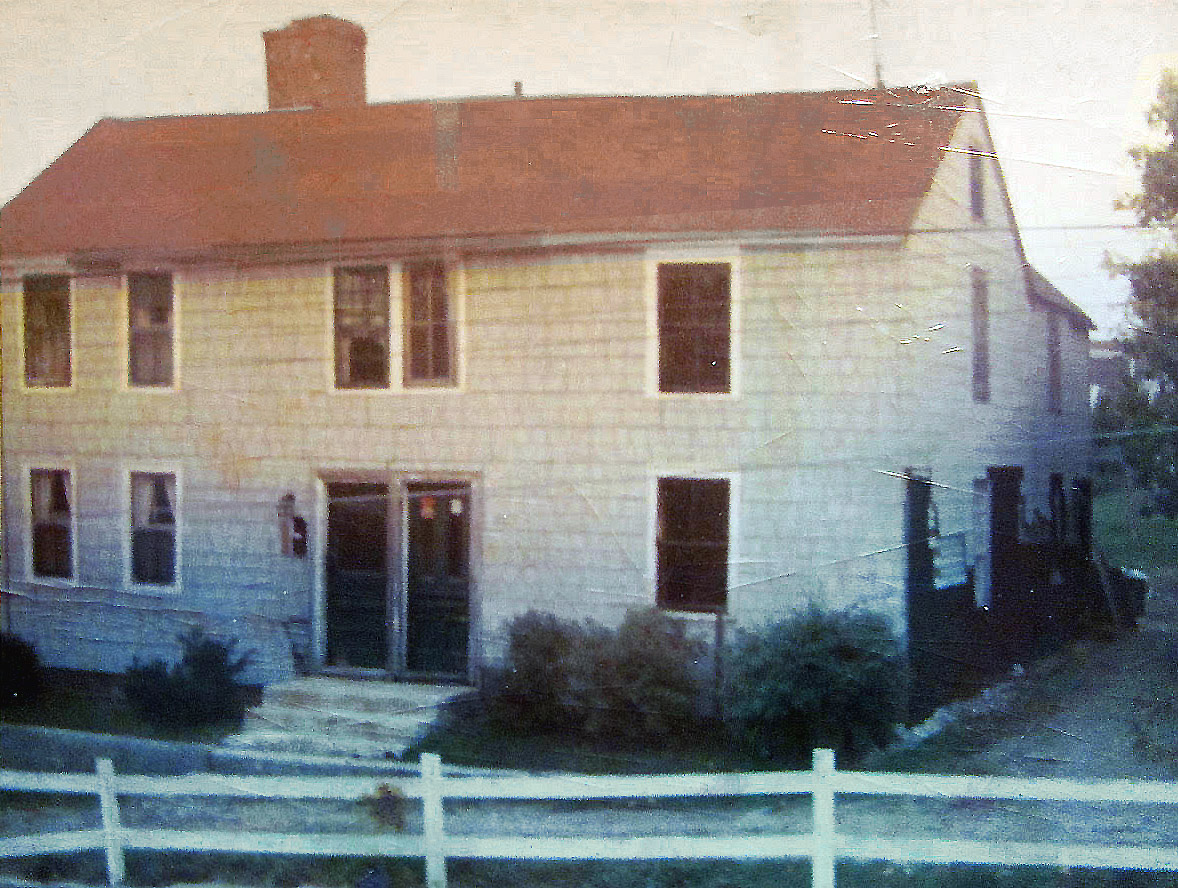
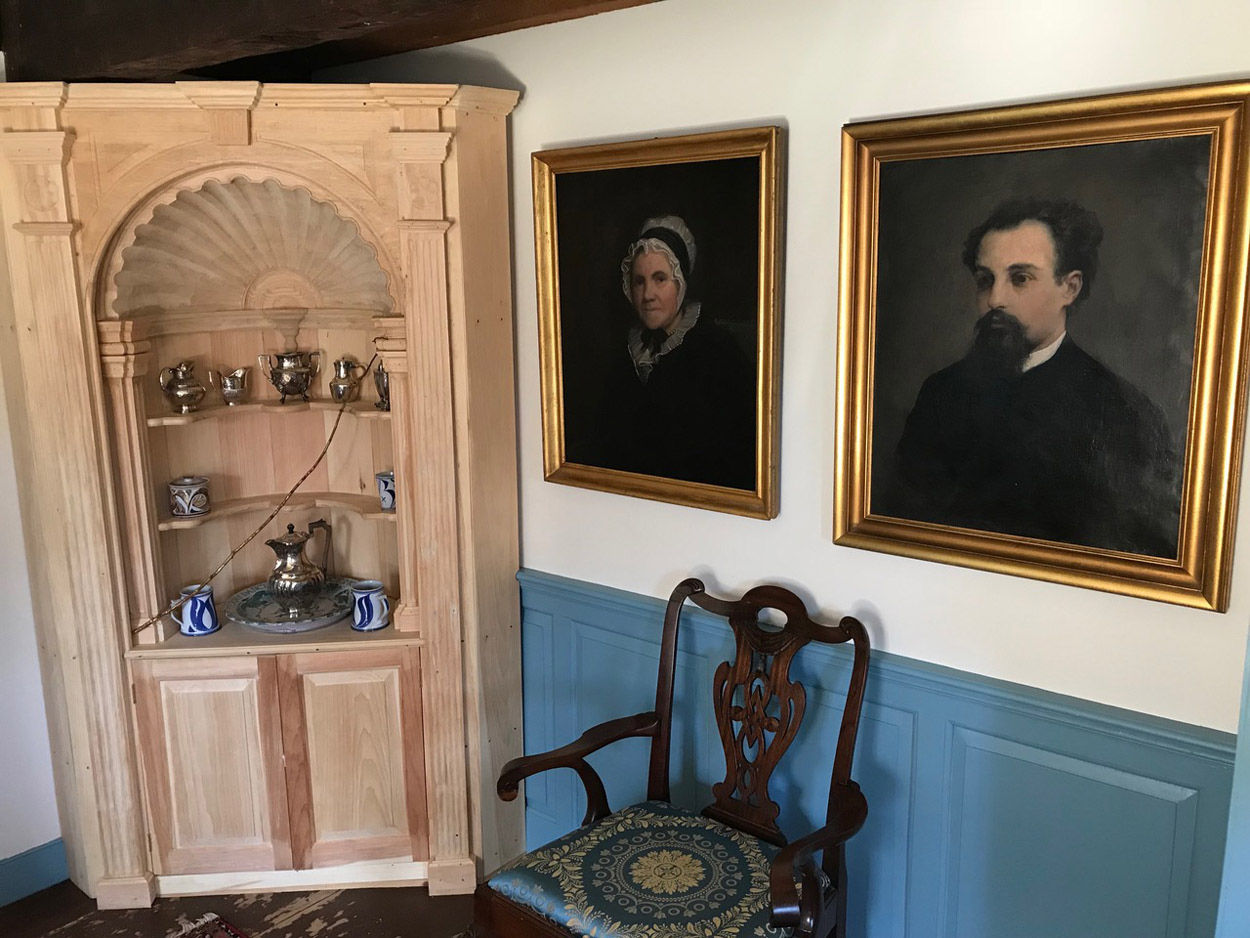
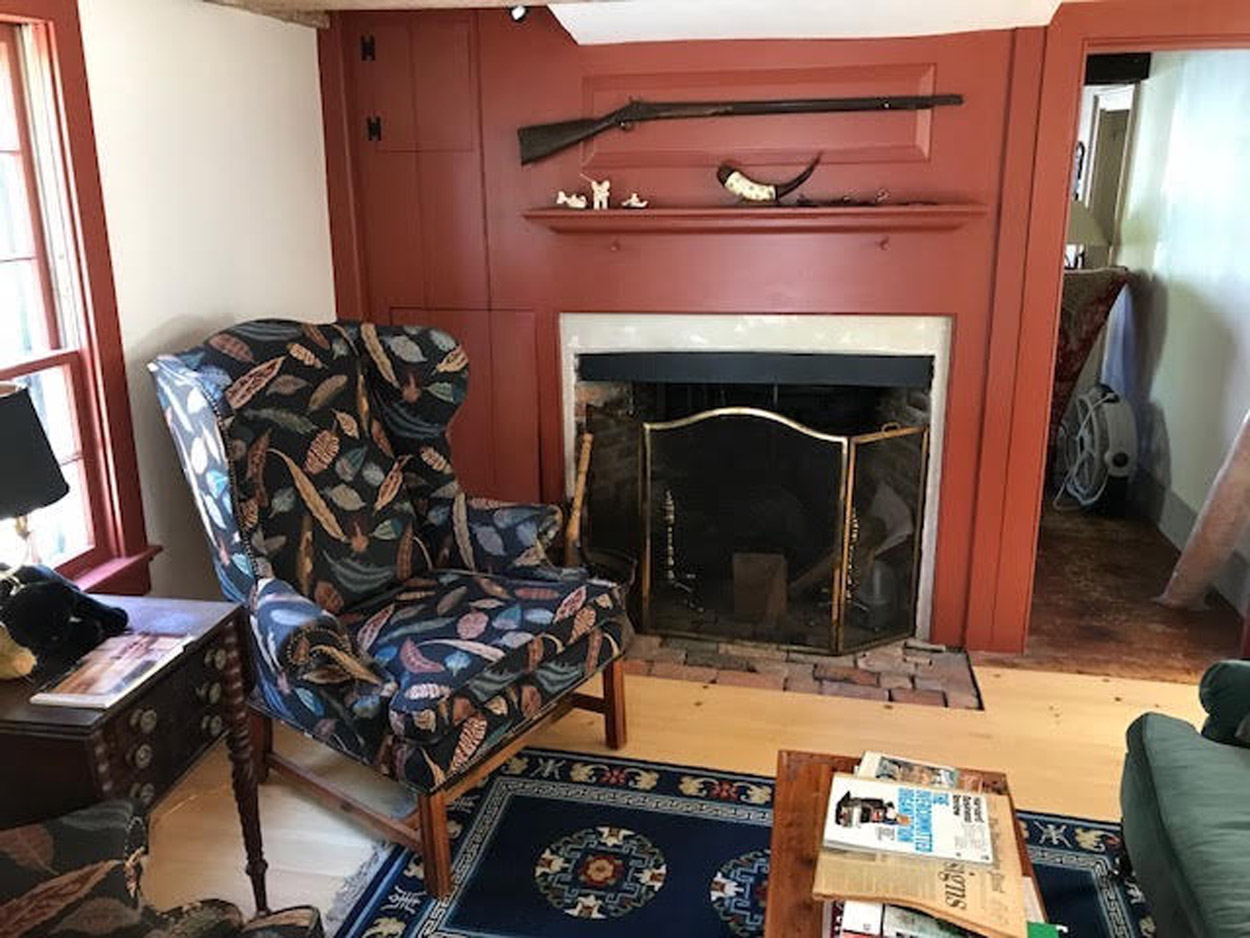
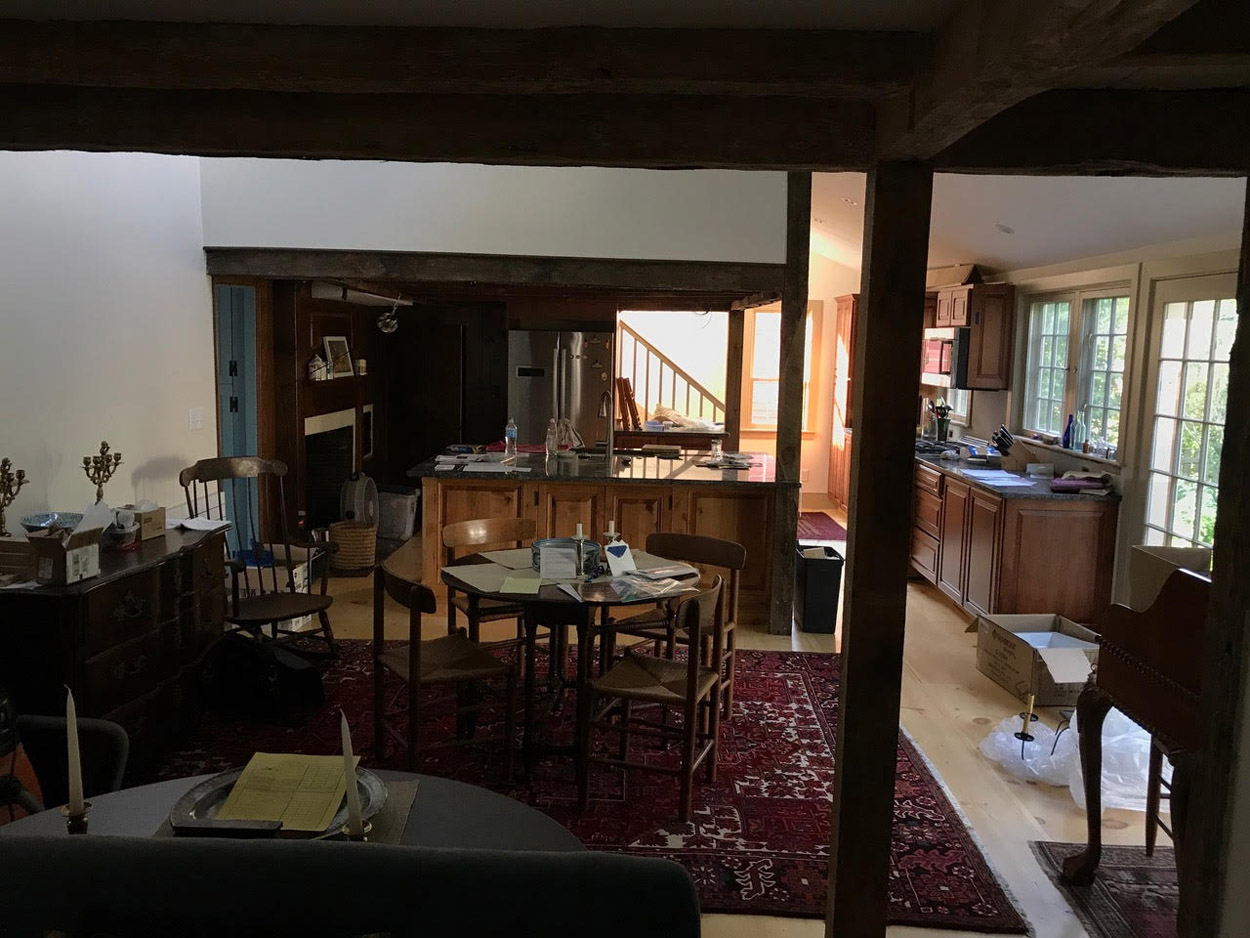
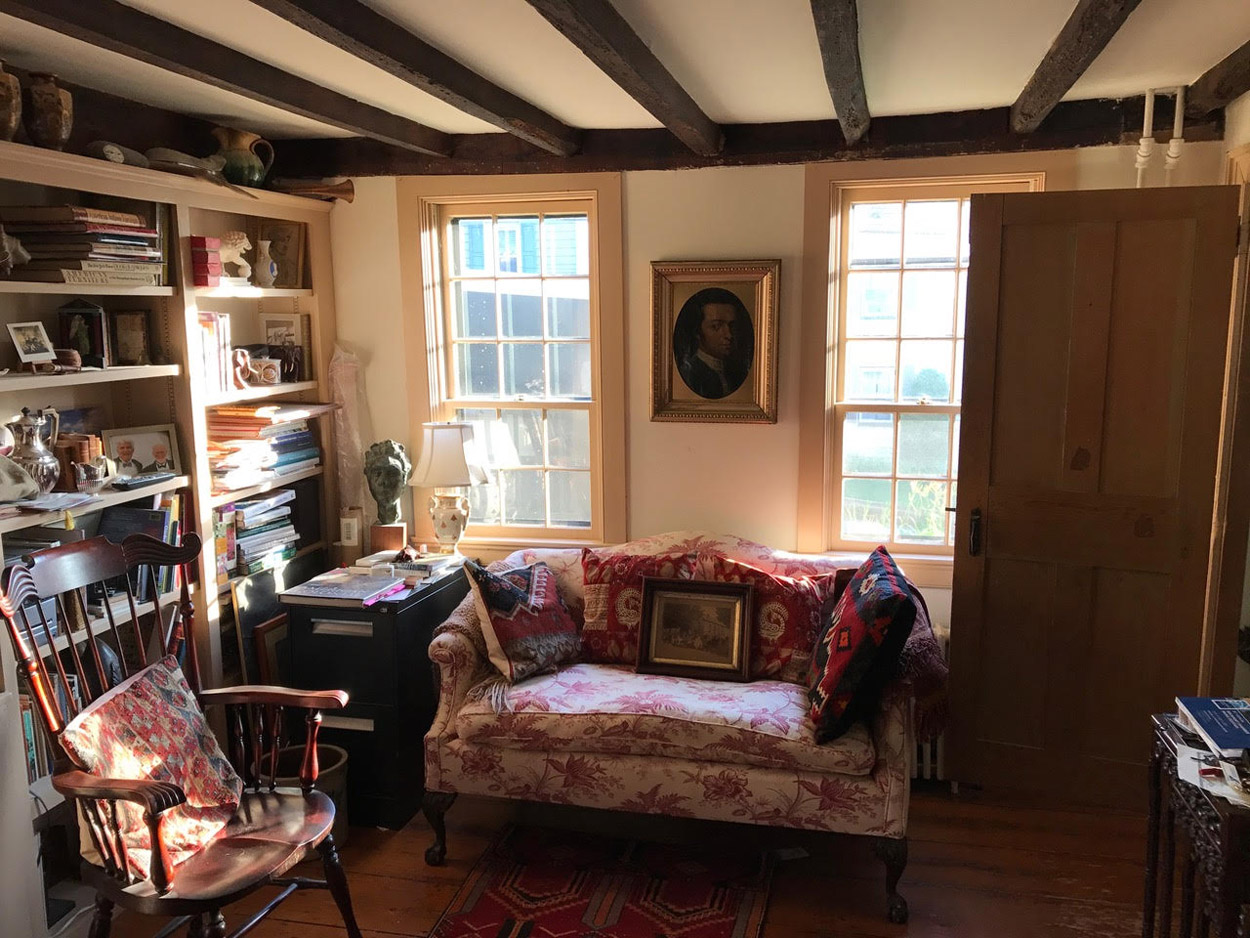
After purchasing the house a few years ago, Rick and Peter began the process of restoring its architectural features while adapting it to suit a modern lifestyle. The house was extended to the rear, providing a downstairs bathroom, a modern kitchen, and a new “Beverly Jog” that provides improved access to the upstairs rooms.
The photos below show the renovations that were recently completed and a photo from the 1980s of the same house.

Sources:
 Historic Ipswich