
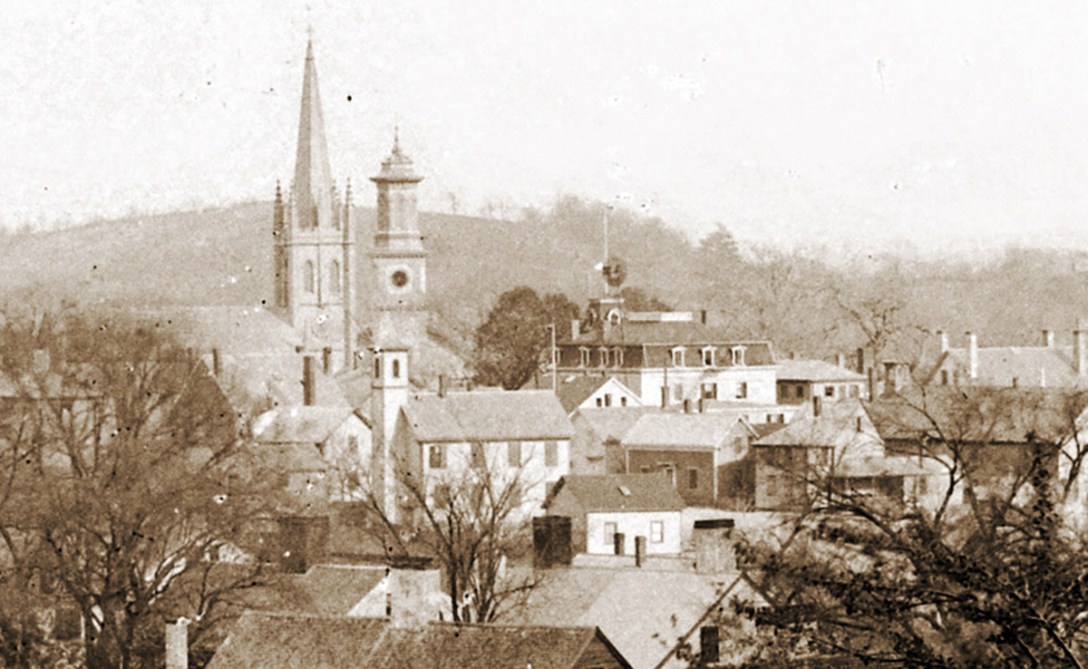

Ipswich, Massachusetts, was founded in 1634 in an area the Indigenous people called “Agawam,” and is known as “America’s best-preserved Puritan town,” with well-preserved streetscapes of 17th to 19th-century residences. The town has more “First Period” houses (1625-1725) than any other community in America.
- Stories and Legends
- Birthplace of American Independence
- Pillow Lace
- The Revolutionary War
- Witchcraft Trials
History articles on this site, indexed by century and decade:
- Ipswich in the 17th century
- Ipswich in the 18th century
- Ipswich in the 19th century
- Ipswich in the 20th century
- Ipswich in the 21st Century
- A photographic and chronological history of the Ipswich Schools
- The Development of the Ipswich Town Government
Chronology of Ipswich History
The following list of dates and events in Ipswich history is from the Genealogy of the Willcomb family of New England (1655-1902); “Over Three Hundred & Fifty Years of Ipswich History,” compiled for the 350th Anniversary Committee of the Town of Ipswich Massachusetts in 1984 by Elizabeth H. Newton, Alice Keenan, and Mary P. Conley, revised by Lee and William Nelson and reprinted in 2001; Felt’s History of Ipswich, Essex and Hamilton; and Ipswich in the Massachusetts Bay Colony by Thomas Franklin Waters.
- 9000 BC. Paleo-Indian site along the banks of Bull Brook and the Egypt River at the end of Paradise Road.
- 1614. Captain John Smith of Virginia sailed near Ipswich and found here twenty-seven fisheries and trading posts.
- 1617. A plague kills most of the Indians at Agawam.
- 1622. Capt. John Mason obtained title to all land between the Naumkeag and Merrimack Rivers (Salem to Newburyport) as a principal partner in a stock company known as the Plymouth Council for New England.
- 1628. William Jeffrey is living at Agawam.
- Masconomet is Sagamore of Agawam.
- 1629. Hugh Brown and others were sent to defend the Agawam Indians.
- 1630 John Winthrop’s ship Arbella begins voyage to America
- 1630. Warrants were sent to Agawam for those settled there to leave.
- 1631. Sagamore of Agawam was banished from every house for one year, on a penalty of ten beaver skins.
- 1633. A plantation was ordered to commence at Agawam. Agawam was settled by Mr. John Winthrop, Jr., and his companions.
- John Shatswell joined the Ipswich settlement with his wife and four children.
- 1634. Agawam is formally changed to Ipswich on August 5. About 100 settlers arrived at Ipswich.
- Robert Lord arrived with the first settlers and was appointed Ipswich Town Clerk
- Anne Dudley Bradstreet and her husband, Simon Bradstreet, lived in Ipswich from 1634 to 1648
- 1635. High Street was laid out and officially accepted during this year.
- The footbridge spanning the Ipswich River near the mill dam was completed.
- Twenty-five wolf hooks were sent to Ipswich.
- Ordered that dwelling houses be built within one-half mile of the meeting house.
- All residents more than 16 years old are compelled to take the oath of fidelity
- Rev. Thomas Parker, Nicholas Noyes, Mr. Henry Sewell, William White, William Moody, and Richard Kent were removed.
- The Great Colonial Hurricane
- Wreck of the Watch and Wait, August 24, 1635
- Daniel Denison arrived with his young bride in the new settlement. He became Major General of the colonial forces and represented Ipswich for several years in the General Court
- 1636. A court was ordered to hold a session once in three months in Ipswich
- Daniel Dennison is appointed Town Clerk.
- Newbury was settled by persons from Ipswich. Henry Short, John Spencer, and Nicholas Easton removed to Newbury.
- 1637. Ipswich was supplied with a watch house.
- 1638. Masconnomet sold Ipswich to Mr. John Winthrop, Jr. for £20.
- Seven selectmen were appointed.
- Hampton was settled by persons from Ipswich and elsewhere.
- Mr. John Rogers was ordained as pastor of the First Congregational Church.
- 1639. John Winthrop Jr. moved to Connecticut and sold Samuel Symonds the Castle Hill grant and his land at “Argilla Farm.”
- It is ordered that the pigges have liberty until the 16th of August next.
- 1639. The town of Rowley set off from Ipswich and incorporated.
- 1640. Deeds ordered to be recorded in the town book.
- 1642. Robert Paine was chosen as the town treasurer.
- The town voted to establish a free school.
- Whosoever kills a wolf is to have the skin, if he nails the head up at the meeting house and gives notice to the constables. A ten-shilling reward to be paid to the person who killed a wolf.
- The Agawames and other tribes are to have their arms restored, having been taken from them because it was suspected that they intended to rise against the English.
- Every householder shall have a ladder in constant readiness for fire.
- 1643. A fulling mill was built on the Rowley River by John Pearson.
- 1644 Masconnomet puts himself, his subjects, and possessions under the protection and government of Massachusetts and agrees to be instructed in the Christian religion.
- 1645. Topsfield was set off from Ipswich.
- A plot of the cow common on the north side of the river, containing by estimation three thousand two hundred and forty-four acres, was presented unto the freemen of the town.
- 1647. The second meeting house was built, with Theophilus Wilson in charge.
- 1649. Smoking is forbidden when on the street.
- Ordered that whosoever hath any hay within three rods of their houses shall remove it within six days after notice, on the fine of 20s
- Ipswich was allowed two-fifths of Plum Island.
- 1651. The town established a Latin school.
- 1653. The law against Sabbath-breaking is posted on the meeting house.
- Rev. Nathaniel Ward died at Ipswich.
- 1654. Dr. Giles Firman returned to England.
- 1656. Rev. John Norton removed to Boston.
- William Paine removed to Boston.
- Thos. Cobbet is chosen pastor of First Church.
- 1658. Masconnomet, Sagamore of Agawam, died.
- 1659. The town bell is rung at 9 p.m. each day.
- 1660. It is ordered that no house, henceforth erected shall have any right to the common lands of this town without express leave of the town.
- 1664. The town voted to grant no more land
- 1665. Plum and Hog Islands and Castle Neck are divided between Commoners who do not exceed 6s 8d in their person.
- 1668. Forty shillings reward was paid to the person who killed a wolf.
- 1670. Every cow is obliged to wear a bell.
- Constables are instructed to prevent young persons from being out late in the evening, especially during Sabbath lectures and training day evenings
- 1671. John Sparkes’ Inn is first mentioned. He was succeeded by Mr. Rogers, who had the Sign of the Black Horse. Mr. Crompton followed Rogers.
- 1672. Laborers are forbidden to have intoxicating liquors
- 1678. A law obliging all persons to have some visible employment.
- Seventy foxes have been killed this year.
- 1680. There are three military companies in Ipswich.
- 1681. Single persons who are under no government are ordered to put themselves under the care of a head of a family.
- Daniel Weldron is required to return to his wife according to the law.
- An inhabitant is complained of by a tythingman because he had had a servant for many years and had not taught him to read
- Roger Derby and his wife, Quakers, remove to Salem.
- A town seal and stamp are bought.
- A magazine is kept in the meetinghouse.
- 1682. Tobacco yards have become common.
- General Daniel Denison died at Ipswich, September 30.
- 1683. Samuel Appleton II removes to Lynn, owns Saugus Iron Works
- Richard Saltonstall removes to England.
- 1684. A house of correction built...
- 1687. Ipswich resists unjust taxation
- 1689. Popular uprising. Gov. Andros was imprisoned.
- 1692. Elizabeth Howe, of Linebrook, is tried for witchcraft and executed.
- 1693. The Supreme Court tried several of the accused in the cases of witchcraft.
- 1696. Samuel Appleton died early this year.
- Ipswich voted to purchase three field pieces.
- I700. The population of Ipswich is about 1500.
- Repaired the “Great Bridge” over the river.
- 1701. The third meeting house was erected, perhaps near the site of the soldiers’ monument. It was banked up with stones and gravel from the old fort on the green. The pulpit of this house was placed “near ye edge of ye great rock in ye meeting house about seventeen foot from ye wall.”
- The almshouse was built on the common.
- Esther Rogers, of Newbury, hanged at Pingree’s Plain, Ipswich.
- 1704. A Town House was erected on Meetinghouse Hill.
- 1705. School was kept in the Town House.
- 1709. One hundred and forty men were admitted as Commoners.
- 1711. Colonel Francis Wainwright died just before guests arrived for his second marriage
- 1717. Almshouse built, 40x16x6 feet.
- 1718. Tea comes into use among the richer class.
- 1720. Flour is baked and eaten occasionally by the rich.
- 1722. The probate office was kept in the courthouse until 1815.
- 1725. Elizabeth Atwood hanged for murdering her child.
- 1726 There were three Indian families living at Wigwam Hill, the last recorded in town.
- 1727. The valuation of Ipswich is second in the county, Salem being first
- 1733. Potatoes began to be cultivated.
- 1734. The hundredth anniversary of the incorporation of Ipswich.
- 1735. Ipswich pays £400 a year for the support of its poor.
- 1736. Diphtheria epidemic.
- 1744. The war began with France.
- 1745. Louisburg was taken by New England forces.
- 1747. South Parish meetinghouse erected.
- 1748. Many great snowstorms in February.
- 1749. Fourth meetinghouse erected on the common.
- 1755. There are 62 slaves more than 16 years old.
- 1757. Captain Jonathan Fellows has the exclusive right to sand banks.
- “Wolves have nearly disappeared.
- 1758. Second Siege of Louisburg
- 1762. First stage, once a week between Ipswich and Boston.
- 1763. The “Stamp Act” was passed.
- 1764. The Town and County bridge was built (Choate Bridge)
- 1766. Colonel John Choate died on March 10 at Ipswich.
- 1767. A steeple was built on the Town House.
- 1770. Coffee began to be used.
- 1771. A new jail was built on the site of the old one.
- 1775. James Foster was appointed the first postmaster.
- Jesse Story was killed at Bunker Hill, June 17.
- Severe earthquakes at Ipswich, November 18.
- Rev. Nathaniel Rogers died.
- Gen. Arnold and the army marched through Ipswich toward Canada.
- 1776. Ipswich instructs her Representatives in favor of Independence, June 10
- 1777. It is voted that the ministers take turns in opening town meetings with prayer
- 1778. Ezra Ross, of West Ipswich, hanged at Worcester, for murder.
- 1780. Slavery was abolished by the State Constitution.
- 1782. Marquis de Castellux visits Ipswich, November 13.
- 1783. Great rejoicing at Ipswich over the news of peace with England.
- Houses began to be papered.
- 1784. The almshouse is rebuilt.
- 1786. Twenty-five men enlisted and aided to quell Shay’s rebellion.
- 1788. Commoners give an absolute grant of land to the town.
- 1789. General George Washington reviews 3d Essex Regiment at Ipswich
- General Michael Farley died on June 20 in Ipswich.
- 1790. Deer have nearly disappeared.
- 1792 Ipswich pays £5oo for the support of the poor.
- A woolen factory is built.
- Brick powderhouse built.
- Doctor Wallis Rust died in December.
- 1793. Hamilton was set off from Ipswich and incorporated.
- A hail storm destroys about 5000 panes of glass in Ipswich.
- Psalms and hymns began to be wholly read in church.
- 1795. A new Town House was erected, costing $7000.
- 1797. The town records begin to compute money in dollars and cents.
- 1800. Population of Ipswich, 3305
- 1802. Cato Haskell kills Charles Lewis from Virginia with a scythe, October 12. 1802. Haskell is sentenced for manslaughter, to be branded on the forehead with M, and imprisoned for a year.
- 1804. Smoking on the streets is forbidden. Penalty, $1.00.
- 1806. The Baptist Society was formed in February.
- 1808. Ipswich trade suffers much from the Embargo.
- Ipswich sends a petition to President Thomas Jefferson.
- Voted to have four fire ladders and four hooks with chains two of each to be kept in the body of the town, one of each at Chebacco and Line Brook.
- 1810. Population of Ipswich, 3569.
- 1811. The town gives $1000 to Newburyport fire sufferers.
- 1813. Sixteen British prisoners were committed to the Ipswich jail.
- 1814. Betsey Telock, aged 49, was burned to death on January 5. 1814. It has been commonly reported that she came to her end by spontaneous combustion from the inordinate use of ardent spirits, but it is the opinion of the gentleman who first discovered her body soon after the flames in her room were extinguished that she caught her bedclothes on fire with a candle and thus lost her life.
- 1816. Major Joseph Swasey suddenly expired in the Town Hall, April 1.
- 1817. The Probate Office building was finished and occupied on December 17.
- 1818. The “Stars and Stripes” became the National flag.
- 1819. Chebacco was set off and incorporated as Essex.
- 1820. The Fox Creek Canal was finished between Ipswich and Essex.
- Population of Ipswich, 2550.
- 1821. A fire engine was bought for $450, and a house was built for it.
- 1823. The Baptist society was dissolved that year.
- 1824. Boston & Ipswich lace factory established.
- 1825. Over $200 raised to help build the Bunker Hill Monument.
- 1826. Col. Nathaniel Wade, a personal friend of Washington, died Oct. 26.
- The Methodist Sunday School was formed that year.
- 1827. Voted 10 cents for every crow killed in Ipswich.
- Ipswich Journal (weekly) was first published.
- 1828. Ipswich Female Seminary was opened by Miss Grant.
- 1830. The cotton factory began operations.
- Population of Ipswich, 2951.
- In 1830, a Unitarian society is formed.
- 1831. There are 332 dwelling houses and 298 barns in Ipswich.
- There are 187 horses, 1439 cattle, 458 sheep, and 284 swine.
- Hay cut in Ipswich amounted to 3179 tons.
- Kev. Moses Welch assumes the pastorate of the Linebrook Church.
- 1832. The bridge was finished over the river on Mill Rd.
- 1833. There are three tanneries.
- Representatives are paid $2 per day from the State Treasury.
- Bank incorporated March 25, capital $100.000.
- The Unitarian Society dedicates a Church edifice.
- 1834. Rev. John P. Tyler assumes the pastorate of Linebrook Church.
- “History of Ipswich, Essex and Hamilton,'” published by Joseph Felt
- Celebration of the 200th anniversary of the founding of the town.
- 1837. The population of Ipswich is 2858.
- Ipswich Register was published for only one year.
- The “Washington Blues” were organized with thirty-six members.
- Thomas S. Greenwood is appointed lighthouse keeper.
- Sixtieth celebration of June 17, by survivors of the Revolution.
- 1838. Old South meetinghouse was dedicated on January 1.
- 1839. A train from Boston made its first passage through Ipswich.
- 1841. Asahel Wildes is the collector of the Port of Ipswich.
- The Plum Island River was frozen over; the winter was so severe.
- 1842. The House of Correction was enlarged and built of brick.
- A County Hospital for the chronic insane is built.
- 1843. The Unitarian Church was bought by the town for a townhouse.
- 1844. John P. Cowles assumes charge of Ipswich.Academy.
- 1846. A section of the town was added to Boxford.
- Alfred Kimball is elected town clerk.
- 1847. Seventeen lives lost by the wreck of the brig “Falconer.” Castle Neck. Dec. 19.
- President Polk and Secretary Buchanan make addresses in Ipswich.
- 1848. The church at Linebrook was torn down and rebuilt. Rev. E. Burchard assumes pastorate.
- 1849. Capt. Joseph W. Willcomb and James H. Staniford leave Ipswich for California gold mines.
- 1850. Ipswich Clarion (weekly) was first published
- The Methodist Church is again enlarged.
- Rufus Choate, lawyer and U. S. Senator, died.
- 1852. The County Court Records are removed to Salem.
- 1854. Dr. Thomas Manning leaves his estate to build a high school.
- Abraham Hammatt, antiquarian, died August 9, aged 73.
- 1855. Daniel L. Willcomb is the surveyor of the port of Ipswich. Frederick Willcomb is the inspector of the port of Ipswich.
- The County Court House was sold to the Methodist Society.
- 1856. Stephen Coburn is the postmaster of Ipswich.
- 1860. The population of the town is 3,300.
- 1861. Benjamin Ellsworth is appointed keeper of the Ipswich Lighthouse
- Reuben Daniels is the surveyor of the port of Ipswich.
- The War of the Rebellion began. Ipswich sends soldiers.
- The bridge over the Ipswich River on County street was built.
- 1863. Coins gone out of circulation, postage stamps used for change.
- Augustine Heard and his nephews give $10,000 for the relief of soldiers.
- Ipswich has paid $13,200 bounty to volunteers for the Union.
- One hundred and fourteen families of volunteers receive town aid.
- The town paid $9768.00 for aid to volunteers’ families.
- 1864. In the war of the Rebellion, Ipswich has sent 348 men.
- Ipswich pays twenty men $2,500 to enlist.
- The town has paid $12,092 for aid to volunteers’ families.
- 1865. The population of Ipswich is 3,311.
- News of the assassination of Abraham Lincoln causes great sorrow.
- End of the Rebellion, and return home of the soldiers. The number of men of Ipswich who died during the war was 52.
- The town has paid $15,950 in bounties to soldiers.
- The town has expended over $52,000 to aid in suppressing the Rebellion.
- John H. Varrell is the postmaster of Ipswich.
- John P. Cowles is the principal of the Ipswich Female Academy.
- The Ipswich Fruit Growers’ Society was organized on September 22.
- 1866. Abrani D. Wait is the overseer of the House of Correction. Dr. Y. G. Hurd is master of the House of Correction.
- An organ costing $2000 is put in the Methodist Church.
- 1868. The “Ipswich Bulletin” was published.
- Decoration Day or Memorial Day was first observed on May 30
- The schooner Lucy K. Cogswell was built by Edward W. Choate.
- The Free Public Library opened. Miss L. Caldwell, librarian.
- Josiah Lord is Representative to the Legislature.
- 1869. The Church of the Ascension, Episcopal, was built on County Street
- Savings Bank incorporated by J. Ross, F. Willcomb, and others.
- 1870. The population is 3674.
- Philip E. Clarke is the inspector of customs.
- 1871. The soldiers’ monument was erected at a cost of $3,000.
- The Ipswich Advance was published.
- 1872. Ipswich Chronicle (weekly) was first published.
- First annual parade of Ipswich firemen.
- An earthquake shock was felt here on Nov. 19.
- Dr. Joseph G. Cogswell bequeaths $40,000 to the Manning School fund.
- The light of the great Boston fire was plainly seen from Ipswich.
- Central Street was built during this year..
- 1873. The Methodist Society builds a parsonage, which costs $6000,
- A great Methodist revival occurs.
- Ipswich Hosiery Mills employs about 300 operatives.
- Ipswich Woolen Mills employs about 50 operatives.
- The house of correction has 144 inmates. The insane asylum has 64 inmates.
- An earthquake shock was felt at Ipswich on Nov. 24.
- There are 508 pupils enrolled in the public schools of the town.
- 1875. The population of Ipswich is 3.674.
- The brig “Ida C.” went ashore on the beach on February 20.
- Schooner “James Freeman” sunk in Ipswich Bay.
- John H. Blake is a Representative to the Legislature.
- John H. Cogswell is the postmaster of Ipswich.
- 1876. The Town Hall was rebuilt and enlarged.
- The Ipswich Female Academy closes its existence.
- The Port of Ipswich is abolished and annexed to Newburyport.
- 1877. Ipswich Gas Light Co. formed, works built, and pipes laid.
- The post office is broken into, and money and stamps are stolen, Nov. 27.
- 1878. The schooner Helen M. Dennis was built.
- The steamer “Carlotta” was built.
- The post office was broken into on the night of April 5.
- A sand schooner was destroyed on Ipswich bar in a storm on April 23.
- Post office broken into, safe and contents carried out, April 7.
- Schooner Lucy K. Cogswell had her masts split by lightning. Aug.
- Schooner “Hop Vine” went ashore on Ipswich bar, Sept 6.
- Schooner “Sarah Ann” went ashore on Ipswich bar, November 2.
- 1879. The Ipswich Mutual Benefit Association was organized
- The sum of $3715 was raised on March 2 to pay the debt of M. E. Church.
- Fire destroys shops and barns at Damon’s mills, April 26, loss $18,000
- The Willowdale Mills Company was incorporated.
- Schooner “G. F. Higgins” was driven ashore on the point, August 20.
- A reservoir for fire purposes was rebuilt at the corner of Mineral and High streets
- 1880. The population of Ipswich is 3699
- Mr. and Mrs. Huntington and four children drowned in the Plum Island River
- 1881. The ”Yellow Day” occurs this year. Schools closed in the afternoon.
- Schooner “Alice Oakes” was wrecked on Ipswich bar, June 10.
- Schooner “Lucy K. Cogswell” sunk by collision with Stmr. Wm. Crane
- Fire causes a loss of $6000 at the Willowdale mills.
- 1882. A town well is drilled in Central Square, 125 feet deep.
- Steam yacht “Evangeline” foundered in Ipswich Bay, October 5.
- 200th anniversary of the death of Maj. Gen. D. Denison observed Sept. 20.
- Manning Street was built from High to Central.
- Steamship “City Point”‘ wrecked on Plum Island and is a total loss
- A reservoir built for fire purposes at Willcomb’s Square.
- First-class postage was reduced from three to two cents.
- Unsuccessful attempt to blow open the post office safe by burglars, Nov.29
- 1884. The two-hundred-fiftieth anniversary of the incorporation of the town is celebrated
- Willowdale mills were destroyed by fire, Jan. 11, loss $50,000.
- An earthquake is felt at Ipswich.
- 1885. Schooner “Isabella Thompson” wrecked on Castle Neck Dec. 1.
- Schooner “Beta” wrecked on Plum Island, April 7, and three drowned.
- Schooner “Lizzie” of Machias, Me., wrecked on Ipswich bar.
- Schooner “Mark Gray” was seriously damaged by a collision.
- Schooner “Franklin” wrecked on Plum Island, Nov. 13.
- 1857. Schooner “E. M. Branscome” wrecked in Ipswich Bay.
- Ipswich Insane Asylum was abolished in October.
- $2500 expended by the government in dredging Ipswich River.
- Plum Island River is frozen over, the winter is so severe..
- 1889. The Agawam “Manual and Directory” was published this year.
- A schooner loaded with sand for Boston sank in the Ipswich River.
- 1890. A new life-saving station is placed on Plum Island.
- Luther Wait is appointed postmaster of Ipswich.
- A very heavy wind and rain storm occurred on October 18
- Freight train wrecked between Fowler’s and Ready’s crossing.
- 1891. The Ipswich Board of Trade was instituted for the benefit of the town
- Ipswich gas works were burned on Jan. 17.
- The Australian ballot system was first used at the town meeting.
- The valuation of Ipswich is estimated at $2,435,239.
- 1892. The sand schooner W. H. Y. Hackett went ashore on Little Neck in Feb.
- The Ipswich National Bank was incorporated and began business.
- The Baptist Church was instituted this year.
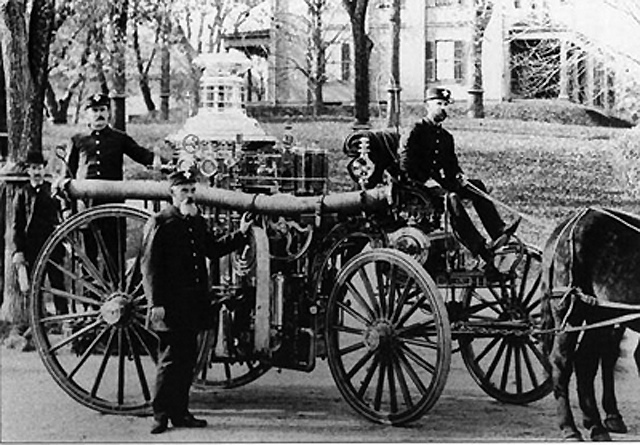
- Warren Hardy was killed by being run over by the “Warren” fire engine.
- The number of children enrolled in the public schools is 736
- The rate of taxation is S11.70.
- There are 802 dwelling houses in town.
- The number of domestic animals owned in the town is 11,209.
- There are 1,017 voters registered in Ipswich.
- The schooner Jonathan Cone went ashore on the beach, Nov. 21.
- 1893. There are seven churches, twelve schoolhouses, and two banks in Ipswich.
- The Free Public Library has about 12,000 volumes.
- The schooner Celia went ashore on Ipswich bar on April 18.
- The Ipswich Mills employ about 800 operatives.
- Schooner A. Baker went ashore on Ipswich bar, Dec. 15.
- The town is practically out of debt.
- There are 61 stores and markets in the town
- Average number of inmates and attendants at the County House, 150.
- The population of Ipswich is about 4,500.
- 1894. Schooner E. F. Willard, of Portland, wrecked on the beach, Feb. 5.
- Four blocks, two houses, and a barn burned in January, on Central Street.
- Damon’s block, Lord’s block, and sheds were burned on April 19.
- The steam fire engine Masconomet bought by the town for $3,200.
- Warren Fire Engine Company was disbanded on October 2.
- George H. Schofield is appointed postmaster.
- The Green Street Bridge is rebuilt as a stone arched bridge.
- The Ipswich Water Works and reservoirs were built, and water pipes were laid.
- A freight train was badly wrecked, October 16 at Ipswich.
- The new Wildes block on Central Street was built.
- The Red Men’s block was built in the fall.
- The new Jewett block on Central Street was built.
- The Measures block was erected on Central Street.
- The new Damon block was erected near the R. R. station.
- 1895. Ipswich produced 47,700 bushels of clams for market this year.
- Nine students graduated from the High School in June.
- 1896. The first electric cars to Ipswich from Beverly were run on June 22.
- Fifteen students graduated from the High School in June.
- A memorial tablet on the South Green was unveiled on July 29.
- Jeffries Neck was sold to A. B. Clark in August.
- C. M. Perley’s team was smashed by a train at Mineral Street, Oct. 12.
- 1897. The telephone exchange was instituted at Ipswich.
- The town put up 1,146 tramps this year.
- Only five students graduated from the High School in June.
- 1898. There was an eclipse of the moon. Jan 17.
- A great snowstorm occurred on Feb. 1
- The Ipswich Historical Society purchased the Whipple house.
- Eclipse of the sun, Dec. 13.
- 1899. Tremendous snowstorm Feb. 13- 14.
- Rev. T. Frank Waters is pastor of the South Cong. Church.
- There are now 1000 dwelling houses in Ipswich.
- Ipswich sends volunteers to the Spanish-American War.
- 1900. There are 1774 persons assessed in Ipswich.
- The valuation of Ipswich is now $3,245,335. 37.
- There were 179 arrests made during the year.
- 825 pupils are enrolled in the public schools.
- During the year, 44 seals were killed in Ipswich.
- There were only 28 cases of infectious and contagious diseases.
- 1901. The number of assessed persons is 1807.
- George Schofield, a Selectman and a Democrat, is elected to the Massachusetts General Court from a largely Republican District and serves several terms in the House and Senate.
- 1902. Benjamin Ellsworth, lighthouse keeper, died Feb. 21, aged 89.
- 1903. The Electric Light System was built as a municipal utility by the Town under the leadership of George Schofield.
- 1907. Greek settlers built their church, St. Mary’s of the Assumption.
- 1908. Polish settlers built Sacred Heart Church. Their priest is Rev. Charles Ryc. Jewish residents establish a synagogue.
- 1909. Ipswich artists win international fame. Arthur Wesley Dow, Theodore Wendel, Henry Kenyon, and Francis Richardson.
- 1910. – French residents founded St. Stanislaus Parish and began their church in 1912. Their priest is Fr. Stanislaus Vermette.
- 1913. Labor troubles erupt at Ipswich Hosiery Mills with a strike and violence as the workers demand higher wages. One woman is killed, and out-of-town police have to be called in.
- Walter Hayward organizes the Ipswich Cooperative Bank.
- 1914. Sympathetic organizations send help to Britain, Belgium, and France as World War I begins with the German invasion.
- 1916. —Cable Memorial Hospital was built and equipped by Richard T. Crane, Jr., and given to the Trustees for the Town.
- 1917. As the United States goes to war, many Ipswich men begin service in the armed forces. About 200 served through the war.
- 1918. A severe influenza epidemic strikes the Town, with so many people ill that they are cared for in tents on the hospital grounds. There are many deaths.
- Ipswich celebrates the end of the war, and the servicemen return home.
- Col. F. R. Appleton, Jr., is one of the founders of the American Legion in Paris. The American Legion is organized in Ipswich.
- 1920. The period of postwar unemployment causes much hardship among families, who are compelled to seek help from the Poor Department.
- 1921. —Memorial Building is voted to be built in memory of Ipswich Veterans of all wars at a cost of $52,000.
- 1922. —Hayward’s Stocking Manufacturing Plant is organized by Walter Hayward and his friend, Perley Barbour, and the building is constructed on land that was purchased from the Boston and Maine Railroad.
- 1923. The Rotary Club was formed with twenty members, and soon increased to twenty-eight. Walter Hayward is the first President.
- 1928. The closing of the Ipswich Hosiery Mills, caused by the failure of the owners, the Lawrence family, to modernize, leaves several hundred people unemployed.
- The Great Depression brought desperately hard times to the people of Ipswich. Many families are able to survive only because of the help of the Town’s Welfare Department and of the federal agencies like the ERA, CWA, PWA, and WPA, most of which are supervised by Selectman Brainard Wallace.
- 1934. The 300th anniversary of the incorporation of Ipswich is celebrated. The First Church of Christ, Scientist, on North Main Street is dedicated.
- 1936. The Ipswich High School was completed with the help of federal funds on Green Street at the site of the old jail, at a cost of $229,000. The opening is celebrated with a gala reunion of all the classes of Manning High.,
- 1937. An expedition starts from Ipswich to celebrate the 250th Anniversary of Manasseh Cutler’s expedition to Marietta, Ohio, in the Northwest Territory. Ipswich’s belief in freedom of the individual is believed to be an important contribution to the development of non-slave governments in that Territory.
- 1938. Robinson’s Shipyard on Fox Creek is set up to build yachts and sailing ships. When war comes, the company converts to building a variety of vessels for the Navy. The Great Hurricane caused much damage and the destruction of hundreds of ancient elm trees.
- 1941. After President Roosevelt and Congress declared war on Germany and Japan, hundreds of men and women began to join the armed forces. Sylvania converts to super-secret war work for the Navy. 1,200 people are employed there building a device, which was revealed to be the proximity fuse, which had an important role in achieving victory. Townspeople participate in Civil Defense work, airplane spotting, air-raid drills, and War Bond drives.
- 1945. –In May, World War II in Europe comes to an end with the defeat of Hitler’s armed forces, and in August, with the news of the surrender of Japan, an impromptu parade downtown to the honor roll celebrates the victory, but remembers with prayer the 30 men and one woman who gave their lives. (Shortly thereafter, the VFW, the Amvets, and the PLAV join the American Legion in representing the veterans of Ipswich.)
- 1948. Movement for Charter government begins, with John F. Conley as the chief proponent of more effective and economical town government.
- 1950. Selectmen-Town Manager Charter is approved by the voters to go into effect in March 1951. Joseph Coupal is appointed the first Town Manager.
- The total assessed valuation of the Town is $9,119,855.
- As the Korean War begins, several young Ipswich men join the armed forces.
- The townspeople join with the Trustees of Reservations to fight a possible state takeover of Crane’s Beach.
- 1951. Ancient Indian artifacts were discovered at Bull Brook, initiating intensive studies of prehistoric Indian cultures.
- 1952. Dispute in ownership of Crane’s Beach is resolved by negotiation between the Trustees of Reservations and the Selectmen, and by final approval of Town Meeting. The League of Women Voters of Ipswich is organized.
- 1954. The Town Manager Charter is narrowly defeated in March. A new Executive-Secretary Charter is approved by the voters in November to go into effect in March. 1955. Norris Stilphen is appointed Executive Secretary. Two damaging hurricanes, Carol and Edna, strike the Town.
- 1955. —- Town’s Sewerage Committee issues a report recommending a sewer system to be built in three stages for the Town. The State’s Public Health Department urges the Town to end the pollution of the Ipswich River.
- A polio epidemic makes parents fearful for their children’s safety. A new Winthrop Elementary School is voted to be constructed to replace the old Winthrop on Central Street.
- Supporters of improved school housing try many times to provide a new High School to get secondary students off double sessions, but did not succeed in achieving the necessary two-thirds vote in many balloting efforts.
- Several Greek Americans have developed large commercial enterprises for the processing and distribution of Ipswich clams.
- 1956. – P.C. 1186, an anti-submarine vessel, is named after Ipswich.
- The first housing for the elderly is contracted for by the Ipswich Housing Authority.
- Ipswich people strongly oppose the proposal of Essex County Electric Company to install power lines across the countryside to Essex and Gloucester.
- Town Meeting approves Bamford’s $50,000 by-law, requiring a referendum vote, rather than a Town Meeting vote, on any capital improvement exceeding that amount, except for a town utility.
- The first members of the Town’s three ethnic populations are elected to the Board of Selectmen. John Pechilis, a Greek-American, in 1956; Walter Dziadul, a Polish-American, in 1957; and John Trudel, a French-American, in 1958.
- 1957. The Conservation Commission is appointed after state legislation sponsored by Representative John Dolan is approved by the General Court.
- The first Zoning By-law is approved by the voters to control the haphazard growth that is threatening the Town.
- Construction of Stage I of the Sewerage System is approved by the voters, with the $600,000 bond issue to be borne by the Town, and $143,000 granted by the Federal Government.
- 1958. The Navy’s highest civilian award is given to J. Warren Horton, a native of Ipswich, for his work on the development of sonar.
- Construction of the sewer system began, with the trunk lines and treatment plant being completed first, and then with the municipal buildings being tied in.
- With the help of matching funds from the State, odoriferous Farley Brook is enclosed through the downtown parking area.
- 1960. John Updike, a resident of Ipswich, is honored by the National Institute of Arts and Letters for his first novel, “Poorhouse Fair”.
- Among the Ipswich people who are listed in the 1960 edition of Who’s Who in America are. Dr. Charles Sidney Burwell, Robert Gray Dodge, Harold Eugene Dow, Ben Perley Poore Moseley, Sidney Nichols Shurcliff.
- 1961. Town Meeting votes to amend the Bamford By-law so that a vote on a school costing less than $500,000 can be taken at Town Meeting. In April, the Town Meeting voted $495,000 to build an intermediate school on the High Street site.
- 1962. In January, the Town Meeting voted $495,000 in additional funds to make the intermediate school into a High School. Amid much controversy, Campanelli Builders, Inc., starts a large residential development in the Linebrook area, later to be known as Pinefield. Citizens for Better Government petitioned for the revocation of the Executive-Secretary Charter, and in the referendum vote, they succeeded by 29 votes.
- 1963. Town returns to the modified old selectmen form of government from 1963 to 1967. Town receives a $193,000 matching grant from the Federal Government for improvements to the water system.
- 1964. Selectmen, as Electric Light Commissioners, make the decision to purchase some electric power from the Massachusetts Electric system while continuing to operate the municipal generating plant. An elementary school is built in the Linebrook area and is later named “Doyon” for a young man from the area who was killed in the Vietnam War. The Historical Commission is established by a vote of the Town Meeting.
- 1965. 100% revaluation of the property in Town is completed, and the assessed value of all property, both real and personal, is $53,533,000. Long-time Selectmen Nathaniel Quint and John F. Conley resigned from office because of the new Conflict of Interest Law. Some Ipswich people go south to participate in the demonstrations of the Civil Rights movement; most Ipswich people support the passage of the Civil Rights Act of 1965. Old North Church on Meetinghouse Green is destroyed by fire after being struck by lightning. (A new modern church is begun on the same site some years later.) When the power blackout occurs in the whole Northeastern U.S., the lights in Ipswich stay on, thanks to our independent municipal power plant.
- 1966. The new St. Joseph Church is begun at the intersection of Linebrook and Pineswamp roads, on the old Ellsworth farm. For the first time, the municipal employees are represented by the labor union in their negotiations for a contract with the Town.
- 1967. A new Town Manager Charter, which was drawn up by the Government Study Committee, was approved by the voters and went into effect in March. John Stinson is appointed Town Manager.
- 1968. Citizens are deeply concerned at the escalation of the Vietnam War and at the danger to Americans who are serving there in the armed forces, including many Ipswich men.
- 1969. A zoning amendment for a Planned Community Development is approved by Town Meeting, but a specific proposal for a real estate development by the Radice Corporation in the Linebrook area fails when the article for a sewer extension is defeated in a referendum vote. (Controversy continues for years until the State Department of Environmental Quality Engineering denies permission for the development’s on-site sewer system in 1976.) The Town begins its efforts to find a solution to its water shortages, which are caused by the demand of its growing population. However, a proposal for the Kimball Brook Reservoir is indefinitely postponed at Town Meeting. The Hayes Hotel in Depot Square burns down, causing four deaths.
- 1970. Betty Cole is elected as Ipswich’s first woman Selectman. Richard Conti is appointed Town Manager. The population of the Town grew from 8.544 in 1960 to 10,750 in 1970. Two important projects: a new high school and a new sewer treatment plant. are twice defeated on balloting days in spring and fall. Ipswich people, like people nationwide, find that their lives are affected more and more by national politics and events, and by the power and influence of television programming.
- 1971. The first step of a controversial proposal for a nuclear power plant in Ipswich is defeated at Town Meeting. Advocates for Charter Government defeat the attempt of Concerned Citizens to revoke the Town Manager Charter.
- 1972. Planning Advisory Committees are appointed to help develop a Master Plan. Their “Problems and Opportunities” report reveals that the townspeople want to retain the rural, historical environment of the Town.
- 1973. Leonard Silvia is appointed Town Manager.
- 1974. A new Electric Light Building on High Street near the Generating Plant is completed, and the Department moves to its new quarters from the building on Elm Street, which is turned over to the Town.
- A Wetlands Amendment is approved by Town Meeting to become part of the Town’s Zoning By-law.
- The Town approves the purchase of 12 acres of land to protect the Dow Brook Watershed.
- 1975. The Historical Commission publishes “Something to Preserve”, a report on a Pilot Project demonstrating a method of protecting historic buildings by acquiring Preservation Agreements.
- 1975. — 77 acres of Marini Farms are purchased by the Town to save agricultural land and to protect the Dow Watershed.
- 1976. Joseph Mitchell is appointed Town Manager, but resigns after several months in office.
- The Town is awarded a $100,000 HUD Community Development Block Grant for the beautification project on North Main Street and for the rehabilitation of homes in the central downtown area.
- George Howe is appointed Town Manager
- 1977. A second CDB Grant is approved by HUD to continue the work of rehabilitation for low-income families.
- 80 low-income apartments for the elderly and 14 for families are constructed at Agawam Village off County Road by the Ipswich Housing Authority.
- A comprehensive revision of the Zoning by-law is adopted by Town Meeting vote, to plan for more orderly growth and to comply with the State Zoning Enabling Act.
- The South Parish House, operated as a Teen Drop-in Center by the Youth Commission, is tragically destroyed by fire.
- Continuing water shortages plague the Town.
- The new Sewer Treatment Plant becomes operational and functions very effectively, a source of pride to the Town.
- 1978. Another year of water shortages forces methods of conservation on the citizens.
- Essex Road Well is begun (and is completed in 1979).
- The town dump is closed, and the site becomes a solid waste transfer station.
- 1979. —- A tax cap set by the voting of Proposition 2 1/2 on the State level causes stringent economies in the Town budget.
- Town Meeting votes that the Electric Light Department should not invest any further through Massachusetts Municipal Wholesale Electric Company in the Seabrook nuclear plant.
- The Conservation Commission publishes an Open Space/Recreation Plan.
- A revaluation is performed to assess all property at 100% valuation. The new assessed value is $236,464,240.
- 1980. George Howe is reappointed, the first second-term Town Manager.
- Harold Bowen makes a bequest of his 1720 home to the Town of Ipswich.
- Massachusetts Historical Commission announces that four districts in the historic areas of the town are named to the National Register of Historic Places.
- The proposal for a town-controlled Industrial Park on Mitchell Road is defeated.
- Two devastating fires bring the terrible loss of life to three members of the Norris family and the destruction of Hill’s Store in Market Street.
- A Community Development Block Grant of $300,000 is awarded for the improvement of the downtown shopping area.
- Hill’s Store is rebuilt.
- 1981. The downtown shopping area is greatly improved with the restoration of the Caldwell Block and the building of the Marketplace, which replaces the burned-out Damon Building.
- 1983. The plans for Middle School. Grades 6, 7, and 8 are inaugurated in the Whipple Junior High School, Green Street.
- 1984. Town Meeting votes to build a new water treatment plant at a cost of $5,360.000.
- Finance Committee announces that the Town is in excellent financial shape. The 1984-85 budget is $9.405,003. The 1983 valuation is $300,706,450. The FY 1984 tax rate is $19.25.
- The Town Census shows our population to be 11,757.
- The Town prepares for summer festivities to celebrate the 350th Anniversary of our incorporation as Ipswich.
- One of the most permanent memorials will be the new monument erected by the veterans’ organizations at the honor roll site on South Main Street in memory of all Ipswich men and women who have served this nation in time of war.
- 1985. Sharpshooters were hired by The Trustees of Reservations to cull the Crane Reservation deer herd.
- George Pappas and the Ipswich Shellfish Co. celebrated 50 years in business.
- Strand Theater is closed and torn down.
- First town planner hired.
- 1986. Town meeting passes $1.5 million bond to build new addition to Winthrop School.
- Green Street sewer project gets underway.
- Alice Mosely became Ipswich’s first woman police officer.
- 1987. Meadowview Farm Development approved.
- New school policy requires equal opportunity for both sexes in hiring practices and educational programs.
- First Presbyterian Church of Hamilton bought the former Christmas Angel on County Road for a church.
- Harvest Market on Central St. closes.
- A town emergency is declared as the Ipswich River swells beyond its banks.
- Cable Hospital is converted into 70 apartments for the elderly and disabled citizens.
- A boardwalk was built from the parking lot to Crane Beach.
- The town created a demolition delay bylaw.
- 1988. The Winthrop new school addition opens.
- Smoking was banned in the Town Hall, Police, and Fire Stations.
- Anne Killeen and Anne Keraghan became our first women firefighters.
- Appleton Farms celebrated 350 years of continuous operation by the Appleton Family.
- Quint’s Corner, which opened in 1936, stopped serving lunch and ice cream at the lunch counter.
- New water treatment plant.
- 1989. Scientists and nature experts predict that within a century, the sea level near Ipswich would rise 3 to 11 feet and destroy 37-130 acres of Crane Beach.
- Developer John Cormier purchased the historic 1640 Hart House with plans to turn it into a restaurant.
- Quint’s closed.
- Colburn Home for the elderly is closed and will be sold.
- Street number bylaw established.
- 1990. The Population of Ipswich is 12,791.
- The Merchants Association was formed.
- Kommittee for Kids was started.
- The Mary Conley Preservation Award for Historic Home Preservation was established.
- Ipswich County Club was forced into bankruptcy.
- 1991. Ipswich County Club was taken over by the Malden Bank for Savings.
- Mime Crane donated Hog Island to The Trustees of Reservations along with a $3 million trust.
- The Emergency Operating Center (EOC) was opened when Hurricane Bob paid a messy visit.
- GTE-Sylvania puts its Ipswich plant up for sale.
- Position of Finance Director established.
- The new sign bylaw was approved.
- Choate Bridge Dedication Ceremony.
- Composting facility opened.
- Municipal government reorganization.
- 1992. Harbormaster gets a new boat.
- The school Committee entered the school choice program.
- Town-wide curbside recycling began.
- The town building inspector enforced the modern building code in historic homes.
- Local historians announced they would start preservation of historical ancestry documents.
- The town of Ipswich became home to two Chambers of Commerce when the Ipswich Business Association incorporated itself under the name of the Ipswich Community Chamber of Commerce.
- First Saturday town meeting held.
- 1993. The St. Lawrence Literary Society decided to allow women to join their club.
- A strong fire chief law was turned down by the State Supreme Court.
- Woolworth’s closes
- Sally Dodge’s Farm, Greenwood Farm, was turned over to the Trustees of Reservations.
- 1994. A 243-year-old house in Lords Square is demolished.
- The communications tower at Cable Gardens was rejected by selectmen.
- Bond was signed by selectmen for the addition to Doyon School.
- Thousands of seeds, to feed 60 families, were planted at Cuvilly Farm on Turkey Shore Rd.
- Ipswich Public Library marked its 125th anniversary.
- 911 Emergency Response System activated.
- 40 40-foot sperm whale washed up on Crane Beach.
- Ipswich Co-Operative Bank purchases Depot Square Liquors building for a new bank.
- 1995. The Hills family store closed after 60 years.
- Knowlton House, 16-18 County Road, was prevented from being torn down by the Historical Commission.
- Cape Ann Market, in town since 1976, was bought by the Star Market.
- The old Strand Furniture building in Depot Square was knocked down to make way for the Co-Operative Bank.
- Town votes to join Essex County Mosquito Control Project.
- EBSCO Publishing buys Sylvania property on Union St.
- Ipswich Partnership hires a downtown manager.
- Carleton Funeral Home was sold to John Morris.
- Three-week celebration to observe the 50th anniversary of the end of World War II.
- Lannan Chevrolet was sold to O’Keefe Chevrolet Oldsmobile Geo Inc.
- Ipswich Partnership awarded $400,000 grant to revitalize downtown.
- The movie “The Crucible” was filmed on Choate Island.
- Long-needed improvements were done to both Green Street Bridge & Labor-in-Vain Bridge.
- The town took easements at Eagle Hill Landing by eminent domain.
- Construction of the fish ladder at the Sylvania Dam was started.
- 1996. Town votes to build new $31 million middle/high school complex.
- Town approves addition to the 127-year-old library.
- Woolworth’s building was demolished.
- Ben Franklin moves into the Hills store.
- The Catholic Archdiocese of Boston announced plans to merge St. Stanislaus (French) and Sacred Heart Church (Polish) and St. Joseph’s Church.
- La Salette is for sale.
- 1997. Ipswich Partnership helps to upgrade downtown with grants to enhance streets and facades.
- The new Catholic parish is named “Our Lady of Hope.”
- St. Stanislaus is closed.
- A new steeple with a cell tower within was put on the United Methodist Church.
- YMCA gets new home at VFW Post 1093 property on County Rd.
- The Great Estates by-law is established.
- The 311-acre La Salette National Shrine is to become a conference center, luxury resort, and golf course called Turner Hill.
- 1998. School Committee declares the Whipple School surplus.
- Plans are underway for a new golf course at Turner Hill.
- Mass. Highway Dept. will take over construction of River Walk based on $417,000 federal and state aid grant to the town.
- After 360 years, ownership of Appleton Farm will pass from the Appletons to the Trustees of Reservation.
- Ipswich Women’s Club celebrates its 100th anniversary.
- Train service was restored to Newburyport.
- 1999. Ground breaking for the new $3 million YMCA on VFW land.
- The MBTA layover station for trains moves to Newburyport.
- Green Street School is converted into the new Town Hall.
- The 1699 Day house on Pineswamp Road was dismantled and reassembled in Topsfield.
- Don Bosco is sold to New England Biolabs.
- Sacred Heart Church closes.
- 2000 . The population of Ipswich is 13,602.
- A few hundred people gathered on New Year’s Eve morning to dedicate the new Ipswich Family YMCA.
- Crane Beach parking stickers went from $3 to $4, and horse van stickers to $20.
- High tides and strong easterly winds washed away about 30 feet of the boardwalk at Crane Beach.
- School officials discovered that two Arthur Wesley Dow paintings, which they were given have been appraised at between $750,000 and $1,000,000.
- A German company, Reifenhauser, moved into the former Chronicle building at 2 Washington St.
- The town received a check from the State for more than $1,000,000 for the Ipswich Public Library project.
- The Planning Board approved Omnipoint’s bid for a cell tower at Cable Gardens.
- A $10,000,000 bond fund for open space was approved at the town meeting. The Ben Franklin store on Market Street closed.
- The Essex County Greenbelt and the Friends of Nichols Field completed the purchase of the 15-acre meadow called Nichols Field.
- New England Alive was closed by the State.
- A 120-foot cell tower was approved on Turnpike Rd.
- A 19-unit motel at the corner of High St. and Mitchell Rd. was approved.
- A new “Birth to 3” center opened at the site of the former Ben Franklin.
- Beer and wine license for the Richdale Store on Market St.
- The Ipswich League of Women Voters voted to disband.
- The old Knowlton house, which is condemned, was listed on the state’s most endangered historic resources.
- Family Dollar Store opened at what was part of the Ben Franklin Store.
- Redesign of Central St/Lord Square was completed.
- An Open Space program manager was hired.
- Veteran football coach Jack Welch retired after 37 years at Ipswich High School.
- The Brown’s cottage at Castle Hill was restored and opened as a B&B.
- The new Middle School/High School opened.
Early Settlers at Ipswich, Mass.
1628. William Jeffrey, John Smith.
1633. John Winthrop, Jr., Mr. William Clerk, Robert Coles, Thomas Howlett, John Diggs, Jolin Gage, Thomas Hardy, William Perkins, Mr. John Thorndike, William Sergeant, Thomas Sellan, George Carr, John Shatswell.
1634. Matthias Currin, John Dillingham, Elliot, Nicholas Easton, William Franklin, John Fuller, Mr. John Fawn, John Manning, John Newman, John Perkins, John Perkins, Jr., Mr. Thomas Parker, John Robinson, Mark Symonds, John Spencer, Mr. Henry Sewell, Mr. Nathaniel Ward.
1635. Robert Andrews, Mr. Thomas Bracey, Dudley Bradstreet, Humphrey Bradstreet, Mr. Simon Bradstreet, John Cross, Mr. John Cogswell John Covington, Mr. Thomas Dudley, Mr. Samuel Dudley, Mr- Daniel Dennison, William Fuller, Philip Fowler, William Foster, Mr. Thomas Firman, Mr. Thomas French, William Goodhue, Ed- mund Gardner, George Giddinge, Mr. William Hubbard, John Hassell, Richard Haffield, John Jackson, John Johnson, Francis Jordan, Richard Jacob,.’\le.\ander Knight, Richard Kent, Robert Kinsman, Roger Lancton, William Moody, Joseph Metcalf, John Mussey, Robert Mussey, Christopher Osgood, John Proctor; Allen Perley, Mr. Richard Saltonstall, Anthony Short, Henry Short, William Symonds, Edmund Sayward, John.Saunders, Hugh Sherratt, Thomas Scott, John Tuttle, Mr. Treadwell, George Varnum, Paul Williamson, John Wyatt, Francis Wainwright, Thomas Wells, John Webster, William White, John Whityear, Mr. Jonathan Wade, Mr. Woodman, Mr. Humphrey Wythe, Samuel Younglove.
1636. Thomas Bishop, Daniel Clark, Thomas Dorman, Samuel Hall, Nathaniel Hart, Thomas Harris, Richard Jennings, Robert Lord, John Merriall, Mr. John Norton, Mr. William Norton, Francis Peabody, Mr Nathaniel Rogers, Samuel Sherman, John Seaverns, Edmund Sawyer, Theophilus Wilson.
1637. Samuel Appleton, William Avery, Henry Archer, Nathaniel Bixby, Thomas Browning, Thomas Boreman, Thomas Clark, Robert Cross, Phillip Challis, Arthur Colebeye, Symond Comesone, Edward French, William Heildred, Robert Hayes, Daniel Hovey, Stephen Jordan, Richard Kemball, William Lamson, Daniel Ladd, Katherine Lord (widow), Joseph Mosse, John Northe, Mr. Pike, William Purrier, Isaac Perkins, Joseph Reading, Mark Quilter, Thomas Rawlinson, Mr. Samuel Symonds, Edward ‘J’readwell, Captain Turner, John Thornton, Mr. Humphrey Vincent, John Wedgewood, William Whitred, Michael Williamson, Willian Warren, Richard Wattles. Mr. John Whittingham, Nathaniel Bishop.
1638. Edward Brown, John Burnam, John Baker, John Cooley, Michael Cartwright, Henry Cachame, Robert Crane. Isaac Comings, Widow Dix, John Dane, Thomas Emerson, William English, Mr. Daniel Epps, Joseph Emerson. John Emerson, ‘I’homas French, Jr., Robert Graves, Thomas Gibson, Samuel Greenfield, John Hanchet, Henry Kingsbury, Mr. William Knight, Henry Kemball, Richard I^unikin, John Morse, Thomas Medcalf, William Miller, John Newmarch, Richard Nichols, William Paine, John Robinson, Thomas Silver, Thomas Sherman, Robert Scott, Lianon Stacy, William Swinder, John Tread’ well, Thomas Treadwell, Samuel Taylor, Matthew Whipple, Mr. John Whipple, Henry Wilkinson, Robert Whitman.
1639. John Andrews, Matthias Hutton, Thomas Bird. Jeremy Belcher. Mr. Richard Bellingham, Nathaniel Bosworth, Jathnell Bird, Samuel Boreman, Edward Cachame, Lionel Chute, Robert Castell, John Davis, Robert Filbrick, Dr. Giles Firman, Ralph Farnum, Thomas Gilven. Humphrey, Richard Huttley, George Hadley, Andrew Hodges, John Knowlton, Robert Mohey, Thomas Newman. James Pitney, Roger Preston, Thomas Smith, Andrew Story, Simon Thomson, Palmer Tingley, Robert Wallis.
1640. Mr. Bacheller, John Lee, and Robert Paine.
1641. Thomas Hart, John Hoyt, Thomas Safford.
1642. John Annable. William Adams. John Brown, Robert Beacham, Richard Bitgood, Henry Bachellor, Thomas Brewer, John Cowley. John Dane, Jr. Wm. Douglass, Richard Davis, Francis Dane, Robert Day, William Fellows, James Howe, William Knowlton, Thomr.s Knowlton, Aleph Knight, Thomas Lee, Edward Lumas, Richard L/mas, Thomas Perry, John Pettis, Moses Pingrey, Henry Pinder, Daniel Podd, John Reddin, Richard Scofield, Theophilus Ketchell, Richard Smith, Daniel Warner,
1643. Richard Andrews. William Buckley, Thomas Low, Thomas Windall.
1644. Edmund Bridges, Robert Chelson. Edward Chapman. Robert Roberts,
Captain Daniel Wood.
1645. Mr. Thomas Whittingham.
1647. Thomas Burnam, John Dennison, Robert Hunter, Luke Heard, Thomas Lovell, and Henry Silsbee.
1648. Wm. Averil, John Appleton, John Ayres, Hamel Bosworth, Edward Bragg, Richard Betts, Gyles Birdley, Job Bishop, James Chute, John Catchame, Malachi Clark, John Choate, William Cogswell, Robert Colborne, Robert Dutch, Ralph Dix, Abraham Foster. John French, William Gutterson, Lancelot Granger, Humphrey Gilbert, Thomas Green, William Heiphar, Anthony Harris, Thomas Harris, Richard Kemball, Jr., Samuel Iong, John Layton, Jacob Perkins, John Pindar, Aaron Pingrey, Samuel Podd, Robert Pearpoynt, Mr. Bryan Pendleton, Daniel Ringe, Mr. Thomas Rawlinson, Ezra Roffe. Daniel Roffe, George Smith, William Story, Thomas Stacy, Nathaniel Stone, Thomas Scott, Jr., Richard Satchwell, Robert Smith, Theophilus Salter, John Woodman, Abraham Warren, Abraham Walderne. Dr. John Ward, John Whipple, Jr., Thomas Whitred, Edward Walderne, John West, John Wooddam, John Warner, Joseph Lanctoii, Philip Long.
1649. Joseph Bixby. William Pritchard, George Palmer, Anthony Potter, Obadiah Wood.
1651. Humphrey Griffen, Edward Gillman, Edward Harrindin, Joseph Leigh, and Henry Walker.
Sources
- Ipswich History 1634-1902 (from Genealogy of the Willcomb Family)
- “Over Three Hundred & Fifty Years of Ipswich History,” compiled for the 350th Anniversary Committee of the Town of Ipswich, Massachusetts, in 1984 by Elizabeth H. Newton, Alice Keenan, and Mary P. Conley, revised by Lee and William Nelson and reprinted in 2001.
- Felt’s History of Ipswich, Essex, and Hamilton
- Ipswich in the Massachusetts Bay Colony by Thomas Franklin Waters
 Historic Ipswich
I wish to know the origins of the name “Labor in Vain”.