
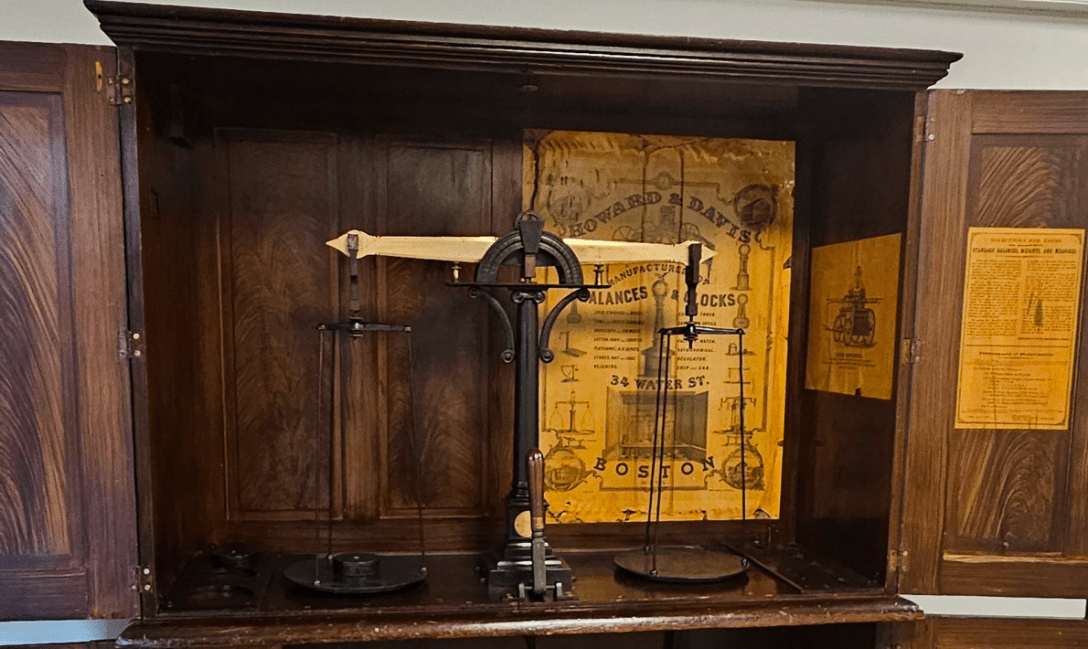
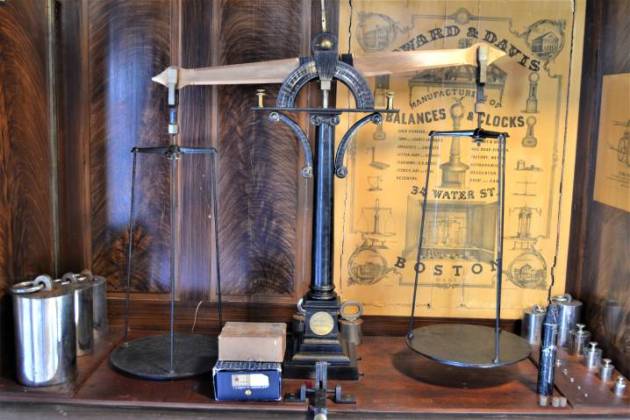
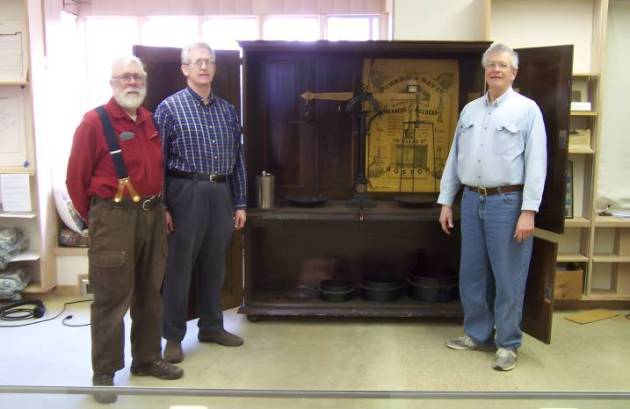
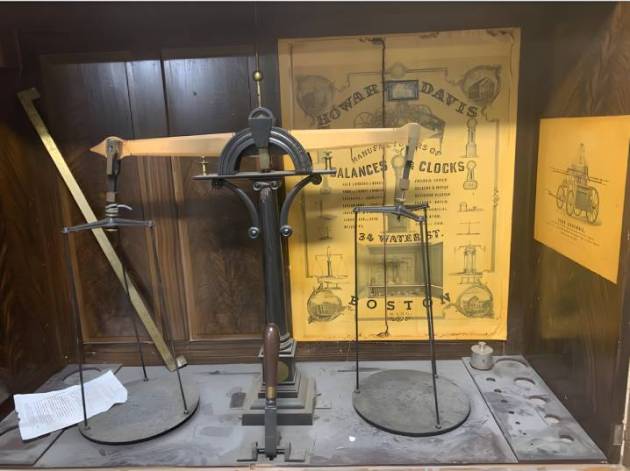
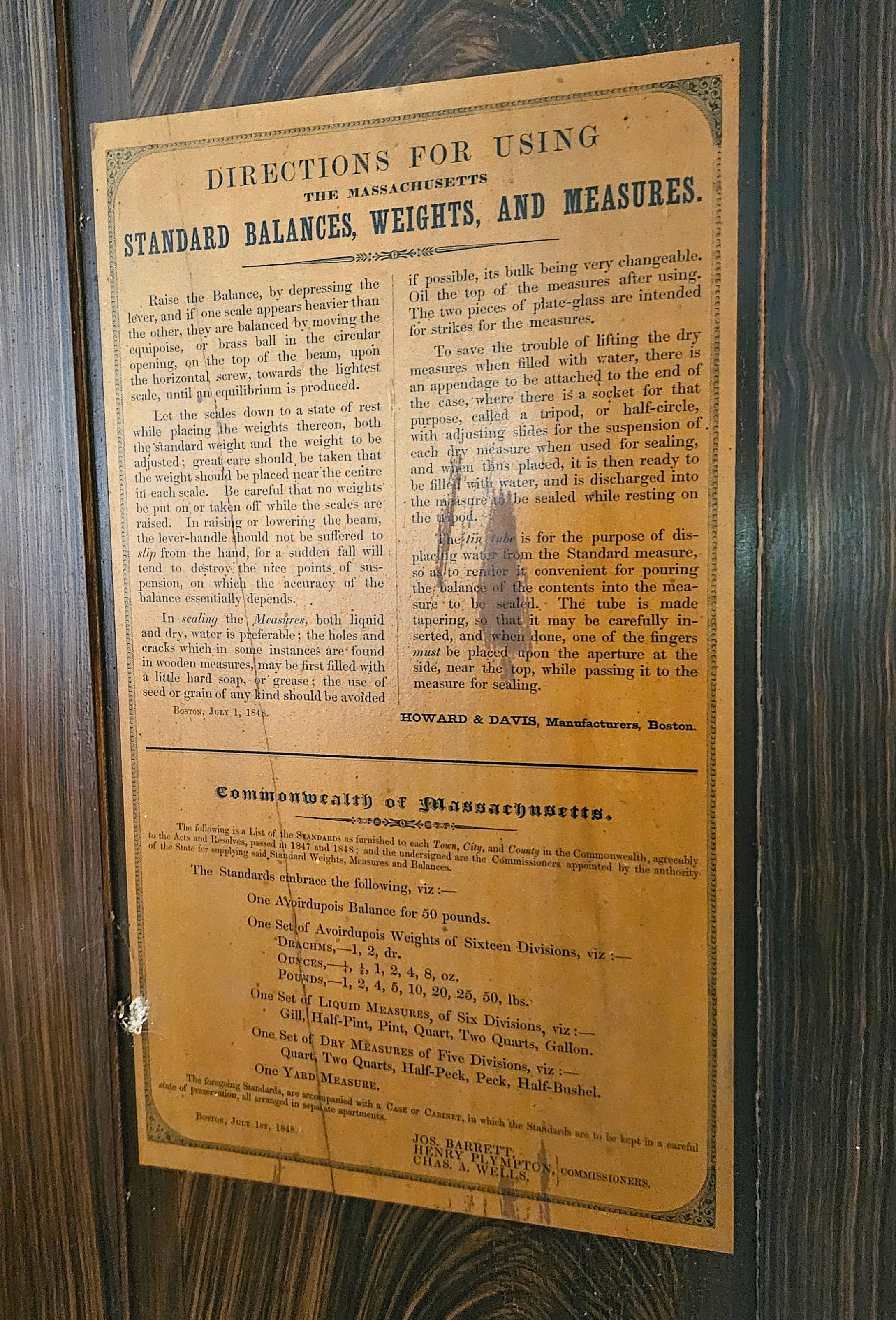
On display on the first floor of the Ipswich Town Hall are the old town scales, recently restored. In 1836, Congress directed the Secretary of the Treasury to create “a complete set of all the weights and measures adopted as standards for the use of the States respectively”. In 1847, the Commonwealth of Massachusetts contracted with Howard & Davis of Boston, one of America’s leading makers of precision balances, to manufacture these sets, which included a precision equal-arm balance, brass standard weights, and a large wooden cabinet. The scales, referred to as standards, were distributed in May 1848 to 316 towns and cities and 14 counties in the Commonwealth.
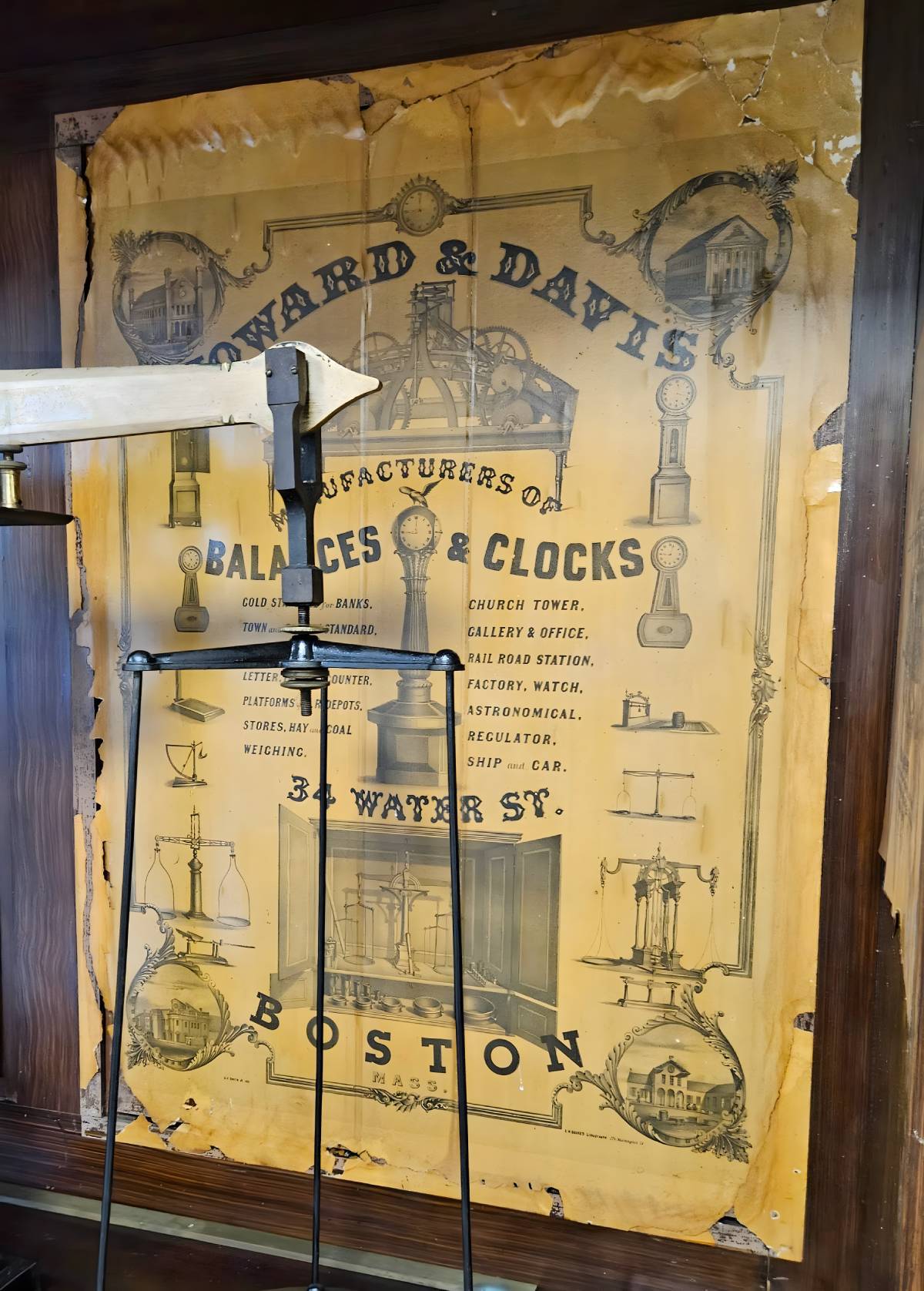
The Howard & Davis firm was formed in Boston, Massachusetts, by Edward Howard and David Porter Davis in 1842. The company was called Stephenson, Howard & Davis when Luther Stephenson became a partner in 1844, and after Stephenson departed in 1847, the company used the name Howard & Davis Clock Company. Located at No 34 Water Street in Boston, the company built high-quality clocks and scales. Town scales, known as standards, were manufactured for municipalities. The company dissolved in 1857 when Davis left to form Davis, Polsey & Company, after which Howard began to sign his clocks, E. Howard & Co. Each town’s Sealer of Weights and Measures used these standards to test and certify merchants’ scales throughout the year.

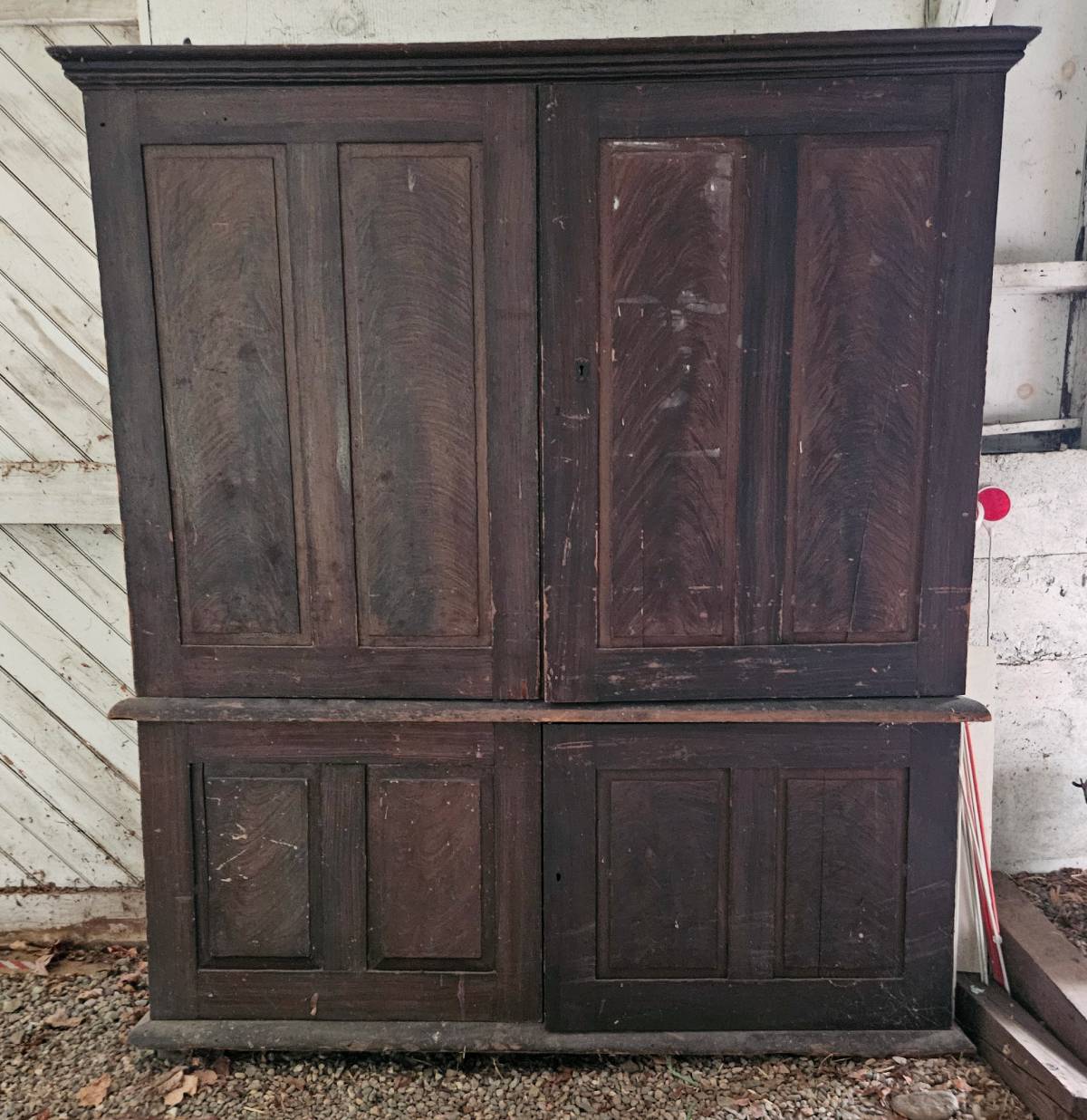
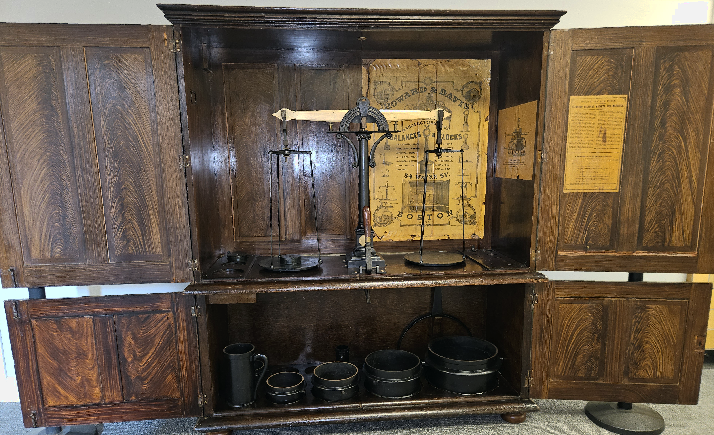
The scales that were provided to the Town of Ipswich in 1848 were used in the Old Town Hall on South Main Street, but for the past three decades were stored in the carriage barn at the Ipswich Museum. In July, 2026, the Ipswich Department of ReCreation under Kerrie Bates arranged for the scales to be returned to the town. Ipswich town historian Gordon Harris restored the cabinets and mechanisms, and documented the history of the scales. The construction and finish were identical on all of the Howard & Davis scales produced in Massachusetts. Although the woodwork at first glance resembles mahogany, the artisans used shellac and faux painting to simulate wood grain, a popular technique during the 19th century.
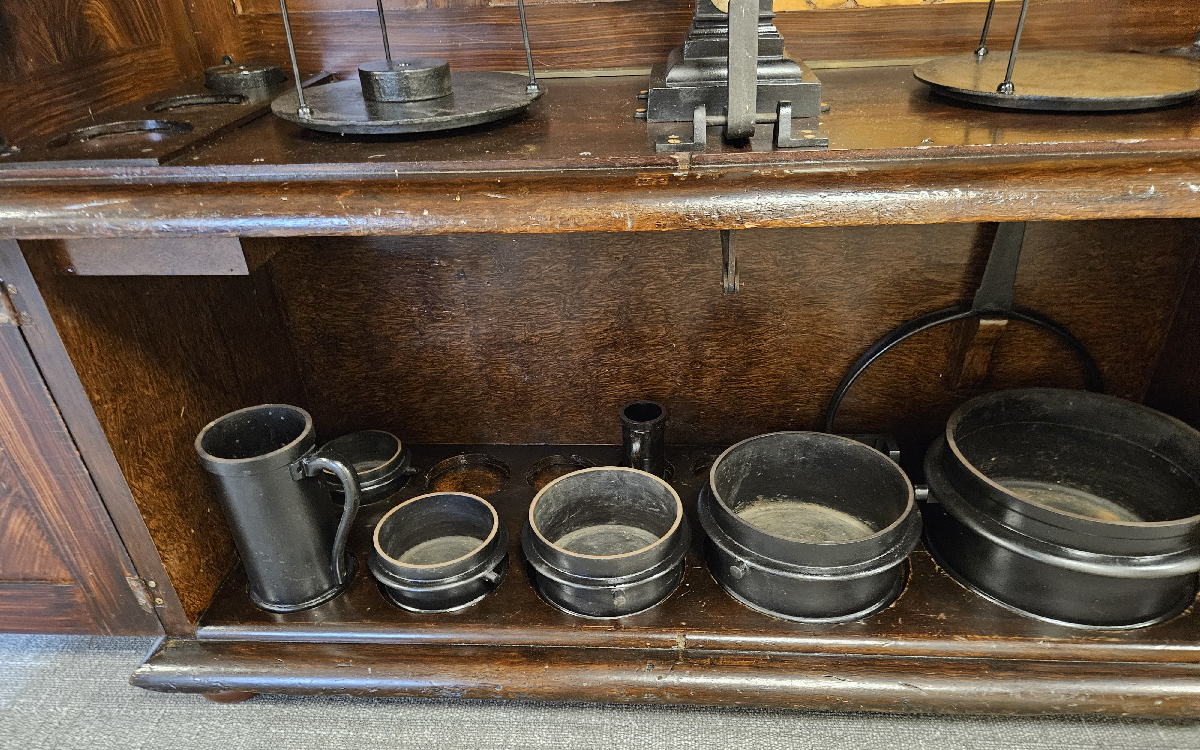
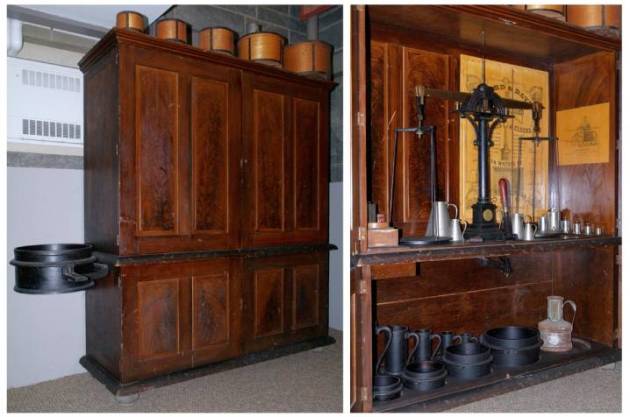
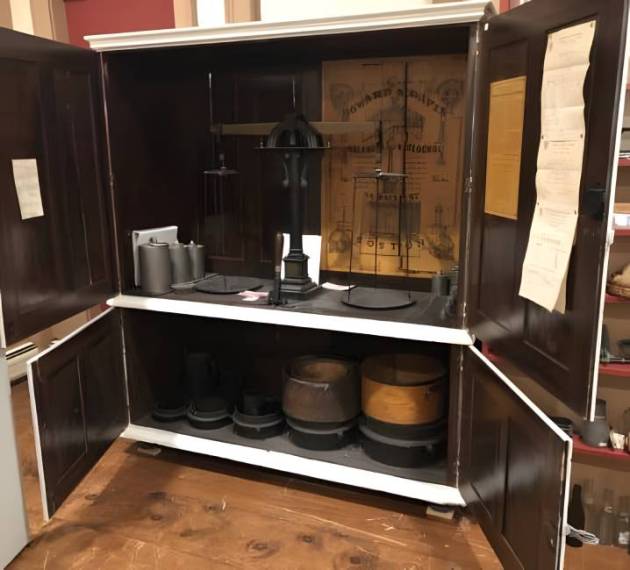
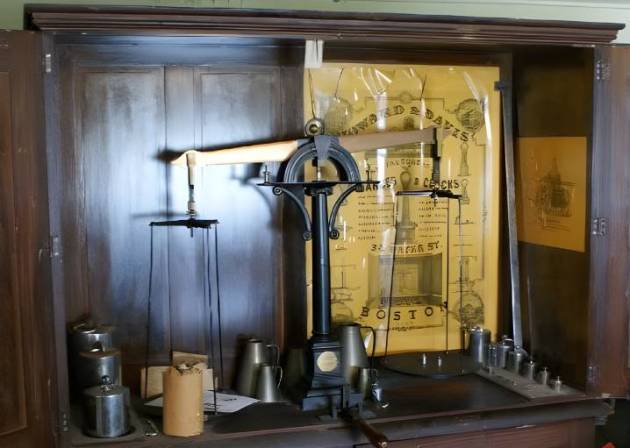
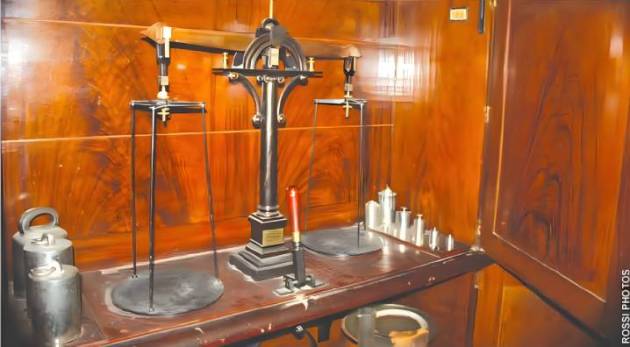
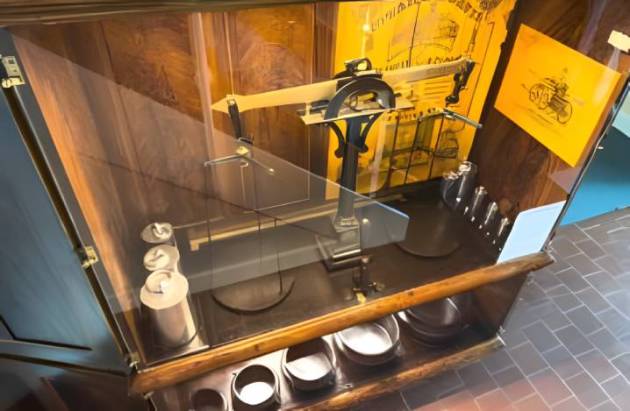
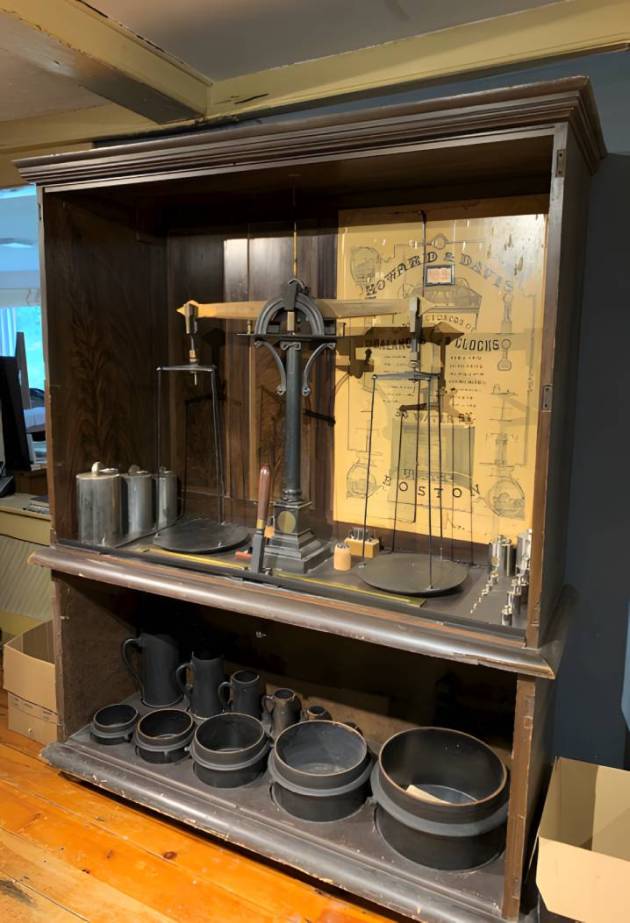
The lower section stores heavy containers that were used to hold items being weighed. The upper section held a nested set of certified brass weights ranging from 1/4 ounce up to 50 pounds, which are unfortunately missing. If you have a set of weights you would like to donate, you can drop them off at the Planning Office at Town Hall, or email Gordon Harris at historicipswich@gmail.com. These items are shown in the photos below, from other Massachusetts towns.
Other Surviving Howard & Davis Municipal Standards
A Howard and Davis set of scales is on display on the 4th floor of the Massachusetts State House, without the cabinet. Other Massachusetts towns with partial or full sets of Howard & Davis scales include Billerica, Boxborough, Carlisle, Fitchburg, Hanover, Harvard, Longmeadow, Montague, Plainfield, Sturbridge, Templeton, Upton, Westford, Wilbraham, and Williamsburg.
Fairbanks Standard Hay Scales
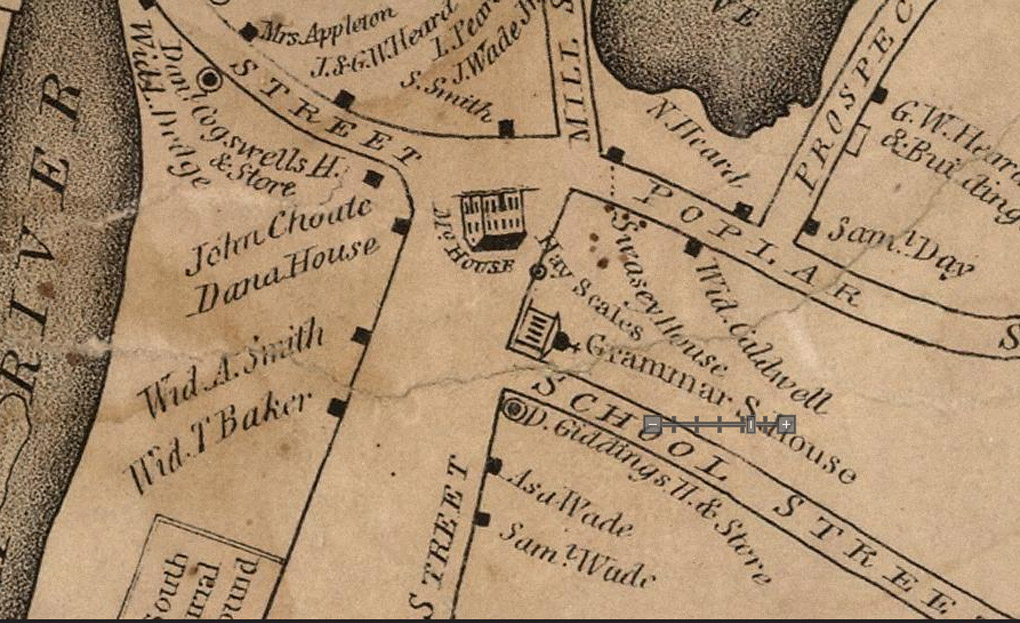
In 1830, Thaddeus Fairbanks received a patent for the first operating platform scale. Even before the design was finalized, customers had already placed orders. By 1882, more than 80,000 Fairbanks scales were being produced annually. The 1857 Ipswich Town Report lists an expenditure of $213.75 to Fairbanks & Co. for improved hay scales, which were placed at the foot of Spring Street at Willcomb’s Corner.
The 1915 Annual Town Report states, “Some action will be necessary in the near future in regard to the Town Scales. Those at Willcomb’s Corner, which were little used and out of repair, were removed this year, the street re-surfaced, making a decided improvement at that place. The scales at Depot Square are not as large as are required for safety in weighing many of the motor trucks now in use. And we have found it almost impossible to get anyone willing to attend to them …If we are to have Town Scales, they should be located at the Town Hall where the weighing could be done from the inside by the janitor or some other Town official.”


Sources and further reading:
- Massachusetts State House Art Commission
- Weights and measures standards of the United States: a brief history
- United States Standards of Weights and Measures: Their Creation and Creators by Arthur H. Frazier
- Weights and Measures in Congress By Sarah Ann Jones
- Weights and Measures Standards of the United States Government: A Brief History by U.S. Department of Commerce
- History of the Standard Weights and Measurement of the United States by Louis A. Fischer
- Delaney Antique Clocks
- Carlisle History
- Hanover’s Weights and Measures Cabinet
- Plainfield Massachusetts Historical Society
- Congress: The Weights and Measures Clause

