

Linebrook Parish was incorporated in 1746 by an act of the Massachusetts Legislature as a “parish,” a region served by a particular church and its pastor. The first sanctuary was located nearby on Leslie Road in Rowley. It was dismantled and re-erected on this site in 1828. The building was taken down, and the present church was built on that site 20 years later at a total cost of $2197.55. The chapel in the rear was added during the ministry of Mr. Alcott in the year 1897.
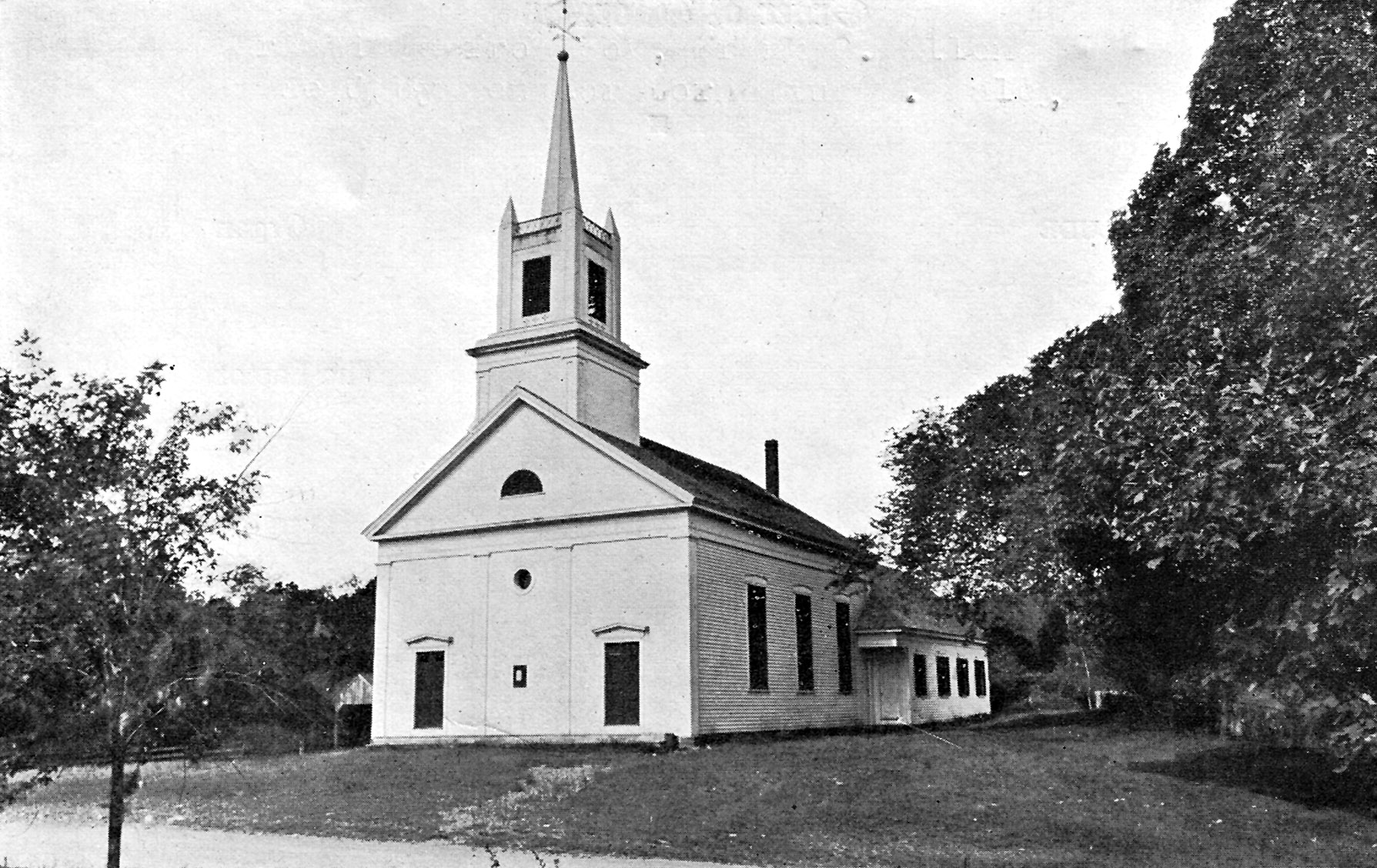
The church building was not occupied except sporadically from the early 1990s until 2006, when the new Linebrook Church was formed. The building was, however, faithfully maintained by the assessors (trustees) of the Linebrook Parish in anticipation of being used once again as a church building.

Linebrook Parish Church, 391 Linebrook Rd. Preservation Agreement
This building is protected by a preservation agreement. Protected elements include:
- All front and side facades of the original building, including doors and windows, their frames, and trim
- Steeple
- Primary and secondary framing
- Walls, floors, woodwork, wood trim, wainscoting, and ceiling of the sanctuary, vestibule and gallery, and stairways
- Pulpit, pews, and chandelier
- Linebrook-church-391-linebrook-preservation-agreement-page-1
- Linebrook-church-391-linebrook-preservation-agreement-page-2
- Linebrook-church-391-linebrook-preservation-agreement-page-3
- Linebrook-church-391-linebrook-preservation-agreement-page-4
- Linebrook-church-391-linebrook-preservation-agreement-page-5
- Linebrook-church-391-linebrook-preservation-agreement-page-6
- Linebrook-church-391-linebrook-preservation-agreement-page-7
- Linebrook-church-391-linebrook-preservation-agreement-page-8
Establishment of the Linebrook Parish
The inhabitants of this precinct were burdened by being so remote from their respective places of worship. Besides, many living within that distance would be better accommodated here, and with ample territory and consequently ample means, it was thought advisable to employ a religious teacher as early as 1739.
Shortly afterward, the propriety of a corporate parish began to be discussed, and a petition was sent to the Great and General Court of Massachusetts Bay. Finally, a committee of that body repaired to the several parishes, took a view of the situation and circumstances, and heard the parishes concerned,” and submitted their report March 21, 1745, old style. “In Council June 4, 1746, it was ordered that the inhabitants and their effects by the report set off together with such other persons exempted as may join them.
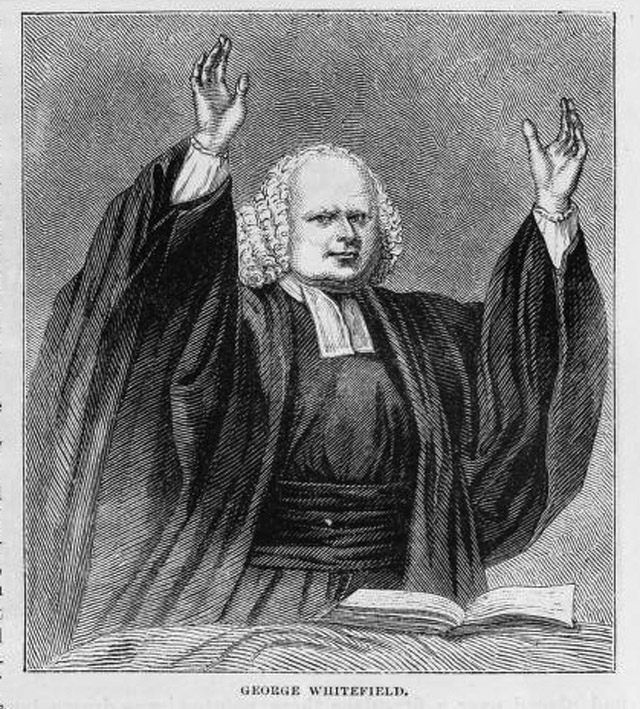
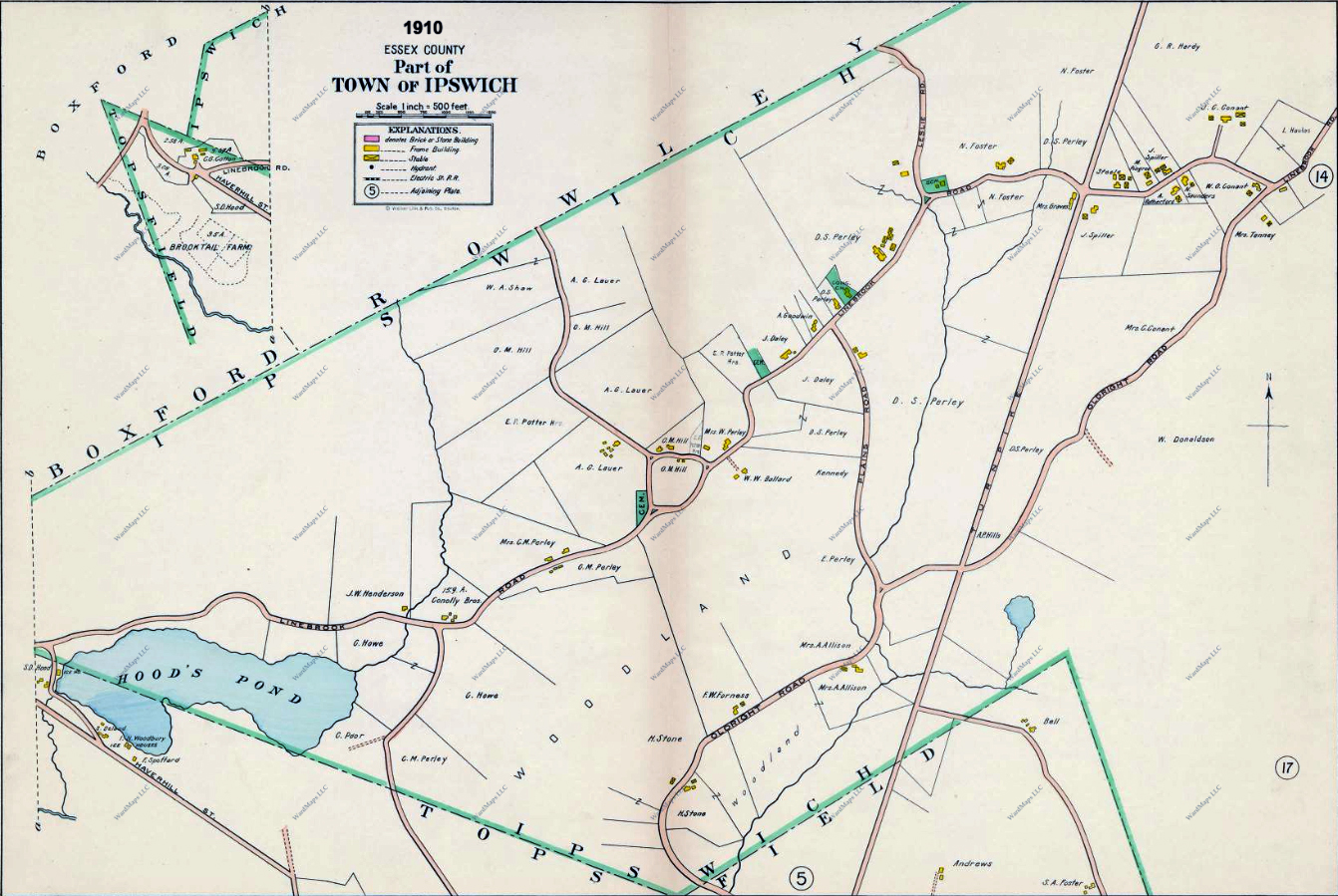
Thus the parish obtained its status, the right to command its parishioners and to tax their property. The perimeter of the parish is in part composed of five different brooks, and it was, therefore, determined by vote on Jan. 27, 1746-7, to name it Linebrook.
Dec. 25, 1755, Dea. Jonathan Burpee, Sen. David Perley, and Mark How were chosen to be a committee to join with the neighboring parishes in perambulating the line, which was described in the petition to the Great and General Court, and recorded in the parish records on March 17, 1752, as follows :
- In Ipswich, beginning at the mouth of Howlett’s Brook, so-called, by the north side of Ipswich River;
- thence running northeasterly by said river till it comes to Gravelly Brook, so-called;
- thence running northerly by said Brook across the West Meadows till it comes to John Smith’s, to the west branch of Egypt River, so-called,
- and by said river till it comes to the northeasterly corner of Bull Brook pasture, so-called;
- thence northwesterly, including said pasture till it comes to where said pasture strikesthe Rowley line;
- thence westerly on Rowley line till it comes to Batchelder’s Brook, so-called;
- thence northerly by said brook, including George Kilburn’s and Thomas Wood’s land on the east side of said brook, following the said brook till it comes to the easterly part of George Hibbert’s land;
- then, as said Hibbert’s land runs to the northwest corner thereof, including said Hibbert’s land;
- thence running northwesterly as the line runs between Jonathan Burpee’s and Aquilla Jewett’s land to the (Mill) Brook, on which stands Mr. Tenney’s grist-mill, so by the brook to the said mill;
- thence by said brook till it comes to Straight bridge; still southwesterly on said brook, including Aaron and Job Pingree’s and Jedediah and David Kilburn’s and David Perley’s land on the north of said brook to an island in the Great Meadows, called Peabody’s Island, to the Boxford line;
- thence southerly as the Boxford and Rowley line runs till it comes to the Ipswich line;
- thence as the line runs between Boxford and Ipswich, till it comes to the corner bounds between Ipswich, Boxford, and Topsfield before Capt. Perley’s door;
- thence as the line runs between Topsfield and Ipswich, till it comes to the first-mentioned bounds at Howlett’s Brook.
Feb. 11, 1774, a part of the parish with the same part of the town of Ipswich was by the General Court set off to Topsfield. No other changes have come to our notice, and the Linebrook of today includes parts of Rowley, Ipswich, and Boxford — the original line except in the set-off to Topsfield.

The first Linebrook Parish Meeting House (Leslie Road)
The first meeting house was erected in 1743. On June 27, 1746-7, the parish voted to finish the house thus:
- First, the pulpit and deacon’s seat;
- Second, the body seats below.
- Third, three fore seats in each gallery;
- Fourth, the gallery stairs and plaster under the gallery;
- fifth, a pew for the parish.
On May 18, 1747, it was voted that the meeting house be finished by the last of October. It was a two-story, square house, furnished with box pews, and was entered by a front door and a door on each side.
Dec. 28, 1747, a committee was chosen to receive and receipt for a gift from Abraham Smith and discharge the executor. They were also to paint the pulpit suitably and put on it the name of Abraham Smith, deceased.
This house stood about a third of the way on the road from the Ipswich-Linebrook schoolhouse to the Rowley-Georgetown road. The building committee was John Smith, Thomas Potter, Mark How, Jonathan Burpee, and John Abbott.
The genealogy of the Fowler family reads that James Davis, who married Abigail Metcalfe, gave the land on which the house stood. The parish records read that the price of pew No. 11, bought by Joseph Metcalfe and Jonathan Burpee, was “3 acres of land to build the house on.” The house was removed to the location of the present church, rebuilt in 1828, and dedicated on Jan. 1, 1829. The rebuilding followed the old model. The present church was erected in 1848.
Their method of psalm singing was quaint. The tuner, as the leader was called, would read a verse or line and then strike some symmetrical movement, when all the voices followed. In 1791, the singing school was invited to assist the tuners, and their office began to decline.”

Rev. George Lesslie
The Rev. George Lesslie came from Ireland when he was eighteen months old with his parents, who settled in Topsfield. He was a graduate of Harvard College and a divinity student of Rev. John Emerson of Topsfield. He was ordained and installed as pastor of the Linebrook church on November 15, 1749, the day of the organization of the church. He married Deacon Burpee’s youngest daughter, and had eight children (six sons), He was “an eminent scholar, intellectually powerful, and a pious and successful minister.” The Parish voted to give Mr. Lesslie for his salary “one hundred pounds, new tenor, yearly; By Indian corn at Christmas time at six shillings a bushel, the one half of his salary; and by pork at Christmas at sixpence a pound, the one-quarter of his salary; and by beef at four pence half penny a pound by the last of October, the one-quarter of his salary…and twelve cords of wood at his door year.”
The church was incorporated with thirteen male members, and in that year, twenty-two members were added. From 1749 to 1770, forty-six members were added, bringing the total to eighty-nine, after which the population of the parish diminished. In the aftermath of the Revolutionary War, the value of paper currency depreciated, and the parish was unable to make up the deficiency in Mr. Lesslie’s salary. In 1779, the pastor requested that his employment be dissolved, and he and Mrs. Leslie moved to Washington, NH, where he served the church there for 20 years, until his death in 1800.
Subsequent pastors
The Parish was unable to fill the position permanently for ten years, by the Rev. Gilbert T. Williams was ordained and installed in 1789 and served until 1813. The parish at that time was reduced in size to one man and three women, and the church went for the next 47 years without a settled pastor. The Rev. David Tullar, having retired from the ministry, began preaching at Linebrook in 1824 at the age of 76. Prospects improved, and the old meeting house on Lesslie Rd. was moved to the current location. Rev. Tullar closed his ministry in 1830 at eighty-two years of age. For the next 30 years, the church was cared for by supply ministers, with no pastor being installed. In 1860, Mr. John Perley bequeathed a fund, “the income from which shall be paid…to the Orthodox Congregational Society, Linebrook Parish, in the towns of Ipswich and Rowley, for the support of preaching and a Sabbath School in said Society annually while the society has a settled minister.”
Pastors to hold office under the provision of this fund were
- Ezekiel Dow (1860-1866)
- Alvah M. Richardson 5 years
- Benjamin Howe 12 years
- Edward H. Briggs, 4 years
- Rev. William Penn Alcott, 1887-1919
- Rev. Emery L. Bradford (1919-30, retirement not listed).

The Second Linebrook Meeting House (still standing)
Excerpts from Ipswich in the Massachusetts Bay Colony, by Thomas Franklin Waters
The Revolutionary War brought great hardship to the little Parish and to the Pastor. The currency was greatly depreciated, and the salary upon which he was settled was so diminished that it afforded him a living only by pinching economy. There is no record of his school in these later years. Again and again, he appealed to his Parish to increase his salary, but the Parish did not or could not afford him relief, and he asked for release from his pastorate in a long and earnest letter, dated Oct. 22, 1779, more than thirty years after he began his ministry.
A chaotic condition continued in the church for several years, the Baptist faction pressing evidently for the ultimate possession of the meeting house. In April 1820, the Committee of Conference reported an agreement with the Baptists to allow them the use of the house six Sabbaths consecutively, beginning with the third Sabbath in May, and half the time until April 1821.
In January 1828, the Parish had regained such vigor and hopefulness that the great project of taking down the old meeting house and rebuilding it in a better locality was entered upon with enthusiasm. A new lot was secured, still occupied by the present meeting house. Daniel Searle and Mark R. Jewett contracted to do the work in April, and on November 4, 1828, the Parish voted to accept the rebuilt house on condition that the builders “paint the pulpit & elders pew and banisters by the pulpit stairs, some devout color” and “make all necessary repairs in the pews which is wanted to make them good and decent.” The rejuvenated sanctuary was rededicated with great dignity on January 1, 1829.

A new house of worship on the same site was built in 1848 and dedicated on November 22. The building committee contracted with Charles C. Bracket for $1850.00, and the Parish furnished the pews used in the Unitarian meeting house in Ipswich, which had been sold to the Town for a Town House.
John Perley, Esq., a native of the Parish, died on May 11, 1860, bequeathing to the Parish seven thousand dollars, to be held in trust as a perpetual fund, “the income of which shall be paid to the Orthodox Congregational Society, Linebrook Parish, in the towns of Ipswich and Rowley, for the support of preaching and a Sabbath School in said society annually, while said society has a settled minister.” The income from this fund has enabled this ancient Church to maintain its worship, notwithstanding the loss in population of the neighborhood and the decline of the church-going habit.
Timeline of Linebrook Church
By J. B. Felt, in The History of Ipswich, Essex, and Hamilton
- 1742, Dec. 2nd. A committee reports that the West End does not become a parish, but keeps up preaching among them.
- 1744, April 12th. Voted that they be set off.
- 1746, June 5th. The General Court allowed some of West Ipswich and of Rowley to become a distinct parish, which voted, on Jan. 27th, 1747, to be called Line Brook Parish.
- 1749, Nov. 15th. Sixteen males sign a covenant and are formed into a Church. This Church had Ruling Elders till after 1757.
- 1823. There were only two female members.
- 1833. There were fourteen males and twenty females.
- 1744. A house had been erected. A vote was passed in 1747 to have it finished. It was near the burying ground.
- The old one was pulled down and another built, on the present spot, in 1828.
- 1790, Nov. 15th. The town grants Bull Brook toward the support of the ministry at Line Brook.
Linebrook today
Description by Ann Grady for the Ipswich Historical Commission, 1983:
“The Linebrook Church was always Congregational in denomination (except for a brief sharing of church facilities with the Baptists between 1817 and 1822). The church disbanded in the 1960s. The parish, however, has continued to function. According to Harold Worthly, Congregational Church historian, most parishes chose to disincorporate after 1875 when an amendment to the Massachusetts Constitution allowed churches to incorporate and enter into legal agreements, and the dual church/parish system was, therefore, rendered no longer necessary.
Linebrook is one of perhaps half a dozen parishes in the Commonwealth that remain incorporated. Most of the others retain a dual church/ parish function, so Linebrook’s position as solely a parish is very distinctive. Parish meetings are held once a year. Parish officers oversee repairs to the building, administer several trusts that benefit the building, and rent the structure to a Congregational church for Sunday Services and to a daycare center for weekly use.
Community groups, such as the scouts, also use the church. Although there is a legal basis, care of the church amounts to a voluntary effort by members of the community who still consider themselves parishioners. Once a year, these people get together and contribute to the maintenance of the building. In many cases, this means a contribution of physical labor. Under the circumstances, they have done a remarkable job. The church is in good repair. Their actions in caring for a building that no longer serves a church function to most of them, which has no connection with local government, but which they recognize as their responsibility under the now nearly extinct designation of parish meeting house, must be nearly unique in New England.”
Statement by the Linebrook Church, an Independent Congregational Church
“The Linebrook Parish was incorporated in 1746 by an act of the Massachusetts Legislature as a “parish’ — a region served by a particular church and its pastor. The church building now used by the Linebrook Church was built by the members of the Linebrook Parish in 1848, their third meetinghouse. Its historic nature and some of its contents have been the subject of news articles and books. The church building was not occupied except sporadically from the early 1990s until 2006, when the new Linebrook Church was formed. The building was, however, faithfully maintained by the assessors (trustees) of the Linebrook Parish in anticipation of being used once again as a church building. Linebrook Church is grateful to and proud of these assessors, who have protected and preserved a lovely colonial-style building so that it might be ready for a congregation. Their faith in the future has been honored by God.”
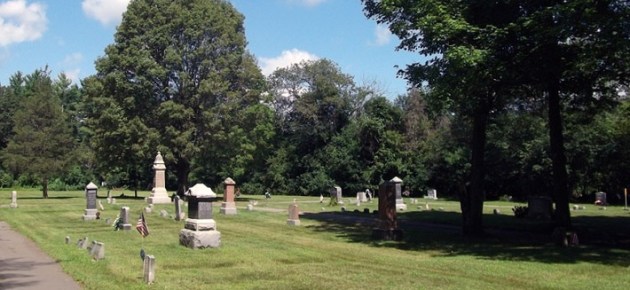
Nomination of the Linebrook Church Neighborhood for the National Register of Historic Places, by Anne Grady, 1984

The Linebrook Church and the four houses along the same side of Linebrook Road, east and west of it, form an intact 19th-century grouping with no intrusions. The houses include the Country Federal house at the easternmost end of the area, the richly ornamented Queen Anne dwelling next west, the Greek Revival cottage with a hint of Gothic just west of the church, and the simpler cottage with a doorway drawn from Asher Benjamin’s Practice of Architecture (1833) at the west end of the area.
The remains of the Linebrook Pound, built before 1832, just across Leslie Road, form an appropriate termination at the east end of the area. The church is a fine example of the New England Village church in the Greek Revival style. The houses form a period setting for the church, which is the major focal point of Outer Linebrook. These properties occupy a strip of more or less level land on the northeast side of the road. A wooded hill rises behind them. A late 19th-century face wall stretches across approximately half of the frontage. The houses across the street were built in the mid-20th century.
Roof and ceiling framing
In the fall of 2020, the ceiling suffered substantial water damage that required the removal of the plaster and exposed the roof and timber truss framing. The Romans perfected the art of spanning wide spaces using the same concept. European cathedrals constructed during the Medieval period spanned vaulted ceilings with timber trusses, often carved or decorated. The same European traditions were employed in North American churches and meeting houses, utilizing the area’s abundant forests for straight pine and oak timbers. The vertical king post in the center connects the peak to the horizontal chord (beam) below and prevents it from sagging. The large horizontal chord keeps the walls from separating. Diagonal timber struts prevent the rafters from sagging.

Sources:
- MACRIS
- Historical Address, Tercentenary Service, September 14, 1930, in connection with the Massachusetts Tercentenary by the pastor, Emery L. Bradford
- History and Genealogy of the Perley Family by M. V. B. Perley, 1906
- Pen-Ramble in Linebrook by M. V. B. Perley
- The Diary of William Bentley, 1802
- Linebrook Parish Church Records, 1747-1819, Ipswich-Rowley, Massachusetts, by M. V. B. Perley
- Ipswich in the Massachusetts Bay Colony, Vol. I by Thomas Franklin Waters
- Ipswich in the Massachusetts Bay Colony, Vol. II by Thomas Franklin Waters
- History of Ipswich, Essex, and Hamilton by Joseph. B. Felt
- Constitution of Massachusetts: Creation of Parishes (Wikipedia)
- The Historical Collections of the Topsfield Historical Society, Volume 20
- Design Guide for Timber Roof Trusses
- Linebrook Church, by Fran Richards
- “Historical Address, Tercentenary Exercises, Linebrook Congregational Church, Sunday, September 14, 1930” by Emory L. Bradford, on file at the Ipswich Historical Commission.
 Historic Ipswich