During the 2016 summer drought, the water level behind the Ipswich Mills Dam was intentionally lowered by about 3 feet to ascertain the geology of the river at that location, to examine the foundation of one of the mill buildings, and to help determine what the river upstream of the dam will look like when… Continue reading Photos from the 2016 Drawdown of the Ipswich River
Acadian Exiles in Ipswich, 1755
Massachusetts men played a conspicuous part in the French and Indian War, which resulted in wholesale destruction and deportation in French-speaking Nova Scotia. Surviviors were exiledย to the Colonies, their childrenย taken from them and distributed to English families as "nothing more than slaves."
Samuel J. Goodhue’s Pier 1 Canoe Depot
April 29, 1783: How Ipswich Celebrated the End of the Revolutionary War
Portraits from Ipswich a Century Ago
The Industrial History of the Ipswich River
The Arnold Expedition Arrives in Ipswich, September 15, 1775
Plum Island
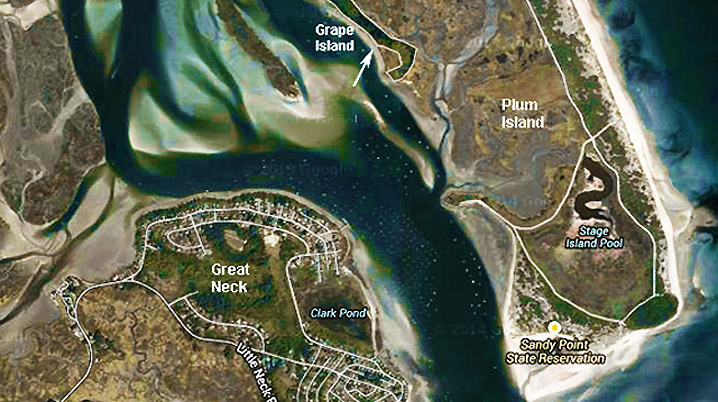
The General Court on October 17, 1649, divided Plum Island among three towns, granted to Ipswich 2/5, Newbury 2/5, and Rowley 1/5. The salt marsh hay, sand, and wildlife were valuable assets to the towns. In the late 1800s summer resort communities sprung up at the northern end, as well as at Grape Island and… Continue reading Plum Island
Charles Wendell Townsend, Ipswich Naturalist
Ipswich as Described by John Greenleaf Whittier
The Plum Island Salt Company
Lucky Enough (Gavin Keenan)
How the Irish Made Their Mark in New England
The Christian Wainwright House, Demolished
The home of Christian Wainwright house originally sat next door to the Nathaniel Treadwell house at 12 North Main Street. In 1845 Joseph Baker moved it to the corner of Market and Saltonstall Streets. The Ipswich Historical Society tore down the house in order to create a better view of the Whipple House before it was moved to the South Green.