
Nancy Virginia Weare spent 33 years at her family's summer camp at Plum Island. In 1993, after Nancy retired, she wrote "Plum Island: The Way It Was."

On the Massachusetts North Shore
Nancy Virginia Weare spent 33 years at her family's summer camp at Plum Island. In 1993, after Nancy retired, she wrote "Plum Island: The Way It Was."

The Rev. Joseph Dana served the Second Congregational Church at the South Green from 1765 until his death in 1827 at age 85. Rev, Dana's tombstone in the Old South Cemetery reads: "In memory of the Rev Joseph Dana D.D., for sixty-two years, Minister of the South Church. His protracted life was eminently devoted to… Continue reading The Boy Who Fell Beneath the Ice

"Most of them had pea and bean porridge, sometimes hasty pudding, both morning and evening. A lady of eighty, after having partaken of Thanksgiving dainties, was heartily glad to return home and set a meal of her favorite broth."

Every day Charlotte Lindgren boarded at Ipswich Depot for her commute to Boston and back. On February 28, 1956, she was unfortunate to be in two horrible train crashes in the same morning, but survived them both unscathed.

Baseball's popularity grew quickly after the Civil War, and Bialek Park was once the town's semi-professional ballpark, In 1912 the town purchased the two private lots that had been the ballpark, constructed a public playground, and removed the fence.
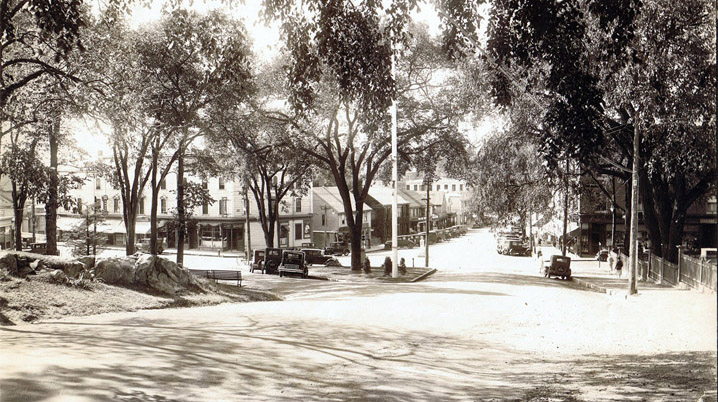
In March 1934, Congress passed the Civilian Conservation bill, creating the Works Progress Administration and the Civil Conservation Corps which accomplished several projects in Ipswich.
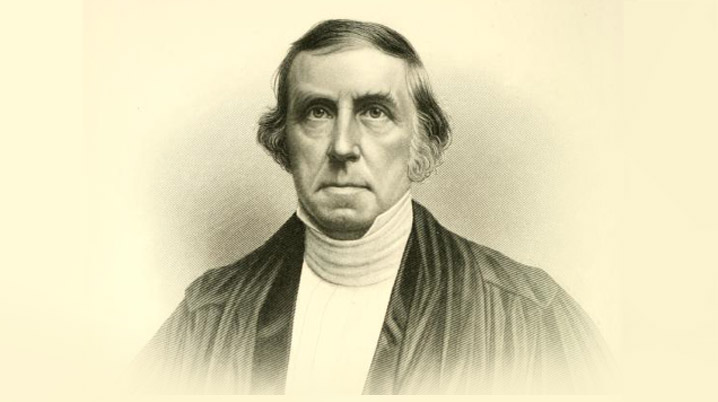
Serious difficulties were in store for the young pastor, who stayed for fifty years. Forbidden by his own congregation from mentioning slavery from the pulpit, Mr. Kimball maintained his great love of the pastorate even as they reduced his salary.

On the fourth day after the ship left port, the sun came out and in the distance could be seen the same ship sailing effortlessly back into port directly into the wind. As the Noah’s Dove approached, its passengers including the young couple were visible but ghost-like.

The recently installed plaque on N. Main St. commemorates the visit by the Marquis de Lafayette to Ipswich in 1824 courtesy of the Lafayette Trail organization and the William G. Pomeroy Foundation. When the First Provincial Congress met in Salem Massachusetts on Friday, October 7, 1774, Ipswich was represented by General Michael Farley. At 56… Continue reading Meeting House Green Plaque Commemorates Lafayette’s Visit to Ipswich

This Ipswich neighborhood has historically had a close social connection with neighboring Rowley. Jewett's mill was created in the 17th Century, and historic houses still line the street.

In 1962 the historic house at the corner of Central and North Main Streets was purchased by Exxon to demolish and build a gas station on the site. The Ipswich Heritage Trust was created to save it.

Two brothers, Moses and Aaron Pengry both resided in Ipswich by 1641. and were active in town affairs. The surnames of their descendants are alternatively spelled Pingree, Pengre, Pengrey, Pengry, Pingre, Pingrey, Pingry.

Polio killed 3,145 people in the United States in 1952 and crippled tens of thousands. Children were kept inside, and public health officials imposed quarantines. From 1956 - 57 over 6000 Ipswich children and adults received the new Salk polio vaccine, and in 1962, Ipswich residents received the oral Sabin vaccine. Since 1979, no cases of polio have originated in the United States. David Lindgren tells what it was like in 1949, "the Summer of Polio."
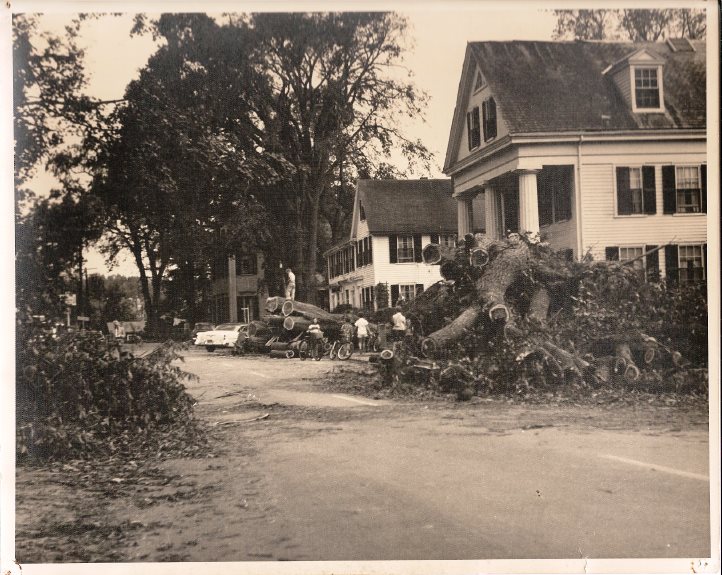
The 1954 storm knocked down trees and power lines all over Ipswich. Hurricane Carol devastated the Massachusetts south coast and Rhode Island, and was responsible for 65 deaths. On September 11, Hurricane Edna hit New England with additional destruction.
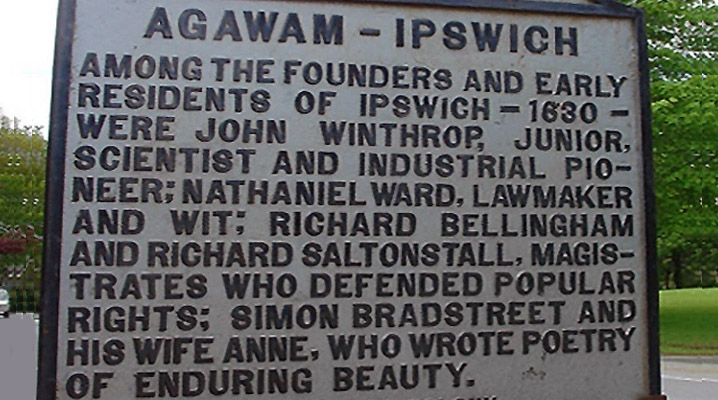
Due to the small scale of the settlement, the settlers of Ipswich reproduced an English form of government from a far earlier time. The first public officials were the clerk, lot-layers and "The Seven Men" (selectmen). By the end of the next century, every industry was supervised by some public functionary.

An old legend about the Gloucester witch Peg Wesson is often mentioned, but never was it told in such detail as in this story published in the Boston Evening Transcript, October 14, 1892. It was carried in papers throughout the country.
 Historic Ipswich