
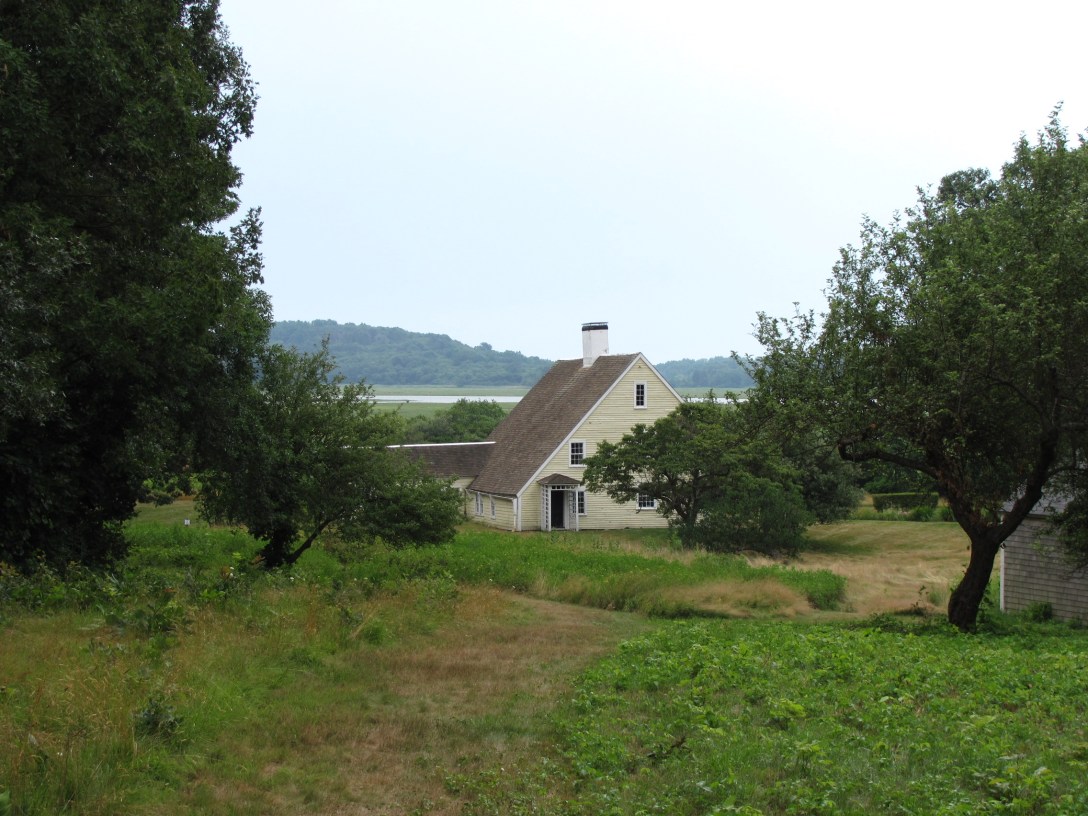
The land on which this house sits was granted to early settler Robert Paine Sr. He transferred the property to his son Robert in 1689, and dendrochronology indicates that the junior Robert built this house about 1694. Owned by the Trustees of Reservations, this house is a well-preserved example of a First Period, hall and parlor house with a saltbox lean-to. A second house on the property was the summer home of the Robert G. Dodge family. The house is open to the public occasionally, but the grounds are open and free for visiting every day of the week. View the house on the Trustees of Reservations site.


The Paine House, located on Jeffrey’s Neck Road at Greenwood Farm, is owned by the Trustees of Reservations, which offers occasional tours. The house became part of Greenwood Farm, an early 20th-century summer retreat for the Robert G. Dodge family.
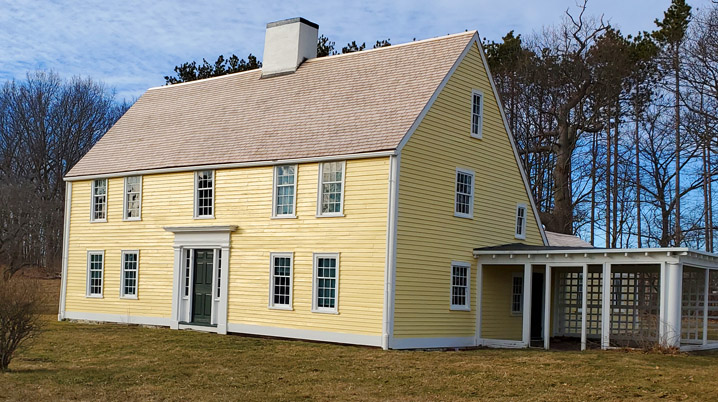
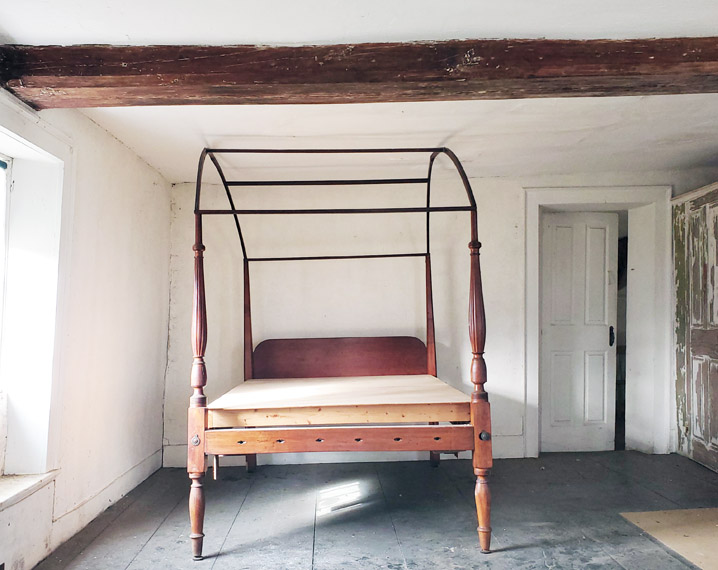
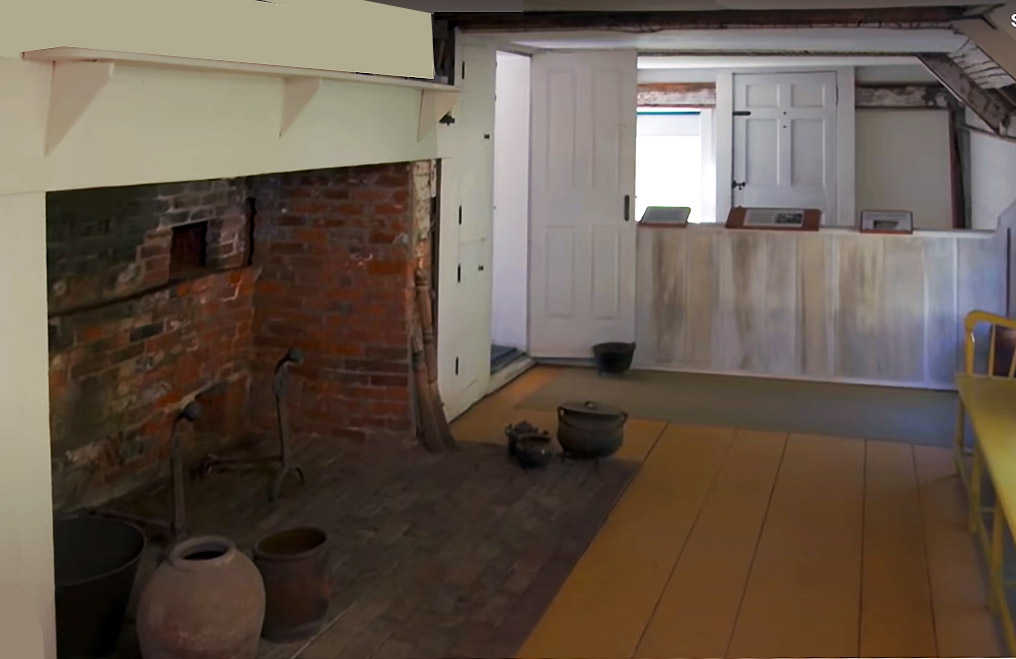
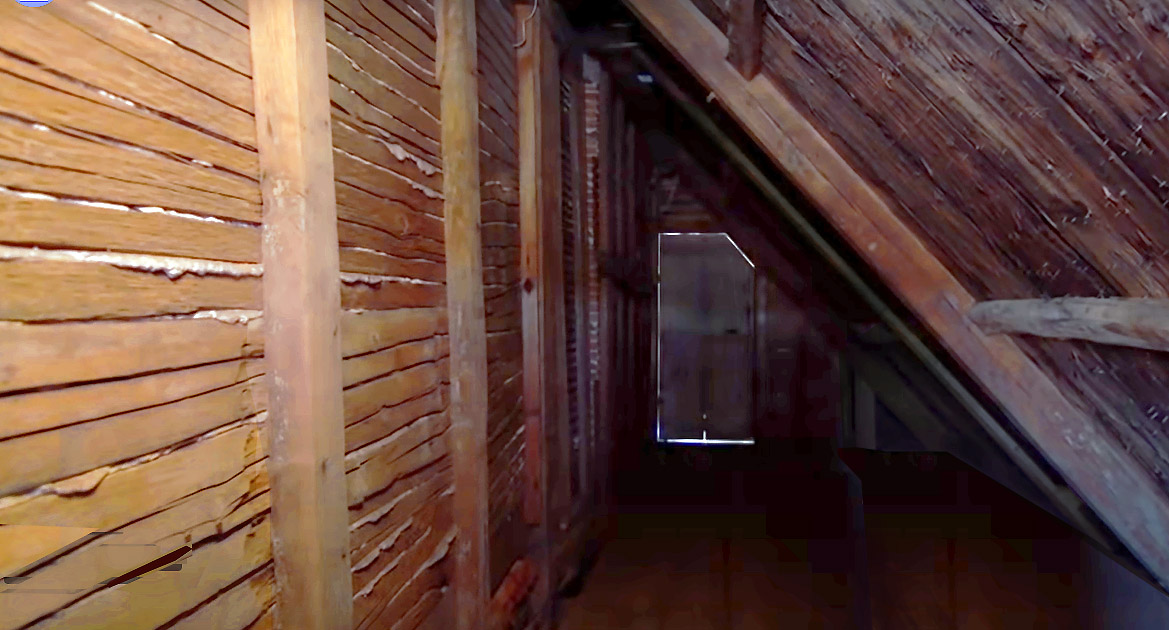
This saltbox was built in 1694, a well-preserved example of First Period architecture. This house uses the principal rafter and purlin system in which multiple purlins span the principal rafters beginning directly above the bay posts, and support vertically laid roofing boards. The method probably evolved from the roof framing of the West of England. Sheathed walls and doors in the Paine house are decorated with shadow moldings created by planes that were run along the outer face of a board at its juncture with another, a relatively rare interior finish. A section of the crawl space basement appears to have served as a dairy. Its interiors are furnished with late 17th-19th-century pieces acquired during the Colonial Revival by former owners Alice and Robert Gray Dodge. The picturesque house remains on its original saltwater farm location.
Abbott Lowell Cummings originally believed that the Ipswich house would date close to 1725 because of “late First Period” traits and particularly to its wide spacing of floor joists. However, the Oxford Tree Ring laboratory published a dendrochronology study of this house and reported, “According to deeds, when Robert Paine, Sr. transferred the property to his son, Robert, in 1689, the son was already living in a house on the premises, though the location of that house is unknown. The date of 1694 identified by dendrochronology would mean that Robert Paine, Jr., built this house before he conveyed the property to his son-in-law, Daniel Smith. Some recent studies have suggested that the house was built after the transfer.”
The Paine House was recognized in 2001 with the Mary Conley Award for Restoration. View this house at MACRIS
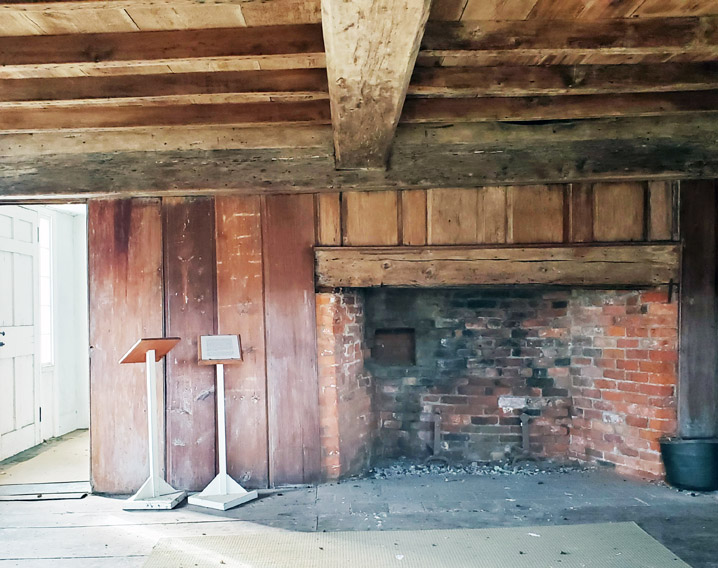
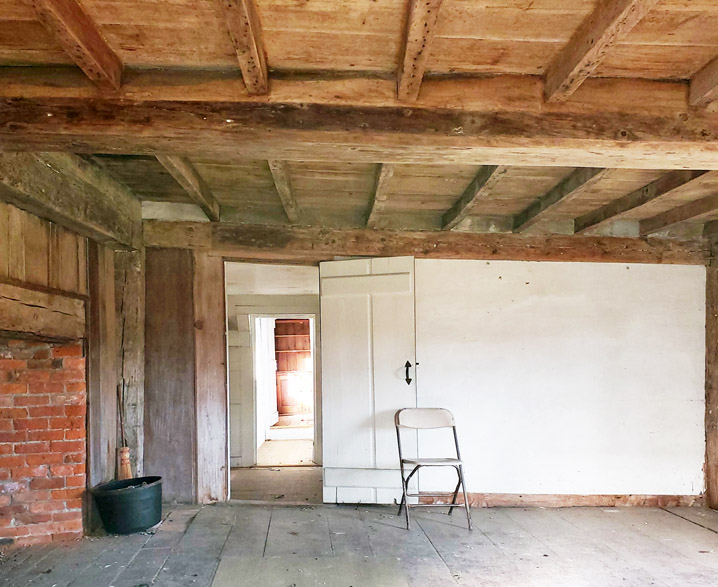
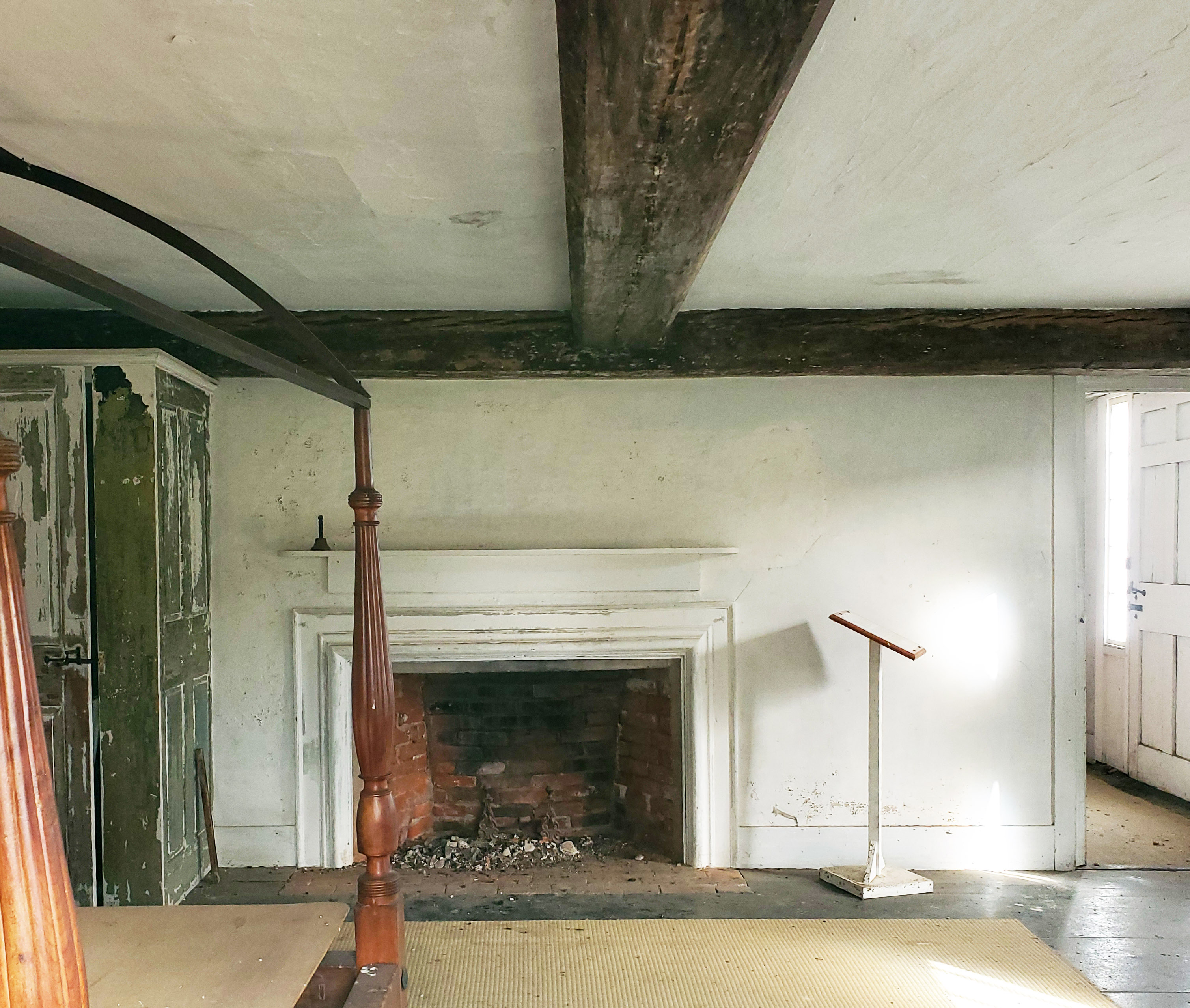
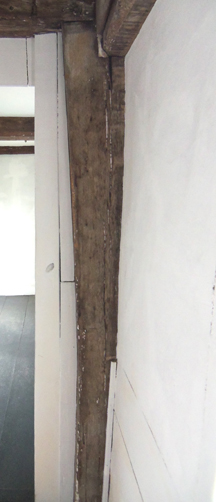
Another unique feature of the house is its gunstock splayed corner posts, a British framing construction technique from the 13th century designed to support the weight borne by these posts. The top of the corner post has a complex joint that first holds the wall plates and large supporting girts that run the length of the house, as well as the roof frame. The corner posts run the full two-story height of the building and are flared at the first-floor ceiling height, supporting the second-floor plates and girts and again at the second-floor ceiling, supporting the plates, girts, and roof.
A Saltwater Farm
Three generations of the Paine family made their home here, including Robert Paine, foreman of the Salem witch trial jury in 1692. From 1916, Greenwood Farm was a summer retreat for the Robert G. Dodge family, who used the Paine House as a guesthouse. Furnished with a fine collection of American furniture and decorative arts, it radiates with Colonial Revival ambiance. Recent archaeological investigations revealed a rare survival of an 18th-century milk room or dairy inside the house.
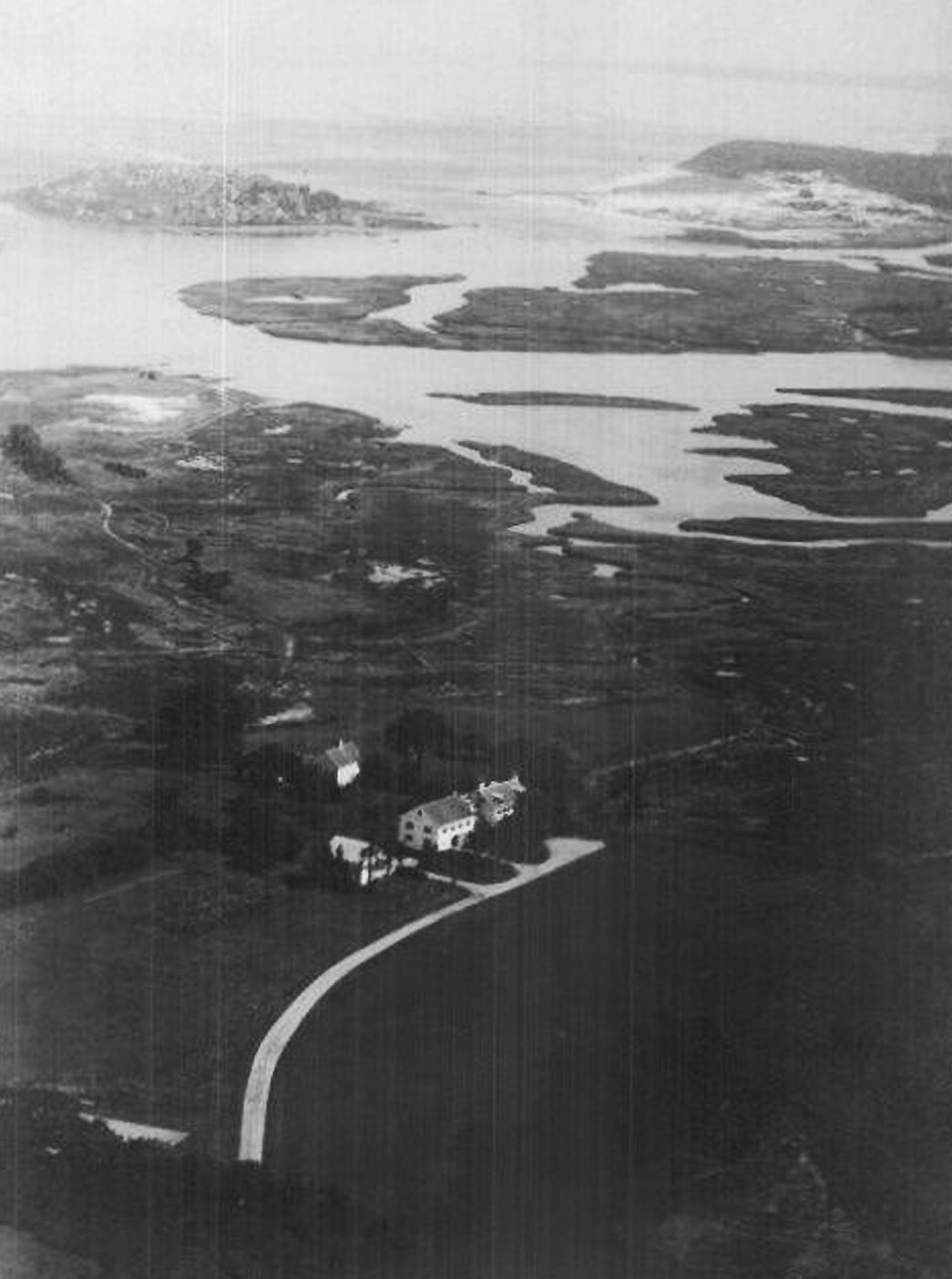
Situated on the edge of the Great Marsh, the 1694 Paine House at Greenwood Farm is the site of 250 years of family farming. Local residents set up fish drying stages, pastured cattle communally, and harvested salt marsh hay. A tour through the Paine House will illuminate the unique features of this First Period structure, including an “in situ” dairy. Trails through the pastureland and the salt marsh are open to all daily, sunrise to sunset.
- Trustees of Reservations, Greenwood Farm
- MACRIS
- Dendrochronology report for the Paine House by Oxford Dendrochronology
 Historic Ipswich