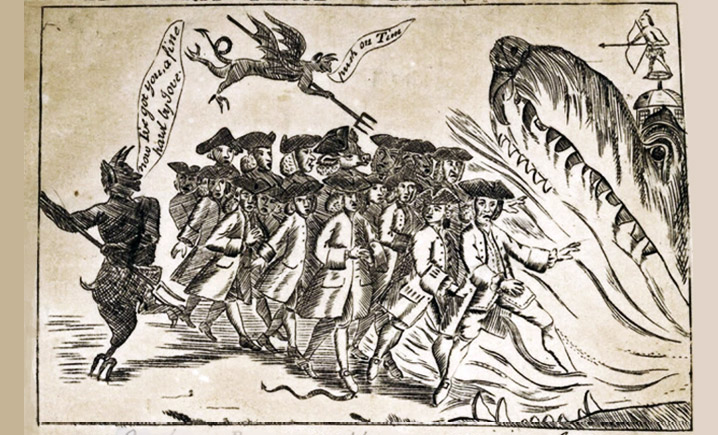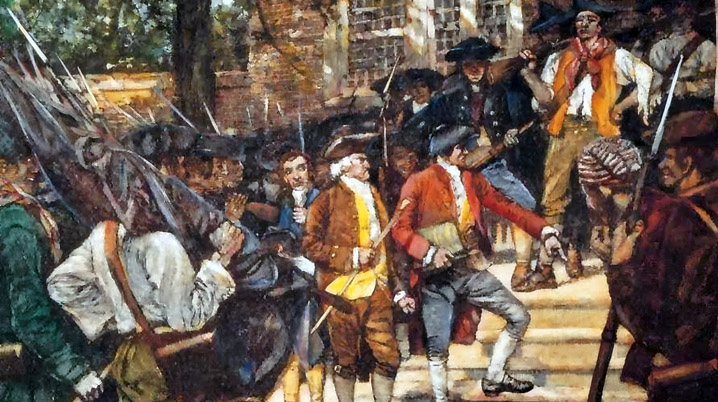
Dr. John Calef was among a handful of members of the Massachusetts Assembly who voted to retract the "Massachusetts Circular Letter" which was adopted in response to the 1767 Townshend Acts. Ipswich citizens' anger at Calef lingered as war with England approached.
Tag: Revolutionary War
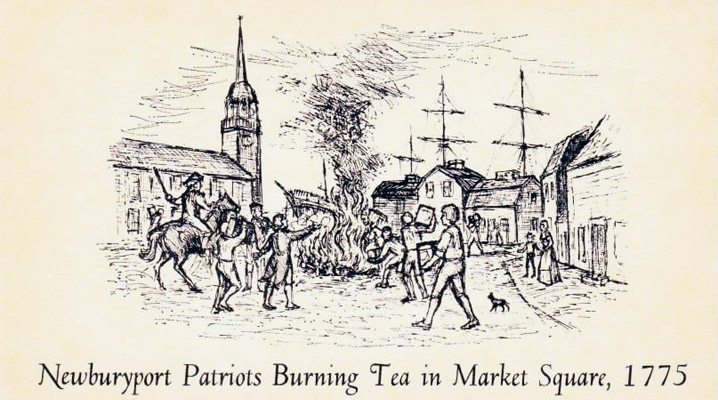
The Newburyport Tea Party
Madame Shatswell’s Cup of Tea
The “Detested Tea” and the Ipswich Resolves
Reply by the Town of Ipswich to the Boston Pamphlet, December 28, 1772
A document known as the “Boston Pamphlet” was distributed throughout the colony, asserting the colonists’ rights. Ipswich held a Town Meeting, established its own “Committee of Correspondence," passed a series of resolves, and gave instructions to their reresentative in the General Court, Michael Farley.
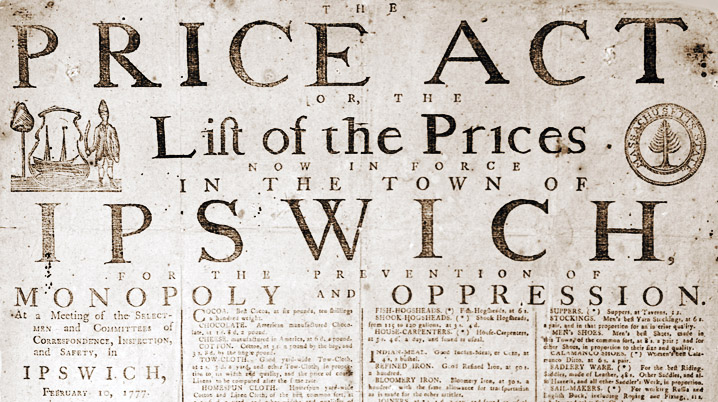
The Price Act, Passed at Ipswich, February 1777
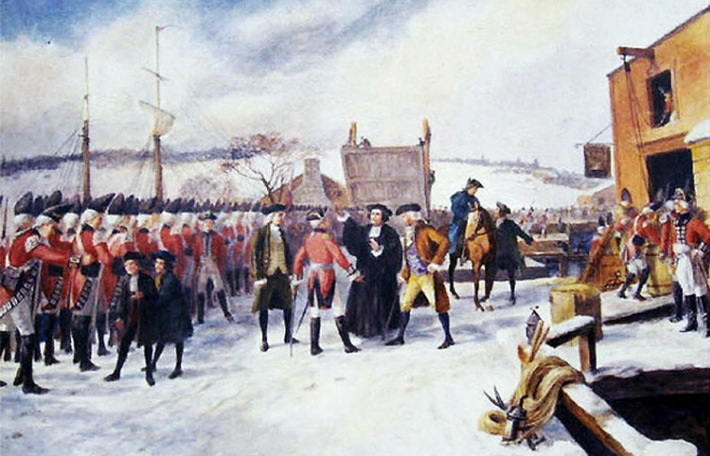
Leslie’s Retreat, or How the Revolutionary War Almost Began in Salem, February 26, 1775
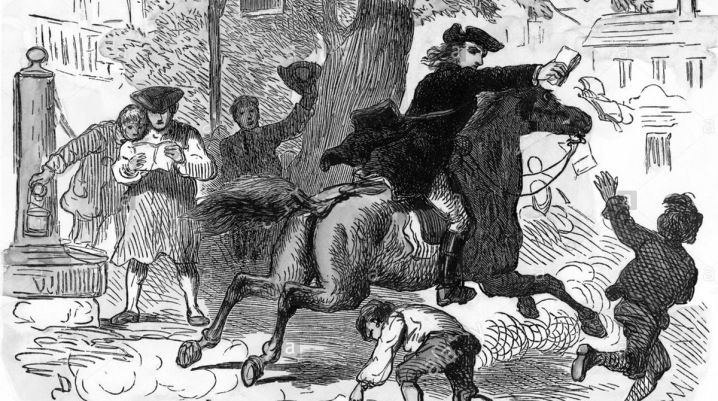
Paul Revere’s Not So Famous Ride Through Ipswich, December 13, 1774
Lieutenant Ruhama Andrews and the 1775 Battle of Quebec
Old Toryism, Mock Federalism & the Essex Junto
“A State of Nature”, Worcester in 1774
"In Worcester, they keep no Terms, openly threaten Resistance by Arms, have been purchasing Arms, preparing them, casting Ball, and providing Powder, and threaten to attack any Troops who dare to oppose them....the flames of sedition spread universally throughout the country beyond conception.” -Gen. Thomas Gage
Account of the Soldiers of Chebacco Parish at Bunker Hill
Of the men from Chebacco parish who were in the battle at Bunker Hill, the names of six are known: James Andrews, Benjamin Burnham, Nehemiah Choate, Aaron Perkins, Jesse Story Jr., a minor who was killed, and Francis Burnham who was wounded. Two Chebacco boys, Aaron Low and Samuel Proctor, belonged to a Gloucester company which reached Cambridge on the afternoon of the 16th.