

Until 350 years ago, the Ipswich River ran unencumbered from its origin 35 miles upstream, carving its way through a 148-square-mile watershed. Herring, shad, salmon and alewife swam upstream to spawn. Ipswich Thomas Franklin Waters wrote that in the early years of the Ipswich settlement, “The virgin soil was black and rich, and…the toil expended found ample return. The fish that were caught plentifully in the Bay, or taken more easily, when the shad and alewives were passing in shoals up over the fishway of the dam, furnished cheap and good dressing. In 1637 “a thousand were put into an acre, which would yield three times more corn than without them.”
In the 19th Century, “Great shoals of alewives came up the Ipswich River in the Spring and were seined at night by the light of torches under the arches of the Choate Bridge. A line of dories intercepted their passage over the dam at the footbridge, and great quantities were taken with a dip net…The seining of shad and alewives at the Choate Bridge, as they passed up the river to spawn in the Spring, was a privilege that was sold at auction each year to the highest bidder.”
When Herring Were Caught by Torchlight
by William J. Barton, written in 1972
Eighty years ago herring fishing was quite an industry in the town of Ipswich, dating back to colonial days and, yes, back to the days of the Indians.
Most of the men around the river would all look forward to “herringing” when fall arrived. The foot of Summer Street was the best landing. A long ramp ran from high tide to low, and it was easier to pull a wagon from the low-water mark after loading herring. During herring fishing days, men all along the river would be sawing wood (hard Carolina pine) to burn in the torches to attract the herring.
The herring fishing consisted of three men in each boat. I am writing this story about the crew I knew well—Henry A. Cook, who was the proprietor of the hotel at Little Neck, Ipswich, John A. Morehouse, and my father, William E. Barton. These men went to Boston and bought a large quantity of Carolina hard pine lumber, used for the most part in bridge building. Headquarters was at our home, 24 Summer St., to the right of the road leading from the wharf.

The lumber, all two inches (hick, was sawed eight inches long and then cut in small pieces to go in the herring torch. It was then stored in our cellar. You would see the men all along the river, sawing and chewing hard pine splinters (a nice taste). The boats used for the fishing were row boats, 18 or more feet long. A heavy torch built of iron about 14 inches in diameter would be put out over the bow of the boat. The sawed wood was placed in burlap bags in the stern of the boat. This would be burned in the torch to attract the fish.
The man who rowed forward was known as the dipper. He used a pair of oars eight feet long. Where he rowed, he was partitioned off from where he would soon be bailing in fish. The dipper, with a good grip on his pole and net, would throw the net bottom-up over the fish. As the boat was rowed along, the net would travel alongside the boat. As the net came opposite the turner (the second man rowing in the boat, left-handed with a long oar) the dipper would elevate the bow of the net to the gunnel of the boat.
The middle man, or turner, would reach out and turn the fish in the boat. The man who rowed the stern oar on the right had a long sweep oar, 10 feet long. The boat was partitioned off midship about nine feet where herring would be stored. The stern would then be reserved to hold bags of Carolina pine to burn in the torch.
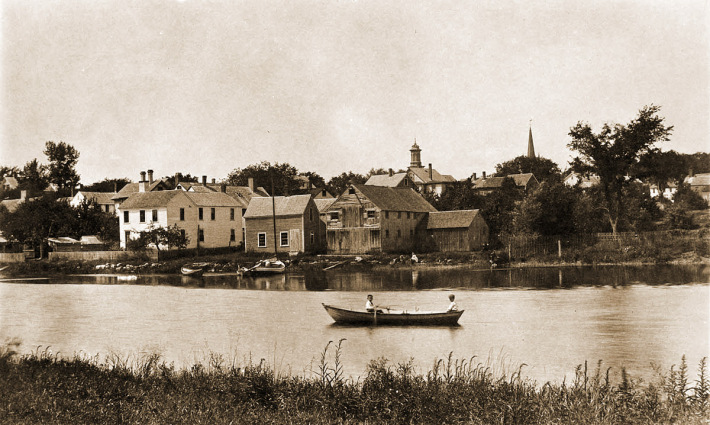
Now we are ready to start fishing. All the boys along the shore knew how to do it. It has been a game for boys for years. We leave the landing between 3:30 and 4 p.m. (no daylight saving time). When we arrived further down the river, it soon became dark, and we lit our torches and looked for a school of fish. When we struck one, we would run them into shoal water. Otherwise, they would go to the bottom. Fishing could start in the Ipswich River, and then the Parker River. If they could not be found in either of these places, they would try the Ipswich Bay. If not successful in this area, they would then row to the back of Plum Island as far as Newburyport Harbor.
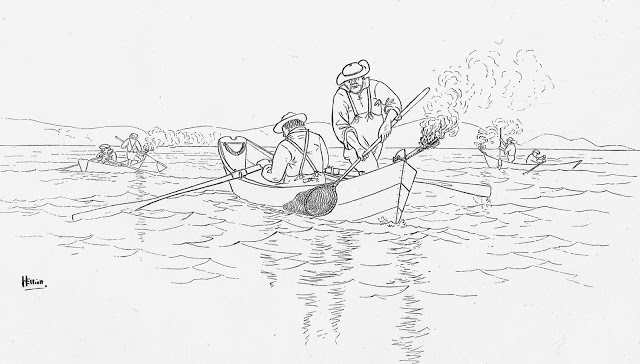
After burning hard pine wood for years, the fishermen found they could roll up small balls of cotton batting and saturate them with kerosene. These were put into a container near the torch, thus saving the large amount of space where the wood had been kept. This was a big improvement. Later it was discovered that they could have a round pipe ring with small holes in it attached to a container, with a can of kerosene running to the ring. This, too, was a big improvement over the heavy torch and hard pine wood.
At the Summer Street landing, the herring were delivered from the hatch to teams by buckets. Fishermen received $1 a bucket. These were large fish called bloaters. In later years when herring fishermen went in large motor boats, they would land at the wharf. They then had a hoist on the wharf from which they would lower the barrel into the boat and hoist a half-barrel at a time.
In later years, large trucks came from Boston and were backed onto the wharf, and a large hose was run out. This hose was 10 or 12 inches in diameter, and like a vacuum cleaner would suck the fish from the boat into the truck. These fish were taken to Boston where the oil was extracted and the remains of the fish were ground into meal. Herring was a very delectable fish and eaten by many families in days past. It was also considered one of the cleanest fish that swims. Herring was prepared in a great many ways—frying, salting, smoked, and sardines packed in cans, etc.
Dipping herring by torching was the early way of catching the fish. As time progressed, they got larger boats, seines, and seine boats. With a seine in a boat, they would leave the shore with men holding, or anchoring, the end of the net. Then they would row the seine boat out over a large area of water, circle a school of fish, and then come to the point of starting and “puss” in the seine and see how many fish they had caught. Another way of catching average or large-size fish was gill-netting. The fishermen would anchor gill nets with an average mesh net in deep water. As fish swam through the seine, they would get caught in the meshes.
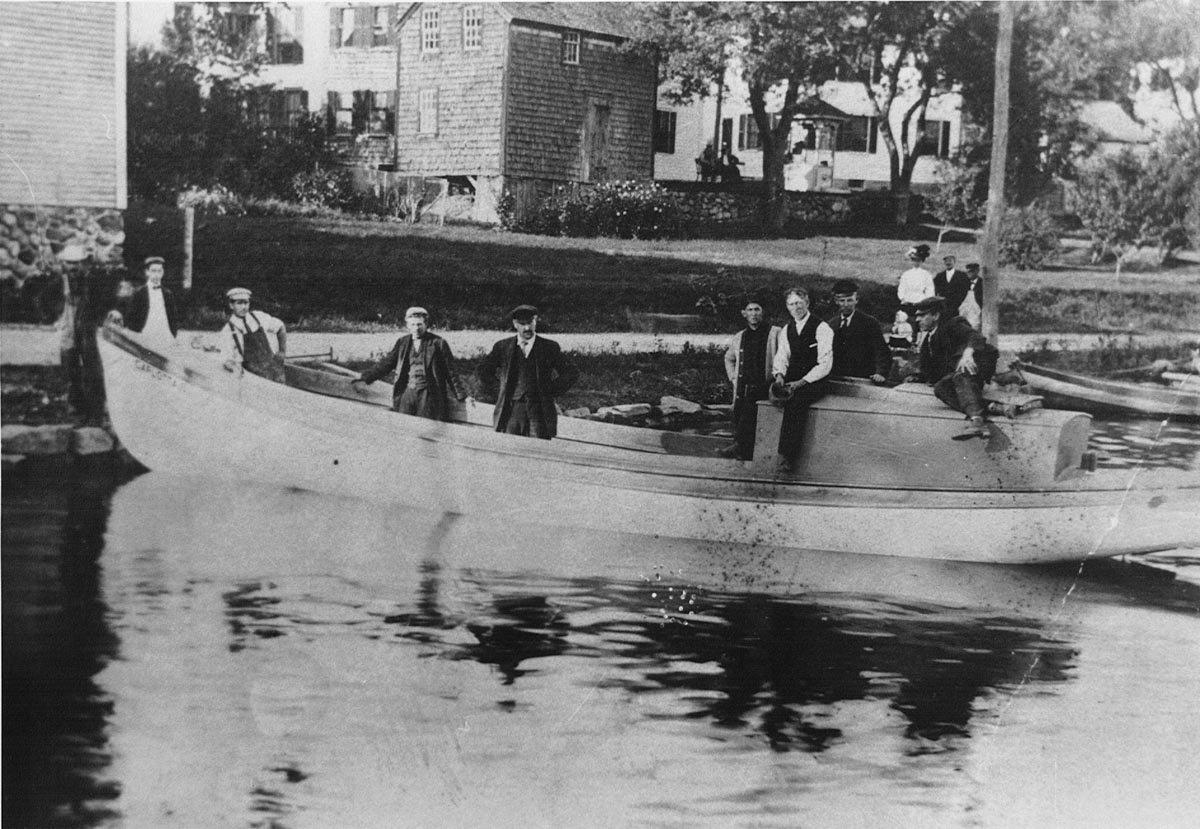
Soon after dark the teamsters with their teams would line up on Green Street by the old County House (the House of Correction). This was the site of what is now the Whipple Junior High School (*the present-day Ipswich Town Hall). They then proceeded down Green Street and along Water Street to the landing, waiting for a load. Wagons would carry six, eight, or 10 barrels of fish. The teams would pull onto the landing and load up with herring. After loading they then went up Summer Street and away to Rocky Neck in Gloucester, Marblehead, and Swampscott. My grandfather, John F. Barton, supplied three boys to help haul their loads to these places.
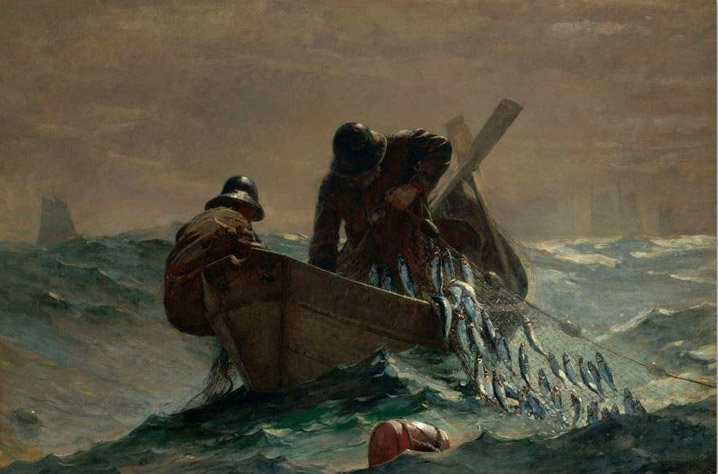
One year there were so many herring caught, that they were sold to people with large farms, such as Castle Hill, and 1000 barrels were put on the land for fertilizer. This same year so many herring were caught, and could not be sold, they were dumped in the Parker River. Herring did not return for many years.
—WILLIAM J. BARTON
 No “Bait and Switch” - Photo by David “Stoney” Stone Letter: The headline “Bait and Switch” in the November 25 article about the Ipswich Mills Dam was eye-catching but very misleading. Read this article at the Ipswich Local News.
 Historic Survey of the Ipswich Mills Dam - Inventory No: IPS.9009: Ipswich Mills Hosiery Manufacturing Company Dam. Survey Form F (structure) submitted to the Massachusetts Historical Commission, Recorded by: Ted Dattilo for the Public Archaeology Laboratory, Inc., May 2024. Received by the Mass. Historical Commission on Nov. 12, 2024 Historical Narrative: The history of the dam and how it relates to the development… Continue reading Historic Survey of the Ipswich Mills Dam
  Ipswich Receives $1.2M Grant For Dam Removal - Ipswich Mills Dam Removal Project Nationally Recognized Among 43 Projects to Receive U.S. Fish and Wildlife Service Funding On April 23, 2024, the U.S. Fish and Wildlife Service announced that 29 states will receive just over $70 million to support 43 projects that will address outdated or obsolete dams, culverts, levees, and other barriers fragmenting… Continue reading Ipswich Receives $1.2M Grant For Dam Removal
  Ipswich Mills Dam Feasibility Study - In 2010, the Ipswich Board of Selectmen voted to begin exploring removal of the Ipswich Mills Dam. The feasibility study was completed in March, 2019 and will set the stage for the Town's decision regarding the dam.… Continue reading Ipswich Mills Dam Feasibility Study
 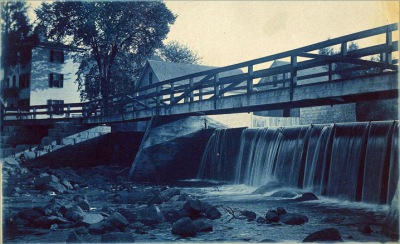 The History of the Ipswich Mill Dam, and a Natural History of the Ipswich River - We measure history by time, but for the Ipswich River and its alewives, time could be running out. We can help preserve the human and natural history of the Ipswich River by freeing it from its man-made encumbrances.… Continue reading The History of the Ipswich Mill Dam, and a Natural History of the Ipswich River
  Regarding the Removal of the Ipswich Mills Dam - By Ipswich resident Roger Wheeler On May 21, a yes vote to remove the head of tide Ipswich Mills Dam and free the river will provide Ipswich, Essex County, and New England with a rare fish-accessible river. This could be an extraordinarily uncommon river and watershed if all fish have accessibility at the head of… Continue reading Regarding the Removal of the Ipswich Mills Dam
 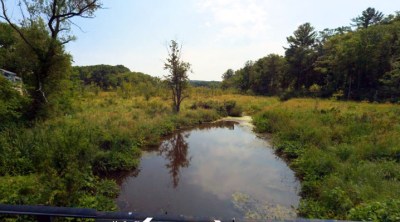 The Miles River - Known in Colonial times as Mile Brook, the Miles River is a major tributary of the Ipswich River but has been diminished in volume by upstream use as a water supply. Evidence of the old Potter and Appleton mills can still be found near County Rd.… Continue reading The Miles River
  The Choate Bridge - The American Society of Civil Engineers cites the Choate Bridge in Ipswich as the oldest documented two-span masonry arch bridge in the U.S., and the oldest extant bridge in Massachusetts. … Continue reading The Choate Bridge
 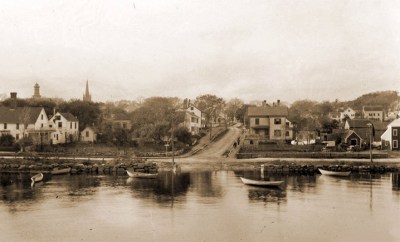 When Herring Were Caught by Torchlight - In the late 19th Century, most of the men around the river would look forward to "herringing" when fall arrived. The foot of Summer Street was the best landing. One year so many herring were caught, they were dumped in the Parker River, and Herring did not return for many years.… Continue reading When Herring Were Caught by Torchlight
 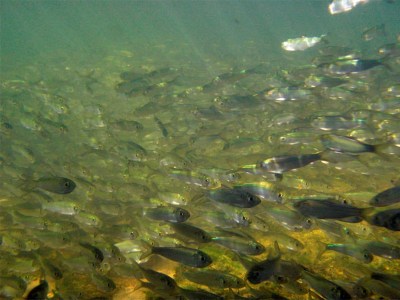 Massachusetts Provincial Law: “An Act to Prevent the Destruction of Alewives on the Ipswich River” - Concerns about the environmental toll that dams have on the Ipswich River date to before 1773. … Continue reading Massachusetts Provincial Law: “An Act to Prevent the Destruction of Alewives on the Ipswich River”
  Industrial History of the Ipswich River - The Industrial History of the Ipswich River was produced for the Ipswich 375th Anniversary by John Stump, , and Alan Pearsall.Historic photos are by Ipswich photographer George Dexter. … Continue reading Industrial History of the Ipswich River
  The Town Wharf - The Ipswich Town Landing is one of several locations along the River where wharves were located over the centuries. … Continue reading The Town Wharf Along the Ipswich River - Historic photos of the Ipswich River from original glass negatives taken by early Ipswich photographers Arthur Wesley Dow, George Dexter and Edward L. Darling. … Continue reading Along the Ipswich River
 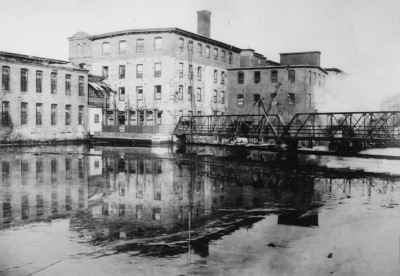 A Photographic History of the Ipswich Mills Dam - Geologically, the Ipswich River is quite young. The Laurentide ice sheet during the most recent ice age receded to the northern border of Massachusetts around 14,000 years ago. As the ice sheet melted, the sea level rose about 100 ft. higher than current levels, putting much of the North Shore area temporarily under water until… Continue reading A Photographic History of the Ipswich Mills Dam
 Sources and additional information:
Ipswich in the Massachusetts Bay Colony Vol. 1 & Vol. 2; by Thomas Franklin Waters
Along the Ipswich River: Historic photos of the Ipswich River from original glass negatives taken by early Ipswich photographers Arthur Wesley Dow, George Dexter, and Edward L. Darling.
The Ipswich River: The 35-mile Ipswich River flows into the Atlantic Ocean at Ipswich Bay. The Ipswich River Water Association works to protect the river and its watershed. Foote Brothers Canoes on Topsfield Rd provides rentals and shuttle service from April to October.
The Industrial History of the Ipswich River: The Industrial History of the Ipswich River was produced for the Ipswich 375th Anniversary by John Stump, a volunteer for the Ipswich Museum, and Alan Pearsall, who produced the Ipswich Mural with funding from EBSCO.
The Choate Bridge: The American Society of Civil Engineers cites the Choate Bridge in Ipswich as the oldest documented two-span masonry arch bridge in the U.S., and the oldest extant bridge in Massachusetts.
The Old Town Landings and Wharfs: Many a pleasant sail down the river are in the memories of William J. Barton. “These were the names of the places and flats along the Ipswich River before my time, and familiar to me during my time. They were used by the fishermen and clammers. I know. I was one of them. It was the happiest time of my life.”
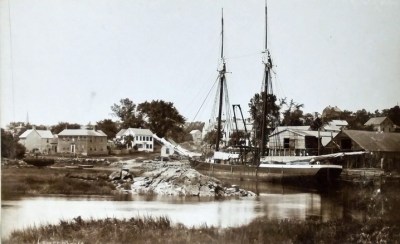
County Street, Sawmill Point, and bare hills: The town voted in 1861 to build County Street and its stone arch bridge, connecting Cross and Mill Streets. A Woolen mill, saw mill, blacksmith shop and veneer mill operated near the bridge.
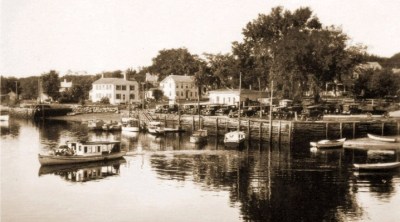
The Town Wharf: The Ipswich Town Landing is one of several locations along the River where wharves were located over the centuries.
Diamond Stage: In 1673, two fishermen from the Isles of Shoals, Andrew Diamond and Harry Maine, arrived together in Ipswich. Mr. Diamond built a platform for salting and shipping fish, and became quite successful. The location is still known today as Diamond Stage.
Water Street: In the book, Ipswich in the Massachusetts Bay Colony, Volume I, Thomas Franklin Waters recorded the history of Water Street, which is part of an early public right-of-way that extended from the wharf to the Green Street Bridge, then cotinued along the Sidney Shurcliff Riverwalk to County St.
 Historic Ipswich
Great article and brings back some amazing memories. I worked on Gusie Millers herring boat in thne late 50’s. On a typical night we would load close to 10 ton of herring. I would make more money in one night than my father would make in two weeks. The work was very scary, especially late in the season when it got cold and icy.
Terrific article. Brings back great memories. I remember my father taking me and my sister down to the wharf on Friday nights in the 1950’s and he would buy herring right off the boats as they returned to the wharf. I specifically remember the kerosene-fed rings which were lit to attract the herring.
Hi Gordon,
That was an interesting reflection about herring fishing by torchlight “back in the day.” Great details. Good illustrations too.
It’s fun to read these pieces written years back. In recent years I have unearthed quite a few accounts of former days in Lynnfield which I have shared with a local weekly. Hey, hopefully someone will do that with what we have written years hence, eh?