

See also: Part II, Ipswich in the Revolutionary War
“The battles of Lexington and Concord on April 19, 1775, were not the start of anything. It was the successful conclusion of a regional resistance campaign that forced imperial power to retreat.” — Public history lecturer Tad Stoermer, Johns Hopkins University.
1764
In April 1764, Parliament enacted the Plantation Act, better known as the Sugar Act, to end the smuggling of sugar. The Act’s purpose was to enforce the 1733 Molasses Act, strengthening customs enforcement of duties on sugar and molasses imported from non-British French and West Indies colonies. The 6 pence per gallon Molasses Act had created a monopoly for British sources with a 6 pence per gallon tax, but was largely unenforceable. Although the 1764 act reduced the tax by half, American colonists nonetheless complained that the tax was excessive. The government of British Prime Minister Grenville was set on maintaining the tax, maintaining that its purpose was to reimburse the British for protecting the colonies in the French and Indian War.
American colonists argued that the British constitution guaranteed that British subjects could not be taxed without their consent. Legislatures in Massachusetts and Rhode Island responded by appointing Committees of Correspondence to coordinate information and organize responses. Although the monopolies that resulted from the Sugar Acts may have benefited rum distillers like John Heard, their ship cargoes were subject to confiscation by British customs commissioners. In 1779, Heard outfitted at least one of his ships for privateering.
1765
In John Adams’ 1765 treatise in opposition to the Stamp Act, he wrote, “This is a Principle which has been advanced long ago…Liberty cannot be preserved without a general knowledge among the people, who have a right, an indisputable, unalienable, indefeasible divine right.” He was referring to the “Ipswich Instructions” in which Citizens of Ipswich protested the lack of representation in the British government when a tax was imposed by the governor of Massachusetts in 1687.
The following includes excerpts from The Breach With Great Britain” by Thomas Franklin Waters, author of Ipswich in the Massachusetts Bay Colony.”)
The determination of the mother country to impose restrictive regulations upon the commerce of the Colonies and to enforce them by Writs of Assistance caused universal resentment. The culminating affront, however, was the passage of the “Stamp Act” in March 1765, which required that legal documents and official papers should be written on stamped paper and that stamps should be affixed to printed books and newspapers. The cost of the stamps was insignificant, but the principle involved was subversive of the liberty of the Colonists. The tax had been imposed by Parliament. As the Colonists had no representatives in that body, this was taxation without representation, and such taxation was tyranny. Intense popular excitement followed.

Riots occurred as soon as the names of the stamp distributors were known. In Boston, the house of Lieut. Gov. Hutchinson was wrecked, and customs officials were mobbed. A Town meeting was held in Ipswich on October 21st to consider the situation. An elaborate document was read and adopted by the assembly of citizens in the form of Instructions to Dr. John Calef, the Town’s Representative in the General Court:
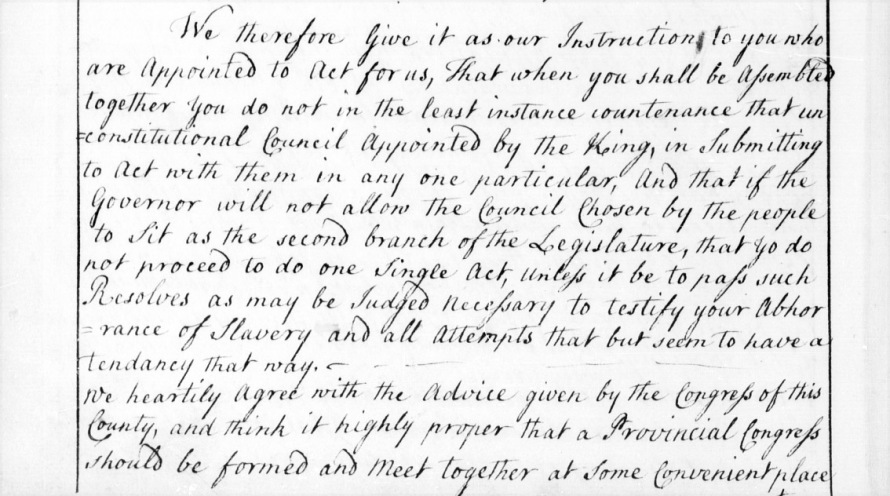
“That as our subordination to our Mother Country has its foundation entirely in our Charter, you are strenuously and decently to maintain that any Measure not Consistent with those Charters, & that Deprives of any Right in them is Neither Consistent with such Subordination Nor Implied in it. When our Fathers Left their Native Country, they came of their own accord and at their own Expense and took possession of a country they were obliged to Buy or Fight for and to which the Nation had no more Right than the Moon.” “The Distressing and Ruining Measures” lately adopted, it further declared, were destructive of their right of self-government, which the Charter secured and which the motherland had tacitly acknowledged for many years.
When the first of November 1765 arrived, the date set for the operation of the Stamp Act, not a stamp could be bought, and the Act could not be enforced. This odious measure was repealed in 1766, but in 1767, the Townshend Acts, so-called, were passed, one of which provided for a tax on wine, glass, tea, gloves, etc, imported into the Province.
In a diary entry, on January 1, 1766, John Adams, a frequent visitor to Ipswich, drew parallels to the Ipswich revolt of 1687 and “the Ipswich Instructions” as a basis for resisting the Stamp Act: “The first Settlers of America were driven by Oppression from the Realm…till at last they offered to make a Contract with the Nation, or the Crown, and to become subject to the Crown upon certain Conditions…which gives them a Right to tax themselves…“This is a Principle which has been advanced long ago…Liberty cannot be preserved without a general knowledge among the people, who have a right, an indisputable, unalienable, indefeasible divine right.”
The “Ipswich Instructions” were a result of a town meeting called in 1687 to protest a tax that the governor of Massachusetts had imposed on Massachusetts Residents, and the subsequent arrest of the leaders of the revolt, for which Ipswich is known as the “Birthplace of American Independence.”
Dr. Calef, the Town’s Representative, was a practicing physician and a prominent citizen. During his first year of service in the General Court, the British government demanded damages for the destruction of property by the riot roused by the Stamp Act. The Town instructed him at a Town meeting on August 18, 1766, to use his influence to prevent any money from being paid out of the Province Treasury for this purpose, but directed him to “move it to the Court to ask his Excellency our Governor to Recommend it to his People in this Government to Relieve ye Sufferers either by Subscription or Contribution as in Cases of Calamities by Fire.”
1768
During the winter of 1767-1768, the General Court issued a Circular Letter, which was sent to the other Assemblies, notifying them of the measure adopted by Massachusetts with regard to resistance to the Townshend Acts and suggesting concerted action. Gov. Bernard was instructed by the Colonial Secretary to demand that the Massachusetts Assembly rescind this Letter and to command the Governors of the other colonies to dissolve their Assemblies if they voted to act with Massachusetts. He acted at once upon these instructions, but on June 30th, 1768, the Legislature refused to rescind its vote, seventeen voting in the affirmative, ninety-two in the negative.

An Ipswich town meeting on August 11, 1768, met “Pursuant to a request of a Great Number of the Freeholders, to try their minds by a Vote, whether they Approve of the Proceedings of the late House of Representatives in not Rescinding etc.”:
- “Voted, that the Town of Ipswich Highly Approve of the Conduct of those Gentlemen of the late House of Representatives, who were for maintaining the Rights and Liberties of their Constituents and were against the Rescinding the resolves of a former House.”
- ” Voted, that the thanks of this Town be given to the Worthy & Much Esteemed Ninety-two Gentlemen of the late Hon. House of Representatives for their firmness & Steadiness in Standing up for and adhering to the Just Rights and Libertys of the Subject when it was required of them at the Peril of their Political Existence to Rescind the resolves of the then former House of Representatives.

Unfortunately, as later events proved, Dr. Calef voted with the minority, and in the political ferment of the time, he thus failed to satisfy his constituents. Nine years later, a mob surrounded his house, and he was forced to flee to British-held territory. On Sept. 19, Calef was replaced by Capt. Michael Farley as Representative. A tanner by trade and an officer in the militia, this was his first high political office.

Any loyalist informers who reported smuggling to the Customs House officials received summary treatment. As printed in the Essex Gazette, August 9-16. 1768: “A Customs House waiter, guilty of this offense, was taken to Salem Common in Sept. 1768 where his Head, Body, and Limbs were covered with warm Tar and then a large quantity of Feathers were applied to all Parts, which by closely adhering to the Tar, Exhibited an odd figure, the Drollery of which can easily be imagined.” He was set in a cart, with a placard, “Informer,” on his breast and back, led into Main Street, and escorted out of town by a cheering crowd, who warned him of worse treatment if he returned.
1770

Joshua Vickery, a ship carpenter of Newburyport, declared that on Saturday, Sept. 10, he was seized and carried to the stocks, where he sat from 3 to 5 p.m. “Most of the time on the sharpest stone that could be found, which put him in extreme pain so that he once fainted.” He was then put in a cart and carried through the town with a rope around his neck, his hands tied behind him, and severely pelted with eggs, gravel, and stones. He was taken into a dark warehouse, where he was kept over Sunday, handcuffed and without bedding. Having made the edge of a tar pot serve as a pillow, his hair was torn out of his head when he arose. On Monday morning, he was compelled to lead a horse cart about the town, although his persecutors, he affirmed, were well satisfied with his innocence, and with another individual who was stripped naked, tarred, and feathered, was committed to jail for breach of the peace.
To deprive theTownshend Acts of all value as a measure for revenue, the merchants of Boston and other large towns bound themselves by agreements not to purchase any of the articles taxed. Ipswich took spirited action. At a Town meeting, held on March 19, 1770, a Committee, previously appointed, reported in the Essex Gazette, Sept. 6-13, 1768. “Taking under consideration the Distrest State of Trade of this Government, and the Whole Continent by Reason of a Late Act of Parliament Imposing Duties on Tea, Glass, etc. …. Voted, that we are Determined to Retrench all Extravagances and that we will to the utmost of our Power & Ability Encourage our own Manufactures and that we will not by ourselves or for any under us Directly or Indirectly Purchase any Goods of the Persons who have Imported or Continue to Import or any Person or Trader who shall Purchase any Goods of said Importer Contrary to the agreement of the Merchants in Boston and the other Trading Towns in this Government & the neighboring Colonies, Until they make a Publick Retraction or a General Importation Takes Place. And further taking into consideration the Excessive Use of Tea, which has been such a bane to this Country. Voted that we will abstain therefrom ourselves & recommend the Disuse of it in our Families Until all the Revenue Acts are repealed.”

Upward of three hundred “Mistresses of Families” in Boston bound themselves to “totally abstain from Tea (sickness excepted) not only in our respective families but that we will absolutely refuse it if it should be offered to us upon any Occasion whatsoever.” A hundred and twenty-six young ladies of Boston signed a similar agreement. The women of the resistance called themselves the “Daughters of Liberty.”
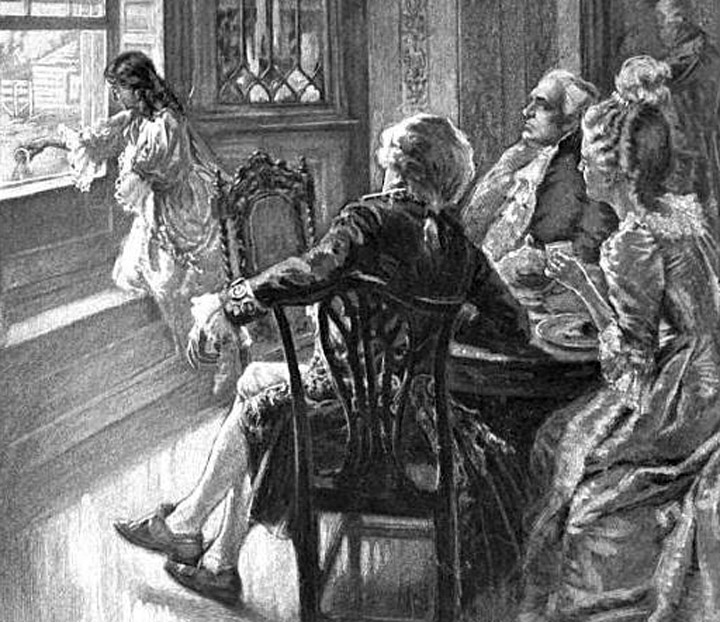
The Boston Massacre

The march of critical events now became rapid. On March 5, 1770, the clash between the soldiers and citizens, known as the “Boston Massacre,” caused the death of several Boston men. In 1772, the “Gaspee,” a British armed vessel stationed in Narragansett Bay to prevent smuggling, ran aground and was captured and burned by an attacking party from Providence.
1772

In the Essex Gazette, Jan 7-14, 1772, proposals appeared for reprinting, by subscription, in a handsome volume, the famous “Vindication of the Government of New England Churches” by John Wise, the minister of the Chebacco Parish, first published in 1717. That bold and brilliant book had produced a profound impression by its impassioned advocacy of democracy in the government of the churches. “The end of all good government,” he affirmed, “is to cultivate humanity and promote the happiness of all, and the good of every man in all his rights, his life, liberty, estate, honor, and so forth, without injury or abuse to any.” It’s no wonder that the writer of that sentence was called up from his grave by the men who were getting ready for the Declaration of Independence.

Ipswich Town Meeting Resolves, December 28, 1772
At a Town meeting on Dec. 28, 1772, Ipswich made its response to the Boston Protest in a lengthy and elaborate series of Resolutions, which included:
- The right of the Colonists to enjoy and dispose of their property in common with all other British subjects,
- The unwarranted assumption of power by Parliament to raise revenue contrary to the minds of the aggrieved and injured people,
- The expenditure of this revenue in providing salaries, which rendered the Governor and Judges independent of the people,
- The neglect of their petitions for redress,
- Establishment of a Committee to correspond with the Committees of other towns.
The Committee, which reported these Resolves, appended their names: Francis Choate, Mr. Daniel Roger,s Capt. Michael Farley, Deacon Stephen Choate, John Calef Esq., Maj. John Baker, William Storey Esq., Mr. John Crocker, Mr. John Hubbard, Mr William Dodge, Mr. Daniel Noyes, Mr. John Treadwell, Joseph Appleton Esq. The Report was read and put to a vote paragraph by paragraph, and unanimously adopted. Capt Farley, Mr. Daniel Noyes, and Major John Baker were chosen for the Committee of Correspondence, “to Receive and Communicate all salutary measures that shall be proposed or offered by any other Town.”
“We, the Committee appointed at a meeting legally assembled in the 17th instant to Consider the Letter from the Town of Boston, with their State of the Rights of the Colonies, and the infringements made upon them, which was publicly Read at said meeting, beg leave to Report that from a full Conviction of the Propriety and Expedience of the Measure, they do Recommend it to the Inhabitants of this Town, to pass the following Resolves, viz—
Resolved
- That the Rights of the Colonies and of this Province in particular, and the List of Infringements and Violations of those Rights, as Stated and expressed by their Respectable Brethren of the Metropolis of this Province, are agreeable to the Real Sentiments of the Inhabitants of This Town, and that it is of the utmost importance, that the Colonies in general, and the Inhabitants of this Province in particular, stand firm as one man to support and maintain all their Just Rights and Privileges.
- That the Inhabitants of this and the other British Provinces have an equal Right with the People of Great Britain to enjoy and dispose of their own property; and that by the first and fundamental Principles of the British Constitution, the same cannot be taken from them, but by their own Consent in Person or by their Representatives.
- That the British Parliament has claimed the Power of Legislation for the Colonists, & in Consequence of Such Power are Raising Revenue in the Colonies contrary to the minds of the aggrieved & injured People of this Country & to the sentiments of Some of the most Judicious, & Dignified Characters in the Nation expressly declared in Parliament.
- This Revenue, thus unconstitutionally raised has been in Part applied to the most Destructive Purposes: The governor of this Province has thereby been Rendered independent of the General Assembly for his support, & consequently, the Connection between him & this People Weakened, and their confidence in him as their governor diminished; And to Complete the Scene According to the best information that can be had, the judges of the Superior Court of Judicature, the King’s Attorney and Solicitor General are to receive their Support from the Same insupportable & grievous Tribute.
- That they have been greatly alarmed at the appointment of Commissioners in Consequence of a late act of Parliament (instituted an act for the better preserving of his Majesty’s Dock Yards, Magazines, Ships Ammunition, and stores) to inquire after the persons concerned in the Burning his Majesty’s Schooner Gaspee at Providence which though a very unjustifiable Act, yet they apprehend this method of proceeding is a great infringement upon the Liberties of the Subject and of the most Dangerous Consequence as the Constitution has already provided a method for the trial of these and all other offenders.
- That every Part of British Dominions has a Right to Petition his Majesty & the Parliament, for the Redress of whatever grievances they are under, & to continue their application until such Times as they are removed, and the Inhabitants of this Town can’t but express their grief that so little Regard has been paid to the petitions of this Province heretofore.
- That the inhabitants of this Town will and they do hereby instruct their Representative in the Great and General Court or Assembly of this Province at the next Session, in a legal and Constitutional Way, to contend earnestly for the maintaining, recovering, and preserving the just Rights and Privileges of this People against all invasions of them.
Also that he use his Influence to place the Judges of the Superior Court upon a Constitutional Basis, whereby they may be rendered indifferent & may be under no undue Bias when Sitting on the sacred Bench of Justice: But as the governor of this Province is not only appointed by the Crown (which is agreeable to Charter but has lately been made dependent on the Crown for his Support (which they look upon as a very great grievance), they therefore can’t think it safe at this time that a fund should be provided to render them independent of the Annual grants of the general court even though they should hold their Commissions during good Behavior;
Nevertheless it is the Instruction of the Inhabitants of this Town to their Representative to give his voice and Influence for the granting such Salaries to the Judges, as shall be adequate to their Important stations, Services and Merritt, and it is their further Instruction to their Representative, that the Right Honorable the Earl of Dartmouth, may be made acquainted by the House of Representatives, that so far from being a Small Faction as has been represented, the good People of this Province are almost generally uneasy, on Account of the Independency of the governor and the Judges, the Board of Commissioners of the Customs in America and the enormous Powers vested in the Court of Admiralty, the Posting Regular Troops in the Province, the Raising a Revenue in America & appropriating the Same without the Consent of the People in Person, or by their Representatives, and further that his Lordship be assured that the good People of this Province are & always have been firmly attached to his preset Majesty & his Royal Family & are desirous to the utmost of their ability to support government, & Promote Quietness and good Order.
Also, it is their further instruction to their said Representative that he use his influence in the next Session of the General Assembly that an agent of the House separate from that of the governor and council, be chosen to represent the grievous State of the Province to the King or his ministers, & in case the governor should still persist in Refusing to give his consent to the grants of the House for the service of which agent or those who have been heretofore appointed by the House, to the several Towns in the Province to make them Compensation by their own grants, in Proportion to their Province taxes.
RESOLVED That the Inhabitants of this Town not only acknowledge the Proceedings of the Town of Boston as set forth in their Printed Pamphlet, to be proper and Constitutional but that they are greatly obliged to them for pointing out the alarming Encroachments making upon the Just Rights and Privileges of the People ad for moving so seasonably and wisely to obtain the sense of the country concerning the same.
RESOLVED That the Town will choose a Committee to Correspond with the Boston Committee and the Committees of Other Towns to Receive and Communicate to this Town all salutary measures that shall be proposed or offered by any other Town, for removing the common grievances of this Province, and that the Town Clerk communicate these our Proceedings to the Boston Committee of Correspondence.
The foregoing Report, being read and after mature Deliberation, the same was put to a vote, paragraph by paragraph, and passed in the affirmative. Noted that Captain Farley, Mr. Daniel Noyes, & Major John Baker be a Committee to Correspond with the Boston Committee of Correspondence, and the Committees of other Towns, and to receive and communicate all salutary measures that shall be proposed or offered by any other Town
Attest: John Baker, Town clerk, Pro. Temp, Ipswich.

1773
Tea Protests Erupt
On December 3, 1773, in Charleston, South Carolina. Christopher Gadsden and the Sons of Liberty seized tea from a ship and placed it in the Exchange Building. The December 16, 1773 edition of the Massachusetts Spy reported that on December 12, “the patriotic inhabitants of Lexington unanimously resolved against the use of Bohea tea of all sorts, Dutch or English importation; and to manifest the sincerity of their resolution, they brought together every ounce contained in the town, and committed it to one common bonfire.”

The best-known event was on Dec. 16, 1773, when tea was thrown into the Boston Harbor. Two weeks later, in Provincetown, locals seized a grounded ship’s cargo of tea and took it to the Fort at Castle Island, but seven men dressed as Mohawks took the three chests of tea and burned them. Similar protests occurred in Princeton and New York over the following months. On March 6, about sixty men boarded a ship in Boston and dumped another twenty-eight chests of tea into the harbor.

Ipswich Town Meeting resolutions, December 23, 1773
A week the tea was thrown into Boston Harbor, the Ipswich citizens met in a most violent mood, and adopted a series of Resolutions:
- That the Inhabitants of this Town have received real pleasure and Satisfaction from the noble and spirited Exertions of their Brethren of the Town of Boston and other Towns to prevent the landing of the detested Tea lately arrived there from the East India Company subject to duty for the sole Purpose of Raising a Revenue to Support in Idleness and Extravagance a Set of Miscreants, whose vile emissaries and Understrappers swarm in the Sea Port Towns and by their dissolute Lives and Evil Practices threaten this Land with a Curse more deplorable than Egyptian Darkness.
- That we hold in utter Contempt and Detestation the Persons appointed Consignees …. who have rendered themselves justly Odious to every Person possessed of the least Spark of Ingenuity or Virtue in America.
- That it is the Determination of this Town that no Tea shall be brought into it during the Term aforesaid, and if any Person shall have so much Effrontery and Hardiness as to offer any Tea to sale in this Town in Opposition to the general Sentiments of the Inhabitants he shall be deemed an Enemy to the Town and treated as his superlative Meanness and Baseness deserve.
There is a tradition of the Farley family that when the embargo on tea went into effect, Gen. Farley would not allow any tea in his home, but his wife would occasionally visit her neighbor, Dame Heard, and enjoy a cup of tea. She was, however, a Patriot, and when a regiment of men was preparing for battle, with her own hands she filled each man’s powder horn with powder which was stored in the garret of her house.
1774

The Ipswich Conventions
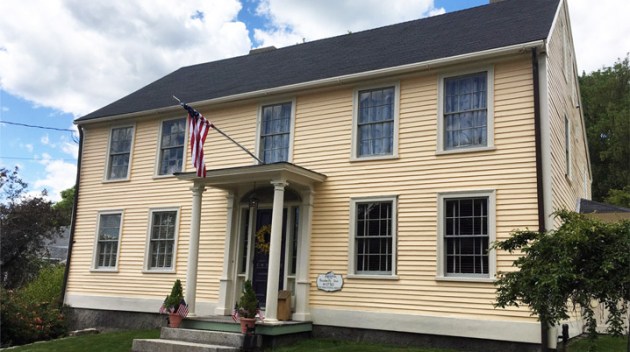
Wild rumors of bloodshed abounded. Delegates from all the towns, 67 in number, arrived at Treadwell’s Inn in Ipswich on Tuesday, Sept. 6, 1774, and the Ipswich Convention began its deliberations, which required two days. Jeremiah Lee Esq. of Marblehead was the Chairman. Resolutions were adopted by unanimous vote, binding themselves to stand together in opposition to the Crown, demanding the resignation of officials holding office by Royal appointment, and declaring the Provincial Congress, soon to assemble, absolutely necessary for the common safety.

Three and a half years later, a second Ipswich Convention was held on April 29, 1778, to review the proposed Constitution framed by the Convention of the State. This Convention was then adjourned to May 12, to be held at Ipswich.
First Provincial Congress
The First Provincial Congress met in Salem on Friday, October 7, 1774, Ipswich being represented by Capt. Michael Farley and Mr. Daniel Noyes. At the Town Meeting held on November 21, the Proposals and Resolves of the Continental Congress being read, the vote was put to the Town to approve of said Proposals and Resolves. It passed in the Affirmative unanimously.
On October 20, 1774, the First Continental Congress adopted fourteen resolutions known as the Articles of Association in response to the “Intolerable Acts” the British government had imposed on the colonies. The articles envisioned a Continental Association with a boycott of any goods produced in Britain, accompanied by an almost Puritanical outlawing of cock fighting and other forms of “diversions and entertainments.” It outlawed the purchasing of expensive clothing and encouraged reliance on local industry. Article 11 provided that “a committee be chosen in every county, city, and town, by those who are qualified to vote for representatives in the legislature, whose business it shall be attentively to observe the conduct of all persons touching this association.” Any infractions were to be “made publicly known and universally condemned as the enemies of American Liberty, and thenceforth we respectively will break off all dealings with him or her.“

1775
Trade with Britain immediately plummeted, and Parliament responded by passing the New England Restraining Act, which prohibited trading with any country other than Britain and its colonies in the West Indies. Colonial ships were banned from Atlantic fisheries.

In January 1775, towns began to establish minutemen companies with instructions to march at a moment’s notice. In Ipswich, on a 25′ x 50′ plot of land at the easterly end of the Town House on Town Hill, a house was constructed for drilling during inclement weather. Recruits were paid a shilling for half a day of training. On May 29, towns were instructed to send half of their militias to strengthen the lines in Cambridge and Roxbury against British attack. By summer, the Congress had voted to raise 10 companies of 50 men each in Essex County. Ipswich requested the Committee of Safety to station troops along the coast from Ipswich to Newburyport to stand guard, “Inasmuch as the Situation of these towns is such that the Stock will immediately be put to Pasture, where the said Stock will be exposed, and Great Numbers of Chattle & Seep may be taken by armed Cutters.”
1776
Independence from Great Britain


Continue: Part II of Ipswich in the Revolutionary War
Posts on this site about the Revolutionary War
 The “Detested Tea” and the Ipswich Resolves - On Dec. 16, 1773, the tea brought into Boston harbor was thrown into the sea. A week later, Ipswich citizens met in the most violent mood, and adopted a series of resolutions,… Continue reading The “Detested Tea” and the Ipswich Resolves
  Ipswich and the American Revolution, Part 2: The Revolutionary War - On June 10th, 1776, the men of Ipswich, in Town-meeting assembled, instructed their Representatives, that if the Continental Congress should for the safety of the said Colonies Declare them Independent of the Kingdom of Great Britain, they will solemnly engage with their lives and Fortunes to support them in the Measure.… Continue reading Ipswich and the American Revolution, Part 2: The Revolutionary War
  Madame Shatswell’s Cup of Tea - Madame Shatswell loved her cup of tea, and as a large store had been stored for family use before the hated tax was imposed, she saw no harm in using it as usual. News of the treason spread throughout the town.… Continue reading Madame Shatswell’s Cup of Tea
  The 1774 Ipswich Convention “To Consider the Late Acts of Parliament” - Notifications were posted in Salem to gather at the Town House to appoint representatives to meet at Ipswich, on September 6, 1774 along with the representatives of the other towns in the county, to consider "to consider and determine on such measures as the late acts of Parliament, and our other grievances render necessary and expedient."… Continue reading The 1774 Ipswich Convention “To Consider the Late Acts of Parliament”
  The Intolerable Acts of 1774 - Despite the failure of the Stamp Act and the Townshend Acts, the British Parliament responded to the "Boston Tea Party" by passing even more restrictive acts to punish the American extremists.… Continue reading The Intolerable Acts of 1774
 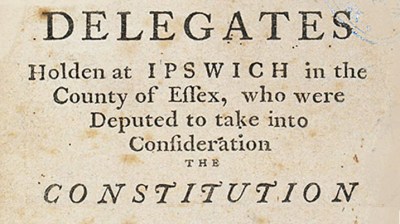 The 1778 Ipswich Convention and the Essex Result - Delegates from 67 towns arrived in Ipswich on Tuesday, Sept. 6, 1774 "to consider and determine on such measures as the late acts of Parliament" and declaring support for a Provincial Congress. They reconvened four years later to debate a draft constitution for Massachusetts. … Continue reading The 1778 Ipswich Convention and the Essex Result
 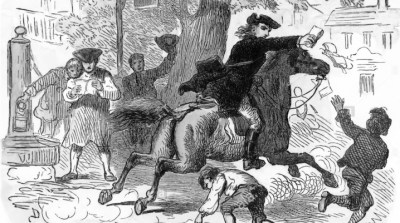 Paul Revere’s Not So Famous Ride Through Ipswich, December 13, 1774 - On the cold icy morning of December 13, 1774, Paul Revere headed out on a 60 mile gallop from Boston along the Old Bay Road through Ipswich to warn the citizens of Portsmouth that British troops may be landing.… Continue reading Paul Revere’s Not So Famous Ride Through Ipswich, December 13, 1774
  “A State of Nature”, Worcester in 1774 - "In Worcester, they keep no Terms, openly threaten Resistance by Arms, have been purchasing Arms, preparing them, casting Ball, and providing Powder, and threaten to attack any Troops who dare to oppose them....the flames of sedition spread universally throughout the country beyond conception.” -Gen. Thomas Gage… Continue reading “A State of Nature”, Worcester in 1774
  The Marblehead Smallpox Riot, January 1774 - In 1773, the selectmen ordered all houses where the disease had appeared to be closed, and dogs to be killed immediately. The fears of the inhabitants increased when permission was granted to build a smallpox hospital on Cat Island.… Continue reading The Marblehead Smallpox Riot, January 1774
  Prosecution of Loyalists in Essex County - An angry mob surrounded the Haverhill home of Col. Richard Saltonstall, a Loyalist, who opened his door and stated that that he was bound to discharge the duties of the office.… Continue reading Prosecution of Loyalists in Essex County
 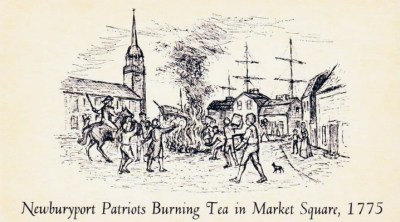 The Newburyport Tea Party - When Parliament laid a tax on tea, the British locked all the tea that had arrived in Newburyport into the powder house. Eleazer Johnson led a group of men who shattered the door and burned the tea in Market Square.… Continue reading The Newburyport Tea Party
  Leslie’s Retreat, or How the Revolutionary War Almost Began in Salem, February 26, 1775 - In our struggle for Independence, the British military received its first setback from the inhabitants of Salem in an episode that could not have been more ludicrous or entertaining if it had been written for Monty Python. … Continue reading Leslie’s Retreat, or How the Revolutionary War Almost Began in Salem, February 26, 1775
  Lieutenant Ruhama Andrews and the 1775 Battle of Quebec - On Christmas Day 1823, Gen Benjamin Pierce of Hillsborough, NH held a reunion of twenty-two citizens who had served in the War of Independence. The oldest attendee was Ammi Andrews, born in Ipswich, MA, aged 89 years.… Continue reading Lieutenant Ruhama Andrews and the 1775 Battle of Quebec
  The Revolutionary War Letters of Joseph Hodgkins and Sarah Perkins - Throughout the Revolutionary War, Joseph Hodgkins sent letters home from the battlefronts to his wife, Sarah Perkins Hodgkins.… Continue reading The Revolutionary War Letters of Joseph Hodgkins and Sarah Perkins
 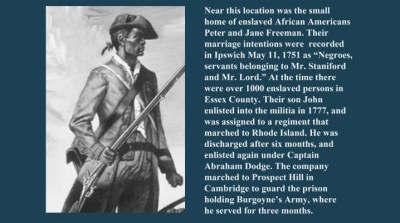 John Freeman, an African American Revolutionary War Soldier from Ipswich - John Freeman, son of enslaved Peter and Jane Freeman of Ipswich, enlisted into the militia of the Revolutionary War in the year 1777, and served in Rhode Island, Providence and Cambridge.… Continue reading John Freeman, an African American Revolutionary War Soldier from Ipswich
 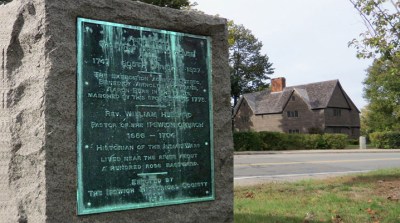 Benedict Arnold and the Fate of the American Revolution - In September 1776, the vulnerable Continental Army under George Washington evacuated New York after a devastating defeat by the British Army. One of Washington’s favorite generals, Benedict Arnold, miraculously succeeded in postponing the British naval advance down Lake Champlain that might have ended the war. Thomas Franklin Waters wrote about Arnold’s march through Ipswich on the way to Quebec “The… Continue reading Benedict Arnold and the Fate of the American Revolution
  Ipswich and the American Revolution: The Breach with Britain - In John Adams’ 1765 opposition to the Stamp Act, he referenced the citizens of Ipswich who resisted a tax imposed by the Crown in 1687. An Ipswich town meeting on August 11, 1768 approved of "the Conduct of those Gentlemen of the late House of Representatives...when it was required of them at the Peril of their Political Existence." The Town meeting on Dec. 28, 1772 supported the rights of the Colonists as British subjects, and established a Committee of Correspondence to communicate resistance with the Committees of other towns. Delegates from throughout Essex County arrived in Ipswich on Tuesday, Sept. 6, 1774, and by unanimous vote, bound themselves together in establishment of the Provincial Congress for the common safety.
… Continue reading Ipswich and the American Revolution: The Breach with Britain
Ipswich and the American Revolution: The Breach with Britain - In John Adams’ 1765 opposition to the Stamp Act, he referenced the citizens of Ipswich who resisted a tax imposed by the Crown in 1687. An Ipswich town meeting on August 11, 1768 approved of "the Conduct of those Gentlemen of the late House of Representatives...when it was required of them at the Peril of their Political Existence." The Town meeting on Dec. 28, 1772 supported the rights of the Colonists as British subjects, and established a Committee of Correspondence to communicate resistance with the Committees of other towns. Delegates from throughout Essex County arrived in Ipswich on Tuesday, Sept. 6, 1774, and by unanimous vote, bound themselves together in establishment of the Provincial Congress for the common safety.
… Continue reading Ipswich and the American Revolution: The Breach with Britain  Account of the Soldiers of Chebacco Parish at Bunker Hill - Of the men from Chebacco parish who were in the battle at Bunker Hill, the names of six are known: James Andrews, Benjamin Burnham, Nehemiah Choate, Aaron Perkins, Jesse Story Jr., a minor who was killed, and Francis Burnham who was wounded. Two Chebacco boys, Aaron Low and Samuel Proctor, belonged to a Gloucester company which reached Cambridge on the afternoon of the 16th.… Continue reading Account of the Soldiers of Chebacco Parish at Bunker Hill
 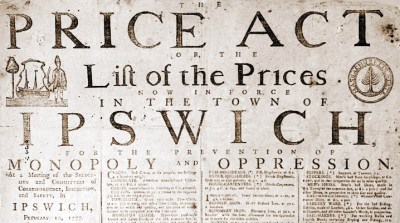 The Price Act, Passed at Ipswich, February 1777 - In 1777, the Ipswich Selectmen and the Committee of Correspondence and Safety, acting under the authority of the General Court, issued a schedule of prices covering all articles of food, clothing, wages of labor of every kind, entertainment at hotels, shipping rates etc.… Continue reading The Price Act, Passed at Ipswich, February 1777
 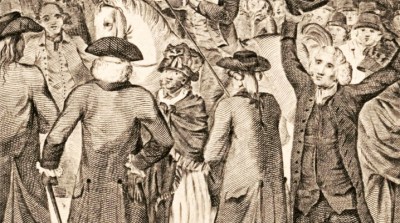 April 29, 1783: How Ipswich Celebrated the End of the Revolutionary War - The manner in which residents of Ipswich celebrated the end of hostilities was recorded in "The Life, Journals and Correspondence of Rev. Manasseh Cutler."… Continue reading April 29, 1783: How Ipswich Celebrated the End of the Revolutionary War
 Articles on this site about the Revolutionary War
Read Part 2: Ipswich and the Revolutionary War
During the 250th Anniversary of the American Revolution, this site is highlighting the timeline of Ipswich in the breach with Britain, and the Revolutionary War. Download this article as a PDF document.
 Historic Ipswich