
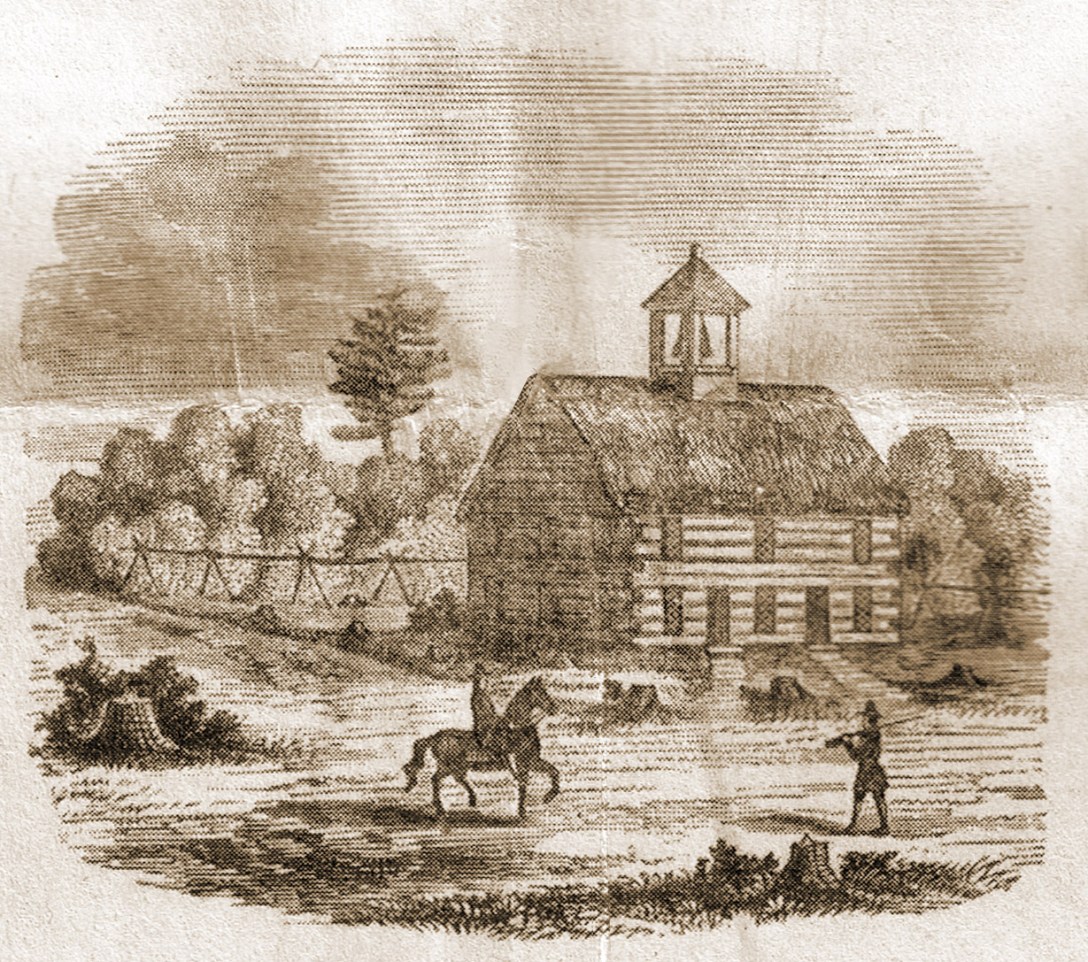
The inhabitants of the part of Ipswich known as Chebacco built a meetinghouse in 1674 and established their own parish in 1679, after overcoming resistance from the mother church in Ipswich. The word “Chebacco” was a Native American name for the lake that lies between Essex and Wenham.
At the close of the seventeenth century, Chebacco Parish had a population of about three hundred people, a church and pastor, a school, and even its own military company. Three bridges and two causeways had been built; five sawmills were in operation on the Essex River. The primary occupations were farming, fishing, and boat building.
A movement for complete separation from Ipswich gained strength in 1818. The legislature approved the request on the condition that the citizens of Chebacco settle accounts with the town of Ipswich. They named their town Essex, and it was incorporated on Feb. 5, 1819.
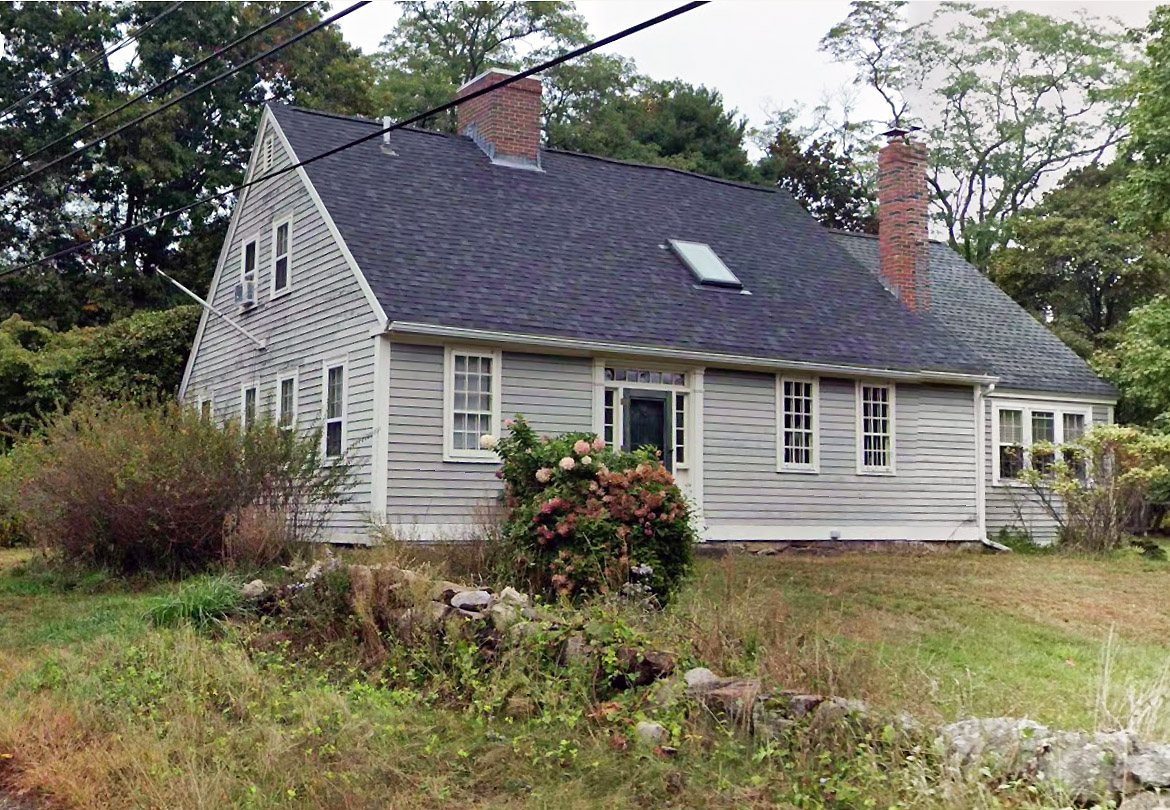
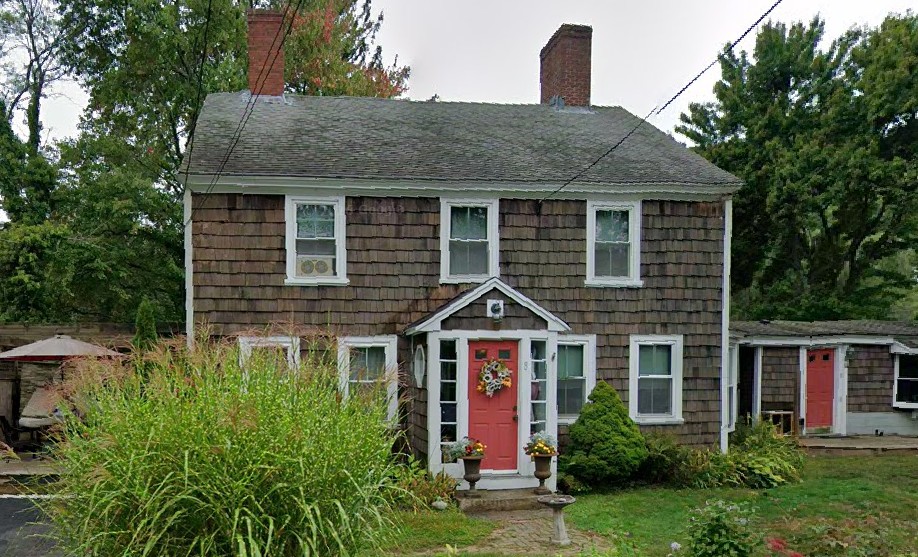
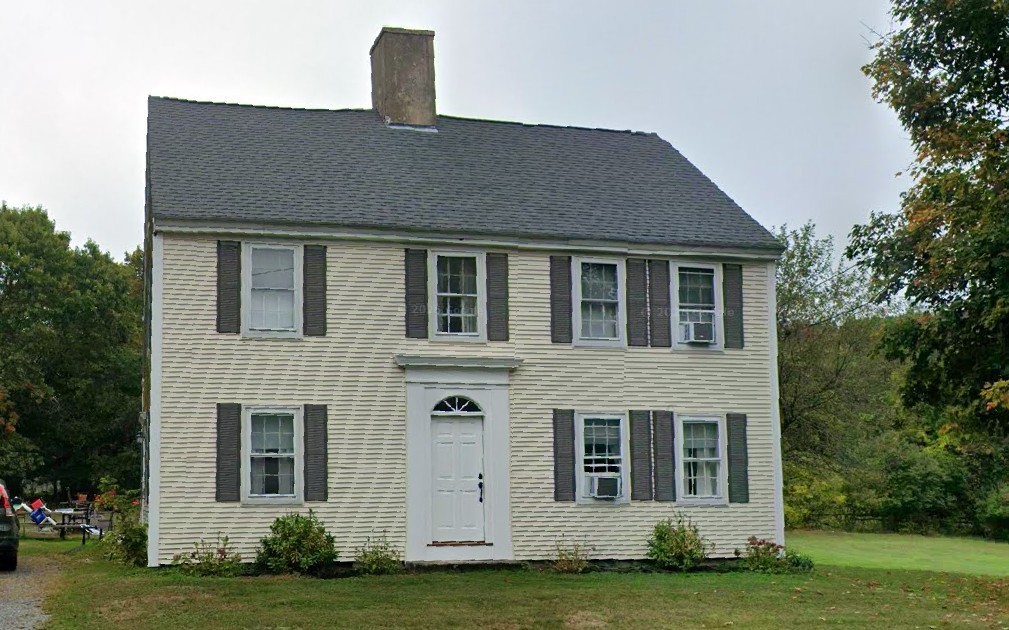
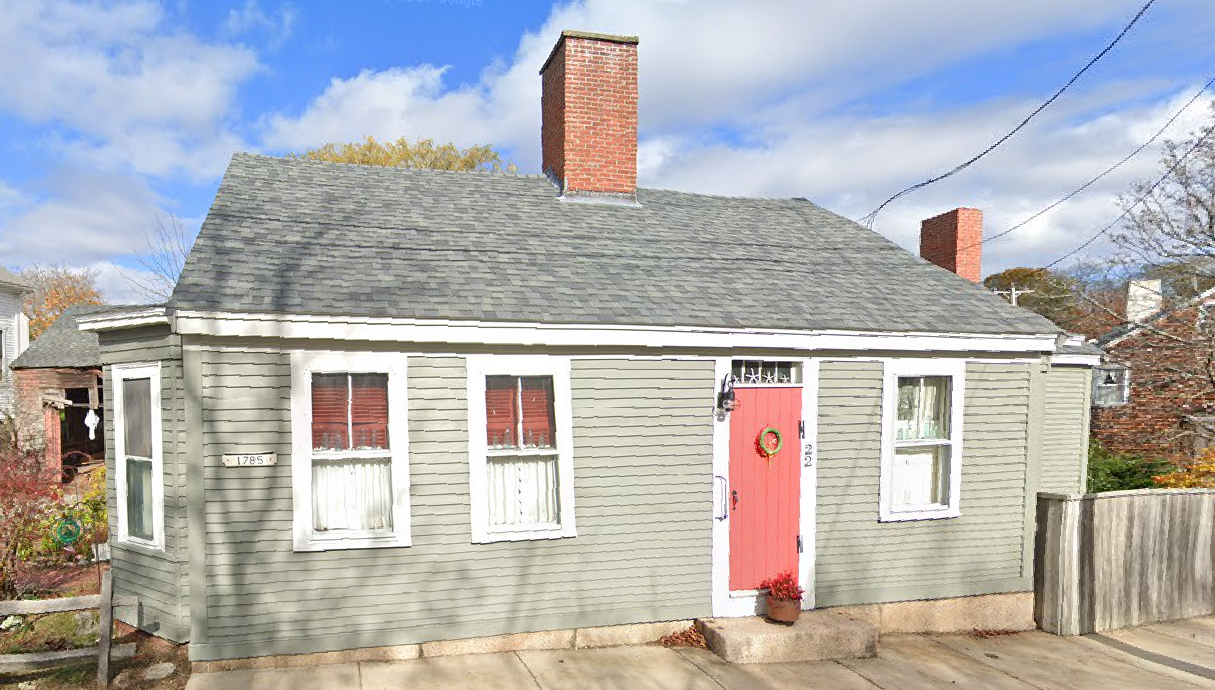
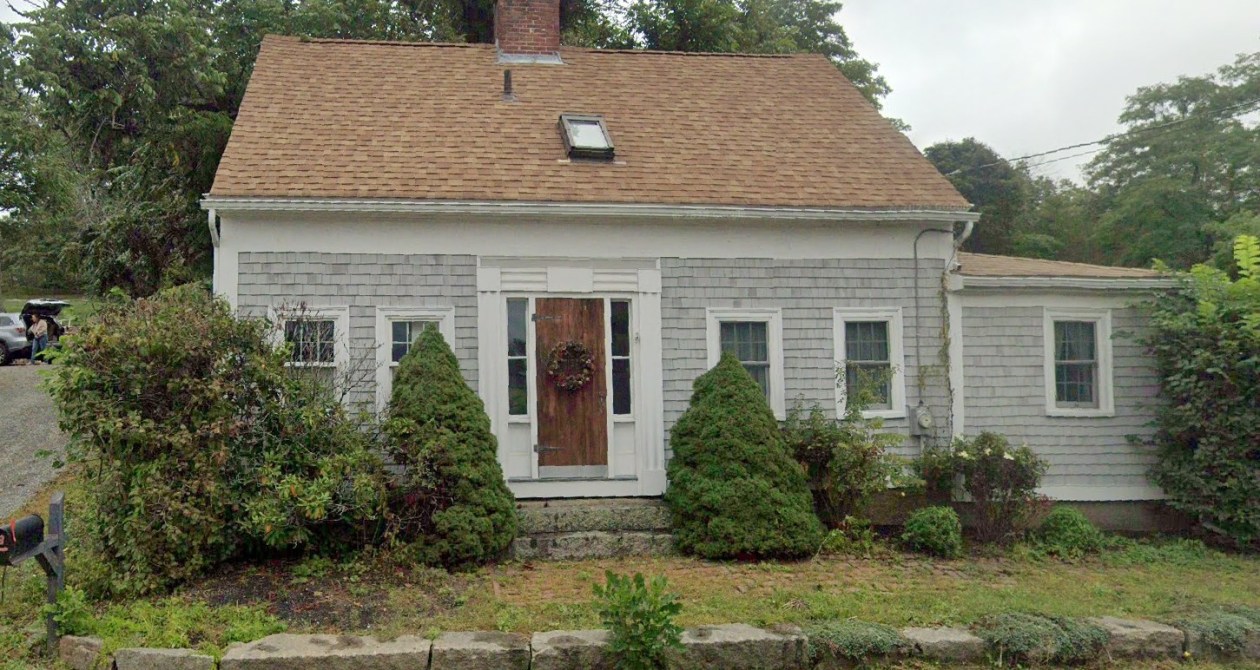
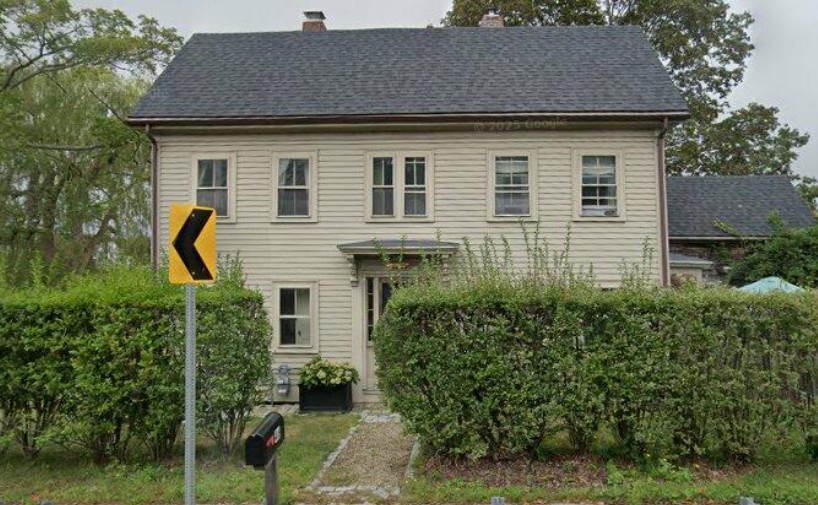
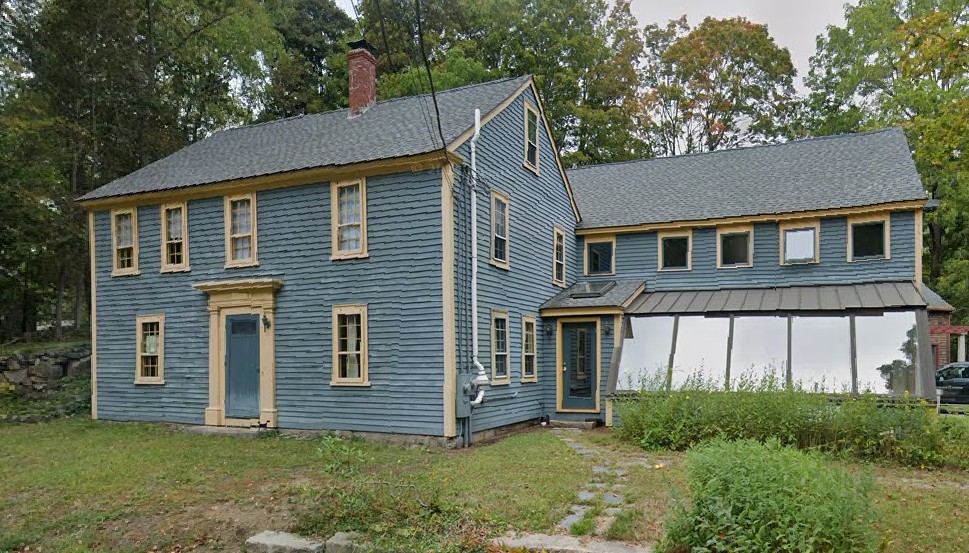
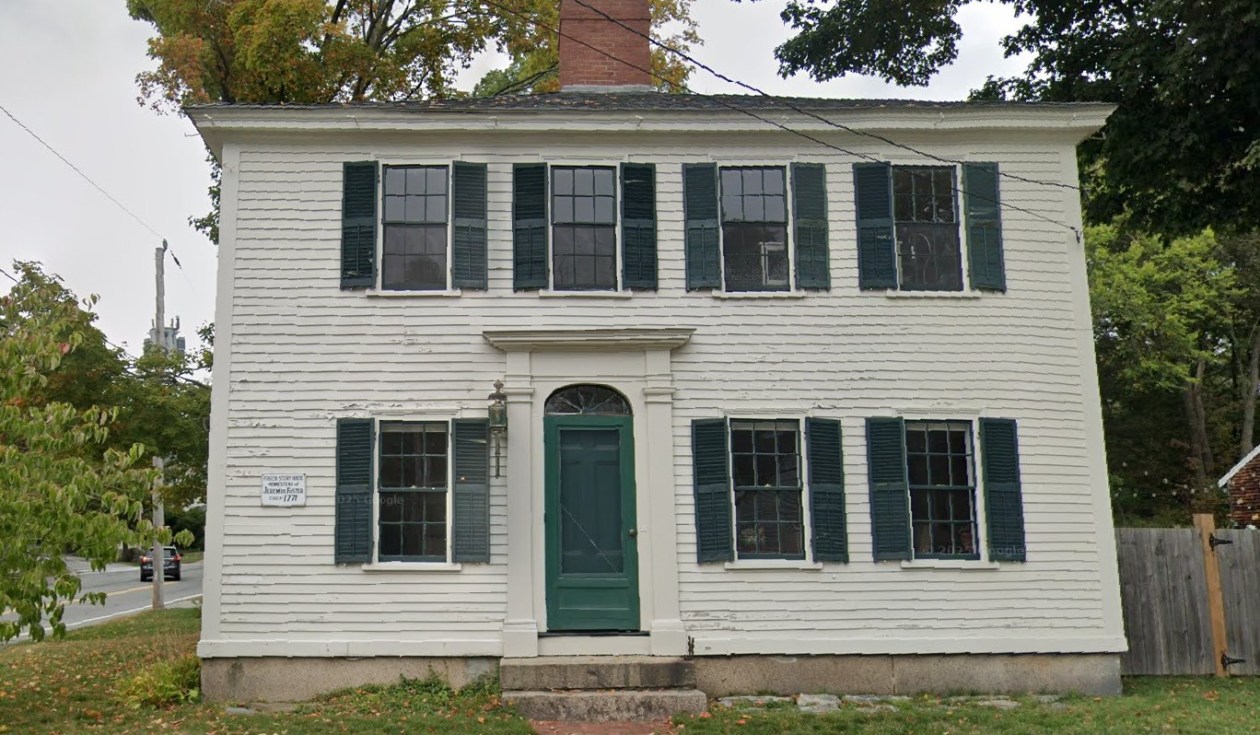
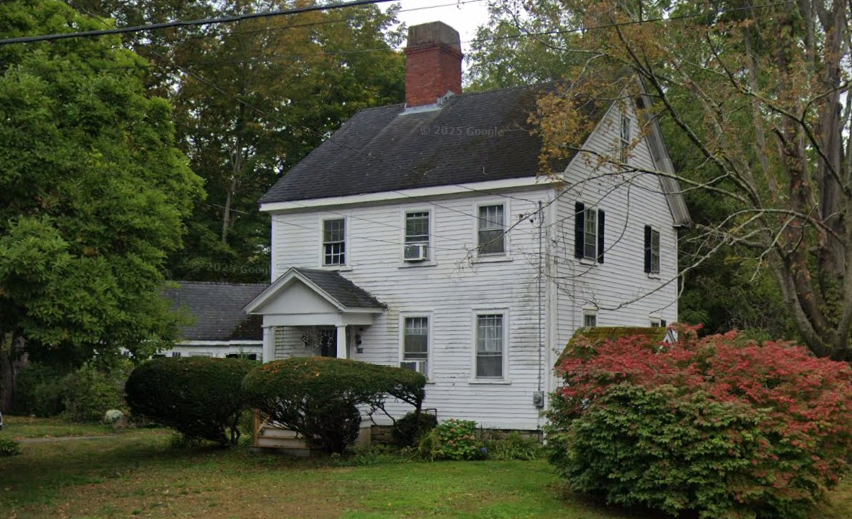
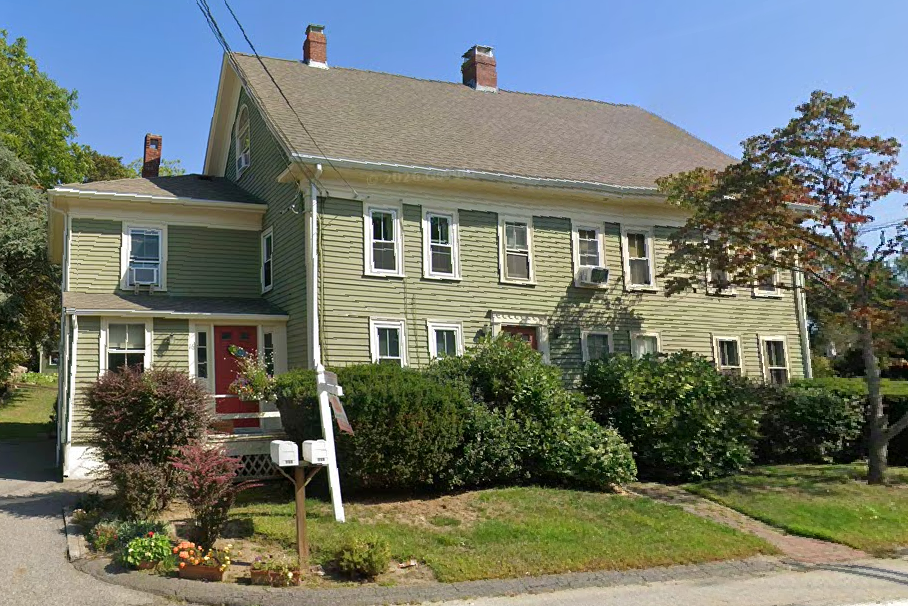
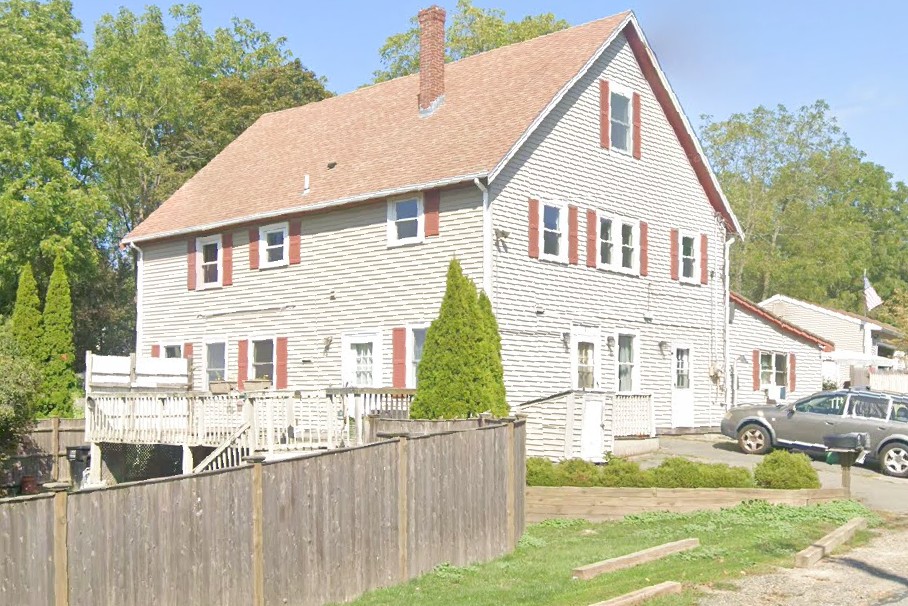
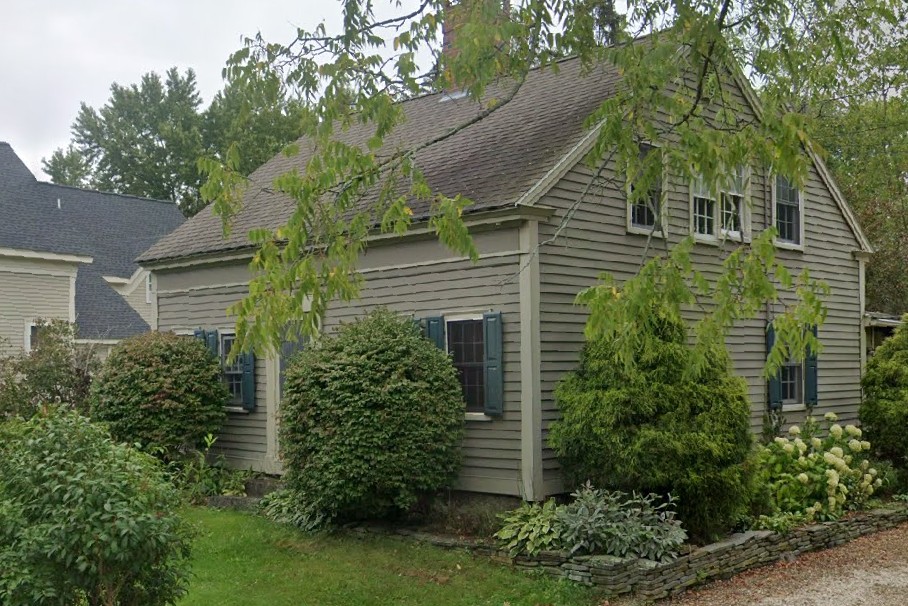
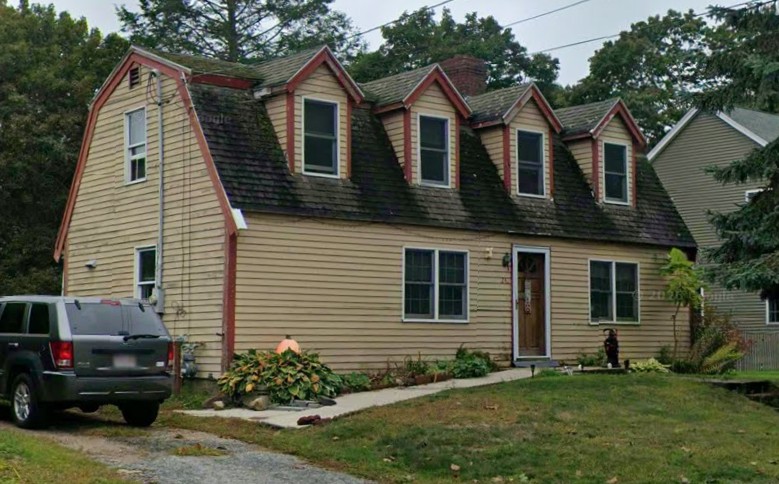
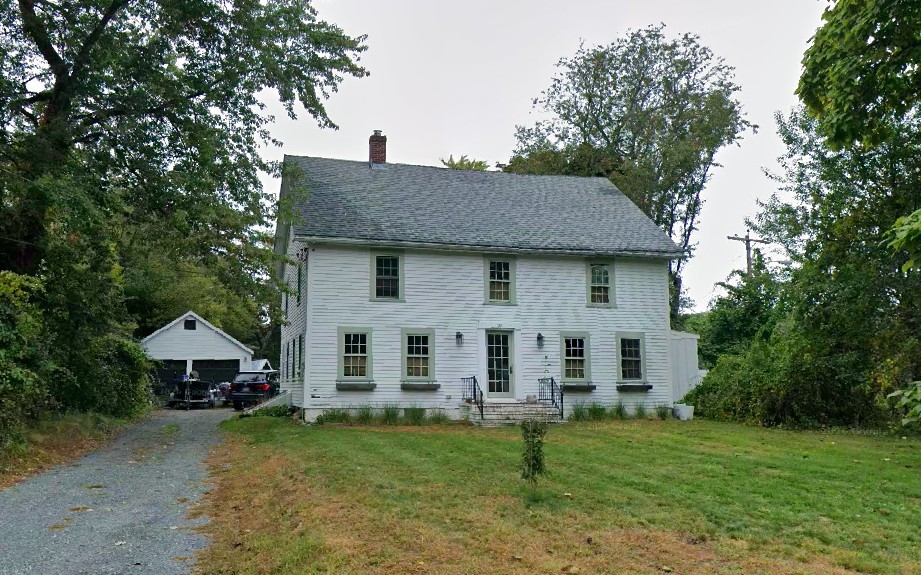
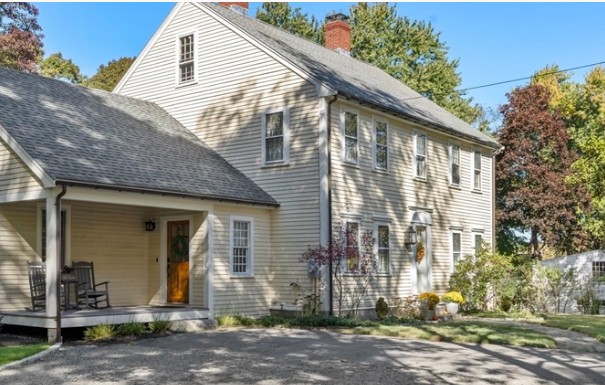
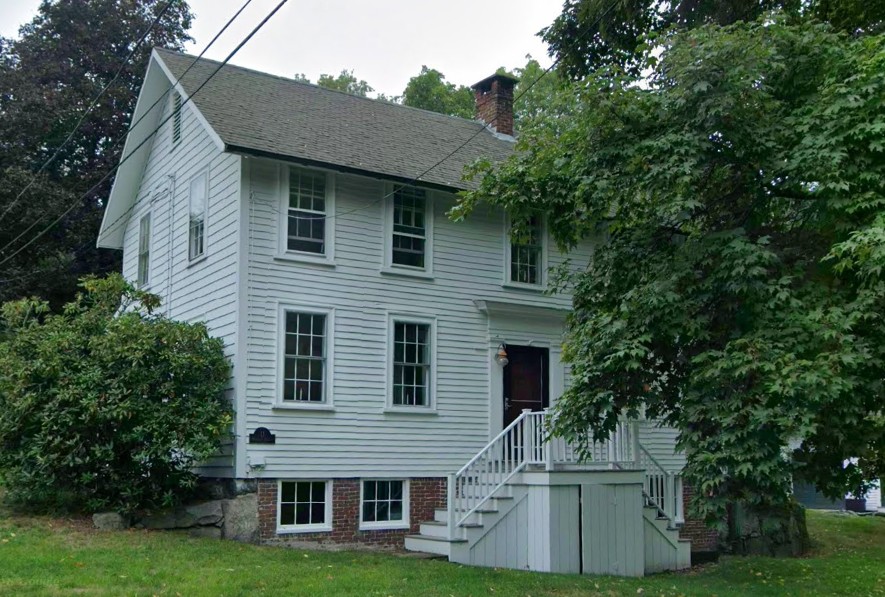
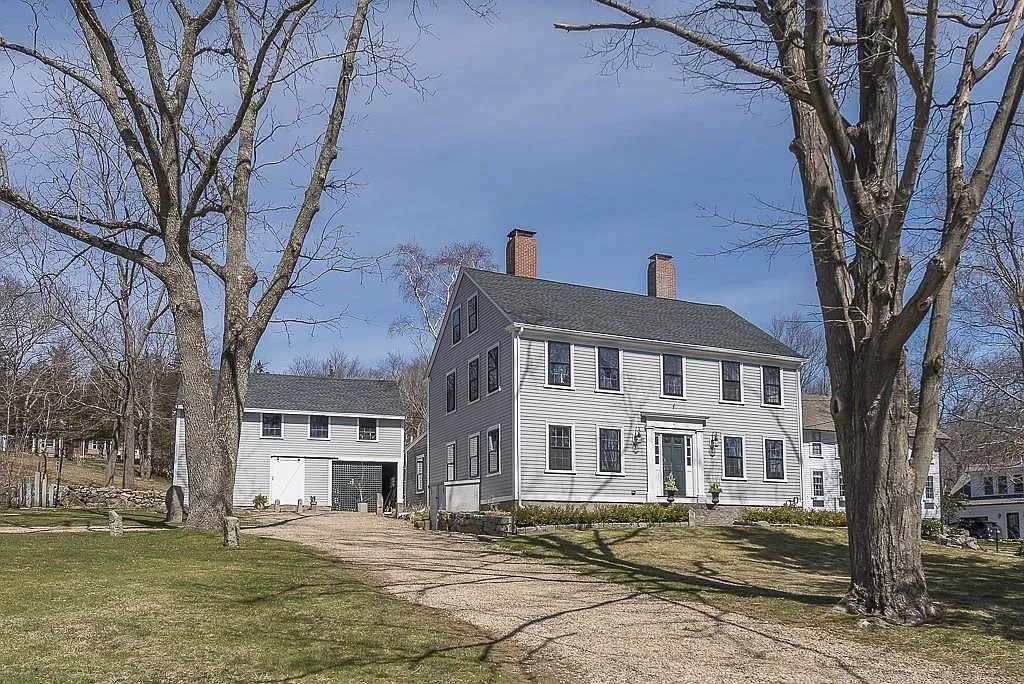
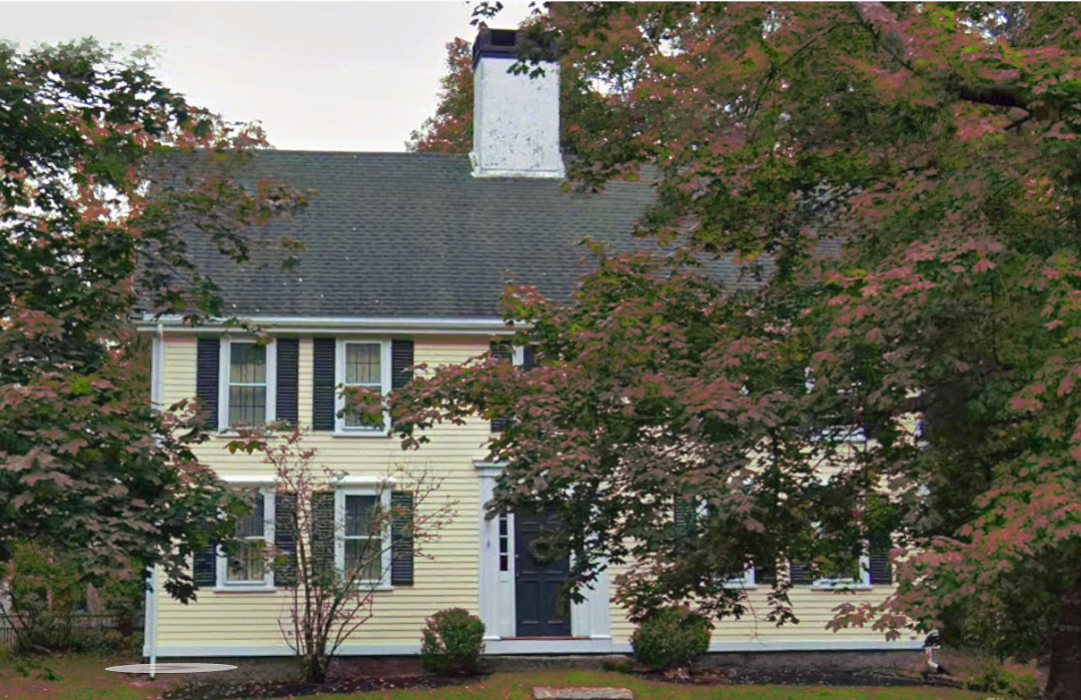
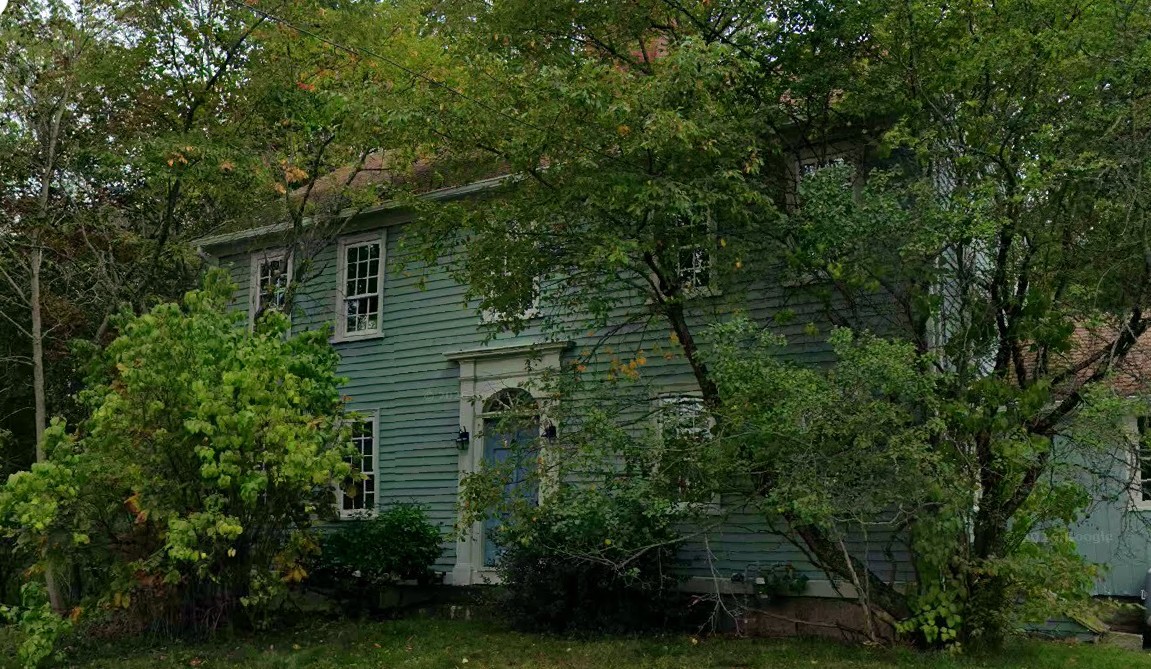
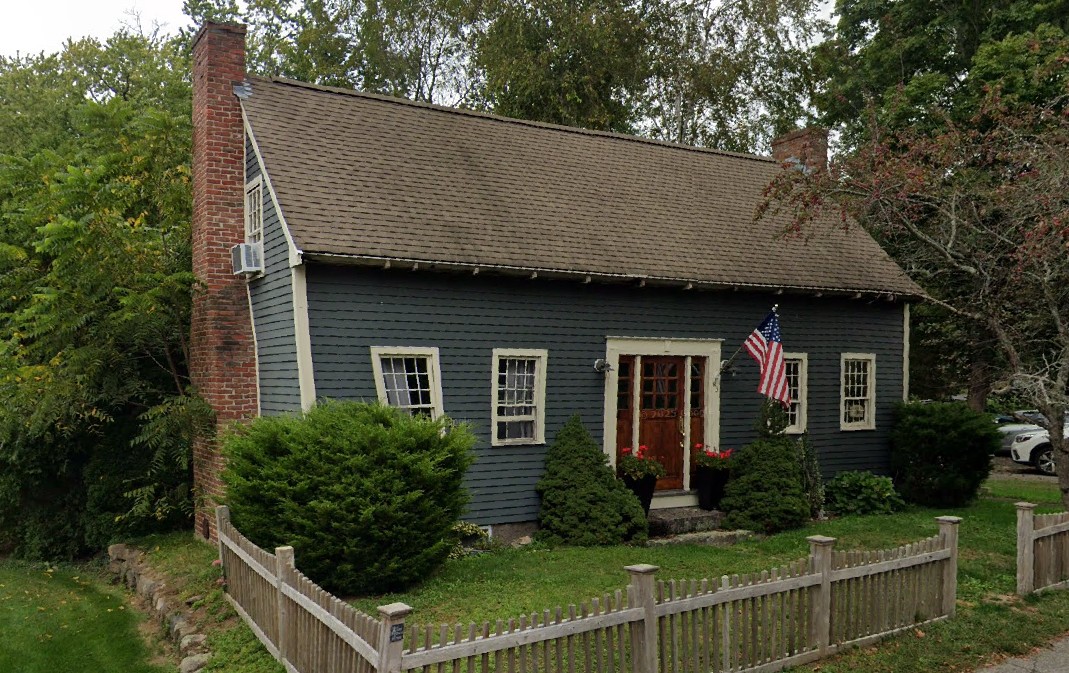
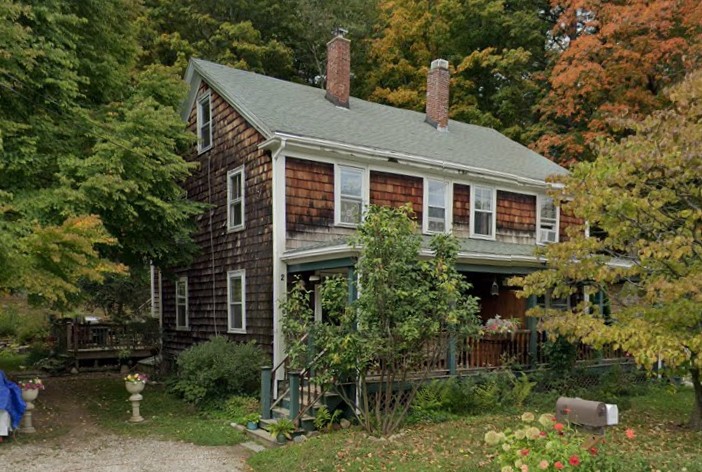
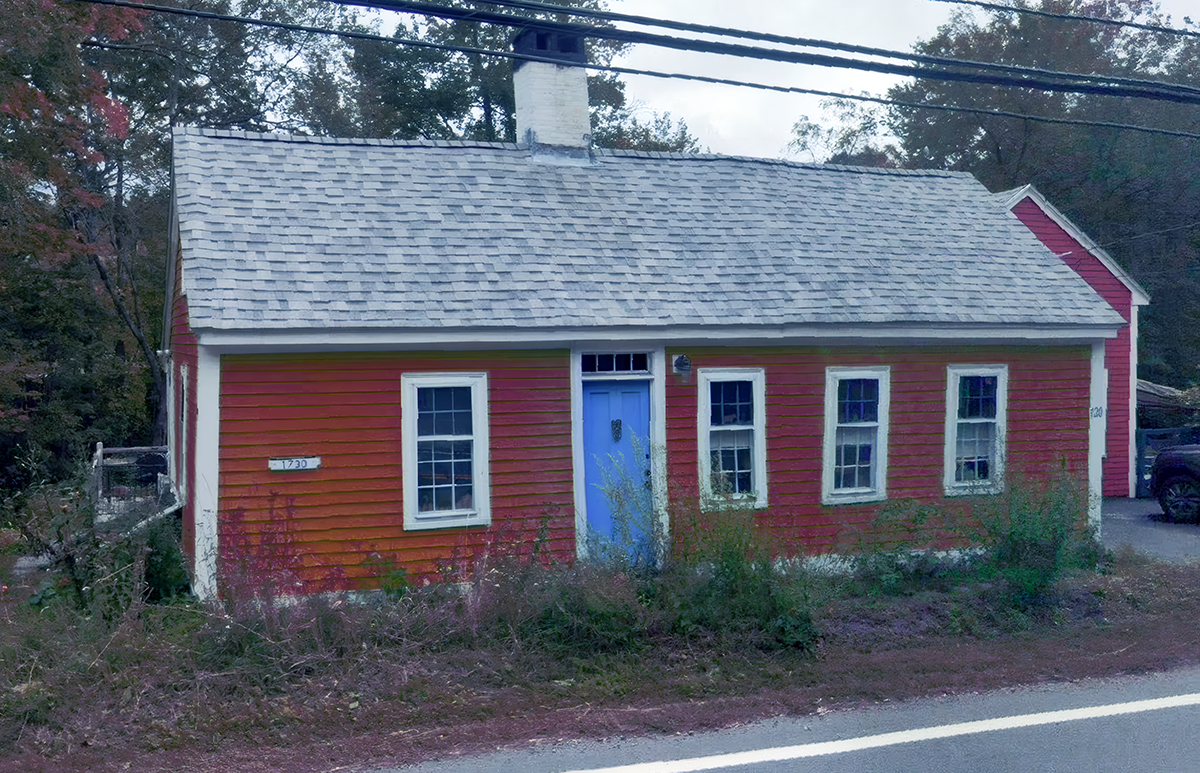
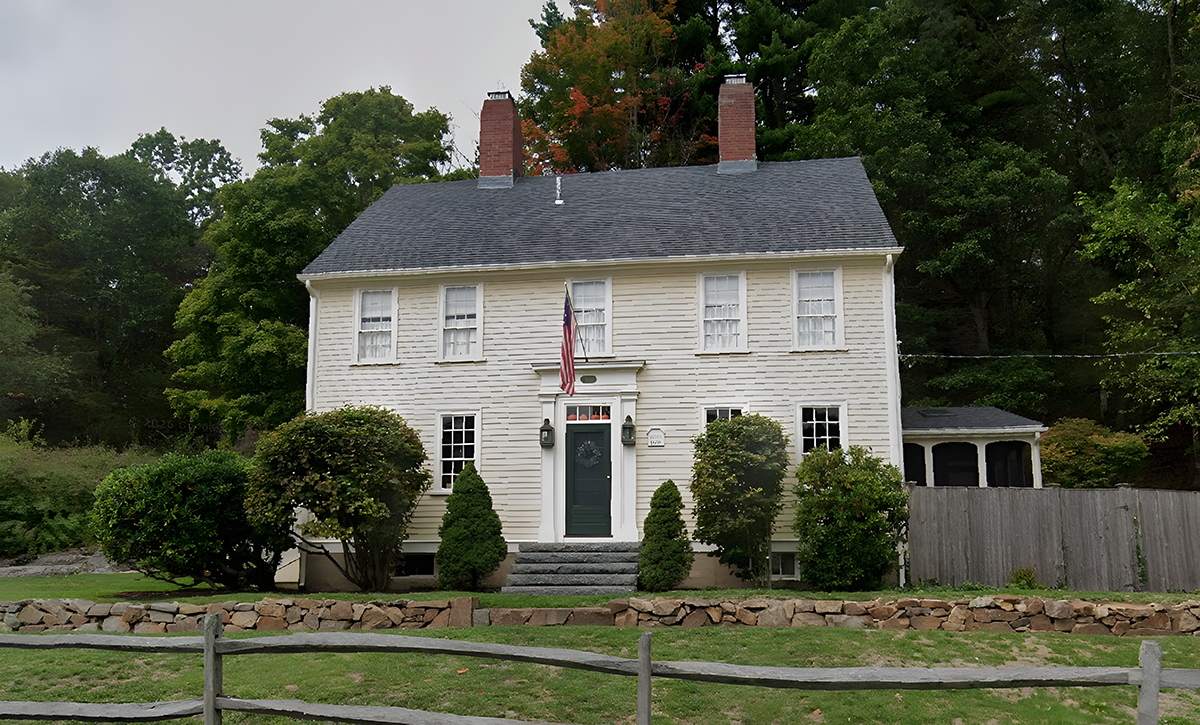
Houses Constructed in Essex Before It Separated from Ipswich
(Click on an image for a larger view, then use the return arrow on your device to return to this page.)
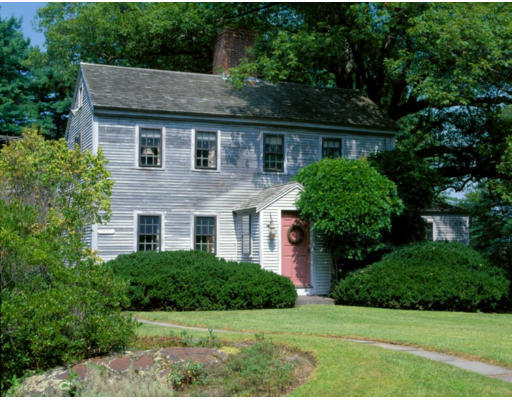

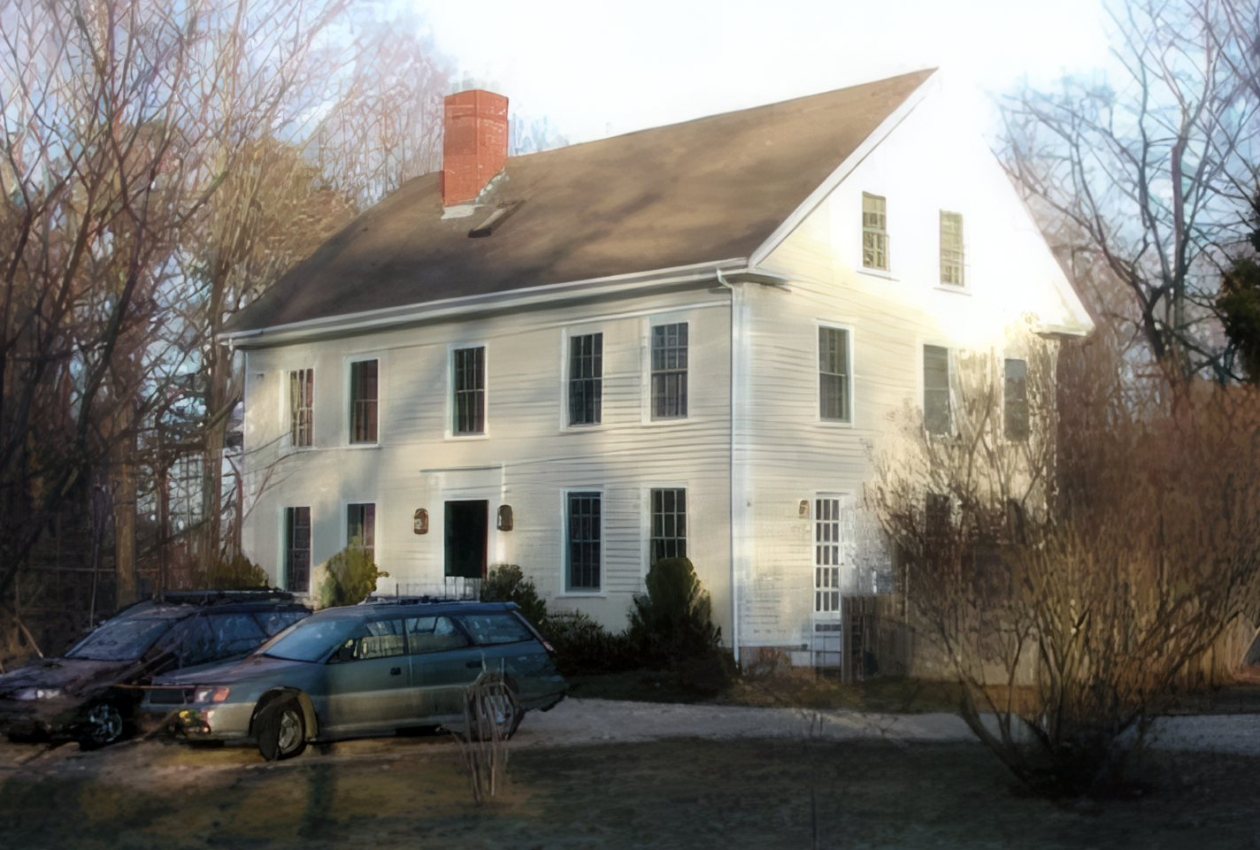
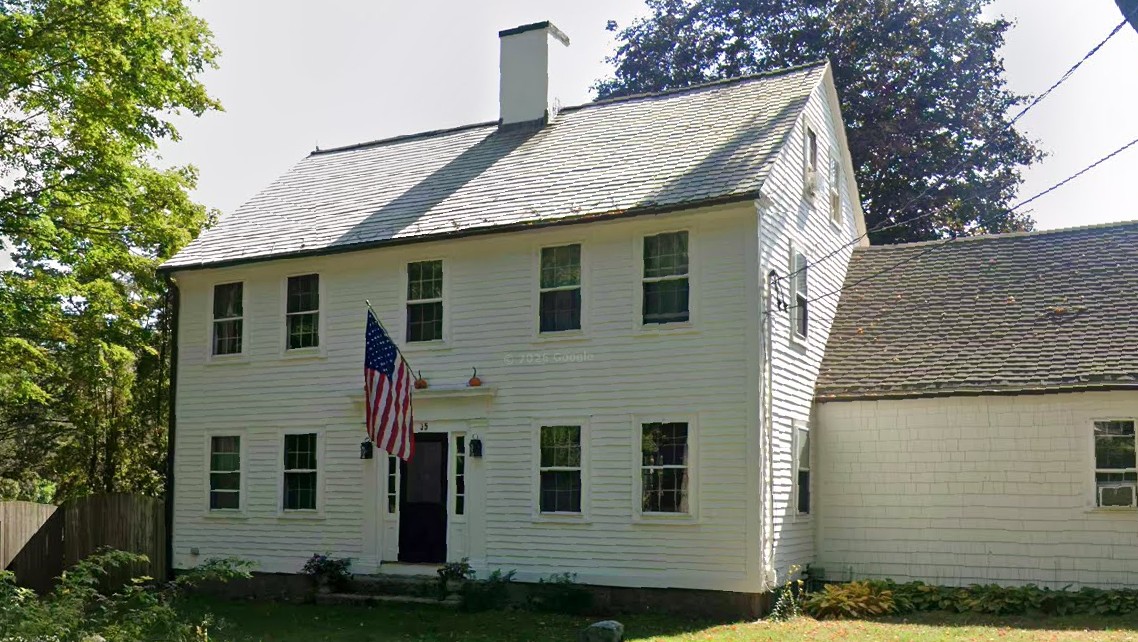
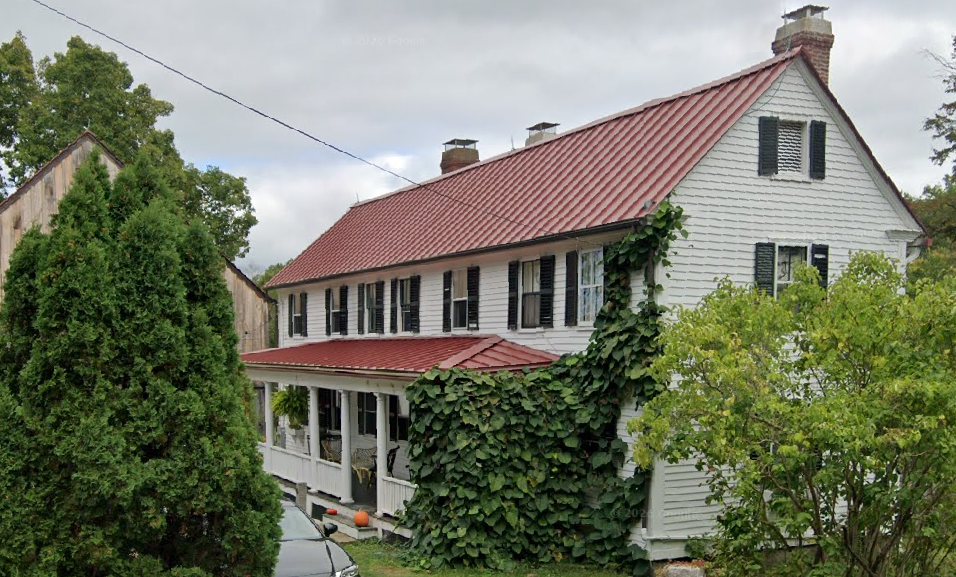

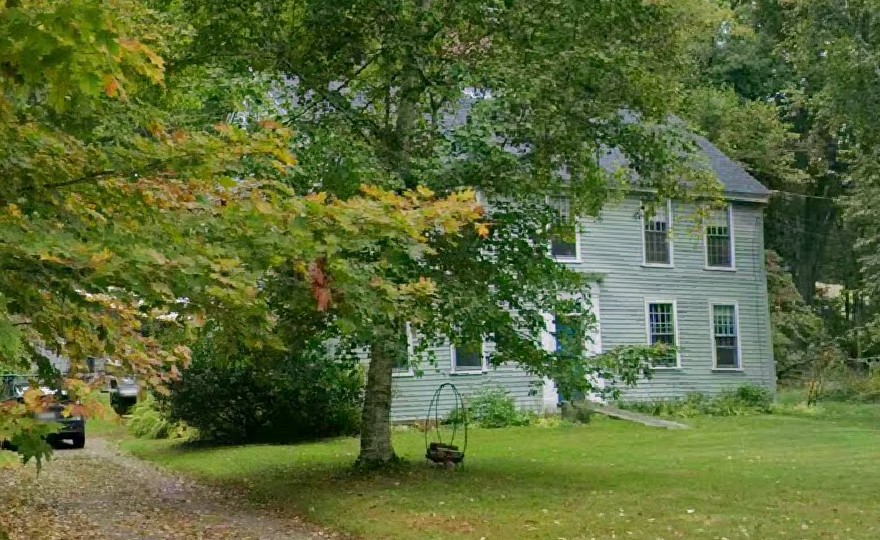
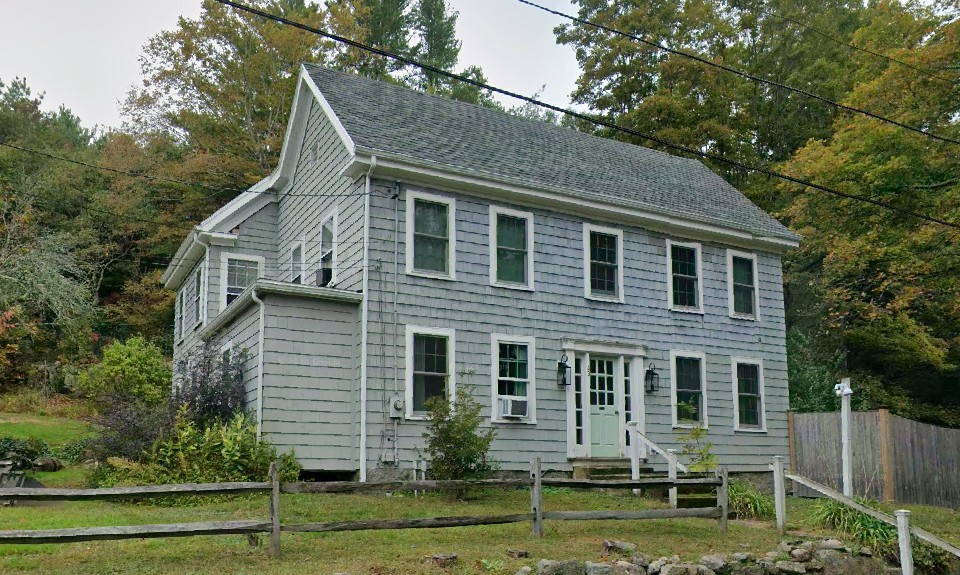
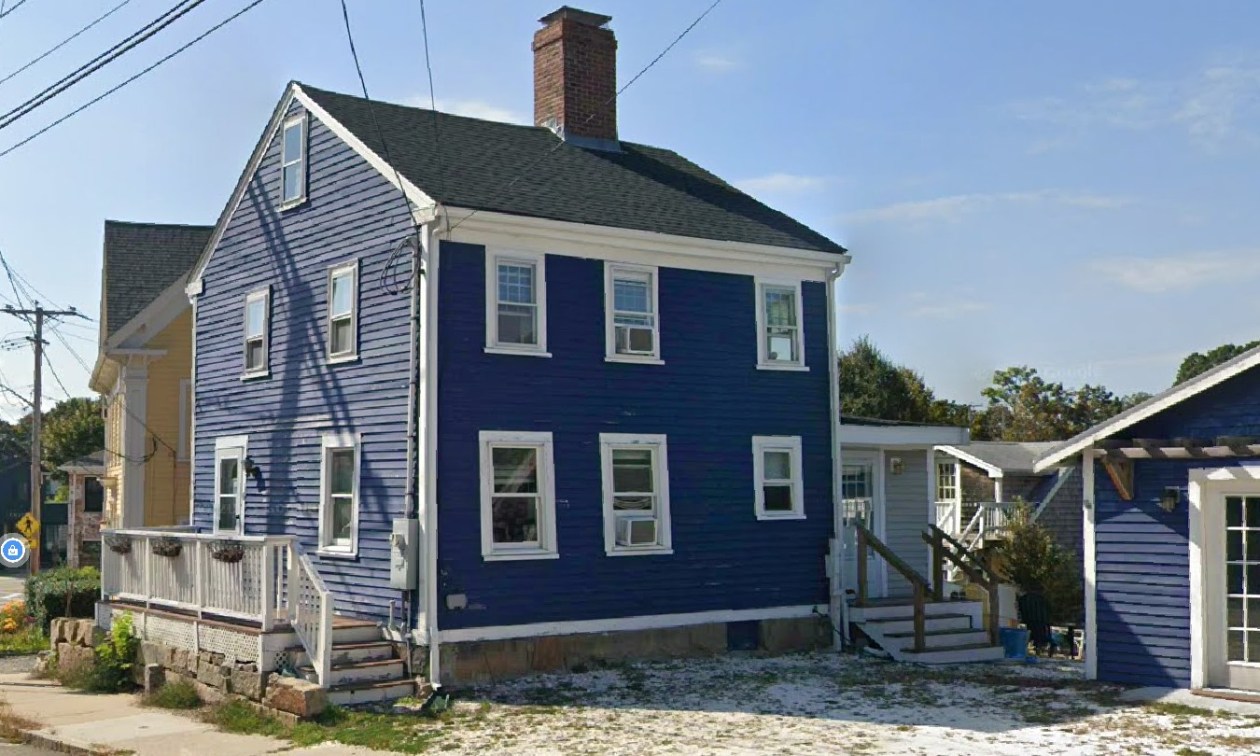
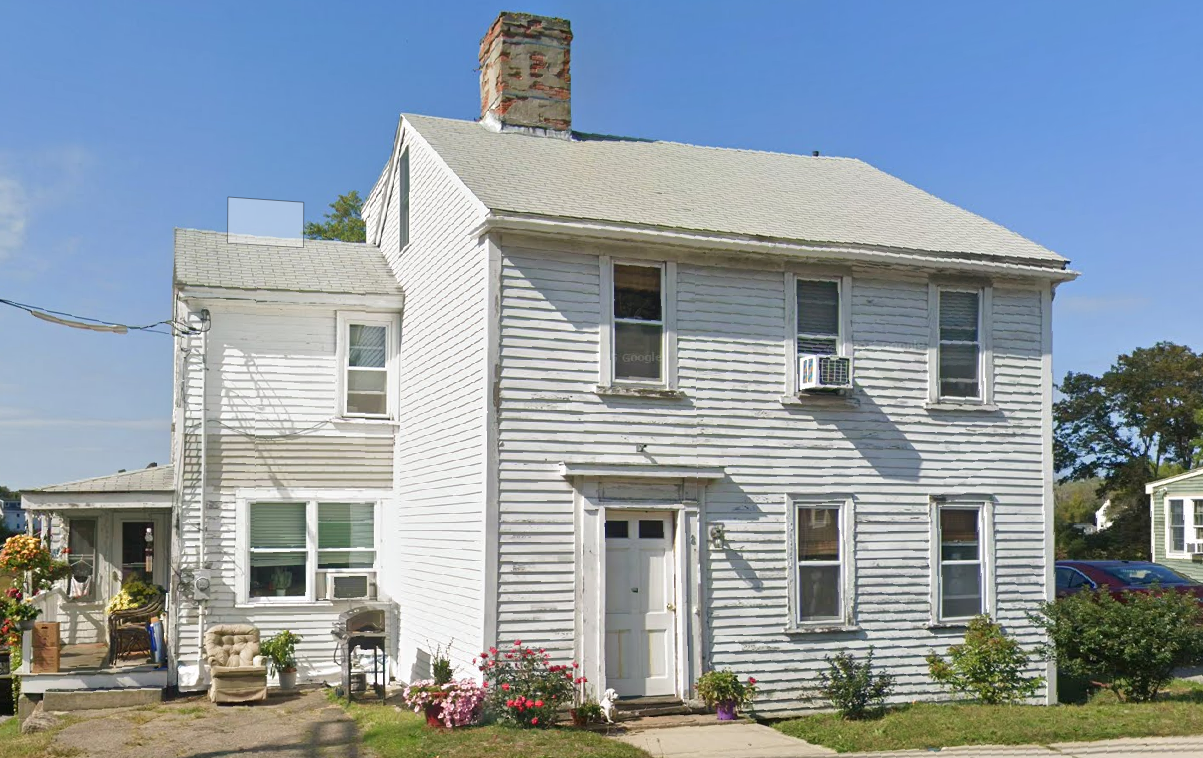
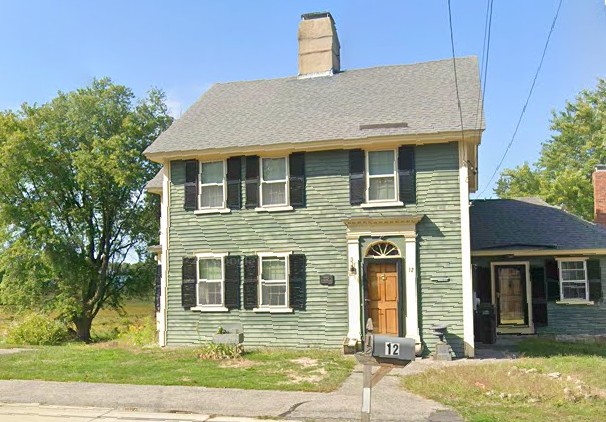
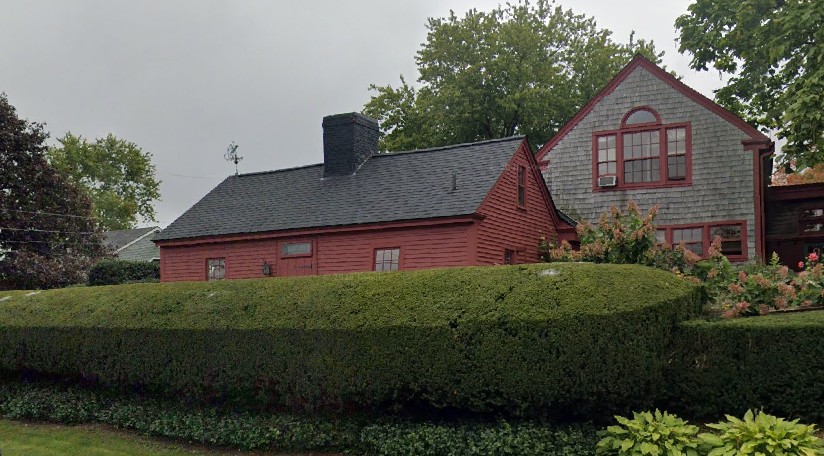
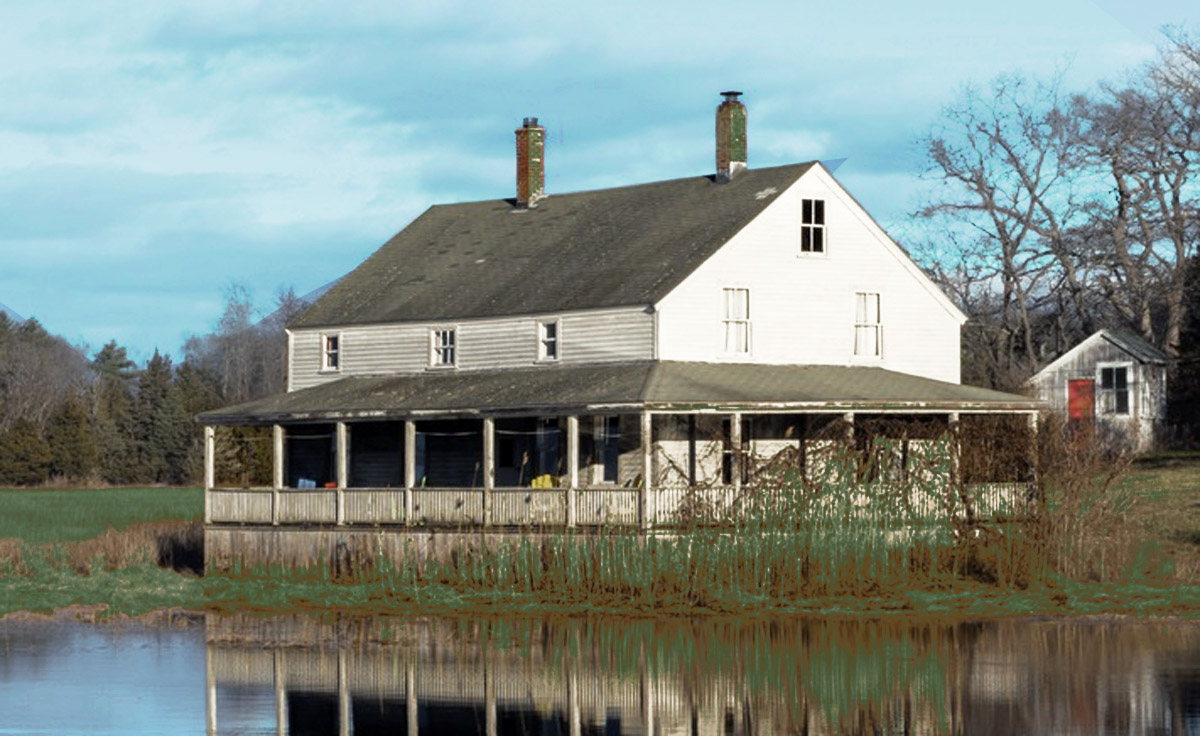
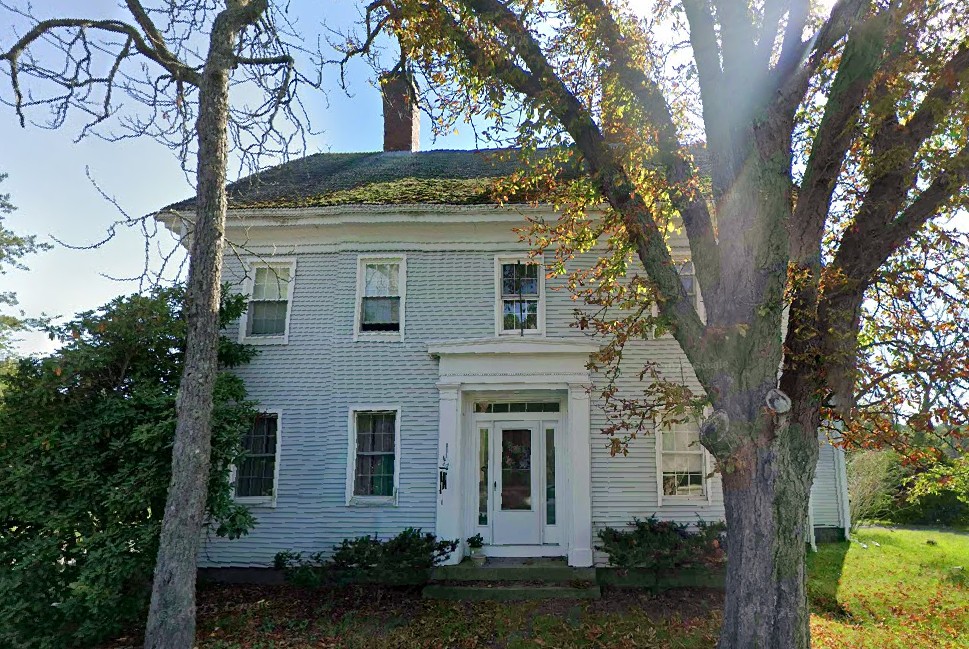
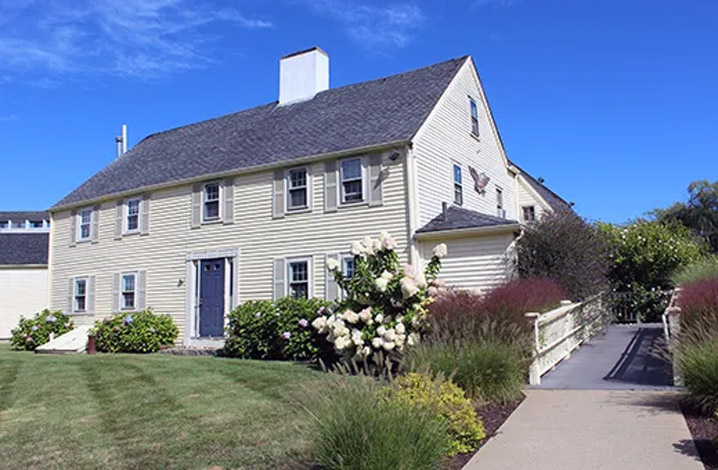
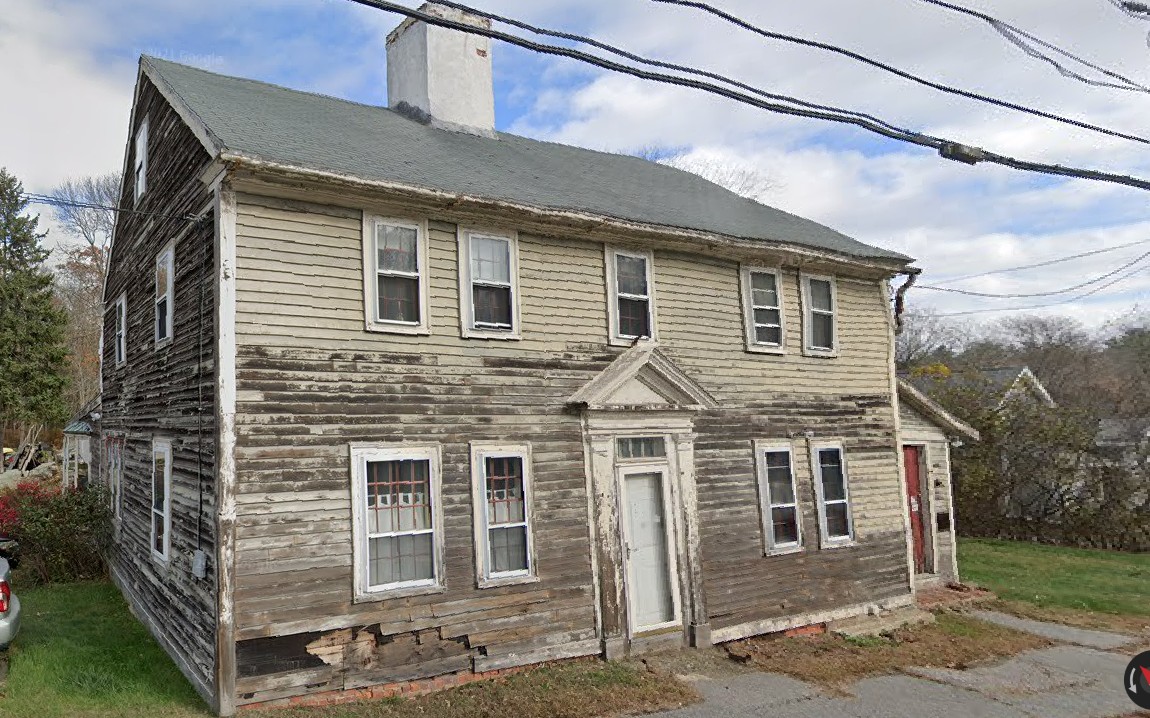
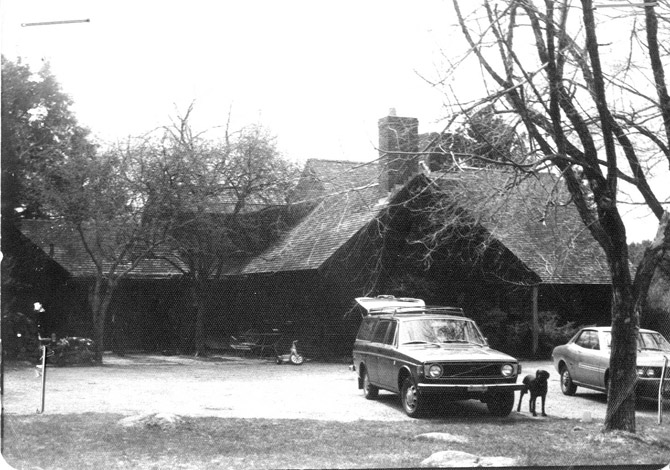
68 Grove St. (1768)
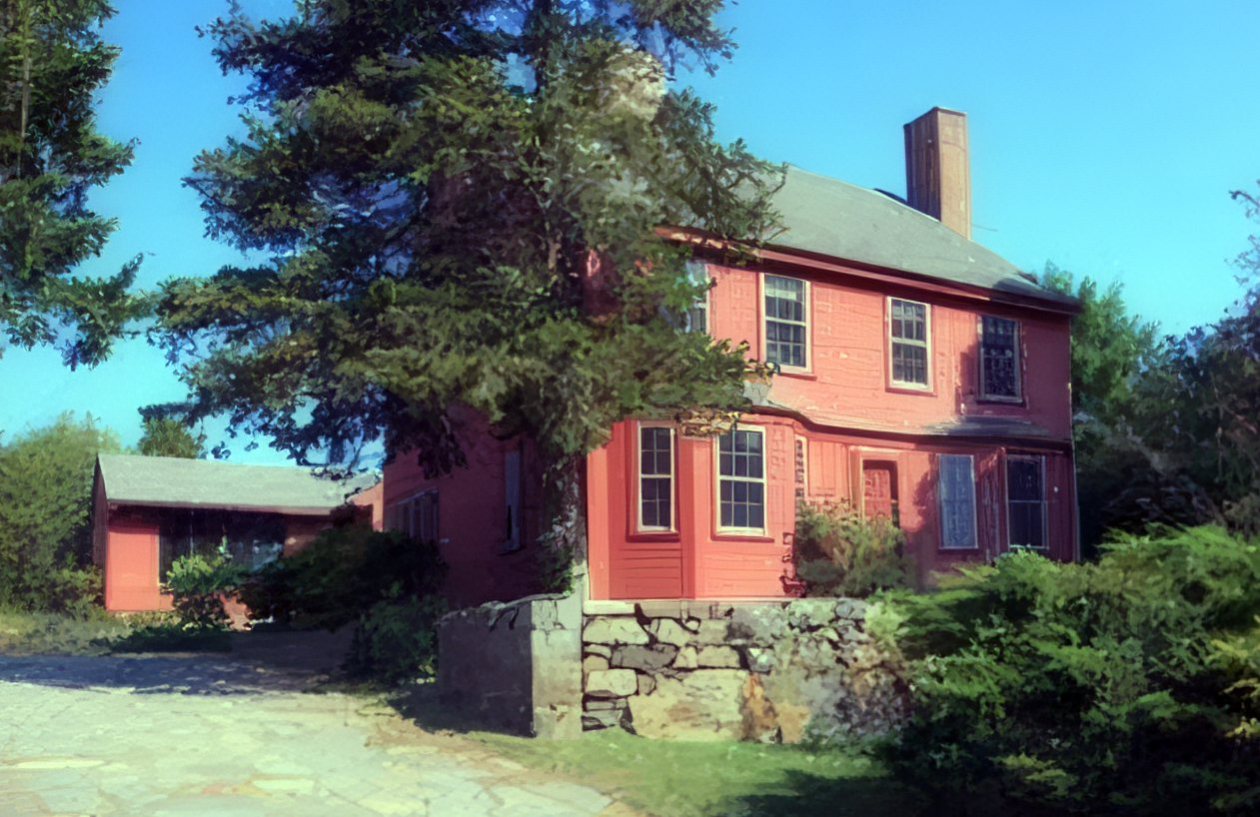
52 Harlow St. (1760)

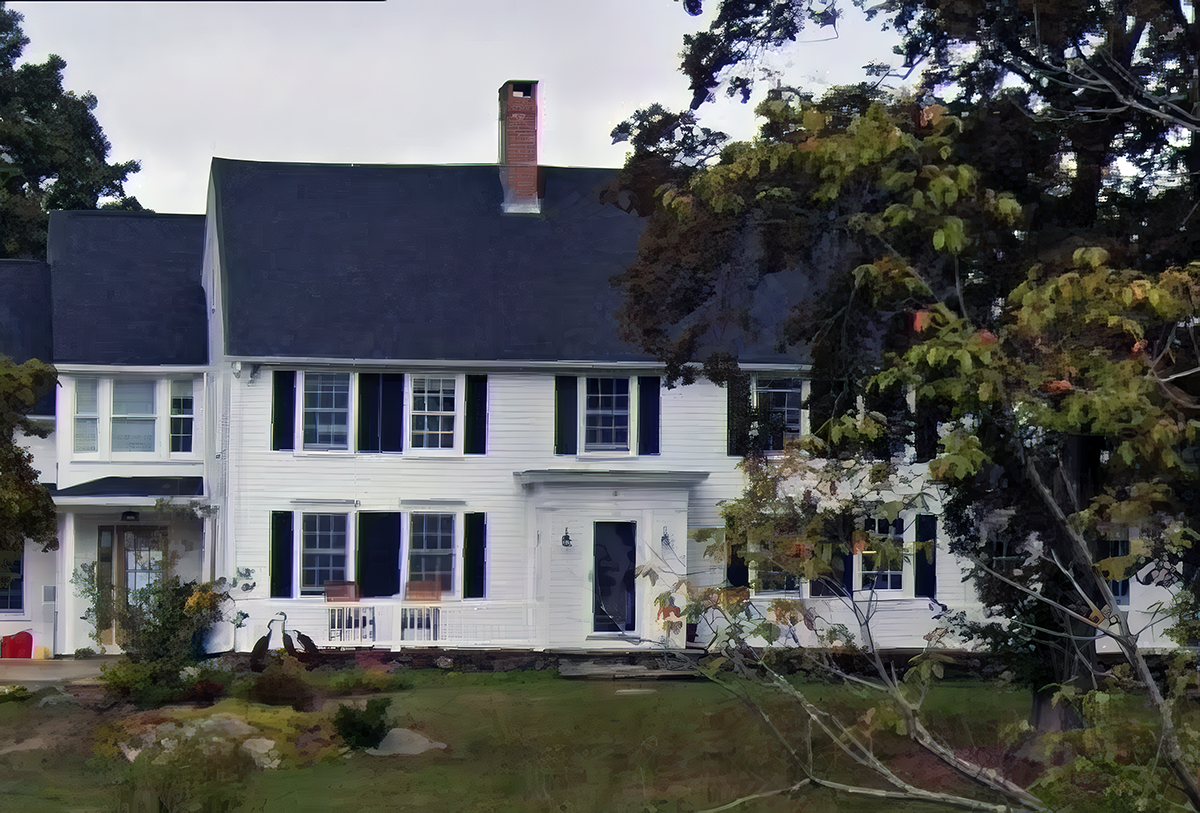
2 Island Road (1735)
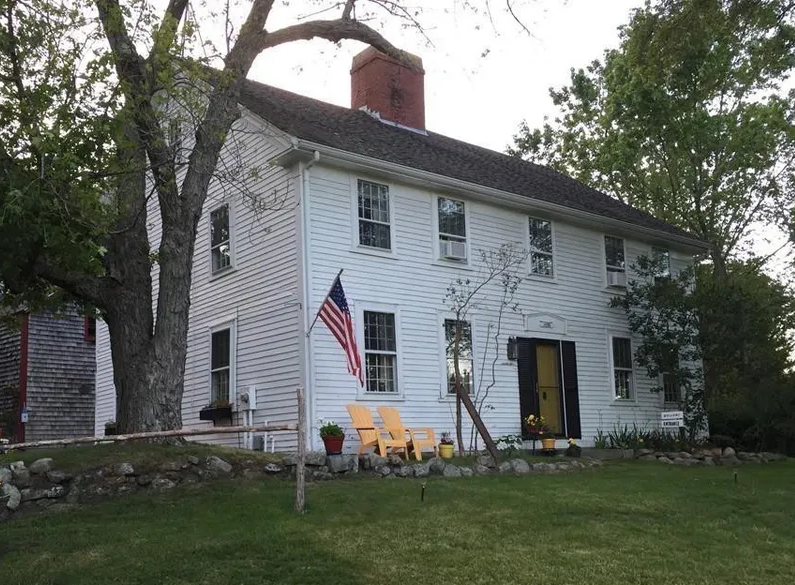
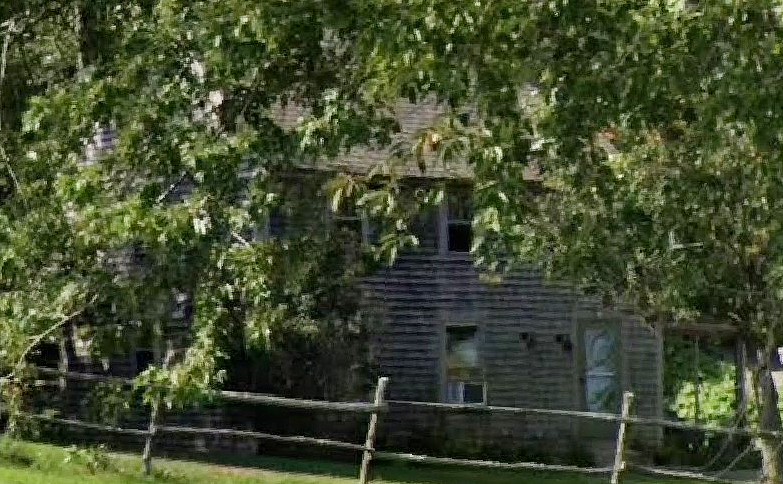
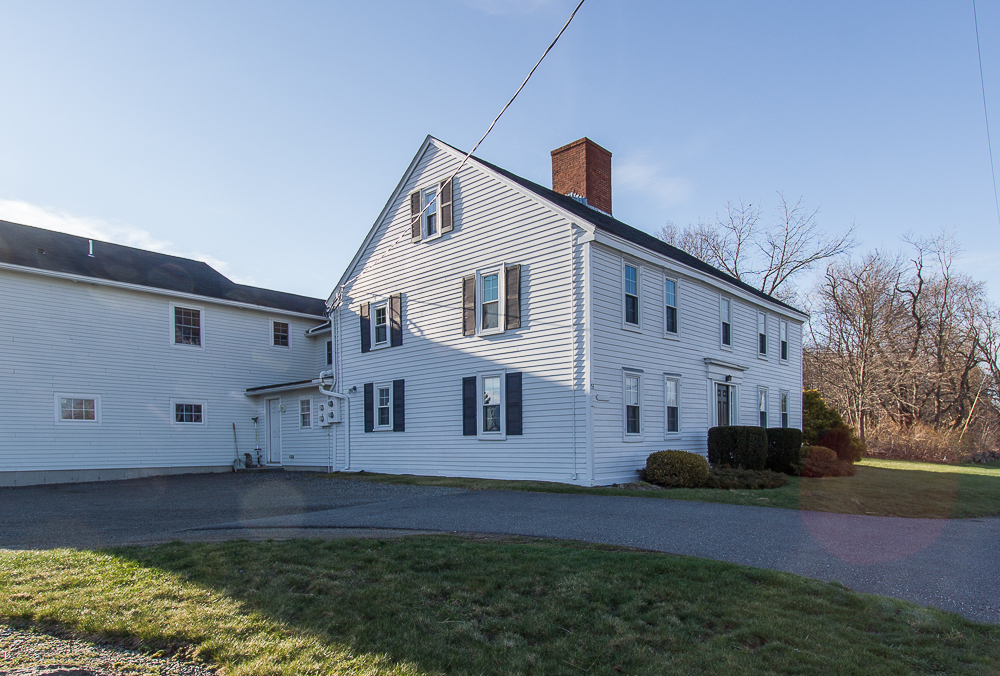

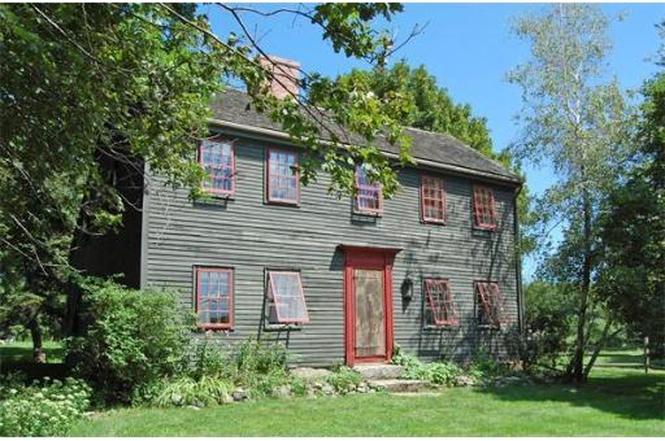
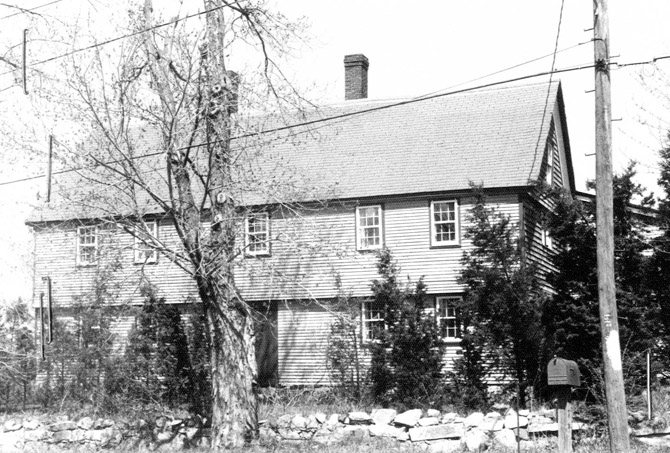
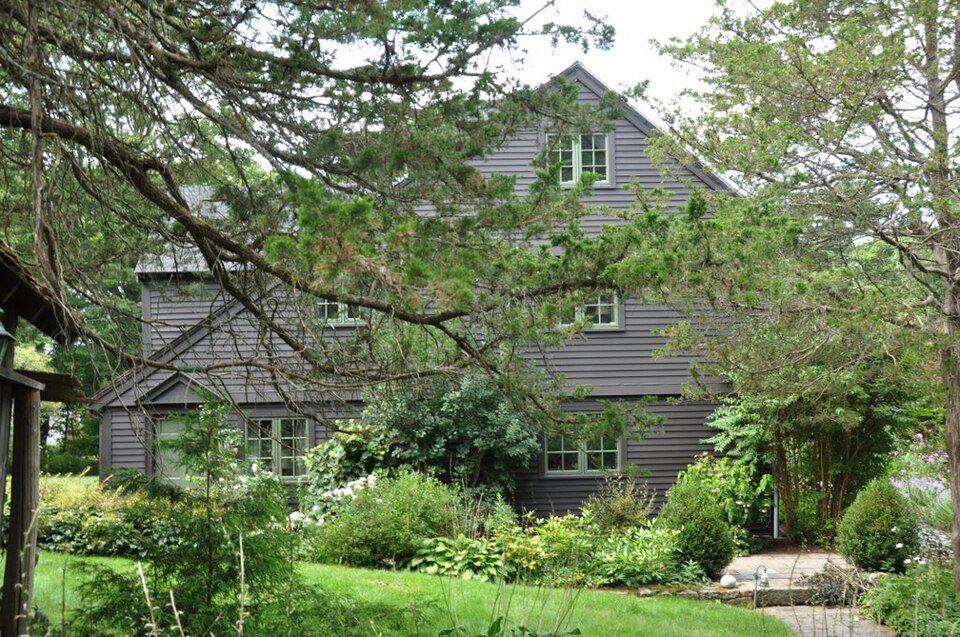

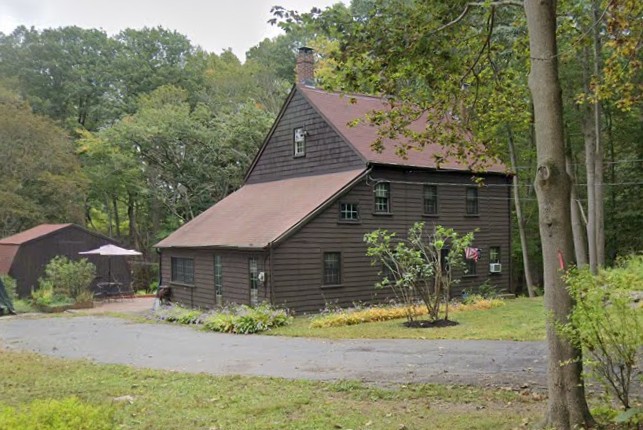
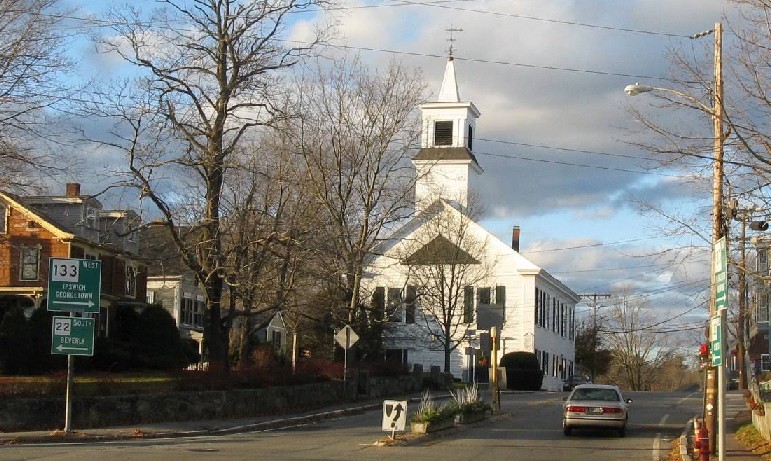
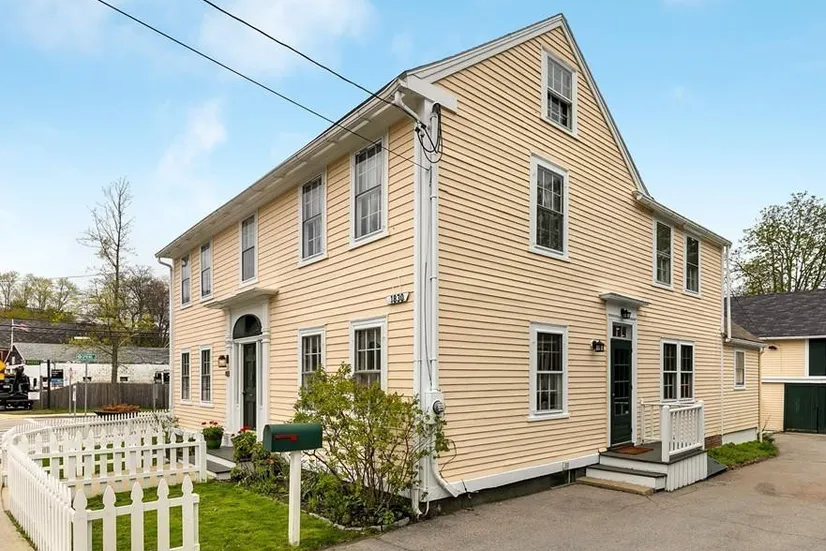
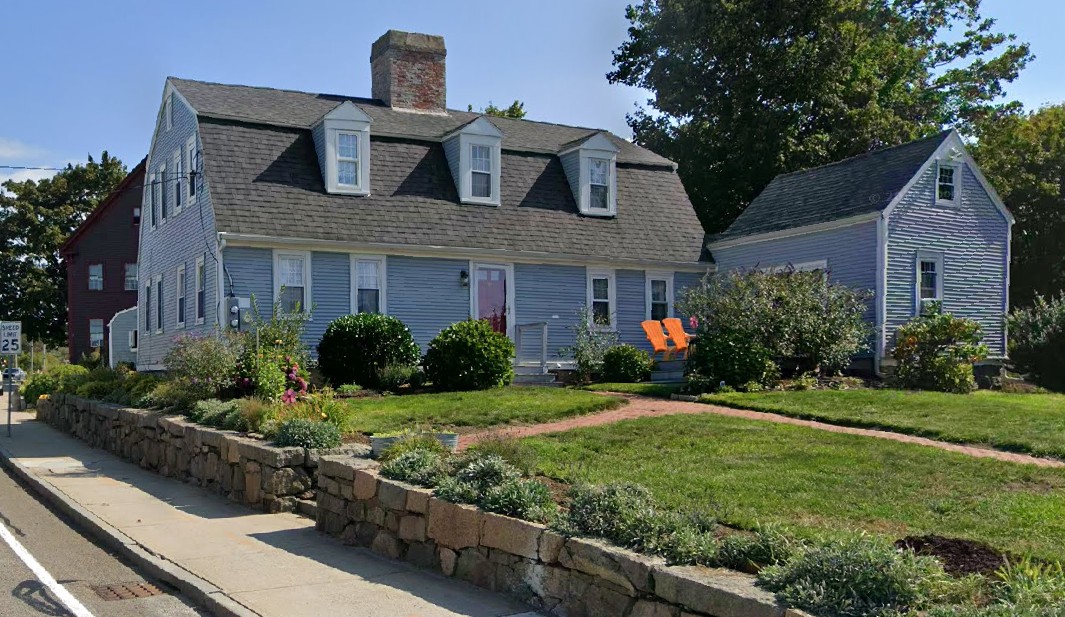
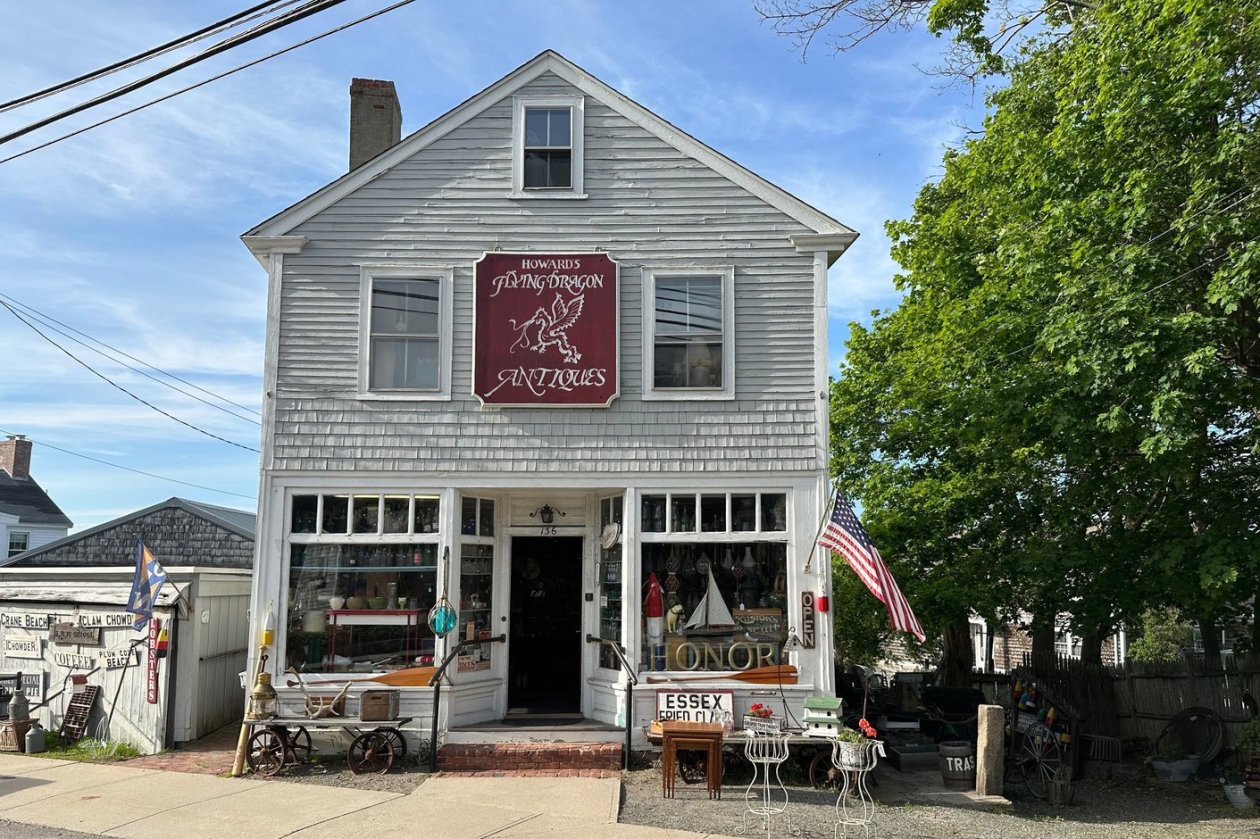
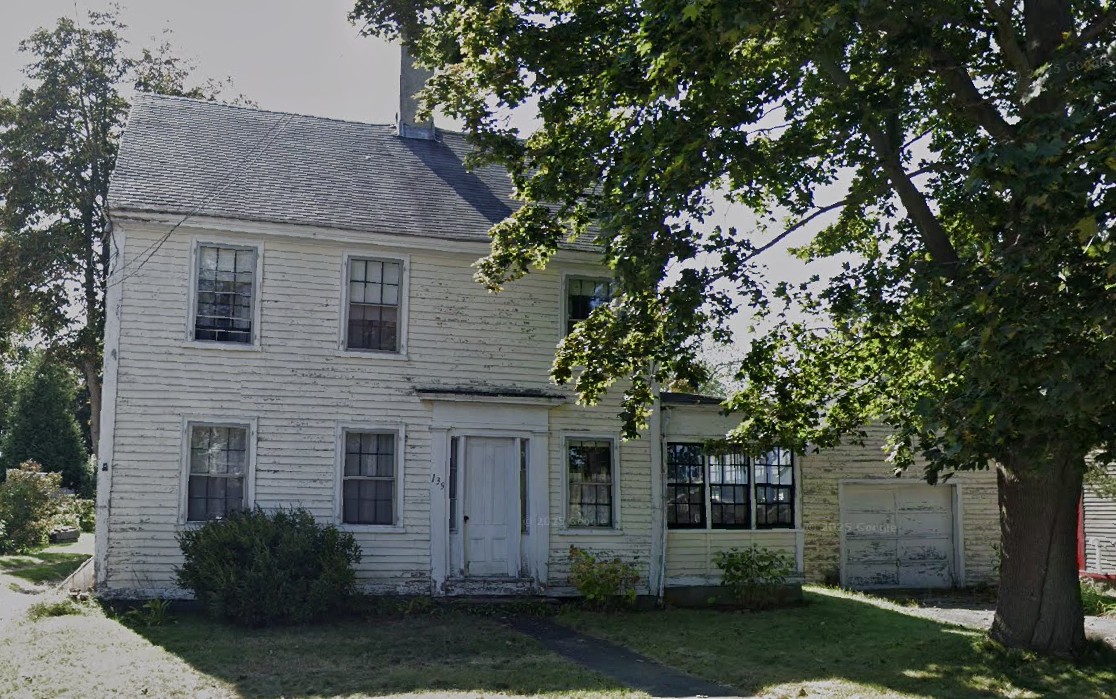
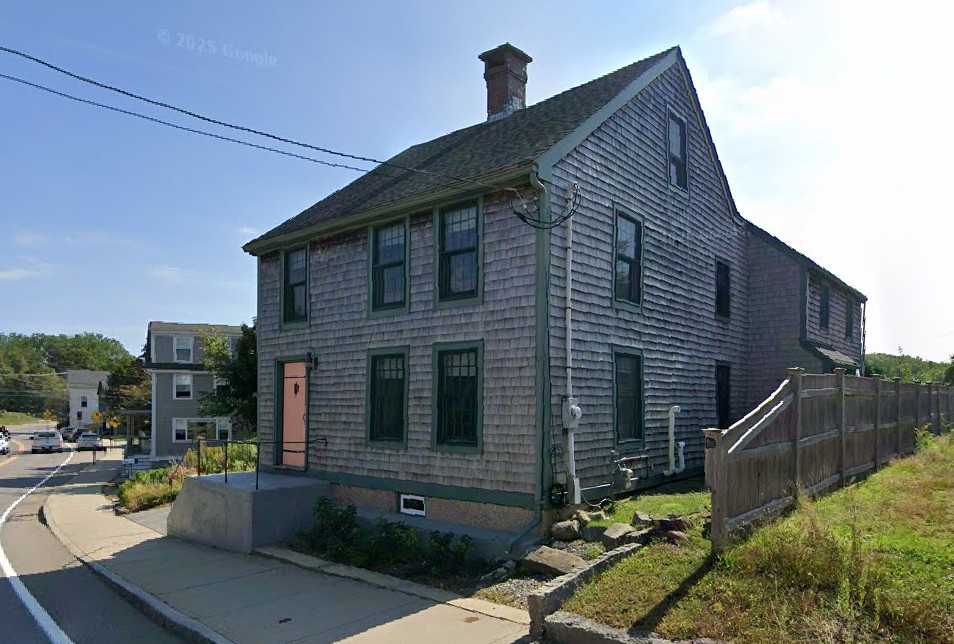
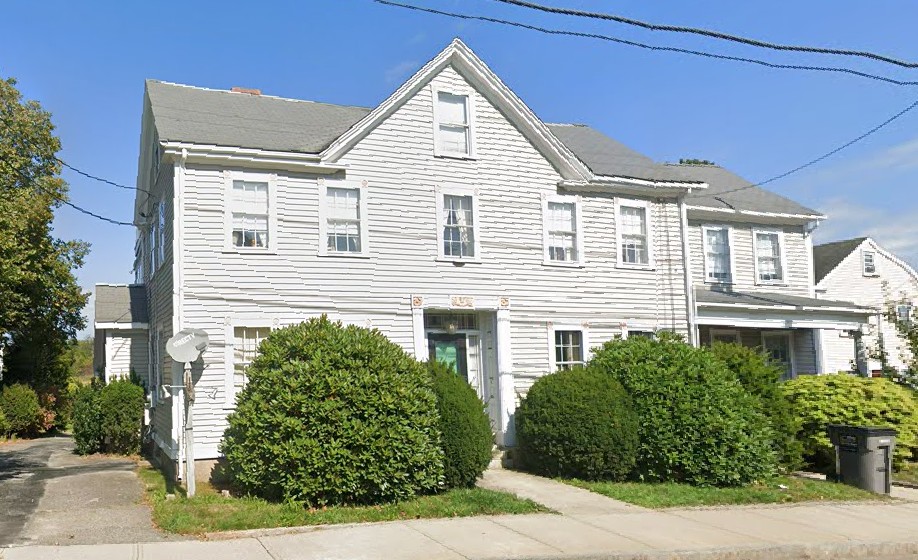
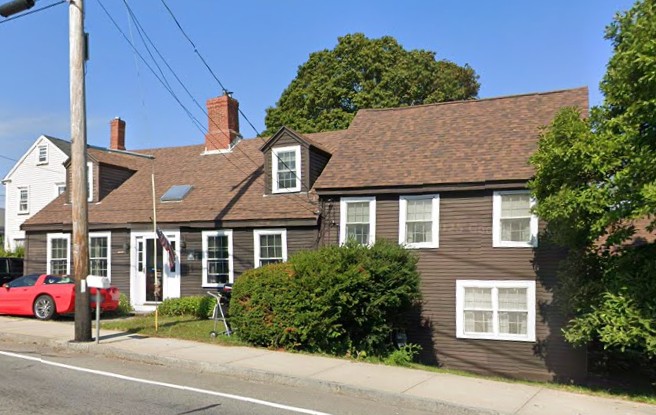
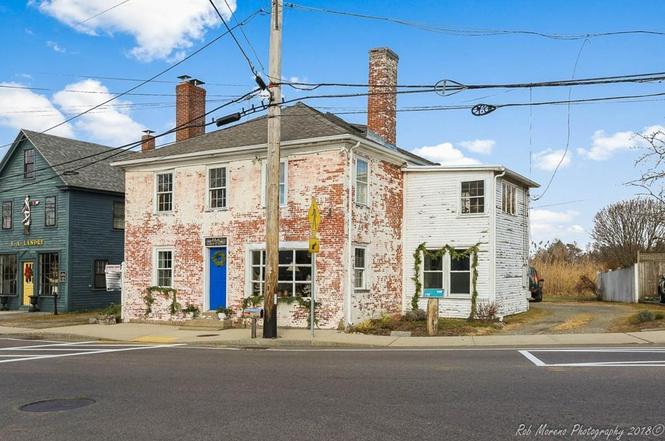
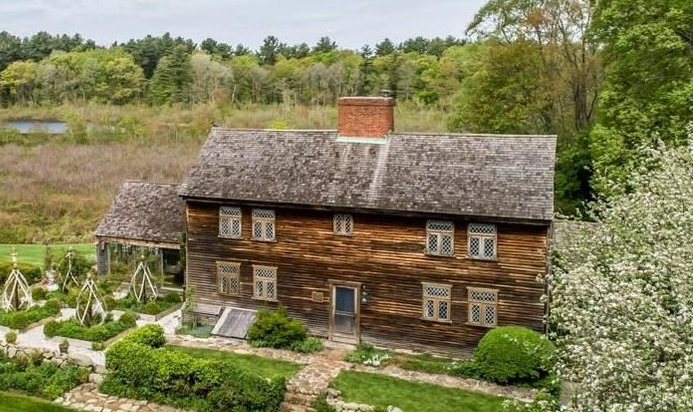
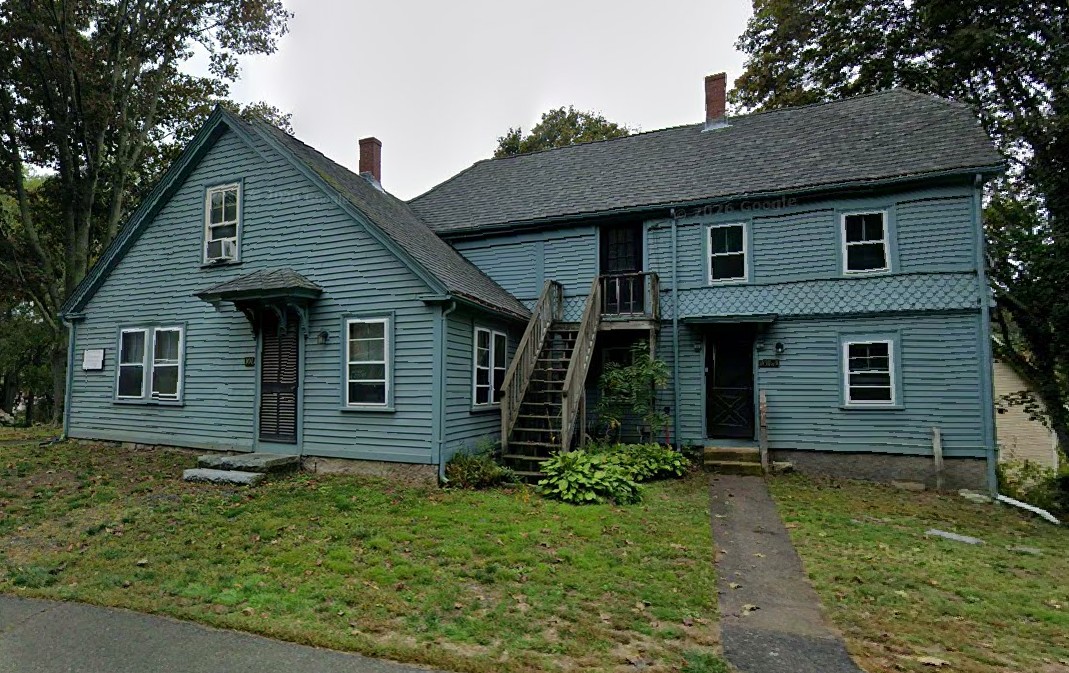
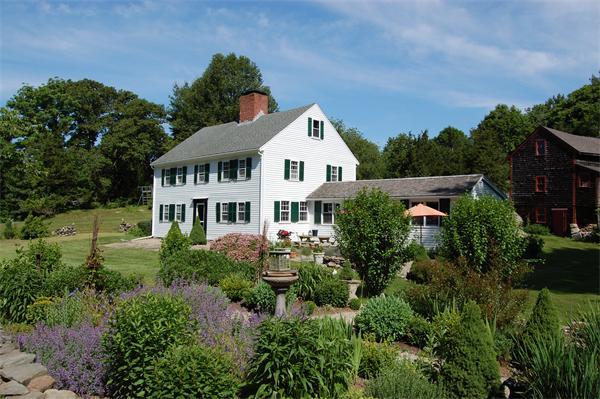
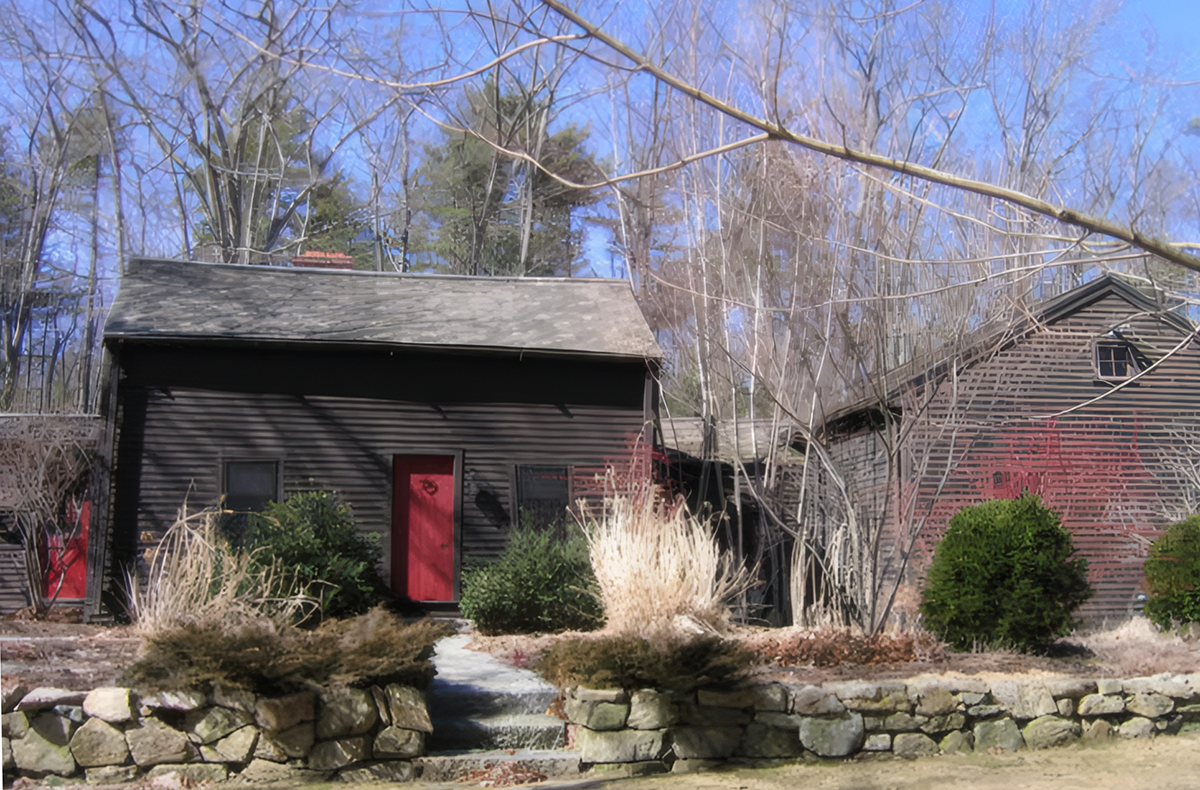
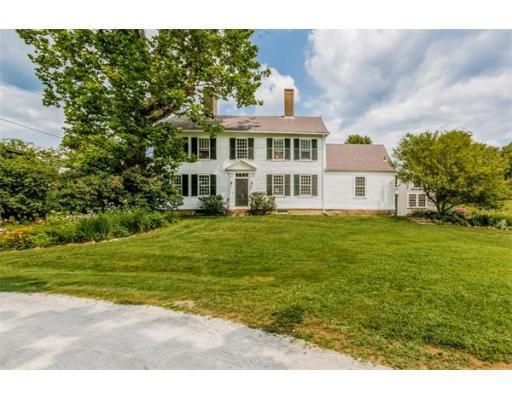
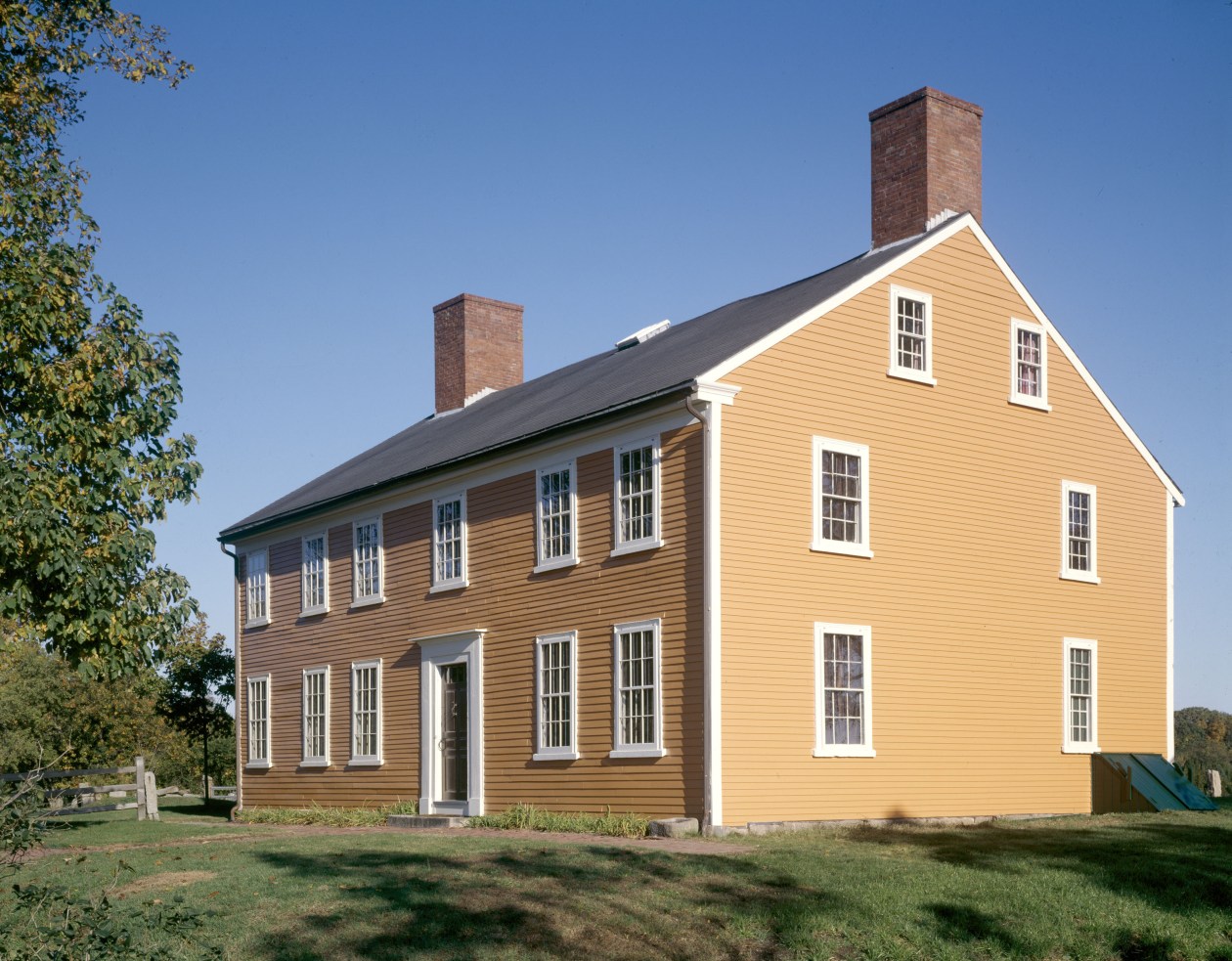
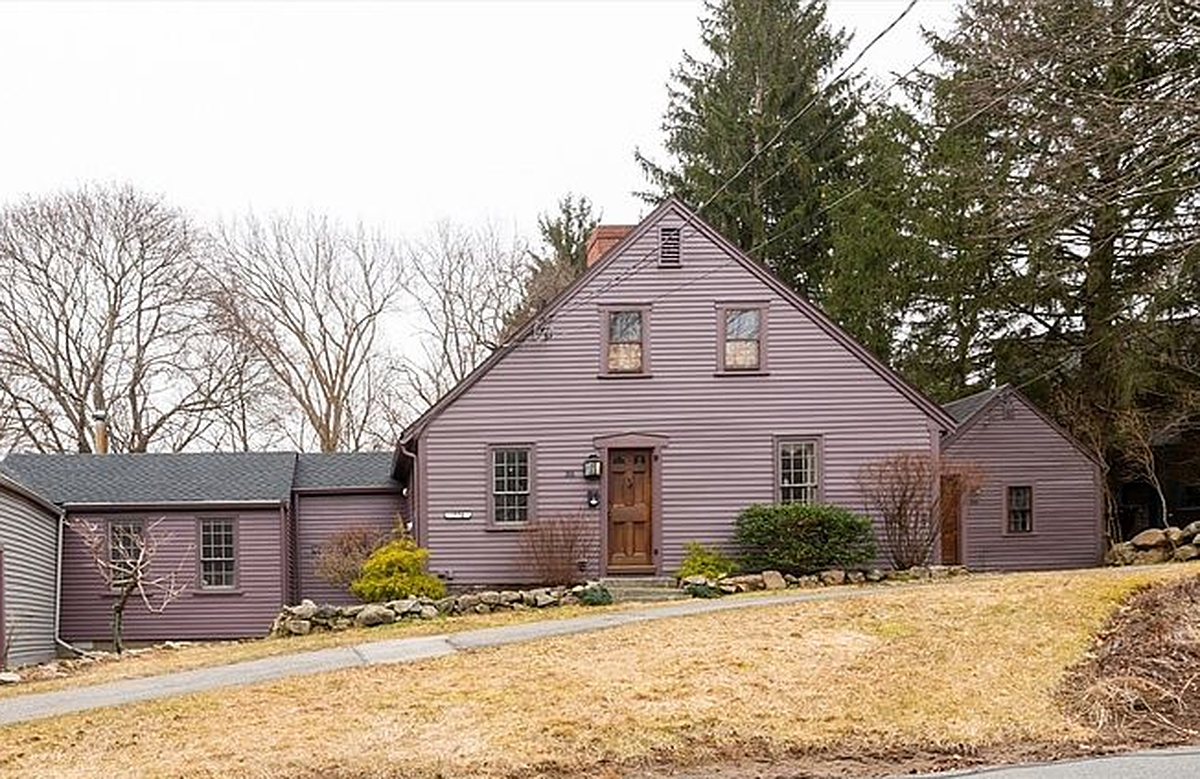
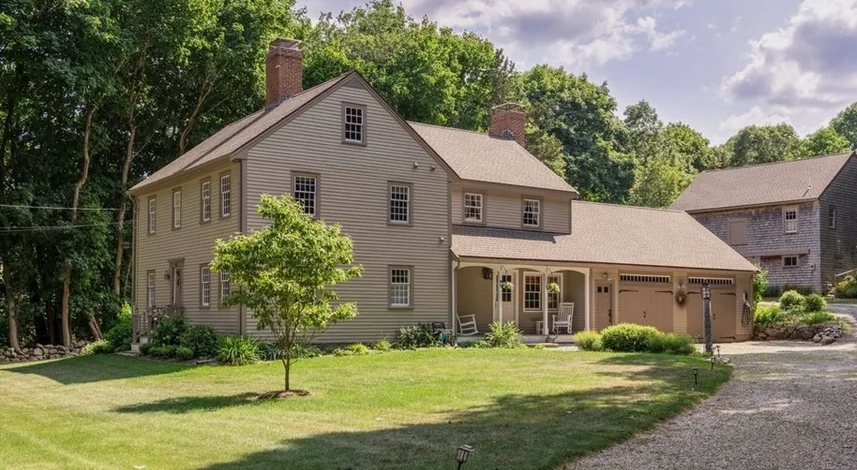
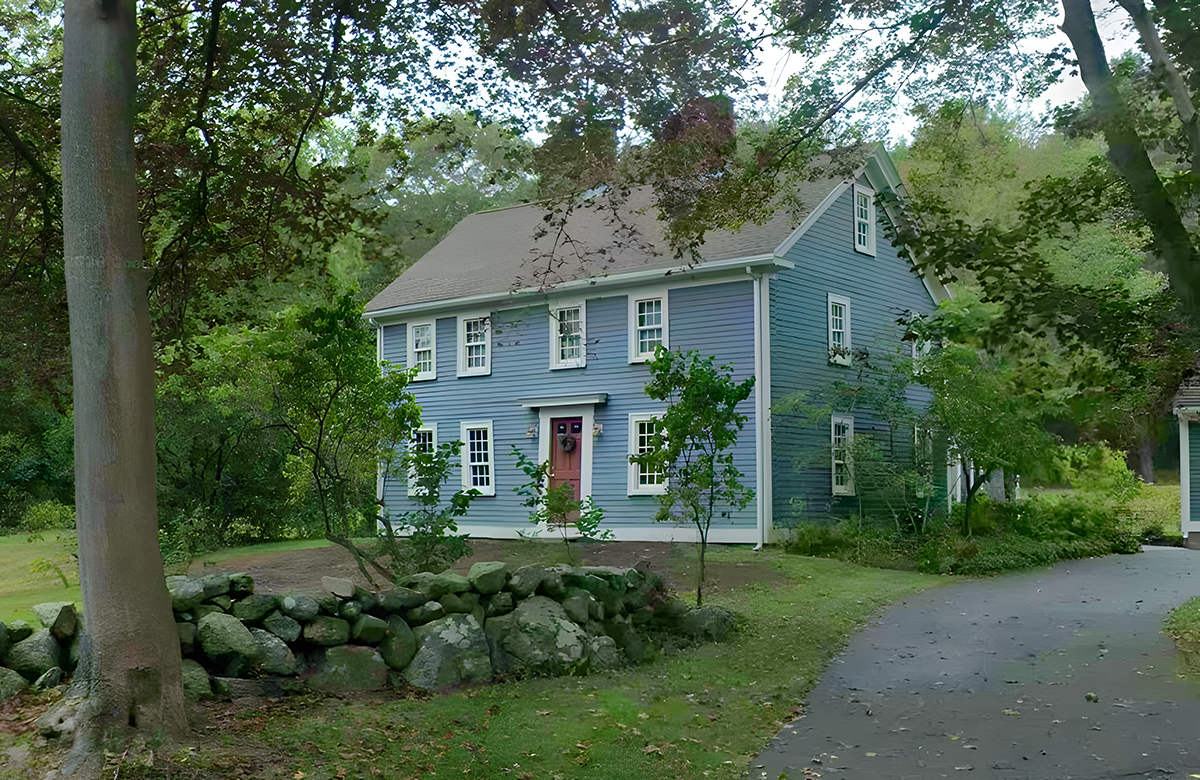
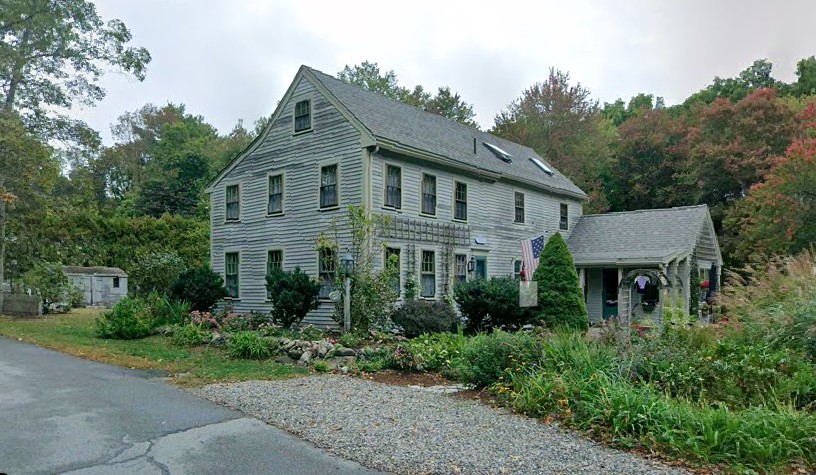
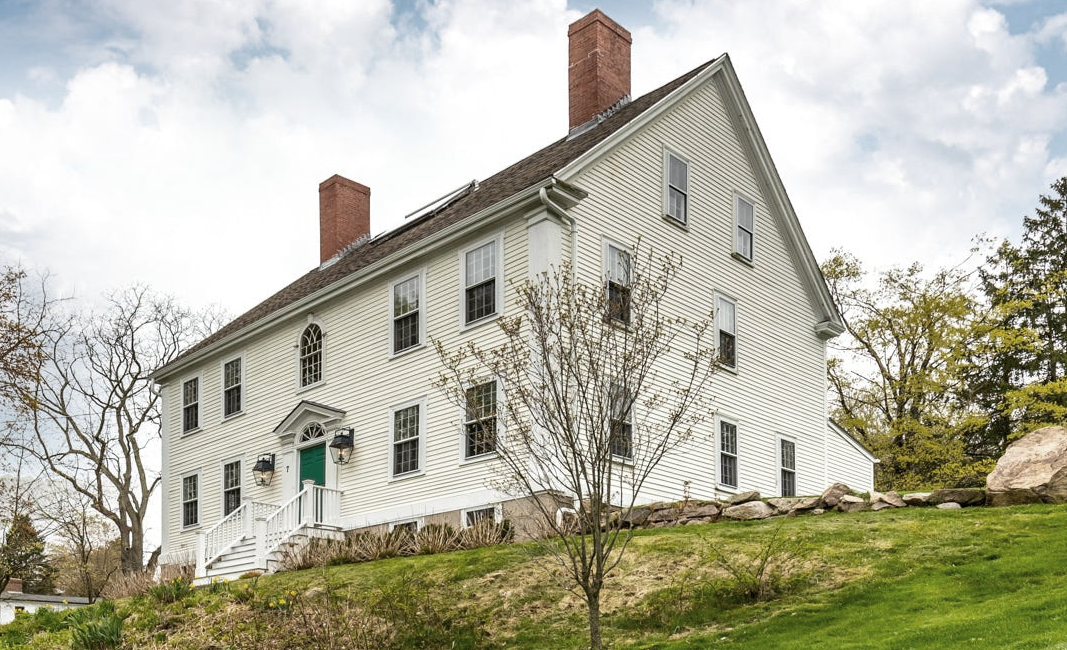

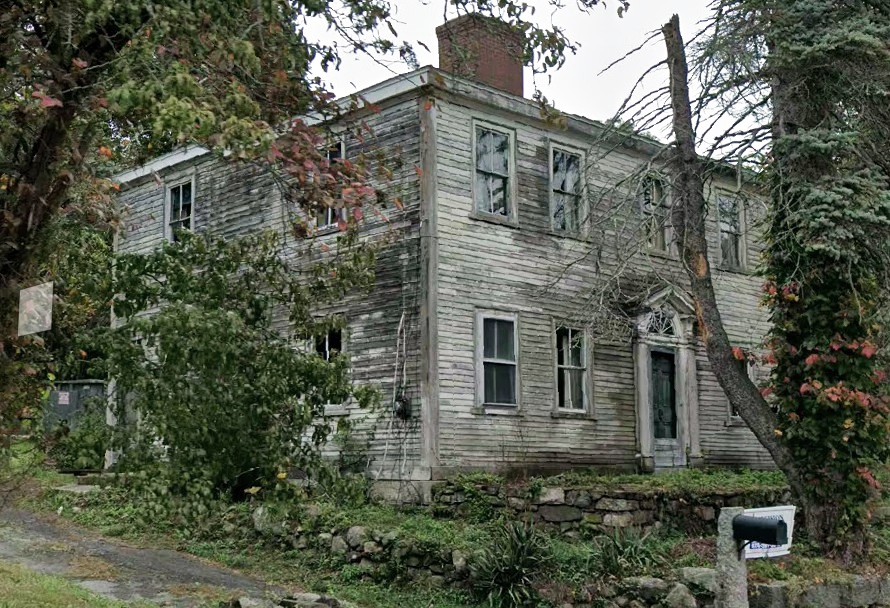
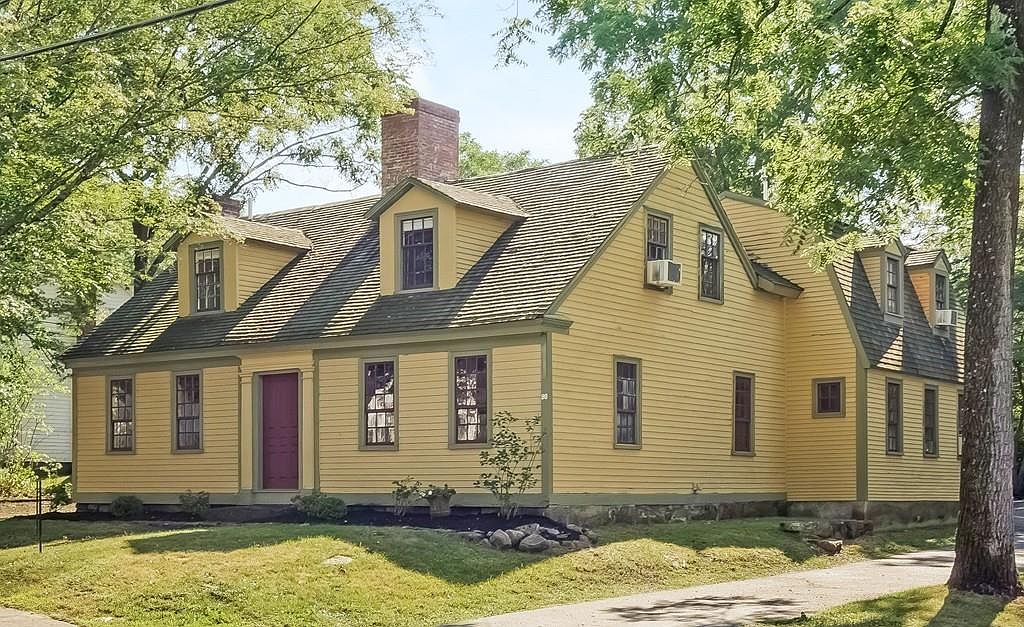
(c. 1800)
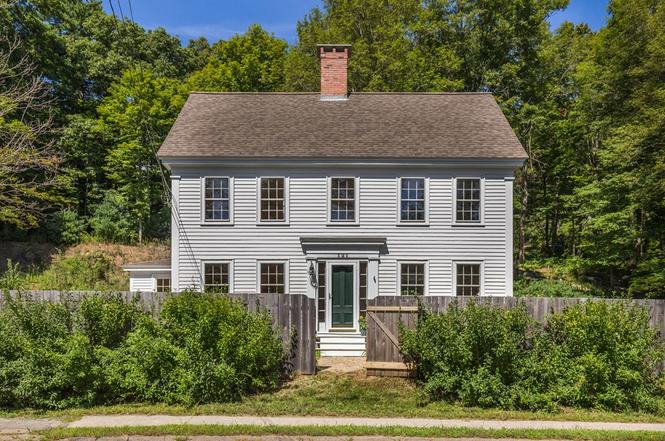
(c. 1800)
First Settlers: The North End
In 1634, the year that Ipswich was incorporated, the town granted land to William White and Goodman Bradstreet toward Chebacco River, now known as Essex River. This land, which these first two settlers occupied, lay in the north part of Essex, probably close to the town line on John Wise Ave. (Rt. 133.) The next year, October, 1635, Mr. John Cogswell had three hundred acres granted to him by the town, ” in the farther part of Chebacco.” This grant was bounded on the west by John Wise Ave. and extended along the north side of Spring Street. Cogswell’s Grant is part of the land granted to John Cogswell.
From today’s Essex Center heading toward Ipswich, the first home you would encounter was Mr. John Cogswell’s. William Goodhue was just north of the Cape Ann Golf Course, and a half mile further was the home of Goodman Bradstreet; a mile further was the home of William White near Choate Street, known as Chebacco Road in Ipswich.
In 1645, John Choate, the first of that family in Ipswich, came from England, obtained land near the head of Castle Neck Creek on Choate Street. His son John built a house nearby, and his son Thomas lived on Choate Island.
In 1656, a road was “laid out to Goodwife Haffield’s bridge, through Mr. Roger’s ox pasture.” The successor to Haffield’s Bridge, on a short section of the old road to Essex, was recently removed to restore tidal flow, as Northgate Rd. is nearby.
The South End
John Burnham, the ancestor of the Burnhams of Essex, lived on the other side of today’s Essex. His large lot extended from Southern Avenue to Rt. 133. In 1643, Thomas Low settled nearby. In 1651, the town granted to the Grammar School all the “neck beyond Chebacco River and the rest of the ground up to Gloucester line”. The Trustees of the school leased the land “forever” to John Cogswell Jr. of Chebacco, for £14 a year. The Burnham family was prominent between Essex Center and the Gloucester town line.
The Falls Area
Beginning in 1636, Richard Kent and John Perkins Jr. operated fish weirs on the Essex River, selling alewives at 5s. for 1,000 fish. Andrew Story lived at the Falls, where the river becomes Alewife Creek. The first sawmill in Ipswich was erected on Chebacco River in 1656, followed by Jonathan Wade, who was allowed to have a sawmill at the same place, and in 1667, Lieutenant Thomas Burnham was permitted to erect one near the falls, “but not to injure Mr. Wade’s.” Another sawmill was erected by William Story four years later, and yet another one in 1682 by Jonathan Wade. In 1761, the town granted land for a schoolhouse at the Falls, where school had been taught two months a year since 1741 in a private house. Members of the Perkins, Choate, and Story families settled here, as well as others.
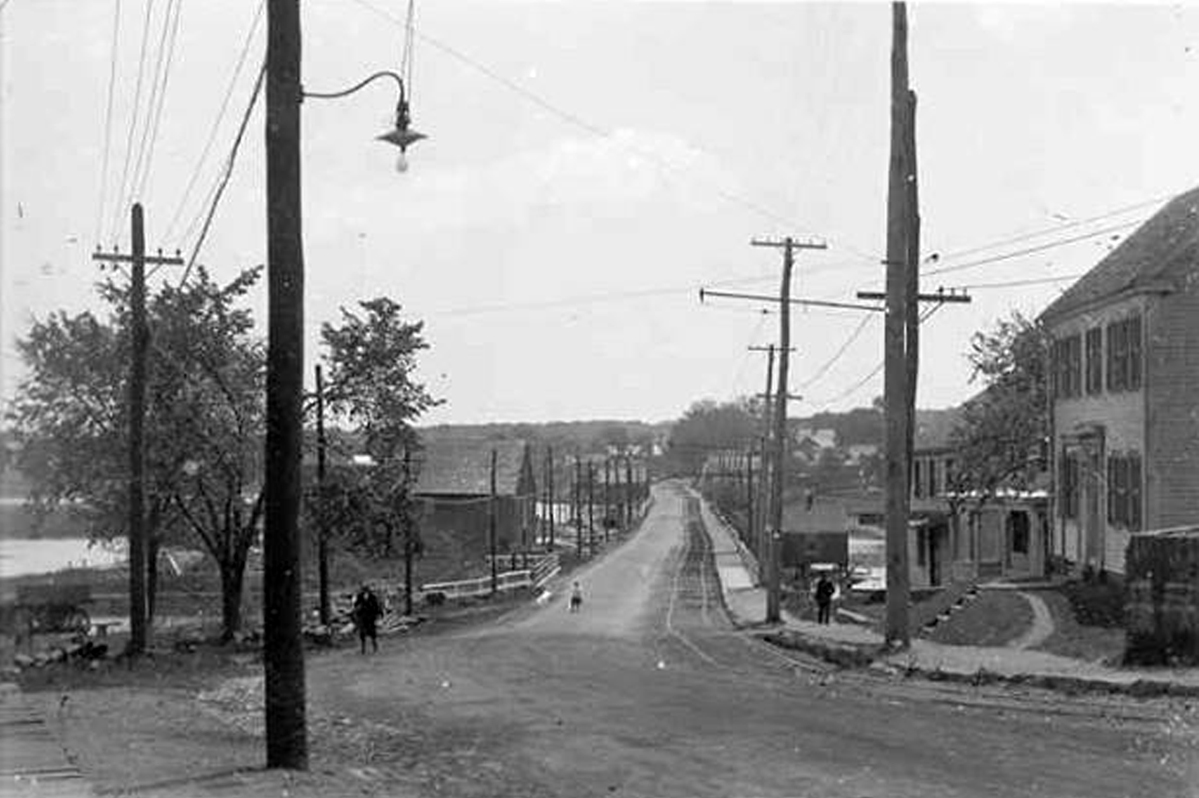
The Shipyard Area and Essex Center
In 1668, twelve years after the first sawmill was erected, the Town of Ipswich granted “One acre of ground, near Mr. Cogswell’s farm, to the inhabitants of Ipswich, for a yard to build vessels, for the use of the inhabitants.” This was near today’s Essex Shipbuilding Museum, and by 1800, Chebacco Parish had a thriving shipyard. Essex became North America’s leading producer of schooners, and by the 1850s, 15 Essex shipyards launched more than 50 vessels a year, most of which were built for the Gloucester fleet. It is estimated that over 3500 wooden ships were constructed in Essex over three centuries.
The farms and homes were separated so far that as late as 1723, some children in Chebacco were being educated at home by their parents. In 1695, Nathaniel Rust, Jr., was chosen as a teacher who taught through the Summer. The town gave one quarter of an acre to Mr. Rust to set up his house at 22 John Wise Avenue, not far from the shipyard. In 1757, a new schoolhouse was built “upon the site of the old one.” In 1795, the present Congregational Church was constructed in the town center across from Essex Shipbuilding Museum.
The Meeting Houses
In 1676, the residents of Chebacco petitioned the town of Ipswich for liberty to call a minister to preach among themselves, “that we might be eased of our long and tiresome Sabbath days’ journeys to the place of public worship in our town.” The Church in Ipswich refused to grant the request, and in 1677 the Court ordered that Chebacco should desist from all further proceedings in this matter. But already, “the sills of the meeting house were laid in Mr. William Cogswell’s land, and the timber in place ready to raise,” across the street from today’s Cape Ann Golf Course on John Wise Ave. Thomas Varney and his wife Abigail Proctor lived close by.
Ipswich authorities obtained an order from the general court that “No man shall build a meeting house at Chebacco.” Abigail Varney saw a loophole in the order, and on Tuesday, March 21, 1679, she, Sarah Martin, and Hannah Goodhue gathered the town’s women, and a few men from Wenham, Gloucester, and Manchester, and they commenced construction while the men of Chebacco looked on. The women were arrested and ordered to appear at the Salem Court, which, after admonishing them, allowed that they “have liberty to proceed to the finishing of the said meeting house for their comfort and settlement.” The building was completed, measuring 42 × 36 feet. The second meetinghouse was built near the same site.
The people of Chebacco wisely chose the inestimable Rev. John Wise as their first pastor, offering him ten acres of good land and agreeing to build a parsonage. His salary was established at £20 cash, £40 in grain, forty cords of oak wood, and eight tons of salt hay. The meetinghouse was dedicated in April 1680. An acre of land was set aside for the Old Burying Place near today’s Essex center.
Members of the congregation were moved by the preaching of Rev. Mr. Whitefield, who, in 1740, visited and preached in Ipswich. In 1746, the church split in half over religious differences, with 26 church members charging the pastor, Rev. Pickering, with not preaching plainly the doctrines of the Bible, a lack of interest in his ministerial work, and worldliness of spirit. On the 13th of January, 1746, sixteen members of the church assembled at the house of Daniel Giddings, and resolved to set up a new religious society, unless Pickering resigned his pastorate. He refused.
A week later, the “Fourth Church in Ipswich” was established, with thirty-eight men from the other church becoming its first members. A covenant was signed by nine men and thirty-two women on May 22. Their Meeting House of worship was erected the same year on the site of the present-day Essex Congregational Church, which became known as Meeting House Hill.
The two churches rejoined after 28 years of separation, assuming the original name, the Second Church of Ipswich, with the Rev. Mr. Cleaveland as pastor. They worshiped half the year in each meeting house until 1792, when the present Congregational Church in Essex was constructed. The old Meeting House, a mile north on the road to Ipswich, disappeared, completing the movement of religion, government, and population to the present-day center of Essex.
The Old Graveyard
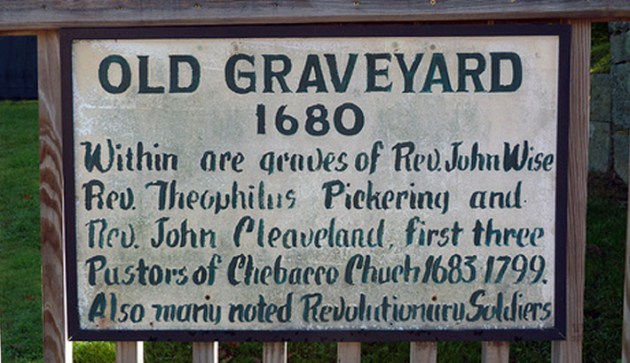
The Old Burying Ground in Essex was established in 1680 for inhabitants of Chebacco Parish. The burying ground was expanded in 1838. Rufus Choate estimated that during the 171 years of service as the only burial place in Essex, as many as 2,000 people had been buried there. Kurt Wilhelm’s site provides an index and photographs of the gravestones. The Spring Street Cemetery was created in 1852 and is the town’s modern cemetery.
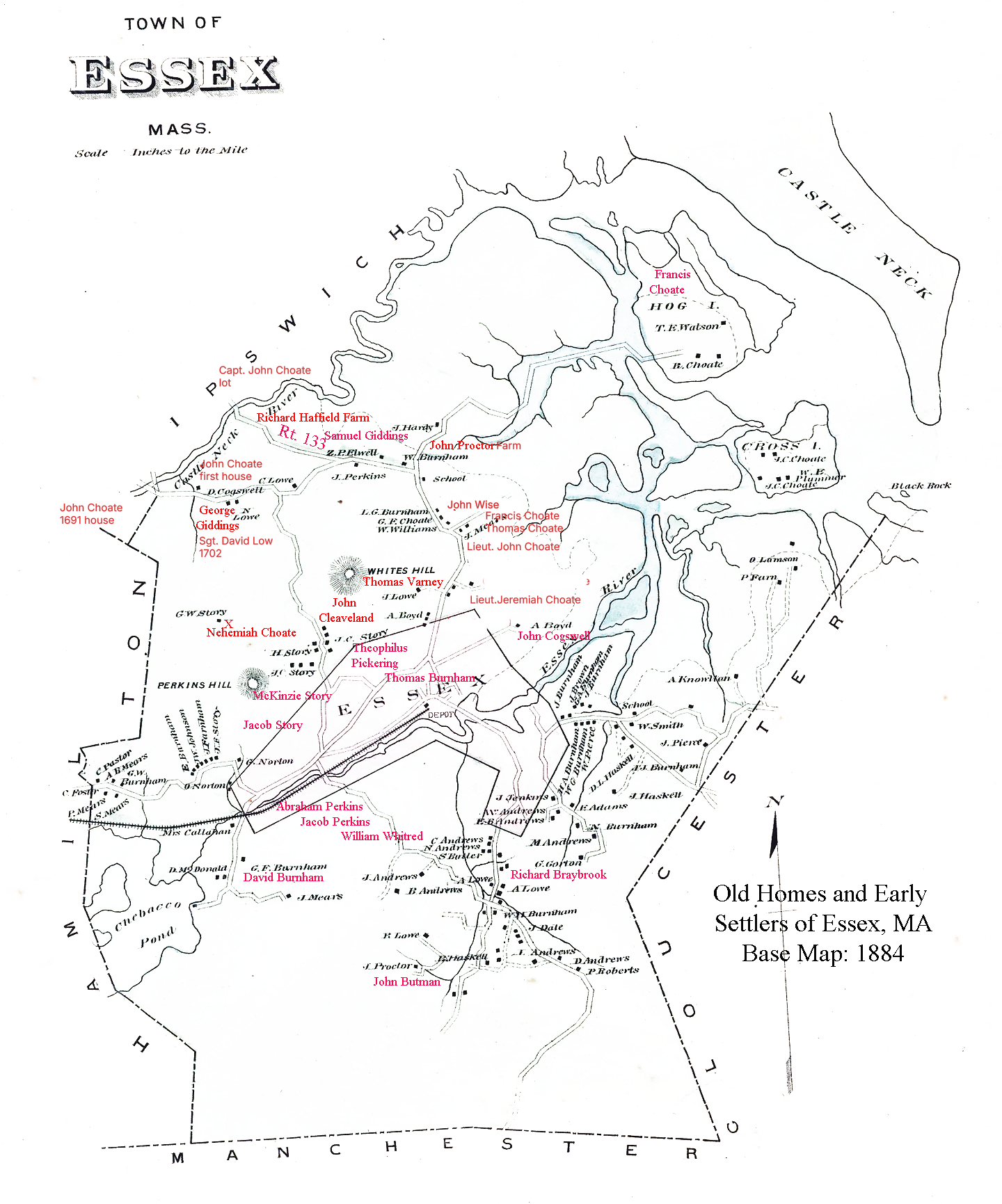
List of Chebacco Parish Households, prepared by Rev. John Cleaveland in 1782, transcribed by Kurt Wilhelm © 2006 / 2010. (Turn sideways to view on phone)
| 1st District: The families on Hog Island | |||||
| HOUSE | FAMILY | TITLE | NAME | SURNAME | |
| 1 | 1 | Messrs. | Benjamin | [ Proctor ] | |
| 2 | John | Proctor | |||
| 2 | 3 | Capt. | Thomas | Choate | |
| 3 | 4 | Mr. | Humphrey | Choate | |
| 4 | 5 | Capt. | William | Choate | |
| 2nd District [North End-1] | |||||
| 5 | 6 | Messrs. | Ebenezer | [ Choate ] | |
| 7 | Robert | Choate | |||
| 6 | 8 | Capt. | David | Low | |
| 7 | 9 | Lieut. | Ebenezer | Low | |
| 8 | 10 | Mr. | Nehemiah | Choate | |
| 9 | 11 | Lieut. | Grover | Dodge | |
| 12 | Messrs. | Jeremy | Kinsman | ||
| 13 | John | Andrews | |||
| 3rd District [North End-2] | |||||
| 10 | 14 | Mr. | Christopher | Hodgkins | |
| 11 | 15 | Capt. | Daniel | Giddings | |
| 12 | 16 | Messrs. | Jonathan | Proctor | |
| 17 | Joseph | Proctor | |||
| 18 | Aaron | Giddings | |||
| 13 | 19 | Mr. | Thomas | Giddings | |
| 14 | 20 | John | Choate | ||
| 15 | 21 | Lieut. | Jeremy | Choate | |
| 16 | 22 | Jonathan | Goodhue | ||
| 23 | widow | Nancy or Mary | Goodhue | ||
| 17 | 24 | Mr. | George | Pierce | |
| 18 | 25 | Mr. | Joseph | Goodhue | |
| 19 | 26 | Messrs. | Jacob | [ Goodhue ] | |
| 27 | Seth | Goodhue | |||
| 4th District [Center] | |||||
| 20 | 28 | Mr. | Jeremiah | Choate | |
| 21 | 29 | Messrs. | Thomas | [ Low ] | |
| 30 | William | Low | |||
| 22 | 31 | Mr. | John | Cogswell | |
| 23 | 32 | Mr. | Samuel | Hadlock | |
| 24 | 33 | Mr. | Jonathan | Cogswell | |
| 25 | 34 | Col. | Jonathan | Cogswell | |
| 26 | 35 | Rev. | John | Cleaveland | |
| 27 | 36 | Messrs. | John | Cavies | |
| 37 | William | Cogswell | |||
| 38 | widow | [-] | Bennet | ||
| 28 | 39 | Messrs. | Joseph | Perkins | |
| 40 | [ Joseph ] | [ Perkins ] | |||
| 29 | 41 | Mr. | Daniel | Low | |
| 30 | 42 | widow | [-] | Holmes | |
| 43 | Mr. | Thomas | Emmerton | ||
| 31 | 44 | Dr. | Ephraim | Davis | |
| 32 | 45 | Mr. | Samuel | Low | |
| 33 | 46 | Dea. | Thomas | Burnham | |
| 5th District [Falls-1] | |||||
| 34 | 47 | Capt. | Aaron | Foster | |
| 35 | 48 | Messrs. | Nehemiah | [ Story ] | |
| 49 | Nathan | Story | |||
| 36 | 50 | Widow | Hitty | Foster | |
| 37 | 51 | Messrs. | Daniel | Rust | |
| 52 | [-] | Ross | |||
| 38 | 53 | Messrs. | Isaac | [ Story ] | |
| 54 | Jesse | Story | |||
| 39 | 55 | Mr. | John | Smith | |
| 40 | 56 | Messrs. | John | Story | |
| 57 | John | Andrews | |||
| 41 | 58 | Elder | Seth | Story | |
| 59 | Ebenezer | [ Story ] | |||
| 42 | 60 | Mr. | Stephen | Story | |
| 43 | 61 | Mr. | Moses | Foster | |
| 44 | 62 | Messrs. | Hannah | [ Foster ] | |
| 63 | Jemima | Foster | |||
| 6th District [Falls-2] | |||||
| 45 | 64 | Mr. | Ammi | Burnham | |
| 46 | 65 | Mr. | Francis | Burnham | |
| 47 | 66 | Mr. | Solomon | Burnham | |
| 48 | 67 | Mr. | Job | Smith | |
| 49 | 68 | Mr. | Robert | Burnham | |
| 50 | 69 | Miss | Lucy | Eveleth | |
| 51 | 70 | Mr. | Jacob | Cogswell | |
| 52 | 71 | Mr. | John | Burnham | |
| 53 | 72 | Mr. | Abner | Toland [ Poland ] | |
| 54 | 73 | Mr. | Jacob | Burnham | |
| 55 | 74 | Mr. | David | Burnham | |
| 56 | 75 | Mr. | David | [ Burnham ] | |
| 76 | William | Burnham | |||
| 57 | 77 | Mr. | Amos | Burnham | |
| 58 | 78 | Messrs. | Wesley | Burnham | |
| 79 | [ Wesley ] | [ Burnham ] | |||
| 7th District [Falls-3] | |||||
| 59 | 80 | Mr. | Jonathan | Smith | |
| 60 | 81 | Capt. | Jonathan | Story | |
| 61 | 82 | Mr. | James | Eveleth | |
| 62 | 83 | Mr. | John | Emerson | |
| 63 | 84 | Lieut. | Abraham | Perkins | |
| 64 | 85 | Lieut. | Jacob | Story | |
| 65 | 86 | Mr. | Francis | Perkins | |
| 66 | 87 | Widow | Jacob | Perkins | |
| 67 | 88 | Widow | Lucy | Andrews | |
| 68 | 89 | Messrs. | Jeremy | [ Burnham ] | |
| 90 | Mark | Burnham | |||
| 69 | 91 | Mr. | Moses | Lufkin | |
| 70 | 92 | Widow | [-] | Jones | |
| 71 | 93 | Elder | [-] | Crafts | |
| 72 | 94 | Widow | John | [ Andrews ] | |
| 95 | Jonathan | Andrews | |||
| 8th District [Rocky Hill] | |||||
| 73 | 96 | Mr. | Amos | Andrews | |
| 74 | 97 | Capt. | [-] | Lees | |
| 75 | 98 | Mr. | Thomas | Burnham | |
| 99 | Capt. | Stephen | Low | ||
| 76 | 100 | Mr. | Simeon | Burnham | |
| 77 | 101 | Mr. | Aaron | Burnham | |
| 78 | 102 | Mr. | Joseph | Burnham | |
| 79 | 103 | Widow | [-] | Marshall | |
| 80 | 104 | Mr. | Joseph | Marshall | |
| 81 | 105 | Widow | Molly | Andrews | |
| 82 | 106 | Mr. | Aaron | Low | |
| 107 | [ Aaron ] | [ Low ] | |||
| 83 | 108 | Messrs. | Caleb | [ Andrews ] | |
| 109 | James | Andrews | |||
| 9th District [Thompson’s Island] | |||||
| 84 | 110 | Mr. | Jonathan | Marshall | |
| 85 | 111 | Mr. | Nathaniel | Groton | |
| 86 | 112 | Mr. | Joseph | Andrews | |
| 87 | 113 | Widow | Nehemiah | Burnham | |
| 88 | 114 | Mr. | John | Cogswell | |
| 115 | widow | [-] | Cogswell | ||
| 89 | 116 | Mr. | William | Cogswell | |
| 90 | 117 | Messrs. | Isaac | [ Andrews ] | |
| 118 | Joseph | Andrews | |||
| 91 | 119 | Capt. | Joshua | Burnham | |
| 92 | 120 | Mrs. | [-] | Singleton | |
| 93 | 121 | Mr. | Joseph | Emmerton | |
| 94 | 122 | Messrs. | David | Marshall | |
| 123 | Thomas | Choate | |||
| 10th District [eastern part of Chebacco] | |||||
| 95 | 124 | Mr. | William | Burnham | |
| 96 | 125 | Mr. | Enoch | Haskell | |
| 97 | 126 | Mr. | Francis | Burnham | |
| 98 | 127 | Mr. | Abraham | Channel | |
| 99 | 128 | Mr. | Nathaniel | Lufkin | |
| 100 | 129 | Mr. | Thomas | Lufkin | |
| 101 | 130 | Mr. | Samuel | Proctor | |
| 102 | 131 | Mr. | William | Butler | |
Stories from Essex
 Chebacco Parish (Essex) Old Graveyard - The inhabitants of Chebacco established their own parish in 1679, after encountering considerable resistance from the mother church in Ipswich. The Old Chebacco Burying Ground in was established in 1680. The community incorporated as the town of Essex in 1819. … Continue reading Chebacco Parish (Essex) Old Graveyard
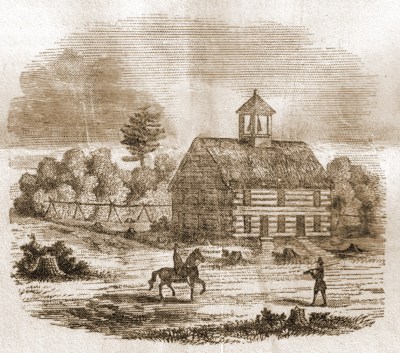 An Early History of the Town of Essex, with Photos of Its Oldest Houses - The inhabitants of the part of Ipswich known as Chebacco built a meetinghouse in 1674 and established their own parish in 1679, after overcoming resistance from the mother church in Ipswich. The word “Chebacco” was a Native American name for the lake that lies between Essex and Wenham. At the close of the seventeenth century,… Continue reading An Early History of the Town of Essex, with Photos of Its Oldest Houses
 The Rev. John Wise of Ipswich - The concepts of freedom about which Thomas Jefferson wrote in the Declaration of Independence originated from the pen of the Rev. John Wise of Ipswich: "The origin of civil power is the people...and when they are free, they may set up what species of government they please."… Continue reading The Rev. John Wise of Ipswich
 Building a Ship in Essex - By the early 1840s, Essex no longer had its own fishing fleet, but had turned to year-round shipbuilding, fostering a symbiotic relationship with the successful fishermen in Gloucester.… Continue reading Building a Ship in Essex
 The Great Colonial Hurricane and the Wreck of the Angel Gabriel, August, 1635 - In August 1635, the 240-ton Angel Gabriel sank in Pemaquid Bay after sailing into the most intense hurricane in New England history. Among the survivors were members of the Cogswell, Burnham and Andrews families, who settled in an area of Ipswich known as Chebacco.… Continue reading The Great Colonial Hurricane and the Wreck of the Angel Gabriel, August, 1635
 Mehitable Braybrook, who Burned Down Jacob and Sarah Perkins’ House, Married John Downing and Was Arrested for Witchcraft - She was charged with burning down her master's house and was arrested years later during the witchcraft trials. Her husband had been captured and indentured by Cromwell's forces in Ireland.… Continue reading Mehitable Braybrook, who Burned Down Jacob and Sarah Perkins’ House, Married John Downing and Was Arrested for Witchcraft
 The Trolley Comes to Ipswich, June 26, 1896 - In 1896, the first trolley from Beverly arrived in Ipswich, and a year later, the Georgetown, Rowley and Ipswich Street Railway opened. By 1919, Mr. Ford's Model T ended the brief era of the street railway.… Continue reading The Trolley Comes to Ipswich, June 26, 1896
 The Women of Chebacco Build a Meeting House - When Chebacco Parish (now Essex) began building their own meeting house, Ipswich authorities obtained an order that “No man shall build a meeting house at Chebacco.” Abigail Proctor saw a glaring legal loophole...… Continue reading The Women of Chebacco Build a Meeting House
 The Body Snatcher of Chebacco Parish - In 1819 the inhabitants of Chebacco Parish began noticing lights moving about at night in the graveyard. It was discovered that at least eight graves had been dug up and their coffins were empty.… Continue reading The Body Snatcher of Chebacco Parish
 1793 and 1818: the “Burden of the Poor” Divides Ipswich into 3 Towns, Ipswich, Hamilton and Essex - As the people of the Hamlet were financially stable, the burden of taxation for the support of the poor in the old town of Ipswich was considered to be an unjust imposition. 25 years later, the men of Chebacco petitioned the Legislature for incorporation as a separate town.… Continue reading 1793 and 1818: the “Burden of the Poor” Divides Ipswich into 3 Towns, Ipswich, Hamilton and Essex
 Choate Island and Rufus Choate - Choate Island was originally known as Hog Island, and is the largest island in the Crane Wildlife Refuge and is the site of the Choate family homestead, the Proctor Barn, the White Cottage, and the final resting place of Mr. and Mrs. Cornelius Crane. There are great views from the island summit of the Castle Neck dunes and Plum Island Mount Agamenticus in Maine.… Continue reading Choate Island and Rufus Choate
 Building Wooden Ships - Shipwright Harold A Burnham comes from a family who have been building wooden boats in Essex MA for several generations. Produced by Blake Road Productions LLC for the Massachusetts Cultural Council.… Continue reading Building Wooden Ships
 Taking to the Air in Essex & Ipswich in 1910 - In 1909, W. Starling Burgess joined with Augustus Moore Herring to form the Herring-Burgess Company, manufacturing aircraft under a license with the Wright Brothers, thus becoming the first licensed aircraft manufacturer in the United States. Burgess took the initial flight of his first plane in 1908 at Chebacco Lake in Hamilton, MA. Flight tests of Burgess biplanes were conducted in November and December, 1910 near Essex Road in Ipswich… Continue reading Taking to the Air in Essex & Ipswich in 1910
Discover more from Historic Ipswich
Subscribe to get the latest posts sent to your email.

