
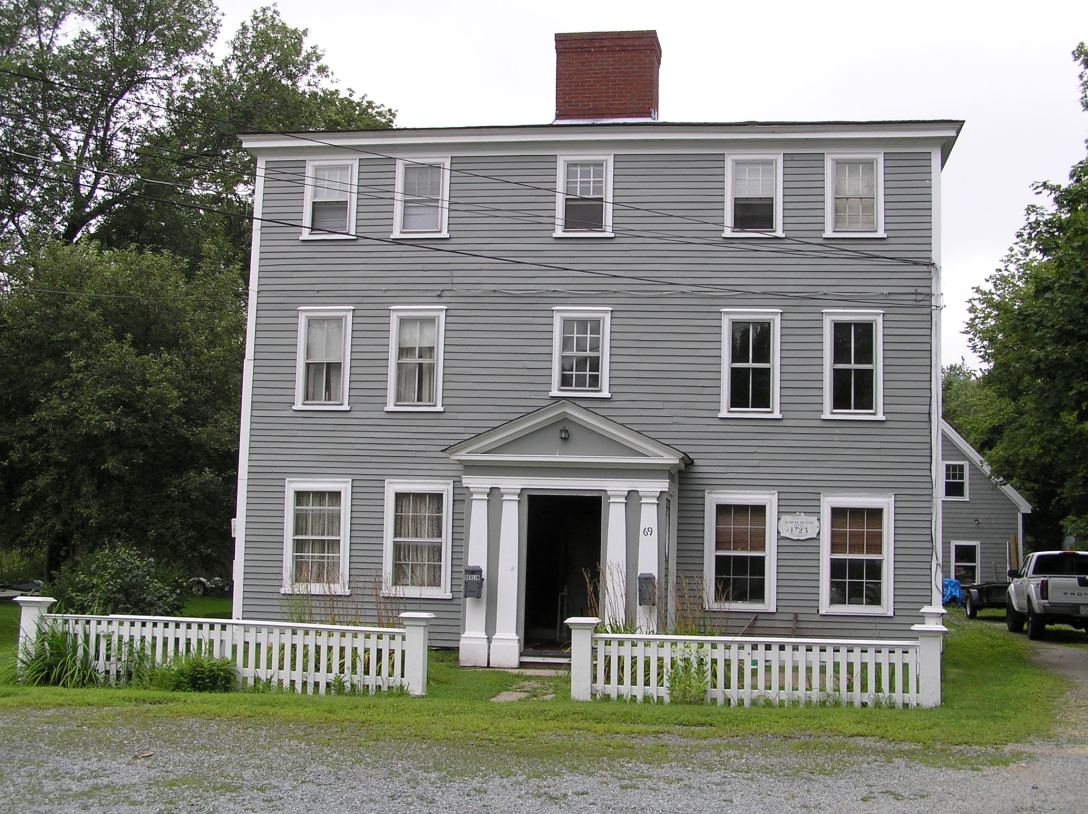

After wealthy Richard Haffield of Chebacco Parish died, his widow slowly went insane, and her daughter Rachel, who lived with her, foolishly married a younger man named Lawrence Clinton, who connived to steal their inheritance. In 1655, the Town of Ipswich took mercy on the old woman and sold her “four rods of ground…near the Mill Dam, for twelve pence, to build a little house on.” Trouble seemed to follow Rachel, and in 1692, she was charged with witchcraft. She was never executed, but died impoverished a few years later, probably in the small house she and her mother had built by the river.
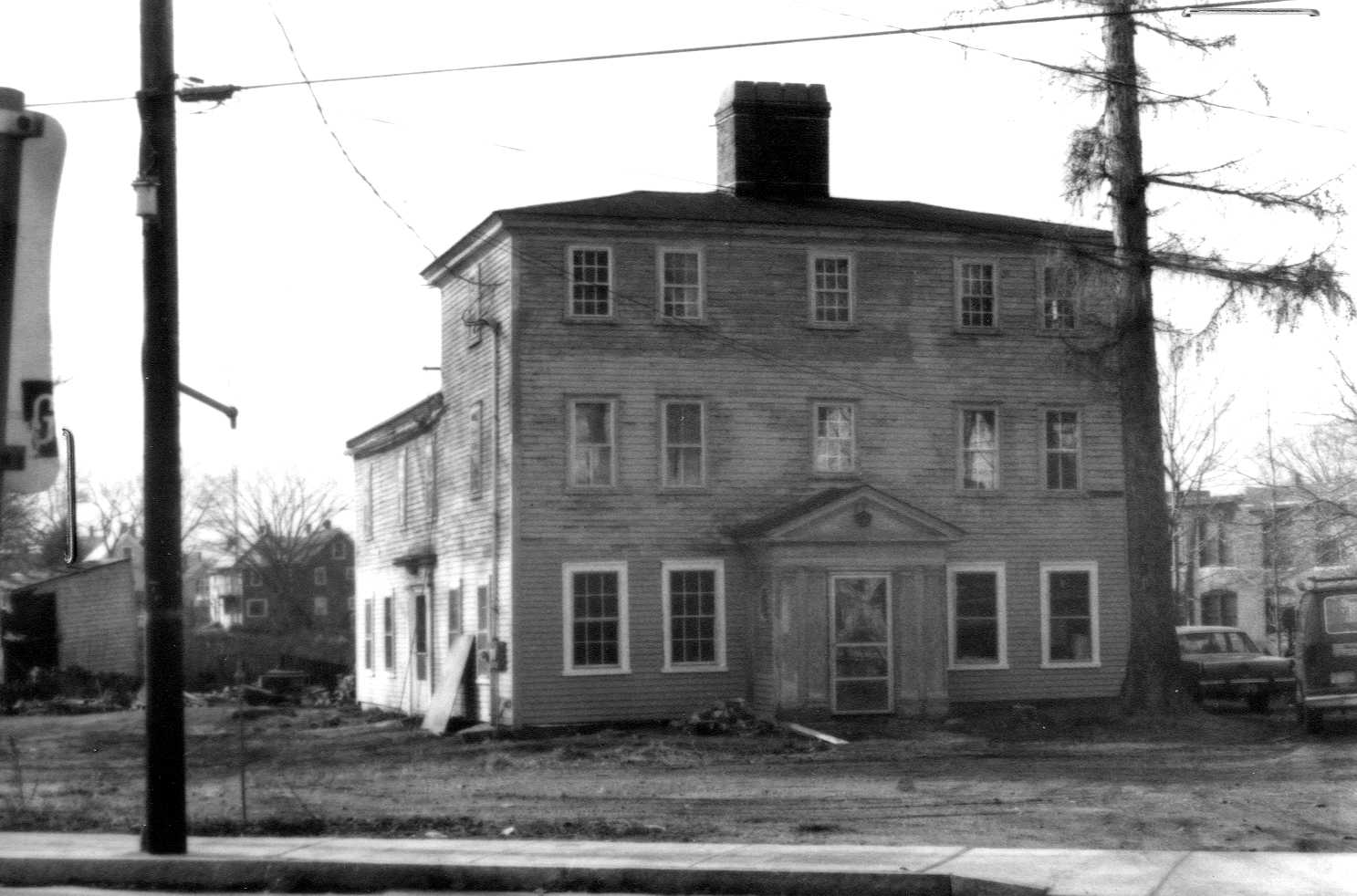
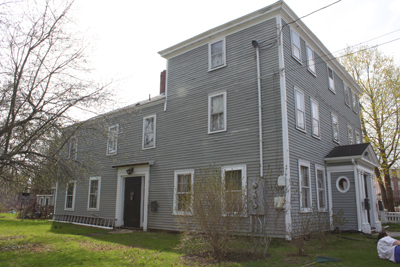
In 1723, Rachel’s nephew Thomas White Jr. of Wenham sold the 4-rod lot to Samuel Dutch, who built the house still standing at 69 S. Main St. The small home of Widow Haffield and Rachel Clinton was recorded as still standing on the lot a few years earlier.
Samuel Dutch enlarged his lot and purchased “two-thirds of the sawmill standing on the south side of the River.” The third floor is believed to have been added later in the 18th or early 19th Century.
Architectural Features of the Samuel Dutch House
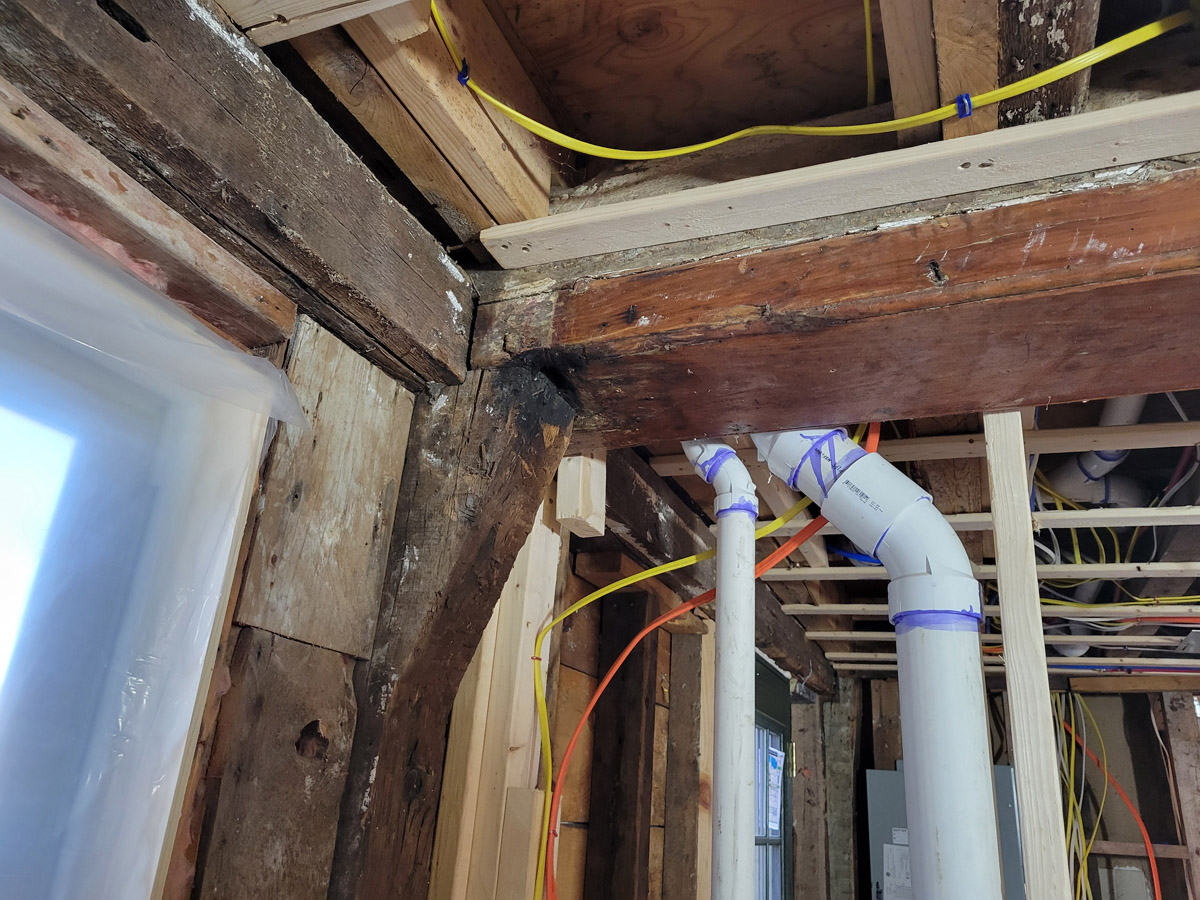
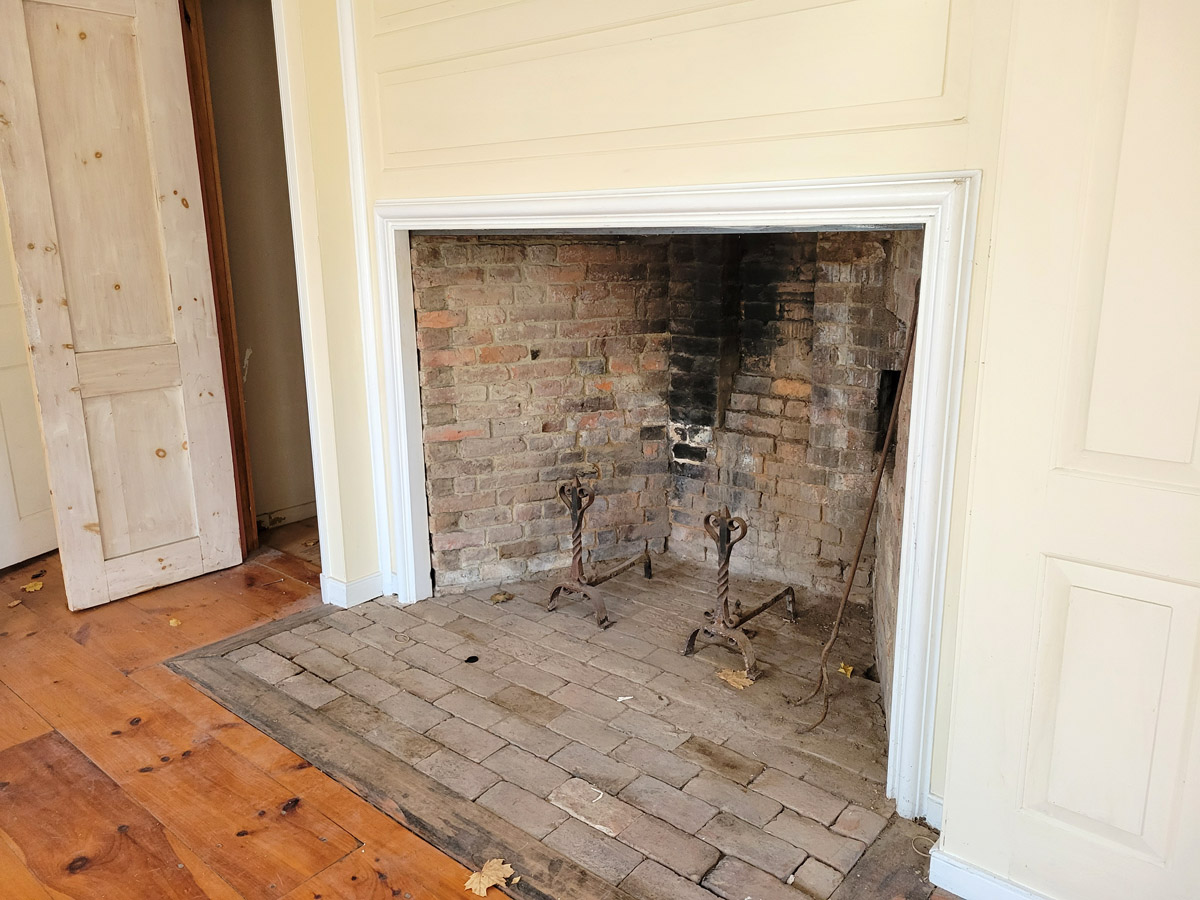
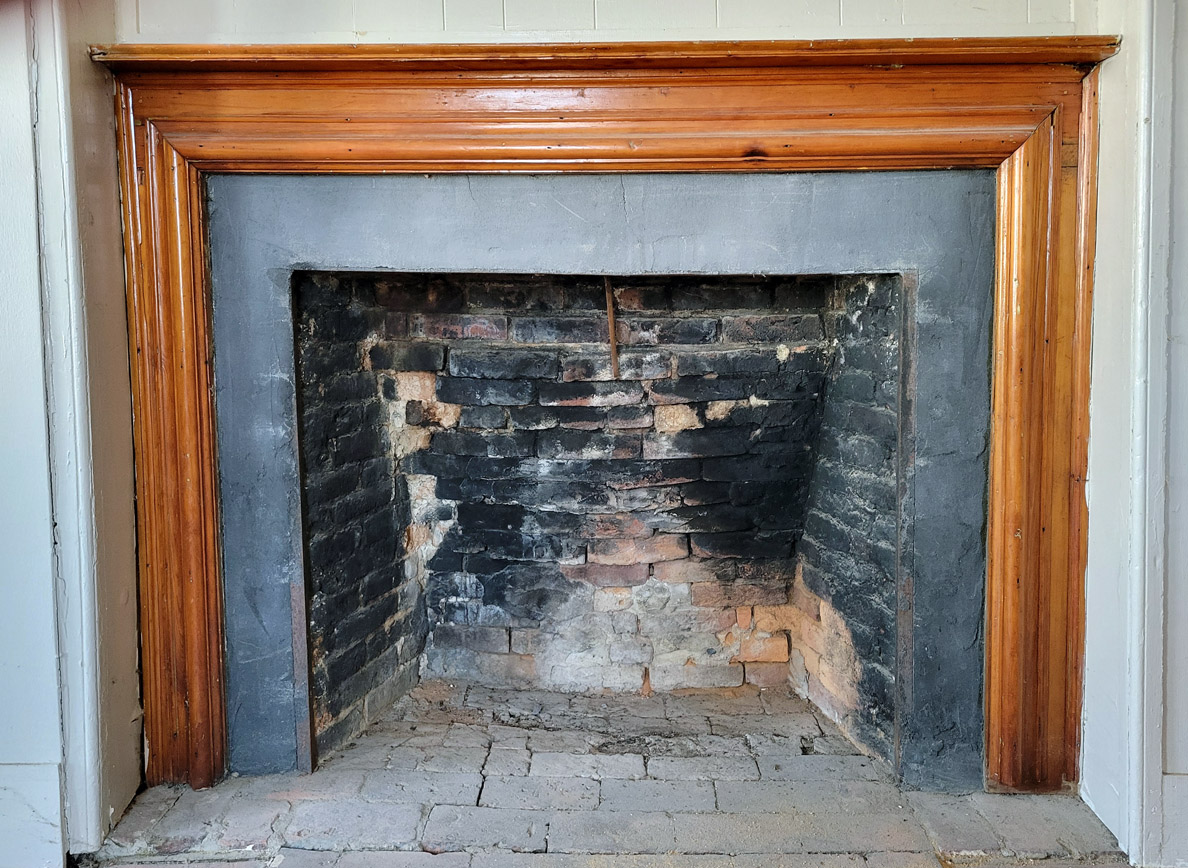
Early 18th-century details in the Samuel Dutch House include the front staircase and some doors, paneling, and bolection molding on the second floor. Federal-era material includes detailing on the third floor, mantels, and paneling elsewhere in the house. The rear ell of the house has a summer beam with beaded corners, found only in late First Period houses.
Structural features and the deed timeline indicate that the rear wing of the house was constructed by Samuel Dutch in 1723, indicating that it is not the home of Rachel Clinton. The federal-style front part of the house was constructed by Asa Andrews, who purchased the property in 1794. Additional improvements were probably made between the time when Andrews sold it to Joseph Farley in 1813 and when Farley sold it to the Ipswich Manufacturing Company in 1836. The front portion of the Samuel Dutch House may have been enlarged with a third floor and a hip roof in the early 19th century.
Early History of the Lot
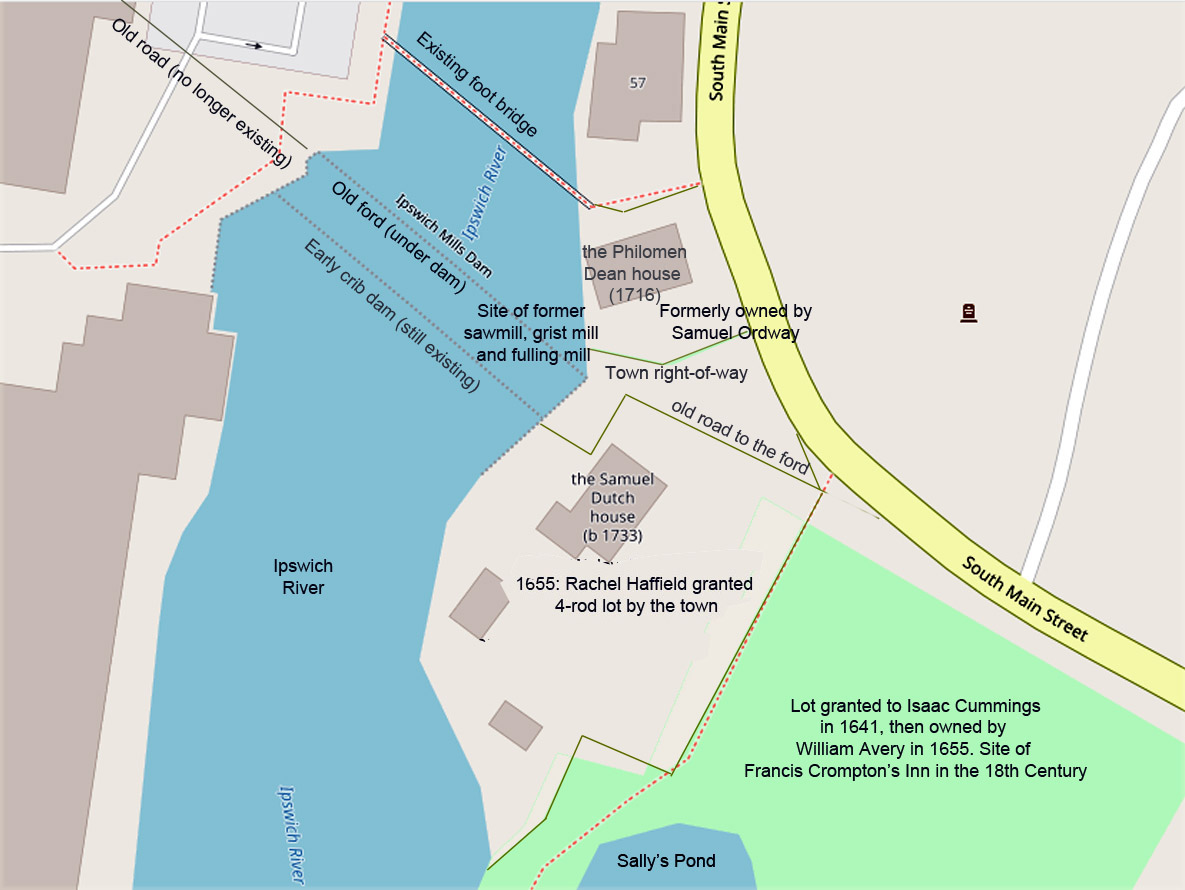
Today’s Sally’s Pond is part of a three-acre lot that was originally granted to Isaac Cummings, who moved to Topsfield and was next owned by William Averill in 1655. Bordering on the north, next to the dam were two small adjoining lots owned by Samuel Ordway, a blacksmith on Dec. 3, 1691 (Ips. Deeds 5: 442). One contained six rods, “and is the place where ye said Ordway hath lately built his shop.” The other was “bordering upon the land that was formerly William Avery’s and joining to Rachel Haffield, alias Rachel Clenton‘s land ye breadth of that garden at one end, and bordering upon William Avery’s land the length of four lengths of rails.” Sarah Ordway, the relict of Samuel, sold the four-rod lot and the six-rod lot to Doctor Philemon Dean on Sept. 8, 1715 (32: 268), bounded “north by a cartway that goeth through the river, west along by ye River, south on ye Common next ye sawmill, east by the County Road, with an old dwelling house upon ye said land.”
Rachel Haffield Clinton
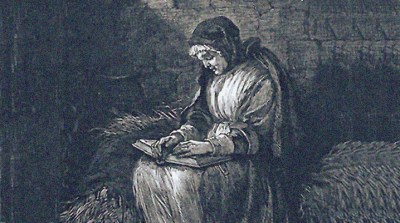
Rachel Haffield arrived in Ipswich with her parents in 1639. Rachel’s once-wealthy father died, and for several years she was the only one of the five sisters and sisters who was unmarried. Her sister Ruth married a man named Thomas White, who was granted control of her late father’s estate, even though Rachel had been appointed as her mother’s guardian. In 1655, at the age of 36, Rachel married a man 14 years her junior named Lawrence Clinton and was tricked into giving her inheritance to his master, Robert Cross. In 1655, the Town Record has the entry, “sold to Widow Hafield four rods of ground by the corner of William Averill’s fence, near the Mill Dam, for twelve pence, to build a little house on. Rachel and her mother Martha, built a small house on the 4-rod lot that the town granted them. Martha had been slowly going insane, and in 1666, the Town of Ipswich declared her “non compos mentis.“
In 1666, Lawrence Clinton, aka Clenton, the husband of Rachel Haffield, aka Hatfield, sold or transferred properties in Ipswich and Chebacco to Thomas White. (2:122). Unfortunately, the deed is not available at the Salem Deeds site.
In 1666, the Town of Ipswich granted guardianship of Martha Haffield to Thomas White, taking it away from Rachel. A man reported visiting her, and “I found her very sad, and weeping, and crying. And she said, “My brother (brother-in-law Thomas White) goes about to undo me every way. First, he would have me say that I stole the money (given to her husband, Lawrence), which was my own. And when he could not make me say so, then he would have had me say that my husband did steal it. But he (Thomas White] is a cheating rogue, and he goes about to undo me. He keeps my portion from me and strives to get all that I have.”
Meanwhile, Rachel’s husband Lawrence, refused to live with her and defied court orders that he support Rachel. Instead, he took up with a woman named Mary Wooden, and by 1680, they had moved to Rhode Island. Rachel had become a beggar and a ward of the town, and she is said to have been living in a hovel on Hog Island. She was tried for witchcraft in 1692 but was acquitted. Thomas White died in 1672. (Wenham Vital Records). Rachel Clinton died in 1695, and her sister Ruth, the widow of Thomas White, was assigned the administration of Rachel’s estate, being the only family member still living.
Samuel Dutch
On May 9, 1723, Ruth White’s son Thomas White Jr. (1664-1740) sold the four full rods near the Mill Dam to Samuel Dutch, “being formerly granted the widow Martha Haffell by the freeholders of Ipswich, bordered east upon land now in possession of Philemon Dean,” etc., for £5 (42: 106). No buildings are mentioned in the deed. Rachel Clinton’s small house on South Main Street must have been removed at about this time, for the Ordway deed of 1691 lists her as an abutter, and the sale of the Ordway property to Philomen Dean in 1715 mentions an old house still standing on the lot.
Samuel Dutch enlarged his lot when he bought from Nathaniel Saltonstall Esq. and Roland Cotton, Gent. of Boston, “two-thirds of the sawmill standing on the south side of the River on the same dam the grist mills and fulling mill stand on, with two-thirds of the ground the mill stands on, and two-thirds of the dam, to be improved only when water runs over the dam,” Feb. 20, 1730 (61: 70). The price was £80.00 for this additional property. In 1733, the Town granted him one rod of land on the riverbank next to the front of his mill.
Subsequent Owners
- Samuel Dutch sold his house, barn wood house, the sawmill, and twenty-four rods of land (including the strip granted by the Town) to John Treadwell, innholder, on Sept. 3, 1742 (84: 68). The price was £800.00, a ten-fold price increase over what he paid twelve years earlier, and included a dwelling house, barn, wood house, “all the buildings standing” and the sawmill.
- John Treadwell sold the same to William Story on Sept. 14, 1765 (116:91). The price of the sale was £400.00, indicating that no improvements had been made by Treadwell.
- William Story mortgaged the property to Joseph Henderson of Boston, April 29, 1788 (149: 44), for £142.00. Henderson assigned the mortgage to Rufus G. Amory of Boston, Sept. 16, 1788 (149: 91), and Amory foreclosed on the mortgage and sold it to Nathaniel Dodge, Nov. 5, 1790 (152: 175).
- Nathaniel Dodge bequeathed to his brother-in-law, Thomas Burnham 4th (1792 Pro. Rec. 361: 522), and Thomas Burnham sold to Asa Andrews, Dec. 25, 1794 (158: 251). The price was £300.00
- On Jan. 1, 1813, Asa Andrews sold the sawmill and land to the waterway to Joseph Farley, on Jan. 1, 1813 (226: 47). The price in the sale was £1000.00.
- Joseph Farley conveyed the property to the Ipswich Manufacturing Co., on Dec. 8, 1836 (294: 153). The price in this sale was £2000.00.
Samuel Dutch House, 69 South Main Street Preservation Agreement
- 69-south-main-dutch-preservation-agreement-page-1
- 69-south-main-dutch-preservation-agreement-page-2
- 69-south-main-dutch-preservation-agreement-page-3
- 69-south-main-dutch-preservation-agreement-page-4
- 69-south-main-dutch-preservation-agreement-page-5
This house is protected by a preservation agreement between the owners and the Ipswich Historical Commission. Protected elements include:
- Front and side facades, including the front entry
- Mantlepieces and moldings surrounding the fireplaces in the front rooms of the first and second floors, and paneling over the fireplace in the second-floor front northwest corner room
- The long summer beam on the first floor of the rear addition

Sources and further reading:
- T. F. Waters, Ipswich in the Massachusetts Bay Colony Vol. 1, pages 460-462):
- MACRIS
- Hammatt, Abraham: “Early Inhabitants of Ipswich” Robert Dutch
- Encyclopedia.com “Clinton, Rachel“
- Demos, John Putnam. Entertaining Satan: Witchcraft and the Culture of Early New England, 1982.
- The Probate Records of Essex County: Estate of Martha Haffield, June 11, 1662
 Rachel Haffield Clinton Arrested for Witchcraft, May 28, 1692 - Everything about Rachel Clinton's life went wrong, and in her old age she was an easy target for the witchcraft hysteria that spread from Salem throughout Essex County.… Continue reading Rachel Haffield Clinton Arrested for Witchcraft, May 28, 1692
  Historic Ipswich
Is this house abandoned. Looks unlived at present.