
Throughout the Revolutionary War, Joseph Hodgkins sent letters home from the battlefronts to his wife, Sarah Perkins Hodgkins.

On the Massachusetts North Shore
Throughout the Revolutionary War, Joseph Hodgkins sent letters home from the battlefronts to his wife, Sarah Perkins Hodgkins.
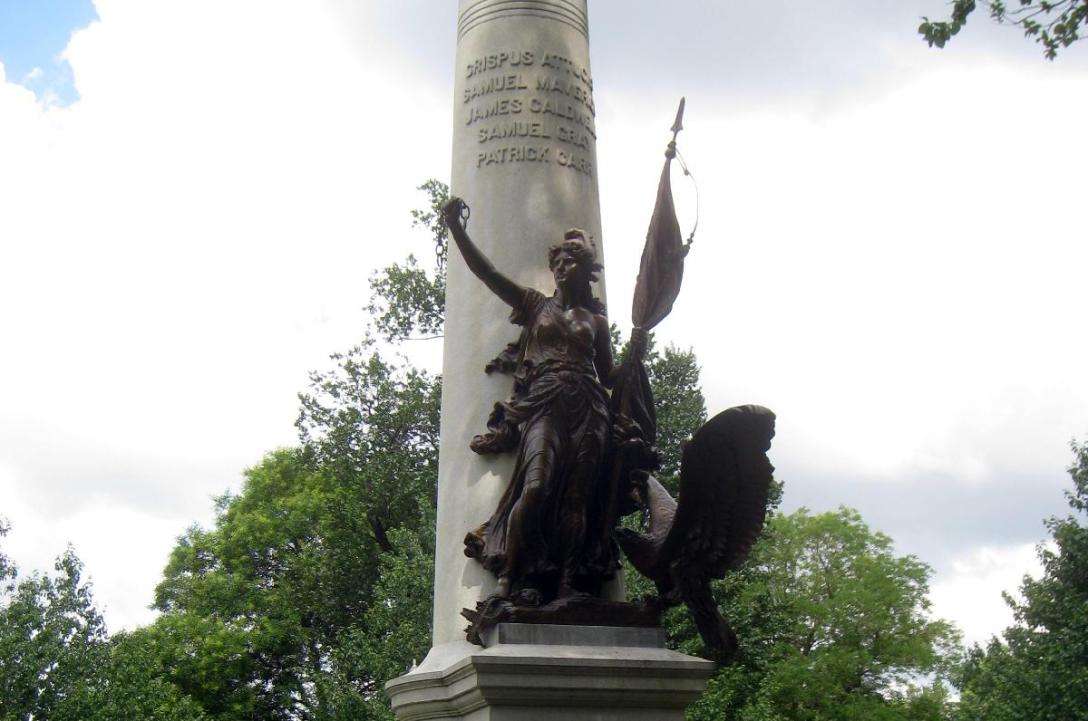
The following is an excerpt from a presentation given on November 14, 1889, at the dedication of the Boston Massacre and Crispus Attucks Monument at Boston Common, which memorializes victims Crispus Attucks, Samuel Maverick, James Caldwell, Samuel Gray, and Patrick Carr. ADDRESS BY MR. JOHN FISKE The troubles and disorders in Boston, which led to… Continue reading Memorial to Crispus Attucks

The voters of the Town of Ipswich resolved on August 11, 1768, that "Thanks be given to the worthy and much esteemed ninety-two gentlemen of the late Honorable House of Representatives for their firmness and steadiness in standing up for and adhering to the just rights and Liberties of the Subjects when it was required of them at the Peril of their political existence."
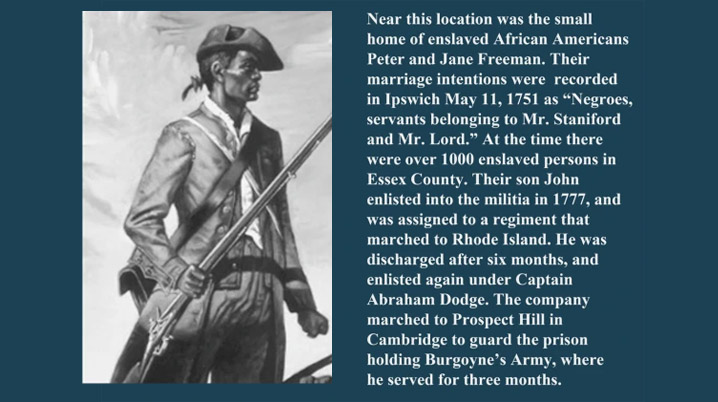
John Freeman, son of enslaved Peter and Jane Freeman of Ipswich, enlisted into the militia of the Revolutionary War in the year 1777, and served in Rhode Island, Providence and Cambridge.
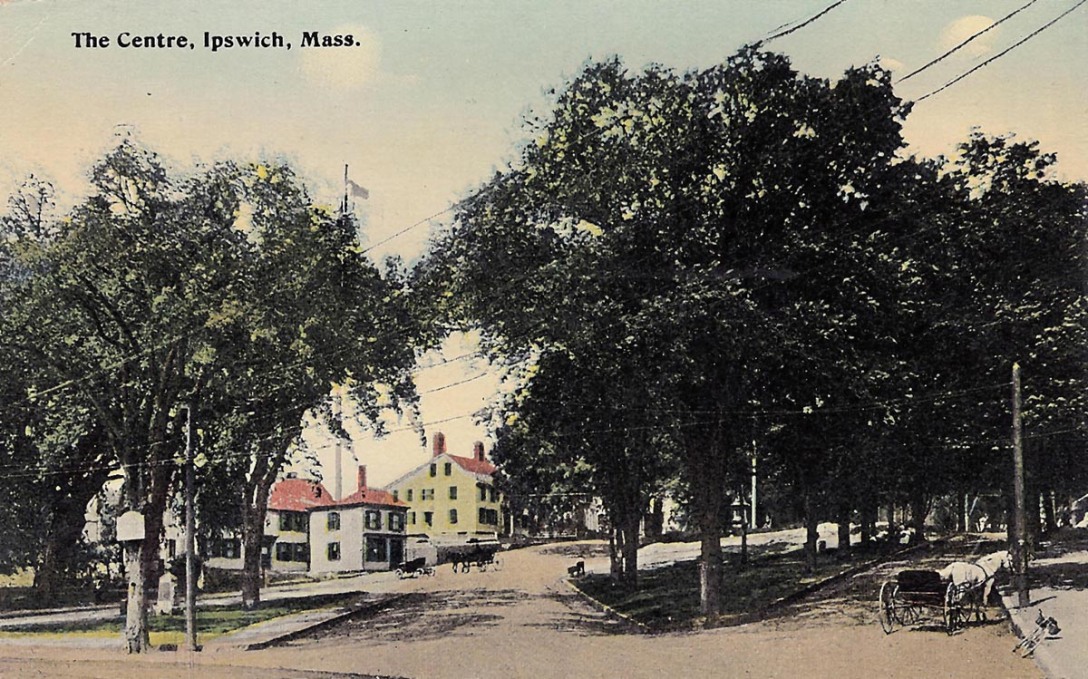
Notifications were posted in Salem to gather at the Town House to appoint representatives to meet at Ipswich, on September 6, 1774 along with the representatives of the other towns in the county, to consider "to consider and determine on such measures as the late acts of Parliament, and our other grievances render necessary and expedient."

In 1774, the Town of Ipswich chose Michael Farley, a tanner, as a delegate to the Provincial Congress. He was appointed major-general of the Militia of Massachusetts in 1777. Farley is buried at the Old North Burying Ground beside his wife Elizabeth. The site of his home is now the Richdale store on Market St..
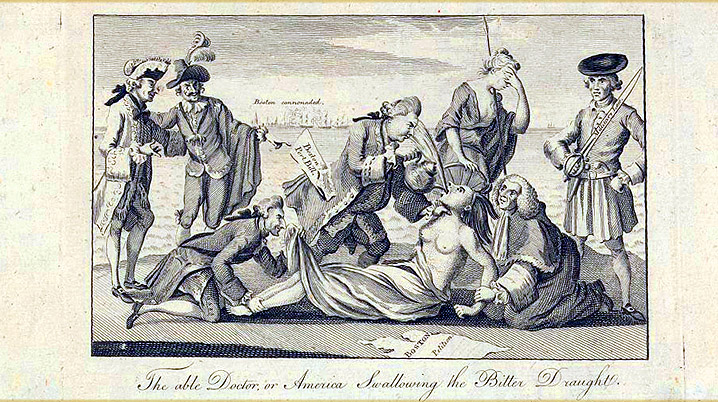
Despite the failure of the Stamp Act and the Townshend Acts, the British Parliament responded to the "Boston Tea Party" by passing even more restrictive acts to punish the American extremists.
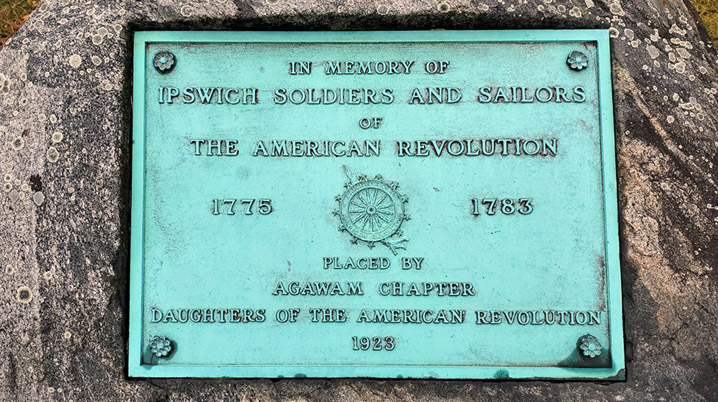
On June 10th, 1776, the men of Ipswich, in Town-meeting assembled, instructed their Representatives, that if the Continental Congress should for the safety of the said Colonies Declare them Independent of the Kingdom of Great Britain, they will solemnly engage with their lives and Fortunes to support them in the Measure.

"Commonwealth" is defined as a state in which authority is vested in the citizenry. In the 17th Century it was the radical philosophy the work and the proceeds thereof should be shared by the people.

In the late eighteenth century, Ipswich had 600 women and girls producing more than 40,000 yards of lace annually. Ipswich industrialists imported machines from England to mechanize and speed up the operation, which destroyed the hand-made lace industry.

In September 1776, the vulnerable Continental Army under George Washington evacuated New York after a devastating defeat by the British Army. One of Washington's favorite generals, Benedict Arnold, miraculously succeeded in postponing the British naval advance down Lake Champlain that might have ended the war. Thomas Franklin Waters wrote about Arnold's march through Ipswich on the way to Quebec "The… Continue reading Benedict Arnold and the Fate of the American Revolution

In John Adams’ 1765 opposition to the Stamp Act, he referenced the citizens of Ipswich who resisted a tax imposed by the Crown in 1687. An Ipswich town meeting on August 11, 1768 approved of "the Conduct of those Gentlemen of the late House of Representatives...when it was required of them at the Peril of their Political Existence." The Town meeting on Dec. 28, 1772 supported the rights of the Colonists as British subjects, and established a Committee of Correspondence to communicate resistance with the Committees of other towns. Delegates from throughout Essex County arrived in Ipswich on Tuesday, Sept. 6, 1774, and by unanimous vote, bound themselves together in establishment of the Provincial Congress for the common safety.
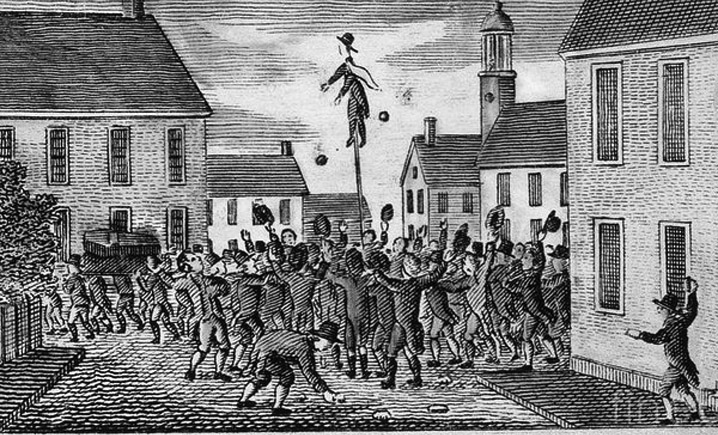
An angry mob surrounded the Haverhill home of Col. Richard Saltonstall, a Loyalist, who opened his door and stated that that he was bound to discharge the duties of the office.

A rumor spread that two British ships were in the river, and were going to burn the town. The news spread as far as New Hampshire, and in every place the report was that the regulars were but a few miles behind them, slashing everyone in sight.

The manner in which residents of Ipswich celebrated the end of hostilities was recorded in "The Life, Journals and Correspondence of Rev. Manasseh Cutler."

A memorial sits in the intersection between the South Green and the site of the former South Congregational Church in Ipswich. It reads, “The expedition against Quebec, Benedict Arnold in command, Aaron Burr in the ranks, marched by this spot, September 15, 1775."
 Historic Ipswich