


The following is a list of First Period (1625-1725), Second Period / Georgian (1725-1776), and Federal-era houses in Ipswich, Massachusetts. Links are provided to photos and the history of the house.
The First Period of colonial American architecture was approximately 1626 through 1725. There are more remaining First Period houses in Essex County, MA, than anywhere else in the country, and Ipswich has 59 (depending on who’s counting), more surviving First Period homes than any other town.
First-period houses have steeply pitched roofs, are asymmetrical due to being built in phases, and feature large central chimneys. Exposed chamfered summer beams are almost always found, especially in the front rooms. First-period builders were often trained in English Medieval and post-medieval techniques. The fronts of these houses ideally faced south to maximize heat from the sun’s rays, which explains why so many First Period homes line the north side of High Street in Ipswich. Many of the houses maintain their First Period characteristics, while many of those features are hidden or removed in other houses of that era.
View a chronological list of First Period houses in Ipswich.
SOURCES and RESOURCES

- Susan Nelson’s detailed listing for the Ipswich Historical Commission
- MACRIS (the Massachusetts Cultural Resource Information System)
- Colonial Society Inventory, 1974
- The Framed Houses of Massachusetts Bay, 1625-1725
- Architecture in Colonial Massachusetts: A Conference Held by the Colonial Society of Massachusetts
- Something To Preserve
- Ipswich in the Massachusetts Bay Colony by Thomas Franklin Waters
- First Period Buildings of Eastern Massachusetts., National Registry of Historic Places
- Historic New England, Architectural Style Guide
- Ipswich Assessors’ database
- Map of First Period houses in Ipswich


Ipswich First Period Houses
 1 South Green, the Captain John Whipple House (1677/1690) - The oldest part of the house dates to 1677 when Captain John Whipple constructed a townhouse near the center of Ipswich. In 1927 the Historical Society moved it over the Choate Bridge to its current location and restored to its original appearance.
… Continue reading 1 South Green, the Captain John Whipple House (1677/1690)
1 South Green, the Captain John Whipple House (1677/1690) - The oldest part of the house dates to 1677 when Captain John Whipple constructed a townhouse near the center of Ipswich. In 1927 the Historical Society moved it over the Choate Bridge to its current location and restored to its original appearance.
… Continue reading 1 South Green, the Captain John Whipple House (1677/1690) 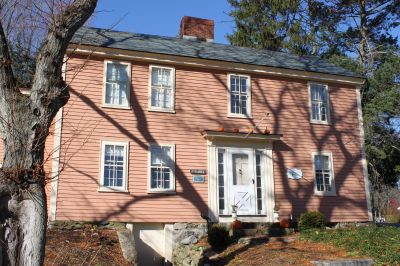 80 East Street, the Jacob Perkins House (c. 1700) - The Perkins-Hodgkins house is believed to have been built in 1700 on the foundation of the earlier Jacob Perkins home. The house has been greatly expanded over the years, but the original asymmetrical structure continues to anchor the corner with Jeffreys Neck Road.… Continue reading 80 East Street, the Jacob Perkins House (c. 1700)
 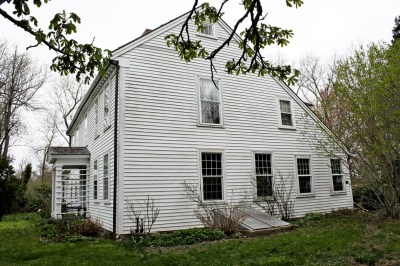 168 Argilla Road, the Tilton-Smith House (c. 1720) - Built circa 1720 by Abraham Tilton Jr., a 1998 fire took away much of its original frame, but the owner totally rebuilt the home with materials salvaged from 18th and 19th century structures throughout New England. … Continue reading 168 Argilla Road, the Tilton-Smith House (c. 1720)
 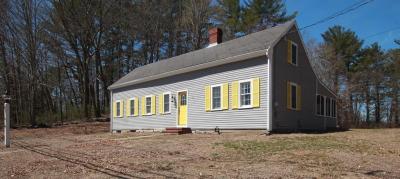 341 Linebrook Road, the Lot Conant house (1717, altered beyond recognition) - Architectural evidence, family history and deed research indicate that the oldest (center) part of this house was the home of Lot and Elizabeth Conant, the first of that family in Linebrook, constructed in 1717.… Continue reading 341 Linebrook Road, the Lot Conant house (1717, altered beyond recognition)
 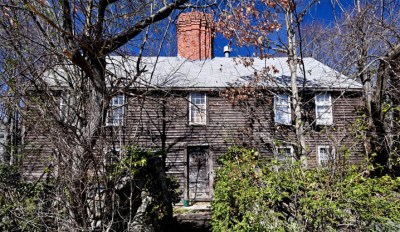 12 Green Street, the Andrew Burley House (1688) - Andrew Burley became a wealthy merchant and updated the house with fine Georgian features. Burley was a justice of the Sessions Court and representative to the General Court.… Continue reading 12 Green Street, the Andrew Burley House (1688)
  30 East Street, the Francis Jordan House (c. 1680) - A massive 17th Century timber frame from the First Period of construction in the English colonies is fully displayed throughout this house. … Continue reading 30 East Street, the Francis Jordan House (c. 1680)
  52 Jeffreys Neck Road, Shatswell Planters Cottage (c. 1646) - This small building on Strawberry Hill was moved from High Street and is believed to have been the original planters cottage of John Shatswell or his son Richard. … Continue reading 52 Jeffreys Neck Road, Shatswell Planters Cottage (c. 1646)
 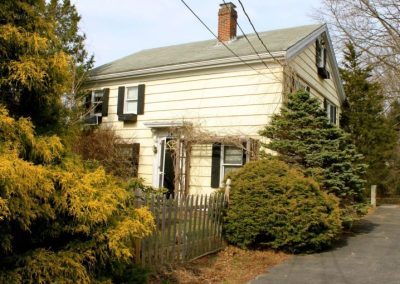 16 Fellows Road, the Ruth Fellows House (1714, altered) - Joseph Fellows acquired the farm by inheritance and purchase. He served in the King Philip war and married Ruth Fraile on April 19 1675. He died before 1693, and Mrs. Ruth Fellows died on April 14 1729. … Continue reading 16 Fellows Road, the Ruth Fellows House (1714, altered)
  95 High Street, the Simon and Hannah Adams House (c. 1700) - Simon Adams, a weaver and veteran of King Philip's War, owned this property in 1707, according to a deed of the adjoining property. (20:15). This "half-house" was originally extended as a leanto over the rear rooms. In 1906 the front door and old sash were changed and around 1919 the east ell was added.… Continue reading 95 High Street, the Simon and Hannah Adams House (c. 1700)
  46 Summer Street, the James Foster House (1720) - James Foster bought this former orchard land in 1720 from Nathaniel Clark who moved to Newbury. The northwest side is the original half-house, which was doubled in size and remodeled to appear Georgian, with the two chimneys, dormers and a symmetrical front. The house was owned by the Soward family in the 19th Century, and partially burned.… Continue reading 46 Summer Street, the James Foster House (1720)
 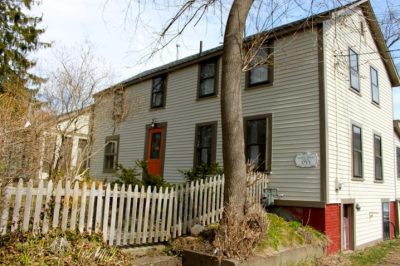 32 Water Street, the Jabez and Mary Sweet House (1713) - Jabesh Sweet built this house on a quarter acre lot by the river at 32 Water Street in 1713. People said that the ghost of Harry Maine the Mooncusser haunted the house that once sat where the garage for this house now stands. He was found guilty and staked to the Ipswich Bar for eternity.… Continue reading 32 Water Street, the Jabez and Mary Sweet House (1713)
 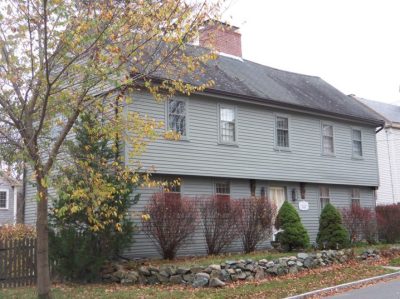 27 Summer Street, the Thomas Knowlton House (1688) - Humphrey Bradstreet. sold his house and land to Deacon Thomas Knowlton in 1646. In 1688 Knowlton passed his house and land to his grand nephew Nathaniel Knowlton with a new house erected on the property, and it is this house that survives today.… Continue reading 27 Summer Street, the Thomas Knowlton House (1688)
  26 East Street, the Polly Dole House (1687-1720) - Part of this house was constructed in 1687 for Deacon John Staniford and his wife Margaret. It acquired its current form in 1720. This was the home of writer John Updike, and has a preservation agreement with the Ipswich Historical Commission.… Continue reading 26 East Street, the Polly Dole House (1687-1720)
  22 Mineral Street, the Warner-Harris House (c. 1696, alt. 1835) - The earliest sections of this house were built by Daniel Warner in 1696 on Market Street. In 1835, Ephraim Harris, builder, was commissioned by Capt. Robert Kimball to build a new house on the lot. Harris removed a portion of the Warner house to his own land at the corner of Central and Mineral Streets, and enlarged it.… Continue reading 22 Mineral Street, the Warner-Harris House (c. 1696, alt. 1835)
  5-7 Poplar Street, the Dr. John Calef House (1671) - This house was built on South Main St. between 1671 and 1688 by Deacon Thomas Knowlton. In the mid-18th Century the house was owned by Dr. John Calef, a Loyalist. John Heard moved the house to its present location in order to build his elaborate Federalist home which now houses the Ipswich Museum. … Continue reading 5-7 Poplar Street, the Dr. John Calef House (1671)
  5 County Street, the Richard Rindge / Pindar House (1718) - The First Period house at 5 County Street was originally on upper Summer St., moved to this location in the last half of the 19th Century.… Continue reading 5 County Street, the Richard Rindge / Pindar House (1718)
 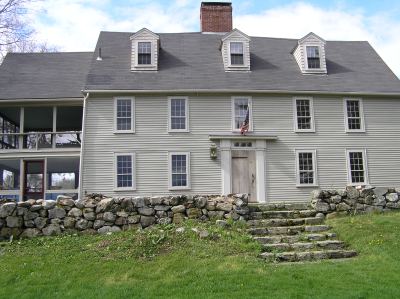 45 Heartbreak Road, the James Burnham House (1690) - The first period home was built in 1690 and has been remodeled greatly. It is an example of the distinct architecture that flowered in Ipswich in the late 17th century… Continue reading 45 Heartbreak Road, the James Burnham House (1690)
 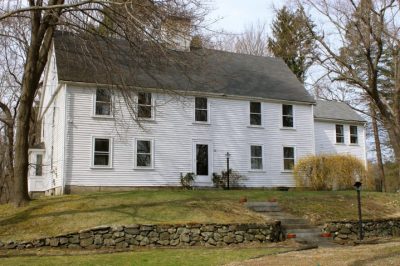 42 Heartbreak Road, the “Thomas Low House” (c. 1720) - The house at 42 Heartbreak Road is traditionally called the Thomas Low House but was constructed during the ownership of his grandson Thorndike Low, and was greatly renovated by subsequent owners in the Kinsman, Burnham and Heard families.… Continue reading 42 Heartbreak Road, the “Thomas Low House” (c. 1720)
  36 Water Street, the York – Averill House (1715-1790) - Captain Samuel York built this house in 1715 after selling two smaller lots on East Street. The earliest portions of this house date from the early years of his ownership, Benjamin Averill, a Revolutionary War veteran, bought the house in 1793 and it remained in the Averill family until the late 19th century.… Continue reading 36 Water Street, the York – Averill House (1715-1790)
  24 Topsfield Road, the Moses Kimball House (1688) - The land on which the Moses Kimball house was built is part of a larger grant to early settler Samuel Appleton. His son John Appleton sold a five and 3/4 acre lot on the south side of Topsfield Road to Moses Kimball, a taylor, who built some portion of this house in 1688.… Continue reading 24 Topsfield Road, the Moses Kimball House (1688)
  28 Water Street, the Harris-Stanwood House (1696) - The Harris – Stanwood house was built in 1696 by John Harris. John Stanwood acquired the property in 1809 and it remained in his family for many years. The right wing was added c. 1884.… Continue reading 28 Water Street, the Harris-Stanwood House (1696)
 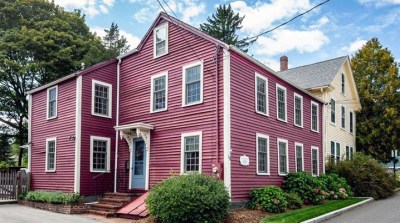 15 Summer Street, the Jonathan Pulcifer House (1718) - Jonathan Pulcifer built this house in 1718 on Summer Street, one of the "oldest ways" in Ipswich. He was a descendant of Benjamin Pulsipher, an early settler of Ipswich who died in 1695.… Continue reading 15 Summer Street, the Jonathan Pulcifer House (1718)
 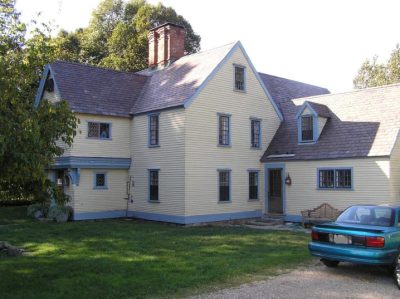 52 Jeffreys Neck Road, Ross Tavern – Lord Collins House (c. 1690) - The house was moved from South Main Street in 1940 by David Wendel and restored to a high-style First Period appearance on the basis of observed physical evidence. The Collins-Lord house on High Street was moved and attached to the rear of this house.… Continue reading 52 Jeffreys Neck Road, Ross Tavern – Lord Collins House (c. 1690)
  67 Turkey Shore Road, the Stephen Boardman House (1725) - This house is named for Stephen Boardman, the son of Thomas Boardman and Sarah Langley. The wide pine board floors in the house are original, and 4 restored fireplaces share a central chimney.… Continue reading 67 Turkey Shore Road, the Stephen Boardman House (1725)
 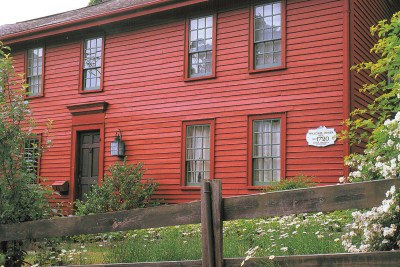 43 Summer Street, the Wilcomb-Pinder House (1718) - This timber-framed First Period house was built in 1718 by William Wilcomb. The interior of the home features hand-hewn summer beams, wide plank flooring and the original fireplaces. The next owner, William Benjamin Pinder was a corporal with Col. Appleton’s company during the French and Indian War.… Continue reading 43 Summer Street, the Wilcomb-Pinder House (1718)
 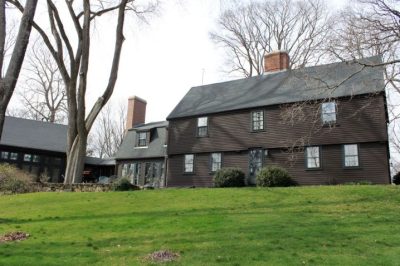 43 Argilla Road, the Giddings-Burnham House (c. 1640 / 1680) - The earliest section of the Giddings-Burnham House at 43 Argilla Road in Ipswich was built in the mid-17thCentury by carpenter George Giddings who immigrated from Norfolk, England. … Continue reading 43 Argilla Road, the Giddings-Burnham House (c. 1640 / 1680)
 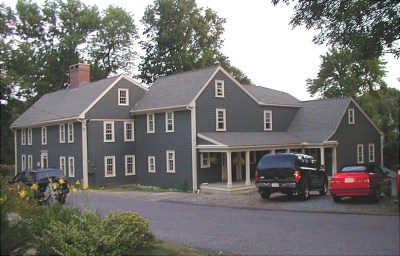 3 Hovey Street, the John Kendrick house(c. 1670 & later) - John Kenrick, a cooper by trade, owned this lot in 1665. He and his son sold it to Thomas Staniford in 1706. Structural evidence supports a construction date of about 1670. Much of the trim dates from the late 18th or early 19th centuries.… Continue reading 3 Hovey Street, the John Kendrick house(c. 1670 & later)
 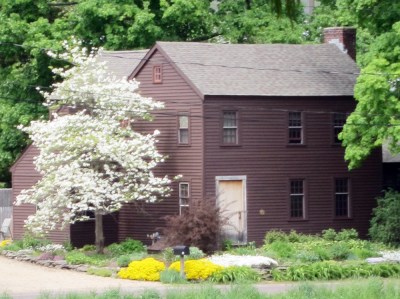 12 Water Street, the Glazier-Sweet house (1728) - This house was built in 1728 by Benjamin Glazier, a sea captain, and transitions the First and Second Periods of Colonial construction. The original half house and early Beverly Jog addition remain intact, with later additions.… Continue reading 12 Water Street, the Glazier-Sweet house (1728)
  9 County Street, the Benjamin Dutch House (1705) - This was built early in the 1700s, and was owned by one of several men named Benjamin Dutch who owned and sold properties throughout town. The asymmetrical facade and timber frame are typical of First Period construction.… Continue reading 9 County Street, the Benjamin Dutch House (1705)
  83 County Road, the Rogers-Brown-Rust House (1665-1723) - In 1836 the house and lot were conveyed to the South Parish as a church site. Asa Brown bought the house and removed it to its present location.… Continue reading 83 County Road, the Rogers-Brown-Rust House (1665-1723)
  8 Water Street, the Pengry-Harris-Sutton House (1677-1743), completely reconstructed in 2010) - Abner Harris bought this lot and enlarged the house in 1743. When the house was dismantled and reconstructed in the early 21st Century, evidence was discovered indicating that the eastern part of the house may date to 1677.… Continue reading 8 Water Street, the Pengry-Harris-Sutton House (1677-1743), completely reconstructed in 2010)
 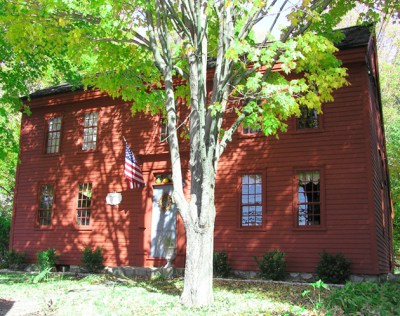 77 High Street, the John Kimball House (1680) - Richard Kimball owned this lot in 1637. The property passed to John Kimball, and the present house dates from the time of his ownership. It belonged to the Lord family through the 19th century.
… Continue reading 77 High Street, the John Kimball House (1680)
77 High Street, the John Kimball House (1680) - Richard Kimball owned this lot in 1637. The property passed to John Kimball, and the present house dates from the time of his ownership. It belonged to the Lord family through the 19th century.
… Continue reading 77 High Street, the John Kimball House (1680)  7 County Street, the Thomas Dennis House (1663-1750) - Shoreborne Wilson, a cooper, built a house and shop on this site about 1660. Thomas Dennis, the well-known master joiner, bought the property in 1663. A 1685 deed refers to the "new dwelling house" of Thomas Dennis.… Continue reading 7 County Street, the Thomas Dennis House (1663-1750)
  6 South Main Street, the Shoreborne Wilson – Samuel Appleton house (1685) - This house was built by joiner Sherborne Wilson,. The house was purchased in 1702 by Col. Samuel Appleton, the eldest son of Major Samuel Appleton. At the time it was still a two-room central chimney structure, and it is believed that Appleton expanded the building on the southeast side. The house is listed in the National Historic Register of Historic Places.… Continue reading 6 South Main Street, the Shoreborne Wilson – Samuel Appleton house (1685)
  51 Linebrook Road, the Hart House (1678) - The oldest parts of the Hart House were apparently constructed in 1678-80 by Samuel Hart, the son of Thomas Hart, an Irish tanner who arrived in Ipswich in 1637. The two oldest rooms are exact duplicates of the originals, which were moved to museums in the early 20th Century.… Continue reading 51 Linebrook Road, the Hart House (1678)
 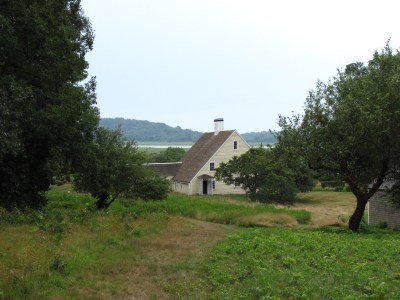 47 Jeffreys Neck Road, the Robert Paine House (1694) - This picturesque house remains on its original saltwater farm location. Three generations of the Paine family made their home here, From 1916, Greenwood Farm was a summer retreat for the Robert G. Dodge family, who used the Paine House as a guesthouse.
… Continue reading 47 Jeffreys Neck Road, the Robert Paine House (1694)
47 Jeffreys Neck Road, the Robert Paine House (1694) - This picturesque house remains on its original saltwater farm location. Three generations of the Paine family made their home here, From 1916, Greenwood Farm was a summer retreat for the Robert G. Dodge family, who used the Paine House as a guesthouse.
… Continue reading 47 Jeffreys Neck Road, the Robert Paine House (1694) 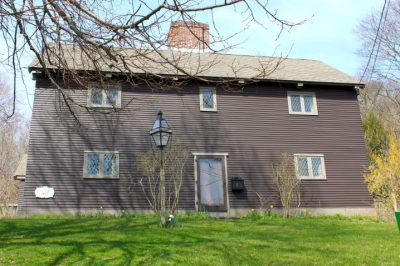 45 High Street, the John Lummus House (1712) - Jonathan Lummus, who served in King Philip’s War in 1675 was appointed a tithing man by the town in 1700. Lummus bought Captain Symon Stacy’s land and dwelling on High Street in 1712. This parcel had originally been granted to Thomas Dudley, Governor of Massachusetts. The house underwent a careful restoration by Phillip Ross in 1964.… Continue reading 45 High Street, the John Lummus House (1712)
  39 Summer Street, the Foster-Grant House (1717) - In 1717 Nathaniel Knowlton sold a small lot to James Foster who is believed to have built the house. In 1826, the family sold to Ephriam Grant, and the house was long known as the "Grant house." Early Colonial features are preserved throughout the house.… Continue reading 39 Summer Street, the Foster-Grant House (1717)
  39 -41 High Street, the Daniel Lummus House (1746 with earlier elements) - This house has elements dating to 1686 but was significantly rebuilt in 1746. Jonathan Lummus bequeathed to his son Daniel "a small piece of land out of my homestead adjoining to his homestead to make a convenient way to his barn." in 1728. … Continue reading 39 -41 High Street, the Daniel Lummus House (1746 with earlier elements)
 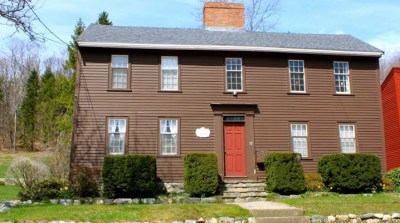 17 High Street, the Thomas Lord House (after 1658) - Thomas Lord, a cordwainer built the earliest section of this house in 1658. The oak frame encloses a two-room over-two-room house. The saltbox leanto was added later.… Continue reading 17 High Street, the Thomas Lord House (after 1658)
  153 Argilla Road, the Isaac Goodale House (1669) - This First Period house was built in West Peabody before 1695. In 1928 it was reconstructed at 153 Argilla Road by Robert and Susan Goodale. … Continue reading 153 Argilla Road, the Isaac Goodale House (1669)
  106 High St. the Caleb Kimball House (1715) - The owner has maintained the left inside as a First Period home, with exposed beams and a large fireplace. The right inside has ooriginal Georgian features,
… Continue reading 106 High St. the Caleb Kimball House (1715)
106 High St. the Caleb Kimball House (1715) - The owner has maintained the left inside as a First Period home, with exposed beams and a large fireplace. The right inside has ooriginal Georgian features,
… Continue reading 106 High St. the Caleb Kimball House (1715)  104 High Street, the John Kimball House (1715) - This is is one of three John Kimball houses along High Street, two said to have been built by the father, the third by the son. This house is protected by a preservation agreement with the Ipswich Historical Commission.… Continue reading 104 High Street, the John Kimball House (1715)
  103 High Street, the William Merchant House (1670) - The building dates to approximately 1670, but the right half may contain timbers from a previous structure on this site which was built in 1639. The section on the left was added in 1672.… Continue reading 103 High Street, the William Merchant House (1670)
  13 High Street, the Joseph Willcomb House (1669-1693) - John Edwards, a tailor, acquired the property in 1668. The earliest section was built by Edwards or his son when he inherited the property in 1693. The house is named for Joseph Willcomb, who captained many ships.… Continue reading 13 High Street, the Joseph Willcomb House (1669-1693)
 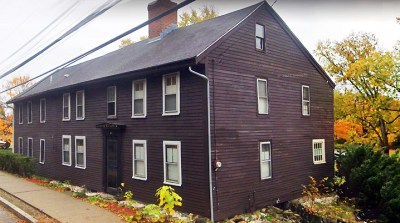 88-90 High Street, the Shatswell-Tuttle House (c. 1690/1806) - The oldest section of the Tuttle – Lord – Shatswell house was built before 1690 for Deacon John Shatswell. It was the home of Col. Nathaniel Shatswell,who commanded Union troops during the Civil War.… Continue reading 88-90 High Street, the Shatswell-Tuttle House (c. 1690/1806)
 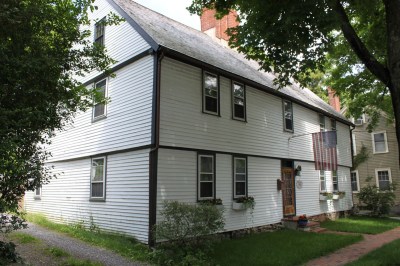 8 East Street, the Captain Matthew Perkins House (1701) - Winner of the 1991 Mary Conley Award, this well-preserved 1st Period house sits on a former orchard lot that was sold in 1701 by Major Francis Wainwright to Matthew Perkins, a weaver and soldier. In 1719 Perkins opened an inn and tavern in this house, "at the sign of the blue anchor."… Continue reading 8 East Street, the Captain Matthew Perkins House (1701)
 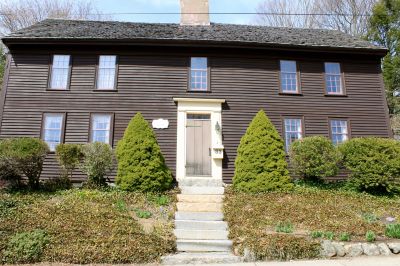 33 High Street, the John and Sarah Dillingham Caldwell House (1660/1709) - In 1654, Cornelius Waldo sold to John Caldwell for £26 the house and land he bought of Richard Betts. Caldwell removed the old house and built a very substantial house of the 1660s.… Continue reading 33 High Street, the John and Sarah Dillingham Caldwell House (1660/1709)
  41 Turkey Shore Road, the William Howard House (c. 1680/1709) - Architectural evidence suggests that William Howard removed the 1638 home of Thomas Emerson and built the left side of the present house about 1680. The right side was added in 1709. … Continue reading 41 Turkey Shore Road, the William Howard House (c. 1680/1709)
 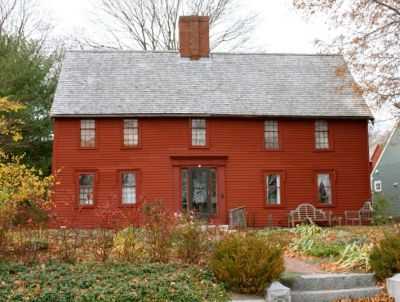 6 Water Street, the Reginald Foster House (1690/1745) - Ipswich deeds list the transfer of a house at this location from Roger Preston to Reginald Foster in 1657, but construction of this house dates to about 1690. Massive chamfered summer beams in the right section, the sharp-pitched roof and purlins provide evidence of an early date.… Continue reading 6 Water Street, the Reginald Foster House (1690/1745)
  27 High Street, the Edward Browne House (c. 1650-1750) - Edward Brown was the original owner of this site in 1639, and the east side of the present house is believed to have been constructed under his ownership around 1650 as a one-room over-one-room floor plan.… Continue reading 27 High Street, the Edward Browne House (c. 1650-1750)
 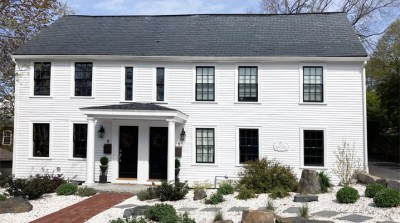 6-8 North Main St., Taverner Sparks (c. 1671-1710) - The left side of this first period house was the home of taverner John Sparks and his wife Mary. The right side was added in the early 18th Century during ownership by the Smith family. Sparks' nearby hostelry was known far and wide, and sessions of the Quarterly Courts met there for 20 years.… Continue reading 6-8 North Main St., Taverner Sparks (c. 1671-1710)
 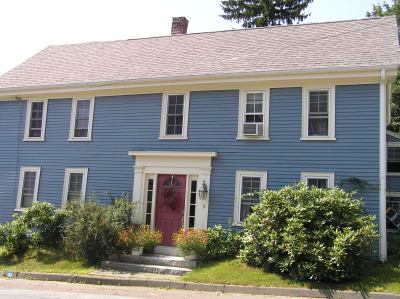 11 Summer Street, the Nathaniel Hovey House (1718) - The Hovey family were among the original settlers of Ipswich. The builder of this house was the son of Daniel Hovey and Abigail (Andrews) Hovey. His grandfather was the settler Daniel Hovey. (There were several descendants of the settler Daniel Hovey given the name Nathaniel. This is not the Nathaniel Hovey who removed to Windham,… Continue reading 11 Summer Street, the Nathaniel Hovey House (1718)
  69 S. Main Street, the Samuel Dutch House (c.1723 & later) - Samuel Dutch bought this land in 1723 and built this house by 1733. The front appears to have been enlarged with a third floor and a hip roof during the early 19th Century. The rear wing has a chamfered summer beam, suggesting that it was an older house.… Continue reading 69 S. Main Street, the Samuel Dutch House (c.1723 & later)
  76 East Street, the Hodgkins-Lakeman House (1668 -1718) - William Hodgkins built the oldest part of this house before 1700. In 1718 he sold the dwelling to Archelaus Lakeman and the property remained in the Lakeman family for almost 200 years.… Continue reading 76 East Street, the Hodgkins-Lakeman House (1668 -1718)
  82 High Street, the John Brewer House (1680) - John Brewer came to Ipswich with his father Thomas Brewer who is shown living in Ipswich in 1639. Town records show that in 1662 the town constables were ordered to pay John Brewer 20 schillings, charges he was due “about constructing the fort”. John Brewer Sr. died on June 23, 1684.… Continue reading 82 High Street, the John Brewer House (1680)
  421 Linebrook Road, the Abraham Howe Barn (1725) - This early 18th century barn served several generations of the Howe family, and was converted to residential use in 1948. Elizabeth Howe, convicted as a witch and put to death in 1692, lived nearby… Continue reading 421 Linebrook Road, the Abraham Howe Barn (1725)
 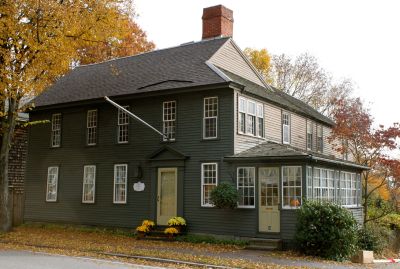 26 High Street, the Philip Call House (1659) - This 2-story timber-frame First Period house was built by cordwainer Philip Call about 1659, enlarged around 1725. In 1967, the owners uncovered a chamfered 17th century summer beam and field paneling behind Victorian-era walls. T… Continue reading 26 High Street, the Philip Call House (1659)
 Ipswich Second Period Houses
The Second Period refers to Colonial Georgian architecture, from approximately 1725 until the American Revolution, which ushered in the Federal era. While often similar to fine First Period homes, 2nd houses feature a planned, balanced facade, pilasters, other ornamental details, and chimneys on either end of the house. Most earlier homes were updated to appear Georgian as they were enlarged or remodeled, but the lack of symmetry and the large central chimneys remain.
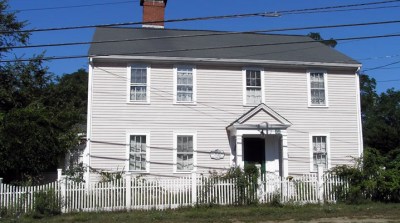 68 Jeffreys Neck Road, the Captain John Smith House (c. 1740) - Richard Smith came from Shropham, Co Norfolk by 1641. His farm came into possession of Richard Smith. To his son, John, for £170, he conveyed an 18 acre pasture, bounded in part by the river, "with the new house and half the barn, standing at the south-east end of ye great field."… Continue reading 68 Jeffreys Neck Road, the Captain John Smith House (c. 1740)
 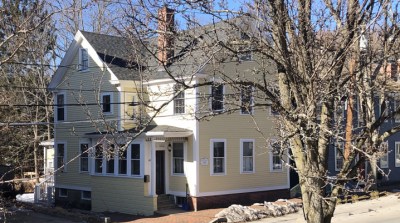 48 North Main Street, the Thomas Morley House (c. 1750, alt. 1845) - This house and its northern neighbor, 50 North Main, were a single structure before 1845, when Thomas Morley bought the southern portion of that house, separated and rotated it 90°.… Continue reading 48 North Main Street, the Thomas Morley House (c. 1750, alt. 1845)
 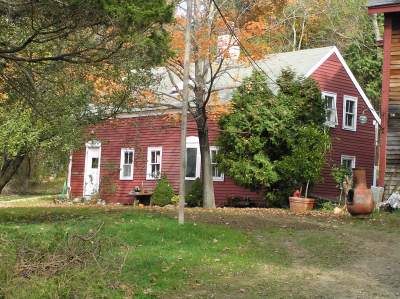 44 Fellows Road, the Joseph Fellows Jr. House (1734) - The corner of Upland Road was known in early days as Fellows Lane, and it was near this corner, perhaps on this lot, that William Fellows, who settled in Ipswich in 1635, is believed to be buried. This house was constructed in 1734 by Joseph Fellows Jr.… Continue reading 44 Fellows Road, the Joseph Fellows Jr. House (1734)
 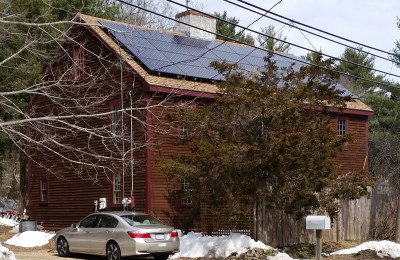 315 Linebrook Road, the William Conant House (1777) - William Conant (1747-1826) amassed considerable real estate in Ipswich. His son William, known locally as “Young Squire Bill" was a selectman, assessor, and overseer for the Town of Ipswich for many years.… Continue reading 315 Linebrook Road, the William Conant House (1777)
  3 Newbury Road, the Philomen Foster House and barn (1787) - Philomen Foster was a deacon of the Linebrook Church and was a member of the Linebrook minutemen. This 18th century cape retains much of its historic character. … Continue reading 3 Newbury Road, the Philomen Foster House and barn (1787)
  27 East Street, the Widow Elizabeth Caldwell House (1740-1755) - Joseph Wait sold this lot to Elizabeth Caldwell, widow of Thomas, in 1829.who moved and joined two houses built c. 1740 to 1775 location. … Continue reading 27 East Street, the Widow Elizabeth Caldwell House (1740-1755)
  2 Old England Road, the Captain Jabez Treadwell House (1748) - The Captain Treadwell house features Georgian-era construction. Captain Treadwell's ships, "The Dolphin," and "Hannah" sailed from the town wharves, where they loaded to Trinidad, St. Lucie, Point Petre and other West India ports.… Continue reading 2 Old England Road, the Captain Jabez Treadwell House (1748)
 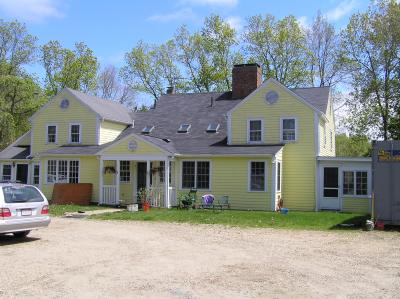 178 Argilla Road, the Stephen Smith House (1742) - Sagamore Hill, which is near Fox Creek and Argilla Roads, was originally apportioned in small tillage lots to a considerable number of owners. The oldest part of this house was built by Stephen Smith, who bought the land in 1742.… Continue reading 178 Argilla Road, the Stephen Smith House (1742)
 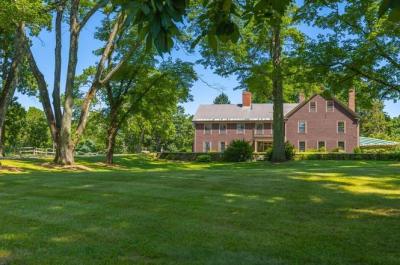 11 Waldingfield Road, “Applefield,” the Oliver Appleton Farm (1759 and earlier) - This property was part of the original Samuel Appleton farm. The 18th Century homes of Oliver Appleton and his son Oliver Jr. were moved a short distance and combined into one house by Charles Tuckerman.… Continue reading 11 Waldingfield Road, “Applefield,” the Oliver Appleton Farm (1759 and earlier)
 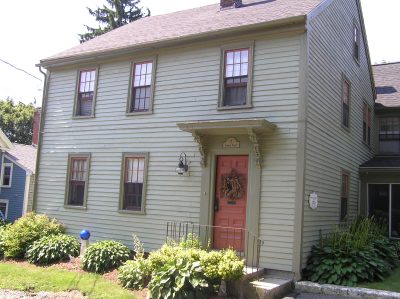 7 Summer Street, the Thomas Treadwell House (c. 1740) - The original house consisted of a large room with a chimney and entry at the right. The sloop, "Endeavorer," under Capt. Thomas Treadwell, was part of the fishing fleet of 1716.… Continue reading 7 Summer Street, the Thomas Treadwell House (c. 1740)
  19 Summer Street, the Solomon Lakeman House (before 1745) - This lot was owned or occupied by Solomon Lakeman in 1745, but could have been constructed earlier. The 1832 map shows the owner as "The widow Lakeman."… Continue reading 19 Summer Street, the Solomon Lakeman House (before 1745)
  130 Topsfield Road, the William Wallis House (c. 1800-20) - This large farm was granted to Ensign Nicholas Wallis in 1639, and it appears to have stayed in the family until a descendant of William Wallis, the presumed builder of this house, sold it in 1875. … Continue reading 130 Topsfield Road, the William Wallis House (c. 1800-20)
  50 Mill Road, the Caleb Warner House (1755) - Caleb Warner, clothier, bought Michael Farley’s interest in the dam and married the 16-year-old daughter of the miller, By 1755 he had a large farm and built this mansion. The rear section incorporates two earlier structures dating to before 1734, the year he came into possession of the land.… Continue reading 50 Mill Road, the Caleb Warner House (1755)
  43 High Street, the Fitts-Manning-Tyler House (1767) - This house is believed to have been built in 1767 at today’s 42 North Main Street. Sophia Tyler bought a lot on High St. in 1873 and removed the Fitts house to the property. Located between the Daniel and Jonathan Lummus houses, the three properties are on land that was originally granted to Thomas Dudley, governor of Massachusetts for four years, and Ann Bradstreet, America’s first poet.… Continue reading 43 High Street, the Fitts-Manning-Tyler House (1767)
  108 High St., the Dow-Harris House (1735) - This dwelling began as a half house, two rooms in depth, and was constructed about 1735 for Margaret Dow and her second husband John Lull. The entry room retains its original interior casings. Additions date to the 19th Century. … Continue reading 108 High St., the Dow-Harris House (1735)
  307 High Street, the Moses Jewett House (1759) - Moses Jewett married Elizabeth Bugg of Rowley. He was Captain of a Troop of Horse in Col. John Baker’s Regiment, which marched on the Lexington alarm, April 19, 1775 and also marched to Gloucester on November 29th of the same year.… Continue reading 307 High Street, the Moses Jewett House (1759)
 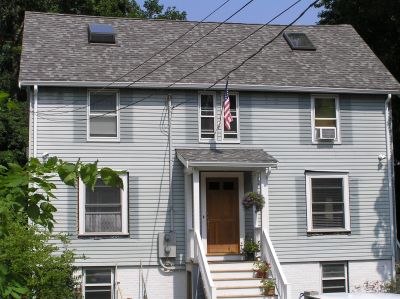 5 Spring Street, the Henderson House (c. 1880) - This house stayed in the Henderson family through the 19th Century. In the 1960s it was the site of a gunfire exchange with Ipswich police officers.… Continue reading 5 Spring Street, the Henderson House (c. 1880)
  5 Summer Street, the Widow Fuller House (1725) - In 1754, Elizabeth Fuller sold this house and land to Thomas Treadwell, who also owned the house at 7 Summer Street. Stylistic evidence points to a construction date of c. 1725. Originally the house was one room deep, with a cased frame. An ell was added at the turn of the 19th century.… Continue reading 5 Summer Street, the Widow Fuller House (1725)
  155 Argilla Road, the Holman-Ilsley House, c. 1790 (moved in 1951) - This house was moved to this location from Ilsley Farm in W. Newbury. Architectural features suggest an 18th Century origin. … Continue reading 155 Argilla Road, the Holman-Ilsley House, c. 1790 (moved in 1951)
  85 High Street, the Elizabeth and Philip Lord House (1774) - This house was built about 1774 by Phillip Lord when he married the widowed Elizabeth Kimball Warner In 1832, the house was acquired by Benjamin Fewkes, who smuggled the first lace stocking machine into this country from England. … Continue reading 85 High Street, the Elizabeth and Philip Lord House (1774)
  83 High Street, the Isaac Lord House, 1696-1806 - This house was in the Lord family for several generations. The right side is probably First Period. Boards and timbers from the 1771 Jail on Meeting House Green were used when the house was enlarged in 1806.… Continue reading 83 High Street, the Isaac Lord House, 1696-1806
 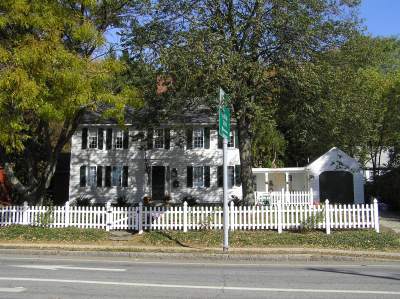 73 High Street, the Nathaniel Lord House (c. 1747) - This house is named after Nathaniel Lord who spent 36 years as the Register of Probate in the Ipswich Court. The western half of this house predates the eastern side and may have 17th Century elements.… Continue reading 73 High Street, the Nathaniel Lord House (c. 1747)
  68 High Street, the Wood – Lord House (c. 1740) - After her husband Daniel disappeared in 1727 at Penobscot Bay after being attacked by Indians, the court allowed Martha Ringe to marry John Wood before the customary three years had passed "in order to advance her circumstances." It was owned by Nathaniel Lord and his heirs in the 19th Century.… Continue reading 68 High Street, the Wood – Lord House (c. 1740)
  59 South Main Street, the Philomen Dean House, Old Lace Factory (1716) - Dr. Philomen Dean bought this lot in 1715 and built a house soon thereafter. After various owners, the building was sold to the Boston and Ipswich Lace Co. in 1824, and an addition was built for use as a factory.… Continue reading 59 South Main Street, the Philomen Dean House, Old Lace Factory (1716)
 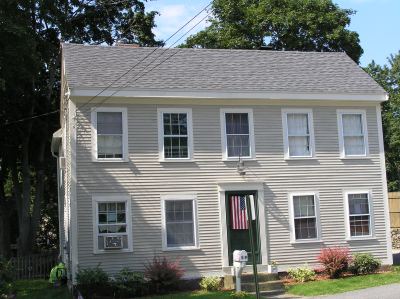 59 East Street, the Daniel Rindge House (1719) - The small lot fronting on East Street was sold to Daniel Ringe, Oct. 16, 1719 . It was sold to John Holland, Nov. 6, 1742. Daniel Ringe was an early settler of Ipswich, and as a young man worked as a cow-herd. Captain Ringe was a soldier in the Indian wars and became a prominent citizen of Ipswich.… Continue reading 59 East Street, the Daniel Rindge House (1719)
  49 North Main Street, the John & Joanna Chapman House (1769) - This house was built in 1770 by John Chapman, a "leather breeches maker." In 1822 Captain Ephraim Kendall sold the house to Ebenezer and Daniel Russell, and throughout the rest of the 19th-century the house stayed in the Russell family.… Continue reading 49 North Main Street, the John & Joanna Chapman House (1769)
 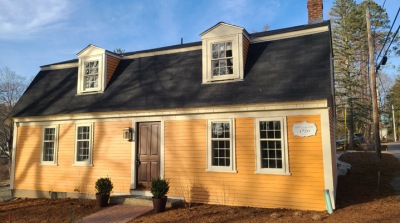 48 Turkey Shore Road, the Nathaniel Hodgkins House (1720) - The house at 48 Turkey Shore Road is believed to have been built by Nathaniel Hodgkins in 1720 on land formerly owned by Daniel Hovey. The gambrel roof indicates early Georgian era construction. A 19th Century rear ell was removed in 2022 and replaced with a modern but compatible addition.… Continue reading 48 Turkey Shore Road, the Nathaniel Hodgkins House (1720)
  38 North Main Street, the Old Post Office (1763) - This structure was built in 1763 as part of the historic Dr. John Manning property. Probably originally a barn or warehouse, it became the post office in 1790. This building also served as the shop of Daniel Rogers, a master gold and silversmith who later moved to Newport RI.… Continue reading 38 North Main Street, the Old Post Office (1763)
  30 High Street, the Joseph Bolles House (1722) - This house began as a central chimney house, one room deep. Rooms were later added to the rear, The original oak frame is concealed, and second and third period trim dominate the house.… Continue reading 30 High Street, the Joseph Bolles House (1722)
 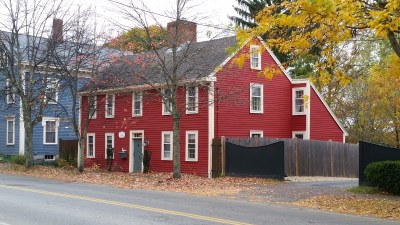 40 High Street, the William and Lydia Lull Caldwell House (after 1733) - William Caldwell built this house after purchasing the lot in 1733, The house remained in the Caldwell family into the 20th Century. Key features of the house include a large kitchen fireplace and exceptional period trim. … Continue reading 40 High Street, the William and Lydia Lull Caldwell House (after 1733)
 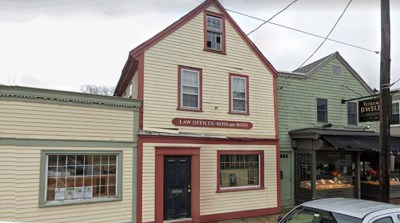 20 Market Street, the Stacey-Ross House (1734) - In 1733 John Stacey "being incapable of labor " petitioned the town that he may build a house beside the rocky ledge on the lower North Green "for selling cakes and ale for his livelihood." The house was moved to this location 100 years after its construction. … Continue reading 20 Market Street, the Stacey-Ross House (1734)
  110 High Street, the John Kimball Jr. House (1730) - John Kimball Sr. acquired this land in 1708. Kimball's son, John Jr. built the house and a barn. The eastern half is older, and its timbers were originally exposed. The driveway is the original High Street before the bridge was constructed in 1906.… Continue reading 110 High Street, the John Kimball Jr. House (1730)
  86 County Road, the Burnham – Brown House (1775) - This house was built in 1775 on a lot on Candlewood Rd., probably by Thomas Burnham. In 1821 Nathan Brown bought the house from Oliver Appleton, and 3 years later he removed it to its present site on County Rd. Brown and others enlarged and remodeled the old Burnham House, but some 18th century features remain. … Continue reading 86 County Road, the Burnham – Brown House (1775)
 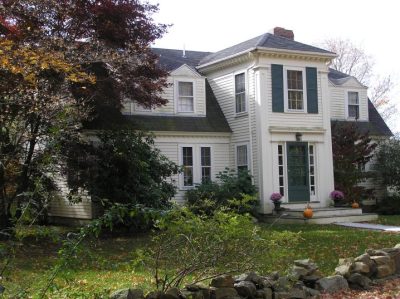 65 Candlewood Road, the Rhoda Kinsman House (1776/1818) - Jeremiah Kinsman died in 1818, and his will bequeathed the “Walker’s Island farm” to his sons Jeremiah and William in equal parts. William or his son William Jr. built this house next door, which was known as the “cottage." It came to be occupied by Rhoda Kinsman, daughter of William Jr.… Continue reading 65 Candlewood Road, the Rhoda Kinsman House (1776/1818)
 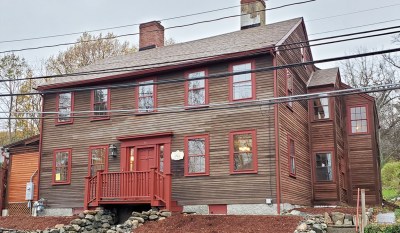 38 East Street, the John Harris House (1742) - Thomas Harris purchased land along East Street in 1665. His son John was deputy sheriff and transported accused witches to Salem for trial. This sizable Georgian house was built by John Harris, 3rd or 4th generation. The property descended to Capt. Stephen Baker, whose heirs owned into the 20th Century.… Continue reading 38 East Street, the John Harris House (1742)
  9 High Street, the Samuel Newman House (before 1762) - Joseph Newman built the house at 9 High Street in 1762. It was later owned by Samuel Newman. The present form of this house is composed of at least 3 structures, and the attic tells the story. It started out as a colonial home with a center chimney and center entrance.… Continue reading 9 High Street, the Samuel Newman House (before 1762)
  151 Labor in Vain Road, the Henry Bennett House (c. 1680- 1720) - The house on Fox Creek Rd. known as the Labor in Vain Farm House was built around 1720, but has some late First Period features.… Continue reading 151 Labor in Vain Road, the Henry Bennett House (c. 1680- 1720)
  11 County Street, the Bennett-Caldwell House (1725) - Joseph Bennett built this early Second Period house in 1725. In 1818 the house was sold to Capt. Sylvanus Caldwell, who engaged in maritime trade along the coast from Massachusetts to Maine for a half century.… Continue reading 11 County Street, the Bennett-Caldwell House (1725)
 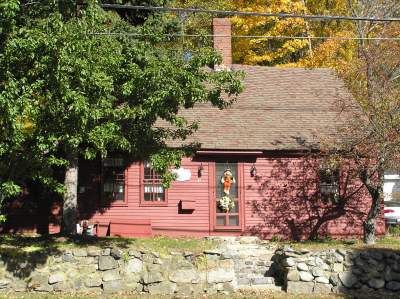 57 High Street, the Stone – Rust – Abraham Lummus House (c. 1750) - This cape saltbox was built by Robert Stone and has many original features. William Rust bought the house in 1851 and his heirs occupied the estate into the 20th century.… Continue reading 57 High Street, the Stone – Rust – Abraham Lummus House (c. 1750)
  232 Argilla Road, the Brown-Crockett House (c. 1800) - John Patch died in 1799 leaving the Sagamore Hill farm to his grandson Tristram Brown, who built the dwelling, which he operated as a boarding house on the way to the beach. Dr. Eugene A. Crockett bought the property along with its dairy and hay farm in November 1897. … Continue reading 232 Argilla Road, the Brown-Crockett House (c. 1800)
 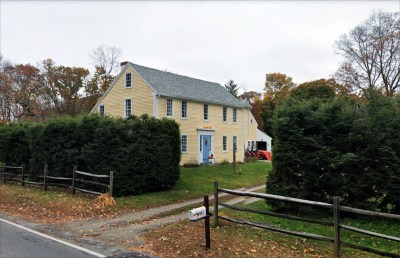 114 Topsfield Road, the Goodhue-Adams House (1763) - The home at 114 Topsfield Road is known as the Goodhue-Adams-Patch house. The Goodhue and Adams families were among the original settlers in Ipswich. The house is believed to have been built in 1763. … Continue reading 114 Topsfield Road, the Goodhue-Adams House (1763)
 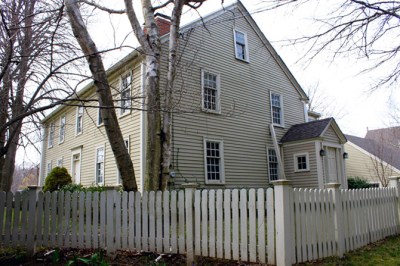 49 Candlewood Road, the Kinsman-Patch House (1767) - Robert Kinsman constructed this First Period house before 1714, and the home has been greatly expanded over the years. Stephen Kinsman inherited the house in 1726, and with his wife Elizabeth Russell brought up a family of twelve children. They dwelt in the old Robert Kinsman homestead until 1767 when he sold his farm, 47 acres and buildings to Samuel Patch.… Continue reading 49 Candlewood Road, the Kinsman-Patch House (1767)
  41 Candlewood Road, the Boardman House (c. 1730) - Bryan Townsend completely restored this second-period 1750 home built by Captain John Boardman or his son Thomas. The barn that Townsend restored received the 2009 Mary Conley award for historic preservation of an Ipswich property.… Continue reading 41 Candlewood Road, the Boardman House (c. 1730)
  53 Argilla Road, the Samuel Kinsman house (1750-77) - Samuel Kinsman received this property in a bequest from his father Capt. John Kinsman, who married Hannah Burnham in 1733. The house is generally dated circa 1750 with a 1777 wing from an existing structure that was moved.… Continue reading 53 Argilla Road, the Samuel Kinsman house (1750-77)
  41 Linebrook Road, Old Cross Farm (c. 1717) - Originally a smaller house, constructed by John Denison the elder, it came into the possession of of Nathaniel Cross in 1761 and became a 25 -acre working farm. Several generations of the Cross family lived in this house, operating a weaver’s shop, fruit farm and poultry operation. … Continue reading 41 Linebrook Road, Old Cross Farm (c. 1717)
  34 High Street, the White Horse Inn / Jeremiah Lord House (1659 / 1763) - John Andrews, innkeeper sold this lot with a house in 1659. The First Period structure was greatly altered and expanded after its purchase by Jeremiah Lord in 1763, and took its present appearance around 1800. … Continue reading 34 High Street, the White Horse Inn / Jeremiah Lord House (1659 / 1763)
 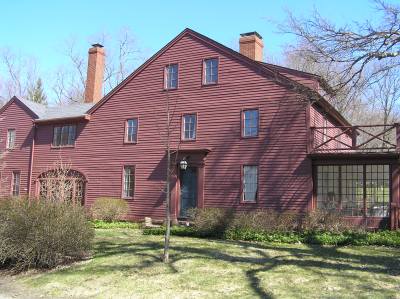 11 Woods Lane, the Merrifield House (c. 1725-1800) - The oldest part of the large house at 11 Woods Lane was built in 1792 by Francis Merrifield, Jr. who served as a lieutenant in Capt. Nathaniel Wade’s Co. during the Revolutionary War. … Continue reading 11 Woods Lane, the Merrifield House (c. 1725-1800)
  88 County Road, the Col. Nathaniel Wade House (1727) - This house was built in 1727 by Captain Thomas Wade. His son Nathaniel Wade received command at West Point after Generald Arnold went to the enemy. The house has a preservation covenant with the Ipswich Historical Commission.… Continue reading 88 County Road, the Col. Nathaniel Wade House (1727)
 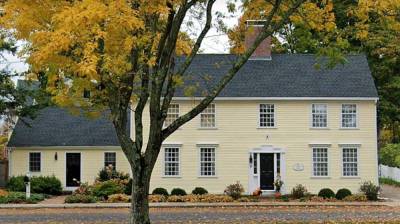 7 South Village Green, the Col. John Baker House (c. 1761) - Daniel Rogers sold the old Rogers homestead to John Baker in 1761 and Baker greatly altered or built this house, which has much original material, including Georgian paneling and original fireplaces. This house is protected by a preservation agreement with the Ipswich Historical Commission.… Continue reading 7 South Village Green, the Col. John Baker House (c. 1761)
  62 East Street, the Wainwright-Treadwell House (1691/1726) - Capt. John Wainwright bought 3 1/2 acres from Nathaniel Treadwell in 1710 and built part of this fine Georgian mansion, which features elaborate panels and molding, re-used summer beams, and a massive early fireplace.… Continue reading 62 East Street, the Wainwright-Treadwell House (1691/1726)
 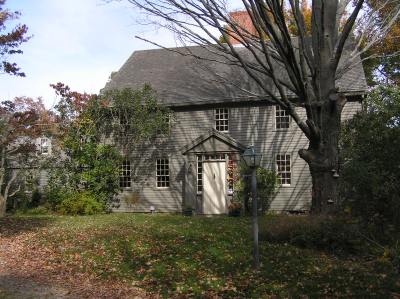 59 Candlewood Road, the Jeremiah Kinsman House (1752) - Stephen Kinsman built the house at 59 Candlewood Rd. in 1752. He bequeathed to his son Jeremiah "all my lands in Walker's Swamp with the dwelling house and buildings thereon, recorded Dec.27, 1756.… Continue reading 59 Candlewood Road, the Jeremiah Kinsman House (1752)
  57 North Main Street, the Day-Dodge House (1737) - This unusual house has three entrances and asymmetrical bays. The corner at North Main and East Street is the oldest section and appears to have elements of a barn constructed by Francis Wainwright at this location in 1696. This house is protected by a preservation agreement.… Continue reading 57 North Main Street, the Day-Dodge House (1737)
  5 South Village Green, the Aaron Smith House (1776) - Aaron Smith married Lucy, the daughter of John and Eunice Baker next door. A metal worker, He produced bayonets for the Revolutionary War. The clocks he produced are highly valued.… Continue reading 5 South Village Green, the Aaron Smith House (1776)
  47 County Street, the Benjamin Grant House (1735) - The Benjamin Grant House was originally built as a half house. Benjamin Grant was born in 1701, married Anne Perkins in 1722, and was killed in the French and Indian War in 1756.… Continue reading 47 County Street, the Benjamin Grant House (1735)
  36 North Main Street, the Dr. John Manning House (1763) - This house has one of the first preservation agreements in Ipswich, created by the Ipswich Heritage Trust. Dr. Manning built an unsuccessful wind-driven woolen mill next to the Choate Bridge. … Continue reading 36 North Main Street, the Dr. John Manning House (1763)
 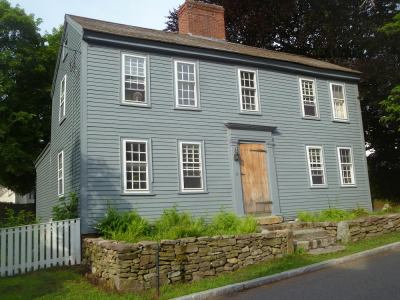 3 Summer Street, the Benjamin Kimball House (c . 1730, moved in 1803) - This house was a single-floor 2 room cape moved to this location in 1803. The first floor outside corners have gunstock posts, evidence that they once supported the roof. … Continue reading 3 Summer Street, the Benjamin Kimball House (c . 1730, moved in 1803)
  2 Turkey Shore, the Heard – Lakeman House (1776) - Nathaniel and John Heard bought this land in 1776 and built the present house. Nathaniel sold the house to Richard Lakeman III in 1795. The house was added to the National Register of Historic Places in 1980, and has a preservation agreement with the Ipswich Historical Commission. … Continue reading 2 Turkey Shore, the Heard – Lakeman House (1776)
 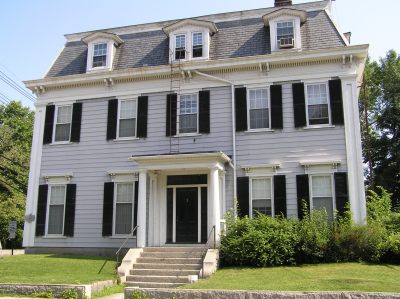 2 Poplar Street, Swasey Tavern (1718) - John Ayres built a house in 1693, and sold it in 1705 to John Whipple, who did extensive alterations. In 1725 Increase How purchased the "good mansion house” from Whipple and ran an inn. In 1789 President George Washington addressed the citizenry from these steps. It was owned by General Joseph Swasey in the early 19th Century. … Continue reading 2 Poplar Street, Swasey Tavern (1718)
  2 North Main Street, the John Appleton House (1707) - In 1962 the Appleton House was purchased by Exxon, which intended to build a gas station on the site. The Ipswich Heritage Trust was formed to save the house, the first major preservation action in Ipswich.… Continue reading 2 North Main Street, the John Appleton House (1707)
  18 East Street, the Baker-Dodge House (1727) - This house was built by John Baker III, and was purchased by Mary Dennis Dodge in 1818. The house is protected by a preservation agreement between the owners and the town of Ipswich. … Continue reading 18 East Street, the Baker-Dodge House (1727)
  14 East Street, the Baker-Newman House (1725) - John Baker obtained a section of the land extending down East Street to Spring Street, originally granted to Rev. Cobbet. Nathaniel Jones Jr. sold the house and lot to George Newman Jr., a weaver.… Continue reading 14 East Street, the Baker-Newman House (1725)
 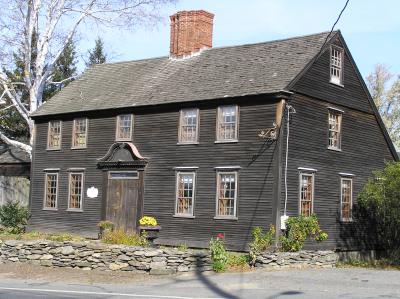 115 High Street, the Baker-Sutton House (1725) - The widow of cowherd Haniel Bosworth sold this lot with a dwelling in 1702 to William Baker, who built this fine early Georgian house. The pilastered chimney and elaborate Connecticut Valley door frame were added in the 20th Century.… Continue reading 115 High Street, the Baker-Sutton House (1725)
 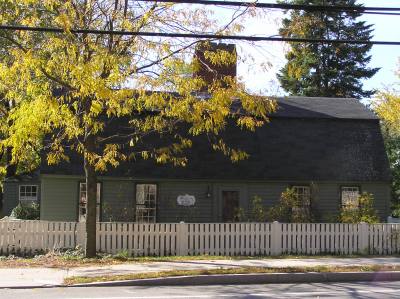 100 High Street, the Joseph Fowler House (1720 – 1756) - Joseph Fowler, a carpenter bought the lot in 1720. Records indicate that a house may have existed before Fowler obtained it. The house has a 1-1/2 story, gambrel roof with a central chimney and exposed “gunstock” posts.… Continue reading 100 High Street, the Joseph Fowler House (1720 – 1756)
  1 Turkey Shore Road, the Burnham-Patch-Day House c. 1670-1730 - This house has a preservation agreement with the Ipswich Historical Commission. The house was built by Thomas Burnham in 1730 on the foundation of the earlier house he bought in 1667. The large ell on Poplar Street was added in the early nineteenth-century. Abner Day bought the house of the heirs of John Patch in 1814 and kept a well-known tavern.… Continue reading 1 Turkey Shore Road, the Burnham-Patch-Day House c. 1670-1730
 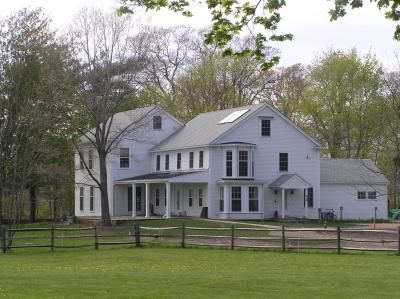 Appleton Farms - Owned by the Trustees of Reservations, Appleton Farms is America’s oldest working farm, with 12 miles of walking trails, a visitor center, and Community Supported Agriculture program.… Continue reading Appleton Farms
 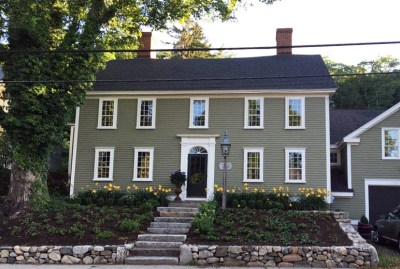 21 High Street, the Haskell-Lord House (c. 1750) - This fine house was built circa 1750 by Mark Haskell, an Ipswich cabinet-maker. Haskell served as a Light House Volunteer during the Revolutionary War. Daniel Lord married Eunice, the daughter of Mark Haskell, and Haskell conveyed to him the house and an acre of land in 1767, which is the first registered deed.… Continue reading 21 High Street, the Haskell-Lord House (c. 1750)
 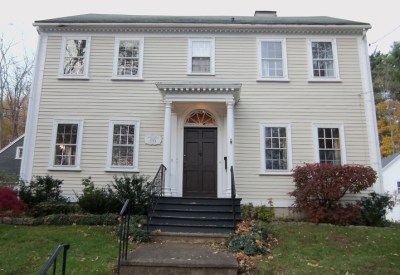 3 High Street, the John Gaines House (1725) - The John Gaines house at 3 High St. is a 1725 building remodeled in 1806 with Federal trim. The Gaines family in Ipswich are famous for the chairs they produced. The home also served for over one hundred years as the Episcopal rectory.… Continue reading 3 High Street, the John Gaines House (1725)
 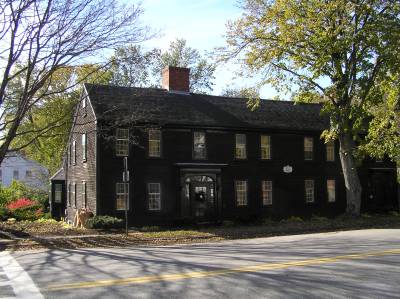 52-54 High Street, the Lord-Harris House (after 1716) - Although in 1660, Henry Kingsbury sold a house on or near this lot to Robert Lord, the present house probably dates to after John Lord gained possession in 1716, based on architectural observations. … Continue reading 52-54 High Street, the Lord-Harris House (after 1716)
  16 County Street, the Abraham Knowlton House (1726) - The original house is believed to have been constructed between 1725 and 1740. The house was in poor condition and in 2003 was restored by Ipswich architect Matthew Cummings. It is identical in construction to the Dennis-Dodge house a few doors away.… Continue reading 16 County Street, the Abraham Knowlton House (1726)
  1 High Street, the Nathaniel Rogers Old Manse (1727) - The house was constructed for the Rev. Nathaniel Rogers in 1727 by Ipswich cabinet-maker, Capt. Abraham Knowlton. In the early 1900s the building was known as "ye Olde Burnham Inn". This house is protected by a preservation agreement with the Ipswich Historical Commission.… Continue reading 1 High Street, the Nathaniel Rogers Old Manse (1727)
  10 County Street, the Dennis-Dodge House (1740) - The 1740 Dennis-Dodge house was owned by Captain John Dennis, whose father Thomas Dennis was a renowned woodworker and owned a home across the street. A succession of Dennis family members retained this property. Captain Ignatius Dodge (1816 - 1901) inherited the house. In the early 1800s, Eunice Hale maintained a school in the building.… Continue reading 10 County Street, the Dennis-Dodge House (1740)
 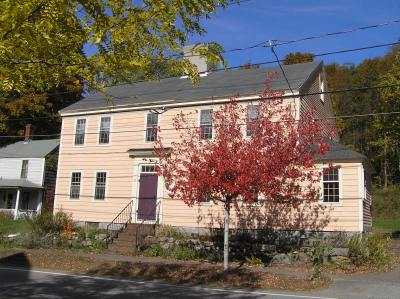 37 High Street, Lord – Baker House (c. 1725) - The house is believed to have been built by Robert Lord III in 1720. The property continued in the Lord family until 1775, when Samuel Baker, felt-maker and hatter, purchased it. This early 2nd period house is protected by a preservation agreement between the owners and the Ipswich Historical Commission.… Continue reading 37 High Street, Lord – Baker House (c. 1725)
  58 North Main Street, the Captain Richard Rogers House (1728) - Captain Richard Rogers bought this lot in 1728 and built this high style, gambrel roofed house shortly thereafter. The balustrade, paneling and shell cupboards in this house indicate a high-style Georgian influence, one of the finest of its vintage in New England.… Continue reading 58 North Main Street, the Captain Richard Rogers House (1728)
  50 North Main Street, the James Brown House (1700 / 1721) - The James Brown house is part of a larger 1700 house that was divided into three houses in the 19th Century. The chamfered oak frame in the southern portion indicates late First period, while the northern section appears to date from the 1720s. The Morley house next door was separated and turned sideways. … Continue reading 50 North Main Street, the James Brown House (1700 / 1721)
  12 North Main Street, Treadwell’s Inn (1737) - In 1737, Captain Nathaniel Treadwell opened an inn in this building. John Adams visited Ipswich frequently during the 1770s in his capacity as a lawyer and always stayed at Captain Nathaniel Treadwell's inn. It was once erroneously named the Christian Wainwright house, which no longer stands.… Continue reading 12 North Main Street, Treadwell’s Inn (1737)
 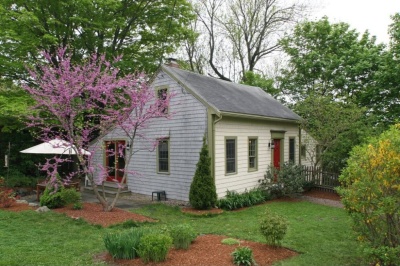 12 Warren Street, the Widow Louisa Wells House (c. 1840) - The small “broken back” cottage at 12 Warren Street in Ipswich is listed on the town assessors’ site as having been built in 1700, but the house lacks First Period features, indicating a later date. It was moved a short distance to this location, which had been the site of the town pound in the… Continue reading 12 Warren Street, the Widow Louisa Wells House (c. 1840)
  107 Argilla Road, Argilla Farm (c. 1805) - In 1637, John Winthrop Jr. conveyed his farm to Samuel Symonds, who became Deputy-Governor of the Colony. It came into possession of Thomas Baker, who married one of Symonds' daughters. Allen Baker built the hip-roofed farm house in 1785. It was purchased by Ephraim Brown and inherited by his son Thomas.… Continue reading 107 Argilla Road, Argilla Farm (c. 1805)
 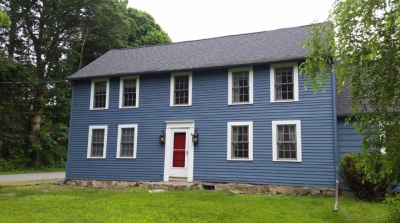 27 Lakeman’s Lane, the Benjamin Fellows House (c. 1719) - Benjamin Fellows' son Ephraim Fellows was a private in Captain Thomas Burnham's Company which marched on the alarm of April 19, 1775, fighting in the Battle of Lexington.… Continue reading 27 Lakeman’s Lane, the Benjamin Fellows House (c. 1719)
 Ipswich Third Period Houses

The Third Period was the Federal era between c. 1780 and 1830, particularly from 1785 to 1815. It is also called “Adam,” referring to three Scottish brothers who were influential designers of the era. Builders in the new American republic distanced themselves from English influence and created a new style unique to America. Federal-era homes can be distinguished from Georgian architecture mostly by details, including semicircular fanlights over the front doors, side lights on either side of the doors, Palladian windows, and wide corner boards.
After 1820, architecture in the United States underwent frequent stylistic changes, including the Greek Revival, Italianate, and Gothic Revival Periods, followed by a half-century of Victorian architecture: 2nd Empire, Queen Anne, Stick, and Shingle styles.
 175 County Road, the William Manning House (1820) - The large Federal-era house on the campus of the First Presbyterian Church in Ipswich was built by William Manning in 1820 after he purchased a portion of the ancient Potter family Farm.… Continue reading 175 County Road, the William Manning House (1820)
 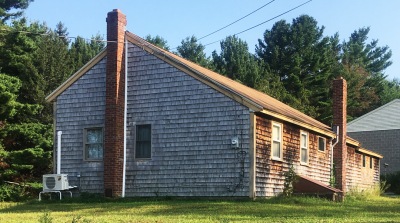 166 Linebrook Road, the William Lummus House (before 1832) - The present house at 166 Linebrook and the ancient Kozeneski barn that stood across the street were built by the Lummus family. … Continue reading 166 Linebrook Road, the William Lummus House (before 1832)
 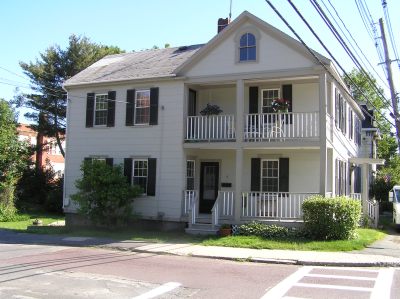 9 Green Street, the Elizabeth Holland House (1811) - The house on the southeast corner of County Street was built by Elizabeth Holland on Meeting House Green in 1811, and was moved to lot by John How Cogswell between 1872 and 1884.… Continue reading 9 Green Street, the Elizabeth Holland House (1811)
  188 Argilla Road, the Oliver Cogswell House (1815) - Oliver Cogswell built this dwelling about 1815. In the early 20th Century it was purchased by Dr. Joseph L. Goodale of Boston, who improved the plain farm dwelling into an attractive summer home.… Continue reading 188 Argilla Road, the Oliver Cogswell House (1815)
 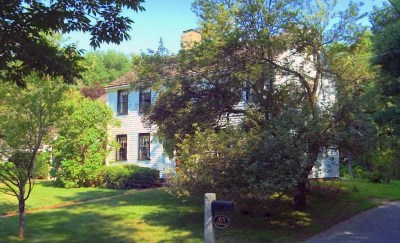 375 Linebrook Road, the Thomas Foster House (1800) - This area was settled by Fosters in the mid 17th century and remained in the family until the late 19th century, when it became part of the adjoining David Tullar Perley property. This is one of three traditional five-bay, two-floor Federal houses in Linebrook.… Continue reading 375 Linebrook Road, the Thomas Foster House (1800)
 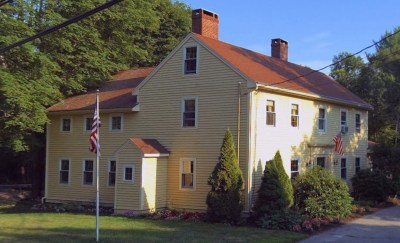 306 Linebrook Road, the Deacon William Foster Conant House (1833) - Deacon William Foster Conant (b. 1802, d. 1886) was, like his father and grandfather, a well-respected member of the community, a deacon of Linebrook Church and captain in the Linebrook Militia. His business included lumbering, farming, and road-building. … Continue reading 306 Linebrook Road, the Deacon William Foster Conant House (1833)
 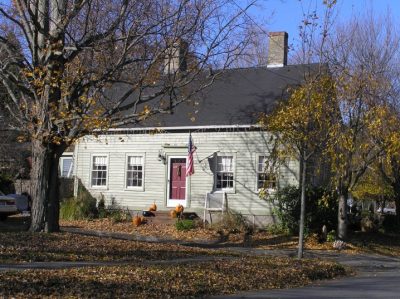 78 Washington Street, the Daniel Haskell House (1835) - The Federal trim and substantial chimneys identify this house as perhaps the earliest of the story-and-one-third 19th century cottages on Linebrook. It is uncertain which Daniel Haskell Sr. or Jr. was the owner. Records show that both died of dementia.… Continue reading 78 Washington Street, the Daniel Haskell House (1835)
 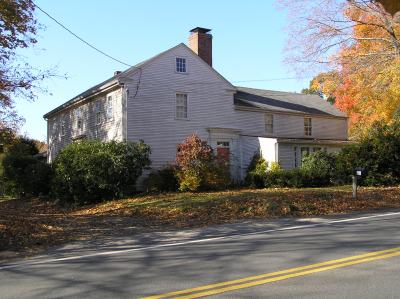 310 High Street, the Stephen Pearson House (1808) - Stephen Pearson served under Benedict Arnold and after Arnold's treason under Colonel Nathaniel Wade of Ipswich. From this farm he sold a wide variety of products including hides, shoes, and black walnuts. Pearson's granddaughter, Emily Pearson Bailey published a book of poems in the late 19th century.… Continue reading 310 High Street, the Stephen Pearson House (1808)
 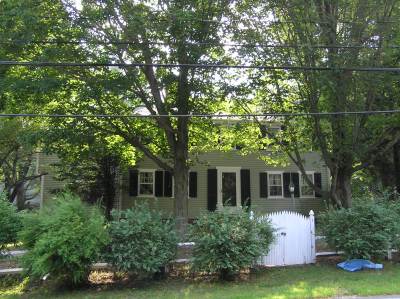 2 Jeffreys Neck Road, the Merrill-Kimball House (1839) - Abigail Holland sold Ezra Merrill, a mariner, 3/4 of an acre in 1839 and he built the present house shortly thereafter. The house was conveyed to his daughter, Kate M. Kimball, upon his death in 1901 An interesting feature in this house is the presence of an oven on the second floor, suggesting that it may have been a 2-family house.… Continue reading 2 Jeffreys Neck Road, the Merrill-Kimball House (1839)
 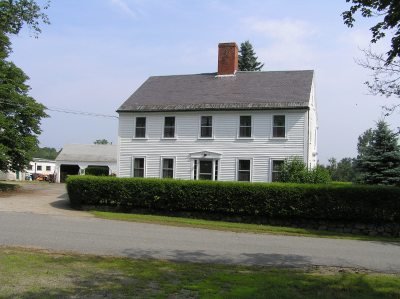 56 Fellows Road, the Josiah Brown House (1812) - The pasture land along Fellows and Candlewood Roads was purchased in the mid-17th Century by John Brown. His descendant Josiah Brown built this house in 1812. For over two hundred and forty years after John Brown bought the farm, it remained by inheritance in the Brown family through successive generations.… Continue reading 56 Fellows Road, the Josiah Brown House (1812)
 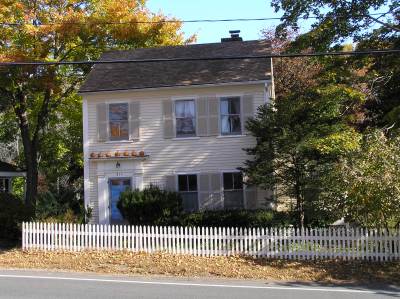 311 High Street, the Amos Jewett House (1834) - Captain Moses Jewett purchased this land in the late 18th Century. His grandson Amos built the house in 1834 for his bride. His small shoe shop still stands on the property.… Continue reading 311 High Street, the Amos Jewett House (1834)
 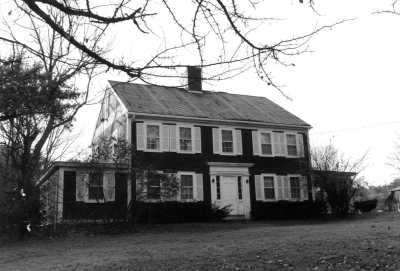 392 Linebrook Road, the Emerson Howe House (1810) - Emerson Howe was a farmer and member of the Linebrook Militia. This house incorporates Georgian, Federal and Greek Revival features, and includes some reused First Period building materials. … Continue reading 392 Linebrook Road, the Emerson Howe House (1810)
  208 Topsfield Road, the Joseph and Judah Goodhue House (1767) - After the death of Chrales G. Rice in 1943, the Winthrop family purchased their farm and the old Goodhue house. The Winthrops built a large house close to the river, and left this house still standing.… Continue reading 208 Topsfield Road, the Joseph and Judah Goodhue House (1767)
  11 Topsfield Road, the Jacob and Brown House (b. 1832) - William Gray Brown, occupied this house after his fathers death and continued his father’s ice and coal business. He also owned and operated the Agawam House hotel facing Meeting House Green. The turret and porch are Victorian additions.… Continue reading 11 Topsfield Road, the Jacob and Brown House (b. 1832)
  437 Linebrook Road, the Allen Perley Farm (1784) - The house at 437 Linebrook Rd. assumed its present form in three stages. The right (east) side of the main house was originally a traditional five bay center chimney house, and is traditionally said to have been constructed by wealthy land-owner Allen Perley in 1784. The left (west) side was constructed later, which added a second front entry… Continue reading 437 Linebrook Road, the Allen Perley Farm (1784)
 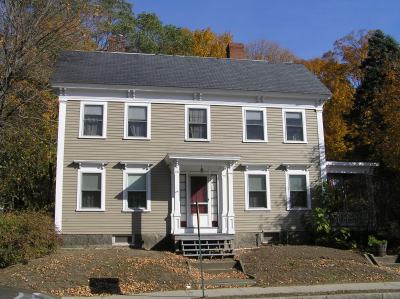 79 High Street, the Thomas H. Lord House (c 1835) - The ancient Joseph Lord house was at the approximate location of the present Thomas H. Lord house, which was owned at the beginning of the 20th Century by descendants of Joseph Lord. This house appears to have been built between 1814 and 1835.… Continue reading 79 High Street, the Thomas H. Lord House (c 1835)
 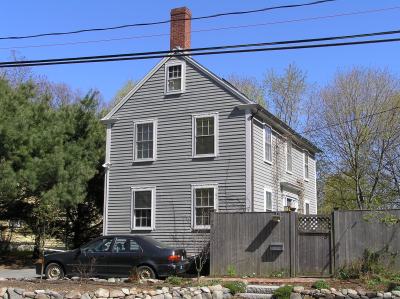 92 County Road, the Nathaniel Wade House and Shop (1810) - The Nathaniel Wade house and shop at 92 County Rd. was constructed in 1810. Many of the 19th Century houses on the east side of County Rd. were built by the Wade family, many of whom were contractors.… Continue reading 92 County Road, the Nathaniel Wade House and Shop (1810)
 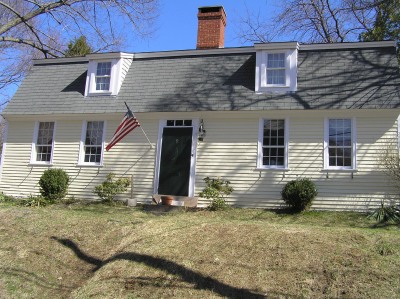 9 Woods Lane, the Mary Wade House (1792) - Francis Merrifield, Jr. bought this corner lot from his father in 1792 and built the gambrel cottage. Mary Wade, Jr., daughter of Col. Nathaniel Wade of Revolutionary War fame, bought the property in 1827.… Continue reading 9 Woods Lane, the Mary Wade House (1792)
 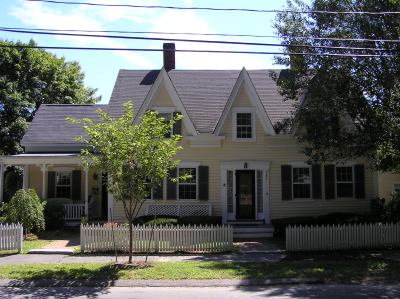 17 Argilla Road, the Samuel Wade-Canney House (1845) - Samuel Wade built this house as a retreat in 1845. In 1856, it was owned by S. F. Canney, whose lumber company burned at its first location by the County Street Bridge, and burned again at its Brown Square location. … Continue reading 17 Argilla Road, the Samuel Wade-Canney House (1845)
 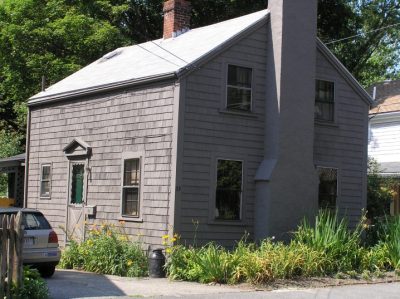 33 East St., the Old Store (1830) - The house at 33 East St. was built in approximately 1830 near the corner of East and County Streets for use as a store by James Quimby, and was moved to this location in 1850 by Joseph Wait.… Continue reading 33 East St., the Old Store (1830)
  24 Market Street, the Aaron Jewett House (c. 1800) - Constructed around the beginning of the 19th Century, this small building has served as Tetrault Jewelry Store since 1941, one of the longest-lasting family businesses in Ipswich. … Continue reading 24 Market Street, the Aaron Jewett House (c. 1800)
 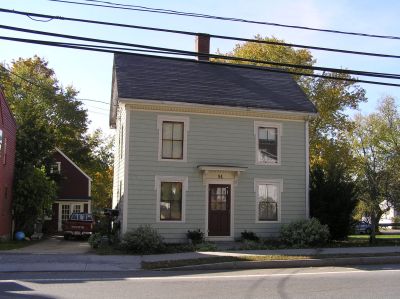 84 High Street, the John Smith House (c. 1830) - This house first appears on the 1832 map of Ipswich, in the possession of John Smith. In 1958 the house was purchased by Wilbur Trask, Many of his photos are featured on this site.… Continue reading 84 High Street, the John Smith House (c. 1830)
 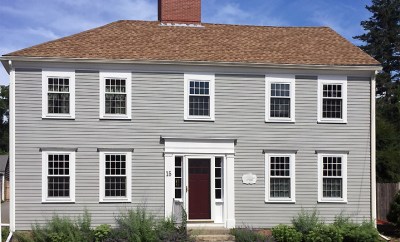 15 County Street, the Rev. Levi Frisbie House (1788) - This house at 15 County Street was built in 1788 for Rev. Levi Frisbie, pastor of First Church in Ipswich. He continued in the pastorate thirty years until his death in 1806, succeeded by the Rev. David Tenney Kimball.… Continue reading 15 County Street, the Rev. Levi Frisbie House (1788)
  2 Labor in Vain Road, the McMahon House (b. 1856) - Local legend is that the house was built by a sea captain, and it is haunted. The first owner of record is Elizabeth McMahon, daughter of Elizabeth Appleton and Thomas McMahon. She sold the house to James Galbraith in 1864. The owner on the 1910 Ipswich map is Henry Perry Willcomb.… Continue reading 2 Labor in Vain Road, the McMahon House (b. 1856)
 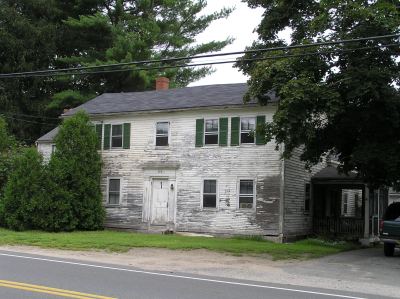 285 High Street, the Daniel Nourse House (1809) - Daniel Nourse, a farmer, bought the property in 1790 and built the present house in 1809. This was the home of John W. Nourse, farmer, civil engineer, and local historian who uncovered hundreds of Native American artifacts in his fields. The Nourse family cemetery is located nearby. A milestone from the Old Bay Road is in the basement wall. This is one of the finest Federal-era houses in Ipswich Village and has fallen into decay through neglect. … Continue reading 285 High Street, the Daniel Nourse House (1809)
 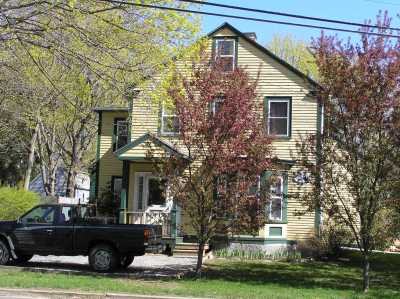 90 County Road, the William Wade House (1822) - Captain William Wade was a carpenter by trade, and the house features an attractive stairway and handrails in the front entry hall. The Wade family dominated this stretch along County Road.… Continue reading 90 County Road, the William Wade House (1822)
  61 Turnpike Road, the John Foster House (1780) - The sign that hung at Foster's Tavern has been stored in a barn at the Ipswich Museum for a century.and reads, "I shoe the horse, I shoe the ox
I carry the nails in my box
I make the nail, I set the shoe, And entertain some strangers too."… Continue reading 61 Turnpike Road, the John Foster House (1780)
61 Turnpike Road, the John Foster House (1780) - The sign that hung at Foster's Tavern has been stored in a barn at the Ipswich Museum for a century.and reads, "I shoe the horse, I shoe the ox
I carry the nails in my box
I make the nail, I set the shoe, And entertain some strangers too."… Continue reading 61 Turnpike Road, the John Foster House (1780) 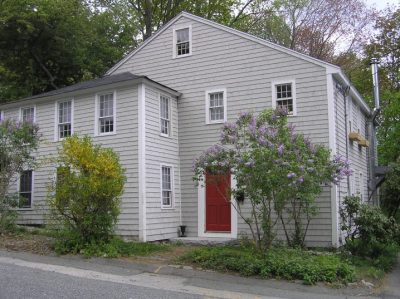 3 Spring Street, the James Scott House (1840) - The first use of 3 Spring Street as a residence was between 1832-1856. It is possible that the building may have been used as a barn or shop before that. The 3 Spring St. property was portioned off from the large two-acre parcel originally owned by Francis Jordan. … Continue reading 3 Spring Street, the James Scott House (1840)
  84 County Road, the Reverends Daniel Fitz and Moses Welch House (1829) - The house was used as a joint residence by Rev. Moses Welch, who assumed the pastorate of Linebrook Church in 1831, and the Rev. Daniel Fitz, who assumed the pastorate of the nearby South Church in 1827 upon the death of the Rev. Joseph Dana… Continue reading 84 County Road, the Reverends Daniel Fitz and Moses Welch House (1829)
 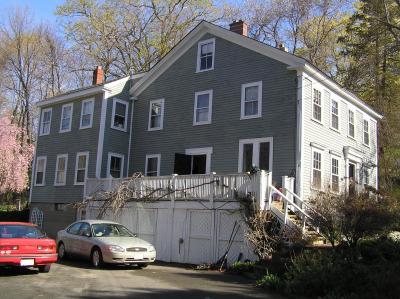 79 County Road, the Jacob Manning House (c. 1820) - The house was built in approximately 1820, and was moved back on the lot when the Verizon telephone company building was constructed in the 20th Century.… Continue reading 79 County Road, the Jacob Manning House (c. 1820)
 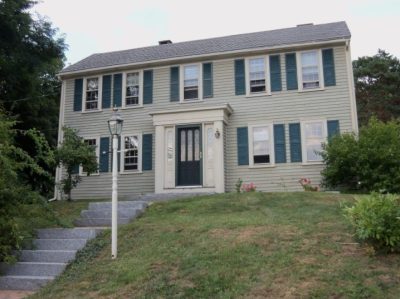 8 Agawam Avenue, the Newmarch-Spiller House (1798) - Hannah Newmarch Spiller was Zaccheus' grandaughter and wife of Thomas Newmarch, who is assumed to have built this house.The estate was bequeathed by Hannah's sister Martha Newmarch (who was unmarried), to Hannah Spiller, daughter of her late sister.… Continue reading 8 Agawam Avenue, the Newmarch-Spiller House (1798)
 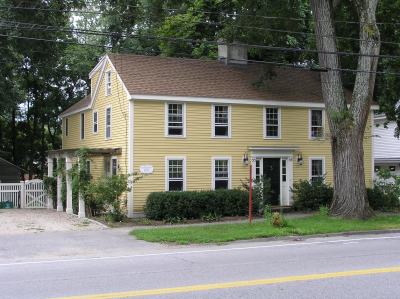 66 High Street, the John Harris-Mark Jewett House (1795) - This house was built in 1795 by John Harris. In 1784 John Heard convinced the town that if it would buy John Harris' previous home at the corner of High and Manning, he would provide $400 annually for the care of the poor. … Continue reading 66 High Street, the John Harris-Mark Jewett House (1795)
 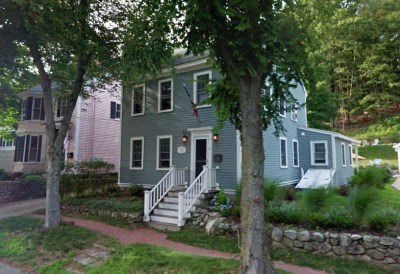 6 East Street, the Daniel Russell House (1818) - In 1818 Daniel Russell bought the land with the old Norton - Cobbet house on it, the home of two of the first pastors of the First Church in Ipswich. Daniel Russell, the son of Henry and Mary Lord Russell. Daniel Russell was born in Ipswich on August 14, 1767 and died on December 29 1837, having lived 70 years. His wife was Sarah Sutton.… Continue reading 6 East Street, the Daniel Russell House (1818)
 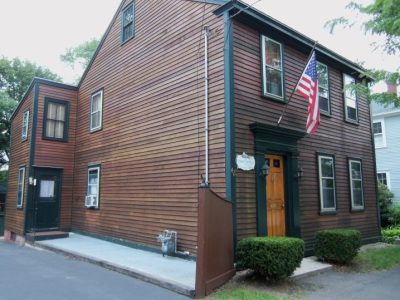 42 High Street, the Abner Harris House (c. 1800) - This house was built by Abner Harris in 1800. The Ringe house that formerly stood on this lot is said to have been moved to Central St.… Continue reading 42 High Street, the Abner Harris House (c. 1800)
  37 East Street, the Stephen Baker House (1834) - The small two story three bay colonial at 37 East Street was built in 1834 by Stephen Baker Jr. as a storehouse for his grocery. The lot was also used a lumber yard and Baker opened a way to the river, constructing a wharf at the end of the lane.… Continue reading 37 East Street, the Stephen Baker House (1834)
  29 North Main Street, the Odd Fellows Building (1817) - In 1817 the Probate Court and Registry erected this building for its own use. In the year 1852, the Registry and its records were removed to Salem. By 1884 a second floor had been added, and it housed the Odd Fellows upstairs, with Blake's Drug Store downstairs.… Continue reading 29 North Main Street, the Odd Fellows Building (1817)
  26 North Main Street, the Agawam House Hotel (1806) - Nathaniel Treadwell built the second Treadwell's Inn in 1806. In the mid-1800s the inn was modernized with Victorian architectural elements and was renamed the Agawam House. It continued to be the town's first class hotel until it closed in the late 1920s.… Continue reading 26 North Main Street, the Agawam House Hotel (1806)
 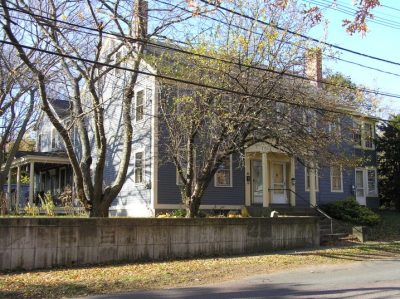 James and Sanford Peatfield - Featured image: The house at 46-48 Washington Street is known as the James Peatfield House, and was built in 1860. In a building erected by the Heards at the “Lower Mills,” James Peatfield and his brother Sanford were engaged in knitting shirts and drawers upon a rotary warp frame, invented by James as early as… Continue reading James and Sanford Peatfield
 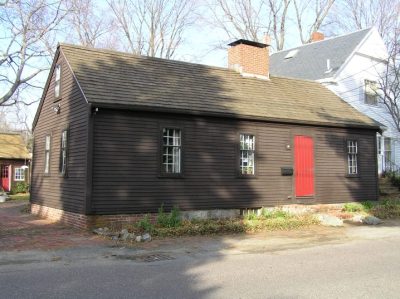 16 Mineral Street, Daniel Ringe House c. 1742/ Wise Saddle Shop (1801) - Jabez Farley sold this lot to Joseph and John Wise in 1801, who probably built this small dwelling shortly thereafter. As late as 1832, this was the only house on Mineral Street.… Continue reading 16 Mineral Street, Daniel Ringe House c. 1742/ Wise Saddle Shop (1801)
  1 Lords Square, Payne School (1802) - In 1802, the North District decided to construct a schoolhouse with public subscription. In 1891 it was moved from its previous location where the laundromat is now, and received extensive repairs. Payne School was last used for students in 1942, and since 1972 has served as the Ipswich School superintendent's office.… Continue reading 1 Lords Square, Payne School (1802)
 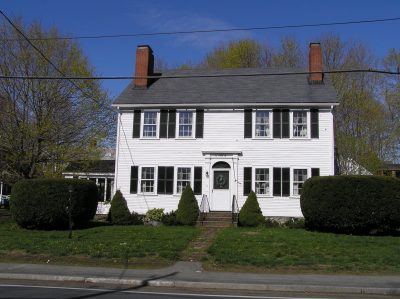 85 County Road, the John Wade House (1810) - The John Wade house was built at the far end of South Green in 1810, but was moved further down County Road in 1948 to make room for the South Green Burial Ground expansion. This house bears remarkable similarity to the homes of housewrights Asa Wade and Samuel Wade, both still standing in their original locations on County Rd. facing the South Green. … Continue reading 85 County Road, the John Wade House (1810)
  50 Argilla Road, the Burnham-Andrews House (1815) - The Burnham farm at one time stretched both sides of Argilla Road. This house was probably moved a short distance to this location by J. Howard Burnham in the late 18th or early 19th Century. … Continue reading 50 Argilla Road, the Burnham-Andrews House (1815)
  45 County Street, the Amos Dunnels House (1823) - The Amos Dunnels house was constructed in 1823 on South Main St. and was moved to 45 County St. in the 20th Century. … Continue reading 45 County Street, the Amos Dunnels House (1823)
 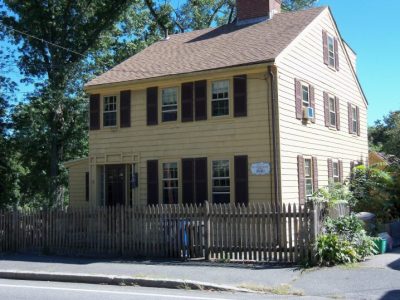 35 East Street, the Luther Wait House (1810) - In 1872 Luther Wait removed the County jailor's house to this location. Wait served on several town boards including the school committee and as town assessor, and served two terms as postmaster.… Continue reading 35 East Street, the Luther Wait House (1810)
 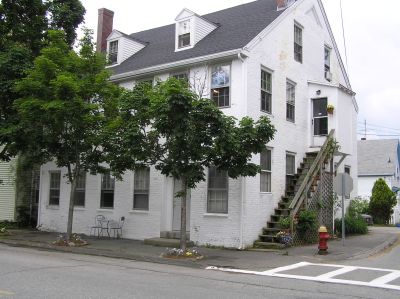 34 North Main Street, the William Pulcifer House (1836) - William Pulcifer was a dry goods storekeeper who built the combination storefront, office and residence building at 34 North Main St. in 1836. This is the only brick residence in the Meetinghouse Green Historic District… Continue reading 34 North Main Street, the William Pulcifer House (1836)
 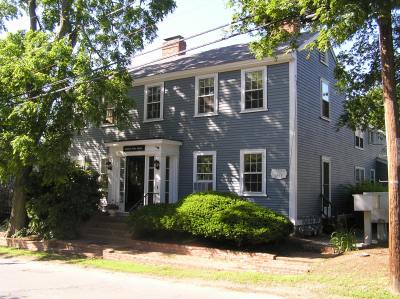 18 Green Street, the Isaac Stanwood Jr. House (1812) - Captain Isaac Stanwood was born in Ipswich, May 2, 1755. On January 24, 1775, he was enrolled among the Ipswich minute-men, and marched as a private in Captain Nathaniel Wade's company, in the alarm of April 19, 1775.… Continue reading 18 Green Street, the Isaac Stanwood Jr. House (1812)
  14 Candlewood Road, the Joseph and Elizabeth Perkins Brown House (1779) - Elizabeth Brown, descendant of the early Candlewood settler John Brown, was the wife of Captain Perkins. In December, 1779, their daughter, Elizabeth, became the wife of Joseph Brown, of the same family line, who built this house.… Continue reading 14 Candlewood Road, the Joseph and Elizabeth Perkins Brown House (1779)
 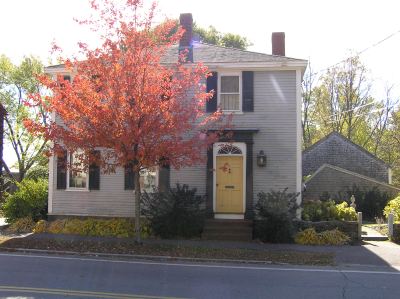 44 High Street, the Francis Goodhue House (c. 1800) - This house displays refined Federal-era features indicating the late 18th or early 19th Century for its construction. The barn and the lower level of this house may be half a century older.… Continue reading 44 High Street, the Francis Goodhue House (c. 1800)
  403 Linebrook Road, the Timothy Morse House (1817) - Timothy Morse Jr. (b. 1783) was a fine carpenter by trade and the house retains much of his finish work. Antique wide pine floors and period detail have been maintained.… Continue reading 403 Linebrook Road, the Timothy Morse House (1817)
  82 County Road, the Brown – Manning House (1835) - The widow Judith Manning and single woman Mary Brown had the house at 82 County Rd. built for them in 1835. It remained in the family until the late 19th century.… Continue reading 82 County Road, the Brown – Manning House (1835)
  78 County Road, the Samuel Wade House (1831) - In 1831, Samuel Wade purchased a lot and built this house as his home. In the early-mid Twentieth Century, the Samuel Wade house became the Southside Nursing Home, with 20 rooms & 13 bathrooms. It was restored as a private residence by the Marchand family, who made it their home in the 1960s and 70s.… Continue reading 78 County Road, the Samuel Wade House (1831)
 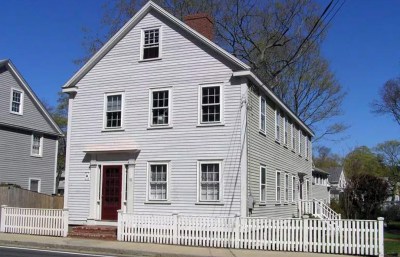 76 County Road, the Asa Wade House (1831) - This building is similar to the house next door, which was built by Samuel Wade, who may have built both houses. Asa Wade is buried in the Old South Cemetery across the street.… Continue reading 76 County Road, the Asa Wade House (1831)
 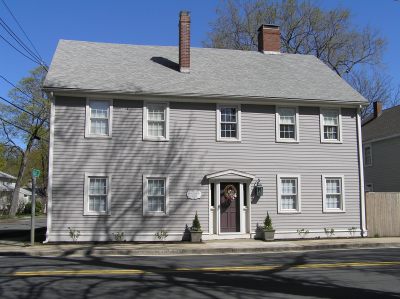 72 County Road, the David Giddings House (1828) - The site of the David Giddings house was bequeathed by Jonathan Wade to his grandson Nathaniel in 1749. In 1828 Wade sold the lot and the shop standing on it to David Giddings, who enlarged it to a two-story dwelling facing the Green.… Continue reading 72 County Road, the David Giddings House (1828)
 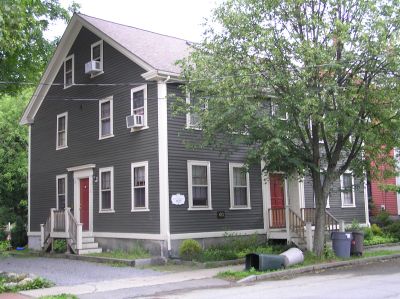 40 North Main Street, the Captain John Brewer House (1825) - Captain John Brewer bought two small parcels on North Main St. in 1824 and on them built the present house as a general store.… Continue reading 40 North Main Street, the Captain John Brewer House (1825)
  321 High Street, the Jewett-Cate House (1780) - Aaron Jewett's daughter, Eliza married Mark Cate of Rowley, and for years it was known as the "Cate house." Sarah Houghton bought it in 1912 and opened a popular tea-room known as "The Rose Tree Inn."… Continue reading 321 High Street, the Jewett-Cate House (1780)
 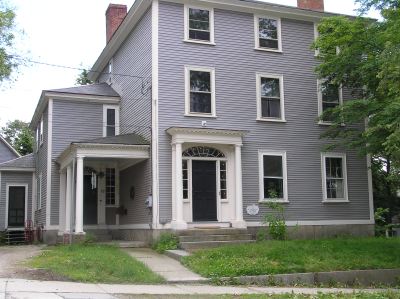 19 North Main Street, Thomas & Margaret Heard Manning House (1799) - This house was built by Dr. Thomas Manning in January, 1799, and remained in the family until 1858, when it became a parsonage. This house is protected by a preservation agreement between the owners and the Ipswich Historical Commission. … Continue reading 19 North Main Street, Thomas & Margaret Heard Manning House (1799)
  16 High Street, the Jacob Manning House (1818) - Jacob Manning in 1818 built this house at 16 High Street in a small space between the Poor House and the Lord House next door. That former Poor House was later torn down. … Continue reading 16 High Street, the Jacob Manning House (1818)
  54 S. Main St., the Heard House / Ipswich Museum (1795) - The Museum provides tours of the First Period Whipple House and works by nineteenth-century Ipswich Painters including Arthur Wesley Dow. … Continue reading 54 S. Main St., the Heard House / Ipswich Museum (1795)
  36 South Main St., the Hall-Haskell House / Ipswich Visitor Center (1820) - The Ipswich Visitor Center is located in the Hall-Haskell House on South Main Sreet.. Open weekends in May, seven days a week Memorial Day through October.… Continue reading 36 South Main St., the Hall-Haskell House / Ipswich Visitor Center (1820)
  52 N. Main Street, the Treadwell-Hale house (1799) - This building is believed to have been built after the land was sold to Nathaniel Treadwell 3rd in 1799. He transferred to Joseph Hale one month later. There is a stone cooking hearth in the basement of the house, which is protected by a preservation agreement with the Ipswich Historical Commission.… Continue reading 52 N. Main Street, the Treadwell-Hale house (1799)
  30 Summer Street, the Smith-Barton House (moved 1880) - The house at 30-32 Summer Street may have been the High Street home of Daniel Smith, and was moved to the current location in the 1880s by John Conley. The house was occupied by Civil War Veteran John Barton.… Continue reading 30 Summer Street, the Smith-Barton House (moved 1880)
  34 Mitchell Road, the Mitchell Farm (1800) - There has been a farm on this site since the late 17th century. Structural evidence suggests that the present house was constructed about 1800. From 1870 until the 20th century the building was owned by the Mitchell family.… Continue reading 34 Mitchell Road, the Mitchell Farm (1800)
  8 Meeting House Green, the David T. Kimball House (1808) - In 1808 the jail site was sold to Reverend David Tenny Kimball; the old jail was removed, and he built the house that is located there now. Rev. Kimball was highly respected for his ministry and a staunch abolitionist.… Continue reading 8 Meeting House Green, the David T. Kimball House (1808)
  Historic Ipswich
Does anyone know anything about the Rev. Capen house?
The Parson Capen house in Topsfield is open 3 days of the week in the summer. http://www.topsfieldhistory.org/parson_capen.shtml