
Opinion article by Michael Corbelle
“Are we kinda being pricks?” Those words, spoken recently by Marblehead citizen David Modica as he questioned why his town’s leadership was voting to shirk its state-mandated responsibility to alleviate the housing crisis, have become a rallying cry against the “Not In My Backyard” attitude of so many property owners across the country – including our beloved Ipswich.
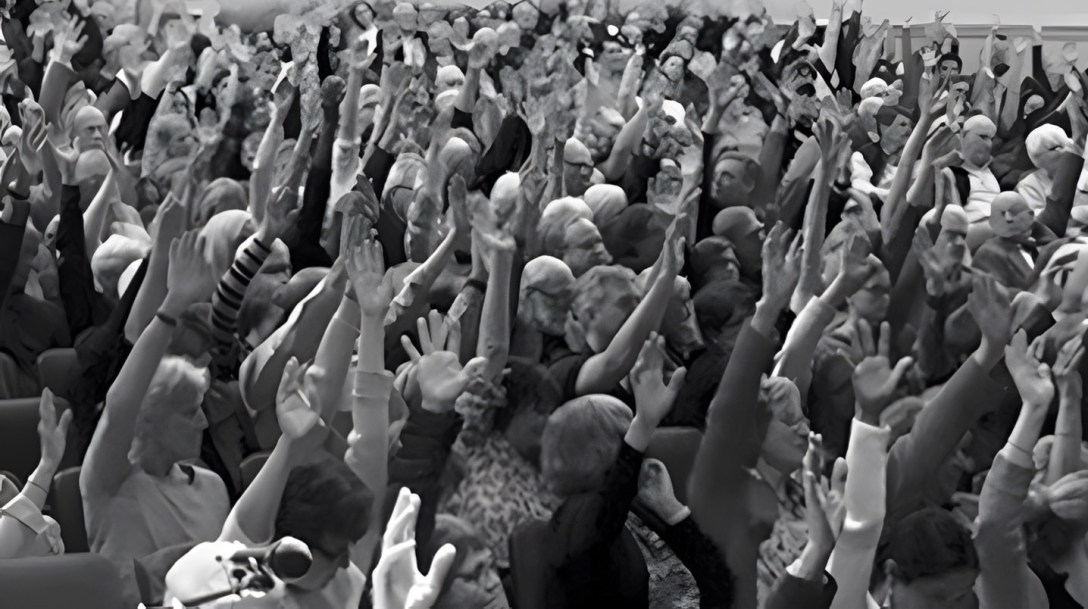
How many times on Tuesday night did Select Board Member Michael S. Dougherty glibly refer to “the process” of Town Meeting in Ipswich as a tactic to halt real decision-making? Perhaps unsurprisingly, his critique of “the process” misses the forest for the trees. As someone who participated in my first Town Hall meeting Tuesday night, I’d like to address the elephant in the room by addressing who wasn’t in that room: parents of young children.
Ipswich has a voter suppression problem – yes, our liberal haven of Ipswich, where roughly two-thirds of the town meeting voted to symbolically admonish Donald Trump. Less charged than racially-motivated actions of the South, but no less insidious, our beloved Town Hall effectively disenfranchises an enormous segment of our population, as many households with a child had to leave one parent – and therefore one voter – at home.
The foundations of our democracy are usually credited to two sources, one of which is Ancient Athens. Their democracy – or “rule of the people” – was restricted to those few wealthy male citizens privileged enough to own land. The other is the New England Town meeting, a tradition that began in Provincetown Harbor before the Pilgrims even landed in Plymouth, with the signing of their Mayflower Compact, which was signed by just 41 of the Mayflower’s 102 passengers.
At least we can say disenfranchisement is a tradition here. Just fourteen years after the Mayflower Compact, Ipswich held its first town meeting, and voting rights were restricted to only those men who owned land – not the poor, not women, and certainly not the enslaved. Over time (nearly three centuries in the case of women), Ipswich granted suffrage to all of its citizens. Yet, despite our shifts from a farming colony to an industrial town to our modern diverse economy, our meeting process has remained largely unchanged.
There is a wide delta between legal suffrage and functional suffrage. For example, black men in the South received the right to vote in the wake of the Civil War, but the end of Reconstruction led to the limiting of those rights for over a century by poll taxes and voter examinations, not to mention deliberate intimidation tactics. Shockingly, there were more black Congressmen in the 1860s than in the 1960s.
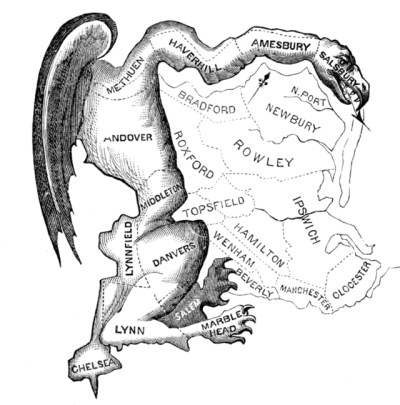
In 2026, the United States is fighting a second war no one asked for, and it involves the gerrymandering of Congressional districts to functionally disenfranchise those same black voters. The term “Gerrymandering” – named for Elbridge Gerry of our beloved North Shore – was invented here in Essex County, where Gerry created a district that wrapped around Ipswich to favor his own party, thereby setting a precedent for those in power to restrict the rights of those who would challenge it.
That brings us back to our modern-day voter suppression, right here in Ipswich. 7pm on the second Tuesday in May is a perfect time to hold a Town Meeting – if you don’t want much of the population to vote. Fewer than 550 voters determined the fate of the Public Safety building, with only 190 needed. Just as in 1634, the burden of parenting often falls on mothers, and while no rule exists to keep them from voting, a cursory look around the gym on Tuesday night would reify the sense that there was little representation of women under the age of 50. As they are typically among the most progressive-minded voters in the United States, one can only assume the impact a greater presence from that demographic would have had on our vote on the Public Safety building, which failed by eight votes. Speaking anecdotally, my group chat with other Ipswich dads counted more than that many households who were forced to leave one-parent homes with their children. While Ipswich is proudly home to a large population of baby boomer-aged Democrats, fostering conditions that allow them to hold a majority of the political power does not feel so, well, democratic.
As we look ahead to more difficult decisions about elementary school construction, should we not first work toward implementing a system that allows our elementary school parents equal voice? If “no taxation without representation” is the American promise first uttered here in Massachusetts, then should those willing to increase their own tax burden not be represented?
Julian Colville wrote a letter to the Ipswich Local News on April 27 that said, “ultimate authority isn’t in the hands of the Select Board, the town manager, or the School Committee, but rather in yours and mine.” While I disagree with other statements in Julian’s letter, I do agree that this ancient, democratic form of government requires participation and thus, change.
One might anticipate such counterarguments as, “Well, if it’s so important, hire a sitter.” Not only does requiring voters to pay for the ability to vote constitute a poll tax, but there are not enough babysitters in town to cover every home with young children. Similarly, those resistant to change might just consider this to be more leftist whinging. I hope those still reading are eager to band together to empower more citizens who value progress and the common good. If you find yourself disagreeing, consider why — is it because I’m wrong, or because doing what is right would make it harder for your side to win?
Town Meeting is old but not incapable of change. During COVID, it was held on a Saturday, and participation was high despite a global pandemic. Just last year, Gov. Healy signed a law allowing towns to continue remote meetings, thus allowing greater participation. Changing our bylaws to schedule Town Meeting at a more convenient time is a bare minimum goal, not a moonshot.
Successful governments are equal parts aspiration and action — we have plenty of the former. Many in attendance on Tuesday were willing to vote in favor of Mr. Harris’ article. The road to our modern political situation was paved by those willing to make symbolic gestures while consciously evading the imperative to create real change for fear of the impact courageous acts might have on their own status. If we have the opportunity to expand our democratic process and ensure the rights of more citizens to participate in “the process,” then we have a moral obligation as Americans to do so.
Discover more from Historic Ipswich
Subscribe to get the latest posts sent to your email.

