

The Ipswich East End Historic District was added to the National Registry of Historic Places in 1980. View a complete description in the Nomination Report.
The East End includes the seafaring portion of the original village of Ipswich and offers an architectural history of the town’s development. It was here that the first houses were built in this town where fishing and lumbering were prominent industries. When settlers arrived in the 1630s, wigwams, huts, and hovels were constructed between Town Hill and what is now Town Wharf. The Ipswich River was the town’s avenue to the Atlantic.

Settlement remained concentrated in this area, and the town rapidly grew and prospered. Wharves and warehouses were built along the riverbank. Water Street was the site of a custom house, pottery manufacturing, and an ancient tannery. Salt manufacture began in 1652, a brew house was built by 1663, and Moses Pengry established a shipyard in 1673. By 1676, shipbuilding was an extensive industry. The River became the chief highway of commerce as far inland as Falls Island (eradicated when the County St. bridge was built in 1861). Fishing and lumbering became prominent. Staves, clapboards, masts, timbers for houses, and fish were shipped to foreign ports.

The general lack of new buildings late in the 18th century reveals the economic hardships Ipswich faced at this time. The 1830s heralded the Industrial Revolution in Ipswich, and new buildings followed on the heels of successful textile mills. Lower County St., once pasture land, was improved in 1861 when a new bridge was built, linking the South Green area and the East End. The 1830s were one of the most prosperous periods in Ipswich’s history. The Industrial Revolution and new buildings followed on the heels of successful textile mills.
Thriving merchants built fine Victorian homes during this era, attesting to the prosperity of the town and the rising middle class. Five Second-Empire homes were built between 1860 and 1870. This marked the final stage of development for the East End. Today, the East End is predominantly residential and includes over 60 examples of period architecture contributing to the character of the historic district.
Physical boundaries: The East End is bounded on the north and west by East Street. That street extends from the High-North Main Streets intersection on the west to Jeffrey’s Neck Road on the north, skirting Town Hill. The River and its eastern bank (Turkey Shore Road) form the eastern boundary of the district from Town Wharf to the Green Street Bridge. Green Street is the southern edge of the District, enclosing Water, Summer, and Hovey Streets and Agawam Avenue, and a major portion of County Street. The East End is now predominantly residential and includes over 60 fully surveyed historic houses.

Houses in the East End are listed by address, house name, and date built. The detailed listing for the Ipswich Historical Commission is the source of much of the information for dates and descriptions of the houses listed below.
County Street

3 County Street (c. 1850) – The house does not appear on the Ipswich maps through 1910, at which time this tiny parcel was owned by Dr. Russell.
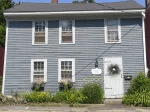
5 County Street, the Richard Rindge / Pindar House (1718) – The First Period house at 5 County Street was originally on upper Summer St., moved to this location in the last half of the 19th Century.

7 County Street, the Thomas Dennis House (1663-1750) – Shoreborne Wilson, a cooper, built a house and shop on this site about 1660. Thomas Dennis, the well-known master joiner, bought the property in 1663.
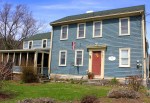
9 County Street, the Benjamin Dutch House (1705) – This was built early in the 1700s, and was owned by one of several men named Benjamin Dutch who owned and sold properties throughout town. The asymmetrical facade and timber frame are typical of First Period construction.
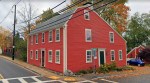
10 County Street, the Dennis-Dodge House (1740) – The 1740 Dennis-Dodge house was owned by Captain John Dennis, whose father Thomas Dennis lived across the street. A succession of Dennis family members retained this property until Captain Ignatius Dodge (1816 – 1901) inherited the house.
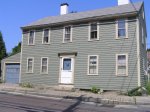
11 County Street, the Bennett-Caldwell House (1725) – Joseph Bennett built this early Second Period house in 1725. In 1818 the house was sold to Capt. Sylvanus Caldwell, who engaged in maritime trade along the coast from Massachusetts to Maine for a half century.

15 County Street, the Rev. Levi Frisbie House (1788) – This house at 15 County Street was built in 1788 for Rev. Levi Frisbie, pastor of First Church in Ipswich. He continued in the pastorate thirty years until his death in 1806, succeeded by the Rev. David Tenney Kimball.

16 County Street, the Abraham Knowlton House (1726) – The original house is believed to have been constructed between 1725 and 1740. The house was in poor condition and in 2003 was restored by Ipswich architect Matthew Cummings. It is identical in construction to the Dennis-Dodge house a few doors away.

17 County Street, Perkins and Daniels Shoe Factory (1843) – This house was built in 1843 near the EBSCO dam as Hoyt’s Veneer Mill. It was moved in 1859 to its present location where it became the Perkins & Daniels Stocking Factory. Farley & Daniels succeeded in 1884.

25 County Street, the J. Caldwell House (c. 1860) – The house at 25 County Street in Ipswich was built in approximately 1860 on a corner of the former Ipswich Jail grounds. The 1872 Ipswich map shows the owner as J. Caldwell. In 1910 the owner is N. S. Kimball.
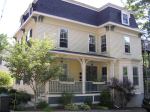
26 County Street, the John M. Dunnels house (1867) – This home was constructed in approximately 1867 by J. M. Dunnels, who was a “tin and sheet iron worker” with a shop downtown.

28 County St., the Stone-Wendel House (1872) – Theodore Wendell Wendel first lived in this Victorian house before moving to Argilla Rd. The nearby County Street and Green Street bridges appear in his paintings, as does Town Hill and the rolling landscapes beyond.

31 County Street, Ascension Memorial Episcopal Church (1875) – The Ascension Memorial Episcopal Church on County Street was designed by famed architect James Renwick Jr. (1818-1895) and is considered “American Gothic Revival” in style. Construction was begun in 1869 and completed in 1875. (Not listed in the historic district)

35 County St., the Lydia and Reuben Daniels House (1863) – The house was build by Reuben Daniels, surveyor and shoe manufacturer, and his wife Lydia. (Not listed in the historic district)

45 County Street, the Amos Dunnels House (1823) – The Amos Dunnels house was constructed in 1823 on South Main St. and was moved to 45 County St. in the 20th Century. (Not listed in the historic district)
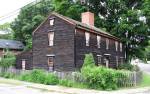
47 County Street, the Benjamin Grant House (1735) – The Benjamin Grant House was originally built as a half house. Benjamin Grant was born in 1701, married Anne Perkins in 1722, and was killed in the French and Indian War in 1756. (Not listed in the historic district)
East Street

2 East Street, the Robert Jordan House (1863) – The “Old Brick,” the home of Col. Francis Wainwright was at this location in the 17th and early 18th Century. The original Methodist Church was erected here in the 1830s. Robert Jordan bought this lot in 1862, and built this fine Italianate home. Dr. George C. Bailey was the next owner, but then built the large Victorian house at 48 Market Street in 1887.

3 East Street, the James W. Perkins House and Provisions (c. 1860) – This house was built between 1856 and 1872. Samuel Hunt purchased the ancient Day-Dodge house at the corner of North Main and East Streets on Feb. 14, 1849 with three lots adjoining. The 1856 Ipswich map shows Burroughs Machine Shop at this location. The 1896 Ipswich Business Directory lists J.W. Perkins, Provisions and Meat Market at this location.

4 East St., the old Methodist Parsonage (1830) – The house at 4 East Street was constructed about 1830 and served as the Methodist Parsonage. The first sanctuary of the Methodist Church was located next door at the location of the present-day Ipswich Inn.

6 East Street, the Daniel Russell House (1818) – In 1818 Daniel Russell bought the land with the old Norton – Cobbet house on it, the home of two of the first pastors of the First Church in Ipswich. The son of Henry and Mary Lord Russell, Daniel Russell died in 1837, having lived 70 years. His wife was Sarah Sutton.

7 East Street, the Sadie Stockwell House (1888) – The heirs of Samuel Hunt sold the lot to Sadie B. and Frank Stockwell in 1888. This is one of just a few Queen Anne shingle-style homes of the Victorian era in Ipswich.

8 East Street, the Captain Matthew Perkins House (1701) – Winner of the 1991 Mary Conley Award, this well-preserved First Period house sits on a former orchard lot that was sold in 1701 by Major Francis Wainwright to Matthew Perkins, a weaver and soldier. In 1719 Perkins opened an inn and tavern in this house, “at the sign of the blue anchor.”
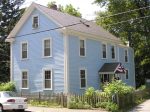
9 East Street, the Foster Russell House (1856) – Samuel Hunt sold a half acre at the foot of his lot on East St. to Foster Russell and D. P. Nourse, May 9, 1855, and Mr. Russell and his wife Martha Hodgkins built this house.

10 East Street, the Nathaniel Harris House (1819) – Nathaniel Harris built his home in 1819 on a section of land from the Baker-Newman property next door. His widow Elizabeth Staniford lived into her 90s.

13 East St., Ignatius Dodge Shoe Manufacturing (b. 1856) – On the 1856 map this appears to be the “Ignatius Dodge Shoe Shop.” The 1910 Ipswich map shows #13 East Street is owned by “F. Lord.”

14 East Street, the Baker-Newman House (1725) – John Baker obtained a section of the land extending down East Street to Spring Street, originally granted to Rev. Cobbet. Nathaniel Jones Jr. sold the house and lot to George Newman Jr., a weaver.
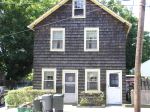
15 East Street: Dawson’s Bakery; James and Louise Glover House (c. 1870) – The house at #15 East Street may have been a small shop before it was converted to residences. The 1872 map shows the building at this location as “Dawson Bakery.”

16 East Street, the Lakeman-Johnson House (c 1840) – This house was built between 1837 and 1846 when mariner Richard Lakeman sold the land “with the dwelling house and other buildings thereon,” to his brother, Captain Ebenezer “Eben” Lakeman. The house features an Asher Benjamin doorway and has a preservation agreement with Historic New England.

18 East Street, the Baker-Dodge House (1727) – This house was built by John Baker III, and was purchased by Mary Dennis Dodge in 1818. The house is protected by a preservation agreement between the owners and the town of Ipswich.
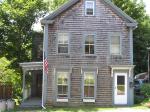
21 East Street, the George Russell House (c. 1870) – The first known owner of this house was George Russell, (1823-1884) a mason. His parents were Daniel Russell and Mary Lakeman.

22 East Street, the Moses Fellows House (1873) – Thomas Sweet sold this lot to Moses A. Fellows and Sarah G. Hodgkins in 1873, and Fellows built this Italianate house shortly thereafter. Fellows owned a lumber yard on Water Street.
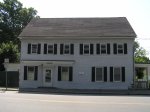
25 East St, the Stanwood-Willcomb House (1830) – Stephen Stanwood erected this house in 1830 for a fulling mill. Sheep grazed on the bare hills above East and High Streets, and the mill used water that ran from the springs. This is said to be the first house in town to have running water. Fred Willcomb and his brother Lewis E. Willcomb operated a store here at Willcomb’s Corner.
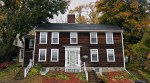
26 East Street, the Polly Dole House (1687-1720) – Part of this house was constructed in 1687 for Deacon John Staniford and his wife Margaret. It acquired its current form in 1720. This was the home of writer John Updike, and has a preservation agreement with the Ipswich Historical Commission.

27 East Street, the Widow Elizabeth Caldwell House (1740-1755) – Joseph Wait sold this lot to Elizabeth Caldwell, widow of Thomas, in 1829.who moved and joined two houses built c. 1740 to 1775 location.

30 East Street, the Francis Jordan House (c. 1680) – A massive 17th century timber frame from the First Period of construction in the English colonies is fully displayed throughout this house.
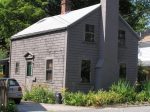
33 East St., the Old Store (1830) – The house at 33 East St. was built in approximately 1830 near the corner of East and County Streets for use as a store by James Quimby, and was moved to this location in 1850 by Joseph Wait.

35 East Street, the Luther Wait House (1810) – In 1872 Luther Wait removed the County jailer’s house to this location. Wait served on several town boards including the school committee and as town assessor, and served two terms as postmaster.
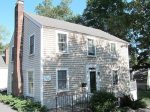
37 East Street, the Stephen Baker House (1834) – The small two-story three-bay colonial at 37 East Street was built in 1834 by Stephen Baker Jr. as a storehouse for his grocery. The lot was also used a lumber yard and Baker opened a way to the river, constructing a wharf at the end of the lane.
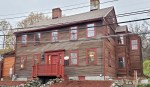
38 East Street, the John Harris House (1743) – Thomas Harris purchased land along East Street in 1665. His son John was deputy sheriff and transported accused witches to Salem for trial. This sizable Georgian house was built by John Harris, 3rd or 4th generation. The property descended to Capt. Stephen Baker, whose heirs owned into the 20th Century.

42 East Street, the Joseph Hovey House (1850) – Joseph Hovey bought a lot in 1843 from the estate of Thomas Boardman, and an adjoining lot in the rear at about the same time from J. H. Boardman. The old Boardman house was torn down about 1850, and Joseph Hovey built a house on the lot, which appears in the 1856 map.

44 East Street, the John Roberts House (c. 1870) – The Ipswich Historical Commission records the date of construction as 1856/1872 by John Roberts, through the marriage of Mary Elizabeth Hovey (1843-1928) to John Roberts (1824-1903).

48 East St., the Tyler Caldwell House (1860) – Tyler Caldwell was “a man of thrift and industry, and amassed a comfortable property; respected in the town and well-beloved in the neighborhood where he lived.”

55 East St. (c. 1922) – This house is said to have been constructed from the front left section of Asa Lord’s store when it was removed from Lord Square in the 1920s.
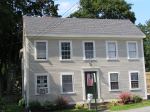
59 East Street, the Daniel Rindge House (1719) – The small lot fronting on East Street was sold to Daniel Ringe, Oct. 16, 1719, who sold to John Holland on Nov. 6, 1742. Daniel Ringe was an early settler of Ipswich, and as a young man worked as a cow-herd. Captain Ringe was a soldier in the Indian wars and became a prominent citizen of Ipswich.

62 East Street, the Wainwright-Treadwell House (1691/1726) – Capt. John Wainwright bought 3 1/2 acres from Nathaniel Treadwell in 1710 and built part of this fine Georgian mansion, which features elaborate panels and molding, re-used summer beams, and a massive early fireplace.

72 East Street, the “Clam Shell” – The lower half of the building at 72 East Street was originally a small clam shack restaurant.

76 East Street, the Hodgkins-Lakeman House (1668 -1718) – William Hodgkins built the oldest part of this house before 1700. In 1718 he sold the dwelling to Archelaus Lakeman and the property remained in the Lakeman family for almost 200 years.
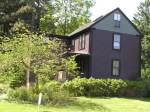
78 East Street, the James Glover House (c. 1860) – James Glover came to Ipswich from England with a long warp weaving machine about 1845. He worked at the Lower Mills until he opened his own textile factory ca. 1860. He manufactured hairnets, knit goods, hoods, and shawls. Glover employed 40-50 hands in the Civil War period, but by 1897 the mill was closed.

79 East St., the Timothy & Julie Curran House (c. 1859) – Timothy & Julie Curran immigrated from County Kerry, Ireland. 1854, Thomas R. Grandfield sold them 1/3/4 acres, and they obtained a $100 mortgage on the property, with buildings on it, 5 years later.
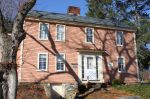
80 East Street, the Jacob Perkins House (c. 1700) – The Perkins-Hodgkins house is believed to have been built in 1700 on the foundation of the earlier Jacob Perkins home. The house has been greatly expanded over the years, but the original asymmetrical structure continues to anchor the corner with Jeffreys Neck Road.
Green Street

2 Green Street, the John Perkins House (1860) – This corner was originally part of a larger lot owned by General Denison. Captain Treadwell and Nathaniel Lord Jr. were later owners, and then Mr. John Perkins, who built this house.

4 Green Street, the William H. Graves House (1852) – William H. Graves was born in 1821. At the age of 27 he was a cordwainer, and married Hannah S. Dodge.
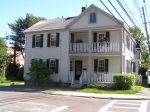
9 Green Street, the Elizabeth Holland House (1811) – The house on the southeast corner of County Street was built by Elizabeth Holland on Meeting House Green in 1811, and was moved to lot by John How Cogswell between 1872 and 1884.
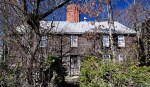
12 Green Street, the Andrew Burley House (1688) – Andrew Burley became a wealthy merchant and updated the house with fine Georgian features. Burley was a justice of the Sessions Court and representative to the General Court.
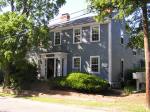
18 Green Street, the Isaac Stanwood Jr. House (1812) – Captain Isaac Stanwood was born in Ipswich, May 2, 1755. On January 24, 1775, he was enrolled among the Ipswich minute-men, and marched as a private in Captain Nathaniel Wade’s company, in the alarm of April 19, 1775.

24 Green St., the Ira Worcester House (by 1864) – Ira Worcester was the Master of the House of Corrections, and Superintendent of the Asylum for the Insane in Ipswich. The facility stood where the present Ipswich Town Hall is now.

25 Green Street, the Ipswich Town Hall (1935) – A large jail/insane asylum was built on the Green Street location in 1828. It was torn down in 1934 to make room for a new high school. The building now serves as the Ipswich Town Hall. The prison workhouse still stands and was remodeled into a senior residence center.
Hovey Street

3 Hovey Street, the John Kendrick house (c. 1670 & later) – John Kendrick, a cooper by trade, owned this lot in 1665. He and his son sold it to Thomas Staniford in 1706. Structural evidence supports a construction date of about 1670. Much of the trim dates from the late 18th or early 19th centuries.

6 Hovey Street, the Thomas Foulds Ellsworth House (1866) – Captain Thomas Ellsworth built this house after purchasing the old Mansfield lot in 1866. He sold the property to Howard C. Dodge in 1887.
Scottons Lane

1 Scotton’s Lane, the Choate-Scotton house (c. 1863) – In the year 1834, Charles Choate moved to Ipswich from Essex with his family and began building vessels at Baker’s Wharf. His sons Lewis and Edward took up the trade and continued the business. Amos Scotton immigrated to Boston and settled in Ipswich. He married Eliza Brown and had 8 children. He passed away on 1905 in Ipswich. His son Amos Scotton, an Ipswich jeweler and knit goods, purchased this property before 1910.
Summer Street

3 Summer Street, the Benjamin Kimball House (c . 1730, moved in 1803) – This house was a single-floor 2 room cape moved to this location in 1803. The first floor outside corners have gunstock posts, evidence that they once supported the roof.
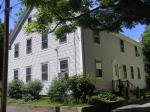
4-6 Summer Street, the Cotton-Nourse House (1840) – Ebenezer Russell sold this lot to Charles C. Cotton, Feb. 27, 1840. Cotton built a double house, and sold half of the house with a partition running through it, and half of a barn to Foster Russell and Daniel P. Nourse in Feb. 1841. Cotton retained half of the house, but by the late 19th Century the house was owned solely by the Nourse family.

5 Summer Street, the Widow Fuller House (1725) – In 1754, Elizabeth Fuller sold this house and land to Thomas Treadwell, who also owned the house at 7 Summer Street. Stylistic evidence points to a construction date of c. 1725. Originally the house was one room deep, with a cased frame. An ell was added at the turn of the 19th century.

7 Summer Street, the Thomas Treadwell House (c. 1740) – The original house consisted of a large room with a chimney and entry at the right. The sloop, “Endeavorer,” under Capt. Thomas Treadwell, was part of the fishing fleet of 1716.
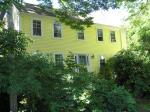
8 Summer Street, the Daniel Glazier House (1840) – Manning Dodge sold a part of his lot fronting on Annable’s Lane (Summer Streeet) to Daniel Glazier on July 20, 1835. Glazier built his house on the lot by 1840.

10 Summer Street, the Charles and Abigail Cotton / Moses Harris House (1838) – Moses Harris was the son of Thomas and Hannah (Soward) Harris and married Emily A. Cotton, age 18, the daughter of Charles and Abigail (Jewett) Cotton who owned several parcels in the area, probably including this house or lot.

11 Summer Street, the Nathaniel Hovey House (1718) – The Hovey family were among the original settlers of Ipswich. The builder of this house was the son of Daniel Hovey and Abigail (Andrews) Hovey. His grandfather was the settler Daniel Hovey. Several descendants of Daniel Hovey were given the name Nathaniel.

12 Summer Street, the Ezra W. Lord House (1848) – This was the childhood home of Walter Ezra Lord, born January 22, 1856. He established himself in a general dry goods business in Ipswich, and was regarded as one of the substantial men of that town. He served 5 years as a selectman, and in 1895 was chosen representative of Ipswich in the lower house of the General Court.

13 Summer Street, the Daniel Clark House (1872) – This lot with a house was purchased by Daniel Clark, in 1872. The old house was moved to 5 County Street, and the present house was erected. It served as Phillip Clark’s funeral home.

14 Summer St., the Isaiah Rogers House (c. 1870) – The first known owner of 14 Summer St. is Isaiah Rogers, shown on the 1872 Ipswich map. The property was sold in 1886 to Sarah Fellows Lord.

15 Summer Street, the Jonathan Pulcifer House (1718) – Jonathan Pulcifer built this house in 1718 on Summer Street, one of the “oldest ways” in Ipswich. He was a descendant of Benjamin Pulsipher, an early settler of Ipswich who died in 1695.

16 Summer Street, the Treadwell House (1852) – The house at 16 Summer Street was built by the husband of William Treadwell’s daughter Elizabeth.

17 Summer St., the William and Margaret Chapman House (after 1832) – Margaret L. Chapman, wife of William Chapman, died Nov. 21, 1889, aged 80 yrs. William Chapman, son of Jedediah Chapman, died July 24, 1899, aged 86 years.

19 Summer Street, the Solomon Lakeman House (before 1745) – This lot was owned or occupied by Solomon Lakeman in 1745, but could have been constructed earlier. The 1832 map shows the owner as “The widow Lakeman.”

24 Summer Street, the William E. Barton House (1884) – This house first appears in the 1884 Ipswich village map under the ownership of J. E. Barton. In the 1910 map it belongs to William J. Barton.

27 Summer Street, the Thomas Knowlton House (1688) – Humphrey Bradstreet. sold his house and land to Deacon Thomas Knowlton in 1646. In 1688 Knowlton passed his house and land to his grand nephew Nathaniel Knowlton with a new house erected on the property, the house that survives today.

30 Summer Street, the Smith-Barton House (moved 1880) – The house at 30-32 Summer Street may have been the High Street home of Daniel Smith, and was moved to the current location in the 1880s by John Conley. The house was occupied by Civil War Veteran John Barton.

31 Summer Street, the Bartlett House (c. 1870) – Ezekiel Bartlett sold this property to Frederick Willcomb in 1872. The decorative brackets under the soffets and porch roof are Italianate, suggesting a mid-century construction.
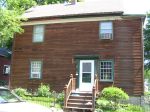
36 Summer Street, the John Brocklebank House (1856) – The Brocklebank family in Essex County traces its roots to John Brocklebank Sr. born about 1630 in Yorkshire, England, who moved with his wife Sarah to Rowley, MA in 1657. Jenny Ellsworth came into possession of this house and 38 Summer St. in 1930.
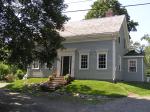
37 Summer Street, the William H. Jewett House (b.1872) – The elegant Cape Cod Colonial at 37 Summer Street first appears as the W. Jewett house in the 1872 Ipswich map, although the town website lists the date of construction as 1825.

38 Summer Street, the William M. and Jennie Ellsworth House (1881) – This house was built by William Merrill Ellsworth and his wife Jenny (Lord) Ellsworth. Two similar houses side by side are on the same lot in the 1910 map, owned by Mrs. Jennie Ellsworth.

39 Summer Street, the Foster-Grant House (1717) – In 1717 Nathaniel Knowlton sold a small lot to James Foster who is believed to have built the house. In 1826, the family sold to Ephraim Grant, and the house was long known as the “Grant house.” Early Colonial features are preserved throughout the house.

40 Summer Street, the Denison Rust House (b. 1872) – Denison Rust deeded the house to Vallancourt E. Rust in 1906. In the late 20th Century this house was owned by the Brockelbank family.

43 Summer Street, the Wilcomb-Pinder House (1718) – This timber-framed First Period house was built in 1718 by William Wilcomb. The interior of the home features hand-hewn summer beams, wide plank flooring and the original fireplaces. The next owner, William Benjamin Pinder was a corporal with Col. Appleton’s company during the French and Indian War.

46 Summer Street, the James Foster House (1720) – James Foster bought this former orchard land in 1720 from Nathaniel Clark who moved to Newbury. The northwest side is the original half-house, which was doubled in size and remodeled to appear Georgian, with the two chimneys, dormers and a symmetrical front. The house was owned by the Soward family in the 19th Century, and partially burned.

48 Summer St., the Alonzo and Abbie Butler House (1868) – in 1884 Abbie Butler and Alonzo Butler sold to Sarah Burnham the house next door at 46 Summer St. Ownership was transferred to Nathaniel Burnham in 1923.
Turkey Shore Road
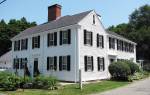
1 Turkey Shore Road, the Burnham-Patch-Day House c. 1670-1730 – This house has a preservation agreement with the Ipswich Historical Commission. The house was built by Thomas Burnham in 1730 on the foundation of the earlier house he bought in 1667. The large ell on Poplar Street was added in the early nineteenth-century. Abner Day bought the house of the heirs of John Patch in 1814 and kept a well-known tavern. (Not listed in the historic district)

2 Turkey Shore, the Heard – Lakeman House (1776) – Nathaniel and John Heard bought this land in 1776 and built the present house. Nathaniel sold the house to Richard Lakeman III in 1795. The house was added to the National Register of Historic Places in 1980, and has a preservation agreement with the Ipswich Historical Commission. (Not listed in the historic district)

15 Turkey Shore Rd. (c. 1900) – The Queen Anne Free Classic style of the early 20th Century shares some of the characteristics of the more elaborate Queen Anne houses of the late 19th Century, but is a separate class style of architecture.(Not listed in the historic district.)

17 Turkey Shore, the John Edward Norman House (1895) – Capt. John E. Norman was lost at sea, only twenty-eight years old, leaving a widow and a young family. This house is presumed to have been built by his son, John E. Norman, 2nd. (Not listed in the historic district.)
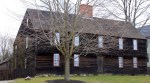
41 Turkey Shore Road, the William Howard House (c. 1680/1709) – Architectural evidence suggests that William Howard removed the 1638 home of Thomas Emerson and built the left side of the present house about 1680. The right side was added in 1709.

48 Turkey Shore Road, the Nathaniel Hodgkins House (1720) – The house at 48 Turkey Shore Road is believed to have been built by Nathaniel Hodgkins in 1720 on land formerly owned by Daniel Hovey. The gambrel roof indicates early Georgian era construction. A 19th century rear ell was removed in 2022 and replaced with a modern but compatible addition.

49 Turkey Shore Road, the Austin Measures House (1874) – Austin Measures’ Candy Shop was first located in a small building on North Main Street, and later on Central Street. This house was built in 1874. The low-pitched roof, window hoods and corbels supporting the flat roof portico are of Italianate influence.

59 Turkey Shore Road, the Elizabeth and Otis Glover House (c 1870) – Elizabeth Glover, wife of Otis Glover, inherited the property at 59 Turkey Shore Road from her father, Abraham Soward. She moved the old house off the lot and built this large Queen Anne house on the location. Her husband Otis Glover was in the Civil War from 1861 to 1864, and lived until 1903.
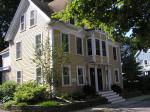
63 Turkey Shore Road, the Isaac Foss House (1870) – The Foss House is the finest example of the Gothic Revival era in Ipswich. The steep front gables on this home show the influence of a romantic movement in architecture inspired by medieval design, a departure from the classical Federal and Greek Revival styles popular earlier in the century.

67 Turkey Shore Road, the Stephen Boardman House (1725) – This house is named for Stephen Boardman, the son of Thomas Boardman and Sarah Langley. The wide pine board floors in the house are original, and 4 restored fireplaces share a central chimney.
Water Street
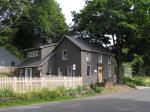
4 Water Street, the Jewett House (1849) – This house was built in 1849, framed with lumber taken from the 1747 Meeting House of the First Church when it was torn down, prior to the building of the Gothic church that stood on that location for a century.
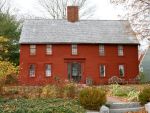
6 Water Street, the Reginald Foster House (1690/1745) – Ipswich deeds list the transfer of a house at this location from Roger Preston to Reginald Foster in 1657, but construction of this house dates to about 1690. Massive chamfered summer beams in the right section, the sharp-pitched roof and purlins provide evidence of an early date.

8 Water Street, the Harris-Sutton House (1677-1743), completely reconstructed in 2000) – Abner Harris bought this lot and enlarged the house in 1743. When the house was dismantled and reconstructed in the early 21st Century, evidence was discovered indicating that a section of the eastern part of the house may date to the Moses Pengry ownership in 1677.
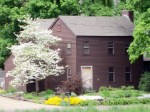
12 Water Street, the Glazier-Sweet House (1728) – This house was built in 1728 by Benjamin Glazier, a sea captain, and transitions the First and Second Periods of Colonial construction. The original half house and early Beverly Jog addition remain intact, with later additions.

28 Water Street, the Harris-Stanwood House (1696) – The Harris – Stanwood house was built in 1696 by John Harris. John Stanwood acquired the property in 1809 and it remained in his family for many years. The right wing was added c. 1884.

32 Water Street, the Jabesh Sweet House (1713) – Jabesh Sweet built this house on a quarter acre lot by the river at 32 Water Street in 1713. People said that the ghost of Harry Maine the Mooncusser haunted the house that once sat where the garage now stands. Found guilty, he was staked to the Ipswich Bar for eternity.
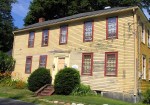
36 Water Street, the York – Averill House (1715) – Captain Samuel York built this house in 1715 after selling two smaller lots on East Street. The earliest portions of this house date from the early years of his ownership, Benjamin Averill, a Revolutionary War veteran, bought the house in 1793 and it remained in the Averill family until the late 19th century.
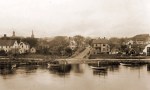
Images of Water Street – Today’s Water and Summer Streets are the town’s oldest public ways, and were in the early years called simply, “the Way to the Meeting House” or “the Way to the River.” On either side of the River, a public way was sedulously preserved from any encroachment.


great, thanks for the work
Alvin perkins