
Often alone in Ipswich while her husband Simon was engaged in government, Anne Bradstreet wrote a collection of poems published in London in 1650 titled, "The Tenth Muse Lately Sprung up in America...by a Gentlewoman in these Parts."

On the Massachusetts North Shore
Often alone in Ipswich while her husband Simon was engaged in government, Anne Bradstreet wrote a collection of poems published in London in 1650 titled, "The Tenth Muse Lately Sprung up in America...by a Gentlewoman in these Parts."
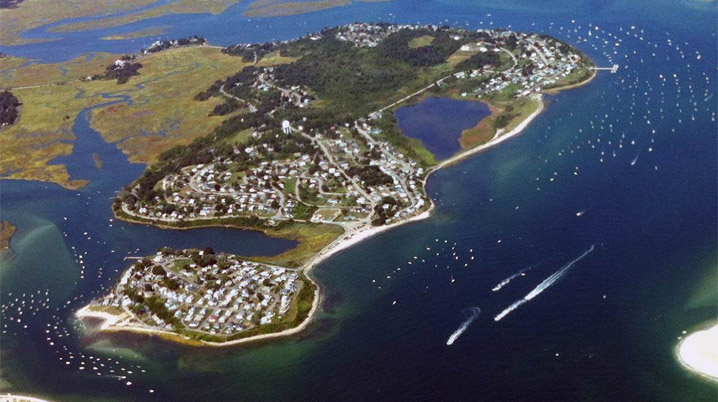
Before the settlement of Ipswich was begun in 1633 by John Winthrop, William Jeffrey, who had come over in 1623, had purchased from the Indians a title to the glacial drumlin which bears his name. By 1639 the whole tract was set apart as a common pasture by the new town, and in 1666 the General Court gave Jeffrey five hundred acres of land elsewhere. After the early eighteenth century, the Necks remained as the only common lands retained by the Commoners.

Mounted securely to a stone post at the corner of Middle and Independent Streets in Newburyport, there was for many years a large cast-iron bombshell, thrown from a mortar at the Second Siege of Louisbourg, Nova Scotia in 1758.

Soon after her marriage she was known as a fortune-teller, her clients increasing during the fifty years that she afterwards lived. Her fame reached every fireside in New England, and her successful predictions were the themes of many midnight vigils and story-tellers.
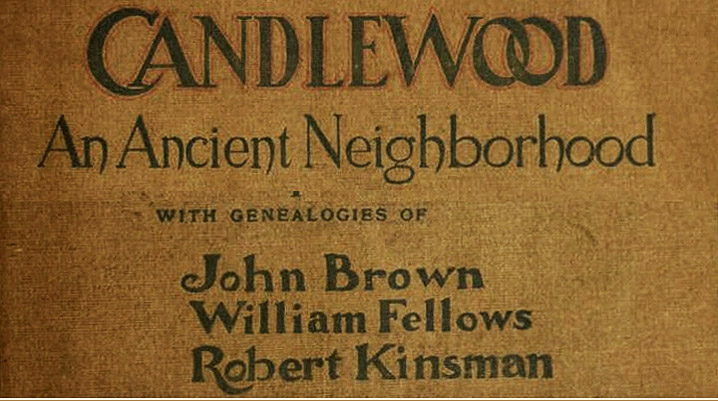
An Ancient Neighborhood in Ipswich, Massachusetts, written by Thomas Franklin Waters, with genealogies of John Brown, William Fellows, and Robert Kinsman)

Soffron Brothers were the exclusive suppliers of clams to the Howard Johnson chain for 32 years, which featured Ipswich Fried Clams on the menu. The four brothers, Tom, George, Pete and Steve, were the children of Greek immigrants who came to work at the Ipswich mills. Their Ipswich factory was at Brown Square in the building that now houses the Ipswich Ale Brewery.
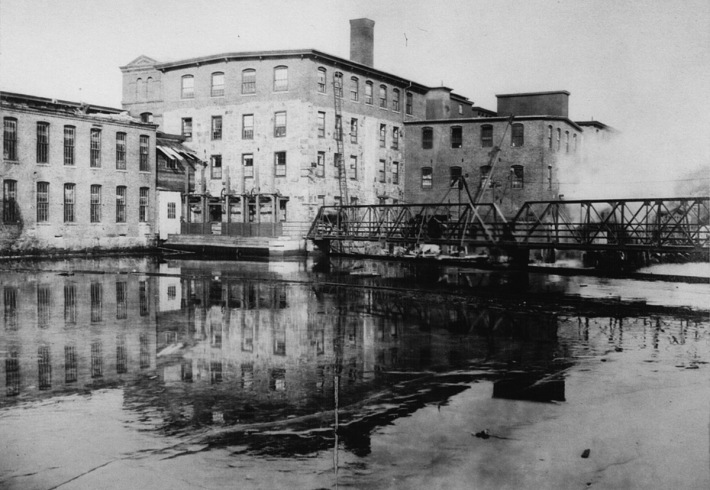
Geologically, the Ipswich River is quite young. The Laurentide ice sheet during the most recent ice age receded to the northern border of Massachusetts around 14,000 years ago. As the ice sheet melted, the sea level rose about 100 ft. higher than current levels, putting much of the North Shore area temporarily under water until… Continue reading A Photographic History of the Ipswich Mills Dam

in 1686, Mr. and Mrs. Stewart on High St. were favored with a visit from the book seller John Dunton, who came to Ipswich "in the course of his saddle-bag peregrinations."

Traditional hand rug hooked rugs were the most popular item in Ipswich antiques dealer Ralph Warren Burnham's shop on High St. in Ipswich.

The Strand Opera House was built in 1909 on Market Street in Ipswich and hosted operas, plays, travelling shows and even the Boston Symphony. In 1930 the Strand burned and re-opened as a movie theater.I n November, 1985 the Strand Theater was demolished. In it’s place was constructed the First National Bank of Ipswich.

Alice Keenan: "Naturally when we moved to Ipswich my antiquarian cup ranneth over. This lovely old town, its long history, ancient houses and interesting people became almost an obsession"
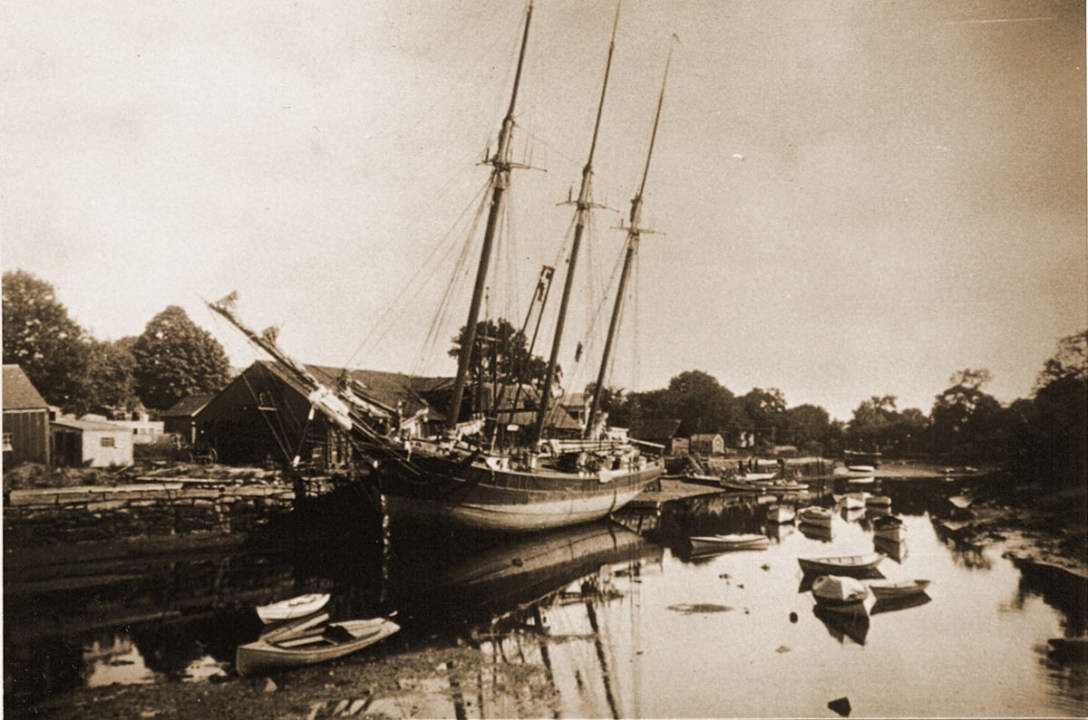
John S. Glover opened a wharf on Water St. in 1847, receiving shipments of coal and cement, along with maritime salvage. His wharf was a short distance from the home be built on East St. around 1872 across from the present-day Town Wharf.
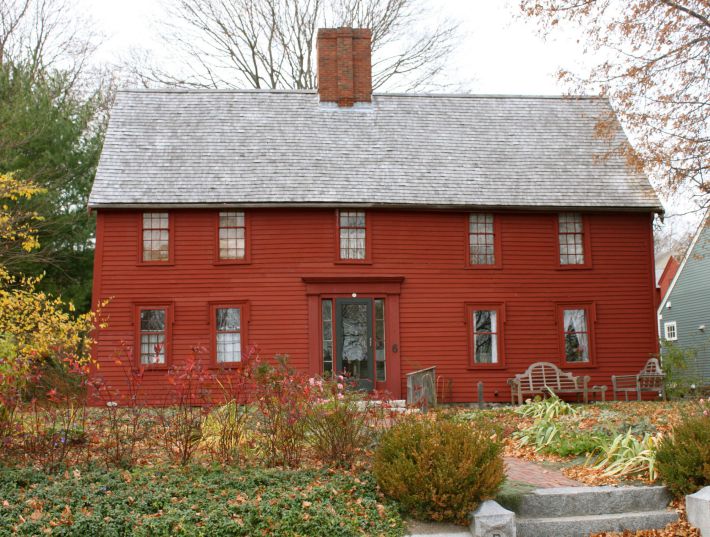
This important book described the process by which the town of Ipswich began to preserve at-risk historic homes after the town rejected efforts to set up a legal historic district.

The excursion boat Carlotta was built in 1878 at Rogers Point boat yard, and sailed from Town Wharf to the Neck and Plum Island for 35 years. The small hotels at Little Neck, Ipswich Bluff and Grape Island were favorite destinations for tourists and locals.
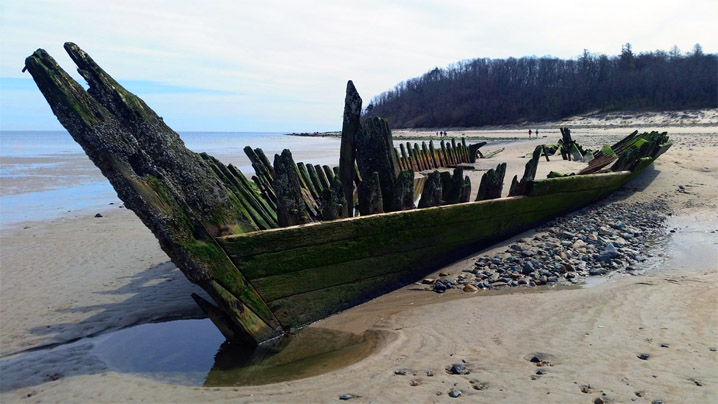
Christmas, 1909 witnessed the heaviest storm in many years. The ship was wrecked during the captain's first trip for a load of sand from the plentiful supply on Plum Island.
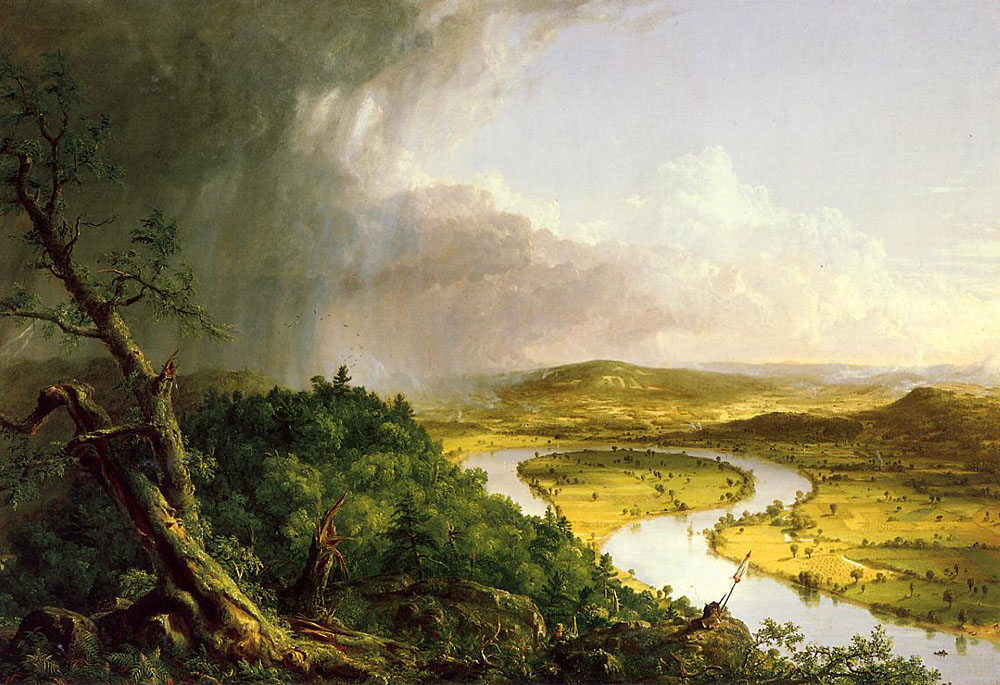
Featured image: North Conway, 1907. The White Mountain National Forest was established in 1918. In New England townships, common lands became increasingly smaller with each subdivision through distribution, sale, or inheritance. As commons shrank, conflicts over herding grew. The number and sizes of herds had to be regulated, as some settlers paid herdsmen to tend… Continue reading The Tragedy of the Wilderness: The Colonists and Indian Land, Part 4
 Historic Ipswich