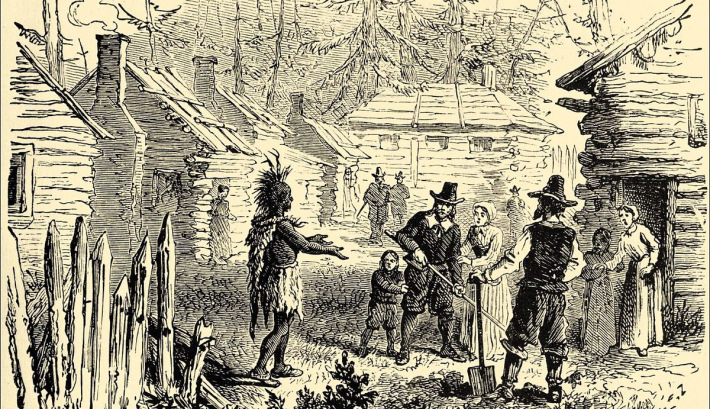
The idea of private property was alien to Native Americans, but the practice of private ownership apparently was not a feature of colonial life either.

On the Massachusetts North Shore
The idea of private property was alien to Native Americans, but the practice of private ownership apparently was not a feature of colonial life either.

Salt marsh hay is still gathered on the North Shore today. The grass was stacked on staddles to raise it above the high tides, and was hauled away on sleds over the frozen marsh in mid-winter.

Joseph Ross (1822-1903) is best known for designing the first movable span bridge in the country, which he patented in 1849 at the age of 26, and became the most common railroad bridge type in the Boston area. His corporation Joseph Ross & Sons was highly successful.

The Hayes Hotel was constructed in 1842 as a woolen goods factory. Converted to a tavern and hotel in 1885, the building was being used as a rooming house when it burned in 1969 with a loss of life.

Panoramic maps depicting cities and towns were popular during the late nineteenth and early twentieth centuries. Also known as bird's-eye views, the drawings were created as if viewed from the air. Click on the 1893 map of Ipswich, and keep clicking to zoom in and find your house!
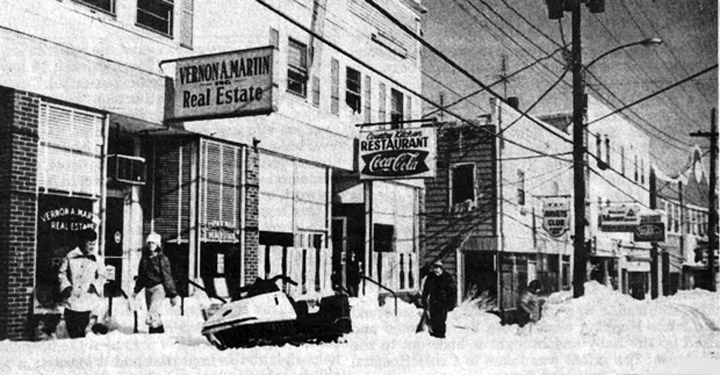
The "Blizzard of '78" raged from Sunday evening February 5 through Tuesday evening February 7. Over a billion dollars of damage occurred, including the loss of 11,000 homes and the lives of 29 Massachusetts residents. The highest total snowfall was 43.7 inches in Ipswich.
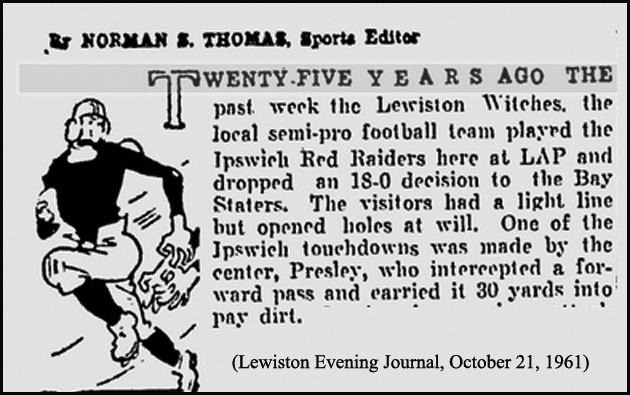
"A melting pot of awesome contenders were the Ipswich Red Raiders, members of a semiprofessional football league active during the late 1930s and 1940s. The Ipswich Red Raiders won the division championship in 1935. Made up of Ipswich men in their twenties and early thirties, they played teams from the surrounding cities and as far… Continue reading Ipswich Red Raiders, “A Melting Pot of Awesome Contenders!”

For over 200 years, this was part of the Potter family farm. The land by the River's bend was purchased by George Barnard in 1899. It became the Margery Restaurant which burned in 1977.

Images from the blizzard, January 27, 2015 and the series of snowstorms that followed. Many photos are from the I Love Ipswich Facebook group. Featured image: the road into Crane Beach, by Diane Young.
What was forwarded to me was a shocking eye-opener of national proportions, I promised to keep it under my hat, so consider yourselves among the very privileged few to have this access. Please don't tell anyone...

Dogtown is a five square mile area of Gloucester and Rockport strewn with glacial boulders. Visitors to Dogtown find cellar holes of abandoned houses, and boulders emblazoned with inspirational messages.
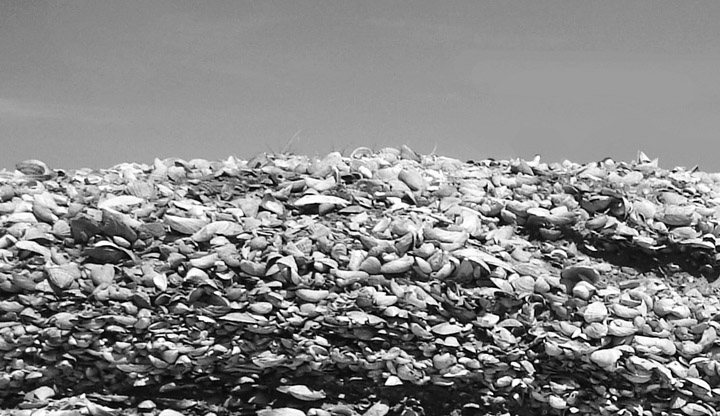
In1882, a shell heap on the shore of Treadwell's Island was observed to contain nearly two quarts of human bones, broken into short pieces.

In contact situations in the early 17th century, Europeans were quick to grasp the essential humanity of Native Americans and admired their appearance and physical fitness. Soon, upper-class English wore American feathers and furs, Native Americans prized English woven fabrics and garments, especially tailored shirts.

Many Ipswich Streets lost their original names, but a few streets gained them back. During our long winters, Ipswichites retreat to Facebook and debate the names of familiar places. If you call us Ipswichians, we'll know you're not from around here.

This history of Jeffreys Neck is from the Agawam Manual and Directory by M.V.B. Perley, published in 1888. The business of fur-trading and fishing along the New England coast received a new impetus about the beginning of the seventeenth century. In 1604 Agawam was the center of Arcadia, so-called in the French patent of November… Continue reading Jeffreys’ Neck Road
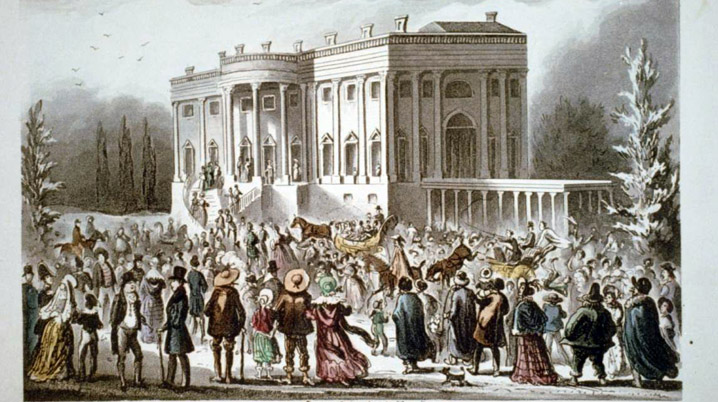
John Adams, our second President, and his eldest son John Quincy Adams, our sixth President, both quietly departed Washington on the eve of their opponent’s inauguration. Each did so in good conscience, leaving their successors, Thomas Jefferson and Andrew Jackson respectively, to enjoy two terms in office.
 Historic Ipswich